绿色增长

Search documents
越南6月起全面启售生物燃料汽油
Shang Wu Bu Wang Zhan· 2026-02-02 05:13
在推进路线图实施的同时,各部委将继续完善石油产品经营相关标准和技术规范,加强检查监管,维护 市场秩序和消费者合法权益。其中工贸部将进一步完善新的石油产品经营和处罚相关政令,为转型阶段 建立更加统一、配套的法律框架。 评估认为,使用生物燃料汽油将带来显著环境效益。据测算,每减少100万吨以上汽油消耗,可减少二 氧化碳排放逾250万吨。同时,发展生物燃料还有助于促进国内生产、增加就业岗位,为经济社会增长 作出积极贡献。 越通社1月26日报道,自2026年6月1日起,越南将在全国启售生物燃料汽油E5 RON 92和E10 RON 95 (乙醇含量分别为5%和10%),这是政府及各部委经多年筹备后,按既定路线图推进的一项重要举 措。工贸部表示,围绕此次转型的法律框架、技术基础设施及企业界共识已基本就绪,可确保市场平 稳、安全、高效运行,推动落实越南在环保、应对气变和保障国家能源安全方面的承诺。 该部于2025年11月颁布部门规章,对越南生物燃料与传统燃料掺混路线图作出具体规定,符合绿色增长 和可持续发展总体方向。近来,该部同相关部委及石油产品经营龙头企业在许可发放、技术监管和供应 准备等方面密切配合。越南石油集团(P ...
苏波:科技创新引领产业创新,加快高水平科技自立自强
Feng Huang Wang Cai Jing· 2025-12-29 06:20
Group 1 - The 10th China Manufacturing Power Conference was successfully held in Beijing, focusing on the theme "Rooted in Reality, Moving Towards New Directions" and discussing the high-quality development path of China's manufacturing industry during the 14th and 15th Five-Year Plans [1] - The conference highlighted the importance of the "15th Five-Year Plan" as a critical period for advancing China's manufacturing capabilities and achieving high-quality growth [1] Group 2 - Su Bo, Deputy Director of the National Manufacturing Power Construction Strategic Advisory Committee, stated that China's manufacturing power development index reached 128.85 in 2024, compared to Germany's 136.45 and Japan's 128.77, indicating that China has entered the ranks of manufacturing powers [3] - Su Bo emphasized that the "15th Five-Year Plan" marks the second decade of the "three-step" strategy for manufacturing power construction, aiming for China's manufacturing level to reach the middle level among global manufacturing powers by 2035 [3] - Six key tasks were proposed for future development: enhancing technological innovation, advancing digital economy, accelerating smart manufacturing, building a modern industrial system, promoting green growth, and strengthening the autonomy of industrial and supply chains [3]

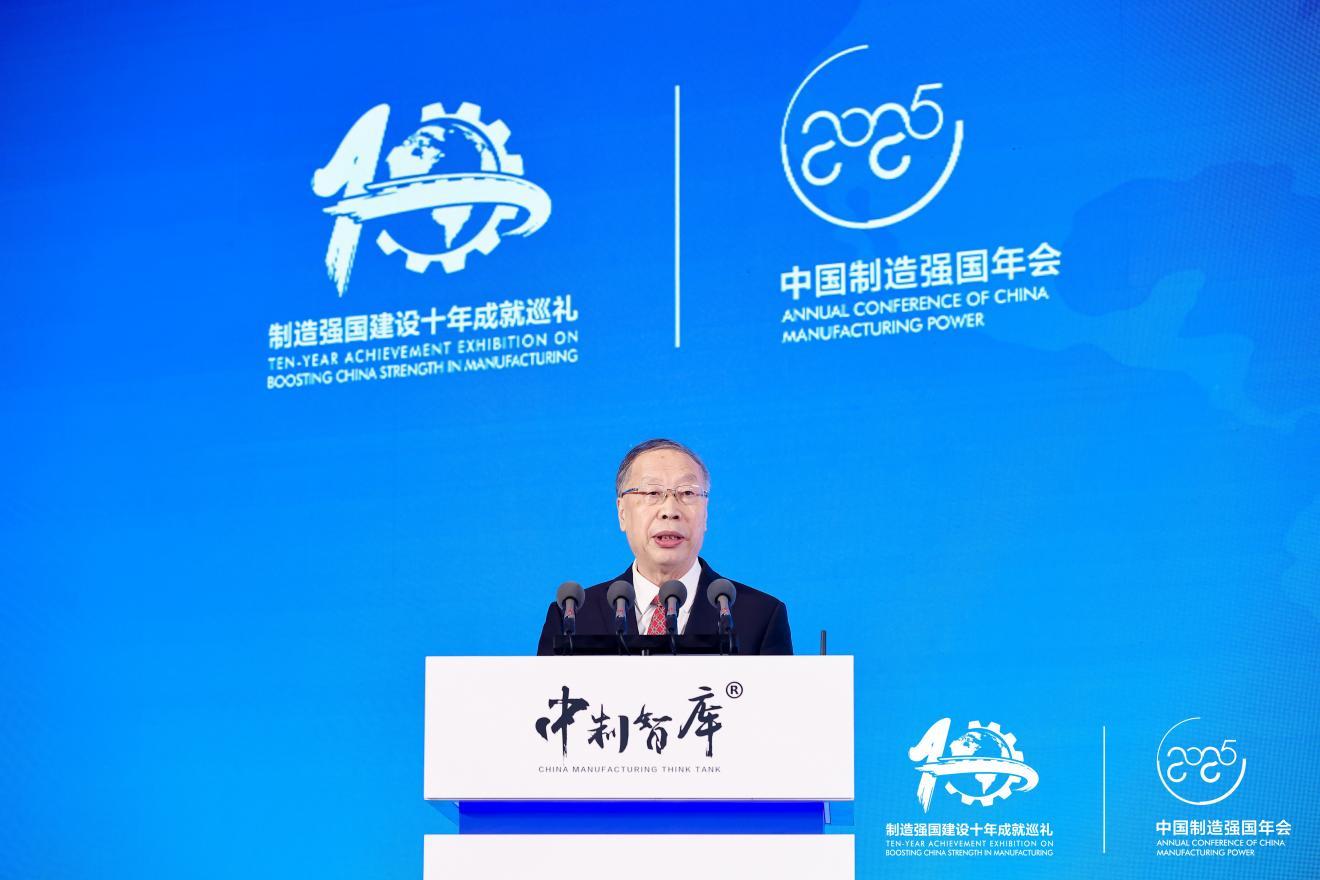
苏波:中国制造强国发展指数超过日本,开启“十五五”强国建设新征程
Xin Lang Cai Jing· 2025-12-29 03:33
Core Viewpoint - The 10th China Manufacturing Power Conference highlighted China's progress in manufacturing, with a focus on enhancing innovation and digital transformation to strengthen its position among global manufacturing leaders [3][6]. Group 1: Manufacturing Development Index - According to the 2024 Manufacturing Power Development Index, China scored 128.85, compared to Germany's 136.45 and Japan's 128.77, indicating that China has entered the ranks of manufacturing powers [3][6]. - China's manufacturing level has improved from mid-low end to mid-high end in several key areas, narrowing the gap with major global manufacturing countries [3][6]. Group 2: Strategic Recommendations - Six key tasks were proposed for future development: 1. Enhance technological innovation to lead industrial innovation and achieve high-level self-reliance in technology [4][6]. 2. Promote the digital economy and advance the comprehensive expansion of digital manufacturing [4][6]. 3. Accelerate the development of intelligent manufacturing to create new growth momentum [4][6]. 4. Develop new quality productivity and build a modern industrial system [4][6]. 5. Foster new advantages in green growth and promote low-carbon circular development in industry [4][6]. 6. Build a new industrial ecosystem to strengthen the autonomy and controllability of the industrial and supply chains [4][6].
陇南市武都区:聚焦高效发展 做好“绿色增长”转型文章
Xin Lang Cai Jing· 2025-12-25 10:11
Core Viewpoint - Wudu District is focusing on efficient development and transitioning towards "green growth" through urban renewal and environmental initiatives [1] Urban Development - Wudu District has completed the renovation of 321 old residential communities, significantly improving urban quality [1] - The district has implemented urban greening projects, planting over 210,000 trees and establishing 20 urban parks, creating a four-tier park system [1] - The urban greening area has reached 1.7 million square meters, with a green coverage rate of 38.18% and an average per capita park green space of 11.96 square meters [1] Resource Management - The district is enhancing natural resource management by regulating mineral resource exploration and encouraging enterprises to participate in green mine construction [1] - Agricultural green development is being promoted through policy guidance, technological innovation, and enterprise involvement, leading to increased resource recovery rates [1] Waste Management - A "garbage revolution" is being implemented, exploring market-oriented sanitation operations and accelerating waste classification and collection [1] - The urban household waste recycling rate has reached 36.9%, with a 100% rate for harmless treatment of household waste [1]
400余家上市公司齐聚!关于海南封关、制造强国、“十五五”资本市场、AI等领域投资机会,答案都有了
Mei Ri Jing Ji Xin Wen· 2025-12-12 10:29
Group 1: Conference Overview - The "2025 14th Annual Conference on the Development of Listed Companies and the Exchange of Opportunities in Hainan Free Trade Port" was held in Haikou from December 11 to 13, with over 400 listed companies and 20 institutions participating [1] - The conference coincided with the countdown to the full closure of Hainan Free Trade Port, emphasizing Hainan's role as a new experimental field for reform and opening up [1] Group 2: Institutional Opening in Hainan - Hu Xiaolan emphasized that the future focus for Hainan is to advance post-border institutional opening, aligning domestic systems with international high-standard economic and trade rules [3][4] - The core of high-level opening is not just about tariff reductions and market access but also about improving domestic regulations and standards to match international practices [4] Group 3: Market Competition and Fairness - Hu Xiaolan highlighted the importance of ensuring fair competition among market participants, addressing both anti-monopoly and anti-unfair competition measures [6] - The need for equal treatment of state-owned, private, and foreign-invested enterprises in market access and subsidies was stressed to prevent market distortion [6] Group 4: Manufacturing Industry Insights - Su Bo discussed the achievements of China's manufacturing sector, noting that its share of global manufacturing value added increased from 19.8% in 2010 to 31.1% in 2023 [7] - He identified the need for breakthroughs in key technologies such as high-end chips and industrial software to close the gap with leading manufacturing countries [7] Group 5: Capital Market Trends - Lian Ping indicated that equity assets have become the preferred choice for capital allocation as funds shift from the real estate market to other sectors [10][11] - The A-share market is seeing a rise in technology content, with the electronic sector surpassing the banking sector in market capitalization [10] Group 6: Emerging Industry Opportunities - Various industry leaders discussed opportunities in AI, digital economy, and health-conscious consumer trends, indicating a shift towards personalized and experience-driven consumption [12][14] - The importance of data governance in AI applications was highlighted, emphasizing the need for deep understanding and precise management of industry data [12] Group 7: Robotics and AI Development - Nanshan Aluminum's chairman mentioned that the robotics sector is seen as a new growth area, with expectations for the market size to reach trillions [18] - The integration of AI in traditional industries poses challenges, particularly in maintaining production while implementing new technologies [19]

2025工贸领域数字转型论坛在河内召开
Shang Wu Bu Wang Zhan· 2025-12-09 03:38
Core Insights - The Vietnamese Ministry of Industry and Trade is accelerating the adoption of new technologies and green growth in the industrial and trade sectors, aiming to enhance international integration and innovation [1] Group 1: Digital Transformation in Industry and Trade - The digital economy in Vietnam is projected to reach a value of $39 billion by 2025, leading the ASEAN region [2] - Online retail is expected to exceed $25 billion, solidifying its role as a key pillar of the internet economy [2] - The industrial production index is forecasted to increase by 8.4%, marking the highest growth in five years [2] - 90% of processing and manufacturing enterprises are partially adopting digital solutions, with 35% utilizing robots and sensors in production [2] - 10%-12% of enterprises are expected to achieve smart factory 3.0 status [2] - Over 40 artificial intelligence startups have attracted $123 million in private capital [2] Group 2: Future Strategies and Initiatives - In 2026, the Ministry of Industry and Trade plans to implement a series of breakthrough strategic measures, including national e-commerce data standardization and increasing the number of next-generation smart factories (3.0-4.0) [2] - Initiatives will also focus on promoting smart energy measurement and management [2]

“共同追求更可持续的未来”(外媒看中国)
Ren Min Ri Bao· 2025-11-21 22:12
Group 1 - The core viewpoint of the articles emphasizes China's significant role in global climate governance and its commitment to achieving substantial reductions in greenhouse gas emissions by 2035, with a focus on a comprehensive green transition across the economy [1][4][6] - China has established itself as a leader in renewable energy, boasting the largest and fastest-growing renewable energy system globally, and is the largest market for new energy vehicles [2][4][5] - The development of a clean energy industry network in the Tibetan Plateau showcases China's efforts to leverage its geographical advantages for low-cost renewable energy production [3][4] Group 2 - China's new round of national contributions aims for a 7%-10% reduction in greenhouse gas emissions from peak levels by 2035, with non-fossil energy consumption reaching over 30% of total energy consumption [4][6] - The collaboration between China and African nations in renewable energy projects, such as solar and wind, supports Africa's energy transition and sustainable development [2][5] - China's commitment to multilateralism in addressing climate change is highlighted, with initiatives like the South-South Cooperation Fund and infrastructure projects under the Belt and Road Initiative [6][7]
“共同追求更可持续的未来”(外媒看中国)——国际舆论积极评价中国引领全球气候治理
Ren Min Ri Bao· 2025-11-21 21:54
Core Viewpoint - The international community is closely watching the COP30 conference, with expectations that its outcomes will guide global climate governance for the next decade. China has made significant progress in implementing its 2030 Nationally Determined Contributions (NDCs) and has announced its 2035 NDCs, which include absolute reduction targets for all greenhouse gases [1][4]. Group 1: China's Role in Global Climate Governance - China is recognized as a key leader in global climate governance, with foreign media highlighting its achievements in green industry development and international cooperation on climate change [1]. - The country has established the world's largest and fastest-growing renewable energy system, becoming the largest market for new energy vehicles [2][4]. - China's new round of NDCs aims for a 7%-10% reduction in greenhouse gas emissions by 2035, with non-fossil energy consumption reaching over 30% of total energy consumption [4][6]. Group 2: Renewable Energy Development - China is developing a vast clean energy industry network in the Tibetan Plateau, leveraging its unique environmental conditions to create a low-cost renewable energy system [3]. - The country has formed the largest and most complete new energy industrial chain globally, providing a significant portion of the world's photovoltaic components and wind power equipment [2][4]. - Chinese enterprises are expanding their presence in the global clean energy sector, influencing the energy transition worldwide [4][5]. Group 3: International Cooperation and Investment - China is actively collaborating with African nations on renewable energy projects, supporting their energy transitions through investments in solar, wind, hydro, and biomass energy [2][5]. - The establishment of the South-South Cooperation Fund for climate change reflects China's commitment to enhancing international climate cooperation [7]. - China's actions in trade, finance, and security have generated positive environmental and social benefits, enhancing the capacity of other countries to achieve sustainable development goals [7][8].
世界资源研究所高官:绿色增长是未来之路 中国对此理解透彻
Zhong Guo Xin Wen Wang· 2025-11-12 12:18
Core Viewpoint - Immediate action is required for a sustainable future, as emphasized by Adriana Lobo from the World Resources Institute during the COP30 event in China [1] Group 1: Climate Action Progress - The latest "2025 Climate Action Report" indicates that current global climate actions are insufficient to meet the emission reduction targets set by the Paris Agreement by 2030 [2] - There is a significant challenge in climate financing, with a need to achieve an annual financing goal of $1.3 trillion, particularly for developing countries [2] Group 2: China's Role in Green Transformation - China has made substantial progress by setting a comprehensive 2035 Nationally Determined Contribution (NDC) target, covering the entire economy [3] - The shift towards green finance in China is seen as a catalyst for economic transformation, positioning the country as a leader in climate change response and sustainable development [3][6] - China's initiatives, such as the CCICED and the Belt and Road Initiative, are fostering new international cooperation models that combine technology from developed countries with resources from developing nations [3] Group 3: Sustainable Trade Initiatives - Recent collaborations between China and Brazil in sustainable trade, particularly in beef and soybean procurement, are highlighted as win-win strategies that improve standards and reduce carbon emissions in supply chains [5] Group 4: Economic Growth and Climate Action - Climate action is not seen as contradictory to economic growth; rather, it promotes smarter growth strategies, with China being one of the countries that understands this balance well [6] - The event at COP30 emphasized the importance of collective efforts in climate action, where every participant plays a crucial role [6]
全球GDP20强城市最新出炉:洛杉矶险胜东京,重庆12,苏州惊险入围
Sou Hu Cai Jing· 2025-11-08 18:46
Core Insights - The latest global city GDP rankings reveal a diverse development landscape, with New York leading by a significant margin, followed closely by Los Angeles and Tokyo in a tight competition [1][3] - China showcases strong performance with five cities making the top twenty, including Shanghai, Beijing, Shenzhen, Guangzhou, and Suzhou, highlighting the robust vitality and resilience of Chinese urban economies [1][5] Group 1: City Rankings and Economic Performance - New York tops the list with over 9 trillion, while Los Angeles narrowly surpasses Tokyo with approximately 6.78 trillion vs. 6.68 trillion [3] - Los Angeles benefits from its core position as California's economic engine, driven by advanced manufacturing, digital entertainment, and international trade [3] - Tokyo remains a leading financial hub in Asia, focusing on digital transformation and green growth, supported by significant R&D investment [3] Group 2: China's Economic Growth - Chongqing ranks 12th globally with a GDP of 3.21 trillion, leveraging its strategic position as a key node in the new western land-sea corridor [5] - The city has seen substantial growth in high-tech manufacturing and modern services, with a notable increase in retail sales surpassing 1 trillion [5] - Suzhou claims the 20th position with a GDP of 2.67 trillion, showcasing its industrial strength and innovation-driven economic clusters [7] Group 3: Innovation and Development Trends - The competition among cities has evolved into a new phase characterized by innovation leadership and collaborative development [8] - The collective rise of Chinese cities is reshaping the global economic landscape, emphasizing the importance of development models and industrial vitality [8]