区块链

Search documents
HashKey HLDGS:合规为先机构为核:香港数字资产领先者-20260206
GUOTAI HAITONG SECURITIES· 2026-02-06 02:45
Investment Rating - The report assigns a rating of "Buy" for HashKey Holdings [4]. Core Insights - HashKey is positioned as a leading player in the digital asset market in Hong Kong, with a comprehensive licensing framework and a focus on compliance, which is becoming increasingly critical as the digital asset landscape evolves [2][8]. - The company is expected to see significant revenue growth from 2025 to 2027, with projected revenues of HKD 7.82 billion, HKD 12.11 billion, and HKD 23.38 billion, representing year-on-year growth rates of 11%, 55%, and 90% respectively [8]. - HashKey's net profit is projected to improve significantly, moving from a loss of HKD 1.08 billion in 2025 to a profit of HKD 594 million by 2028 [8]. Summary by Sections 1. HashKey: Compliance First, Building a Full Ecosystem - HashKey was established with a "compliance first" strategy, obtaining full licenses from the Hong Kong Securities and Futures Commission, making it a leading licensed virtual asset trading platform in Hong Kong [17][24]. - The company has developed a comprehensive ecosystem that includes trading facilitation, on-chain services, and asset management, catering to both institutional and retail clients [24][29]. 2. Focus on Institutional Trading Business, Gradual Improvement in Profitability - HashKey has shifted its focus towards institutional clients, with institutional trading volume increasing significantly, accounting for 68% of total trading volume in the first half of 2025 [30][34]. - The company has seen its trading volume grow from HKD 4.2 billion in 2022 to HKD 638.4 billion in 2024, driven by the launch of its trading platforms [30][34]. 3. Steady Progress on the Compliance Path, Attracting Institutional Participation - The tightening of global digital asset regulations has created a clear framework that enhances investor protection and promotes sustainable development in the digital asset industry [43]. - HashKey's comprehensive licensing and compliance strategy positions it as a preferred partner for institutions looking to engage in the digital asset space [8][43]. 4. Profit Forecast and Valuation Analysis - The report utilizes a price-to-sales (P/S) valuation method, comparing HashKey to peers like Coinbase and OSL, resulting in a valuation of HKD 28.1 billion and a target price of HKD 10.14 per share [8]. - HashKey's revenue is expected to grow significantly, with total revenues projected to reach HKD 3.415 billion by 2028, reflecting a robust growth trajectory [4][8].
手机不是“提款机” 这些套路要看清
Xin Hua Wang· 2026-02-05 23:41
Core Insights - The article highlights the increasing prevalence of financial scams targeting the elderly as the year-end approaches, emphasizing the need for awareness and protection against various fraudulent schemes [1][2]. Group 1: Types of Scams - A typical scam involves promising high returns on investments, where victims are lured into withdrawing large sums of money for "high-yield investment projects" that ultimately lead to financial loss [1][2]. - Another scam involves fraudulent retirement home investments, where individuals are promised guaranteed returns and premium services, but the reality is that the companies are not legally compliant and have financial issues [3]. - Emotional scams are also prevalent, where scammers pose as caring individuals on social media to build trust before leading victims into investment schemes, resulting in significant financial losses [4][5]. Group 2: Warning Signs and Advice - Authorities warn that terms like "stable, high-yield, high-return" are common phrases used in investment scams, and individuals should be cautious of unknown investment apps and groups [2][3]. - It is advised that elderly individuals should consult family members before making any financial decisions, especially those involving investments [3]. - The article suggests that individuals should be wary of unsolicited messages and interactions on social media, as they can lead to scams [5]. Group 3: Prevention Strategies - The article outlines several strategies to prevent falling victim to scams, including avoiding clicking on suspicious links, not sharing personal information, and being skeptical of offers that seem too good to be true [6][7][8]. - It emphasizes the importance of using official channels for reporting scams and seeking help, such as contacting local authorities or using dedicated anti-fraud hotlines [2][10].
一探上海两会|上海市人大代表颜铭爱:长护险支付存潜在风险,引入“区块链”机制赋能一键结算
Di Yi Cai Jing· 2026-02-05 12:18
Core Viewpoint - The current long-term care insurance (LTCI) system in Shanghai has 500,000 elderly participants, but it faces risks such as medical card fraud and financial security issues in offline settlements. The introduction of blockchain technology is suggested to enhance the medical insurance code and streamline the settlement process, thereby improving care for the disabled and reducing family burdens [1][1]. Group 1 - There are currently 500,000 elderly individuals in Shanghai enrolled in long-term care insurance [1]. - Offline settlement processes for long-term care insurance are vulnerable to risks like medical card fraud and financial security concerns [1]. - The proposal includes using blockchain technology to optimize the medical insurance code and facilitate one-click settlement for long-term care insurance [1].
关于把握数字化智能化发展浪潮提升中央银行履职能力的若干思考|金融与科技
清华金融评论· 2026-02-05 09:17
文/中国人民银行科技司相关课题组 金融数字化、智能化背景下提升央行履职能力应以建设强大的中央银行为 目标,以数字央行建设为抓手,以运用数字化智能化手段提升央行履职能 力为主线,为建设具有高度适应性、竞争力、普惠性的中国特色现代金融 体系贡献科技力量。 金融信息化事业加速迈进数字化智能化新阶段 金融业是典型的技术密集型和创新驱动型行业。一部金融发展史,也是一部金融与科技不断融合创新的演进史。改革开放以来,随着信息技术持续迭代发 展,我国金融信息化事业已先后历经电子化、网络化阶段,为迈进数字化、智能化新阶段奠定坚实基础。金融电子化阶段,我国金融业主要依托电子计算 机、卫星通讯网络等技术,实现金融业务"从手工到电子、从单机到联网"的历史性突破,行业整体电子化、自动化水平显著提升。金融网络化阶段,我国 金融业运用互联网、移动通信、数据库等技术,将传统金融业务迁移至互联网和移动终端,推动金融数据集中和信息系统互联互通,支撑央行履职的国 库、支付、征信、反洗钱、会计核算等信息化基础设施体系逐步建立健全,金融服务和管理信息化水平实现全面跃升。 近年来,随着新一轮科技革命和产业变革深入发展,人工智能、大数据、云计算、区块链、 ...


涉及脑机接口技术等,中国提出多项APEC合作项目
Xin Lang Cai Jing· 2026-02-05 06:55
记者今天从广州召开的2026年亚太经合组织(APEC)标准与合格评定分委会(SCSC)首次会议了解 到,此次会议由中方担任主席,市场监管总局牵头组织。中国在会议上提出的多项APEC合作项目,得 到各个经济体的积极响应。 另外,提出"老年友好型食品设计标准化"项目,聚焦区域经济体共同面临的老年营养改善和食品适配问 题,推动老年友好型食品设计的标准化路径,为促进健康老龄化和创新发展提供国际协同方案,充分发 挥标准化在公共健康治理中的基础性作用。(央视新闻) 其中聚焦脑机接口技术在康复领域的应用需求,推动APEC数字康复相关标准与测试技术区域协调,完 善脑机接口ISO国际标准体系。 提出数字赋能绿色转型新项目倡议,聚焦人工智能、区块链、物联网等先进技术在应对气候变化领域的 应用潜力,推动ISO绿色低碳国际标准在APEC经济体实施。 ...
涉及脑机接口技术等 中国提出多项APEC合作项目
Yang Shi Xin Wen· 2026-02-05 06:36
Core Viewpoint - The 2026 APEC Standards and Conformance Subcommittee (SCSC) meeting held in Guangzhou, chaired by China, focused on several collaborative projects, particularly in brain-computer interface technology and digital empowerment for green transformation [1] Group 1: APEC Cooperation Projects - China proposed multiple APEC cooperation projects that received positive responses from various economies [1] - The projects emphasize the application of brain-computer interface technology in rehabilitation, aiming to enhance regional coordination on digital rehabilitation standards and testing technologies [1] - There is a push to improve the ISO international standard system for brain-computer interfaces [1] Group 2: Digital Empowerment and Green Transformation - A new initiative for digital empowerment in green transformation was introduced, focusing on advanced technologies such as artificial intelligence, blockchain, and the Internet of Things [1] - The initiative aims to explore the potential of these technologies in addressing climate change [1] - Efforts will be made to promote the implementation of ISO green low-carbon international standards across APEC economies [1]
定义机构化时代:Consensus 2026将在香港举办 锚定数字资产新坐标
Di Yi Cai Jing· 2026-02-05 06:36
Core Insights - The Consensus conference in Hong Kong aims to define the development path of digital assets for the next decade, emphasizing the integration of innovative energy from the crypto ecosystem into a robust and transparent modern financial system [1][11] - The event highlights Hong Kong's role as an international innovation hub, especially in the context of accelerating global regulatory frameworks and technological integration [1][9] Group 1: Conference Details - The Consensus Hong Kong 2026 will take place from February 10 to 12, 2026, focusing on "Web3 and Blockchain Accelerating the New Era of Applications" [1] - The conference will introduce two new summits: the "AI and Robotics Summit" and the "Asia Macro Summit," aimed at exploring the intersection of AI and blockchain, as well as analyzing the development paths and regulatory dynamics in major Asian markets [5] - The event will also feature collaborations with global investor communities and developer programs to enhance connections between technology development and capital [5][6] Group 2: Regulatory Environment - Hong Kong's regulatory framework aims to balance innovation and risk prevention, following the principle of "same business, same risk, same rules" to provide a stable environment for compliant operations [9] - The Hong Kong Securities and Futures Commission's "ASPIRe" roadmap includes twelve measures to enhance market security and innovation capabilities [9] - Recent initiatives include the pilot of the digital Hong Kong dollar (e-HKD) and the mBridge cross-border central bank digital currency project, showcasing efforts in modernizing financial infrastructure [9] Group 3: Global Context - The global Web3 sector is entering a new phase characterized by the simultaneous establishment of rules and infrastructure, with major economies accelerating the formation of regulatory frameworks [10] - The conference serves as a critical global platform, bringing together regulators, institutional investors, and technology developers to compare regulatory approaches and showcase the latest business practices in areas like DeFi and NFTs [11] - The outcomes and consensus from the conference are expected to provide insights for Hong Kong's differentiated and sustainable development path, potentially guiding the global digital asset industry towards maturity and a more efficient financial infrastructure [11]


同花顺跌2.08%,成交额13.68亿元,主力资金净流出3993.56万元
Xin Lang Zheng Quan· 2026-02-05 02:43
Core Viewpoint - The stock price of Tonghuashun has experienced fluctuations, with a recent decline of 2.08% on February 5, 2025, while the company shows a year-to-date increase of 9.26% [1][2]. Group 1: Stock Performance - As of February 5, 2025, Tonghuashun's stock price is reported at 352.01 yuan per share, with a trading volume of 1.368 billion yuan and a turnover rate of 1.23%, leading to a total market capitalization of 189.241 billion yuan [1]. - Year-to-date, the stock has increased by 9.26%, with a decline of 1.59% over the last five trading days, a rise of 1.35% over the last 20 days, and an increase of 1.53% over the last 60 days [2]. Group 2: Company Overview - Tonghuashun, established on August 24, 2001, and listed on December 25, 2009, is based in Hangzhou, Zhejiang Province. The company provides software products, system maintenance services, financial data services, and investment analysis tools for individual investors [2]. - The revenue composition of Tonghuashun includes 48.33% from value-added telecommunications services, 36.01% from advertising and internet promotion services, 9.43% from fund sales and other businesses, and 6.22% from software sales and maintenance [2]. Group 3: Financial Performance - For the period from January to September 2025, Tonghuashun achieved a revenue of 3.261 billion yuan, representing a year-on-year growth of 39.67%. The net profit attributable to shareholders reached 1.206 billion yuan, marking an increase of 85.29% year-on-year [2]. - Since its A-share listing, Tonghuashun has distributed a total of 7.991 billion yuan in dividends, with 4.193 billion yuan distributed over the past three years [3]. Group 4: Shareholder Information - As of September 30, 2025, the number of shareholders for Tonghuashun is reported at 82,600, a decrease of 4.81% from the previous period, with an average of 3,336 circulating shares per person, an increase of 5.05% [2]. - The second-largest circulating shareholder is Hong Kong Central Clearing Limited, holding 14.6293 million shares, an increase of 2.3322 million shares from the previous period [3].

中国平安揽获2025年金融科技、医疗健康行业专利数双榜首
Jin Rong Shi Bao· 2026-02-04 10:22
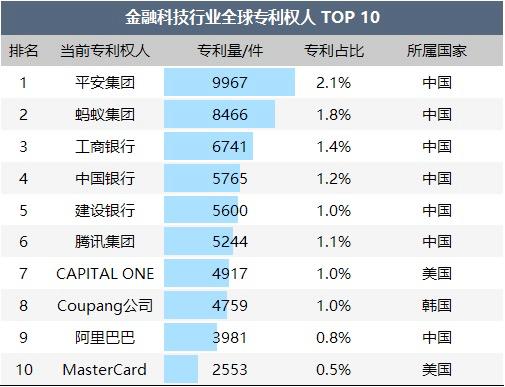
Core Insights - The white papers released by the National Intellectual Property Administration reveal that Chinese companies are solidifying their innovation leadership in the financial technology and healthcare sectors from 2019 to 2025 [1] Group 1: Patent Leadership - Ping An Group ranks first globally in both financial technology and healthcare sectors, with a total of 9,967 patents in financial technology and 5,704 patents in healthcare [2][3][4] - In financial technology, Ping An's patents are particularly strong in risk prevention (12.7% of total patents) and intelligent customer service (10.5% of total patents) [2] - In healthcare, Ping An leads in medical image processing, elder care, and intelligent consultation, showcasing a comprehensive innovation strategy [4] Group 2: Technological Drivers - Artificial intelligence (AI) and big data are identified as core technological engines driving Ping An's innovation strategy [5] - The company has integrated AI and big data into its operations, achieving a 23% increase in policy renewal efficiency through its AI-driven models [5] - Ping An's commitment to sustainable development is evident through its AI-ESG management platform, which has earned it an AAA rating in the MSCI ESG assessment [5] Group 3: Application Empowerment - Ping An has successfully transformed its patent achievements into impactful applications, such as the "Ping An Medical Assistant" and "Ping An Family Doctor" products, which address healthcare challenges [6] - The company is focused on creating a comprehensive AI medical product matrix that includes various innovative solutions for healthcare [6] - The strategic emphasis on deep application of technology has allowed Ping An to convert its extensive patent portfolio into significant business drivers [7] Group 4: Economic Impact - The technological innovations by Ping An aim to enhance the quality and efficiency of the real economy while addressing the public's desire for improved living standards [8] - The company's innovations have led to significant improvements in service efficiency, such as reducing car insurance claim processing time from hours to minutes [8]

KuCoin联合主办WLS 2026,探讨“可信数字基础设施”的长期建设
Sou Hu Wang· 2026-02-04 09:45
Group 1 - The World Laureates Summit 2026 (WLS 2026) opened on February 1 in Dubai, UAE, focusing on the theme "Fundamental Science: Responding to Human Challenges with Scientific Consensus" [1] - The summit aims to connect fundamental scientific discoveries with global governance and public policy needs, emphasizing the role of science in addressing long-term development issues [1] - The event received high-level support from the UAE government, highlighting the importance of fundamental science and cutting-edge technology in national development strategies and global governance systems [1] Group 2 - KuCoin, as a co-host, is exploring the foundational value of technology in research collaboration, digital infrastructure, and public governance, leveraging blockchain's characteristics [3] - During the summit, KuCoin will lead the "AI×Blockchain Science Forum" to discuss the applications of blockchain and artificial intelligence in research collaboration and public governance [3] - Michael Gan, as the Deputy Secretary-General of the World Laureates Association, is participating in discussions on artificial intelligence, fundamental science, and global collaboration mechanisms [3] Group 3 - The WLS 2026 spans three days, with over 1,000 participants, including Nobel Prize, Turing Award, and Wolf Prize winners, marking a new high in scale and academic influence [4] - The summit is evolving into an important international platform for addressing long-term challenges and promoting cross-disciplinary collaboration and institutional innovation [5]