
太空数据中心

Search documents
顺灏股份(002565.SZ):筹划出售控股子公司上海绿馨电子科技有限公司60%股权
Ge Long Hui A P P· 2026-01-15 10:23
登录新浪财经APP 搜索【信披】查看更多考评等级 格隆汇1月15日丨顺灏股份(002565.SZ)公布股票交易异常波动公告,公司目前拟筹划出售控股子公司上 海绿馨电子科技有限公司60%的股权,相关交易可能对公司净利润造成小幅度影响,可能触发信息披露 标准。具体交易方案仍在论证中,公司尚未与任何交易对方签订正式交易协议,预计不会构成《上市公 司重大资产重组管理办法》中规定的重大资产重组。如该事项后续触及审议及信息披露标准,公司后续 将依据法律法规的规定进行审议和披露。 公司目前仅作为投资人参股轨道辰光,公司现有业务未与轨道辰光的业务产生协同效应,一定时期内公 司主营业务不会发生明显变化;轨道辰光业务受宏观经济、行业政策、市场环境变化等因素的影响,亦 存在产业化、商业化落地周期较长以及不达预期的风险。轨道辰光的"天数天算"业务可能在未来5年内 才有明确的商业价值,太空数据中心的"地数天算"业务可能在未来5-10年才逐步具备与地面数据中心进 行竞争的优势,这一过程中轨道辰光也可能面临同行业公司的充分竞争压力。太空数据中心面临强烈辐 射、轨道维护困难、碎片危害以及与数据治理和太空交通相关的监管问题等障碍,包括但不限于 ...

顺灏股份:筹划出售控股子公司上海绿馨电子科技有限公司60%股权
Ge Long Hui· 2026-01-15 10:21
格隆汇1月15日丨顺灏股份(002565.SZ)公布股票交易异常波动公告,公司目前拟筹划出售控股子公司上 海绿馨电子科技有限公司60%的股权,相关交易可能对公司净利润造成小幅度影响,可能触发信息披露 标准。具体交易方案仍在论证中,公司尚未与任何交易对方签订正式交易协议,预计不会构成《上市公 司重大资产重组管理办法》中规定的重大资产重组。如该事项后续触及审议及信息披露标准,公司后续 将依据法律法规的规定进行审议和披露。 公司目前仅作为投资人参股轨道辰光,公司现有业务未与轨道辰光的业务产生协同效应,一定时期内公 司主营业务不会发生明显变化;轨道辰光业务受宏观经济、行业政策、市场环境变化等因素的影响,亦 存在产业化、商业化落地周期较长以及不达预期的风险。轨道辰光的"天数天算"业务可能在未来5年内 才有明确的商业价值,太空数据中心的"地数天算"业务可能在未来5-10年才逐步具备与地面数据中心进 行竞争的优势,这一过程中轨道辰光也可能面临同行业公司的充分竞争压力。太空数据中心面临强烈辐 射、轨道维护困难、碎片危害以及与数据治理和太空交通相关的监管问题等障碍,包括但不限于上述各 类因素均可能导致项目商业化进度和效益晚于和 ...
“中美AI竞争蔓延至太空,中国算力占得先机”
Guan Cha Zhe Wang· 2026-01-15 08:13
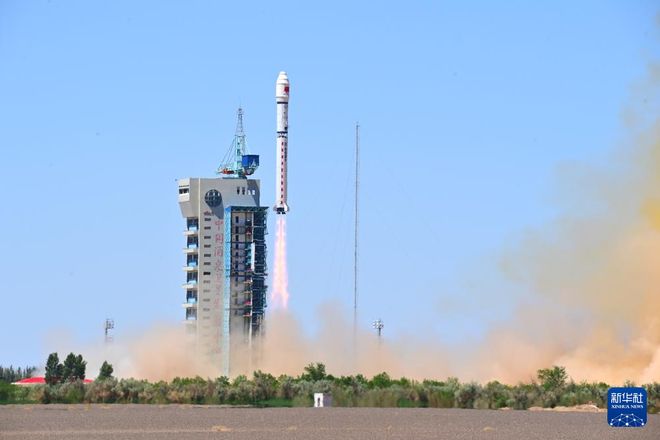
Core Viewpoint - The competition between the US and China in the field of artificial intelligence (AI) is intensifying, extending into space with both countries' tech companies racing to deploy solar-powered computing networks in orbit [1] Group 1: AI and Space Computing Initiatives - US companies like Google and SpaceX are planning to deploy satellite constellations powered by solar energy to meet the growing computational demands of AI [1] - Chinese startups such as ADA Space and the Zhijiang Laboratory, supported by Alibaba Group, launched 12 satellites equipped with computing devices, capable of performing 50 quadrillion operations per second, equivalent to a supercomputer [1] - The "Trisolaris Computing Constellation" project aims to operate 2,800 satellites to achieve a total computing capacity of 1,000 POPS (one quintillion operations per second), focusing on real-time processing of Earth observation data [1][3] Group 2: Project Developments and Goals - A project led by Beijing plans to build a centralized large-scale computing facility in a sun-synchronous orbit, targeting a computing capacity of 1,000 POPS by 2027, with an eventual power capacity of 1 gigawatt [3] - Google's "Suncatcher project" aims to launch two satellites equipped with AI chips by early 2027, in collaboration with Planet Labs [4] - Starcloud, a US startup, has launched a satellite with NVIDIA H100 chips and plans to launch a commercial satellite with 100 times the computing power of its first satellite later this year [4] Group 3: Technical Challenges and Market Dynamics - Two main approaches for space data centers are identified: centralized systems and satellite constellations, with the latter being favored for redundancy and resilience against space radiation [5] - SpaceX is a key player in building space data centers using a constellation approach, leveraging its experience with the Starlink satellite internet service [5] - The current AI boom in the US is straining the electrical grid, with rising consumer electricity prices and an aging power plant infrastructure leading to potential supply crises [6] Group 4: Comparative Energy Infrastructure - The US electrical grid, managed by PJM, is facing risks of capacity exhaustion due to the high demand from AI data centers, which could lead to rolling blackouts during peak usage [6] - In contrast, China is investing heavily in its electrical infrastructure, with Morgan Stanley predicting a $560 billion investment in grid projects by 2030, a 45% increase from the previous five years [7] - Goldman Sachs forecasts that China will have approximately 400 gigawatts of backup power capacity by 2030, three times the expected global data center electricity demand at that time [7]

彭博社:太空 AI 数据中心:实际可行吗?
彭博· 2026-01-15 01:06
Investment Rating - The report does not explicitly provide an investment rating for the space data center industry Core Insights - The concept of space data centers is gaining traction among tech billionaires like Elon Musk and Jeff Bezos, who envision moving AI's substantial energy demands off Earth to space [3][5] - The energy requirements for AI data centers are projected to be significantly higher than traditional data centers, with IDC estimating that AI data centers may require ten to a hundred times more power [5] - BloombergNEF forecasts that electricity consumption by US data centers will double from 2026 to 2033, primarily due to AI's energy demands [5] - Space offers advantages such as abundant space for large satellite networks and continuous sunlight in certain orbits, which can help overcome land and energy constraints on Earth [4][10] Summary by Sections Industry Overview - The report discusses the potential for space data centers to handle the increasing data processing needs driven by the expansion of AI technologies [3][5] - Major players in this field include SpaceX, Blue Origin, and Google, all of whom are exploring the feasibility of deploying data centers in space [21][22] Technical Challenges - Significant engineering challenges remain before space data centers can become economically viable, including the need for advanced solar panels and cooling systems [4][20] - The size of solar panels required for these data centers poses a challenge for launch and operation in space [12][14] - The modular design of satellites is suggested to facilitate easier repairs and maintenance in the event of failures [17] Regulatory Environment - The regulatory landscape for space data centers is less cumbersome than that on Earth, primarily requiring launch and operational licenses from the FAA and FCC [10] Future Outlook - Predictions for the deployment of space data centers vary, with Musk suggesting a timeline of four to five years, while Bezos estimates a more conservative ten to twenty years [24]
顺灏股份(002565.SZ)拟向参股子公司轨道辰光增资7498万元 将持有其28.68%股份
智通财经网· 2026-01-13 09:37
Core Viewpoint - The company has approved a capital increase of 74.9804 million yuan to its subsidiary, Beijing Rail Transit Chen Guang Technology Co., Ltd., which will enhance its stake to 28.68% and support the subsidiary's business development in the space data center sector [1] Group 1: Company Actions - The company will hold its sixth board meeting on January 13, 2026, to review the proposal for the capital increase [1] - The capital increase aims to strengthen the investment layout of the company and align with its future development strategy [1] Group 2: Subsidiary Business Overview - Beijing Rail Transit Chen Guang Technology Co., Ltd. focuses on launching computing power satellites into the dawn-dusk orbit to establish a space data center [1] - The subsidiary's business scope includes the production and research of small satellites, as well as internet information services [1]
顺灏股份:拟向轨道辰光增资7498万元 增资完成后将持有其28.68%股权
Mei Ri Jing Ji Xin Wen· 2026-01-13 09:05
Core Viewpoint - Shunhao Co., Ltd. plans to increase its investment in its associate company, Guidao Chengguang, by 74.98 million yuan, resulting in a 28.68% equity stake in Guidao Chengguang, which constitutes a related party transaction [1] Group 1 - The investment amount for the capital increase is 74.98 million yuan [1] - After the capital increase, Shunhao will hold a 28.68% stake in Guidao Chengguang [1] - Guidao Chengguang's main business involves launching computing power satellites into the dawn-dusk orbit to establish a space data center, providing computing power services [1] Group 2 - The operational scope of Guidao Chengguang includes the production and manufacturing of small satellites, research and testing of small satellites, and internet information services [1]
马斯克 3 小时高能量访谈,全是暴论
程序员的那些事· 2026-01-12 12:32
Core Insights - The article discusses Elon Musk's predictions and insights regarding AI, robotics, and energy, emphasizing the rapid advancements expected in these fields over the next few years [2][7][30]. Group 1: AI Predictions - Musk predicts that Artificial General Intelligence (AGI) will be achieved by 2026 and that by 2030, AI will surpass the total intelligence of all humans combined [8]. - He believes that current AI has two orders of magnitude of improvement potential, meaning existing hardware could run models that are 100 times smarter [8]. - Musk anticipates a tenfold performance increase in AI capabilities annually, supported by advancements in chip technology and computational power [9]. Group 2: AI Safety - Musk identifies three key traits for ensuring AI safety: truth, curiosity, and beauty [12]. - He argues that truth prevents AI from making irrational decisions, while curiosity ensures that AI values human existence [15]. - The perception of beauty is seen as essential for AI to create a positive future [15]. Group 3: Robotics Advancements - Musk predicts that within three years, Tesla's Optimus robots will surpass the best human surgeons in surgical capabilities, with a large-scale deployment expected [19]. - He explains that the rapid progress in robotics is due to exponential growth in AI software, chip capabilities, and mechanical flexibility [20]. - Musk updates his previous estimate, suggesting that the number of humanoid robots could exceed 10 billion by 2040, with a significant increase in availability within the next five years [20]. Group 4: Energy and Sustainability - Musk emphasizes the importance of solar energy, stating that humanity currently utilizes only about 1% of the solar energy available on Earth [24]. - He praises China's advancements in solar energy production, predicting that by 2026, China's electricity output will be three times that of the U.S. [26]. - Musk envisions a future where energy becomes the basis of currency, highlighting the potential of space-based data centers powered by solar energy [27]. Group 5: Economic and Social Implications - Musk predicts a future characterized by both high income for all and social unrest, with white-collar jobs being the first to be replaced by AI [32][33]. - He suggests that the transition to an AI-driven economy will be gradual, with a significant pressure to evolve as fully automated companies outperform traditional ones [34]. - Musk proposes that the solution to the transition could involve providing everyone with access to goods and services, leading to deflation as production outpaces monetary supply [38].


马斯克深度访谈:2026年实现AGI
Sou Hu Cai Jing· 2026-01-12 10:32
Core Insights - Elon Musk expresses a sense of urgency regarding the rapid evolution of AI, suggesting that the window for capitalizing on its benefits may only last another two to three years [1] - He predicts that AI could replace half of all white-collar jobs globally, posing existential threats to companies that fail to adopt AI technologies [4] - Musk forecasts that by 2026, Artificial General Intelligence (AGI) could be achieved, with AI intelligence surpassing the collective intelligence of all humans by 2030 [4] Group 1: AI and Employment - Musk's assessment of the job market is stark, indicating that AI's advancement could lead to widespread job displacement [2] - He warns that companies fully operated by AI will obliterate those that do not integrate AI, leading to a catastrophic loss of competitiveness for traditional businesses [4] Group 2: AI Development and Infrastructure - Musk emphasizes the underestimation of the potential for optimization in AI models, suggesting that current models have two orders of magnitude of improvement left [6] - He highlights China's potential to surpass other regions in AI computing power, particularly in terms of electrical output by 2026 [7] - Musk dismisses concerns about chip shortages, instead focusing on the importance of electricity and the need for substantial metal resources for future robotics [9][12] Group 3: Robotics and Healthcare - Musk predicts that within three years, surgical robots will outperform the best human surgeons, potentially revolutionizing healthcare access in under-resourced areas [11] - He notes that the cost of robotics will approach only material and energy expenses, drastically reducing labor costs [11] Group 4: Space and Data Centers - Musk discusses the feasibility of space-based data centers, which could become economically viable as launch costs decrease [13][15] - He points out that space offers abundant solar energy and cooling solutions, circumventing many challenges faced by terrestrial data centers [15] Group 5: AI Ethics and Safety - Musk argues against training AI to avoid sensitive topics, suggesting that this leads to deception and undermines the pursuit of truth [15] - He believes that the core value of AI should be the pursuit of absolute truth, even if it is uncomfortable, as a means of ensuring safe coexistence with superintelligent systems [15] Group 6: Future Outlook - Musk's assertion that humanity is merely a biological startup program for silicon-based life forms underscores the urgency of adapting to rapid technological changes [17] - The timeline he presents for significant advancements in AI and robotics is alarmingly close, indicating a pressing need for readiness in both individuals and industries [17]
马斯克3小时高能量访谈,全是暴论
量子位· 2026-01-12 09:34
Core Insights - The article discusses Elon Musk's predictions and insights regarding the future of AI, robotics, and energy, emphasizing the rapid advancements expected in these fields and their implications for society [2][7][30]. Group 1: AI Predictions - Musk predicts that Artificial General Intelligence (AGI) will be achieved by 2026 and that by 2030, AI will surpass the total intelligence of all humans combined [8]. - He believes that current AI has two orders of magnitude of improvement potential, meaning existing hardware could run models that are 100 times smarter [8]. - Musk anticipates a tenfold performance increase in AI capabilities annually, supported by advancements in chip technology and computational power [9]. Group 2: AI Safety - Musk identifies three key traits for ensuring AI safety: truth, curiosity, and beauty [12]. - He argues that truth prevents AI from making irrational decisions, while curiosity ensures that AI values human existence [15]. - The perception of beauty is seen as essential for AI to create a positive future [15]. Group 3: Robotics Advancements - Musk predicts that within three years, Tesla's Optimus robots will surpass the best human surgeons in performing surgeries, with a significant number of these robots deployed [19]. - He explains that the rapid progress in robotics is due to exponential growth in AI software, chip capabilities, and mechanical flexibility [20]. - Musk updates his previous estimate, suggesting that the number of humanoid robots could exceed 10 billion by 2040, with a more immediate increase expected in the next two years [20]. Group 4: Energy and Sustainability - Musk emphasizes the importance of solar energy, stating that humanity currently utilizes only about 1% of the solar energy available on Earth [24]. - He praises China's advancements in solar energy production, predicting that by 2026, China's electricity output will be three times that of the U.S. [26]. - Musk envisions a future where energy becomes the basis of currency, highlighting the potential of space-based data centers powered by solar energy [27]. Group 5: Societal Implications - Musk predicts a future characterized by both high income for all and social unrest, with white-collar jobs being the first to be replaced by AI [32][33]. - He suggests that the transition to an AI-driven economy will be gradual, with companies that fully adopt AI outperforming those that do not [36]. - Musk proposes that the solution to the transition could involve providing everyone with access to goods and services, leading to deflation as production outpaces monetary supply [38].
东兴证券:太空光伏或成行业第二成长曲线 利好HJT、钙钛矿新技术等方向
智通财经网· 2026-01-12 08:02
Core Viewpoint - The report from Dongxing Securities highlights that solar energy is the preferred energy source for space activities, with the potential for significant growth in the space photovoltaic market driven by the concept of space data centers and advancements in technology [1][2]. Market Demand - Solar energy is identified as the primary energy source for space activities, with current demand mainly for satellite solar wings. The industry is small but rapidly expanding. If the concept of space data centers is realized, it could lead to over 800GW of space photovoltaic installation demand, surpassing current global ground photovoltaic annual additions [2]. - Leading domestic companies are focusing on the space photovoltaic market, accelerating technology research and scenario exploration, indicating a shift from concept validation to explosive growth in the sector [2]. Technology Development - The main requirements for space photovoltaic technology include high efficiency, lightweight, and adaptability to extreme temperatures and strong radiation. The current mainstream technology on the ground is TOPCON, which faces limitations in radiation resistance and lightweight modifications [3]. - Gallium arsenide (GaAs) is the current mainstream technology for space photovoltaics, achieving over 30% efficiency but with high production costs due to the scarcity of gallium, leading to prices around 1000 RMB/W, significantly higher than ground photovoltaic systems [3]. - P-type HJT batteries are seen as a potential replacement for GaAs due to their compatibility with space conditions, offering lightweight and excellent low-temperature performance [3]. Future Prospects - Perovskite tandem batteries are expected to become a significant option for next-generation space photovoltaics, with theoretical efficiencies reaching 45%, surpassing GaAs. They are lightweight and flexible, which could lead to substantial weight reductions for satellites and lower launch costs [4]. - Perovskite's flexibility allows for diverse solar wing designs, making it suitable for the unique requirements of space equipment [4]. Related Companies - Companies to watch include Junda Co., Ltd. (02865), Dongfang Risheng (300118.SZ), Mingyang Smart Energy (601615.SH), and GCL-Poly Energy (03800) [5].
