情绪消费

Search documents
一年卖出27亿,柠檬茶品牌「林里LINLEE 」获数千万融资|36氪独家
3 6 Ke· 2026-01-15 02:25
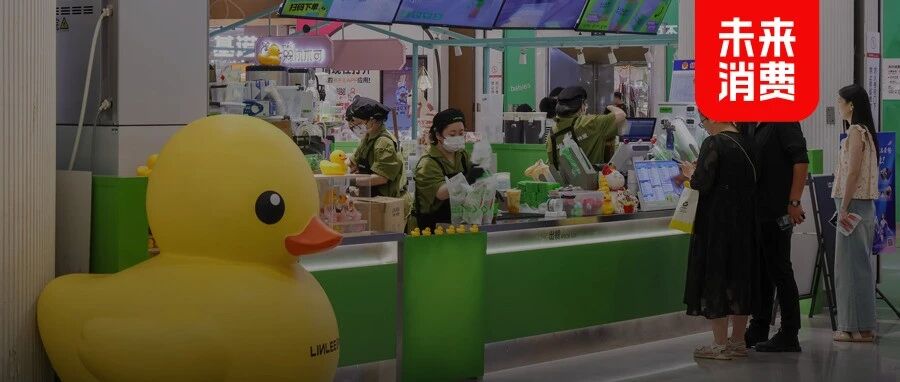
Group 1 - The core point of the article is that the lemon tea brand "LINLEE" has completed a multi-million A round financing, with a valuation close to 1 billion, aimed at brand building, supply chain upgrades, and organizational improvements [1] - "LINLEE" has over 1900 stores across 31 provinces and 200+ cities, with a projected GMV of 2.7 billion by 2025 [2] - The brand's journey began in 2012, facing challenges such as a previous failed tea shop and competition from counterfeit brands, leading to a rebranding in 2021 [3] Group 2 - The focus remains on the domestic market, with the current chain rate for lemon tea at around 10%, indicating significant growth potential compared to the 30%-40% chain rate of the milk tea category [4] - The company has invested heavily in supply chain improvements, including partnerships with lemon orchards covering 30,000 acres and a self-built sorting center with a daily capacity of 40 tons [4] - The brand has established a cold chain distribution network covering over 80 cities, ensuring delivery times of less than 24 hours to core cities [4] Group 3 - "LINLEE" has developed a strong product matrix, with key products achieving annual sales of 20 million cups for signature lemon tea, and 12 million cups each for two other core products [5] - The brand is adapting to consumer trends towards healthier drinks and enhancing marketing efforts for dining and social occasions [5] - The introduction of the "little yellow duck" as a promotional item has significantly contributed to brand growth, with over 110 million units distributed in 2025 [6] Group 4 - The emotional connection with consumers is emphasized, with the "little yellow duck" serving as a symbol of the brand's warmth and relatability [7] - The company is expanding its IP development with a new character "LINLEE Duck," aiming to create a comprehensive "Duck Universe" [7][8] - The strategy includes integrating emotional consumption into the brand's identity, differentiating "LINLEE" in the competitive landscape [8]
一年卖出27亿,柠檬茶品牌「林里LINLEE」获数千万融资|独家
36氪未来消费· 2026-01-15 02:17
Core Viewpoint - The lemon tea brand "LINLEE" has successfully completed a multi-million A round financing, with a valuation nearing 1 billion, primarily aimed at brand building, supply chain upgrades, and organizational improvements [2]. Group 1: Financing and Growth - "LINLEE" has previously secured multi-million angel round investment from 37 Interactive Entertainment in 2021, marking this as its second financing round [3]. - The brand has expanded its store count to over 1900, covering 31 provinces and more than 200 cities, with a projected GMV of 2.7 billion by 2025 [4]. Group 2: Market Position and Strategy - The lemon tea market has seen a resurgence in financing, with competitors focusing on IPOs and international expansion, while "LINLEE" remains focused on the domestic market [9][10]. - The current chain rate for lemon tea is only 10%, compared to 30%-40% for milk tea, indicating significant growth potential before entering a phase of stock competition [10]. Group 3: Supply Chain and Product Development - "LINLEE" has established a robust supply chain, collaborating with a 30,000-acre lemon orchard yielding approximately 20,000 tons annually, and has built a large lemon sorting center with a daily capacity of 40 tons [12]. - The brand's cold chain distribution network covers over 80 cities, ensuring delivery times of less than 24 hours to core cities, which has helped stabilize costs during price fluctuations [13]. Group 4: Product Offerings and Consumer Engagement - "LINLEE" has developed a strong product matrix, with key offerings like hand-crafted lemon tea achieving annual sales of 20 million cups for its signature product [13]. - The brand has successfully tapped into emotional consumption through its mascot, the "little yellow duck," which has become a significant driver of growth, with over 110 million units distributed in 2025 [14]. Group 5: Brand Identity and Future Plans - "LINLEE" is enhancing its brand identity by integrating IP elements, launching a new character "LINLEE Duck" with a dedicated social media presence, aiming to create a comprehensive "duck universe" [17][18]. - The company is focused on differentiating itself in the emotional consumption space by combining tea drinks with IP development [18].

去年服务价格同比上涨0.7%,“悦己经济”引领武汉消费新风尚
Chang Jiang Ri Bao· 2026-01-15 00:40
Core Insights - The consumption market in Wuhan is witnessing a new trend where "emotional consumption" is rising despite stable or declining prices in essential goods [1][8] - The service prices in Wuhan increased by 0.7% in 2025, with significant rises in beauty services (9.1%) and pet services (4.2%), indicating a shift towards "self-care" spending [1][9] Consumption Trends - Emotional consumption is characterized by a diverse range of services available throughout the day, catering to various age groups and emotional needs, such as early morning breakfast spots and 24-hour pet hospitals [4] - The CPI data shows that while overall prices increased modestly, specific sectors like education, culture, and entertainment saw significant price hikes, with ticket prices for attractions rising by 7.3% [8] Price Changes - The price changes from 2024 to 2025 in various categories indicate a mixed trend, with food and beverages expected to decrease by 0.5%, while other services like "other goods and services" are projected to increase by 9.6% [5] - Traditional consumer goods prices remain stable, with fresh vegetable prices down by 3.3% and pork prices down by 8.5%, allowing consumers to allocate more budget towards emotional and luxury spending [8] Market Dynamics - The rise in emotional consumption aligns with the upgrade of industrial products, as consumers are increasingly interested in health-oriented and technologically advanced products [8] - The trend reflects a broader shift among younger consumers who prioritize spending on personal well-being and experiences, indicating a new lifestyle and consumption pattern in Wuhan [9]

年轻人为何爱上“哭哭马”
Xin Lang Cai Jing· 2026-01-14 18:39
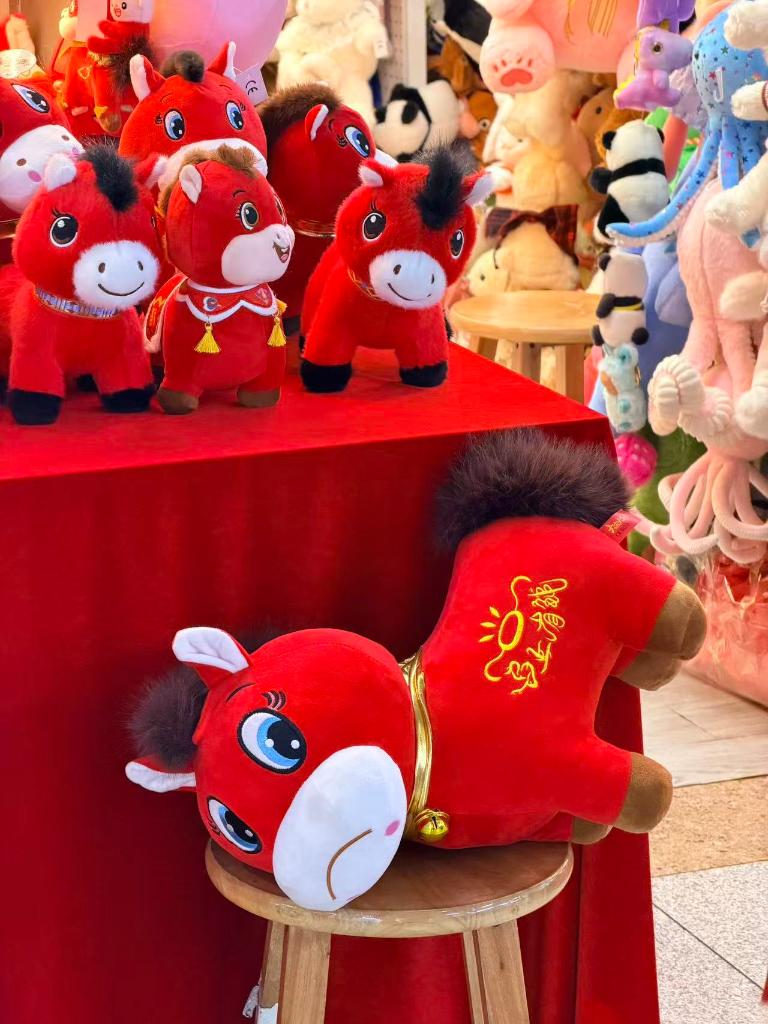
Core Insights - A production error led to the creation of the "Crying Horse" plush toy, which unexpectedly became a viral sensation, resonating emotionally with consumers [2][3] - The "Crying Horse" symbolizes a blend of traditional cultural values and modern emotional expression, appealing to consumers' desire for relatable and imperfect products [3][4] Group 1: Product and Market Response - The "Crying Horse" emerged from a manufacturing mistake where the toy's mouth was sewn incorrectly, resulting in a sad expression that consumers found endearing [2] - The toy's popularity has led to increased demand for both the "Crying Horse" and its counterpart, the "Laughing Horse," with many customers purchasing them as a pair [3] Group 2: Emotional Value and Consumer Behavior - The rise of the "Crying Horse" reflects a growing trend in consumer behavior where emotional value and relatability in products are prioritized over perfection [4] - Consumers are willing to pay for products that provide emotional resonance, indicating a shift towards emotional consumption in a fast-paced lifestyle [4][5] Group 3: Production and Business Adaptation - The response time for production adjustments was remarkably quick, with the manufacturer expanding from two production lines to over ten within 48 hours to meet the surge in orders [6] - Daily production capacity reached 15,000 units, with international orders coming from countries like Russia and South Africa, showcasing the global appeal of the emotional connection offered by the toys [6]

生活观察|商品快反!“哭哭马”火了
Xin Hua Wang· 2026-01-14 13:35
Core Insights - A production error led to the unexpected popularity of a plush toy known as "crying horse," which resonated emotionally with consumers, transforming a defect into a symbol of emotional expression and connection [1][2][3] Group 1: Emotional Value and Consumer Behavior - The "crying horse" embodies a blend of cuteness and emotional resonance, appealing to consumers' desire for relatable and imperfect products in a highly homogeneous market [2][3] - Consumers are increasingly willing to pay for products that provide emotional value, reflecting a shift towards emotional consumption in fast-paced lifestyles [2][3] - The toy serves as a safe emotional outlet, allowing individuals to project their feelings of fatigue and frustration onto it, thus facilitating emotional release [3] Group 2: Manufacturing and Market Response - The rapid response of manufacturers in Yiwu, Zhejiang, allowed for the expansion of production lines from two to over ten within 48 hours, achieving a daily output of 15,000 units [4][5] - The ability to quickly identify market opportunities and adapt production accordingly is a hallmark of the Yiwu small commodity market, supported by a robust industrial chain and efficient business environment [4][5] - The success of both "crying horse" and its counterpart "laughing horse" has led to international orders from countries like Russia and South Africa, showcasing the global reach of this emotional product [5]
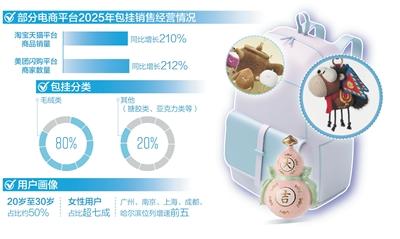
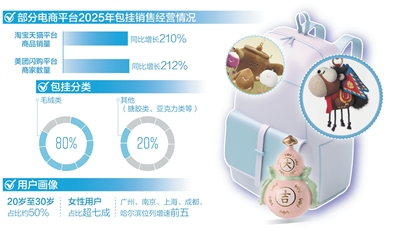
玩具新潮催生“包挂经济”(看中国好物七十二变)
Ren Min Ri Bao· 2026-01-14 07:00
Core Viewpoint - The rise of "bag-hanging economy" reflects a shift in consumer preferences towards portable, emotionally resonant products, particularly among younger demographics, emphasizing emotional value over mere utility [2][3][4]. Group 1: Changing Consumer Demand - Bag-hanging products serve as "emotional companions" and social symbols, allowing consumers to express their emotions and connect with like-minded individuals [3][4]. - The trend towards smaller, more affordable bag-hanging items aligns with the emotional consumption trend, where young consumers prioritize products that provide joy and a sense of belonging [3][4]. - Consumers are increasingly treating bag-hanging toys as personal items, often customizing them to reflect their moods and styles, thus enhancing their emotional connection [3][4]. Group 2: Industry Transformation - The bag-hanging economy is supported by a robust supply chain in Guangdong, where over 4,000 toy manufacturers and nearly 1,500 supporting companies create a complete industry chain from design to sales [5][6]. - The shift from mass production to flexible manufacturing allows for rapid design iterations and small-batch production, catering to the fast-changing market demands [6][7]. - Advanced manufacturing technologies, such as 3D printing, enable low-cost, small-scale production, making it feasible to produce unique items without significant upfront investment [6][7]. Group 3: Global Expansion - Chinese bag-hanging products are gaining international popularity, with brands like Labubu and collaborations with local cultural elements resonating with global consumers [8][10]. - The export of Chinese cultural products is seen as a new growth area, with significant sales increases reported in regions like Southeast Asia and the Americas [10]. - The narrative of Chinese creativity and cultural confidence is being reinforced through the global success of these products, showcasing a blend of local culture and international appeal [11].
商品快反!“哭哭马”火了
Xin Hua She· 2026-01-14 06:57
Core Insights - A production error led to the unexpected popularity of a plush toy known as "crying horse," which resonated emotionally with consumers, transforming a defect into a symbol of emotional expression and connection [1][2][3] Group 1: Product and Market Response - The "crying horse" toy, originally a flawed product, gained popularity due to its cute appearance and the emotional value consumers attached to it, reflecting a shift towards emotional consumption in a saturated market [2][3] - The rapid response from manufacturers in Yiwu, Zhejiang, allowed for the expansion of production lines from two to over ten within 48 hours, achieving a daily output of 15,000 units [4] Group 2: Emotional Value and Consumer Behavior - Consumers are increasingly drawn to products that offer emotional resonance, with the "crying horse" serving as a vessel for expressing feelings of fatigue and frustration, fulfilling a psychological need for self-soothing [3] - The phenomenon illustrates a broader trend in consumer behavior where imperfections and unexpected outcomes can create unique emotional connections, leading to increased demand [2][3] Group 3: Global Market Expansion - The "crying horse" and its counterpart "laughing horse" have attracted international orders from countries like Russia and South Africa, indicating the global appeal of this emotional healing product [5]
机构称2026年情绪消费高景气度或将延续,港股通消费ETF(513230)现小幅微涨
Mei Ri Jing Ji Xin Wen· 2026-01-14 06:28
1月14日,恒指午后转跌,恒生科技指数现跌0.19%。港股通消费ETF(513230)午盘震荡,现小幅微 涨。持仓股中,康耐特光学、海底捞、农夫山泉、老铺黄金、古茗、布鲁可等涨幅靠前;下跌方面,高 鑫零售、同程旅行、名创优品等跌幅居前。 华西证券认为,2026年情绪消费高景气度延续。Z世代消费群体,商品消费逐步过渡到商品+情绪消费 并重需求,消费者买单意愿强,情绪消费有望迎来持续高景气发展阶段;服务型消费成为重要的促内需 抓手。政策端持续强调服务消费潜力,包括养老、育儿、旅游、离岛免税等,25年政策端正持续发力, 目前效果正逐步显现(例如离岛免税迎来强势增长),26年迎来结构性增长亮点;AI应用商业化加速 发展Meta近期以数十亿美元收购中国AI智能体公司Manus,标志着AI应用端26年或有望加速,AI+消费 服务业发展有望迎来新一轮发展高潮;品质商超再创佳绩,超市调改或进入收获期。山姆、胖东来25年 再创零售额新高,持续高增长,线下零售商场调改有望进入收获期。 港股消费ETF(513230)跟踪中证港股通消费主题指数,一键打包港股新消费龙头,成分股近乎囊括港 股消费的各个领域,包括泡泡玛特、百胜中国、安踏 ...
生活观察丨商品快反!“哭哭马”火了
Xin Hua Wang· 2026-01-14 05:45
Core Viewpoint - The unexpected popularity of the "Crying Horse" plush toy, resulting from a production error, highlights the growing importance of emotional value in consumer products and the rapid response capabilities of the manufacturing industry in Yiwu, China [1][4][6]. Group 1: Product and Market Dynamics - The "Crying Horse" emerged from a production mistake where the toy's mouth was sewn incorrectly, leading to a "sad" expression that resonated with consumers [3][4]. - This product has become a symbol of emotional expression, with consumers creating puns and phrases around it, indicating a shift towards valuing imperfections in products [3][4][6]. - The demand for both the "Crying Horse" and its counterpart, the "Laughing Horse," has surged, with many customers purchasing them as a pair, reflecting a desire for a balance of emotions in their purchases [4][6]. Group 2: Emotional Value and Consumer Behavior - The rise of the "Crying Horse" illustrates a trend where consumers are increasingly drawn to products that offer emotional resonance and a sense of connection, especially in a fast-paced lifestyle [6][7]. - The toy serves as a "safe emotional container," allowing individuals to project their feelings of fatigue and frustration, thus fulfilling a psychological need for emotional release [6][7]. - The phenomenon indicates a broader shift in consumer behavior towards valuing emotional experiences over mere product functionality [6][7]. Group 3: Manufacturing and Supply Chain Response - Yiwu's manufacturing sector demonstrated remarkable agility, expanding production lines from two to over ten within 48 hours to meet the surge in demand for the "Crying Horse," achieving a daily output of 15,000 units [9]. - This rapid response capability is supported by a well-established industrial chain and efficient business environment, showcasing the evolution of Chinese manufacturing from simple outsourcing to flexible production that can quickly adapt to market demands [9]. - The success of the "Crying Horse" has led to international orders from countries like Russia and South Africa, indicating the global appeal of this emotional product [9].
看中国好物七十二变丨玩具新潮催生“包挂经济”
Ren Min Ri Bao· 2026-01-14 04:58
Core Insights - The article discusses the emerging "bag-hanging economy," characterized by the popularity of small, portable accessories that serve as emotional expressions and social symbols among young consumers [4][5][6][8]. Group 1: Consumer Trends - Bag-hanging products are increasingly favored for their small size, low cost, and strong emotional value, catering to the psychological needs of young consumers who prioritize emotional satisfaction over mere utility [6][7][12]. - These accessories serve as "visual emotional expressions," helping consumers identify like-minded individuals and form new social circles [8][9]. - The trend reflects a shift in consumer behavior, where items are not just toys but also personal statements and reminders of experiences, often linked to local culture and personal memories [9][10]. Group 2: Industry Dynamics - Dongguan, known as the "Toy Capital of China," has become a manufacturing hub for bag-hanging products, housing over 4,000 toy manufacturers and 1,500 supporting companies, creating a complete industry chain from design to sales [10][11]. - The industry has shifted from mass production to flexible manufacturing, allowing for rapid design iterations and small batch production, which meets the fast-changing market demands [11][12]. - The integration of smart manufacturing and digital workshops has enabled lower production costs and quicker turnaround times, facilitating the production of unique items even in small quantities [11][12]. Group 3: Global Expansion - Chinese bag-hanging products are gaining international traction, with successful examples like the "Labubu" character and collaborations with popular media, enhancing their appeal in overseas markets [14][15]. - The rise of Chinese cultural products in global markets is supported by a growing acceptance of Chinese culture and aesthetics, with brands adapting their offerings to resonate with local consumers [15][16]. - The Chinese toy industry is leveraging its strong supply chain to enhance its global presence, with significant growth in regions like Southeast Asia, Europe, and the Americas projected for 2025 [15][16].