
智能网联新能源汽车

Search documents
重庆,收获一个新产业链
3 6 Ke· 2025-11-06 02:20
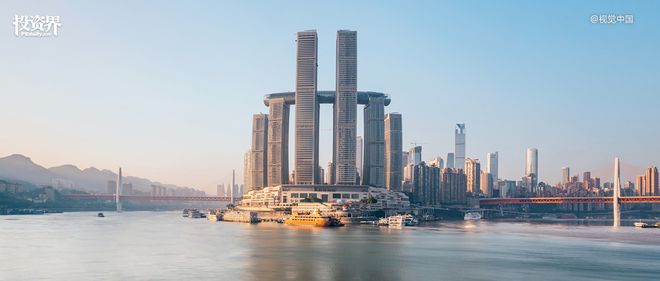
Core Insights - The article highlights the successful IPO of Seres, a luxury electric vehicle company based in Chongqing, which has become the first luxury EV company in China to be listed in both A-share and H-share markets, achieving a market capitalization exceeding HKD 220 billion at opening [1] - Seres raised a net amount of HKD 14.016 billion, marking the largest IPO for a Chinese car company to date and the largest global car IPO in Hong Kong since 2025 [1] - The rise of Seres is attributed to its partnership with Huawei and support from Chongqing state-owned assets, showcasing a successful model of urban industrial investment [1] Group 1: Seres' Rise - Seres transitioned from a traditional car manufacturer, previously known as Xiaokang Co., which focused on micro-vans, to a prominent player in the electric vehicle market after partnering with Huawei in 2021 [2][3] - The collaboration with Huawei allowed Seres to leverage smart automotive solutions, leading to the launch of the Aito series, which significantly boosted its market value [3] - In 2024, Seres achieved sales of 497,000 units, revenue of CNY 145.176 billion, and a net profit of CNY 5.946 billion, becoming the fourth global EV company to achieve profitability for the year [3] Group 2: Support from Chongqing State-Owned Assets - Chongqing's state-owned investment platform, Yufu Holdings, played a crucial role in Seres' growth by establishing a CNY 200 billion industrial investment fund and investing over CNY 3.3 billion to develop a "super factory" for Seres [4][5] - The "super factory" became the core production base for the Aito M9 model, which is expected to deliver 150,000 units in 2024, significantly contributing to Seres' revenue growth [4] - Yufu Holdings continued to support Seres by becoming a major shareholder after Seres acquired the factory for CNY 8.164 billion, creating a positive cycle of state capital investment [4][5] Group 3: Impact on Chongqing's Economy - The development of the electric vehicle industry has led to the establishment of a comprehensive supply chain in Chongqing, with over 100 local parts manufacturers entering Huawei's supply chain [6] - As of October 2025, the Chongqing industrial investment fund has invested approximately CNY 21.4 billion in various projects, including Seres, contributing to the formation of a closed-loop ecosystem in smart connected EVs [6] - The growth of the EV industry has positioned Chongqing as the fourth largest economy in China with a GDP of CNY 3.22 trillion in 2024, and it has become a leader in R&D investment in the central and western regions [7]
刚刚,今年最大造车IPO敲钟
Xin Lang Cai Jing· 2025-11-05 01:58
Core Viewpoint - The successful IPO of Seres Group on the Hong Kong Stock Exchange marks a significant milestone as it becomes the first luxury electric vehicle company to be listed in both A and H shares, achieving a market capitalization exceeding HKD 220 billion [3][4]. Group 1: IPO and Investment Highlights - Seres Group's IPO attracted a record 22 cornerstone investors, with Chongqing Industrial Investment Fund committing HKD 2.176 billion, setting a new benchmark for cornerstone investments in the Hong Kong IPO market [3][6]. - The IPO was oversubscribed by over 130 times in the retail segment, indicating strong investor confidence in Seres' future prospects [5][6]. - The cornerstone investors included a mix of local and international funds, showcasing a broad interest in Seres' growth potential [6][7]. Group 2: Strategic Partnerships and Growth - The partnership with Huawei in 2021 was pivotal for Seres, transitioning from a traditional car manufacturer to a key player in the electric vehicle sector [4][5]. - Chongqing Industrial Investment Fund played a crucial role in Seres' development by investing approximately HKD 3.3 billion to establish a "super factory," enabling Seres to enhance its production capabilities without significant capital expenditure [5][9]. - The "super factory" has allowed Seres to produce the successful model, the Wanjie M9, with a projected delivery of 150,000 units in 2024, contributing to an expected revenue of over CNY 145 billion [5][9]. Group 3: Regional Economic Impact - The establishment of the Chongqing Industrial Investment Fund, with a total scale of CNY 200 billion, has been instrumental in supporting local industries and fostering a robust manufacturing ecosystem [8][10]. - The fund has invested in various projects, including Seres, and has significantly contributed to the development of the smart connected vehicle and electronic information manufacturing sectors in Chongqing [8][9]. - By the end of October 2025, the fund had invested approximately CNY 214 billion, achieving a leverage effect of over seven times through strategic investments in key industries [8][10]. Group 4: Future Outlook and Industry Development - Chongqing aims to establish itself as a major advanced manufacturing center, focusing on smart connected vehicles and integrated circuits, as part of its "33618" modern manufacturing cluster initiative [11][12]. - The city has seen a substantial increase in R&D investment, exceeding CNY 80 billion, and has doubled the number of high-tech enterprises since 2020, indicating a strong commitment to innovation and industrial upgrading [12][13]. - The successful IPO of Seres and the growth of the Chongqing Industrial Investment Fund exemplify a model for regional economic development and industrial transformation in China [9][12].

广汽董事长冯兴亚担任十五运会火炬手
Xin Hua Wang· 2025-11-04 02:23
Core Viewpoint - The 15th National Games torch relay was held simultaneously in Hong Kong, Macau, Guangzhou, and Shenzhen, showcasing a collaborative effort to promote the Greater Bay Area and highlight the development of the automotive industry in China [1][3]. Group 1: Event Overview - The torch relay featured 50 torchbearers in the Hong Kong region, utilizing various transportation methods including running, ferries, and cars, while passing through iconic landmarks [3]. - GAC Group's Chairman and General Manager, Feng Xingya, served as the 8th torchbearer, emphasizing the significance of the event in promoting regional integration and the automotive industry's growth over the past 15 years [3][5]. Group 2: GAC Group's Involvement - As the sole official automotive partner for the National Games and the Special Olympics, GAC Group provided over 700 service vehicles across multiple competition zones, including electric, hybrid, and fuel-powered options [5]. - GAC Group ensured comprehensive service support during the torch relay, with the GAC Trumpchi E9 PHEV serving as the command vehicle to guarantee precise baton exchanges [5]. - The company established the GAC National Games Intelligent Support Center, operating 24/7 to ensure the safe and efficient operation of event vehicles, showcasing China's manufacturing excellence [5].


工信部推动大模型与智能网联新能源汽车深度融合,产业进入新发展阶段,新能车ETF(515700)震荡蓄势
Xin Lang Cai Jing· 2025-11-04 02:11
Group 1 - The Ministry of Industry and Information Technology emphasizes the implementation of "Artificial Intelligence + Manufacturing" to accelerate the innovation of smart products and equipment [1] - The development of intelligent connected new energy vehicles is expected to drive the transition from electrification to intelligence as a new growth momentum in the new energy vehicle industry chain [1] - The New Energy Vehicle ETF closely tracks the CSI New Energy Vehicle Industry Index, with a high lithium battery content, and the weight distribution of component stocks is 51.4% for batteries, 14.4% for energy metals, 8.8% for complete vehicles, and 7.6% for automation equipment [1] Group 2 - As of October 31, 2025, the top ten weighted stocks in the CSI New Energy Vehicle Industry Index account for 53.56% of the index, including companies like CATL, BYD, and Ganfeng Lithium [2] - The New Energy Vehicle ETF has several off-market connections, including Ping An CSI New Energy Vehicle ETF Initiated Connection A, C, and E [2]
以旧换新补贴申请量破1000万份,小鹏超级增程官宣
CMS· 2025-10-26 11:17
Investment Rating - The report maintains a "Recommended" rating for the automotive industry, indicating a positive outlook for the sector's fundamentals and expectations for the industry index to outperform the benchmark index [32]. Core Insights - The automotive industry experienced an overall increase of 3.0% from October 19 to October 25, 2025, with significant growth in various segments, particularly in automotive parts and services [2][11]. - The "Energy-saving and New Energy Vehicle Technology Roadmap 3.0" was released, outlining six major goals for the automotive industry by 2040, with 2025 marking a critical starting point for China's automotive industry to become a global leader [24][25]. - The volume of applications for the vehicle replacement subsidy program exceeded 10 million, with over 340 million applications for scrapping and more than 660 million for replacement, significantly stimulating domestic demand and promoting green transformation in transportation [26]. Market Performance Overview - The automotive sector's secondary segments saw notable increases, with automotive parts and services rising by 4.0% and 3.9%, respectively, while commercial vehicles also showed a 3.0% increase [11]. - Individual stocks within the automotive sector mostly rose, with notable gainers including Biao Bang Co. (+23.2%), Ao Lian Electronics (+18.3%), and Qingdao Double Star (+16.6%) [15]. Industry Dynamics - Key developments include the official announcement of the Xiaopeng X9 super range extender targeting the global market, and the successful delivery of over 40,000 units of the Lynk & Co 900 model within five months of its launch [24][26]. - Companies like SAIC Group are investing in multiple tech firms to enhance their smart electric vehicle ecosystem, while GAC and Huawei are set to launch a new brand's first model in mid-2026 [28][29]. Investment Recommendations - The report recommends focusing on companies with strong sales performance or potential blockbuster vehicles, such as BYD, Seres, Great Wall Motors, and JAC Motors, while also keeping an eye on key partners like BAIC Blue Valley and Changan Automobile [2][11]. - In the commercial vehicle segment, recommended stocks include Yutong Bus, China National Heavy Duty Truck Group, and Weichai Power, while in the parts sector, companies like Fuyao Glass and Xingyu Automotive are highlighted for their cost and product advantages [2][11].



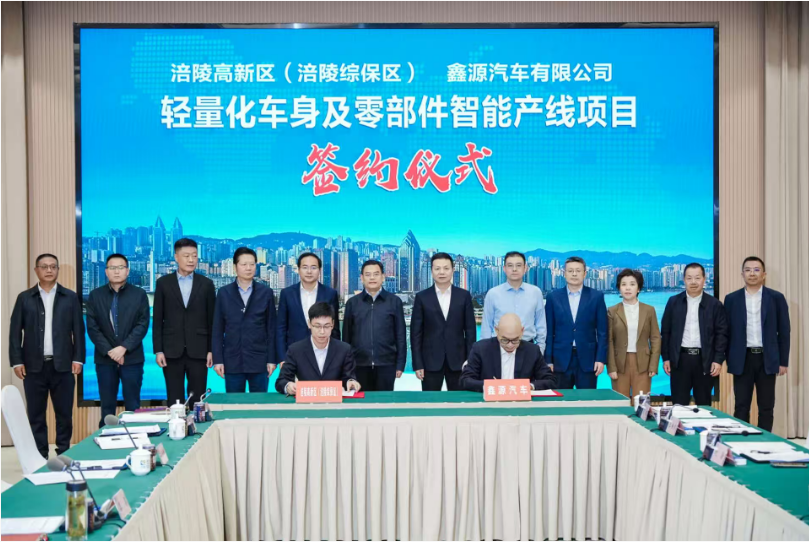
涪陵高新区与鑫源汽车签署战略投资协议
Huan Qiu Wang· 2025-10-24 10:28
Core Insights - The strategic investment agreement between Fuling High-tech Zone and Xinyuan Automobile focuses on deep cooperation in lightweight vehicle bodies and intelligent production lines, marking a significant step in Chongqing's development of the smart connected new energy vehicle industry cluster [1][3]. Group 1: Strategic Cooperation - The partnership aims to enhance the quality and efficiency of the automotive industry, specifically targeting lightweight vehicle bodies and intelligent production lines [4]. - Fuling District will provide a favorable business environment, policy support, and resources, while leveraging Xinyuan Automobile's manufacturing experience to advance lightweight technology research and application [3][6]. Group 2: Industry Development - Chongqing's smart connected new energy vehicle industry is positioned as a leading sector within the "33618" modern manufacturing cluster, driving the transformation towards new energy, intelligence, high-end, and green development [3]. - The collaboration is expected to accelerate the mass production and delivery of Xinyuan Automobile's core products, enhancing the entire value chain from materials to market [6]. Group 3: Market Positioning - Xinyuan Automobile is focusing on niche markets, particularly in the new energy commercial vehicle sector, to avoid homogenized competition and foster regional collaboration [3]. - The strategic cooperation is seen as a model for regional economic "internal circulation," providing valuable insights for other regions and enterprises [3].
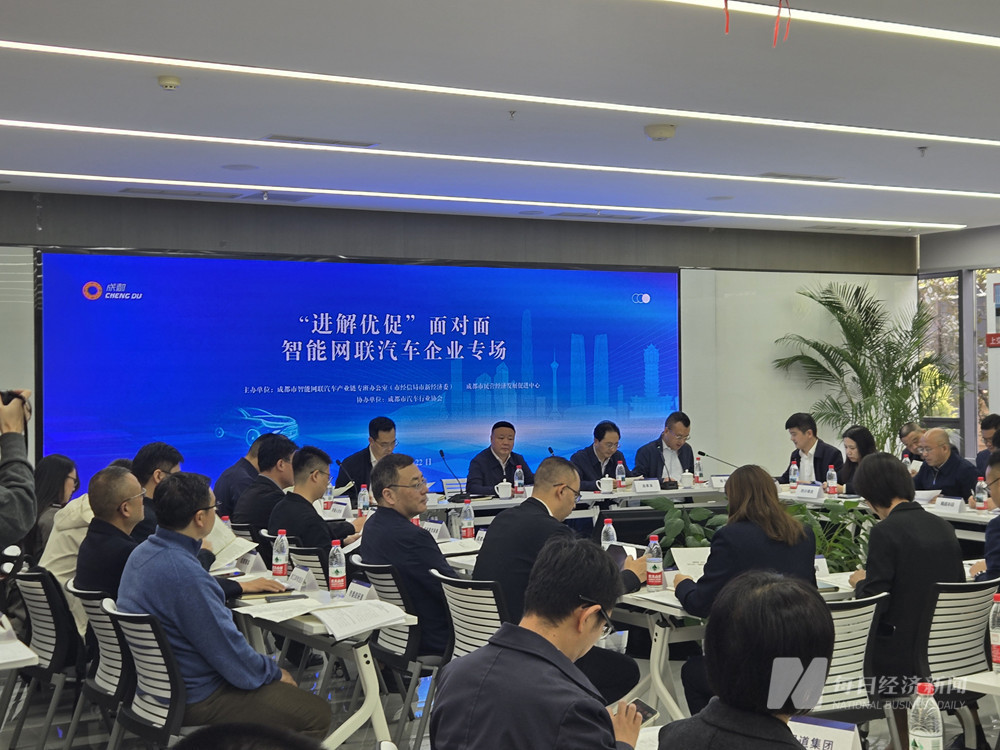
新能源汽车产销齐涨背后,成都汽车产业力争重返“第一梯队”
Mei Ri Jing Ji Xin Wen· 2025-10-23 12:20
Core Insights - Chengdu is focusing on the development of the intelligent connected vehicle industry, aiming to upgrade its automotive sector and address industry challenges through direct communication between government and enterprises [2][9]. Industry Overview - The automotive industry is the second-largest pillar of Chengdu's economy, with a revenue of 118.34 billion yuan and a production of 629,000 vehicles from January to September 2023, showing a year-on-year growth of 19.6% and 26.4% respectively [2][7]. - New energy vehicles (NEVs) have seen a significant increase, with a production of 173,000 units, up 259.2%, and revenue of 20.08 billion yuan, up 80.9% [2][7]. Company Developments - FAW Toyota has reported a production of 112,800 vehicles in the first three quarters of 2023, a 91% increase, with an expected annual production of 145,000 units [3][5]. - Sichuan Lynk & Co has emerged as a key player in NEV manufacturing, producing 178,700 vehicles in the first nine months, a 196% increase, with NEV production reaching 146,900 units, up 626% [7][8]. Policy and Support - Chengdu's government is actively formulating policies to support both NEVs and traditional fuel vehicles, aiming to create a balanced environment for the automotive industry [5][9]. - The city has established a dedicated team to oversee the development of the intelligent connected vehicle industry, aiming for a production target of 1.5 million vehicles and a revenue target of 300 billion yuan by 2030 [9][11]. Market Positioning - Chengdu aims to re-enter the top tier of automotive manufacturing cities in China by 2030, leveraging its existing industrial base and innovative capabilities [9][11]. - The city is recognized as a leading area for NEV adoption, with a total of 1.1818 million NEVs, ranking first among non-restricted purchase cities in China [11].
中汽中心与中国长安汽车签署战略合作协议
Zhong Guo Qi Che Bao Wang· 2025-10-23 10:22
Core Insights - The strategic cooperation agreement between China Automotive Technology and Research Center (CATARC) and Changan Automobile marks a new chapter in collaboration between two major state-owned enterprises [2][9] - Both parties express high expectations for the partnership, aiming to enhance their core functions and competitiveness in the automotive industry [3][9] Group 1: Strategic Goals and Focus Areas - CATARC aims to strengthen its capabilities in government think tank support, industry technical services, and automotive consumption guidance, focusing on intelligent connected new energy vehicles [5] - Changan Automobile is committed to becoming a world-class automotive group with global competitiveness and core technologies, emphasizing innovation in new energy and intelligent connectivity [7] - The cooperation will align with national automotive industry strategies and key tasks from the State-owned Assets Supervision and Administration Commission (SASAC), focusing on high-quality development and technological self-reliance [8] Group 2: Collaborative Framework and Mechanisms - The partnership will integrate both parties' innovative resources to address critical technologies and establish a collaborative system for joint research and development [8] - Plans include forming "innovation alliances," "central enterprise collaborative innovation laboratories," and "technology task forces" to enhance joint innovation and accelerate the application of technological advancements [8] - The collaboration aims to create a replicable model of strategic cooperation that enhances the automotive supply chain and industry capabilities [9]


【快讯】每日快讯(2025年10月23日)
乘联分会· 2025-10-23 08:38
Domestic News - The "Energy-saving and New Energy Vehicle Technology Roadmap 3.0" was officially released, outlining six major goals for China's automotive industry by 2040, including a 60% reduction in carbon emissions from peak levels by 2040 and an 80% penetration rate of new energy vehicles [6] - Qingdao announced adjustments to the 2025 automobile trade-in subsidy rules, which will be effective from September 28, 2025, to December 31, 2025, requiring public lottery for subsidy eligibility [7] - SAIC Group established a new company, SAIC Forward Automotive Technology, with a registered capital of 20 million yuan, focusing on automotive parts R&D and sales [8] - SAIC Volkswagen signed a strategic cooperation memorandum with German robotics company Neura Robotics to develop cognitive robotic systems for automotive manufacturing [9] - BYD plans to invest 8.8 billion yuan in a new battery project in Taizhou, aiming for an annual production capacity of 22 GWh of lithium iron phosphate blade batteries [10] - Hongmeng Zhixing launched a worry-free driving assistance service with coverage up to 5 million yuan, available for customers who place orders by November 3, 2025 [11] - Huawei's Qian Kun Intelligent Driving CAS 4.0 system added a driver incapacitation assistance feature to enhance safety for long-distance drivers [12] - Geely established a new company, Geely Jiyao Tongxing Holdings, with a registered capital of 1 billion yuan, focusing on engineering and technology research [13] Foreign News - General Motors plans to discontinue support for Apple CarPlay and Android Auto by 2028, transitioning to a unified in-car experience with a new computing platform [15] - Tata Technologies announced a strategic partnership with Synopsys to accelerate the transition to software-defined mobility, leveraging each other's expertise [16] - Waymo will begin human-driven testing at Newark Airport, laying the groundwork for future autonomous ride-hailing services [17] - Baidu plans to launch the world's first driverless taxi without a steering wheel in Switzerland by 2027, in collaboration with Swiss Post [18] Commercial Vehicles - Honda China and Dongfeng Group announced a joint initiative to demonstrate hydrogen fuel cell commercial vehicles in Wuhan, with plans to expand to other cities [19] - The Tuyano X6 won the Innovation Gold Award at the 79th Plovdiv International Technical Fair, showcasing China's manufacturing competitiveness [20] - The 2026 model of Great Wall's pickup truck, the King Kong Cannon, was launched with prices ranging from 89,800 to 120,800 yuan [21] - Weichai's new energy Blue Sky VAN was globally launched, featuring efficient power systems and a focus on comfort and environmental sustainability [22][23]





亮点满满!第三十二届中国汽车工程学会年会暨展览会隆重开幕
Zhong Guo Qi Che Bao Wang· 2025-10-23 02:36
Core Insights - The 32nd China Society of Automotive Engineers Annual Conference and Exhibition (SAECCE 2025) commenced in Chongqing, featuring over 120 sessions and the launch of the Automotive Innovation Technology Exhibition (AITX) with eight thematic exhibition areas [2][4]. Industry Growth and Achievements - Since the 14th Five-Year Plan, China's automotive industry has significantly increased production and sales, with both surpassing 31 million units in 2024, marking a historical high and maintaining the world's largest automotive market for 16 consecutive years. New energy vehicle sales rose from under 1.4 million in 2020 to nearly 13 million in 2024, increasing market share from 5.4% to over 40% [4]. - Technological advancements include a 30% reduction in the cost of power batteries, a 30% increase in the average range of new electric passenger vehicles to 500 kilometers, and an increase in the application of L2-level assisted driving features in new cars from approximately 16% to over 60% [4][5]. Ecosystem Development - China has established the world's largest and most resilient automotive industry system, fostering diverse innovation scenarios and a robust infrastructure network. This includes pilot projects in fuel cell vehicles, battery swapping, and intelligent connected vehicles [5]. Regional Development and Strategic Importance - Chongqing is positioned as a key city in China's automotive landscape, benefiting from national strategies such as the Belt and Road Initiative and the Chengdu-Chongqing Economic Circle. The city aims to become a hub for intelligent connected new energy vehicles, emphasizing high-quality manufacturing and technological innovation [7]. Awards and Recognition - The 2025 Automotive Industry Rao Bin Award was presented to Zhu Huarong, Chairman of China Changan Automobile Group, highlighting the progress of Chinese brands from a weak automotive nation to a strong one [11][13]. Collaborative Initiatives - The "Transparent Supply Chain for the Automotive Industry" project was launched to create a unified data standard system and promote a transparent and collaborative supply chain ecosystem among major automotive companies [15]. - The "CSAE Automotive Science and Technology Innovation (Chongqing) Alliance" was established to integrate government, industry, academia, research, finance, and application, aiming to enhance the development of Chongqing's automotive industry [17]. Industry Dialogue and Perspectives - Discussions at the conference emphasized the importance of high-quality development, innovation, and global competitiveness. Key figures highlighted the need for a respectful and orderly industry environment, avoiding excessive competition [19][20]. - The transition from low-end to high-end markets for Chinese brands was noted, with a focus on brand strength and safety in the context of new energy and intelligent transformation [22][26]. Future Trends and Innovations - The automotive industry is shifting towards system innovation, integrating electric and intelligent technologies. The future of vehicles is seen as a convergence point for energy, data, and user experience, driving a revolution in mobility and lifestyle [26][28]. - The conference also showcased the launch of the 2025 annual projects by the China Automotive Research Institute, focusing on advanced topics in intelligent connected vehicles [32].


