绿色化

Search documents
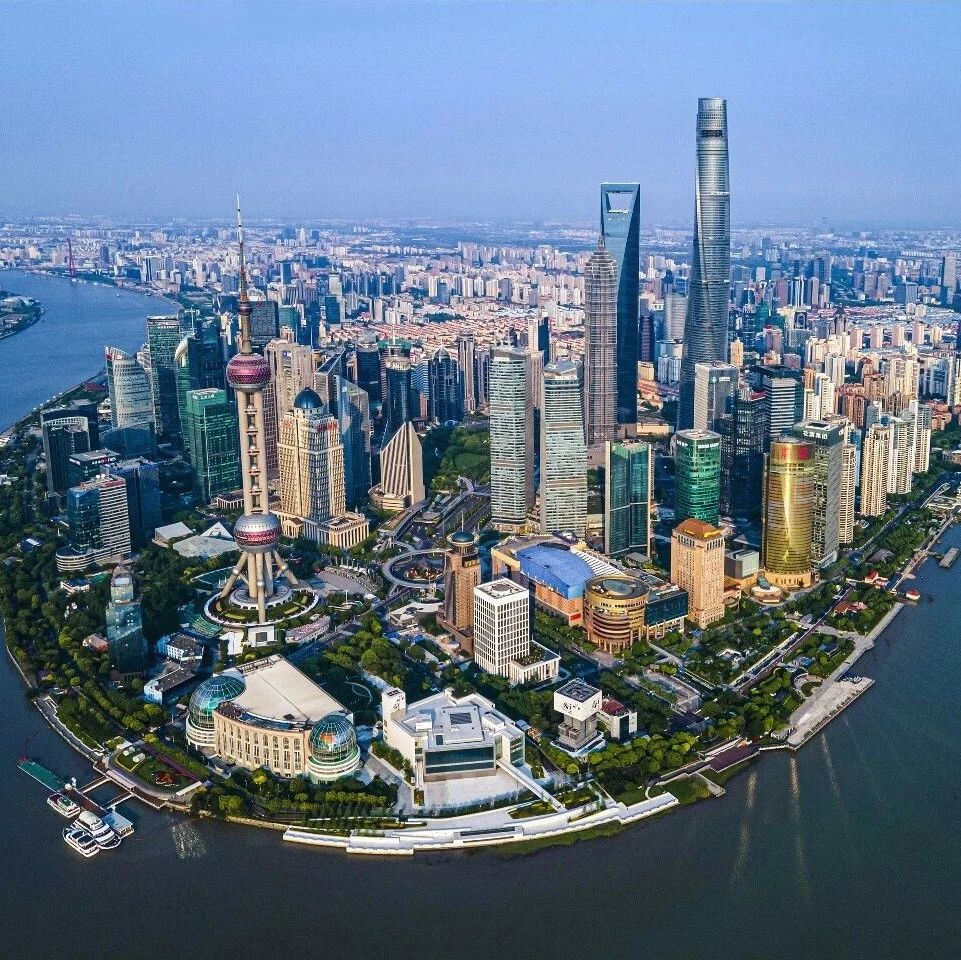
上海“十五五”三大先导产业关键词:全产业链整体突破、全栈创新
第一财经· 2026-01-19 15:18
Core Viewpoint - Shanghai aims to build a world-class high-end industrial cluster with advanced manufacturing as the backbone, as outlined in the "15th Five-Year Plan" [3][4]. Group 1: Modern Industrial System - The "2+3+6+6" modern industrial system includes two transformations of traditional industries (digitalization and greening), three leading industries (integrated circuits, biomedicine, and artificial intelligence), six emerging pillar industries (new generation electronic information, smart connected vehicles, high-end equipment, advanced materials, new energy and green low-carbon, and fashion consumer goods), and six future industries (future manufacturing, future information, future materials, future energy, future space, and future health) [3][4]. Group 2: Traditional Industries - Shanghai's traditional industries show strong support, high efficiency, and high-tech characteristics, with a revenue profit margin of 6.2% in 2024, exceeding the national average by 0.8 percentage points [5]. Group 3: Leading Industries - The plan emphasizes the development of three leading industries: enhancing the integrated circuit industry's capabilities, promoting biomedicine through innovative drug development, and advancing artificial intelligence through comprehensive innovation [6][7]. Group 4: Service Industry Development - The plan focuses on the high-quality development of the service industry, aiming to extend the productive service sector towards specialization and high-value chains, while also enhancing the quality of life services [7]. Group 5: Artificial Intelligence Growth - By 2025, the annual tasks of the "Shanghai Plan" for artificial intelligence are expected to be completed, with the AI industry projected to exceed 550 billion yuan in scale, growing at over 30% [8].

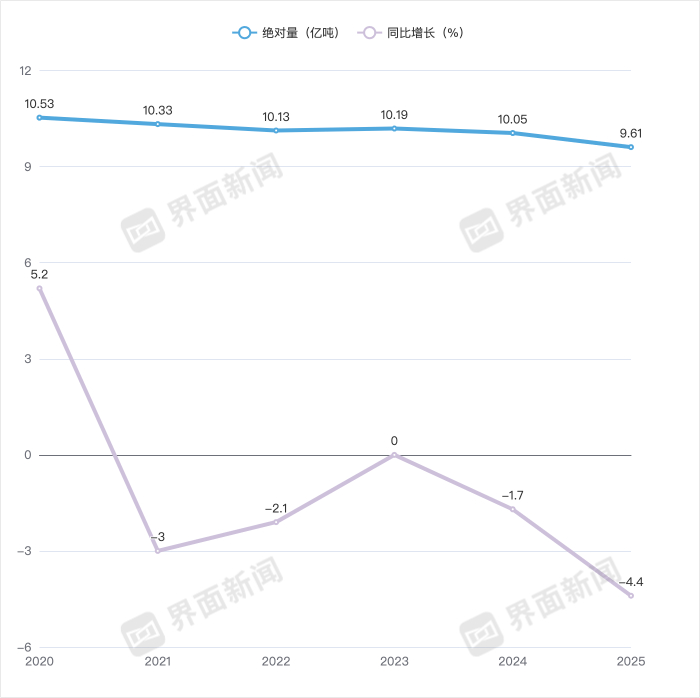
中国粗钢产量自2020年来首次跌破10亿吨
Xin Lang Cai Jing· 2026-01-19 14:06
Core Viewpoint - China's crude steel production has declined for the first time below 1 billion tons since 2020, with a total output of approximately 961 million tons in 2025, representing a year-on-year decrease of 4.4% [1][2]. Group 1: Production Trends - Since 2020, crude steel production has generally been on a downward trend, with a cumulative decrease of 92.19 million tons from 2020 to 2025 [2]. - The production in 2023 was relatively stable compared to previous years, but a further decline is expected in the following years [2][3]. Group 2: Policy Impact - The "dual control" policy on production capacity and output has been a significant factor in the decline of crude steel production, particularly since the introduction of carbon neutrality goals in 2020 [4]. - The National Development and Reform Commission has confirmed that production control will continue through 2025, emphasizing a "reduction development" approach [4]. - The Ministry of Industry and Information Technology has set clear production control requirements, prohibiting new capacity and promoting the reduction of excess capacity [4]. Group 3: Demand Changes - The demand structure for steel is undergoing significant changes, with a notable decline in demand for construction steel due to the downturn in the real estate sector, leading to a 19.37% drop in 2024 and an 18.14% decline in the first half of 2025 [5][6]. - Although the manufacturing sector's demand for steel has increased, it is insufficient to offset the decline in construction steel demand [5][6]. Group 4: Export Dynamics - Exports have become a crucial outlet for the steel industry, with a 6.7% year-on-year increase in steel exports in the first eleven months of 2025, totaling 10.8 million tons [6]. - However, international trade disputes and tariff barriers pose challenges to sustaining high export levels, with new export license management set to begin in 2026 [6].
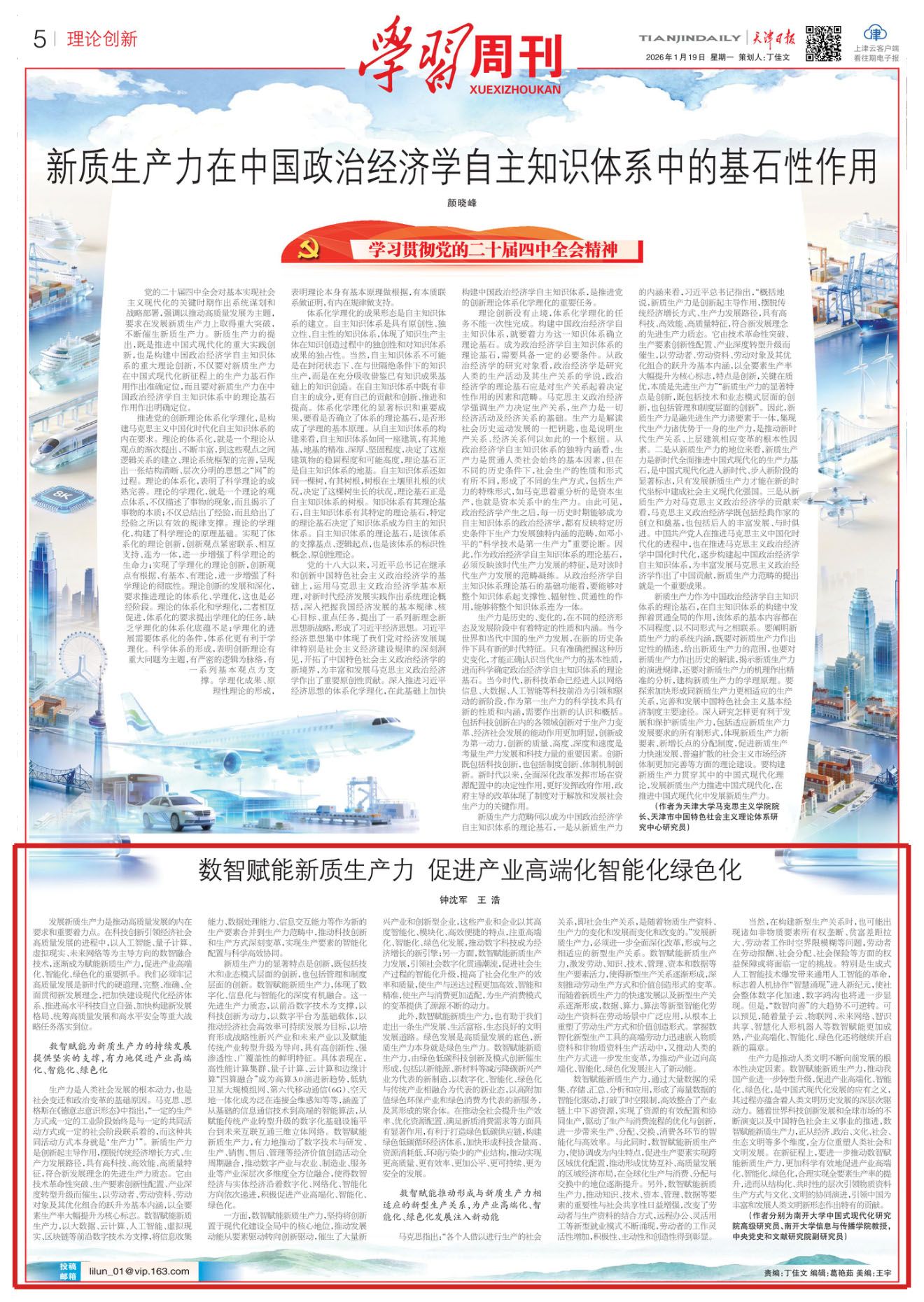
数智赋能新质生产力 促进产业高端化智能化绿色化
Xin Lang Cai Jing· 2026-01-19 14:04
Core Viewpoint - The article emphasizes the importance of establishing an autonomous knowledge system in China's political economy, highlighting the role of new quality productivity as a theoretical foundation for this system [3][4][5]. Group 1: Theoretical Foundation - The autonomous knowledge system is characterized by originality, independence, and self-sufficiency, reflecting the unique contributions and innovations of knowledge producers [2]. - The theoretical foundation of the autonomous knowledge system is likened to a building's foundation or a tree's roots, which determine its stability and growth potential [2][4]. - The construction of this knowledge system requires a deep understanding of the basic principles and essential factors that influence production relations, as emphasized by Marxist political economy [4][5]. Group 2: New Quality Productivity - New quality productivity is defined as a form of productivity that emphasizes innovation, high efficiency, and quality, aligning with the new development philosophy [9][14]. - It is driven by technological breakthroughs, innovative configurations of production factors, and deep industrial transformations, marking a shift from traditional economic growth models [14][15]. - The integration of digital technologies such as artificial intelligence, quantum computing, and big data is crucial for enhancing new quality productivity and promoting high-end, intelligent, and green industrial development [9][10][14]. Group 3: Role of Digital Empowerment - Digital empowerment is identified as a key enabler for the continuous development of new quality productivity, facilitating the transformation of industries towards higher efficiency and sustainability [11][19]. - The article discusses how digital technologies can optimize resource allocation and enhance the efficiency of production and consumption processes, leading to a more intelligent and precise production model [19]. - The emergence of new production relationships, driven by digital empowerment, is expected to reshape labor production methods and value creation forms, fostering a more innovative and flexible workforce [18][20]. Group 4: Green Development - New quality productivity is inherently linked to green production, emphasizing the importance of low-carbon technologies and sustainable practices in driving economic growth [17]. - The article highlights the need for a green, low-carbon supply chain and a circular economy to achieve higher quality, efficiency, and sustainability in development [17][21]. - The integration of green technologies and practices is seen as essential for meeting new consumption demands and enhancing overall production efficiency [17].
上海“十五五”三大先导产业关键词:全产业链整体突破、全栈创新
Di Yi Cai Jing· 2026-01-19 07:19
Core Viewpoint - Shanghai aims to build a world-class high-end industrial cluster by establishing a modern industrial system characterized by "2+3+6+6" during the 14th Five-Year Plan period, focusing on advanced manufacturing as the backbone [1][2]. Group 1: Modern Industrial System - The "2" in the "2+3+6+6" system refers to the digital and green transformation of traditional industries [1]. - The "3" represents the acceleration of three leading industries: integrated circuits, biomedicine, and artificial intelligence [1][2]. - The first "6" indicates the development of six emerging pillar industries: next-generation electronic information, intelligent connected new energy vehicles, high-end equipment, advanced materials, new energy and green low-carbon products, and fashion consumer goods [1]. - The second "6" focuses on six future industry fields: future manufacturing, future information, future materials, future energy, future space, and future health [1]. Group 2: Traditional Industries and Performance - Shanghai's traditional industries exhibit strong support, high efficiency, and high-tech characteristics, with a revenue profit margin of 6.2% in 2024, surpassing the national average by 0.8 percentage points [3]. - Nearly one-third of Shanghai's traditional industries are classified as strategic emerging industries, and they hold a significant share in international markets [3]. - Approximately 70% of Shanghai's traditional industries are technology-intensive, indicating a robust technological foundation [3]. Group 3: Leading Industries and Innovations - The integrated circuit industry aims for an overall breakthrough, focusing on building a secure and controllable local industrial ecosystem [4]. - The artificial intelligence sector is set to expand its innovation chain from application layers to foundational frameworks, core algorithms, and computing chips [4]. - By 2025, the artificial intelligence industry in Shanghai is expected to exceed 550 billion yuan, with a growth rate of over 30% [5].
绿智双驱,链动未来!临清纺织绘就高质量发展新画卷
Zhong Guo Jing Ji Wang· 2026-01-19 03:22
Group 1 - The article highlights the advancements in the textile industry in Linqing City, Shandong, with companies like Sanhe Textile Group and Dehui Textile Company leading the way in smart and green production technologies [1][2] - Sanhe Textile Group has invested 120 million yuan in smart round screen printing technology, increasing its annual dyeing capacity by 120 million meters and reducing energy consumption per product by 8% [1] - The company has maintained a 30% market share in Africa, leveraging over 20 years of experience and continuous technological upgrades to enhance its competitive edge [1] Group 2 - Dehui Textile Company has implemented a comprehensive dust removal system, reducing dust concentration below national standards by 30% and cutting particulate emissions by over 50 tons annually [2] - The company focuses on producing high-end combed yarn, helping downstream clients save 20% on dyeing and finishing water consumption [2] - Both companies are part of a collaborative effort to transform the local textile industry, with Sanhe serving as a "chain master" to drive the upgrade of small and medium enterprises in the region [2] Group 3 - Linqing City encourages textile companies to adopt photovoltaic technology for cost reduction and efficiency improvement, with a total installed capacity of 10.4 megawatts providing 10.9 million kilowatt-hours of green electricity annually [2]
转型升级中迈向行业引领
Zhong Guo Jing Ji Wang· 2026-01-19 03:01
Core Insights - The Chinese injection molding machine industry is experiencing significant transformation driven by "China Intelligent Manufacturing" and global green transition, with a steady increase in market size and optimization of internal structure [1] Group 1: Market Overview - In 2024, the domestic injection molding machine market reached 25.21 billion RMB, a year-on-year increase of 8.2%, with vertical machines holding approximately 38% market share [2] - The market size is expected to stabilize between 27 billion to 30 billion RMB in 2025, with vertical injection molding machine market size projected to reach 9.67 billion RMB [2] - The growth is supported by continuous demand from various sectors, including automotive, home appliances, packaging, consumer electronics, and healthcare, particularly driven by the rapid development of the new energy vehicle industry [2] Group 2: Data Focus - The vertical injection molding machine market is showing strong growth, with total production expected to reach 187,200 units in 2025, a year-on-year increase of 10.71% [4] - Sales are projected at 184,500 units, with a year-on-year growth of 11.03%, indicating a healthy supply-demand balance [4] - China’s production of vertical injection molding machines accounted for 65% of global output in 2024, with an expected increase in this leading position in 2025 [4] Group 3: Technological Upgrades - The market growth is accompanied by significant technological advancements, with the penetration rate of servo energy-saving and all-electric vertical injection molding machines exceeding 42% in 2024 [5] - The market share of IoT-enabled high-speed precision models increased from 12% in 2023 to 24% in 2025, contributing to a 35% increase in overall industry profit margins [5] Group 4: Competitive Landscape - The industry is characterized by a competitive landscape where specialized companies are emerging, with Guangdong Baizan Intelligent Equipment Co., Ltd. being a notable example [6] - Baizan focuses on the vertical injection molding machine sector, investing in R&D to develop all-electric intelligent machines with high precision, achieving a tolerance of 0.01mm [6][7] - In 2025, Baizan is expected to hold approximately 16% market share in the IoT-enabled high-speed precision segment, ranking among the top three in the national market [7] Group 5: Future Outlook - The future of the Chinese injection molding machine industry will revolve around three core trends: deep integration of intelligence, accelerated globalization, and continuous emphasis on green manufacturing [8] - By 2025, the export value of Chinese vertical injection molding machines is projected to reach 1.28 billion USD, a year-on-year increase of 19.6% [8] - The "dual carbon" goals necessitate that manufacturing equipment be highly energy-efficient and capable of processing new eco-friendly materials, making green manufacturing capabilities a core competitive advantage [8]
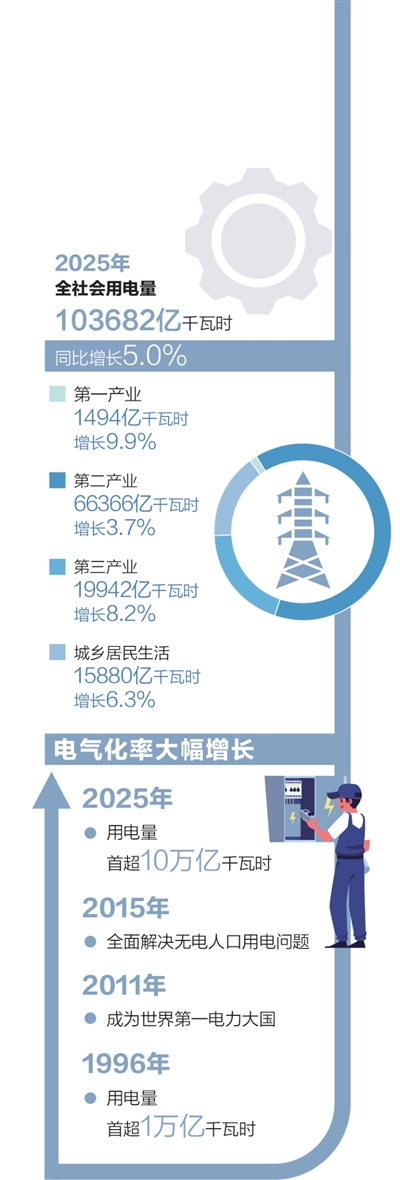
全球首次,2025年我国全社会用电量超10万亿千瓦时——这个“10万亿”,意味着什么(经济新方位)
Ren Min Ri Bao· 2026-01-19 01:33
Core Insights - In 2025, China's total electricity consumption is projected to exceed 10 trillion kilowatt-hours for the first time, marking a significant milestone in global energy consumption [3][4] - The growth in electricity consumption reflects China's status as a manufacturing powerhouse and indicates a substantial improvement in energy security [3][4] Group 1: Electricity Consumption Growth - Total electricity consumption in 2025 is expected to reach 10,368.2 billion kilowatt-hours, a year-on-year increase of 5.0% [3] - The first industry will consume 149.4 billion kilowatt-hours, growing by 9.9% [3] - The second industry will account for 66,366 billion kilowatt-hours, with a growth rate of 3.7% [3] - The third industry will consume 19,942 billion kilowatt-hours, reflecting an 8.2% increase [3] - Urban and rural residents' electricity consumption will reach 15,880 billion kilowatt-hours, growing by 6.3% [3] Group 2: Industrial and Sectoral Changes - The second industry remains the primary electricity consumer, accounting for approximately 64% of total consumption [4] - High-value-added and technology-intensive industries are driving new electricity consumption growth, with semiconductor manufacturing seeing a significant increase [4][5] - The third industry is becoming a crucial driver of electricity consumption, with sectors like data centers and electric vehicle charging services experiencing rapid growth [5][7] Group 3: Electrification and Energy Efficiency - The electrification rate of end-use energy is around 30%, surpassing that of major developed economies [7] - Investments in smart irrigation systems and rural electrification projects are enhancing energy efficiency and supporting agricultural electricity needs [7][8] - The development of electric heating and high-temperature heat pumps in industrial sectors is contributing to energy transition [8] Group 4: Power Supply and Infrastructure - China has the world's largest power supply system, with renewable energy sources like wind and solar surpassing traditional coal power [9][10] - The construction of ultra-high voltage transmission lines is facilitating the transfer of clean energy from resource-rich regions to consumption centers [10] - The national electricity market is evolving, with significant increases in electricity trading volumes, reflecting a more dynamic and integrated energy market [11]
从新鲜入局“驶向”信任扎根
Xin Lang Cai Jing· 2026-01-18 21:30
Core Insights - The Chinese automotive industry is projected to achieve a production and sales volume exceeding 34 million vehicles by 2025, maintaining its position as the world's largest market for 17 consecutive years, with new energy vehicles (NEVs) expected to surpass 16 million units, leading globally for 11 years [1][2] - NEVs are anticipated to account for 50.8% of new car sales in China by 2025, marking a significant shift towards electric vehicles as the dominant force in the market [1] - China's automotive exports are expected to exceed 7 million units, with international markets becoming a new growth driver [1] Industry Development - The success of China's NEVs is attributed to a comprehensive and efficient supply chain, allowing rapid component development and enhancing consumer trust in product delivery and after-sales service [2] - China has established a complete industrial system covering basic materials, components, complete vehicles, and manufacturing equipment, supplying 70% of battery materials and 60% of power batteries globally, creating a competitive advantage [2] - Policy support, including long-term special bonds and targeted loans for technological innovation, has played a crucial role in driving the automotive industry's transformation towards green, intelligent, and high-end development [2] Brand Evolution - Chinese automotive brands have shifted from a low-price competition model to a focus on technological innovation and value enhancement, improving brand perception and quality [3] - The transition from being perceived as "new entrants" to gaining consumer trust reflects the evolution of Chinese manufacturing towards intelligent manufacturing, emphasizing innovation and quality [3] - The industry's advancement signifies a broader economic shift in China, driven by innovation and quality-first principles, positioning it for future growth in intelligent and connected vehicle markets [3]
古越新章 智风和畅——绍兴传统产业以创新突破发展瓶颈
Shang Hai Zheng Quan Bao· 2026-01-18 18:15
Core Viewpoint - Shaoxing is experiencing a transformation in its traditional industries through green and intelligent upgrades, maintaining its historical essence while adapting to modern trends [1] Industry Summary - The textile, pharmaceutical, and chemical industries, which have historically formed the foundation of Shaoxing's economy, are revitalizing through innovation and technology integration [1] - The manufacturing sector in Shaoxing is showing significant growth, with the industrial added value of above-scale enterprises increasing by 9.8% year-on-year from January to November 2025 [1] Company Summary - Xilinmen, starting from small workshops, focuses on health sleep solutions by integrating innovative technology into smart mattresses [1] - Wanfeng Co., known for its substantial R&D investments, is leading the green upgrade in high-end printing and dyeing, beginning with a high-temperature dye [1] - The computer communication and electronic equipment manufacturing industry, representing new growth momentum, achieved a growth rate of 20.1%, while the chemical raw materials and chemical products manufacturing industry also saw a 20% increase [1]
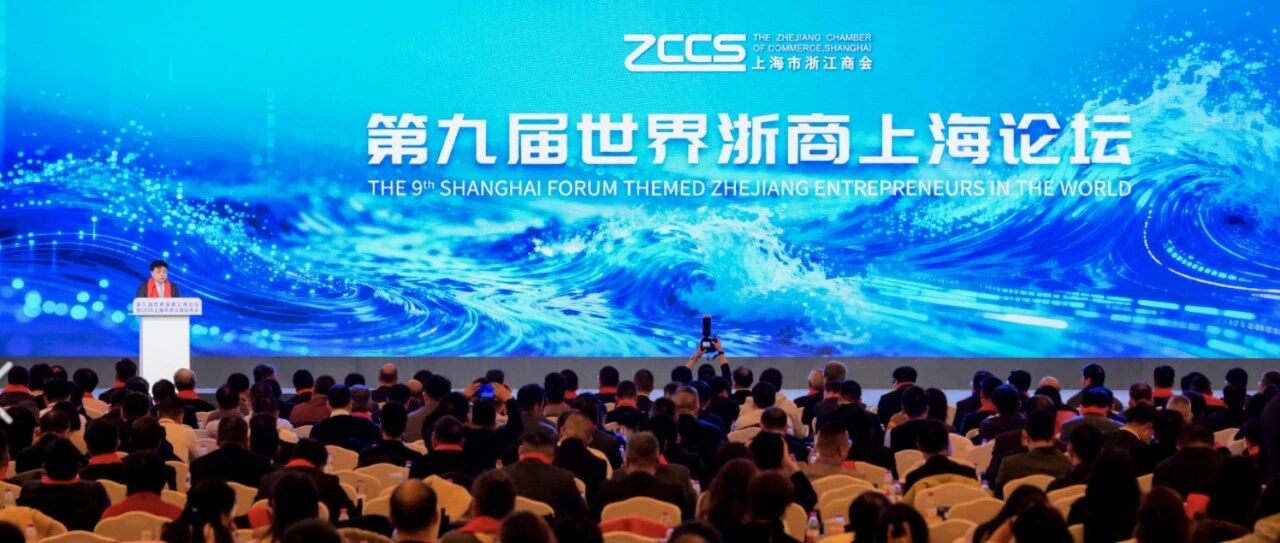
王均金郭广昌南存辉现身浙商年会:今年经济怎么样?民企未来靠什么
第一财经· 2026-01-18 15:51
Core Viewpoint - The article emphasizes the resilience of the Chinese economy amidst challenges, highlighting the importance of innovation and global opportunities for private enterprises in China [3]. Group 1: Economic Resilience and Challenges - The current economic environment is warmer compared to the previous year, with negative factors being gradually digested, showcasing the resilience of the Chinese economy [3]. - The past few decades of rapid economic growth have led to challenges that require reflection on whether companies overestimated their capabilities and competitiveness [5]. Group 2: Innovation and Product Development - The era of relying on a single successful strategy is over; companies must focus on innovation and enhancing product quality to improve competitiveness [6]. - The hospitality sector, exemplified by the Atlantis Hotel in Sanya, has seen improved occupancy rates and pricing, indicating strong consumer demand for high-quality products despite a backdrop of consumption downgrade [6]. Group 3: Importance of Technology and ESG - Emphasis on technological innovation as a new engine for private enterprise development, with a call for investment in foundational research and key technologies [6]. - The significance of ESG (Environmental, Social, and Governance) initiatives and green technology development is highlighted as a global consensus and a substantial market opportunity [6]. Group 4: Globalization and International Opportunities - Despite domestic market challenges, globalization remains a key focus, with companies encouraged to build global capabilities and perspectives [8]. - The example of Fosun's global operations, with overseas revenue reaching 46.67 billion yuan in the first half of 2025, illustrates the potential of Chinese enterprises in the global market [8]. Group 5: Competitive Landscape and Future Directions - Chinese private enterprises, particularly in emerging sectors like AI and biotechnology, are becoming globally competitive, with significant price differentials in international markets [9]. - The new era of globalization involves not just product exports but also the allocation of innovative resources globally and participation in setting international standards [9].