绿色航运

Search documents
我国国际海运量占全球近三分之一
Xin Hua Wang· 2025-08-12 05:42
新华社海口7月11日电(记者王存福、叶昊鸣)我国拥有全球规模最大的海运船队,建成了全球最 大的世界级港口群,国际海运量占全球近三分之一,海洋经济总量持续攀升,为全球经贸持续稳定发展 注入了强劲动力。 航海日活动期间,全国各地举行了丰富多彩的主题活动,进一步弘扬新时代航海精神,传承航海文 化,增强全民的航海意识,为加快建设交通强国、海洋强国创造良好氛围。 交通运输部部长刘伟在启动仪式上表示,下一步,我国将继续打造绿色航运新生态,加快完善绿色 航运政策体系,健全碳排放监测核算标准,推进新型动力技术装备研发,完善绿色能源加注产业链,加 快新能源清洁能源船舶规模化应用,推动国际绿色航运走廊建设,促进全球航运减排。 【纠错】 【责任编辑:刘阳】 这是记者11日从2025年中国航海日主论坛暨航海日活动启动仪式上获得的消息。 2025年7月11日是我国第二十一个航海日,也是"世界海事日"在我国的实施日。今年航海日活动的 主题是"绿色航海 向新图强",主场活动包括论坛、研讨会、科普文化体验等20多项丰富多彩的活动。 主论坛发布了2024年中国航运发展报告,公布了2025年度安全诚信航运公司和船舶名单、2025年航海领 域全国 ...
三峡坝区船舶用上“充电宝”
Ke Ji Ri Bao· 2025-08-12 02:23
Core Insights - The introduction of the "Ship Power Bank" (船电宝) is transforming the operational efficiency of vessels in the Three Gorges Dam area, providing a reliable power source without the need for diesel generators [1][2] - The adoption of this technology is not only enhancing the economic viability for ship owners by significantly reducing operational costs but also contributing positively to environmental sustainability by cutting down emissions [2][3] Group 1: Technology and Implementation - The "Ship Power Bank" is a mobile, large-capacity power supply system that integrates energy storage, charging and discharging, and remote control functions, serving as a supplementary mode for shore power access [1] - Since July, over 10 large cargo ships have installed the "Ship Power Bank," with more than 100 vessels signing up for installation, indicating rapid adoption in the Three Gorges area [1] Group 2: Economic Benefits - Using the "Ship Power Bank" can save more than 50% in costs compared to traditional diesel generators, while also reducing wear and tear on equipment, leading to lower maintenance costs [2] - The improved power supply enhances the quality of life for crew members aboard the vessels [2] Group 3: Environmental Impact - The use of the "Ship Power Bank" significantly reduces exhaust emissions from vessels while docked, aligning with national policies aimed at promoting high-quality development in inland waterway transportation [3] - The initiative is part of a broader commitment to green shipping and the electrification of the Yangtze River, showcasing the transition from traditional energy sources to cleaner alternatives [3]
氢能如何更好赋能传统产业?
Zhong Guo Chan Ye Jing Ji Xin Xi Wang· 2025-08-11 01:13
Core Viewpoint - The Chinese government is focusing on promoting the green and low-carbon development potential of traditional industries, particularly through the application of clean low-carbon hydrogen in sectors such as metallurgy, synthetic ammonia, synthetic methanol, and refining [1][2]. Group 1: Policy and Implementation - The "Implementation Plan" issued by the Ministry of Industry and Information Technology, National Development and Reform Commission, and National Energy Administration aims for significant progress in the application of clean low-carbon hydrogen in industrial sectors by 2027 [1]. - The shift from "demonstration verification" to "industrialization" is crucial for achieving deep decarbonization in high-emission industries [1][2]. Group 2: Industry Impact and Current Progress - Hydrogen utilization in the metallurgy industry is seen as a key technology for the green transformation of the steel sector, with significant strategic importance [2]. - Current projects, such as Baosteel's Zhanjiang project, demonstrate the potential for hydrogen-based metallurgy, achieving over 60% carbon reduction compared to traditional methods [3]. Group 3: Economic Challenges - Economic viability remains a major issue, with the production costs of green hydrogen being significantly higher than traditional methods, which hinders widespread adoption [3][5]. - The need for a clear market demand and economic incentives is emphasized to encourage the transition to hydrogen-based processes [5]. Group 4: Recommendations for Policy Improvement - Experts suggest establishing a unified national standard for green hydrogen and improving incentive policies to facilitate its adoption in traditional industries [6]. - Recommendations include financial support for research and development of hydrogen production technologies and the establishment of a green hydrogen premium compensation mechanism [6][7]. Group 5: Future Directions - The exploration of "flying economy" models and the establishment of hydrogen industry collaborative demonstration zones are proposed to enhance the efficiency of hydrogen production and distribution [7]. - The development of a hydrogen replacement roadmap for the steel industry and the implementation of a "green hydrogen quota system" in the refining sector are also suggested [7].
西部港区完成首次加注 东部盐田港半年业务超去年全年 深圳港LNG加注全域覆盖
Shen Zhen Shang Bao· 2025-08-09 18:33
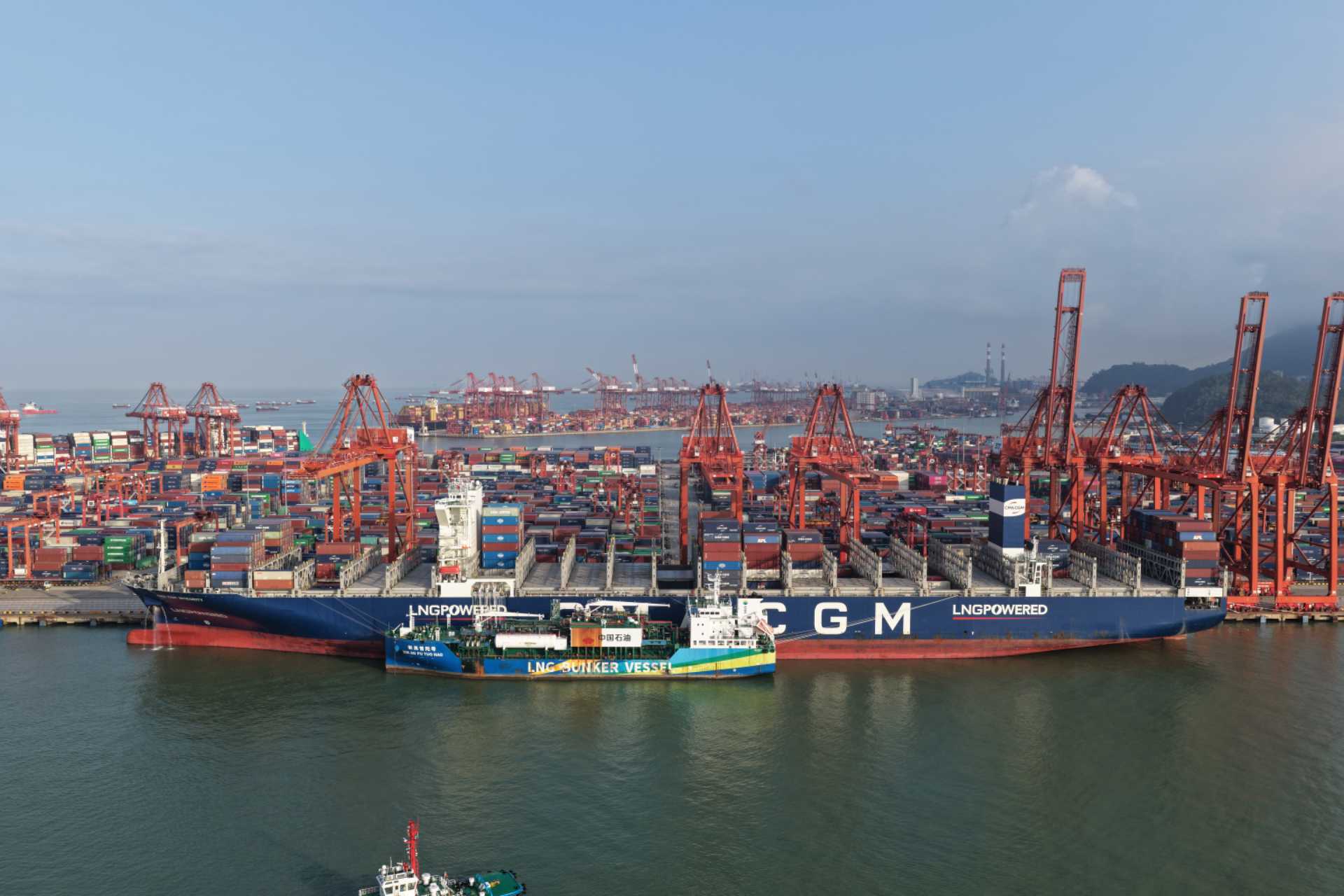
Core Viewpoint - Shenzhen's LNG bunkering operations have expanded from the eastern port area to the western port area, enhancing the port's green shipping service capabilities and marking a significant step in the transition to renewable energy in the shipping industry [1][2]. Group 1: LNG Bunkering Operations - The "Xin Ao Pu Tuo" vessel successfully bunkered approximately 6,700 cubic meters of LNG for the "Da Fei Cheng Shi" container ship, marking the first LNG bunkering at the western port area of Shenzhen [1]. - Shenzhen has become the fourth globally and the second in China to have simultaneous loading and LNG bunkering capabilities for international vessels [2]. - The eastern Yantian port area has seen a rapid increase in LNG bunkering, with a total of 310,200 cubic meters bunkered in the first half of this year, surpassing the total volume for the previous year [2]. Group 2: Industry Trends and Future Plans - The global shipping industry is rapidly transitioning to renewable energy, with LNG-powered vessels accounting for 102 out of 647 new ship orders in the first half of this year, representing 55.5% of the total [1]. - The Shenzhen Municipal Transportation Bureau is planning to enhance LNG emergency anchorage and bunkering capabilities while exploring alternative fuels such as biofuels and green methanol [3]. - Research indicates a potential "combinatorial substitution" trend in ship fuel development, with LNG being the preferred short-term alternative and methanol and ammonia having the most promising long-term applications [3].

建设国际航运中心,深圳港LNG加注全域覆盖
2 1 Shi Ji Jing Ji Bao Dao· 2025-08-09 09:07
Core Insights - The global shipping industry is increasingly focusing on the selection and refueling of ship fuels, with LNG becoming a key factor in the green transition [2][3] - The LNG bunkering market is projected to exceed $8.29 billion in 2024, with a compound annual growth rate of 42.6%, reaching $20.21 billion by 2033 [3] - Shenzhen has successfully expanded its LNG bunkering operations from the eastern port area to the western port area, enhancing its service capabilities [4][5] Industry Developments - On August 9, 2023, the Shenzhen Western Port Area successfully conducted its first LNG bunkering operation, refueling the "Dafei Chengshi" vessel with approximately 6,700 cubic meters of LNG [2][5] - The port has established a comprehensive LNG bunkering service covering both eastern and western regions, improving operational efficiency for LNG vessels [5] - Shenzhen's Yantian Port has seen a significant increase in bonded fuel bunkering, with 434,000 tons of bonded fuel added from January to July 2023, a year-on-year increase of 40.7% [3] Regulatory and Strategic Initiatives - Shenzhen is actively promoting the development of green shipping as part of its goal to become a global marine center, with policies supporting bonded fuel bunkering for international vessels [6][10] - The city has implemented measures to enhance the safety and efficiency of LNG bunkering operations, including collaboration with professional institutions for risk assessment and emergency response [5][10] - The Chinese government is encouraging the development of alternative fuels, with LNG being the preferred short-term option, while methanol and ammonia are seen as having long-term potential [9][10] Competitive Landscape - Other cities in China, such as Shanghai, Ningbo, and Dalian, are also advancing their LNG bunkering capabilities, indicating a nationwide push towards alternative marine fuels [11][12] - Dalian has become the first port globally to offer multiple alternative fuels, including biofuels, green methanol, LNG, and green ammonia, showcasing the competitive landscape in the marine fuel sector [12]


前7月长江干线港口货物吞吐量超23亿吨
Ren Min Ri Bao Hai Wai Ban· 2025-08-08 20:42
Core Insights - The Yangtze River's cargo throughput reached an estimated 2.34 billion tons from January to July, marking a year-on-year increase of 4.8% [1] - The Three Gorges Hub's throughput was 98.584 million tons, reflecting a year-on-year growth of 15.3% [1] - The Yangtze River Navigation Center guided 35,000 vessels, up 2.4% year-on-year [1] - The cruise passenger volume reached 5.144 million, showing a year-on-year increase of 5.3% [1] - The use of shore power by vessels in the Yangtze Economic Belt was approximately 128 million kilowatt-hours, a 22% increase year-on-year, indicating a normalization of shore power usage and progress in green transformation [1]

中集安瑞科签建全球最大氨燃料MGC船
Zhong Guo Hua Gong Bao· 2025-08-05 02:38
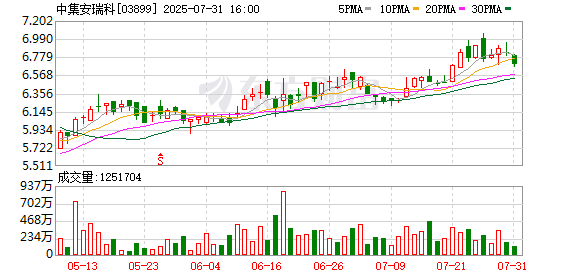
中集安瑞科副总裁、中集太平洋海工总经理高文宝表示:"此次订单总金额超过1.6亿元美金。今年初至 目前,公司已完成交付12条整船,预计2025年全年相关水上清洁能源业务新签订单有望达到约80亿 元。" 中化新网讯 日前,中集安瑞科控股有限公司旗下南通中集太平洋海洋工程有限公司与挪威公司Amon Gas签订2+2艘51000立方米氨双燃料中型LPG/液氨运输船建造合同订单,新船计划于2028年交付。 据介绍,该船型是目前全球最大的中型气体运输船,也是全球首款采用氨燃料动力、容积超过51000立 方米的MGC船型,代表着未来绿色航运的发展方向。与目前市场上仅配备氨燃料主机、未配置氨燃料 发电机组的MGC船型不同,本次新签的氨燃料MGC运输船首次实现氨燃料主发动机与氨燃料发电机组 的同步配置。 ...

济宁实施“港产城”融合,书写内陆国际化都市转型新篇
Qi Lu Wan Bao Wang· 2025-08-04 07:55
Core Insights - Jining is accelerating its port-industry-city integration development, achieving a port cargo throughput of 55.75 million tons in the first half of 2025, a year-on-year increase of 10.4% [1] - The city is focusing on the development of green shipping, with significant growth in the demand for new energy vessels, evidenced by a threefold increase in orders compared to the same period last year [2][3] - Jining's port and shipping capabilities are improving, with the total navigable waterway length exceeding 650 kilometers, maintaining the top position in the province for inland waterways [5] Port-Industry-City Integration - The integration of port, industry, and city is being realized through the establishment of seven major port operation areas and the construction of "seven hundred billion" port industrial parks [8] - The Liangshan Port coal and steel logistics park has attracted investments from 58 Fortune 500 companies, contributing to the formation of a trillion-level industrial cluster [8] - The Jining Port's strategic position as a core port in the Shandong provincial plan enhances its role in the national logistics network [9] Green Shipping Development - The demand for green vessels is being stimulated by favorable policies, including free passage for new energy vessels on the Grand Canal and national subsidies [3] - Shandong New Energy Shipbuilding Co. has established a production capacity for 2,000-5,000 ton inland new energy vessels, with 168 signed contracts and 90 vessels under construction [3][4] - The company has achieved significant technological advancements, including a 90% reduction in pollutant emissions for pure electric vessels [2] Logistics and Transportation Enhancements - Jining's logistics capabilities are expanding with the completion of key projects, such as the renovation of the Shunda Port terminal and the early operation of the Liangshan Port freight line [5] - The Dragon Gong Port has become a demonstration port for container shipping with the highest level of intelligence in the country, handling 146,500 TEUs in the first half of the year [5][6] - New multi-modal transport routes have been established, enhancing the logistics network and reducing costs for local agricultural products [6][7] Future Development Plans - Jining aims to become a northern inland shipping center, with plans to revise the overall port plan and develop a five-year plan for 2026-2030 [9] - The city will focus on building five major centers, including a commercial logistics center and a green ship manufacturing center, to support its integration strategy [9]
中集拿下超1.6亿美元大单 签订2+2艘全球最大氨燃料动力运输船建造合同
Shen Zhen Shang Bao· 2025-07-31 18:11
Core Viewpoint - The signing of a contract for the construction of two ammonia dual-fuel medium-sized LPG/ammonia transport vessels marks a significant breakthrough in China's clean energy shipbuilding sector, with a total contract value exceeding $160 million [2][3]. Group 1: Contract Details - The contract involves the construction of 2+2 vessels with a capacity of 51,000 cubic meters, making them the largest medium-sized gas transport vessels globally [2]. - The new vessels are expected to be delivered by 2028 and will contribute significantly to the international shipping industry's emission reduction goals [2]. Group 2: Technological Advancements - The newly signed vessels will be the first to feature synchronized ammonia fuel main engines and ammonia fuel generator sets, significantly enhancing energy efficiency compared to traditional designs [3]. - The project will enable the company to master the ammonia fuel power system's matching, safety control, gas supply design, and debugging processes, laying a solid foundation for future developments in ammonia fuel supply vessels and large gas transport vessels [3]. Group 3: Industry Context - As of March this year, a total of 130 ammonia-fueled vessels have been ordered or announced globally, with an additional 225 vessels reserved for ammonia fuel, indicating a growing trend towards ammonia fuel as a key pathway for decarbonizing shipping [3]. - The company’s president highlighted that this order reflects international shipowners' recognition of the company's technical strength in the clean energy shipbuilding sector, positioning clean energy maritime solutions as a cornerstone of its international strategy [3].
上海北泖泾航道疏浚整治工程完工
Zhong Guo Chan Ye Jing Ji Xin Xi Wang· 2025-07-30 02:31
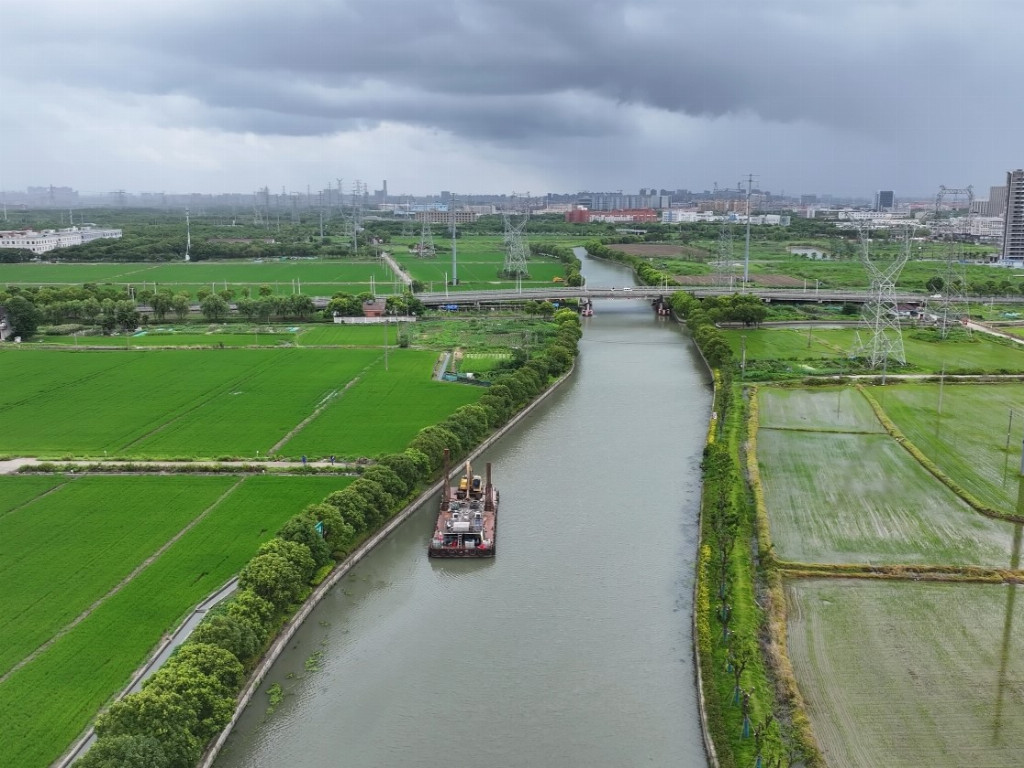
Core Viewpoint - The project is a maintenance dredging operation in the inland waterways of Shanghai, specifically in the Songjiang District, aimed at enhancing navigation capacity and safety while optimizing ecological benefits [2][5]. Group 1: Project Overview - The dredging project spans a total length of 5.93 kilometers with a total volume of 101,300 cubic meters, primarily focused on removing sediment from the waterway [2]. - The North Maojing waterway has a unique geographical position and is classified as a Grade VII technical level, necessitating precise design standards to accommodate small vessel traffic [2]. Group 2: Construction Challenges and Solutions - The construction area has a dense network of underground pipelines, increasing the complexity and risk of the dredging operation [4]. - A specialized pipeline inspection team was established to conduct thorough surveys of underground pipelines, ensuring zero accidents during construction [4]. - The project team adopted self-propelled backhoe dredgers and dynamically adjusted vessel ratios to optimize the workflow, resulting in a 30-day reduction in the overall construction period [4]. Group 3: Environmental and Community Considerations - To minimize noise and pollution, the project team implemented reasonable work hour arrangements and reduced nighttime construction activities, thereby lessening the impact on local residents [4]. - An effective communication mechanism was established, including multiple coordination meetings and visits to local residents, ensuring a smooth feedback channel with the government [4]. Group 4: Project Outcomes - The completion of the project significantly improved the navigation capacity and safety of the North Maojing waterway, while also enhancing the ecological environment [5]. - The project serves as a model for Shanghai's green shipping development and high-level water environment management [5].