
贸易保护

Search documents
化工日报:对等关税暂缓,聚酯产业链反弹-20250411
Hua Tai Qi Huo· 2025-04-11 04:59
Report Industry Investment Rating No relevant content provided. Core Viewpoints - On April 10, the polyester industry chain rebounded across the board, with the main contracts of PX/PTA/PF/PR rising by 5.31%, 4.97%, 5.41%, and 4.11% respectively. The main reason was that Trump halted the reciprocal tariffs that took effect on April 9 and implemented a 90 - day suspension of reciprocal tariffs on countries that did not take retaliatory actions for trade negotiations [1]. - The compromise on tariff issues led to a significant rebound in risk assets on Wednesday night, with oil prices rebounding about 10% from the low, driving the overall rebound of downstream energy - chemical products. Although direct textile and clothing export orders to the US remained suspended, indirect orders from Southeast Asia resumed shipping on Thursday, and the 90 - day buffer period might increase subsequent rush - export and re - export orders, partially offsetting the negative impact of high tariffs on China [1]. - The suspension of reciprocal tariffs offset some negative demand impacts, but direct textile and clothing export orders to the US remained suspended, and the demand expectation for textiles and clothing was still weak. Attention should be paid to further changes in trade policies [1]. Summary by Directory I. Price and Basis - The report presents figures on TA and PX main contracts, their basis and inter - period spreads, PTA East China spot basis, and short - fiber 1.56D*38mm semi - dull natural white basis [9][10][13] II. Upstream Profits and Spreads - Figures show PX processing fee PXN, PTA spot processing fee, South Korean xylene isomerization profit, and South Korean STDP selective disproportionation profit [16][19] III. International Spreads and Import - Export Profits - It includes figures on toluene US - Asia spread, toluene South Korea FOB - Japan naphtha CFR, and PTA export profit [24][26] IV. Upstream PX and PTA Start - up - Figures display the operating rates of PTA in China, South Korea, and Taiwan, as well as the operating rates of PX in China and Asia [27][30][31] V. Social Inventory and Warehouse Receipts - Figures show PTA weekly social inventory, PX monthly social inventory, PTA total warehouse receipts + forecast volume, PTA warehouse receipt inventory, PX warehouse receipt inventory, and PF warehouse receipt inventory [33][36][37] VI. Downstream Polyester Load - Figures present the production and sales of filament and short - fiber, polyester load, direct - spinning filament load, polyester staple fiber load, polyester bottle - chip load, filament factory inventory days, and the operating rates of looms, texturing machines, and printing and dyeing machines in Jiangsu and Zhejiang [44][46][56] VII. PF Detailed Data - Figures include 1.4D physical and equity inventories, polyester staple fiber load, polyester staple fiber factory equity inventory days, recycled cotton - type staple fiber load, raw - recycled spread, pure polyester yarn operating rate, pure polyester yarn production profit, polyester - cotton yarn operating rate, and polyester - cotton yarn processing fee [68][69][77] VIII. PR Fundamental Detailed Data - Figures show polyester bottle - chip load, bottle - chip factory bottle - chip inventory days, bottle - chip spot processing fee, bottle - chip export processing fee, bottle - chip export profit, the price difference between East China water bottle - chips and recycled 3A - grade white bottle - chips, bottle - chip next - month spread, and bottle - chip next - next - month spread [84][86][93] Strategy - Unilateral: In the short term, be cautious about short - selling PX/PTA/PF/PR on rallies for hedging. Although the US relaxed the intensity of reciprocal tariffs on other countries, the China - US trade war might further escalate, and the US might threaten other countries to impose tariffs on Chinese goods and semi - finished products. Attention should be paid to tariff negotiations in traditional re - export countries such as Vietnam, India, and Bangladesh. In the medium term, trade protection would bring uncertainty to global economic growth, and there was a risk of further decline in oil prices. It is recommended to maintain a light position and be cautious [4][5] - Cross - variety: Go long on MEG and short on PTA - Cross - period: No relevant strategy provided
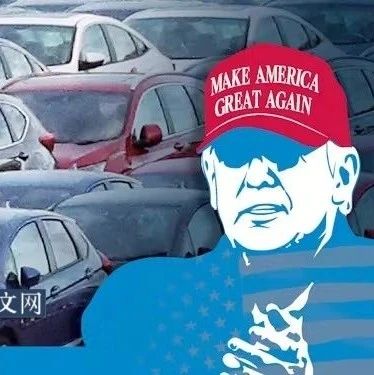
特朗普政府宣布4月3日起对汽车加征25%关税
日经中文网· 2025-03-27 03:34
Core Viewpoint - The article discusses the significant increase in tariffs on imported automobiles and key components from Japan to the United States, which is expected to impact the profitability of Japanese automakers and generate substantial tax revenue for the U.S. government. Group 1: Tariff Details - A 25% tariff will be imposed on all non-U.S. produced automobiles, including passenger cars, SUVs, and certain trucks, starting from April 3, 2024 [1][2] - Current tariffs on passenger cars are 2.5% and 25% on trucks, which will increase to 27.5% and 50% respectively with the new tariffs [1] - Key components such as engines, transmissions, and powertrains will also be subject to the 25% tariff [3] Group 2: Economic Impact - Japan's automobile exports to the U.S. are projected to reach 6.0261 trillion yen in 2024, accounting for 28.3% of Japan's total exports to the U.S. [1] - The new tariffs are expected to generate over $100 billion in tax revenue annually for the U.S. government [3] Group 3: Historical Context - The current tariff measures are based on findings from a previous investigation under the Trade Expansion Act of 1962, which highlighted the decline of the U.S. automotive industry due to low-priced imports [5][6] - In the 1960s and 70s, the U.S. produced about half of the world's automobiles, but this share has drastically decreased to around 10% by the late 2010s [5]

兴业证券王涵 | 欲“祸水外引”而不能?——特朗普2.0的执政思路和现实约束——经济专题研究第三期
王涵论宏观· 2024-11-22 03:49
要点 2016年美国大选特朗普首次胜选后,我们发布了报告指出"祸水外引"的风险(2016年12月7日《祸水东 引》)。今年特朗普再次胜选,其政策主张进一步引发市场关注。特朗普主张"加关税、减税收",通过对 外构筑贸易壁垒、对内减税的方式吸引制造业回流美国,并实现美国的再工业化。这些主张与他在上一任 期的政策保持一致。然而, 无论从美国外部环境还是内部情况来看,本轮都与上一轮有所 不同。 特朗普1.0版本所面临的内政外交空间相对宽裕。 2016年,特朗普意外赢得大选,意味着美国持续"金融 化"带来的贫富差距扩大正加剧内部矛盾。尽管如此,特朗普"财政刺激+贸易保护"的1.0版本可实施政策 空间仍较现在大:一是通胀和美国债务水平均偏低;二是地缘问题对美国内政外交和两党的影响没有现在 那么突出。 相比特朗普上一任期,从国际环境来看,当前,尽管美国仍被普遍认为是"超级大国",但其国际影响力正 在减弱。 相比2016年,美国经济、工业、贸易等多维度指标在全球中的份额均出现下降。而在这个阶 段,新兴市场国家的实力不断增强,新兴经济体GDP全球占比明显提升,区域性的贸易协定也持续增多。 同时,包括俄乌冲突在内的地缘冲突指向尽 ...
兴业证券王涵 | 特朗普的目标与现实 ——经济每月谈第六期
王涵论宏观· 2024-10-31 08:43
高关税和美国经济、外交利益存在矛盾。 在经济方面,高关税难以弥补减税带来的财政缺口,财政赤 字仍可能大幅扩张。短期内,进口需求难以迅速减少,关税成本大概率会被转嫁给消费者,推高国内价 格水平。中长期来看,即使企业回流,美国制造业并不具备竞争优势,反而可能引发成本推动型通胀上 升,进而对联储政策空间形成制约。在外交方面,高关税可能引发美国与他国、特别是盟国间的利益冲 突。一旦引发国与国之间竞相加征关税,则可能导致全球需求萎缩。 要点 特朗普的竞选策略延续了其第一任期的风格,尤以贸易保护和大规模减税引人关注。这一"增关税、减 税收"的组合,意在财政上取得平衡,更重要的是通过对外筑起贸易壁垒、对内减税放松,来吸引制造 业回流,推动美国再工业化。然而,特朗普的政策主张可能存在多个矛盾。 "再工业化"与市场规律间存在矛盾。 战后,美国逐渐从"工业强国"转向"金融强国",从"生产者"转型为 "财务投资者"。这一转变主要由市场力量推动,本质上是美国对外投资的收益率显著高于本土投资。当 前,美国生产成本高企,美国制造业回流并不符合资本利益,换句话说,单凭市场力量实现难度较大。 而如果美国逆市场力量推动制造业回流,可能需要投入 ...