边缘计算

Search documents
今夜,A股公司,利好
Zheng Quan Shi Bao· 2025-12-15 14:55
Group 1: Key Developments in Companies - Domestic GPU manufacturer Jingjia Micro announced that its subsidiary Chengheng Micro has successfully completed key stages of the edge AI SoC chip CH37 series, including tape-out, packaging, and testing, marking a significant breakthrough in the project [1][3] - Heshun Technology reported that its subsidiary successfully completed the carbonization stage of its 350-ton M-grade carbon fiber project, which is a crucial milestone in the company's carbon fiber sector [1][7] - Moulding Technology signed a procurement framework agreement with a domestic robotics company and received a small batch order for humanoid robot outer covers, marking a key milestone in entering the humanoid robot market [1][8] Group 2: Financial Implications and Market Impact - Jingjia Micro's third-quarter revenue reached 301 million yuan, a year-on-year increase of 230.65%, while the net profit attributable to shareholders was 15.08 million yuan, up 246.66% [5] - Shu Dao Equipment won a bid for the Nigeria Rumuji natural gas liquefaction facility project, with a contract value of 64.86 million USD (approximately 458 million yuan), which represents 53.13% of the company's audited revenue for the recent fiscal year [1][8] - Changchun High-tech's subsidiary signed an exclusive licensing agreement for the GenSci098 injection project, which could yield up to 1.365 billion USD in milestone payments, significantly enhancing the company's global development strategy [1][10]
今夜!A股公司,利好!
Zheng Quan Shi Bao Wang· 2025-12-15 14:51
Core Insights - Multiple A-share companies announced positive developments on December 15, indicating significant progress in various sectors, including AI, carbon fiber, robotics, and international projects. Group 1: Company Announcements - Jingjia Micro announced that its subsidiary Chengheng Micro has successfully completed key stages of its edge AI SoC chip CH37 series, marking a significant breakthrough in development [1][2] - Heshun Technology reported that its subsidiary has completed the carbonization phase of its 350-ton M-grade carbon fiber project, achieving international advanced performance standards [7] - Mould Technology signed a procurement framework agreement with a domestic robotics company, receiving a small batch order for humanoid robot outer covers, marking its entry into the humanoid robotics sector [7][8] Group 2: Project Developments - Shudao Equipment won a bid for the Rumuji natural gas liquefaction facility project in Nigeria, with a contract value of $64.86 million, representing 53.13% of the company's audited revenue for the last fiscal year [8] - Shenghui Integration's subsidiary in Thailand secured a project order worth approximately 432 million RMB, contributing positively to the company's overseas business development [9] - Changchun High-tech signed an exclusive licensing agreement for the GenSci098 injection project, potentially earning up to $1.365 billion in milestone payments, which aligns with the company's global development strategy [10]

沐曦股份 周三上市;寒武纪拟使用近28亿元资本公积金弥补亏损丨公告精选
2 1 Shi Ji Jing Ji Bao Dao· 2025-12-15 14:38
Group 1: Company Announcements - Muxi Co., Ltd. will list its shares on the Shanghai Stock Exchange's Sci-Tech Innovation Board on December 17, 2025, and will be classified under the Sci-Tech Growth Tier as it is not yet profitable [1] - Cambrian Technology plans to use 2.778 billion yuan from its capital reserve to cover cumulative losses, with a limit set to bring its negative retained earnings to zero by the end of 2024 [2] - TCL Technology's subsidiary, TCL Huaxing, intends to acquire a 10.7656% stake in Shenzhen Huaxing Semiconductor for 6.045 billion yuan, increasing its total stake to 94.9761% [2] - Yipin Hong plans to sell a 13.45% stake in its subsidiary Arthrosi Therapeutics for up to 1.5 billion USD, which includes an initial payment of 950 million USD and milestone payments of up to 550 million USD [3] - Jingjia Microelectronics announced that its subsidiary has successfully completed key stages of its AI SoC chip CH37 series, marking a significant project milestone [4] - Aerospace Electronics intends to inject 728 million yuan into its subsidiary, Aerospace Changzheng Rocket Technology, to enhance its commercial space industry capabilities [5] - Unigroup Guowei has established a Central Research Institute focusing on AI chip architectures and algorithms for applications in robotics and low-altitude vehicles [6] Group 2: Performance Metrics - Spring Airlines reported an 18.02% year-on-year increase in passenger turnover for November [7] - China Southern Airlines saw a 10.42% increase in passenger turnover for November 2025 [7] - Air China experienced a 10.1% rise in passenger turnover for November 2025 [7] - China Eastern Airlines reported a 10.35% increase in passenger turnover for November 2025 [7] - Xinhua Insurance's cumulative original insurance premium income grew by 16% from January to November [7] - Hainan Airport recorded a passenger throughput of 2.0909 million in November, an 8.16% year-on-year increase [7] Group 3: Mergers and Acquisitions - Luoyang Molybdenum's subsidiary plans to acquire a gold mine project for 1.015 billion USD [7] - Jiadu Technology intends to acquire 60% of Hisense Micro-Link for 79.2 million yuan [7] - Zhongtai Chemical plans to acquire 15.173% of Huatai Company for 1.2 billion yuan [7] - Tianfu Energy's Tianyuan Gas is set to acquire 100% of Chengtong Oil and Gas for 21.49 million yuan [7] - Taotao Vehicle's subsidiary plans to acquire 100% of Racka brand company for 15 million USD [7]

今夜!A股公司,利好!
券商中国· 2025-12-15 14:27
Core Viewpoint - Multiple A-share companies announced positive developments on December 15, indicating significant progress in various sectors, including AI chips, carbon fiber production, robotics, and international project contracts [1]. Group 1: GPU Industry - Jingjia Micro announced that its subsidiary Chengheng Micro has successfully completed key stages of its edge AI SoC chip CH37 series, including tape-out, packaging, and testing, marking a significant breakthrough [2][3]. - The CH37 series chip provides a peak AI computing power of 64 TOPS@INT8, supporting high-demand applications in robotics, AI boxes, smart terminals, and drones [2]. - The chip is designed for flexible precision computing, ensuring both inference efficiency and algorithm development flexibility [3]. Group 2: Carbon Fiber Production - Heshun Technology reported that its subsidiary successfully completed the carbonization stage of its 350-ton M-grade carbon fiber project, achieving international advanced performance standards [6]. - This milestone is crucial for the company's carbon fiber industry chain layout and strengthens its core competitive advantages [6]. Group 3: Robotics Sector - Moulding Technology signed a procurement framework agreement with a domestic robotics company, receiving a small batch order for humanoid robot outer covers, marking a key entry into the humanoid robotics market [6][7]. - This order signifies recognition of the company's manufacturing processes and quality assurance systems, laying the groundwork for expanding its customer base in the robotics sector [7]. Group 4: International Projects - Shudao Equipment won a bid for the Rumuji natural gas liquefaction facility project in Nigeria, with a contract value of $64.86 million (approximately 458 million RMB), representing 53.13% of the company's audited revenue for the 2024 fiscal year [7]. - This project marks the company's first large-scale LNG facility project in Africa, enhancing its international strategy and brand influence in the global natural gas liquefaction sector [7]. - Shenghui Integration's subsidiary Acter won a project order in Thailand worth approximately 432 million RMB, contributing positively to the company's overseas business development [8]. Group 5: Pharmaceutical Sector - Changchun High-tech's subsidiary signed an exclusive licensing agreement for the GenSci098 injection project, potentially earning up to $1.365 billion in milestone payments, which aligns with the company's global development strategy [9].

景嘉微:控股子公司边端侧AI SoC芯片成功点亮
Ju Chao Zi Xun· 2025-12-15 09:26
景嘉微表示,诚恒微CH37系列的顺利点亮,是公司与诚恒微集中优势资源、协同推进核心技术自主研发与产业化落地的重要成果。这不仅将进一步丰富公 司和诚恒微的产品线与核心技术储备,更有助于拓宽产品应用场景,服务更广泛的客户领域。 在当前人工智能向边端侧加速渗透的产业浪潮下,诚恒微CH37系列的突破,被视为景嘉微深化"GPU+边端侧AISoC芯片"产品矩阵、响应国家科技自立自强 战略的关键一步。该芯片旨在为具身智能、边缘计算等前沿应用提供高能效、自主可控的算力引擎。 强劲AI算力:提供高达64TOPS@INT8的峰值AI算力,为复杂的视觉识别与多模态感知模型在设备端侧实时运行提供了充沛动力。 灵活高效处理:支持混合精度计算,兼顾了算法开发的灵活性与推理效率;同时具备高实时性与低延迟特性,确保快速精准的决策执行。 多传感融合优化:芯片架构专为多传感器(如视觉、雷达)融合场景深度优化,能高效协同处理多元数据,构建统一的实时环境感知能力。 12月15日,景嘉微发布公告称,公司控股子公司无锡诚恒微电子有限公司(以下简称"诚恒微")自主研发的边端侧AISoC芯片CH37系列,已顺利完成流 片、封装、回片及成功点亮等全部关键流程 ...

景嘉微(300474.SZ):边端侧AI SoC芯片CH37系列目前已顺利完成流片、封装、回片及点亮等关键阶段工作
Ge Long Hui A P P· 2025-12-15 08:27
格隆汇12月15日丨景嘉微(300474.SZ)公布,控股子公司无锡诚恒微电子有限公司(简称"诚恒微")自主 研发的边端侧AI SoC 芯片CH37系列,目前已顺利完成流片、封装、回片及点亮等关键阶段工作。芯片 点亮后,经测试,其基本功能与核心性能指标(包括算力效率、模块协同及稳定性等)均已达到设计要 求,标志着该项目取得阶段性突破。后续,诚恒微将加快推进芯片的功耗优化与全面性能测试,确保产 品早日具备量产条件。 为积极响应国家推动高水平科技自立自强和自主可控的战略号召,公司和诚恒微正大力推动核心技术的 自主研发与产业化落地,集中优势资源,充分发挥协同效应,拓宽产品应用场景并拓展服务客户领域, 持续优化以"GPU+边端侧AISoC 芯片"为核心的产品矩阵,提升在智能算力领域的核心竞争力与市场影 响力。通过不断推进芯片迭代优化和生态体系建设,加快在具身智能、边缘计算等前沿场景的实际应 用,助力构建安全可控的国产化算力底座。诚恒微 AI SoC 芯片 CH37 系列的阶段性突破,将进一步丰 富公司及诚恒微产品线和核心技术储备,有利于增强公司核心竞争力,巩固公司在相关领域的市场竞争 力与市场占有率,对公司长期发展战 ...
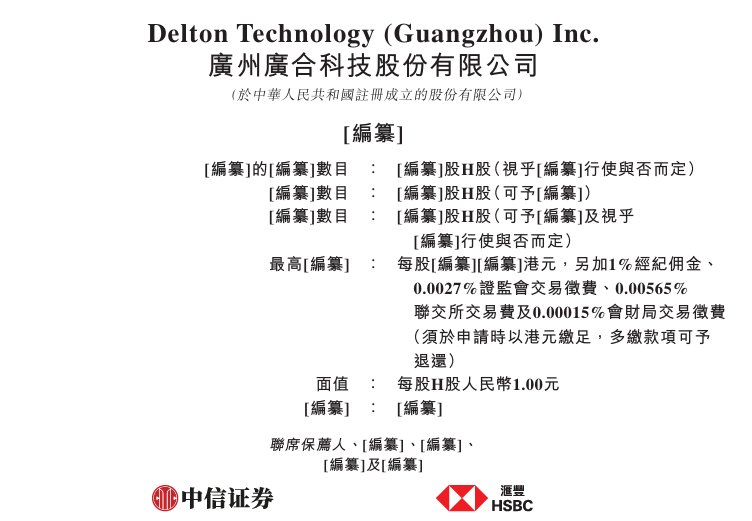
广合科技递表港交所 主营算力服务器关键部件PCB制造
Zhi Tong Cai Jing· 2025-12-15 03:33
Core Viewpoint - Guangzhou Guanghe Technology Co., Ltd. (stock code: 001389) has submitted an application for listing on the Hong Kong Stock Exchange, with CITIC Securities and HSBC acting as joint sponsors [1]. Company Overview - Guanghe Technology focuses on the research, development, production, and sales of customized PCBs (Printed Circuit Boards) for computing servers and other computing scenarios. It ranks third globally and first among manufacturers based in mainland China in terms of cumulative revenue from computing server PCBs from 2022 to 2024 [3][4]. Financial Performance - The company reported revenues of RMB 2.412 billion, RMB 2.678 billion, RMB 3.734 billion, and RMB 2.680 billion for the fiscal years 2022, 2023, 2024, and the nine months ending September 30, 2025, respectively [5]. - The total comprehensive income for the same periods was RMB 0.280 billion, RMB 0.415 billion, RMB 0.680 billion, and RMB 0.492 billion [6]. - The net profit margins for the fiscal years were 11.6%, 15.5%, 18.1%, and 18.9% [8]. Market Trends - The global PCB market is expected to grow from USD 62.0 billion in 2020 to USD 75.0 billion in 2024, with a compound annual growth rate (CAGR) of 4.9%. The demand for PCBs is driven by the expansion of AI, data centers, and IoT applications [13]. - The sales of computing scenario PCBs are projected to reach USD 12.5 billion in 2024, growing to USD 21.0 billion by 2029, with a CAGR of 10.9% [13][22]. Customer Base and Dependency - The company has a high dependency on its top five customers, which contributed RMB 1.534 billion, RMB 1.757 billion, RMB 2.292 billion, and RMB 2.271 billion to its revenue over the past years, representing 63.6%, 65.6%, 61.4%, and 59.3% of total revenue, respectively [4]. Production Capacity - The company aims to align its production capacity with customer demand to ensure stable and reliable supply of PCB products. Its main factories are located in Guangdong and Hubei provinces [4].
芯原股份20251214
2025-12-15 01:55
Summary of Conference Call for Chip Origin Technology Company Overview - **Company**: Chip Origin Technology (芯原股份) - **Industry**: Semiconductor and AI Chip Development Key Points Investment and Shareholding - Chip Origin acquired a 2.11% stake in Zhudian Semiconductor for 20 million yuan in registered capital and 350 million yuan in cash, becoming the largest shareholder with a 40% stake, thus gaining control [2][3] Strategic Focus - The company has terminated its merger with Xinlai but will continue to strengthen its layout in the RISC-V field and maintain cooperation with Xinlai while expanding partnerships with other RISC-V IP suppliers [2][6] Market Environment - The third interest rate cut in 2025 marks the sixth cut since September 2024, providing a favorable environment for the industry, although potential interest rate hikes in the next year should be monitored [2][9] Collaboration with Google - Chip Origin has partnered with Google on the open-source Coral NPU project, which features 0.27 billion parameters, aimed at ecosystem development and providing free resources to developers, utilizing RISC-V architecture [2][10] Industry Trends - Qualcomm's acquisition of a high-performance RISC-V company indicates a promising future for the RISC-V industry, with Chip Origin committed to its development and maintaining relationships with ARM clients [2][11] Stock Performance - Since the new policy in September 2024, Chip Origin's stock has surged by 460% in 2025, reaching a valuation of 100 billion yuan, outperforming major indices [4][12] Project Development - The company is progressing well with foundational projects in Q4, with an increase in both existing and new orders, indicating sustained business growth [4][16] RISC-V Development Outlook - RISC-V is expected to have a broad development space, particularly in industrial applications and autonomous driving, although it may not directly challenge ARM in the mobile market [2][17] High-Speed Interface Importance - High-speed interfaces (SerDes) are crucial in data centers, facilitating efficient data transmission, and are a focus area for Chip Origin's development [18][19] Future Strategies - Chip Origin aims to enhance competitiveness through mergers and acquisitions, as well as independent R&D, while also considering the development of high-speed interface IP products [20][17] Challenges in Mergers - Common issues in mergers include valuation and cultural integration, with creative payment methods and earn-out agreements suggested as solutions [21][22] Policy Impact - National policies significantly influence mergers in the semiconductor industry, supporting technology acquisition while also imposing challenges related to asset preservation and valuation [22][23] Industry Outlook - The semiconductor industry is expected to continue its positive trend driven by innovation, despite challenges such as high valuations and policy restrictions [23]

研判2025!中国刀片式服务器行业分类、市场规模及重点企业分析:规模扩张与国产化共塑关键窗口期,高端竞争蓄势待发[图]
Chan Ye Xin Xi Wang· 2025-12-15 01:42
Core Viewpoint - The Chinese blade server industry is experiencing a critical development phase driven by technological upgrades, deepening market applications, and supply chain localization, characterized by simultaneous expansion of market size and acceleration of domestic production processes [1] Industry Overview - Blade servers are a high-density server platform designed for specific application industries and high-density computing environments, allowing multiple "blade" modules to be inserted into a unified chassis, providing optimal space efficiency and energy efficiency for large data centers [4][6] - The evolution of the blade server industry in China has transitioned from early architectural exploration to market maturity, showcasing a trajectory from single functionality to multi-fusion [6] Market Size - The market size of the Chinese blade server industry is projected to reach approximately 15.07 billion yuan in 2024, reflecting a year-on-year growth of 2.8%, driven by strong demand from cloud computing and artificial intelligence [1][8] Key Enterprises - Unisplendour Corporation, through its subsidiary H3C, leads the blade server market, leveraging its unique position as the exclusive provider of HPE servers in China and its "plastic architecture" for resource pooling [10] - Inspur Information maintains a strong market share through continuous innovation in liquid cooling technology, while Huawei excels in AI computing scenarios with its self-developed Kunpeng chips [10] - Sugon focuses on high-performance computing and liquid cooling technology, establishing a competitive edge in the research and supercomputing sectors [10] Industry Development Trends 1. **Liquid Cooling Technology and AI Integration** - The industry is accelerating towards green and intelligent infrastructure, with liquid cooling technology expected to penetrate over 30% of the market by 2025, significantly improving energy efficiency [13] 2. **Market Concentration and Localization** - The competition is becoming increasingly oligopolistic, with domestic CPUs gaining traction in government and military sectors, while the supply chain is reducing reliance on imports [14] 3. **Edge Computing Expansion** - The blade server architecture is evolving towards a dual-mode of "centralized large clusters + distributed micro-clusters," adapting to the demands of edge computing driven by 5G and IoT applications [16]




精研科技(300709.SZ):散热板块的营业收入规模目前占公司营业收入比重相对较小
Ge Long Hui A P P· 2025-12-15 01:12
Core Viewpoint - The company focuses on providing one-stop services for thermal simulation, design, manufacturing, and testing, aiming to create customized thermal solutions and reliable thermal products [1] Group 1: Company Overview - The company’s main products include liquid cooling modules, liquid cooling plates, and air cooling modules, along with self-manufactured components such as heat pipes and vapor chambers [1] - The thermal segment's revenue currently constitutes a relatively small proportion of the company's total revenue [1] Group 2: Industry Application - The company's thermal products have been applied in edge computing servers and energy storage sectors [1]