AI编程

Search documents
“人人都是程序员”的梦该醒了!AI 编程“大逃杀”:Cursor 或成创业公司唯一“幸存者”,“60 分开发者”撑起最后防线
AI前线· 2025-12-10 08:27
Core Insights - The article discusses the rapid rise and subsequent decline of "Vibe Coding," a trend in AI programming tools that gained significant attention in 2023, highlighting the challenges of user retention and the sustainability of such platforms [3][5][12]. User Engagement Trends - User traffic for major products has significantly decreased, with Lovable's traffic dropping from 35 million to under 20 million, a nearly 50% decline. Other products like Bolt.new and Vercel v0 also experienced substantial decreases of 27% and 64% respectively [4][5]. - The CEO of Bolt.new acknowledged high user churn rates across platforms, emphasizing the need for sustainable business models to retain users [5]. Market Dynamics - The initial hype around AI programming tools was driven by capital investment, leading to inflated valuations and user numbers. However, as interest wanes, a return to realistic valuations is anticipated [5][12]. - Lovable, which claimed to have 35 million monthly active users, is criticized for attracting a user base primarily composed of non-developers, such as product managers and students, rather than professional developers [12][19]. Product Differentiation - Two distinct paths in AI coding tools are emerging: "asynchronous agent-based vibe coding" and "human-led serious engineering collaboration." The latter is more likely to gain long-term acceptance from professional developers [10][14]. - Tools like GitHub Copilot and Cursor focus on integrating into existing workflows, providing assistance rather than complete solutions, which may lead to better user retention [10]. Future Outlook - The article suggests that the future of Vibe Coding may be limited to niche markets, while more sustainable growth is likely to be found in tools designed for professional users and backed by robust infrastructure [24]. - The concept of "vibe working," where AI organizes data for users without requiring technical knowledge, is identified as a potential area for growth, although it remains uncertain if current companies can pivot successfully to this model [25][27].


中信证券:AI编程成为最快落地Agent场景,行业空间有望达230亿美元
Xin Lang Cai Jing· 2025-12-10 00:47
Core Insights - The report from CITIC Securities highlights that AI programming has become the fastest emerging application scenario due to significant improvements in model programming capabilities through reinforcement learning [1] - The current market size of the AI programming industry is approximately $3 billion, with projections to reach $23 billion by 2030, and a long-term potential space of nearly $700 billion [1] - The report indicates that the current CR3 (Concentration Ratio of the top three companies) exceeds 70%, suggesting that the perspective of "models consuming applications" is not comprehensive [1] - The industry has achieved an initial gross margin of 20%-30% through a pay-per-use model, and with the potential for significant price reductions in model APIs, the gross margin for coding applications is expected to improve [1] - The report recommends focusing on leading overseas AI programming companies, as well as domestic small and medium-sized enterprises and internet giants [1]

字节前技术负责人联手清华姚班校友创业!
具身智能之心· 2025-12-05 16:02
Core Insights - The article discusses the evolution of AI programming from "Vibe Coding" to a more structured "Engineering Era" defined by the InfCode coding agent developed by a startup team from Tsinghua University [9][11]. Group 1: Vibe Coding and Its Limitations - Vibe Coding allows developers to generate runnable code from simple prompts, creating a magical programming experience [3][5]. - However, it struggles with complex enterprise-level projects due to limitations in context window, reasoning depth, and the absence of an Agentic model, making it difficult to locate bugs in large codebases [5][11]. Group 2: InfCode's Breakthrough - InfCode, developed by the startup "Ciyuan Wuxian," has achieved top scores in two authoritative AI coding benchmarks: SWE-Bench Verified and Multi-SWE-bench-CPP [6][14]. - InfCode scored 79.4% in the SWE-Bench Verified benchmark and 25.58% in the C++ subset of Multi-SWE-bench, significantly outperforming competitors like Claude 3.7 Sonnet and DeepSeek V3 [7][15]. Group 3: Technical Innovations of InfCode - InfCode incorporates a multi-agent system designed for enterprise scenarios, marking a shift from individual efficiency to organizational evolution [8][11]. - The system features a "Code Intent Analysis" mechanism that allows it to understand the functional intent behind natural language descriptions, improving its ability to locate issues in large codebases [21][20]. - It utilizes an AST-based structured retrieval engine to enhance code search accuracy, overcoming limitations of traditional text search tools [25][22]. Group 4: Dual-Agent Architecture - InfCode employs a novel dual-agent architecture that iteratively generates and tests code patches, enhancing robustness and completeness [30][31]. - This approach allows for continuous improvement of patches, making them suitable for integration into production environments [31][32]. Group 5: Team and Vision - The team behind InfCode is described as a "startup dream team," combining technical expertise with productization and commercialization capabilities [42][44]. - The vision is to transform the AI coding landscape from mere tool efficiency to a comprehensive reconstruction of the software engineering lifecycle, aiming to create a "digital employee" platform [44].

字节前技术负责人创业,联手清华姚班校友,编程智能体世界登顶
机器之心· 2025-12-05 04:08
Core Insights - InfCode is defining the "Engineering Era" of AI programming, moving beyond the "Vibe Coding" concept introduced by Andrej Karpathy, which focuses on generating code from simple prompts [3][7]. Group 1: InfCode's Performance - InfCode achieved a Pass@1 score of 79.4% on the SWE-Bench Verified benchmark, surpassing leading models like GPT-5 and Claude, which scored around 70% [6][13]. - On the Multi-SWE-bench C++ subset, InfCode reached a 25.58% resolution rate, significantly outperforming competitors such as Claude 3.7 Sonnet (8.59%) and DeepSeek V3 (7.75%) [6][13]. Group 2: Technical Innovations - InfCode employs a multi-agent system designed for enterprise scenarios, marking a shift from individual efficiency to organizational evolution in AI coding [6][9]. - The system integrates "Code Intent Analysis," allowing it to understand the functional intent behind natural language descriptions, enhancing its ability to locate issues in large codebases [18][19]. - InfCode features a structured search engine based on Abstract Syntax Trees (AST), improving code retrieval accuracy compared to traditional text search tools [21][23]. Group 3: Repair Process and Methodology - The repair process of InfCode consists of two phases: generation and selection, allowing for multiple iterations to produce diverse patch candidates [30][33]. - InfCode utilizes a dual-agent architecture for code patch generation and testing, enabling continuous improvement and robustness of the generated patches [25][29]. Group 4: Team and Vision - The core team of InfCode, referred to as a "startup dream team," combines technical expertise with commercialization capabilities, positioning them uniquely in the competitive AI coding agent landscape [35][38]. - The team aims to transform the AI coding landscape from mere tool efficiency to a comprehensive reconstruction of the software engineering lifecycle, focusing on end-to-end value delivery [38].

中国00后,正扎堆改变世界
3 6 Ke· 2025-12-05 03:07
Group 1 - Anysphere, an AI programming company, has achieved a valuation of 20.79 billion RMB and an annual revenue exceeding 1 billion USD, being recognized as one of the fastest-growing companies in Silicon Valley within just three years of establishment [1] - CEO Michael Truell, a post-2000s entrepreneur, has rapidly ascended to billionaire status, attracting significant attention from investors [2] - The investment community is increasingly favoring entrepreneurs under 35, with major firms like Sequoia, Hillhouse, and BlueRun Capital investing in young founders [3] Group 2 - Axiom Math, another startup, raised 64 million USD (approximately 456 million RMB) in its first round of financing, achieving a post-money valuation of over 300 million USD [4] - The founder, 24-year-old Hong Letong, has no product or customers yet, but her exceptional mathematical talent has drawn significant investment interest [5] - Hong Letong's impressive academic background includes attending MIT, where she completed dual degrees in mathematics and physics in just three years, and publishing multiple high-quality papers [6][7][8] Group 3 - After receiving a Rhodes Scholarship, Hong Letong pursued a master's in neuroscience at Oxford and later began a PhD in mathematics and law at Stanford before deciding to start her own company [9][10] - Her motivation to create Axiom Math stemmed from a conversation about using AI to solve mathematical problems, particularly in light of criticisms regarding AI's performance in math tests [11] - The goal of Axiom Math is to develop an AI model capable of solving complex mathematical problems, which could have significant implications for various fields such as scientific research and financial modeling [14] Group 4 - The robotics sector is also seeing a surge of interest from young entrepreneurs, with notable figures like Chen Yuanpei, who founded Lingchu Intelligent, gaining recognition as a leading AI entrepreneur [20] - Chen Yuanpei's company focuses on developing dexterous robotic hands, which have attracted partnerships with major companies like NVIDIA and Meituan [28] - The embodied intelligence robotics market is projected to grow significantly, with estimates suggesting it could reach 400 billion RMB by 2030 [29] Group 5 - Another young entrepreneur, Fu Zhi, founded Gongji Technology, a shared computing power platform, after identifying a gap in the market for flexible computing resources [33] - The company has seen rapid growth, achieving a revenue of 20 million RMB in the first half of 2025 and securing significant investments [37] - The shared computing power market is expected to exceed 1 trillion RMB by 2030, indicating a strong demand for such services [38] Group 6 - The rise of post-2000s entrepreneurs marks a new era in China's innovation landscape, with a focus on cutting-edge technologies like AI and robotics [39] - These young founders are characterized by their strong educational backgrounds and a desire to lead in global trends rather than merely follow [39] - The entrepreneurial spirit among this generation is driven by ideals and passions, positioning them as potential leaders in the global market [39]
斯坦福CS变天,最火新课竟教「不写一行代码」,学生挤爆了
3 6 Ke· 2025-12-01 02:12
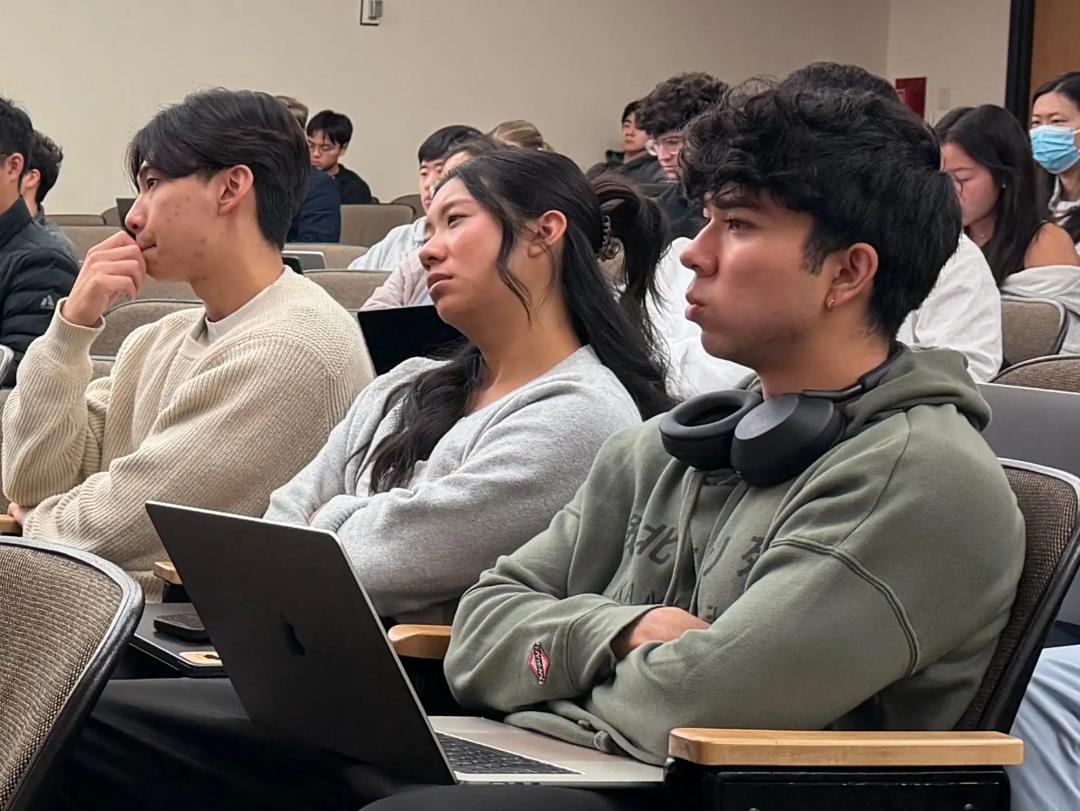
Core Insights - Stanford University is offering a popular course titled "Modern Software Developer," which encourages students to use AI tools instead of writing code by hand, reflecting a shift in computer science education [3][12][29] - The job market for entry-level software engineers is facing significant challenges due to the rise of AI, with a projected 20% decline in employment for developers aged 22 to 25 by mid-2025 compared to the peak in late 2022 [8][10][12] - Tech giants are increasingly relying on AI for coding tasks, with estimates suggesting that up to 30% of code at Microsoft and 50% at Meta could be generated by AI by 2026, fundamentally altering hiring practices [13][14][17] Group 1 - The course at Stanford aims to teach students how to program without writing code, highlighting a new approach to software development education [3][12] - There is a growing concern among students about their job prospects in a market increasingly dominated by AI, leading to anxiety about the value of their degrees [4][20] - The trend indicates that companies are prioritizing experienced developers over entry-level candidates, as AI tools can perform many tasks previously done by junior programmers [10][12] Group 2 - Major tech CEOs have openly discussed the impact of AI on their workforce, with statements indicating that AI is becoming a substitute for many coding roles [13][14][17] - The concept of a "super engineer" is emerging, where the ability to effectively utilize AI tools becomes more valuable than traditional coding skills [21][25][29] - The job landscape is shifting towards roles that require human judgment and creativity, as opposed to purely technical coding tasks, suggesting a need for adaptation among new graduates [30][32]
10000个代码文件,我打几把游戏的功夫就搞成Wiki了!
量子位· 2025-11-27 04:34
金磊 发自 凹非寺 量子位 | 公众号 QbitAI Terminal仓库包含了大约7500个文件,编程语言涵盖C++、C#、JSON、XML、Markdown等。 天下程序员苦 看懂老、大项目 久矣。 例如猛地给你一个包含 近10000个代码文件 的项目,你就说把它们给吃透得花多长时间吧。 But!现在你不用再为此发愁了,因为有一款 国产AI编程工具 ,会给你来一波实实在在的 神助攻! 多说无益,我们直接拿 微软 在GitHub上面的 terminal仓库 来打个样: 接下来,我们先克隆一下: git clone —depth=1 https://github.com/microsoft/terminal.git 然后把这个项目导进国产AI编程工具里面,先点击 仓库Wiki (Repo Wiki) 功能,再点击 生成 即可: | ... | terminal | 6 ID III III @ | ← → | | | | | | | --- | --- | --- | --- | --- | --- | --- | --- | --- | | = | ਜ | 商体口文 | = 项目都述 × | = 架构设计 ...

出手就对标马斯克,中国00后正扎堆改变世界
创业邦· 2025-11-26 03:34
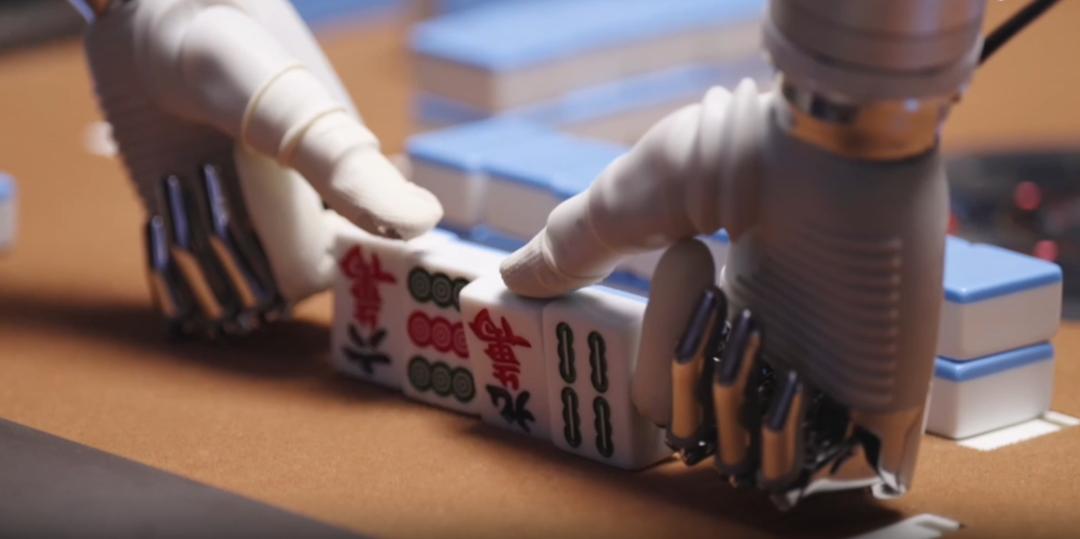
Core Insights - Anysphere, an AI programming company, has achieved a valuation of 207.9 billion RMB and an annual revenue exceeding 1 billion USD within just three years, earning recognition as one of the fastest-growing companies in Silicon Valley [5] - The trend in venture capital is favoring entrepreneurs under 35, with major firms like Sequoia, Hillhouse, and BlueRun investing in young founders, indicating a shift towards supporting the new generation of innovators [5] Group 1: Axiom Math and Its Founder - Axiom Math, founded by 24-year-old Hong Letong, raised 64 million USD (approximately 456 million RMB) in its first round of funding, achieving a post-money valuation of over 300 million USD despite having no product or customers [7] - Hong Letong's impressive academic background includes dual degrees in mathematics and physics from MIT, multiple prestigious awards, and a decision to drop out of Stanford to pursue entrepreneurship [9][10] - The company's goal is to create an "AI mathematician" capable of independent reasoning and generating mathematical conjectures, addressing the limitations of current AI training methods [10][11] Group 2: Robotics and Embodied Intelligence - Chen Yuanpei, a 24-year-old founder of Lingchu Technology, has developed a robot capable of playing Mahjong, showcasing advancements in embodied intelligence [13][14] - Lingchu Technology's first product, a 21-degree-of-freedom dexterous hand, has attracted partnerships with major companies like NVIDIA and Meituan, indicating strong market interest in embodied intelligence [18] - The embodied intelligence sector is projected to grow significantly, with estimates suggesting the industry could reach 400 billion RMB by 2030 and exceed 1 trillion RMB by 2035 [18] Group 3: AI Computing Power and Market Trends - Fu Zhi, founder of Gongji Technology, is creating a shared computing power platform, likened to a "Didi for computing," to meet the growing demand for AI computing resources [21][22] - The shared computing market is expected to grow rapidly, with predictions indicating that by 2030, the market size will exceed 1 trillion RMB, highlighting the potential for significant returns in this sector [25] - Gongji Technology has already integrated tens of thousands of devices, achieving a computing power equivalent to two major intelligence centers in the Yangtze River Delta, and has generated 20 million RMB in revenue in the first half of 2025 [25] Group 4: The New Generation of Entrepreneurs - The new generation of entrepreneurs, particularly those born after 2000, is focusing on cutting-edge fields such as AI, embodied intelligence, and biotechnology, with 80% of young innovators in these areas having top-tier academic backgrounds [26] - This cohort is characterized by a strong sense of confidence and ambition, aiming to lead global trends rather than merely follow them, marking a significant shift in the entrepreneurial landscape in China [26]

Claude Opus 4.5夺回编程王座,超Gemini 3 Pro和GPT-5.1
AI前线· 2025-11-25 05:03
Core Insights - Anthropic's Claude Opus 4.5 has surpassed competitors in coding, agent capabilities, and computer operations, achieving top scores in various benchmarks, outpacing GPT-5.1 and Gemini 3 Pro [2][14][21] Performance Metrics - Claude Opus 4.5 achieved 80.9% in SWE-bench Verified, 59.3% in Agentic terminal coding, and 88.9% in Agentic tool use, outperforming previous versions and competitors [5][14] - In a two-hour high-pressure exam, Claude Opus 4.5 scored the highest ever, surpassing all human candidates, demonstrating its ability to understand complex codebases and identify bugs under ambiguous instructions [6][16][17] Pricing Structure - The latest pricing for Claude Opus 4.5 is $2.50 per million tokens for batch input and $12.50 for batch output, significantly lower than previous versions [9][10] Advanced Tool Use - Claude Opus 4.5 features enhanced advanced tool use capabilities, allowing it to select tools, write automation scripts, and understand tool usage effectively, which is integrated into the Claude developer platform [23][31] - The introduction of Claude for Excel allows for efficient data processing without overwhelming the model with raw data [26][28] User Feedback - Users have reported that Claude Opus 4.5 can genuinely understand user needs, completing tasks that were challenging for earlier models like Sonnet 4.5 [15][16]

中国AI编程赛道,谁能跑到最后?
3 6 Ke· 2025-11-20 11:34
Core Insights - AI programming is recognized as one of the fastest-growing, most commercially viable, and widely adopted applications of AI technology, with significant capital backing [1] - Cursor, an AI programming tool founded in 2022, has seen its valuation soar to $9.9 billion within 20 months, with an annual recurring revenue (ARR) exceeding $500 million and over 360,000 paying users [1] - The global market for AI coding tools could potentially contribute $3 trillion to GDP annually, comparable to France's GDP in 2024 [1] Group 1: Market Dynamics - In the U.S., 91% of developers use AI programming tools, while only 30% do so in China, indicating a significant growth opportunity for domestic AI programming tools [4] - Major Chinese tech companies like Alibaba, ByteDance, Tencent, and Baidu have launched AI programming products, with revenues expected to reach millions in the Chinese market [5][6] - The competitive landscape is intensifying as companies adopt aggressive pricing strategies, with many offering free versions of their AI programming tools to attract users [11][12] Group 2: Product Development and Ecosystem - The development of independent AI Integrated Development Environments (IDEs) is becoming a trend among Chinese companies, allowing for a complete coding solution without reliance on traditional tools [12][13] - The focus on creating user-friendly IDEs is crucial for attracting developers, as seen with Cursor's strategy of leveraging familiar open-source ecosystems [21][22] - Companies are also integrating their AI programming tools with cloud services and developer communities to enhance user engagement and product adoption [23][24] Group 3: B2B and B2C Strategies - The B2B market for AI programming tools is characterized by high customization demands, making it challenging for companies to quickly capture this segment [28][30] - Despite the focus on B2B, many companies are prioritizing B2C strategies to build a user base, with ByteDance and Alibaba leading in this area [16][29] - The willingness of enterprises to pay for AI programming tools is currently low, primarily due to a lack of perceived value in improving software quality [31] Group 4: Future Outlook - The AI programming market in China is still considered a blue ocean, with potential for various tools catering to different user needs and development processes [33] - The rapid evolution of AI programming tools suggests that new paradigms and tools may emerge, potentially disrupting existing players [33] - The long-term success in the AI programming space will depend on building robust developer ecosystems and maintaining competitive advantages through continuous innovation [20][33]