Agent

Search documents
腾讯大模型团队架构调整,前OpenAI研究员姚顺雨出任要职|36氪独家
36氪· 2025-12-17 15:18
Core Insights - Tencent has established a consensus internally that it must possess self-developed model capabilities that cannot lag behind [4] - The company has recently undergone organizational adjustments, creating new departments focused on AI infrastructure, data, and model development [4][6] - Tencent is aggressively recruiting top AI talent, offering salaries up to double the market rate to attract professionals from competitors like ByteDance [8][9] Organizational Changes - Tencent has formed the AI Infra Department, AI Data Department, and Data Computing Platform Department to enhance its AI capabilities [4][6] - Vinces Yao has been appointed as the Chief AI Scientist and will oversee the AI Infra and large language model departments [4][6] - The restructuring aims to unify the model development efforts across various internal teams, enhancing collaboration and efficiency [5] Talent Acquisition - Tencent is actively targeting ByteDance's AI team, offering significantly higher salaries to attract top talent [8][9] - The company is not only focusing on fresh graduates but also on experienced professionals globally, indicating a strong urgency to build its AI capabilities [9] - The recruitment strategy has already yielded results, with new hires contributing to the development of Tencent's large model initiatives [9] Model Development and Performance - Tencent has released a new large model, HY 2.0, which shows significant improvements in pre-training data and reinforcement learning strategies [10] - The company plans to launch over 30 new models in 2025, with its 3D model already ranking among the global leaders [10] - The urgency to enhance model capabilities is driven by the competitive landscape, where model performance is critical for product success [19] Competitive Landscape - The AI application market in China is primarily focused on chatbot technologies, with model capabilities determining product potential [19] - Competitors like ByteDance and Alibaba are also making significant advancements, with ByteDance launching new products that enhance their market position [21][22] - Tencent faces unique challenges in integrating AI capabilities into its existing applications without compromising user experience or compliance [23] Future Directions - The next competitive focus is on developing AI agents, with Tencent planning to integrate such capabilities into WeChat [18][23] - Despite having a strong user base, Tencent must navigate the complexities of embedding AI into its established platforms while maintaining privacy and compliance [23] - The company acknowledges that the AI market is still in its early stages, indicating a cautious yet strategic approach to future developments [23]



腾讯调整大模型组织架构:姚顺雨加盟,向总裁刘炽平汇报
量子位· 2025-12-17 10:00
Core Viewpoint - Tencent has announced a significant organizational restructuring in its AI division, with the notable addition of Yao Shunyu, a prominent figure in the AI research community, as the Chief AI Scientist [1][4][11]. Group 1: Yao Shunyu's Background and Role - Yao Shunyu, a former OpenAI researcher and a distinguished academic, has joined Tencent as the Chief AI Scientist in the CEO's office, reporting directly to Tencent's president, Liu Chiping [2][4]. - At only 28 years old, Yao has made substantial contributions to the field of AI, particularly in the area of large models and agent-based research, with notable works including Tree of Thoughts and ReAct [3][19]. - His recent departure from OpenAI and subsequent move to Tencent has garnered significant attention, highlighting his status as a leading talent in the AI sector [3][11]. Group 2: Organizational Changes at Tencent - Tencent has restructured its AI organization, establishing new departments such as AI Infra, AI Data, and Data Computing Platform to enhance its large model development capabilities [6][8]. - The AI Infra department, led by Yao, will focus on building the technical capabilities for large model training and inference, aiming to create a competitive edge in AI infrastructure [8][10]. - The restructuring aims to strengthen Tencent's engineering advantages and improve the efficiency of AI large model research, aligning with the company's strategic goals in AI [8][12]. Group 3: Tencent's AI Product Development - Over the past year, Tencent has launched more than 30 new models under its Mix Yuan series, with Mix Yuan 2.0 showing significant improvements in pre-training data and reinforcement learning strategies [9]. - Tencent's AI product, Yuanbao, has rapidly gained user acceptance, becoming one of the top AI applications in China, and is integrated into major platforms like WeChat and QQ [10]. - The company is undergoing a comprehensive AI-driven efficiency transformation, with over 900 applications utilizing its Mix Yuan models across various internal services [10][12]. Group 4: Strategic Importance of AI for Tencent - Tencent's advancements in AI are closely tied to its extensive resources, including rich scenarios, vast data, and a strategic approach, positioning the company favorably in the AI landscape [14][15]. - The recruitment of top talent like Yao Shunyu signifies Tencent's commitment to accelerating its AI initiatives and enhancing its capabilities in the competitive AI market [11][12].
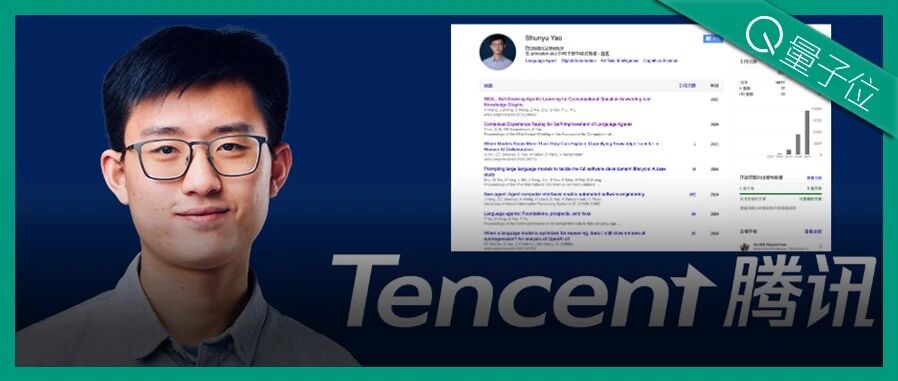
腾讯大模型团队架构调整,前OpenAI研究员姚顺雨任要职 | 智能涌现独家
3 6 Ke· 2025-12-17 08:45
此次调整也是腾讯在今年紧锣密鼓的AI布局中,颇为重磅的一步。 36氪独家获悉,腾讯近期完成了一次组织调整,正式新成立AI Infra部、AI Data部、数据计算平台部。 12月17日下午发布的内部公告中,腾讯表示,Vinces Yao将出任"CEO/总裁办公室"首席 AI 科学家,向 腾讯总裁刘炽平汇报;他同时兼任AI Infra部、大语言模型部负责人,向技术工程事业群总裁卢山汇 报。 腾讯并未披露Vinces Yao的中文名或过往履历。不过,36氪了解到,Vinces Yao即为数月前入职腾讯的 姚顺雨,他毕业于清华和普林斯顿大学,曾任OpenAI研究员,是OpenAI首批智能体产品Operator与 Deep Research的核心贡献者。 此前,混元大模型团队虽是腾讯的公司级项目,拉通了各个BG的不同板块,就TEG内部而言,参与到 混元模型研发的就有大预语言模型部、AI Lab、机器学习平台等等部门。经过调整后,模型团队内部力 量会更加统一。 新成立的 AI Data 部、数据计算平台部,将分别负责大模型数据及评测体系建设、大数据和机器学习的 数据智能融合平台建设工作。 其中,王迪继续担任大语言模型部 ...
穿越周期的早期投资:从赛道思维到认知红利|甲子引力
Sou Hu Cai Jing· 2025-12-16 10:45
Core Insights - The article discusses the shift from "track thinking" to "cognitive dividends" in early-stage investment, emphasizing the need for investors to develop a deep understanding of people, cycles, and non-consensus views in a crowded market [1][2]. Group 1: Investment Strategies - Investors are moving away from simply betting on popular sectors and are focusing on building their own cognitive models and project radars to identify unique opportunities [1][2]. - The importance of maintaining a "feel" for the market and establishing positive feedback loops during industry downturns is highlighted as key to capturing the next big opportunity [1][2]. Group 2: Key Investment Areas - Major investment themes identified include AI applications, AI-driven consumer electronics, embodied intelligence, and energy systems related to AI [8][9]. - The focus on AI hardware and AI for Science is emphasized, with a recognition of the rapid evolution of sectors like quantum technology and biomanufacturing [9][10]. Group 3: Cognitive Differentiation - Investors are encouraged to develop unique cognitive perspectives that differentiate their investment decisions, even when consensus exists around certain sectors [12][21]. - Examples of successful investments based on unique cognitive insights include early support for companies that later gained significant market traction, despite initial skepticism from the broader investment community [14][15]. Group 4: Project Sourcing and Influence - The role of personal influence and brand visibility in attracting quality projects is discussed, with a focus on how public engagement can enhance investment opportunities [25][26]. - The importance of continuous learning and sharing insights through platforms like podcasts and articles is noted as a way to build a network of potential investment opportunities [27][28]. Group 5: Future Outlook - The consensus among investors is to continue focusing heavily on AI-related investments, with specific attention to foundational AI technologies and applications [32][33].
一份命中率 80% 的 AI 预测复盘|拾象年度预测
海外独角兽· 2025-12-15 10:01
Core Insights - The article reflects on the predictions made for the AI industry in 2025, noting that most judgments about industry dynamics and technological paths have proven accurate, although there was an overestimation of technological advancements and infrastructure maturity [2] - The emergence of positive signals such as World Model, multimodal capabilities, and robotics indicates that the AI field will continue to surprise, but high expectations have been priced in, leading to increasing market anticipation [2] Group 1: OpenAI and Microsoft Dynamics - In 2025, OpenAI transitioned to a profitable organization, and Microsoft invested in Anthropic, altering the landscape of models and cloud services [6] - Microsoft built an internal LLM team through the acquisition of Inflection AI and ended its exclusive relationship with OpenAI, leading to a multi-cloud model where all models are supported across various cloud platforms [7] Group 2: Google's Positioning - Google, initially seen as lagging in LLM training, has become the "most advanced follower" with significant resources, including TPU and distribution channels, allowing it to regain its competitive edge [8] - The launch of Gemini 3 in Q4 2025 marked a significant comeback for Google, sparking discussions about AI competition and demonstrating its advantages in AI infrastructure and talent [9] Group 3: Agent and OS Development - The competition among model vendors resembles the historical Windows/DOS battle, focusing on developer mindshare and ecosystem control, with Anthropic showing a strong commitment to building an OS [10] - The trend of transforming chatbots into advanced agents capable of complex tasks is evident, with significant investments in OS-level capabilities [11] Group 4: Coding Agents and Automation - The rise of coding agents, exemplified by Claude Code, signifies a shift in AI's role from simple assistance to generating and modifying entire projects, with substantial growth in ARR [13] - The focus on task automation highlights the importance of long-horizon task success rates as a measure of agent capabilities, with agents evolving to handle more complex tasks [17] Group 5: Context Layer and Infrastructure - The context layer is identified as a critical infrastructure capability for agents, with companies like Palantir benefiting from context engineering to enhance agent performance [22][23] - The demand for context-driven solutions is driving competition among AI and data companies, emphasizing the need for effective context layer construction [22] Group 6: Hardware and Inference Trends - The shift in focus from pre-training to reinforcement learning (RL) scaling indicates a significant change in the AI training paradigm, with post-training becoming equally important [26][27] - NVIDIA maintains its leadership in the computing market, with its market cap surpassing $5 trillion, while other companies like AMD are struggling to keep pace [25] Group 7: M&A Activity and Market Dynamics - The AI sector is experiencing active M&A activity, with larger companies acquiring AI-native applications and smaller firms, driven by the need to stay competitive [46][47] - The trend of "acqui-hire" is emerging as a strategy to quickly build high-level teams in response to the AI arms race [49][50] Group 8: Energy and Nuclear Power - The ongoing energy crisis is leading to a resurgence in nuclear power, with companies benefiting from stable power sources seeing significant valuation increases [51][52] - The demand for reliable energy sources is becoming a critical asset in the AI infrastructure landscape [52] Group 9: AI in Scientific Research - The rapid development of AI in scientific fields is leading to the emergence of specialized foundation models across various disciplines, with significant advancements expected [54][55] Group 10: Market Performance and Predictions - The U.S. stock market experienced fluctuations in 2025, with a notable recovery driven by AI investments, particularly in SaaS companies [61][63] - The narrative around AI is shifting from hype to a focus on practical applications and profitability, with companies needing to demonstrate real-world value [63]

中信证券:OpenAI企业级AI现状与Agent发展展望
Di Yi Cai Jing· 2025-12-15 00:15
(文章来源:第一财经) 中信证券研报表示,从OpenAI企业端AI的数据来看,2025年企业级AI处于场景探索阶段,用户数和流 量实现高增,能力平权和人员降本价值凸显,且行业整体渗透率仍有较大提升空间。展望2026年,我们 认为以强化学习技术发展为基础的Agent主线仍将持续演进,带动AI从降本到增收打开更多应用场景, 其中数据分析、代码生成、人力招聘、销售辅助、智能客服等场景需求较为清晰。建议持续关注AI在 财务、人力、销售、生产、供应链等管理软件核心模块上的商业进展。 ...

美国AI春晚,一盆凉水浇在Agent身上
36氪· 2025-12-11 10:00
Core Insights - The article discusses the emergence of AI Agents and the current state of AI infrastructure, highlighting the gap between the rapid development of AI Agents and the readiness of the underlying infrastructure to support them [3][5][9]. Group 1: AI Agent Development - The AI Agent era is recognized as having arrived, with significant announcements from Amazon Web Services (AWS) regarding AI infrastructure and management [5]. - There is a notable increase in interest and investment in AI Agents, with many developers and companies focusing on this area during major events like re:Invent [5][6]. - However, there is a contrasting sentiment among developers regarding the current capabilities of AI infrastructure, which is perceived as inadequate to support the demands of AI Agents [9]. Group 2: Infrastructure Challenges - Developers express concerns about the current state of AI infrastructure, citing weaknesses in cost management and AI-first capabilities [9][11]. - The high costs associated with AI model inference are a significant barrier, with estimates indicating that 80-90% of AI Agent costs are tied to inference [11]. - There is a call for a software revolution to better accommodate AI Agents, including the need for simpler interaction interfaces and the elimination of data silos [13][14]. Group 3: Investment Trends - A new wave of investment in AI infrastructure is emerging, with companies focusing on optimizing AI infrastructure to reduce inference costs [15]. - Major players like NVIDIA are making significant investments in AI infrastructure startups, indicating a trend towards enhancing the foundational technologies that support AI Agents [15]. - Database companies are also recognizing the importance of adapting their products to better interact with AI Agents, emphasizing the need for scalable solutions to meet the growing demand [15].


从App到Agent,亚马逊云科技助推的软件范式跃迁
Sou Hu Cai Jing· 2025-12-11 06:13
Core Insights - The emergence of AI Agents is seen as a pivotal moment in AI development, transforming various industries and altering work, life, and learning practices [2][11] - Software is shifting from a process and function-centric model to one focused on capabilities and execution, marking a transition from App to Agent models [2][11] Group 1: AI Agents and Their Impact - AI Agents possess capabilities such as perception, understanding, planning, action, and self-feedback, enabling them to autonomously complete tasks without relying on manual instructions [4] - The successful deployment of Agents requires four core elements: AI infrastructure, reasoning systems, enterprise data, and Agent construction tools [4][6] - Amazon Web Services (AWS) introduced the Amazon AI Factory service, allowing AI infrastructure to be deployed in customer data centers, providing a similar experience to public cloud without data upload concerns [4] Group 2: Amazon Bedrock AgentCore - Amazon Bedrock AgentCore is a new platform that enables enterprises to scale, securely build, deploy, and operate Agents, significantly reducing the time from proof of concept to production [6] - The platform features a modular design with seven delivered components, enhancing the ease and speed of Agent construction [6][7] - AWS emphasizes addressing challenges in Agent deployment, such as security and management, through features like AgentCore Policy and AgentCore Evaluations [7] Group 3: Development Tools and Paradigm Shift - The introduction of Kiro, a platform for building and managing Agents, allows for automation in task execution and analysis, transforming traditional software development practices [9][10] - Kiro Autonomous Agent acts as a virtual developer, automating various tasks and learning from team interactions, while Amazon Security Agent functions as a virtual security engineer [10] - The transition to Agent-based software development signifies a shift from application-centric to task-centric approaches, leading to lower development costs and faster delivery [11]
读懂2025中国AI走向!公司×产品×人物×方案,最值得关注的都在这里了
量子位· 2025-12-10 04:26
Core Insights - The year 2025 is marked by significant advancements in AI, particularly with the emergence of DeepSeek-R1 and the release of the V3.2 series, which encapsulate the year's technological narrative [1] - The main storyline revolves around the competition between open-source and closed-source AI models, focusing on inference efficiency, training paradigms, and cost structures, while world models evolve from theoretical concepts to real products [1] - 2025 is referred to as the "Agent Year," where AI agents transitioned from passive responders to proactive planners, leading to transformative changes across various industries [1] Group 1: AI Development and Trends - The AI landscape is evolving into an "Agent Internet Era," indicating a shift in how AI technologies are integrated into everyday applications [2] - AI is becoming a critical infrastructure in sectors like healthcare, meteorology, and industry, moving beyond mere plugins to essential components of existing systems [3] - The interplay between open-source and closed-source technologies is blurring, with agents, embodied intelligence, and world models overlapping and facilitating cross-industry collaboration [3] Group 2: AI Awards and Recognition - The "2025 AI Annual List" was unveiled at the MEET2026 Smart Future Conference, recognizing leading companies, potential startups, outstanding products, solutions, and key figures in the AI sector [6][8] - The selection process involved hundreds of companies and individuals, with results based on real data and expert opinions, reflecting the most representative forces in China's AI ecosystem [7][8] - The awards highlight companies that have played dual roles as "wave makers" and "steady navigators," continuously introducing new paradigms, tools, and models to the industry [12][14] Group 3: Notable Companies and Products - The "2025 AI Annual Leading Enterprises" list features companies that excel in technology, long-term investment, product implementation, and industry reputation, showcasing a diverse range of approaches to AI [12][18] - The "2025 AI Annual Outstanding Products" list includes applications that integrate AI into daily communication, search, and creative processes, as well as tools embedded in enterprise workflows [24] - The "2025 AI Annual Outstanding Solutions" list emphasizes solutions that incorporate cutting-edge algorithms into mature product forms, enhancing real business processes and accelerating the integration of AI technologies [30][31] Group 4: Key Figures in AI - The "2025 AI Annual Focus Figures" list includes entrepreneurs and leaders who have made significant contributions to the AI field, demonstrating the importance of human influence in technological advancements [35][36] - These individuals are recognized for their roles in driving product and business growth, advancing scientific research, and fostering collaboration across the industry [35][36]



明天!量子位的这件大事就要来了|MEET2026
量子位· 2025-12-09 05:39
Core Insights - The MEET2026 Smart Future Conference is set to take place on December 10, 2025, in Beijing, featuring prominent figures from academia and industry, including Tsinghua University and major tech companies like Baidu and Google Cloud [1][39]. Group 1: Conference Highlights - The conference will cover a wide range of topics related to AI, including large language models, embodied intelligence, autonomous driving, and cloud computing [3][39]. - Key discussions will focus on the advancements in AI technology, particularly the emergence of AI agents capable of autonomous operations and cross-system collaboration [5][6]. - The event will feature two significant dialogues: a GenAI Talk and an Agent Roundtable, addressing real industry challenges without exaggeration [7][16]. Group 2: Notable Speakers - The conference will host nearly thirty influential speakers from academia and industry, including Zhang Yaqin from Tsinghua University and executives from leading tech firms [17][21]. - The lineup includes representatives from various sectors, covering the entire AI ecosystem from foundational research to practical applications [33][34]. - Emerging companies in the AI space, such as Zhuoshijia Technology and Taichu Yuqi, will also participate, showcasing the breadth of innovation in the industry [28][31]. Group 3: Reports and Publications - The conference will release two important documents: the "2025 AI Top Ten Trends Report" and the "2025 Artificial Intelligence Annual List," summarizing key advancements and influential figures in the AI sector [35][39]. - The trends report will provide insights into technological developments, product solutions, and industry applications, serving as a comprehensive overview of the AI landscape [35][39].