人民币国际化

Search documents
暂停采购澳洲铁矿,中国为什么突然如此强硬了?
Sou Hu Cai Jing· 2025-10-13 10:27
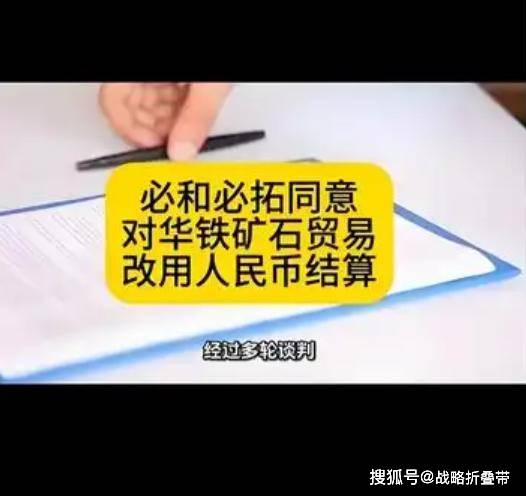
导读:2025年10月11日,必和必拓与中国矿产资源集团签署协议,同意自2025年第四季度起以人民币结 算铁矿石贸易。此前,澳大利亚总理阿尔巴尼斯于10月1日对中方决定表示"失望",但中国态度坚决。 中国对澳洲铁矿采取强硬立场,绝非一时冲动,而是长期被动后的战略破局 —— 既是对澳洲矿业巨头 定价霸权的反击,更是掌握资源话语权、推进人民币国际化的主动布局。这种强硬背后,是历史教训、 产业困境与现实底气的三重叠加。 ...


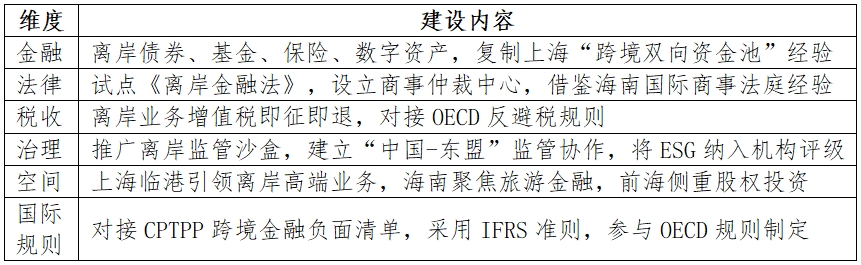
构建“六位一体”离岸金融体系
Guo Ji Jin Rong Bao· 2025-10-13 10:11
Core Viewpoint - The article emphasizes the strategic direction for the development of China's offshore financial system, aligning it with the Shanghai International Financial Center, highlighting its role in enhancing national financial competitiveness and supporting the internationalization of the Renminbi [1][22]. Summary by Relevant Sections Offshore Financial System - The offshore financial system is not merely a combination of "overseas accounts + foreign currency business," but a comprehensive institutional ecosystem that integrates five dimensions: financial, institutional, governance, spatial, and strategic [3][6]. Financial Dimension - This includes offshore accounts such as OSA (Offshore Accounts), FT (Free Trade Accounts), and NRA (Non-Resident Accounts), as well as offshore bonds, funds, banks, and insurance services [3]. Institutional Dimension - It encompasses applicable laws, judicial arbitration, regulatory rules, tax policies, and compliance standards [4]. Governance Dimension - This involves cross-border regulatory cooperation, data governance, anti-money laundering, anti-tax avoidance, and ESG (Environmental, Social, and Governance) standards [5]. Spatial Dimension - It relies on offshore financial functional zones, international financial centers, and cross-border cooperation platforms [6]. Strategic Dimension - The system aims to serve the internationalization of the Renminbi and the Belt and Road Initiative, aligning with high-standard rules such as CPTPP and DEPA, and requires pilot verification through free trade experimental zones [6]. Core Functions of the Offshore Financial System - The system's core functions are reflected in three aspects: establishing institutional pricing power for Renminbi-denominated assets, optimizing global capital efficiency, and transforming domestic regulatory experiences into international rules [7][8]. Challenges in the Current System - The current offshore financial system faces challenges such as institutional supply lagging behind strategic demand, fragmentation of regulations, and a lack of a unified legal framework [9][10][11]. Proposed Institutional Framework - A proposed "1+N+X" framework includes the establishment of an Offshore Financial Law, specialized business regulations, and local differentiated pilot programs to enhance the system's effectiveness [13][14]. Legal and Taxation Improvements - Recommendations include creating an "offshore legal applicability zone," upgrading the account system to integrate both domestic and foreign currency functions, and optimizing the tax system to attract more offshore entities [14][17]. Integrated Innovation - The article advocates for a "six-in-one" integrated innovation approach that combines finance, law, taxation, governance, spatial planning, and international rules to create a robust offshore financial ecosystem [15][18]. Future Direction - The construction of a Chinese offshore financial system should focus on institutional confidence, avoiding the mere replication of models from Hong Kong and Macau, and instead, aim to be a rule-setting entity in the global financial landscape [20][21].
美元霸权崩塌!人民币使用率暴涨,中国重塑世界经济格局
Sou Hu Cai Jing· 2025-10-13 10:10
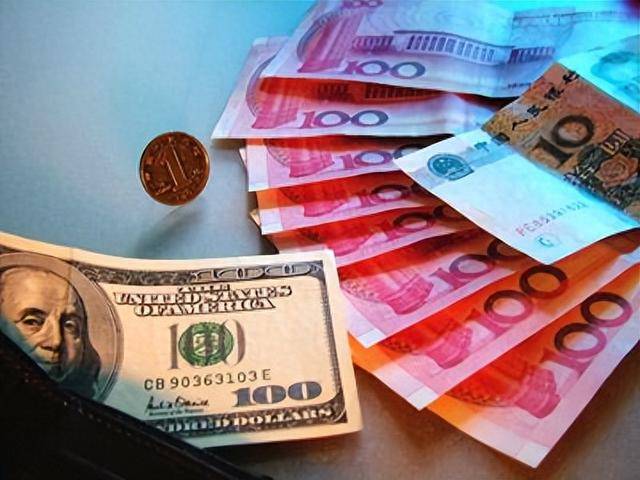
2025年10月,俄罗斯向印度出口的一批原油完成结算,这笔本应遵循国际能源贸易惯例的交易,最终却以人民币完成支付。 这一看似偶然的商业选择,正成为全球货币格局悄然转向的生动注脚。 美元地位的弱化早已在贸易场景中显现端倪。 过去全球遭遇地缘局势紧张时,美元总能凭借避险属性吸引资金流入,但这种惯性在2025年被打破。 更关键的是,美元"被武器化"的前车之鉴让各国心生警惕,不少国家曾因制裁遭遇企业交易受限、资产被冻的困境,寻找替代结算方式逐渐成为共识。 人民币正在这些信任缺口里找到自己的位置,而且这种渗透早已超出双边贸易范畴。 俄印之间的原油结算之所以选择人民币,背后是现实需求的倒逼:印度卢比国际认可度低,俄罗斯收了也难以在全球流通;卢布受地缘局势影响波动剧 烈,长期贸易中风险过高;美元则面临被制裁的潜在风险,两家最终都将目光投向了人民币。 更重要的是,俄罗斯收来的人民币能直接采购中国的工业品,印度也能通过向中国出口农产品补充人民币储备,形成了稳定的使用闭环。 这种转变在普通企业的日常经营中更为真切。 河南信阳一家外贸家具企业负责人最近明显感受到了变化:以前总觉得人民币跨境结算门槛高、风险大,习惯用外币结算,直到银 ...
宋科:数字经济时代的人民币国际化之路
Sou Hu Cai Jing· 2025-10-13 08:47
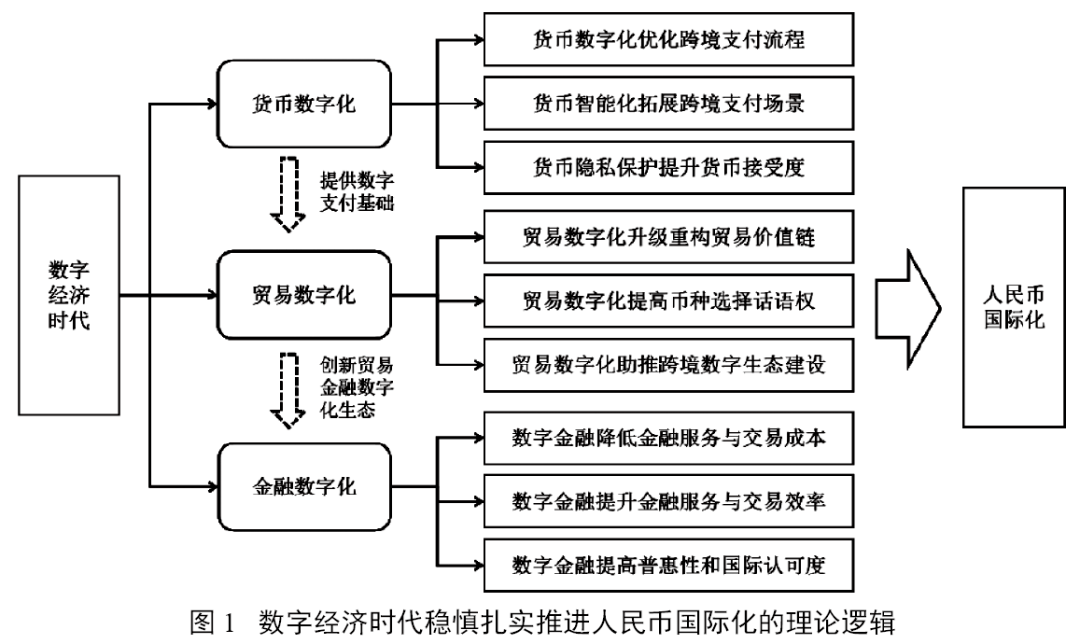
Core Viewpoint - The internationalization of the Renminbi (RMB) has progressed over 15 years, achieving significant milestones, and is now entering a new phase of cautious and steady advancement, particularly influenced by digital economy factors [1][2]. Group 1: Currency Digitalization and RMB Internationalization - Digital currency can enhance cross-border payment systems, improve payment processes, and reduce transaction costs, thereby facilitating RMB internationalization [3][6]. - The People's Bank of China is actively involved in the mBridge project, which aims to innovate cross-border payment systems and enhance the digital currency landscape [6][10]. - Central bank digital currencies (CBDCs) can streamline cross-border payment processes, integrate fund and information flows, and improve payment efficiency, positively impacting the international use of the RMB [6][9]. Group 2: Trade Digitalization and RMB Internationalization - Trade digitalization is expected to optimize trade models, reduce costs, and enhance the international competitiveness of Chinese enterprises, thereby increasing the demand for RMB in international trade [11][12]. - The shift towards digital trade allows for improved negotiation power and currency choice in trade settlements, which can further promote RMB internationalization [13][14]. - Digital trade platforms are emerging, creating a digital ecosystem that supports various cross-border payment scenarios, enhancing the RMB's international usability [15][16]. Group 3: Financial Digitalization and RMB Internationalization - Digital finance, through technological innovation, can change financial product service models, enhance market depth and breadth, and promote low-cost, high-efficiency financial services, increasing the global use of the RMB [17][18]. - The development of digital finance can lower transaction costs and improve transaction efficiency, thereby encouraging the international use of the RMB [19][20]. - Digital finance can also enhance financial inclusivity, providing more accessible financial services to underserved populations, which can expand the RMB's application scenarios [19][20].
太硬了
表舅是养基大户· 2025-10-13 07:59
Group 1 - The core point of the article is that despite nearly 70% of stocks declining, the A-share market's performance exceeded expectations, indicating resilience amid external uncertainties [1][4][6] - External factors, particularly comments from major companies like Vance and Chuanbao, have eased market sentiment, contributing to a recovery in U.S. stock futures [4][6] - The A-share market is experiencing a necessary adjustment due to high market congestion, with the top 5% of stocks accounting for 45.95% of total trading volume, indicating potential structural deterioration [12][14][15] Group 2 - The Hong Kong stock market has seen a more significant decline compared to A-shares, reflecting its higher foreign investment concentration and pricing power [7][10] - Recent data shows that September's exports increased by 8.3% year-on-year, while imports rose by 7.4%, with iron ore imports being a notable variable [34][35][36] - A significant reduction in shareholding by the chairman of Dongfang Fortune, amounting to over 5.8 billion, raises concerns about market dynamics and pricing power [29][33]

澳洲妥协!同意结算!外国网友看袋围铁矿巨头服软同意人民币结算
Sou Hu Cai Jing· 2025-10-13 07:37
根据2025年10月上旬的多篇财经报道,澳大利亚铁矿石巨头必和必拓(BHP)已同意自2025年第四季度起,在对华铁矿石现货交易中接受人民币结算。 这一事件被国内外媒体和网友广泛关注,视为中国在国际大宗商品贸易和人民币国际化进程中取得的关键突破。 印度网友:袋鼠也就这样,我感觉我们也可以要求以卢比结算铁矿山交易,毕竟印度也是铁矿进口大国 美国网友:试试就知道,谁会把印度放眼里!还真以为自己又行了 巴西网友:袋鼠的动作也太快了他们就应该坚持自己的立场,这样订单全都是我们的了 美国网友:袋鼠太不靠谱了!东大才停止进口几天铁矿就着急的服软,真有那么可怕吗 西班牙网友:袋鼠还以为自己掌握资源就硬气,铁矿石并不仅仅澳洲才有 澳洲网友:为什么服软呢!这一年要损失多少,坚持不买他们连铁都造不出了 美国网友:失去东大这样的大客户会像我们的豆农一样,濒临破产,必和拓必可不是傻子 日本网友:计谋这一块,还是没人玩得过东大,东大也不会打没有准备的仗,一定是找到了替代品 澳洲网友:好好的服务东大这样的客户吧!别让巴西给挖走了 俄罗斯网友:澳洲好好的做自己的生意吧!没必要听美国人的话,以人民币结算也不亏,要认清形势 长期以来,国际铁矿石 ...


铁矿石贸易人民币结算破冰,中国夺得定价权
Sou Hu Cai Jing· 2025-10-13 04:51
Core Insights - The iron ore trade market, valued at $1.2 trillion, is undergoing its most significant transformation in thirty years with a landmark agreement between China Mineral Resources Group and BHP to implement RMB settlement for iron ore spot trades starting in Q4 2025 [1][3]. Group 1: Transition from USD to RMB - The shift to RMB settlement marks a substantial advancement in China's pricing power for iron ore, which has historically been dominated by USD settlements, accounting for approximately 80% of the trade [3][4]. - BHP was the last major Australian mining company to refuse RMB settlement, but after China’s directive to halt USD-priced iron ore purchases, BHP quickly accepted the new terms [3][4]. Group 2: Pricing Power Dynamics - The competition for iron ore pricing power reflects a broader struggle for dominance in the global commodity trade system [4]. - The establishment of China Mineral Resources Group in 2022 has consolidated purchasing power for state-owned steel enterprises, enabling more effective negotiations against BHP's proposed price increases [5]. Group 3: RMB Internationalization Milestone - The agreement is a strategic milestone for the internationalization of the RMB, with other companies like Vale and Fortescue Metals Group also agreeing to RMB settlements [6][10]. - The Cross-Border Interbank Payment System (CIPS) has demonstrated its capability for global commodity settlements, processing RMB payments amounting to 134.5 trillion yuan in 2023 [6]. Group 4: Strategic Supply Diversification - China's diversified supply strategy, including the upcoming Simandou iron ore project in Guinea, is expected to significantly enhance its bargaining power in iron ore pricing [10]. - The project, with a capacity of 120 million tons per year, could account for 10% of China's annual iron ore imports upon completion [10]. Group 5: Global Implications - The shift to RMB settlement could reduce trade costs for Australia by approximately 1.5 billion AUD annually, given that iron ore constitutes 62% of its exports to China [11]. - The transformation is also impacting other countries, with Russia increasing iron ore exports to China by 80%, 45% of which are settled in RMB [11][13]. - By 2025, the proportion of global commodity transactions settled in RMB is projected to reach 18%, a significant increase from 5% in 2022 [13].
渣打:重申对中国市场的信心,今年实现5%左右增长目标“很有底气”
Ge Long Hui A P P· 2025-10-13 04:46
格隆汇10月13日|渣打集团行政总裁温拓思(Bill Winters)近日再次重申对中国市场的重视与信心。温拓 思表示,中国新经济展现的创新活力与快速发展令人振奋,并认为中国政府提振市场信心、促进消费的 措施行之有效,经济韧性十足,今年实现5%左右增长目标"很有底气"。他特别关注中国向高品质发展 转型的路径,从世界工厂升级为150多个国家的主要贸易伙伴、清洁技术领导者,再到创新驱动释放新 质生产力,每一步都蕴含巨大机遇。人民币国际化、居民财富增长、企业跨境拓展,还有双碳目标下的 绿色转型,都是渣打想参与的赛道。 ...
多家头部券商,落地新业务
Jing Ji Wang· 2025-10-13 02:40
Core Insights - The People's Bank of China, the China Securities Regulatory Commission, and the State Administration of Foreign Exchange jointly issued an announcement to support foreign institutional investors in conducting bond repurchase transactions in the Chinese bond market [1][2] - The new business initiative aims to further open up the interbank bond market and enrich the investment trading mechanisms for RMB assets [1][2] Group 1: Market Participation - Major institutions such as CITIC Securities and China International Capital Corporation have been selected as the first batch of cross-border repurchase market makers, successfully executing initial repurchase transactions [1][2] - Other banks, including Industrial and Commercial Bank of China, Agricultural Bank of China, Bank of China, China Construction Bank, and Shanghai Pudong Development Bank, are also actively participating in the cross-border bond repurchase market [2] Group 2: Transaction Mechanism - The announcement allows all types of foreign institutional investors to participate in bond repurchase transactions, significantly increasing market activity [2][3] - The new trading mechanism enables foreign investors to conduct repurchase transactions using mainstream international bond transfer models, enhancing transaction convenience and risk management capabilities [2] Group 3: Benefits for Foreign Investors - The bond repurchase business provides foreign investors with an efficient and convenient short-term financing channel, helping to reduce transaction costs and improve capital utilization [3] - It serves as an important tool for foreign institutions to achieve stable returns and diversify investment strategies, allowing deeper participation in the Chinese bond market [3]
渣打集团:重申对中国市场的信心,今年实现5%左右增长目标“很有底气”!人民币国际化、居民财富增长都是渣打想参与的赛道
Sou Hu Cai Jing· 2025-10-13 02:25
Group 1 - The CEO of Standard Chartered, Bill Winters, reaffirmed the bank's confidence in the Chinese market, highlighting its innovative vitality and rapid development [1] - Winters believes that the Chinese government's measures to boost market confidence and promote consumption are effective, asserting that achieving a growth target of around 5% this year is very feasible [1] - The bank is particularly focused on China's transition to high-quality development, noting opportunities in becoming a major trading partner for over 150 countries, leading in clean technology, and driving innovation to release new productive forces [1] Group 2 - Key areas of interest for Standard Chartered include the internationalization of the Renminbi, growth in household wealth, corporate cross-border expansion, and green transformation under carbon neutrality goals [1]