稳定币

Search documents
大摩闭门会议-人民币稳定币:数字化的机遇与挑战
2025-07-19 14:57
Summary of Conference Call on Stablecoins and Digital Currency Opportunities Industry Overview - The discussion revolves around the stablecoin industry, particularly focusing on the development of the Renminbi (RMB) stablecoin and its implications in the digital currency landscape [1][2][5]. Key Points and Arguments 1. **Stablecoin Definition and Usage**: Stablecoins are cryptocurrencies pegged to stable assets, primarily fiat currencies, to maintain price stability. They are extensively used in cryptocurrency trading, cross-border payments, and tokenization of real-world assets [2][3]. 2. **Market Volume**: In 2024, the global spot trading volume reached nearly $19 trillion, with 80% of transactions involving stablecoins. Visa reported a total stablecoin transaction volume of approximately $35 trillion over the past year, with 80% classified as programmatic trading [1][3]. 3. **Legislative Developments in the U.S.**: The U.S. House passed the "Genius Act," aimed at enhancing asset regulatory transparency, which could solidify the dollar's dominance by establishing dollar-pegged stablecoins [1][5]. 4. **China's Stance on Stablecoins**: China has banned virtual currency trading, limiting the development of RMB stablecoins. However, Hong Kong is positioned as a testing ground for RMB stablecoins, having implemented relevant legislation on August 1 [1][6][8]. 5. **Hong Kong's Regulatory Framework**: The Hong Kong Monetary Authority (HKMA) has initiated a sandbox for stablecoin testing, with three institutions participating. The regulatory framework aims to create a secure and transparent ecosystem for stablecoin issuance and trading [1][9][12]. 6. **Potential Beneficiaries**: Key players in the stablecoin market include issuers, reserve asset managers, trading platforms, and users. The HKMA's sandbox participants are expected to benefit from the regulatory environment [9][17]. 7. **Futu's Competitive Advantage**: Futu has a strong brand presence and a large customer base in the cryptocurrency trading ecosystem, providing a one-stop trading platform and holding various strategic licenses [1][13][14]. 8. **Future of RMB Stablecoin**: The issuance and adoption of RMB stablecoins may lag behind USD and HKD stablecoins due to limited reserve pools and usage scenarios. The internationalization of the RMB is contingent on restoring global confidence in China's growth [2][18][20]. Additional Important Insights - **Challenges in RMB Internationalization**: The RMB's internationalization requires structural reforms to enhance the attractiveness of RMB assets, addressing issues like debt deflation and an aging population [20][21]. - **Impact of Stablecoin Legislation**: The implementation of the stablecoin law in Hong Kong is expected to fill a global compliance gap and inject new momentum into the financial center, potentially enhancing its competitiveness in the digital asset space [17][18]. This summary encapsulates the critical insights from the conference call regarding the stablecoin landscape, particularly focusing on the RMB stablecoin's development and the regulatory environment in Hong Kong.

易方达、巴克莱同步举牌中州证券,港股券商板块因虚拟资产机遇崛起
Mei Ri Jing Ji Xin Wen· 2025-07-19 14:34
Core Viewpoint - The recent interest from major institutions like E Fund and Barclays in Zhongzhou Securities has drawn significant market attention, highlighting the potential growth prospects of the brokerage sector [1][2]. Group 1: Institutional Investment - On July 11, Barclays purchased approximately 125 million shares of Zhongzhou Securities, achieving a holding ratio of 12.46% [2]. - E Fund acquired 5.27% of Zhongzhou Securities, increasing its total shares to 62.96 million [2]. - The stock price of Zhongzhou Securities surged over 75% on the same day, closing with a gain of 47.48% [1]. Group 2: Market Context - The surge in brokerage stocks on July 11 was linked to news regarding stablecoins [2]. - The brokerage sector has seen a strong performance, with major firms reporting significant profit growth, indicating a robust equity market [4]. Group 3: Future Outlook - Analysts suggest that the brokerage sector is undervalued and underweighted, with H-shares showing more advantages compared to A-shares [4]. - The price disparity between A-shares and H-shares indicates potential investment opportunities, with current premiums for A-shares over H-shares being substantial [4][5].
摩根士丹利:解密富途加密货币的优势
摩根· 2025-07-19 14:02
Investment Rating - The report indicates a positive outlook for the cryptocurrency industry, particularly for the specific company involved, due to favorable regulatory conditions in Hong Kong [1]. Core Insights - The active regulatory environment in Hong Kong has created favorable conditions for financial institutions like the specific company to engage in cryptocurrency business, having obtained a cryptocurrency brokerage license and launched related services [1]. - The company has over 700,000 retail clients in Hong Kong, with an average client asset of approximately HKD 500,000, providing a solid user base for entering the cryptocurrency market [1]. - As a regulated entity, the company offers competitive pricing in cryptocurrency trading, providing greater value to investors and positioning itself as a bridge between traditional finance and the cryptocurrency world [1][4]. - The evolving regulatory landscape in Hong Kong is expected to bring additional revenue sources for the company, especially with the introduction of futures products and the acquisition of VATP licenses, enhancing its growth potential [1][5]. - Stablecoins present potential opportunities in infrastructure, custody, and payment sectors, with the potential for significant revenue increases based on stablecoin reserve asset investment returns and expanded application scenarios [1][6]. - Although it is challenging to estimate the size of the cryptocurrency trading market in Hong Kong, approximately 25% of Bitcoin trading volume occurs during Asian trading hours, indicating substantial market potential [1][7]. - The target of achieving a 12% market penetration rate by 2027 is considered feasible if the company continues to optimize trading experiences [1][7]. Summary by Sections Regulatory Environment - The company benefits from the developing cryptocurrency regulatory environment in Hong Kong, which may lead to the introduction of more futures products and additional revenue sources [5]. Market Potential - The cryptocurrency trading market in Hong Kong is difficult to quantify, but the significant trading volume during Asian hours suggests a large market potential [7]. Competitive Advantage - The company’s competitive advantages include a large retail client base, a one-stop service offering, and competitive pricing compared to platforms like Coinbase [3][4]. Revenue Growth - The company anticipates gradually increasing its fee rates while maintaining a focus on market share, leveraging cross-selling opportunities and low incremental costs to enhance profitability [10].
稳定币及RWA观点分享
2025-07-19 14:02
Summary of Key Points from the Conference Call on Stablecoins and RWA Industry Overview - The discussion revolves around the **stablecoin** industry, highlighting its applications in **cross-border trade** and **smart payment solutions** such as invoice tokenization and Project DSFT, which have received fintech innovation awards and funding, showcasing commercial potential [1][2] - The global trend towards stablecoin policy is one of increasing attention and support, with central banks and regulatory bodies accelerating the formulation of relevant policies to ensure safe and compliant development, although regulatory intensity varies across countries [1][3] Core Insights and Arguments - Future trends for stablecoins include expansion in cross-border trade and smart payment sectors, growth in commercial applications, and increased attention and investment from traditional financial institutions, indicating a positive outlook [1][5] - The digital asset market has recently shown strong performance, with Bitcoin and Ethereum prices surging, suggesting that major economies are entering the stablecoin economic competition, driven by expectations of relaxed monetary policy from the Federal Reserve [1][10] - The market faces challenges from geopolitical tensions, policy changes, monetary policy uncertainties, internal market risks, and potential bubble cycles, necessitating vigilance against various risks [1][12] Regulatory Landscape - Key regulations impacting the digital asset space include the **Stablecoin Act**, **Clarity Act**, **Anti-CBDC Act**, and **Fit 21 Act**, which could significantly influence the global digital asset landscape and economy [1][6] - Different countries exhibit varying regulatory attitudes, with Hong Kong actively following U.S. legislation, while Singapore is tightening regulations, leading to operational challenges for stablecoin payment companies [1][7] Misconceptions and Risks - There are misconceptions within the Chinese community regarding the potential and risks of stablecoin economic models, which could lead to new risks if not addressed [1][4] - The digital asset market is expected to experience a new bull market, with stablecoins playing a central role, but significant risks and misunderstandings could lead to a potential crash [1][11] Market Dynamics - The primary battleground for stablecoins is in the offshore dollar stablecoin system, with major users of USDT and USDC located outside the U.S., particularly in regions like Africa, Asia, and Latin America [1][17] - The issuance of stablecoins is seen as straightforward, but operational security and management are complex due to the prevalence of malicious actors in the blockchain ecosystem [1][18] Future Opportunities and Challenges - The stablecoin market is expected to see hundreds or even thousands of different types of stablecoins, with major companies and celebrities likely to issue their own for brand promotion and low-cost financing [1][26] - Hong Kong is positioned as a significant player in the global stablecoin market, with initiatives to support Chinese entrepreneurs in the stablecoin economy [1][28] Conclusion - The future scale of the stablecoin market is closely tied to China's stablecoin strategy, with significant challenges in competing against the dominance of the U.S. dollar, which currently holds 97% to 99% of the market share [1][30] - Users in global payment systems tend to prefer dollar stablecoins, indicating a need for strategies to encourage the use of Hong Kong or Renminbi offshore stablecoins [1][31][32]
运作报告半夏宏观对冲2025年6月报
2025-07-19 14:02
Summary of Key Points from the Conference Call Industry Overview - The macroeconomic environment shows a continuation of previous trends, with the US AI sector maintaining high capital expenditure and fiscal deficits offsetting contractions in other private sectors [12][10] - The US labor market remains robust, with state government employment expanding, contributing to market stability despite recession fears [12][10] - In China, economic policies have not yet gained momentum, with ongoing issues in real estate and infrastructure funding, leading to a persistent decline in second-hand housing prices [12][10] Economic and Market Insights - The US stock market has rebounded to new highs despite concerns over economic weakness [12][10] - China's second-hand housing market is experiencing a monthly decline of 1%, with PPI and CPI remaining negative, indicating ongoing deflationary pressures [12][10] - The overall economic fundamentals and corporate earnings in China are weak, yet the equity market continues to attract capital inflows due to asset scarcity [12][10] Commodity Performance - Commodity prices are showing signs of strength despite weak demand, categorized into three types: 1. Domestic industrial commodities experiencing supply shrinkage near cash cost levels [13] 2. Commodities with significant overseas pricing components, such as non-ferrous metals, benefiting from expectations of fiscal expansion from the US [14] 3. Oil prices rising due to geopolitical tensions in the Middle East [15] Banking Sector Risks - A significant potential risk is emerging from rising bad debts in the banking sector, particularly in long-term loans to residents, which amount to nearly 60 trillion yuan [16] - The bad debt rate for retail loans has accelerated, reaching levels not seen since early 2016, with second-hand housing prices continuing to decline [17] - A 30% decline in the second-hand housing index could lead to increased default probabilities as collateral values drop below loan amounts [17][18] Investment Strategy Adjustments - The current risk-reward profile for holding bank stocks has shifted negatively, leading to a complete reduction of bank stock holdings in Q2 [18] - Future fiscal policies, especially in real estate, are expected to gain traction as bad debt risks materialize [18] - A significant market style shift is anticipated as these risks unfold [19] Investment Plans - **Gold**: The acceleration of stablecoin issuance is reducing gold's allocation in portfolios [20][21] - **Interest Rates**: Reallocation towards medium-term government bond futures as interbank liquidity stabilizes [22] - **Commodities**: Maintaining net long positions in industrial commodities as prices approach cash cost levels [23] - **Equities**: No significant changes in equity positions compared to the previous month [24] Long-term Holdings - 40% of long-term positions are in stocks with favorable characteristics such as low price-to-book ratios and high dividends, including state-owned enterprises in construction and materials [25] - 15%-20% of positions are in stock index futures, providing protection against potential downturns [25]
稳定币法案落地,比特币跳水,美国银行业坐不住了
Hua Xia Shi Bao· 2025-07-19 13:58
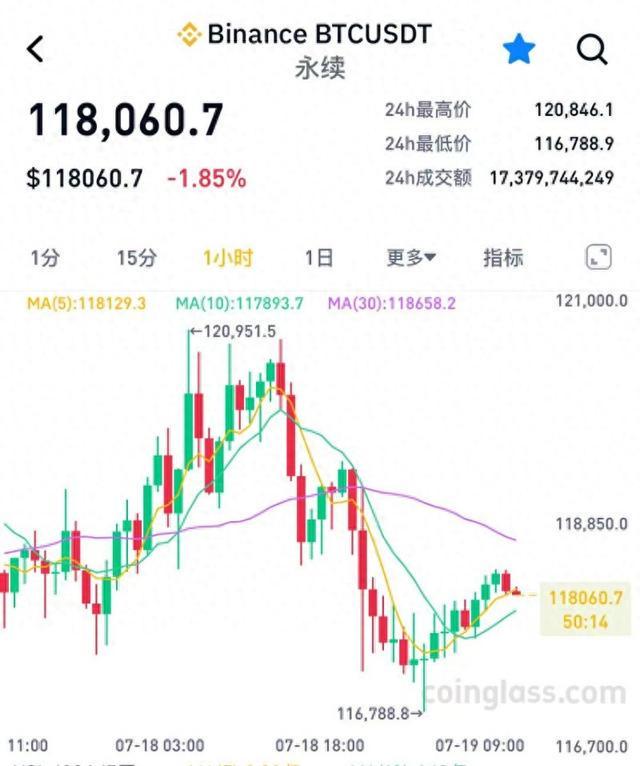
Core Viewpoint - The signing of the "Genius Act" by President Trump marks the beginning of a federal regulatory framework for stablecoins in the U.S., enhancing the legitimacy of the cryptocurrency industry and providing clearer rules for its development [2][4]. Regulatory Framework - The "Genius Act" establishes a legal framework for the issuance and regulation of stablecoins, including requirements for reserve assets, information disclosure, and auditing mechanisms [4][5]. - The act allows stablecoin issuers to hold reserve assets such as fiat currency, government bonds, and central bank reserves, aiming to ensure stable redemption of stablecoins [4][5]. Market Impact - Following the announcement of the act, the cryptocurrency market experienced a collective downturn, with Bitcoin dropping from $120,000 to around $117,000, reflecting a 1.85% decline within 24 hours [2]. - The total market capitalization of stablecoins has surpassed $260 billion, with Tether's USDT leading at over $160 billion, followed by Circle's USDC at over $64 billion [5]. Competitive Landscape - Circle's USDC is positioned to benefit significantly from the new regulations, as 80% of its reserves are in U.S. government bonds, aligning with compliance requirements [5]. - Tether's USDT faces challenges due to its lack of compliance in the U.S. market, despite controlling over 60% of the stablecoin market [6]. Banking Sector Response - Major U.S. banks are increasingly entering the stablecoin space, with Bank of America and Citibank planning to launch stablecoin products, viewing them as crucial for future international payments [8][9]. - JPMorgan has already initiated a pilot for a deposit token named JPMD, which is pegged to U.S. dollar deposits and supports real-time transfers [8]. Systemic Risks - The rise of stablecoins may pose systemic financial risks similar to those of shadow banking, as issuers lack traditional banking constraints, potentially leading to vulnerabilities during market stress [9]. - The issuance of stablecoins by banks is seen as a strategy to maintain control over payment systems and mitigate the impact of financial technology disruptions [9].

加密货币公司Bullish冲刺纽交所:Q1亏3.5亿美元 Peter Thiel是股东
Sou Hu Cai Jing· 2025-07-19 12:36
雷递网 雷建平 7月19日 硅谷投资大佬、亿万富翁Peter Thiel支持的数字资产交易所运营商Bullish(股票代码为BLSH)日前递交招股书,准备在美国纽交所上市。 Bullish曾计划与特殊目的收购公司Far Peak Acquisition(FPAC.US)合并,估值90亿美元,最终未能完成交易。 美国的加密货币公司受益于特朗普政府对加密货币行业的支持以及国会推进加密货币立法,最终促成《天才法案》(Genius Act) 的通过和签署,该法案旨 在监管稳定币。 早前,USDC稳定币发行商Circle在纽交所上市,共发售3400万股,募资总额为10.54亿美元;其中,Circle在此次IPO中出售了1480万股,获4.59亿美元; 包括CEO在内的现有股东减持了1920万股,套现近6亿美元。 Circle是继Coinbase后,成为少数几家在美国上市的纯加密货币公司之一。截至今日收盘,Circle市值达498亿美元。 Q1净亏3.48亿美元 Bullish成立于2020年,是一家专注于机构投资者的全球数字资产平台,目标是提供关键任务型产品和服务,帮助机构投资者拓展业务,赋能个人客户,并 推动稳定币、 ...

计算机行业周报:KimiK2发布获多项开源SOTA!美国天才法案通过!-20250719
Shenwan Hongyuan Securities· 2025-07-19 11:05
Investment Rating - The report rates the industry as "Overweight," indicating a positive outlook for the sector compared to the overall market performance [53]. Core Insights - The report highlights the significant advancements in the AI and computer sectors, particularly with the release of the Kimi K2 model, which has achieved state-of-the-art (SOTA) results in various benchmarks [5][6]. - The passage of the "Genius Act" by the U.S. House of Representatives is seen as a pivotal moment for the stablecoin market, providing a regulatory framework that could enhance the dollar's global dominance and promote financial innovation [30][36]. - The report emphasizes the growing integration of AI in various sectors, particularly in healthcare and government, as companies like 博思软件 (Bosso Software) develop AI solutions tailored to these industries [41][42]. Summary by Sections AI Model Developments - The Kimi K2 model, released on July 11, 2025, features a MoE architecture with a total of 1 trillion parameters and 32 billion active parameters, significantly improving code capabilities and reducing inference costs [7][10]. - The model has seen a daily usage of over 1 million tokens shortly after its launch, driven by increased demand due to the discontinuation of other AI programming tools in the region [10][11]. Regulatory Developments - The "Genius Act," passed on July 17, 2025, establishes a comprehensive regulatory framework for stablecoins, aiming to ensure that only licensed entities can issue them and mandating full reserve backing [30][33]. - This legislation is expected to enhance consumer trust and market stability while setting a benchmark for global stablecoin regulation [36]. Company Updates - 博思软件 is actively integrating AI into its operations across healthcare, public procurement, and government sectors, developing AI agents to improve efficiency in these areas [41][42]. - The company has launched several innovative applications, including AI solutions for medical billing and public procurement compliance [44]. Investment Opportunities - The report identifies key investment targets in the digital economy, AI applications, and companies involved in stablecoin issuance and cross-border payments, suggesting a diversified approach to capitalize on the sector's growth [27][36][39].




特朗普签署稳定币相关法案,什么是稳定币?要“稳”住什么?
华尔街见闻· 2025-07-19 10:53
Core Viewpoint - The signing of the "Genius Act" by President Trump establishes the first regulatory framework for digital stablecoins in the United States, aiming to enhance the demand for U.S. Treasury bonds, lower interest rates, and maintain the dollar's status as the global reserve currency [1][2][5]. Legislative Progress - The U.S. Senate passed the "Genius Act" with a vote of 68 to 30 on June 17, marking the first major approval of cryptocurrency legislation in the Senate [5]. - The House of Representatives approved three related bills on July 17, including the "Genius Act," "Digital Asset Market Clarity Act," and "Anti-Central Bank Digital Currency Surveillance Act" [5]. - Trump described the "Genius Act" as one of the greatest changes in financial technology since the advent of the internet and reiterated his opposition to establishing a central bank digital currency in the U.S. [5]. Understanding Stablecoins - Stablecoins are cryptocurrencies designed to maintain a stable value, typically pegged to the U.S. dollar at a 1:1 ratio, differing from more volatile cryptocurrencies like Bitcoin [8]. - The "Genius Act" mandates that stablecoins be backed by liquid assets such as U.S. dollars or short-term Treasury securities, with issuers required to disclose reserve details monthly [8]. Market Growth and Projections - The stablecoin market has grown significantly from a valuation of $20 billion in 2020 to approximately $247 billion currently, with projections estimating it could reach $3.7 trillion by 2030 [11]. - The two largest stablecoins, Tether (USDT) and USD Coin (USDC), together account for about 90% of the total market capitalization [10]. Government Objectives - The U.S. government aims to leverage stablecoins to bolster the dollar's influence in the digital currency space and maintain its dominance in the global monetary and payment systems [13][14]. - By promoting stablecoins, the government seeks to alleviate future pressures on U.S. debt and enhance its competitive edge in the global economy [14]. Global Influence of the Dollar - Experts suggest that the U.S. dollar's global influence is rooted in the post-World War II economic order, and current measures may not suffice to maintain its status without fulfilling international responsibilities [18]. - The ability of the U.S. to uphold global economic stability and trade relations will be crucial for the future acceptance of stablecoins [19]. Domestic Controversies - The "Genius Act" has faced criticism from both parties, with some Democrats arguing it lacks sufficient consumer protections and some Republicans claiming it contradicts previous executive orders against central bank digital currencies [20].

三大加密货币法案通过!听研究总监前瞻加密货币和稳定币法案背后机会
Hua Er Jie Jian Wen· 2025-07-19 08:51
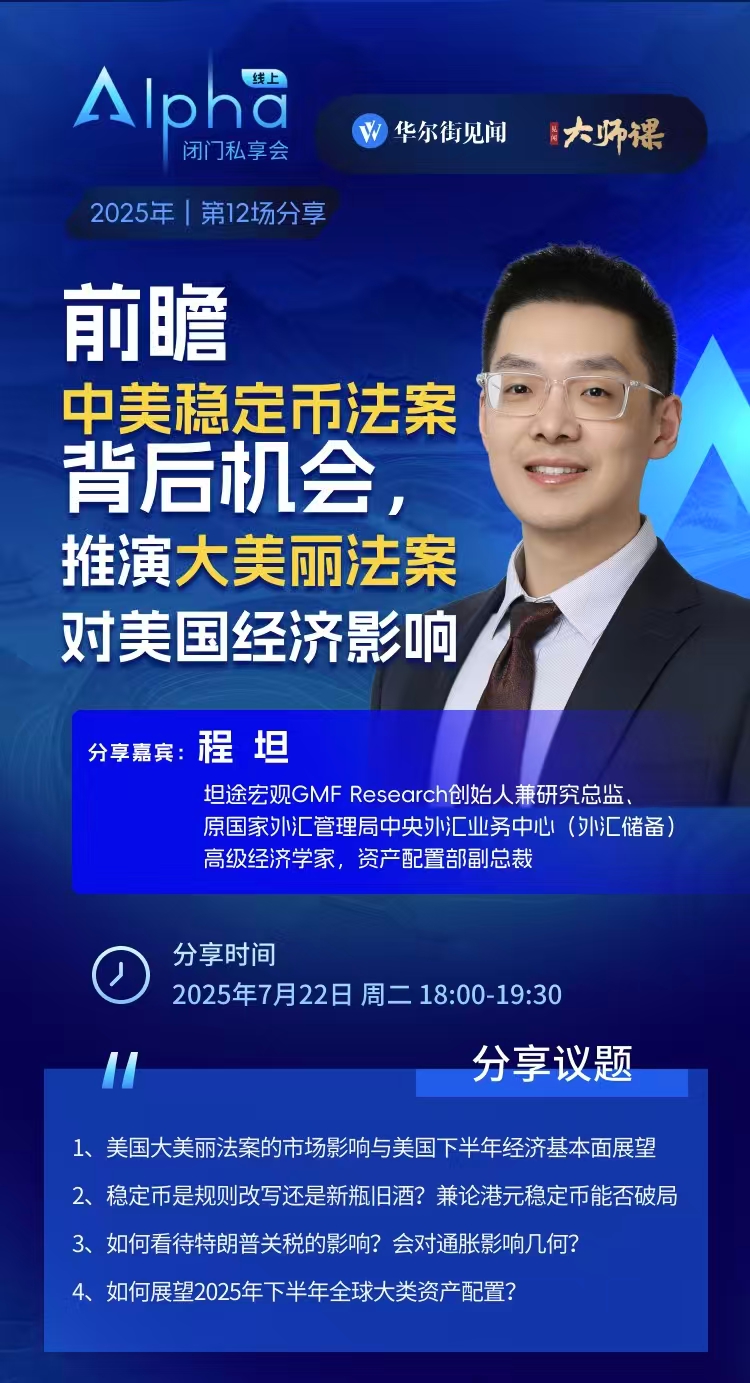
在本次闭门会上,程坦老师将重点分析稳定币的来龙去脉,港元稳定币能否破局,并前瞻背后的机会与风险。本次会议还会研判美国大美丽法案 通过对美国经济的影响,分析美国下半年的经济基本面和关税影响,并展望2025下半年全球资产配置,帮大家看清全球资产大趋势、理清思路。 程坦老师是坦途宏观(GMF Research)创始人兼研究总监,北京大学光华管理学院金融学博士,曾任国家外汇管理局中央外汇业务中心(外汇储 备)高级经济学家,资产配置部副总裁,在《管理世界》等期刊上发表多篇学术论文,研究报告多次获党中央、国务院批示。GMF Research是一 家专注于海外宏观和大类资产研究的独立研究机构,为机构与个人订阅者提供一站式投研服务,目前拥有近两千名个人用户,机构客户覆盖国内 数十家头部资产管理机构和私募基金。 此次分享的详细议题请见以下活动海报,感兴趣的朋友可点击下图加入Alpha闭门私享会会员。 2025年7月17日,当地时间美国众议院悉数通过了《指导与建立美元稳定币国家创新法案》(简称《GENIUS法案》)《2025 数字资产市场清晰法 案》(简称《CLARITY 法案》)、《反 CBDC 监控国家法案》(Anti-CB ...