多边主义

Search documents
做大互利“蛋糕”传递共赢信心
Jing Ji Ri Bao· 2025-07-17 22:06
Core Viewpoint - The third China International Supply Chain Promotion Expo demonstrates China's commitment to maintaining global supply chain stability and fostering open cooperation among countries, countering the challenges posed by decoupling and supply chain disruptions [1][2][3] Group 1: Supply Chain Cooperation - Supply chain cooperation leads to synergistic effects, enhancing economic advantages among countries and fostering deep integration [1] - The expo serves as a platform for multinational companies to accelerate global supply chain integration and innovation [2] Group 2: China's Initiatives - China proposed initiatives at the expo to ensure global supply chain security, promote innovation, accelerate digital supply chain development, and deepen global business cooperation [2] - The country is actively expanding its high-level opening-up policies to attract foreign investment, which is crucial for the participation of foreign enterprises in the expo [2] Group 3: Global Economic Context - The expo reflects a collective expectation for open cooperation and mutual benefit among participating countries, emphasizing the importance of multilateralism [2][3] - China's role as a beneficiary and maintainer of global supply chain integration is highlighted, especially in the context of rising global economic challenges [1]
刘建超会见南非非国大副主席、副总统马沙蒂莱
news flash· 2025-07-17 11:48
马沙蒂莱表示,中方举办此次链博会,为南中两国和广大发展中国家深化合作提供了重要平台。此访期 间,南方同中方就推动两国合作深入交流,我们对访问成果感到满意。南方愿同中方在两党两国最高领 导人共识引领下,加强贸易投资、基础设施建设、新能源汽车、农业等领域合作,密切人员往来,助力 两国各自发展,增进两国人民福祉。中国市场为南非提供了重要发展机遇,欢迎更多中国企业来南投资 兴业。当前单边主义、保护主义抬头,南方愿与中方在金砖、联合国、二十国集团等多边机制框架下密 切协作,践行真正的多边主义,维护国际公平正义。非国大珍视同中国共产党的友谊,希进一步加强两 党在党校建设、干部培训等领域交流合作,推动两党关系好上加好。 智通财经7月17日电,据中联部新闻办,7月17日,中共中央对外联络部部长刘建超在北京会见南非非国 大副主席、副总统马沙蒂莱。 刘建超欢迎马沙蒂莱来华出席第三届链博会并到访中联部。刘建超表示,在习近平主席和拉马福萨总统 战略引领和亲自推动下,中南关系步入"黄金时代"。中方愿同南方共同落实好两国元首重要共识,在涉 及彼此核心利益和重大关切问题上继续坚定相互支持,深化各领域务实合作,密切民间友好往来。当前 国际形 ...
关税战阴云笼罩G20 南非疾呼合作救经济
智通财经网· 2025-07-17 11:01
Group 1 - The G20 finance ministers and central bank governors meeting took place in Durban, South Africa, amid concerns over U.S. President Trump's trade policies [1] - South Africa's Finance Minister Enoch Godongwana warned of multiple headwinds threatening global economic growth, including increased trade barriers and geopolitical risks [1] - The International Monetary Fund (IMF) has downgraded the global economic growth forecast for 2025 from 3.3% to 2.8% [1] Group 2 - This meeting is the third G20 finance ministers meeting of the year, with previous meetings failing to reach a joint communiqué due to significant disagreements among members [2] - The U.S., set to take over the G20 presidency in December, has opposed discussions on climate financing and institutional inclusivity, which are central to South Africa's agenda [2] - Godongwana emphasized the importance of revitalizing multilateralism through inclusive dialogue and collective action to address global challenges [2]
【高端访谈】金砖合作机制为全球治理改革注入“南方力量”——访英国学者马丁·雅克
Xin Hua She· 2025-07-17 07:35
Core Viewpoint - The BRICS cooperation mechanism is growing in strength and influence, providing a platform for the Global South to enhance unity and cooperation, while injecting "Southern power" into global governance reform [1][2]. Group 1: Significance of BRICS Cooperation - The development of the BRICS cooperation mechanism is significant as it addresses the long-standing bias of the international system towards the West, allowing emerging markets and developing countries to have their voices heard [1]. - The total population of BRICS countries exceeds half of the global population, enabling them to represent broader interests and voices in global governance [1]. - The recent expansion of BRICS reflects a major decision by member countries, enhancing the mechanism's representativeness and inclusivity, and creating greater space for collaboration among Global South countries [1]. Group 2: Diversity and Multilateralism - The diversity of the Global South is a key advantage for BRICS, necessitating the expansion of cooperation areas and innovative collaboration methods while maintaining unity and cohesion [2]. - Multilateralism relies on cooperation and trust among nations, emphasizing the importance of resolving differences through consultation to promote common development [2]. Group 3: China's Role in BRICS - China plays a crucial role in the development of the BRICS cooperation mechanism, providing solid support through its own development and promoting deeper and broader cooperation with independent strategic thinking [2]. - The consensus-building and collaborative efforts led by China have been essential for BRICS to reach its current level of achievement [2].
国际锐评丨推动中澳关系“进一步向前、向好”正当其时
Yang Shi Xin Wen Ke Hu Duan· 2025-07-17 02:13
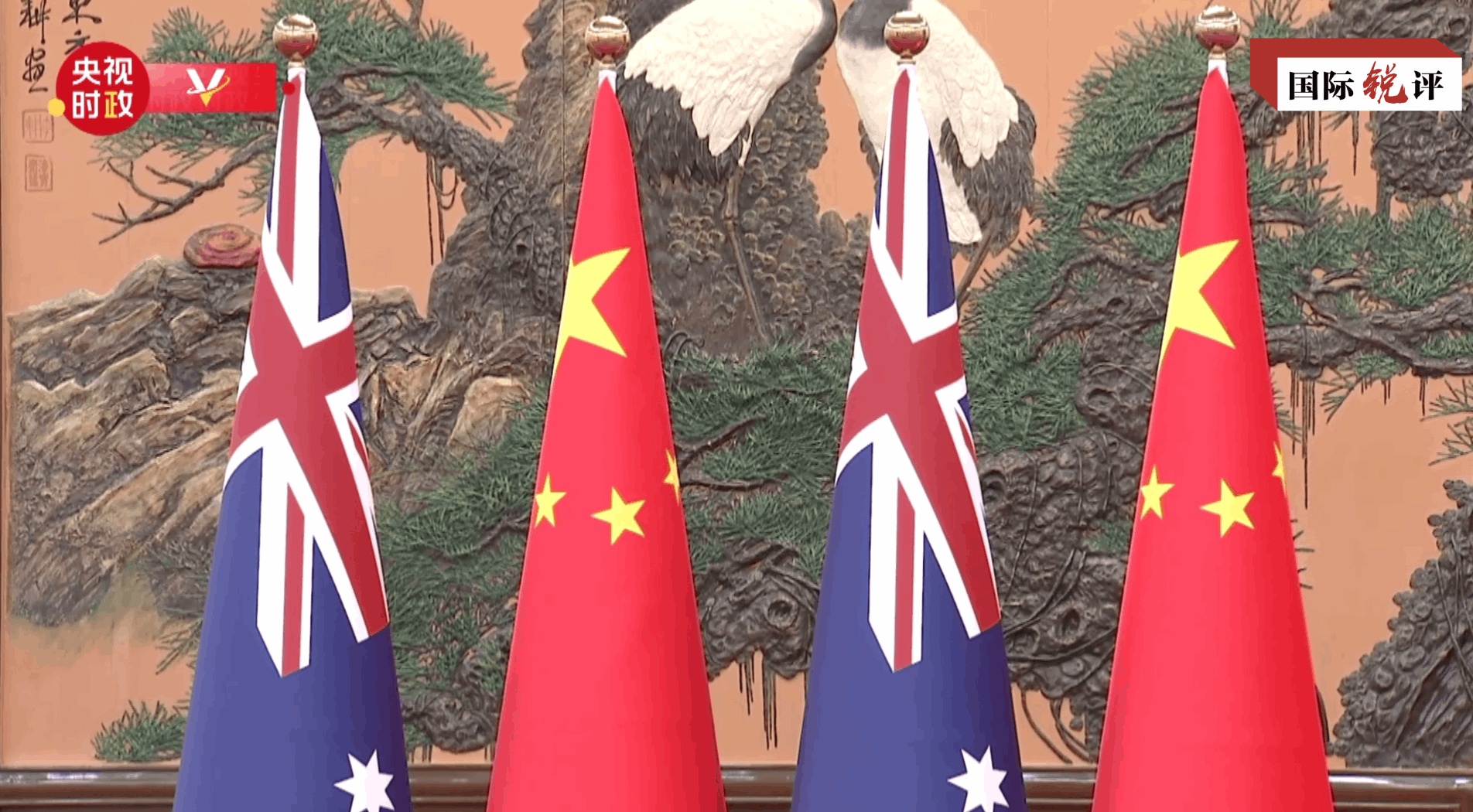
Group 1 - The core focus of the article is on the importance of stabilizing relations between Australia and China, highlighting Prime Minister Albanese's visit to China as a reaffirmation of economic cooperation and dialogue [1][3] - The visit marks the second time Albanese has visited China since taking office, emphasizing the ongoing development of the comprehensive strategic partnership between the two nations [1][3] - The meeting between President Xi Jinping and Prime Minister Albanese resulted in a joint statement agreeing to enhance communication and cooperation in areas of mutual interest while managing differences wisely [1][3] Group 2 - The article discusses the rational and pragmatic approach of the Australian government towards China, indicating a shift in policy planning based on national interests [3] - It notes that the past three years have seen a stabilization and improvement in China-Australia relations, with both sides learning from their experiences [3] - Strategic mutual trust is highlighted as a core element for further development of bilateral relations, with both leaders emphasizing the importance of correct mutual understanding and maintaining peace and cooperation [3][4] Group 3 - Economic cooperation is a key focus of Albanese's visit, with a business delegation accompanying him, and a clear message that Australia does not seek to decouple from the Chinese economy [4] - The article mentions the significance of the high-level free trade agreement signed a decade ago, which has greatly facilitated trade between the two countries [4] - Future cooperation is expected to strengthen in traditional sectors like agriculture and mining, while also expanding into emerging fields such as artificial intelligence, healthcare, green energy, and digital economy [4] Group 4 - The article highlights the increasing closeness between the peoples of both nations, with China being the largest source of international students and tourists for Australia [6] - A new five-year mutual visa arrangement and a unilateral visa waiver policy from China are set to enhance people-to-people exchanges [6] - The emphasis on cultural, sports, education, and tourism exchanges is expected to further strengthen bilateral ties [6] Group 5 - Both countries reaffirmed their commitment to multilateralism and free trade, stressing the importance of the United Nations and the World Trade Organization [6] - The article points out the significance of this cooperation in the current global context, aiming to provide more stability and certainty to the international community [6] - The visit is seen as a step towards promoting a more just and reasonable international order [6] Group 6 - Albanese's visit is framed within the context of Australia's national interests, advocating for a rational approach to relations with China despite existing differences [7] - The article concludes with a hopeful outlook for the future of Australia-China relations, emphasizing the potential benefits for both nations and the broader region [7]

推进普惠包容的经济全球化
Jing Ji Ri Bao· 2025-07-17 01:01
Group 1 - Economic globalization is an inevitable trend driven by the development of social productivity and technological progress, not artificially created by specific individuals or countries [1][2][3] - The essence of economic globalization is characterized by the free flow of goods, capital, information, and services globally, which enhances cooperation and mutual benefits among countries [3][4] - The historical context shows that the significant achievements in economic development and social progress over the past decades are due to the embrace of economic globalization, learning from past conflicts [2][3] Group 2 - Economic globalization is crucial for enhancing people's welfare, as it has led to the rise of global production systems, economic prosperity, and a decrease in global poverty rates [4][6] - The current global economic landscape is marked by challenges such as unilateralism and protectionism, which threaten the progress of economic globalization [5][6] - There is a need for innovation in the concepts, models, and cooperation mechanisms of economic globalization to address its negative impacts and ensure it benefits all nations [6][7] Group 3 - The direction of economic globalization should focus on inclusivity and mutual benefits, addressing the disparities caused by global resource allocation [7][8] - Open economies are essential for national progress, as evidenced by China's development trajectory, which has been significantly influenced by its openness to global markets [9][10] - China has actively participated in and supported economic globalization, contributing to global economic stability and development through various initiatives and reforms [10][11]
第三届链博会火热开幕!打造更紧密国际“共赢链”
证券时报· 2025-07-17 00:11
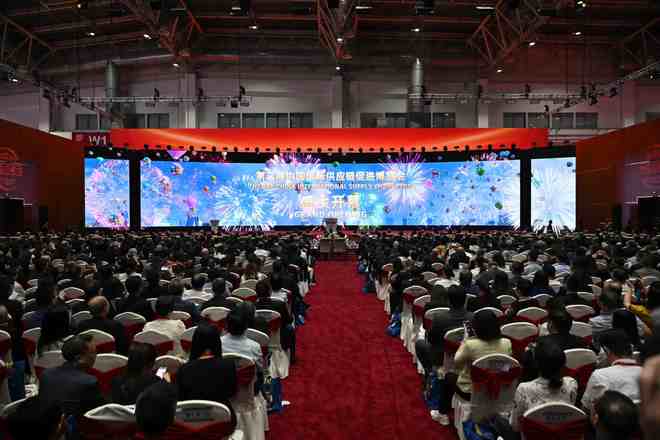
Core Viewpoint - The third China International Supply Chain Promotion Expo (Chain Expo) showcases the vitality and creativity of the global business community, emphasizing the urgent need for companies in the supply chain to find partners, application scenarios, and solutions in the current environment [1]. Group 1: International Participation - This year's Chain Expo features 651 enterprises and institutions from 75 countries and regions, with the proportion of foreign exhibitors increasing from 32% in the previous year to 35% this year [4]. - The actual number of exhibitors reached 1,200, including over 500 partners from the upstream and downstream of the supply chain, highlighting the growing internationalization of the event [4]. - The establishment of various supply chain exhibitor alliances at this year's expo aims to facilitate more tangible cooperation among supply chain participants [4]. Group 2: Foreign Enterprises' Commitment - Many foreign enterprises have been deeply engaged in the Chinese market for decades, with Honeywell having established a complete localized value chain in China over its 90 years of presence [7]. - Airbus has been collaborating with the Chinese aviation industry for 40 years, making China its largest single-country market for civil aircraft [7]. - The participation of Airbus and its Chinese supply chain partners at the expo underscores the integration of capable Chinese companies into Airbus's global supply chain [7]. Group 3: Apple's Engagement - Apple has participated in the expo for the third time, emphasizing its ongoing investment and collaboration with Chinese suppliers, with over 80% of its 200 major global suppliers having factories in China [8]. - The global supply chain index matrix released at the event indicates a stable overall development of global supply chains, with improvements in the indices of promotion, connection, innovation, and resilience from 2018 to 2024 [8]. Group 4: Global Cooperation and Initiatives - The opening ceremony featured the reading of the "Beijing Initiative," which calls for global business communities to practice true multilateralism and promote a fair, open, and predictable market environment [10]. - The initiative emphasizes the importance of maintaining the resilience and stability of global supply chains as a crucial factor in driving world economic development [10]. - Representatives from various countries highlighted the need for continued cooperation in supply chain management to ensure future prosperity and sustainable development [10].

贸促会与国际工商界共同倡议:践行多边主义,加强全球产业链、供应链安全 链博会
Zhong Guo Jing Ying Bao· 2025-07-16 14:16
Core Points - The third China International Supply Chain Promotion Expo (Chain Expo) opened in Beijing on July 16, with over 1,100 representatives from more than 100 countries and regions attending the opening ceremony [1][2] - The event emphasized the importance of maintaining a multilateral trade system and ensuring the stability of global industrial and supply chains [1][2] Group 1 - The "Beijing Initiative" was released, calling for the removal of artificial barriers to trade, investment, technology, and service flows, and promoting a more equal and inclusive supply chain partnership [2] - The theme of this year's Chain Expo is "Linking the World, Creating the Future," running from July 16 to 20, supported by five international organizations [2] - The expo features six major thematic exhibition areas, including advanced manufacturing, smart automotive, green agriculture, clean energy, digital technology, and health living, with 651 participating enterprises and institutions from 75 countries and regions [2]
澳总理任内二度访华,寻求拓展绿色、医疗等多领域合作
2 1 Shi Ji Jing Ji Bao Dao· 2025-07-15 13:07
Core Points - Australian Prime Minister Albanese's visit to China marks a significant step in improving Australia-China relations, emphasizing mutual cooperation and respect [1][2][3] - The visit includes key cities such as Shanghai, Beijing, and Chengdu, indicating a broader engagement with China's diverse regional development [2][3] - The visit coincides with the second decade of the Australia-China comprehensive strategic partnership, highlighting the importance of multilateral cooperation in a changing global landscape [4][6] Economic Cooperation - Australia has been China's largest trading partner for 16 consecutive years, with significant trade growth following the 2015 China-Australia Free Trade Agreement [6][7] - The bilateral trade volume reached AUD 312 billion (approximately RMB 14,623.75 billion) since the agreement's implementation, creating jobs and boosting economic prosperity in Australia [7][8] - Key areas of cooperation include traditional sectors like energy and agriculture, as well as emerging fields such as green technology, healthcare, and digital economy [7][8] Cultural and Human Exchange - Albanese's visit aims to deepen cultural exchanges, with initiatives in sports and tourism, including the facilitation of visa policies that have increased bilateral tourism [5][6] - The Australian government is focusing on enhancing people-to-people connections through various collaborative efforts, including sports and educational exchanges [5][8] Future Prospects - The potential for expanding cooperation in artificial intelligence, healthcare, and digital economy is recognized, with suggestions for joint ventures and research initiatives [8] - The visit is seen as an opportunity to reassess and upgrade the existing free trade agreement to better reflect current economic realities and mutual interests [7][8]
《求是》杂志发表习近平总书记重要文章
中国基金报· 2025-07-15 12:07
Core Viewpoint - The article emphasizes the importance of high-level opening up to promote reform and development, asserting that China's development is inseparable from the world, and vice versa. The door to China's openness will only continue to widen [1][2][27]. Group 1: Expansion of High-Level Opening Up - Continuous expansion of high-level opening up is essential for achieving high-quality economic development in China. The focus is on attracting global resources through domestic circulation and enhancing the synergy between domestic and international markets [2][28]. - The article advocates for a steady expansion of institutional openness, aligning with international high-standard economic and trade rules, and creating a first-class business environment that is market-oriented, law-based, and internationalized [2][35][57]. Group 2: Foreign Investment Policies - China's policy on utilizing foreign investment remains unchanged, with the country being the second-largest consumer market globally, housing the largest middle-income group, which presents significant investment potential [3][64]. - The article highlights that China has established a relatively sound legal and regulatory framework for foreign investment, maintaining political stability and social order, making it one of the safest countries for foreign investment [3][65]. Group 3: Global Economic Integration - Economic globalization is viewed as an objective requirement for the development of social productive forces and technological progress, providing strong momentum for global economic growth [3][20]. - The article stresses the need to resist unilateralism and protectionism, advocating for true multilateralism and inclusive economic globalization, while actively participating in global economic governance [3][39][69]. Group 4: Belt and Road Initiative - The Belt and Road Initiative is highlighted as a significant strategic measure for expanding openness and economic diplomacy, aiming to create a new pattern of international cooperation and development [27][54]. - The article calls for enhancing innovation capabilities through open cooperation and forming a comprehensive open pattern that connects land and sea, as well as east and west [27][54]. Group 5: Legal Framework and Business Environment - The article emphasizes the importance of advancing high-level opening up on a legal basis, enhancing the legal framework for foreign-related activities, and protecting the legitimate rights and interests of foreign investors [57][64]. - It advocates for a transparent and predictable policy environment, with a significant reduction in the negative list for foreign investment, aiming to create a favorable business environment for foreign enterprises [64][65].