量子计算

Search documents
直击WAIC 2025|2025世界人工智能大会上海开幕:百余款新品首发首秀,规模创历史之最
Mei Ri Jing Ji Xin Wen· 2025-07-26 04:00
Core Insights - The "2025 World Artificial Intelligence Conference and Global Governance High-Level Meeting" (WAIC 2025) opened in Shanghai on July 26, focusing on the theme "Intelligent Era, Shared Future" [1] - The conference features five main components: forums, exhibitions, competitions, application experiences, and innovation incubation, showcasing the latest practices in AI technology, industry trends, and global governance [1] - WAIC 2025 emphasizes three core highlights: academic breakthroughs, integration of software and hardware, and global governance, targeting ten key areas including AI infrastructure, scientific intelligence, and AI-enabled new industrialization [1] Event Participation - WAIC 2025 has attracted over 1,200 guests from more than 30 countries and regions, including 12 recipients of prestigious awards such as the Turing Award and Nobel Prize, and over 80 academicians [2] - The conference has the largest knowledge co-creation lineup in its history, featuring representatives from top international laboratories [2] Exhibition Highlights - This year's exhibition area has surpassed 70,000 square meters, with over 800 companies showcasing more than 3,000 cutting-edge products, including over 40 large models and more than 50 AI terminal products [3] - The event includes four major exhibition halls, creating an "AI Capability Corridor" that integrates algorithm models, scene fusion, embodied collaboration, and supply-demand matching [3] Youth Engagement - WAIC 2025 focuses on youth, upgrading awards to recognize outstanding young scientific talents in basic research, technological breakthroughs, and application innovations [3] - The conference introduces various platforms for competitions and discussions, providing a stage for young talents to engage with international experts and industry leaders on topics like model evolution and quantum computing [3]
直面三大挑战 破解六大瓶颈期货业服务实体经济再升级
Zhong Guo Zheng Quan Bao· 2025-07-25 21:07
Core Viewpoint - The article discusses the challenges faced by real enterprises in the context of escalating geopolitical conflicts and volatile commodity prices, emphasizing the need for effective risk management through futures markets [1][2]. Group 1: Challenges Faced by Real Enterprises - Real enterprises are currently facing three core challenges: supply chain security and cost pressure due to geopolitical conflicts, weak market demand and intensified competition, and the need for technological upgrades amidst a talent shortage [1][2]. - The geopolitical conflicts, such as the Russia-Ukraine war and Middle East tensions, have led to increased procurement costs and inventory management difficulties for enterprises [1]. - Traditional markets are experiencing slow growth and severe homogenization, resulting in low profit margins for enterprises [1]. - Enterprises need to invest in R&D in areas like AI and quantum computing, but many small and medium-sized enterprises (SMEs) struggle with high R&D costs and lack of skilled personnel [1][2]. Group 2: Bottlenecks in Utilizing Futures Tools - There are six major bottlenecks preventing enterprises from effectively using futures tools: insufficient talent reserves, lack of internal training mechanisms, limited funding and risk control capabilities, inadequate risk management systems, insufficient market liquidity and product matching, and challenges in managing basis risk [2][3]. - Many enterprises lack professionals familiar with futures hedging strategies and contract design, which complicates their ability to implement effective risk management [2]. - The absence of a systematic training framework leads to a misunderstanding of futures tools as merely speculative instruments [2][3]. Group 3: Expectations from the Futures Industry - Enterprises expect the futures industry to provide product innovation and customized services, such as industry-specific contracts and the development of off-exchange derivative tools [3][4]. - There is a call for the establishment of training systems to enhance the comprehensive application capabilities of enterprises regarding futures tools [3][4]. - The optimization of market infrastructure and the expansion of delivery warehouse coverage are also seen as necessary steps to reduce delivery costs for enterprises [3][4]. Group 4: Innovative Strategies for Risk Management - The company has introduced innovative strategies such as a "futures + options" combination strategy and a dual-track inventory management mechanism to help enterprises manage risks effectively [3][4]. - For example, in the lithium carbonate market, the company utilizes a pricing model that integrates cost, profit, inventory, and basis to help enterprises mitigate price volatility risks [3][4][5]. - The dual-track inventory management allows enterprises to adjust their inventory ratios based on market price expectations, optimizing inventory management and cost control [5][6]. Group 5: Addressing the "Generalization" Dilemma - The futures market currently faces challenges in accurately matching the specific needs of various industries due to a tendency towards "generalization" in product coverage and tool design [6][7]. - There is a notable lack of specific futures products for critical raw materials in the new energy sector, which forces enterprises to rely on indirect hedging methods, leading to inefficiencies [6][7]. - The company suggests expanding the variety of futures products and optimizing contract designs to better serve the needs of SMEs and specific industries [6][7][8].
Quantum Gold Rush: The Catalysts Driving Quantum Stocks Higher
MarketBeat· 2025-07-25 14:13
Industry Overview - The quantum computing sector has experienced strong stock gains due to significant technical and commercial advancements, indicating a shift from research to commercial viability [1][2] - Market focus is now on quantum computing's potential to fundamentally transform the technology sector, with a long-term value creation thesis emerging [2][16] Company Summaries D-Wave Quantum - D-Wave's stock is linked to its strategy of delivering immediate business value, with 81% of business leaders acknowledging the limits of classical computing for optimization [4][6] - The company reported a 509% year-over-year revenue growth in Q1 2025, driven by the sale of its Advantage2 system, showcasing its technology's effectiveness in real-world applications [6] Rigetti Computing - Rigetti's stock surged 30% following a breakthrough in achieving 99.5% two-qubit gate fidelity, significantly reducing error rates in its quantum computers [8][10] - The company is focused on developing a universal quantum computer, with its engineering strategy showing promising results in accuracy [9][10] Quantum Computing Inc. - Quantum Computing Inc. secured a major U.S. commercial contract for a quantum cybersecurity testbed, highlighting its disruptive potential with room-temperature integrated photonics technology [12][14] - The company's approach aims to provide more practical and cost-effective quantum systems, validated by its recent bank contract [13][14] Market Dynamics - The quantum sector's market valuations are based on future potential rather than current revenues, similar to early internet stocks, with an investment thesis centered on capturing a future market worth trillions [15][16] - Each company in the sector is pursuing distinct strategies: D-Wave focuses on near-term sales, Rigetti on long-term technological advancements, and Quantum Computing Inc. on practical hardware solutions [17]






极光(JG.US)融合量子计算,创新业务模式
Ge Long Hui· 2025-07-25 08:49
Core Insights - Aurora Mobile is actively exploring the integration of emerging technologies, particularly quantum computing, into its existing business model, aiming for transformative changes in customer interaction and marketing technology [1] Data Processing and Insights: Quantum Acceleration - The company faces challenges with vast and complex data in its data processing and analysis business. Quantum computing's parallel processing capabilities significantly enhance the efficiency of analyzing customer behavior and preferences [2] - Quantum algorithms enable rapid identification of customer behavior patterns, allowing for the precise prediction of repurchase timing, thereby providing optimal marketing windows and improving data insight depth and accuracy [2] Precision Marketing and Recommendations: Quantum Empowerment - Precision marketing and personalized recommendations are core to the company's business. Quantum bits enrich customer profiling dimensions, creating more accurate and comprehensive customer images [3] - Enhanced collaborative filtering algorithms powered by quantum computing can aggregate vast amounts of information to tailor recommendations for customers, significantly increasing marketing conversion rates and customer satisfaction while optimizing marketing resource allocation [3] Intelligent Decision Support: Quantum Assistance - The complexity of marketing decision-making, with numerous variables, is addressed by the company's use of quantum computing for simulation capabilities. This allows for the construction of market simulation models based on market trends, customer dynamics, and competitor strategies [4] - Quantum simulations can test various promotional strategies, including different channels, timing, and promotional intensity, helping businesses make more informed and forward-looking marketing decisions [4]

新技术让激光线宽缩至原来的万分之一
news flash· 2025-07-24 22:12
Core Viewpoint - A breakthrough technology developed by a team from Macquarie University in Australia has successfully compressed the linewidth of lasers to one ten-thousandth of its original size, from 10 megahertz to 1 kilohertz, which could revolutionize fields such as quantum computing, atomic clocks, and gravitational wave detection [1] Summary by Relevant Categories Technology Advancement - The new technology allows for a significant reduction in laser linewidth, enhancing precision in various applications [1] Potential Applications - The advancements in laser technology are expected to impact several critical areas, including quantum computing, atomic clocks, and gravitational wave detection, indicating a broad scope of influence [1]
IBM、特斯拉股价暴跌,特朗普将视察美联储
Zhong Guo Ji Jin Bao· 2025-07-24 16:27
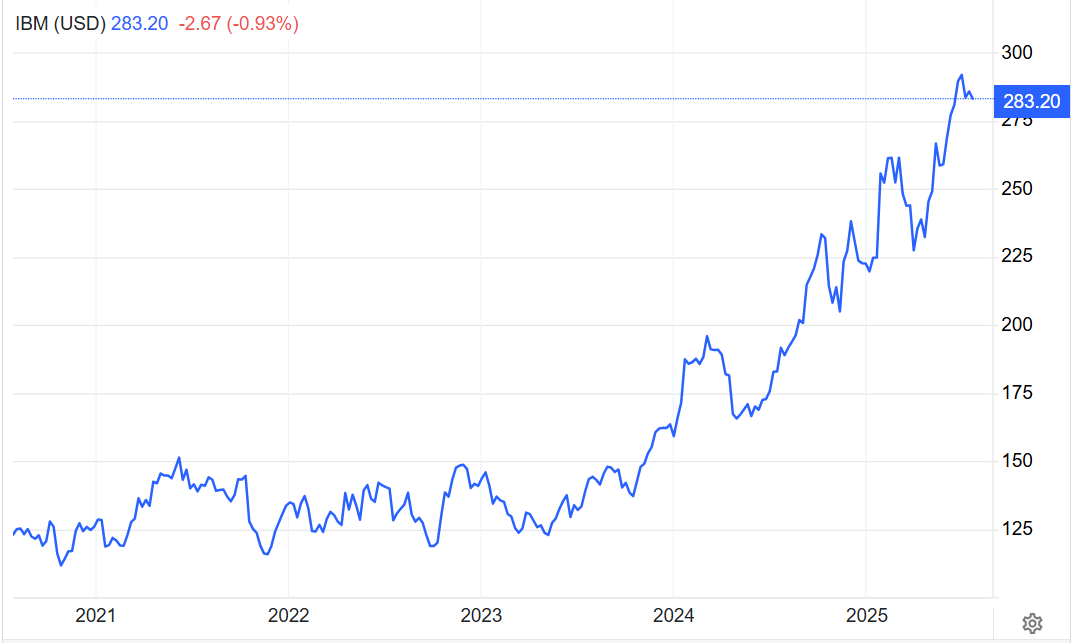
Market Overview - The U.S. stock market showed mixed results, with the Dow Jones Industrial Average dropping over 100 points, while the Nasdaq and S&P 500 indices saw slight increases, reaching new highs [1][2] Company Performance - Alphabet's stock rose after reporting second-quarter earnings and revenue that exceeded market expectations, along with an upward revision of its full-year capital expenditure forecast, which analysts deemed reasonable [2][4] - Tesla's stock plummeted as CEO Elon Musk warned of "several tough quarters" ahead, citing the impact of recent tax law changes on electric vehicle tax credits and federal fuel economy standards [5] - IBM's software sales fell short of expectations, leading to its largest stock drop since 2021, with second-quarter software revenue growing 10% to $7.39 billion, slightly below the expected $7.49 billion [6][8] Analyst Insights - Analysts view Alphabet's strong performance as a positive indicator for the market, particularly regarding the substantial investments in artificial intelligence [4][8] - The technology sector continues to demonstrate its leadership in sustainable growth, as highlighted by the ongoing positive earnings reports [4][8] Other Company Updates - STMicroelectronics reported an unexpected restructuring loss and provided lower-than-expected quarterly guidance, resulting in its largest stock decline in a year [8][9]

【环球财经】全球不稳定性加剧凸显德中合作价值——访德国斯图加特会展中心首席执行官布莱因罗特
Xin Hua She· 2025-07-24 08:40
Group 1 - The core viewpoint emphasizes the importance of strengthening cooperation between Germany and China amidst global geopolitical tensions, supply chain pressures, and increasing trade barriers [1] - The Stuttgart Exhibition Center serves as a vital platform for economic connection between Germany and China, with significant participation from both Chinese and German businesses in exhibitions [1] - The optimistic outlook on Germany-China cooperation highlights numerous opportunities that can benefit both nations and the world, focusing on shared interests and collaborative efforts [1] Group 2 - The current era is characterized by disruptive technologies such as artificial intelligence, quantum computing, and automation, which are reshaping global operational rules, necessitating cooperation over division [2] - Global challenges like climate change present significant opportunities in green technologies, hydrogen energy, and fuel cells, requiring collaborative efforts from Germany, China, and other nations [2]
头顶AI与量子计算光环的IBM(IBM.US)未能交出亮眼业绩 市场从“科技狂热”回归理性
智通财经网· 2025-07-24 00:10
Core Viewpoint - IBM's latest earnings report disappointed investors, particularly due to underperformance in its software and consulting divisions, despite the company's stock having surged over 30% year-to-date, significantly outperforming the S&P 500 index [1][2][3] Financial Performance - IBM's second-quarter software sales grew by 10% year-on-year to $7.39 billion, slightly below Wall Street's expectation of $7.49 billion [2] - The consulting division's sales increased by only 3% to $5.31 billion, indicating a slowdown in growth [2] - Overall, IBM's total sales rose by 8% year-on-year to $17 billion, surpassing analyst expectations of approximately $16.6 billion [5] - The infrastructure business saw a significant 14% increase in sales to $4.14 billion, exceeding expectations of $3.66 billion [5] Business Segments - IBM's infrastructure business has become a key driver of growth, with strong demand from large enterprises, particularly in finance and retail sectors [5][6] - The company reported that bookings related to AI have exceeded $7.5 billion since mid-2023, with about 80% coming from the consulting division [3][6] Future Outlook - IBM maintains its full-year sales growth forecast of at least 5% at constant currency rates, aligning with Wall Street expectations [6] - The company anticipates free cash flow to exceed $13.5 billion, also in line with analyst estimates [6] AI and Quantum Computing - IBM's focus on AI and quantum computing is seen as crucial for driving future growth, with significant investments in AI developer ecosystems and quantum computing capabilities [9][10] - The company has announced that its quantum business orders have surpassed $1 billion, aiming to enter the "quantum practical" era by the end of the decade [10] - IBM's AI platform, watsonx, supports a comprehensive range of AI tools and models, catering to various developer needs [9][10]

国盾量子: 2025年第三次临时股东大会会议资料
Zheng Quan Zhi Xing· 2025-07-23 16:14
Core Points - The company is holding its third extraordinary general meeting of shareholders in 2025 to discuss important proposals, including signing a patent implementation license contract and revising the external investment management system [1][24]. Group 1: Meeting Details - The meeting is scheduled for July 31, 2025, at 15:00, located at the Keda Guandun Quantum Technology Park in Hefei, Anhui Province [7]. - Voting will be conducted through a combination of on-site and online methods, with specific time slots for online voting [7][3]. Group 2: Proposal on Patent License Agreement - The company plans to renew a patent implementation license agreement with the University of Science and Technology of China (USTC) and sign a new agreement due to business needs [5][10]. - The first contract involves a patent for an arbitrary waveform generation system and a proprietary technology for a low-latency synchronization device, with a license period of three years and a revenue-sharing model where 30% of net sales profit will be paid to USTC [6][10][12]. - The second contract includes three patents and one proprietary technology, with a two-year license period and a one-time entry fee of 200,000 yuan, along with a 50% share of net sales profit [17][18]. Group 3: Impact and Compliance - The transactions are considered normal business operations that will enhance the company's product matrix and market competitiveness without harming the interests of the company or its shareholders [22]. - The company emphasizes that these transactions will not significantly impact its independence or create major reliance on the related party [22].

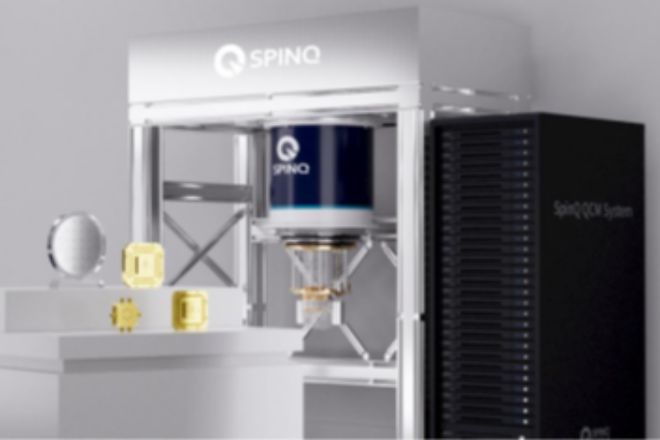
量子计算赛道融资升温,量旋科技获数亿元B轮融资
Nan Fang Du Shi Bao· 2025-07-23 10:12
Core Insights - The demand for computing power is surging in the era of artificial intelligence, leading to increased attention on quantum computing as the next-generation computing technology [2][4] - The company, Liangxuan Technology, recently completed a multi-hundred million yuan Series B financing round, with funds aimed at upgrading core technologies, expanding product commercialization, and global business layout [2][3] - Liangxuan Technology, established in 2018, is focused on the industrialization and popularization of quantum computing, offering a one-stop solution [2][3] Company Overview - Liangxuan Technology has developed two product lines: a desktop nuclear magnetic resonance quantum computer for the education and research market, and an industrial-grade superconducting quantum computer aimed at overcoming the limitations of current computing power [3][4] - The company's desktop products have been sold to over 200 universities and research institutions in more than 40 countries, serving as the main source of revenue [2][3] - The company plans to launch a hundred-qubit superconducting quantum computer by 2025 and has developed software products like the "Liangxuan Cloud" quantum computing cloud platform and "SpinQit" programming framework to lower the barriers to quantum computing usage [3][4] Industry Context - The investment in quantum computing is driven by the limitations of traditional computing models, which are nearing their physical performance limits, especially as AI models grow in complexity [4][5] - Major tech giants like IBM and Google are heavily investing in quantum computing, indicating a global competition in this field [4] - Despite the promising outlook, the industry is still far from practical application, with current quantum computers primarily in the "scenario exploration" and "algorithm validation" stages rather than mature commercial solutions [4][5] Market Projections - According to McKinsey, global quantum computing revenue is expected to exceed $1 billion by 2025, with market size potentially reaching between $28 billion and $72 billion by 2035 [4] - The quantum communication market could reach between $11 billion and $15 billion, and the total scale of the quantum technology industry may approach $100 billion by 2035, with projections of $198 billion by 2040 [4]