绿色低碳转型

Search documents
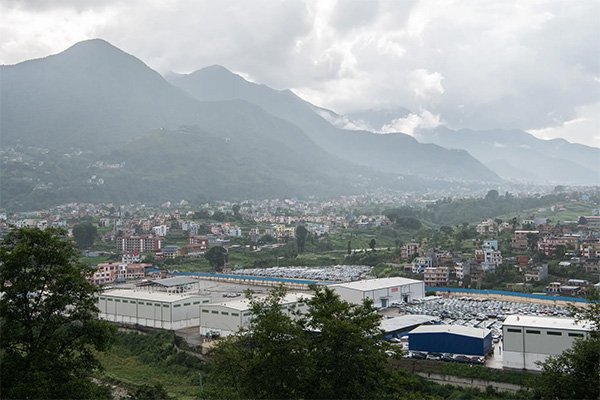
“中国电动汽车帮助尼泊尔改善空气质量,为发展中国家带来新希望”
Guan Cha Zhe Wang· 2025-07-30 12:28
Group 1 - The electric vehicle market in Nepal has experienced explosive growth, with 76% of imported electric vehicles in the fiscal year 2023-2024 coming from China [1] - The Nepalese government is actively promoting the transition to electric vehicles to reduce reliance on imported fossil fuels and improve air quality, with electric vehicles accounting for 76% of all passenger car sales and 50% of light commercial vehicle sales in the past year [1][3] - The Nepalese Customs data indicates that nearly 70% of electric vehicles imported last year were from China, highlighting the significant role of Chinese manufacturers in this market [1] Group 2 - Following a dispute with India in 2015, Nepal's oil imports decreased sharply, prompting the government to invest heavily in hydropower and electrical infrastructure to provide affordable, pollution-free electricity [3] - To encourage electric vehicle adoption, the Nepalese government implemented various incentives, including a total tax rate of 40% for electric vehicles compared to 180% for fuel vehicles [3] - The Nepal Electricity Authority has established 62 charging stations, and the government has allowed anyone to build charging facilities while significantly reducing tariffs on imported charging equipment [3][4] Group 3 - Many businesses in Nepal, including hotels and restaurants, have begun installing charging stations, indicating a growing acceptance of electric vehicles [4] - Initially skeptical, car dealers in Nepal have recognized the potential of electric vehicles, with one dealer reporting a significant increase in sales after the introduction of models suited for Nepal's terrain [5] - The competitive pricing of Chinese electric vehicles is making it difficult for Indian manufacturers to compete, as noted by local dealers [5] Group 4 - Despite the growth in electric vehicle adoption, many Nepalese still rely on inexpensive motorcycles and gasoline or diesel buses, indicating a need for more electric buses to address air pollution [7] - The Nepalese government has allocated approximately $22 million for the purchase of electric buses, with state-owned company Sajha Yatayat operating 41 new energy buses in the past two years [7] - Nepal's approach to electric vehicle adoption contrasts with the policies of the US and EU, which are attempting to curb the Chinese electric vehicle industry, offering a hopeful model for developing countries seeking economic growth while avoiding severe pollution [7]


光伏企业绿电利用显著增长,但产业链脱碳仍待加强
Xiao Fei Ri Bao Wang· 2025-07-30 11:13
Core Insights - The 2025 Photovoltaic Green Supply Chain Seminar highlighted the progress of leading companies like Longi, Jinko, and Tongwei in promoting green low-carbon transformation, despite the ongoing increase in carbon emissions within the photovoltaic industry [1][2][4] Group 1: Industry Performance - In Q1 2025, China's total installed capacity for wind and solar power reached 74.33 million kilowatts, surpassing thermal power for the first time, with solar power alone accounting for 94.6 million kilowatts [2] - By the end of May 2025, China's solar installed capacity exceeded 100 million kilowatts, with Chinese solar components now representing 83.41% of the global market [2] - The evaluation covered 55 photovoltaic-related companies, revealing significant renewable energy utilization among 40 companies, which collectively used 57.1 million megawatt-hours of renewable energy in 2024, resulting in a reduction of over 32.55 million tons of CO2 equivalent [2] Group 2: Carbon Emissions and Goals - Despite advancements, carbon emissions from photovoltaic companies remain high, with 44 companies reporting a total of 105 million tons of CO2 equivalent emissions in the last year [3] - The total carbon emissions for 24 companies that disclosed data for three consecutive years increased from 45.23 million tons in 2022 to 70.57 million tons in 2024, marking a 46.6% increase from 2022 to 2023 [3] - Seven companies committed to achieving carbon neutrality across their value chains by 2050, while six companies included supply chain reduction targets [4] Group 3: Environmental Management - Over 80% of leading companies disclosed green supply chain management requirements, with 10 companies extending environmental risk management to raw material suppliers [6] - 12 companies reported violations related to emissions and water usage, indicating a need for improved compliance and environmental management practices [6] - 16 out of 31 companies involved in component production disclosed plans for waste component recycling, although most actions were concentrated in the European market [7] Group 4: Future Outlook and Recommendations - The report suggests that Chinese photovoltaic companies should focus on international standards regarding resource consumption, greenhouse gas emissions, and biodiversity to enhance their green competitiveness [8] - The industry is encouraged to accelerate its low-carbon transformation and collaborate on building a green low-carbon supply chain to address global environmental challenges [8]



中钢协:吨钢可比能耗同比下降0.6%
Xin Hua She· 2025-07-30 10:48
Core Insights - The steel industry is facing challenges of strong supply and weak demand, but has managed to improve economic efficiency and environmental standards through self-discipline and production adjustments [1][2] Financial Performance - In the first half of 2025, the cumulative operating revenue of key steel enterprises was 299.85 billion yuan, a year-on-year decrease of 5.79% - Operating costs were 280.55 billion yuan, down 6.83% year-on-year - Total profit reached 59.2 billion yuan, showing a significant year-on-year increase of 63.26% - The average profit margin was 1.97%, up by 0.83 percentage points year-on-year [1] Industry Adjustments - The steel industry has implemented self-discipline to stabilize production, resulting in a steady yet declining crude steel output and improved economic benefits - The industry has maintained low steel inventory levels, balanced supply and demand, and kept steel prices relatively stable, which has led to a decrease in raw material demand and a shift in cost focus [1] Environmental Initiatives - In the first half of 2025, energy-saving and environmental protection investments accounted for 28.9% of total investments, an increase of 4.3 percentage points year-on-year - Total energy consumption decreased by 1.5% year-on-year, while comparable energy consumption per ton of steel fell by 0.6% - As of June 30, 193 steel enterprises completed or partially completed ultra-low emission transformations, with 144 enterprises fully completing the transformation involving a crude steel capacity of approximately 598 million tons [1] Future Outlook - The steel industry is entering a deep adjustment period focused on high-quality development and new production capabilities, facing significant transformation tasks and risks - The industry aims to strengthen bottom-line thinking, prepare adequate plans, and actively respond to challenges while promoting stable and healthy development [2]
全市经济社会发展取得开创性进展
Qi Lu Wan Bao· 2025-07-30 06:20
Core Viewpoint - The article highlights the achievements and progress made by Liaocheng in implementing the "14th Five-Year Plan," showcasing significant advancements in economic and social development over the past five years [1] Economic and Social Development - Liaocheng has exceeded expectations in nine key indicators, including fixed asset investment growth and the ratio of R&D expenditure to GDP, while 13 other indicators, such as GDP and fiscal revenue growth, have met expectations [1] - The city has adopted a "6293" work approach, leading to groundbreaking progress and transformative changes in building a modern socialist city [1] Industrial Structure Optimization - Since the beginning of the "14th Five-Year Plan," Liaocheng has added 651 high-tech enterprises and 1,092 technology-based SMEs, ranking third in the province for R&D investment for three consecutive years [2] - The city has established 12 high-standard industrial chains and created three national-level industrial clusters, significantly enhancing industrial development capabilities [2] Effective Demand Expansion - Over 3,900 key projects have been implemented, with major infrastructure developments such as the approval of Liaocheng Airport and the opening of the Jizheng High-speed Railway [3] - Continuous investment in transportation infrastructure has exceeded 10 billion annually for four years, stimulating domestic demand through various economic initiatives [3] Reform and Opening Up - Liaocheng has optimized its business environment, with three new companies listed, bringing the total to seven [4] - The city has deepened cooperation with regions like Beijing and made significant strides in logistics efficiency through the establishment of the Luwest International Land Port [4] Green and Low-Carbon Transition - The city has implemented a three-year action plan for green and low-carbon development, successfully creating a national circular economy demonstration city [5] - Renewable energy projects have expanded, with a 30% share of installed capacity from new energy and a significant reduction in energy consumption per unit of GDP [5] Urban-Rural Integration Development - The establishment of new districts and urban renewal projects has improved the city's infrastructure and aesthetics, earning the title of "National Civilized City" [6] - High-standard farmland construction and rural revitalization initiatives have been prioritized, leading to increased agricultural productivity and brand recognition [6] Enhancing Public Welfare - The city has prioritized public welfare, with over 70% of expenditures directed towards social services, including education and healthcare [7] - Significant investments in educational infrastructure and healthcare services have improved access and quality for residents, enhancing overall community well-being [7]
《山东省跨境电商发展全景分析报告(2025)》
Sou Hu Cai Jing· 2025-07-30 03:50
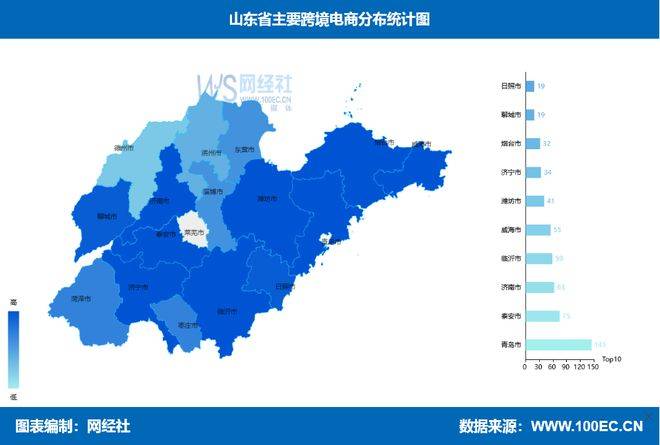
Core Insights - Shandong Province is evolving from a coastal province with "open advantages" to a national "eastern engine" for cross-border e-commerce development, supported by a "5+30" policy network [1] - The report provides a comprehensive analysis of the development history, current status, innovative practices, and future trends of cross-border e-commerce in Shandong Province [1] Group 1: Development and Scale of Cross-Border E-Commerce - Shandong's cross-border e-commerce industry has established a well-structured layout covering multiple cities and sectors, with significant contributions from cities like Qingdao, Yantai, and Weihai [2][3] - Qingdao's cross-border e-commerce import and export scale reached approximately 569.3 billion yuan in the first seven months of 2024, marking a 23.8% year-on-year increase [2] - Yantai's cross-border e-commerce import and export volume surged from 880 million yuan in 2016 to 62 billion yuan in 2022, achieving a compound annual growth rate of 103.6% [3] Group 2: Innovative Operational Models - Qingdao employs a "port logistics + live marketing" model, integrating bonded warehouses with live streaming to attract consumers [9] - Yantai has developed a "supply chain collaborative platform" model, providing comprehensive services across the entire industry chain [9] - Weihai's model focuses on "four-port linkage + industrial cluster," enhancing logistics efficiency and reducing costs significantly [11] Group 3: Achievements in Industry Development - The export value of Qingdao's eyelash industry surpassed 1 billion yuan in 2023, while Yantai's cross-border e-commerce processing capacity reached 1 million orders per day [12][13] - The logistics network in Weihai allows for goods to reach Korea within 16 hours at a cost only one-sixth of air freight [12] - Shandong aims to cultivate 100 internationally competitive cross-border e-commerce brands by 2025 [16] Group 4: Policy Environment and Implementation - Shandong has established a comprehensive policy framework to support cross-border e-commerce, including the "Shandong Province Cross-Border E-Commerce Leap Development Action Plan (2023-2025)" [22][23] - The province has implemented 44 policy measures focusing on enhancing cross-border e-commerce and fostering brand development [23] Group 5: Future Trends and Recommendations - The province is focusing on AI technology to enhance cross-border e-commerce operations, including intelligent product selection and marketing [30] - Shandong is committed to a green and low-carbon transition, promoting sustainable practices in cross-border e-commerce [31][32] - The province plans to leverage RCEP opportunities to deepen regional cooperation and expand into emerging markets [34]
中国华能:积极服务重大战略 助力保障能源安全
Zhong Guo Chan Ye Jing Ji Xin Xi Wang· 2025-07-29 23:54
内蒙古呼伦贝尔,百台纯电动无人矿用卡车在华能伊敏露天矿区"上岗"。动力全部来自光伏绿电,满电 状态单台可拉载90吨货物行驶约60公里,智能矿山低碳运输加速推进。 新疆吐鲁番,华能100万千瓦风电项目全容量并网发电。作为百万千瓦级陆地高抗风风电项目,该项目 所有机组创新采用"抗风轮毂"技术,抗极限风速能力达到57米/秒,可有效应对"沙戈荒"地区的极端大 风环境。 作为全球装机容量第二大的发电集团、国内最大民生供热企业,中国华能紧紧抓住高质量发展这个首要 任务,以科技创新引领产业升级,积极服务国家重大战略,助力保障能源安全。 围绕国家所需 攻坚核心技术 空气也能变身"超级充电宝"?茅山脚下,华能金坛盐穴压缩空气储能发电二期项目加速建设,用电低谷 时压缩空气,存储在地下;用电高峰时释放空气,产生电能向电网供电,平衡供需。 坚持稳中求进 推动产业升级 实施创新驱动发展战略,既要推动战略性新兴产业蓬勃发展,也要注重用新技术新业态全面改造提升传 统产业。 "对于中国华能而言,战略性新兴产业是引领未来发展的方向,传统产业是我们赖以生存的根基,必须 坚持稳中求进、以进促稳、先立后破。"中国华能集团有限公司党组书记、董事长温枢 ...

华能国际: 华能国际2025年半年度报告
Zheng Quan Zhi Xing· 2025-07-29 16:32
华能国际电力股份有限公司2025 年半年度报告 公司代码:600011 公司简称:华能国际 华能国际电力股份有限公司 华能国际电力股份有限公司2025 年半年度报告 重要提示 一、 本公司董事会、监事会及董事、监事、高级管理人员保证半年度报告内容的真实性、准确 性、完整性,不存在虚假记载、误导性陈述或重大遗漏,并承担个别和连带的法律责任。 二、 未出席董事情况 未出席董事职务 未出席董事姓名 未出席董事的原因说明 被委托人姓名 董事 李来龙 因其他事务未能亲自出 王葵 席会议 董事 曹欣 因其他事务未能亲自出 王葵 席会议 董事 丁旭春 因其他事务未能亲自出 高国勤 席会议 董事 王剑锋 因其他事务未能亲自出 高国勤 席会议 三、 本半年度报告未经审计。 四、 公司负责人王葵、主管会计工作负责人文明刚及会计机构负责人(会计主管人员)周远晖 声明:保证半年度报告中财务报告的真实、准确、完整。 五、 董事会决议通过的本报告期利润分配预案或公积金转增股本预案 报告期内未有经董事会审议的本报告期利润分配预案及资本公积金转增股本预案。 六、 前瞻性陈述的风险声明 √适用 □不适用 公司有关未来发展战略和经营计划的前瞻性 ...
中俄举行森林资源开发和利用常设工作小组第二十次会议
news flash· 2025-07-29 12:16
Core Viewpoint - The meeting between Chinese and Russian officials highlights the significant potential for cooperation in forest resource development and utilization, emphasizing the complementary strengths of both countries in this sector [1] Group 1: Cooperation Potential - The Chinese side expressed a strong willingness to enhance communication on trade and investment policies in the forest industry with Russia [1] - Both parties aim to deepen cooperation in related industrial and supply chains, promoting a green and low-carbon transition [1] Group 2: Market Dynamics - Russia views China as a major export market for its forest products, indicating a strong bilateral trade relationship in this sector [1] - The Russian side welcomes Chinese enterprises to invest in forest product processing in Russia and is interested in importing Chinese forestry harvesting and processing equipment and technology [1] Group 3: Environmental Focus - Both countries are looking to collaborate on low-carbon emission reduction in forestry development and utilization, aligning with global sustainability goals [1]
北京连续两年登顶中国省级双碳指数评价报告
Zhong Guo Xin Wen Wang· 2025-07-29 05:28
Core Insights - The report highlights the resilience of China's green low-carbon transition actions amid multiple pressures and complex circumstances [1][2] - The evaluation of the provincial carbon neutrality index (PCNI) reflects the progress of carbon neutrality efforts across various provinces and municipalities in China [1] Group 1: Evaluation Findings - The evaluation covers the years 2022-2023 and 2023-2024, with Beijing consistently ranking first in both evaluations [1] - Shanghai and Tianjin performed notably well in the 2023-2024 evaluation, with other provinces like Jilin, Guangdong, Sichuan, Jiangsu, Chongqing, Fujian, and Hunan also making it into the top ten [1] - Provinces such as Henan, Heilongjiang, Hainan, Hubei, and Zhejiang are positioned in the upper-middle range of the evaluation [1] Group 2: Recommendations - The research team suggests a unified national approach to achieving carbon peak targets, emphasizing the need for provincial-level breakdowns of emission reduction tasks [2] - It is recommended that provinces identify their positions based on their development stages and resource endowments, aligning their reduction tasks with the "14th Five-Year Plan" [2] - The establishment of a shared carbon emission responsibility mechanism for cross-provincial energy transmission is highlighted as crucial for regional collaborative carbon reduction efforts [2]
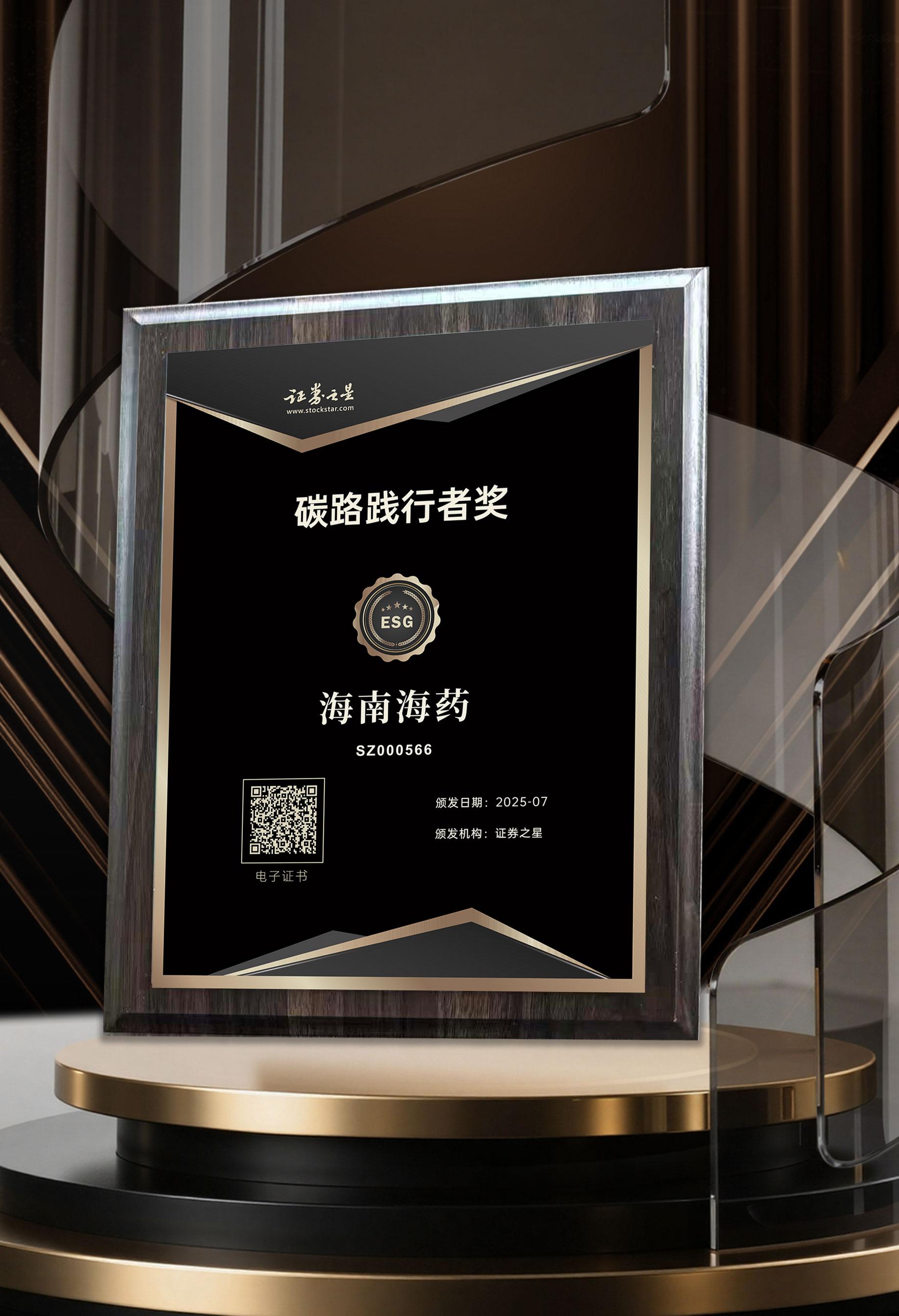
海南海药荣获证券之星ESG碳路践行者奖
Zheng Quan Zhi Xing· 2025-07-29 05:20
Core Viewpoint - Hainan Haiyao has been awarded the "ESG Carbon Path Practitioner Award" for its outstanding practices in environmental, social, and governance (ESG) areas, highlighting its commitment to sustainable development and social responsibility [1][4]. Group 1: Environmental Practices - The company implements an EHS strategic goal, focusing on clean production, resource conservation, and green low-carbon transformation, significantly reducing energy consumption and pollutant emissions [4]. - During the reporting period, Hainan Haiyao did not experience any major environmental pollution incidents, demonstrating effective energy-saving and emission-reduction results [4]. - The company is continuously pursuing circular transformation to achieve carbon neutrality [4]. Group 2: Social Responsibility - Hainan Haiyao emphasizes employee health and safety, achieving zero work-related injuries and fatalities for three consecutive years, maintaining a million-hour death rate of 0% [4]. - The company actively conducts occupational disease health checks covering nearly a thousand employees and provides professional medical services through its medical sector [4]. Group 3: Governance Structure - Hainan Haiyao has established a scientific compliance system, revising its compliance management measures to enhance decision-making transparency and effectively address grievances [4]. - The company has introduced 24 new anti-corruption measures to ensure transparency in power supervision and safeguard business integrity [4]. Group 4: Future Outlook - The company plans to continue implementing its "14th Five-Year" strategic plan, focusing on high-quality development, deepening green low-carbon transformation, and innovative research and development [5]. - Hainan Haiyao aims to accelerate its position as a leading domestic manufacturer of active pharmaceutical ingredients and intermediates while strengthening its ESG integration practices [5]. - The new journey of Hainan Haiyao will further consolidate its ESG leadership and create greater environmental and social value [5].