
产业转型

Search documents
土耳其纺织业产能就业双收缩 结构调整进入关键期
Xin Hua Cai Jing· 2025-12-23 01:20
Core Viewpoint - The Turkish textile industry is experiencing significant adjustment pressure, facing its most pronounced downturn in at least 20 years due to weakened external demand and rising production costs [1] Group 1: Industry Performance - Over 300 textile and apparel companies in Turkey have applied for bankruptcy protection this year, with more than 300,000 jobs lost in the sector over the past two years [1] - Textile production in key regions like Istanbul and Denizli has slowed, with many factories operating at only 30% to 40% of normal capacity [1] - Turkey's textile exports reached approximately $8.6 billion and apparel exports about $15.5 billion, totaling $24.1 billion, which is a decline of about 23.6% compared to the historical high of $31.56 billion in the same period of 2022 [1] Group 2: Competitive Landscape - Increased competition from Asian countries, particularly Bangladesh and Vietnam, is a significant factor putting pressure on the industry due to their lower labor and energy costs [2] - There is a noticeable decline in business activity in traditional textile trade areas in Istanbul, with many showrooms closing due to reduced orders and increased costs [2] - Changes in foreign purchasing behavior, including a decrease in cash transactions and concerns over safety and economic conditions in client countries, have further impacted buyer interest [2] Group 3: Industry Challenges and Responses - Some manufacturers are exiting the textile industry to move into more stable sectors like warehousing and logistics due to difficulties in covering basic production costs [3] - The president of the Istanbul Textile and Raw Materials Exporters Association highlighted the chain reaction effects of bankruptcy protection applications on suppliers and the overall market [3] - There is an urgent need for a new development roadmap focusing on technological transformation, brand building, and sustainable production to navigate the current adjustment period [3] Group 4: Future Directions - The industry must focus on transitioning to high-value sectors, including functional and eco-friendly fabrics, and small-batch, high-quality production to enhance competitiveness [4] - Industry transformation requires policy and financial support, including long-term financing and export credit to alleviate funding pressures for equipment upgrades and R&D investments [4] - Strengthening collaboration across the supply chain and integrating textile production with design, branding, logistics, and digital platforms can improve efficiency and resilience against market fluctuations [4]
【财经分析】土耳其纺织业产能就业双收缩 结构调整进入关键期
Xin Hua Cai Jing· 2025-12-22 16:17
新华财经伊斯坦布尔12月22日电(记者许万虎)土耳其纺织业当前正面临明显调整压力,业内人士表 示,在外部需求走弱、生产成本上升等因素叠加影响下,该行业正在经历至少20年来最明显的一轮下行 周期。 业内人士透露,行业还面临劳动力供给结构变化带来的挑战。长期从事缝纫、染整和裁剪等劳动密集环 节的部分叙利亚难民正在陆续返回本国,而本国年轻劳动力进入纺织行业意愿不足,用工短缺问题突 出。 纺织业是土耳其制造业和出口体系的重要支柱。数据显示,今年以来,该国已有300多家纺织和成衣企 业申请破产保护,过去两年间相关行业就业岗位减少超过30万个。业内普遍认为,本轮调整已超出短期 周期波动范畴,呈现出较为明显的结构性特征。 多重压力迫使企业退出行业呼吁紧急"转型" 产出放缓买家减少传统市场持续承压 据土耳其媒体报道,在伊斯坦布尔、代尼兹利、布尔萨、加济安泰普和卡赫拉曼马拉什等主要纺织产业 集中地区,不少工厂目前已停产或将开工率降至正常水平的30%至40%。作为行业重要支撑的出口表现 持续承压,欧洲市场需求疲软叠加原材料和能源成本上升,对企业经营形成制约。 官方数据显示,截至今年11月,土耳其纺织品出口额约为86亿美元,成衣出 ...
华联控股(000036.SZ)拟约1.75亿美元收购Argentum100%股份 将新增海外锂盐湖矿资产
智通财经网· 2025-12-22 14:07
智通财经APP讯, 华联控股(000036.SZ)发布公告,公司拟以自有或自筹资金约1.75亿美元(折合人民币 12.35亿元)受让Lithium Chile Inc.(以下简称"智利锂业")、Steve William Cochrane(即"Steve Cochrane")合 计持有的Argentum Lithium S.A.(以下简称"标的公司"或"Argentum")100%股份,从而获得Arizaro项目 80%的权益(以下简称"本次交易")。同日,公司与交易对方签署了《股份购买协议》。 本次交易后,上市公司将持有标的公司100.00%的股份,在保持原有房地产开发和物业经营与服务管理 业务的同时,将新增海外锂盐湖矿资产,并拟切入盐湖提锂生产业务。本次交易是上市公司推进产业转 型的重要举措,将与公司此前布局的盐湖提锂、吸附剂生产等业务形成协同效应,助力公司完善在新能 源产业链的投资布局,推动上市公司产业转型工作稳步拓展。 ...

华联控股跨界布局盐湖提锂 拟1.75亿美元收购Argentum100%股份
Zheng Quan Shi Bao Wang· 2025-12-22 14:04
Core Viewpoint - The company, Hualian Holdings, plans to acquire 100% of Argentum Lithium S.A. for approximately $175 million (RMB 1.235 billion) to gain an 80% interest in the Arizaro project, which is located in Argentina's Salta province and is part of the largest undeveloped salt lake in South America's "Lithium Triangle" [1][2]. Group 1 - The primary objective of the transaction is to acquire an 80% interest in the Arizaro project, which encompasses six mining rights over an area of approximately 205 square kilometers [2]. - The Arizaro project is expected to produce lithium carbonate from lithium brine, which is a key raw material for lithium battery production [2]. - The company aims to enhance its market competitiveness and profitability while responding to investor expectations for business transformation due to challenges in the domestic real estate market [2][3]. Group 2 - This acquisition is a significant step in the company's industrial transformation, creating synergies with its existing investments in lithium extraction and adsorbent production [3]. - Following the acquisition, the company will hold 100% of the target company and will continue its real estate operations while adding overseas lithium salt lake mining assets [2][4]. - The company plans to address potential cash flow impacts from significant capital expenditures through self-raised funds and bank loans, and may consider phased construction or third-party partnerships to alleviate financial pressure [3][4]. Group 3 - The company has previously invested in the lithium extraction industry and has partnerships with Shenzhen Juneng and Zhuhai Juneng, which possess patented technologies and solutions for lithium extraction [4]. - The acquisition will prioritize collaboration between the target company and its invested companies in project construction, personnel, and technology to leverage technical advantages for the Arizaro project's development and operation [4].
华联控股:拟1.75亿美元收购境外公司 切入盐湖提锂生产业务
Zheng Quan Shi Bao Wang· 2025-12-22 13:45
此次交易后,公司在保持原有房地产开发和物业经营与服务管理业务的同时,将新增海外锂盐湖矿资 产,并拟切入盐湖提锂生产业务。此次交易是上市公司推进产业转型的重要举措,将与公司此前布局的 盐湖提锂、吸附剂生产等业务形成协同效应。 转自:证券时报 人民财讯12月22日电,华联控股(000036)12月22日公告,公司拟以1.75亿美元(折合人民币12.35亿 元),收购加拿大公司Argentum Lithium S.A.100%股份,从而获得Arizaro项目80%的权益。 Arizaro项目包含Arizaro锂盐湖6个采矿权,总面积约205平方公里。项目目前已完成预可行性研究,在 进一步完成可行性研究后可提交开采阶段环境影响评价报告并申请审批。 ...
华联控股(000036.SZ):拟1.75亿美元收购Argentum100%股份 将新增海外锂盐湖矿资产
Ge Long Hui· 2025-12-22 13:23
Group 1 - The company plans to acquire 100% of Argentum Lithium S.A. for approximately $175 million (RMB 1.235 billion), which represents 24.31% of its latest audited net assets of RMB 5.08 billion [1] - The acquisition will allow the company to gain an 80% interest in the Arizaro project, which is part of the lithium salt lake assets [2] - This transaction is a significant step in the company's industrial transformation, aiming to enhance its investment layout in the new energy industry chain and create synergies with its existing lithium extraction and adsorbent production businesses [2] Group 2 - The target company holds rights to three projects in the Arizaro salt lake area in Salta Province, Argentina, including the Arizaro project and the Arizaro IV project, which is currently in the early exploration stage [2] - The Chascha water source project, which is a pre-bid project, will be separated from the transaction before delivery [2] - Post-transaction, the company will maintain its original real estate development and property management business while adding overseas lithium salt lake mining assets [2]
从产业转型、乡村振兴到民生保障多维度观察高质量发展与共同富裕协同并进
Yang Shi Wang· 2025-12-22 13:05
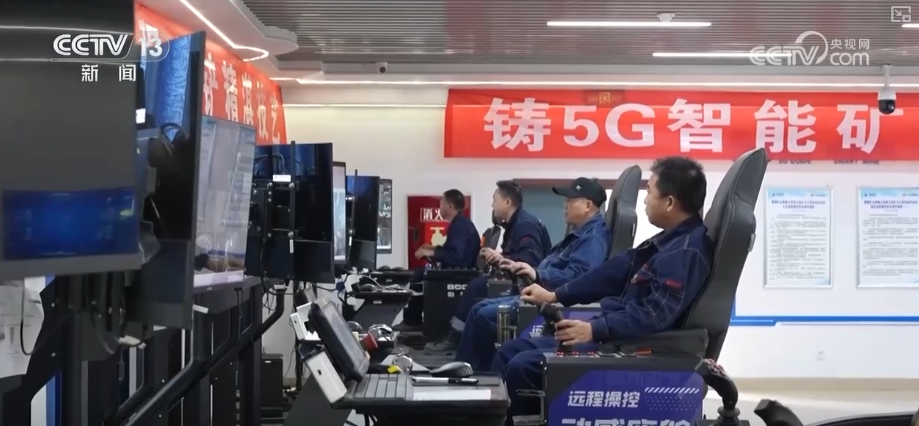
Core Insights - The establishment of the Panzhihua Common Prosperity Experimental Zone aims to explore innovative mechanisms to reduce urban-rural, regional, and group disparities through high-quality development and transformation in a traditional industrial city [1] Group 1: Industrial Transformation - Panzhihua is focusing on industrial transformation, with significant advancements in the steel industry, where Panzhihua Steel's rail production reached 6.25 million tons, generating approximately 30 billion yuan in revenue [5] - The introduction of a 5G control system at the Zhulan Iron Mine has significantly improved mining efficiency, with over 400 technical challenges overcome in the process [6] - The city has expanded its industrial base, with the number of large-scale industrial enterprises increasing to 546 [9] Group 2: Rural Revitalization - The agricultural sector is being modernized, with the introduction of drones and smart irrigation systems in mango production, leading to a significant reduction in labor costs and increased income for local farmers [16] - The Salt Border County has successfully cultivated 18 proprietary mango varieties, enhancing local agricultural innovation [18] - Initiatives like the Youth Entrepreneurship Competition are attracting new talent to rural areas, revitalizing local economies through new business models [20] Group 3: Social Welfare and Public Services - Panzhihua has been recognized as a "City with the Most Happiness" for its efforts in social welfare, particularly in elderly and child care services [23] - The city has developed a comprehensive elderly care service network, serving over 30,000 people through community dining services [27] - New policies have been introduced to support families, including financial incentives for childbirth and housing subsidies for families with multiple children [28]

四川美丰:公司主营产品均是高度市场化的产品
Zheng Quan Ri Bao Wang· 2025-12-22 12:40
Core Viewpoint - Sichuan Meifeng (000731) acknowledges that its main products are highly market-oriented and subject to various factors such as macro policies, industry trends, and supply-demand relationships, with some products exhibiting strong cyclical characteristics [1] Group 1: Company Strategy - The company aims to actively respond to industry changes and overcome risks and challenges posed by market fluctuations [1] - Sichuan Meifeng will focus on cost control, market expansion, management optimization, technological research and development, and safety and environmental protection [1] - The company plans to accelerate technological upgrades and industrial transformation to achieve breakthroughs in market competition [1]

转型新征程 山西“十五五”高质量发展谋新篇
Xin Lang Cai Jing· 2025-12-19 20:27
Core Insights - Shanxi has achieved significant economic growth, with GDP rising from 1.765 trillion yuan in 2020 to 2.549 trillion yuan in 2024, marking a substantial increase as it approaches the end of the 14th Five-Year Plan [1] - The province aims to address unbalanced and insufficient development issues while transitioning from a resource-based economy to a modern industrial system during the 15th Five-Year Plan [1][5] - The energy revolution is central to Shanxi's transformation, shifting from coal-dominated energy to a diversified energy structure, including green electricity [2][3] Economic Growth and Transition - Shanxi's economic growth during the 14th Five-Year Plan is characterized by a projected increase of over 750 billion yuan, equivalent to creating an economic scale similar to that of Taiyuan and Datong combined [2] - The province has transitioned from being a coal resource province to a comprehensive energy province, with significant advancements in intelligent coal mining and green energy initiatives [2][3] - The manufacturing sector has become a key driver of industrial growth, with an average annual growth rate of 8.1%, outpacing coal industry growth [3][4] Energy Sector Developments - The share of renewable and clean energy installations in Shanxi has surpassed 50%, achieving the target set for the 14th Five-Year Plan ahead of schedule [3] - The province has built 244 intelligent coal mines, with 60.48% of coal production now coming from intelligent operations, reflecting a shift towards high-end, intelligent, and green coal mining [2] Challenges and Future Outlook - Despite achievements, Shanxi faces challenges such as structural, institutional, and quality-related issues that hinder the transition from a coal-dominated economy [5][6] - The 15th Five-Year Plan emphasizes the need for balanced development, focusing on energy transition, industrial upgrading, and fostering new growth drivers [6][8] - Shanxi's geographical position offers strategic advantages for regional cooperation and industrial transfer, particularly in energy-intensive industries [7][8]
全国劳动力人口均龄逼近40岁,这些城市正卖力吸引年轻人
Xin Jing Bao· 2025-12-19 01:29
Core Insights - The average age of the national labor force in China has risen to 39.66 years in 2023, up from 32.25 years in 1985, indicating a significant demographic shift [1] - There is a notable regional disparity in labor force age, with Inner Mongolia, Heilongjiang, Liaoning, Jilin, and Sichuan having the highest average ages, while provinces like Hainan, Tibet, and Guangdong have younger labor structures [1] - The aging labor force poses challenges for regions with high average ages, necessitating new strategies for talent attraction and retention [1] Regional Analysis - The three northeastern provinces of China face dual pressures of institutional transformation and youth outflow, with average labor ages exceeding 40 years [2] - Inner Mongolia's reliance on resource-based industries has limited its ability to attract young talent, particularly in sectors favored by youth such as digital and service industries [2] - Sichuan, despite being a populous province, has an aging labor force due to significant out-migration of young workers to coastal cities and demographic shifts within the province [3] Urban Competition for Talent - A competition among cities to attract younger populations is intensifying, moving beyond previous "talent wars" to more comprehensive strategies [4] - Chengdu has implemented a series of supportive measures for talent development, including financial support and free office space, leading to an increase in its youth population [5] - Cities like Changchun and Harbin are adopting targeted strategies to attract talent, with initiatives ranging from financial incentives to comprehensive support systems for graduates [6][7] Challenges and Considerations - Despite various talent attraction policies, cities face deeper challenges related to sustainable talent retention and regional balance [8] - The phenomenon of talent concentration in major cities like Chengdu and Harbin may exacerbate aging issues in surrounding areas, highlighting the need for a balanced regional development strategy [8] - The long-term effectiveness of talent policies will depend on the cities' ability to provide sustainable economic opportunities and a conducive living environment for young professionals [9][10] Conclusion - The overall increase in labor force age serves as a critical warning regarding demographic structure, particularly for regions like Inner Mongolia, Heilongjiang, Liaoning, Jilin, and Sichuan, which must focus on attracting and retaining young talent [11] - Chengdu currently leads in this competition due to its strategic foresight and comprehensive resource allocation, while northeastern cities are striving for revitalization [11]