
改革开放

Search documents
擘画高质量发展新蓝图——党的二十届四中全会部署“十五五”战略任务
Shang Hai Zheng Quan Bao· 2025-10-24 19:15
Core Points - The 20th Central Committee's Fourth Plenary Session approved the "Suggestions on Formulating the 15th Five-Year Plan for National Economic and Social Development," marking a key deployment for achieving socialist modernization [1][2] - The "15th Five-Year Plan" aims for significant achievements in high-quality development, technological self-reliance, and social progress, with a target of reaching a per capita GDP level of middle-developed countries by 2035 [2][3] Economic Development - The "15th Five-Year Plan" emphasizes high-quality development as the central theme, with a focus on economic construction as the foundation for national growth [3][4] - The plan outlines strategic tasks to ensure decisive progress in achieving socialist modernization, including building a modern industrial system and enhancing domestic markets [4][5] Technological Innovation - The plan highlights the importance of technological modernization, with a focus on original innovation and the integration of technology and industry [6] - The emphasis on artificial intelligence and high-performance chips indicates a strategic direction for future economic growth [6] Reform and Opening Up - The "15th Five-Year Plan" will implement over 300 reform measures aimed at deepening reforms and expanding high-level openness [7][8] - The focus will be on breaking local protectionism and enhancing market access, particularly in the service sector [8] Social Development - The plan prioritizes improving people's livelihoods, aiming to create a virtuous cycle between economic development and social welfare [9][10] - Specific measures include enhancing healthcare, education, and community services, with a goal of increasing the average life expectancy to around 80 years by 2025 [10]
“十五五”有哪些重大投资项目?
2025-10-23 15:20
Summary of Key Points from Conference Call Records Industry or Company Involved - The records primarily discuss the Chinese economy and its future development plans, particularly focusing on the "14th Five-Year Plan" and the "15th Five-Year Plan" [1][2][3][4][5][6][7][8][9][10][11][12][13][14][15][16][17][18][19][20][21]. Core Points and Arguments 1. **Economic Challenges**: The Chinese economy faces three major challenges: a decline in the real estate market, local government debt risks, and an aging population [4][5]. 2. **Growth Targets**: The expected economic growth target for the next five years is an average of 4.5% to 5% annually, with a goal of maintaining a growth rate of around 5% in 2026 [5][19]. 3. **Modern Industrial System**: The plan emphasizes the construction of a modern industrial system, focusing on the importance of the real economy and manufacturing, as well as the development of new productive forces [1][7][8]. 4. **New Productive Forces**: Key tasks include technological innovation, upgrading traditional industries, nurturing future industries, and integrating technology with the real economy [8][12]. 5. **Regional Development**: The marine economy is highlighted as a potential growth area, with marine GDP currently at approximately 10 trillion yuan, accounting for about 8% of national GDP [9]. 6. **Green Development**: Emphasis on energy conservation, carbon reduction, and recycling, with increased investment in new and clean energy sources [12]. 7. **Social Welfare**: Focus on reducing income disparity and enhancing the quality of life for lower-income groups, which is a key aspect of achieving common prosperity [6][10]. 8. **Major Tasks**: The plan outlines 13 major tasks, including the construction of a modern industrial system and enhancing service sector competitiveness [7][16]. 9. **Investment Trends**: Recent declines in fixed asset investment are concerning, attributed mainly to the real estate sector's downturn, necessitating measures to stimulate investment [19][20]. 10. **Infrastructure Projects**: The "8+1 Super Projects" include significant infrastructure initiatives like the Sichuan-Tibet Railway and the Yangtze River Waterway, which are crucial for economic development [18]. Other Important but Possibly Overlooked Content 1. **Policy Adjustments**: The order of policy priorities has shifted, with industrial policy and foreign openness gaining more emphasis, reflecting the central government's focus on these areas [2][3]. 2. **Investment in Human Capital**: The importance of investing in social welfare sectors such as education, healthcare, and cultural industries is noted as a means to drive consumption growth [10][11]. 3. **Reform and Opening Up**: Recommendations for reform include expanding the consumption tax base and cautiously advancing property tax to alleviate local fiscal pressures [13][14]. 4. **Capital Outflow**: The significance of capital outflow and foreign investment is highlighted as a means to balance the economy and promote global economic cooperation [14][15]. 5. **Future Planning**: The planning for major projects in the 15th Five-Year Plan involves a focus on technology innovation, key industries, and social welfare, ensuring a comprehensive approach to development [17][21].
地摊“长”成商贸城,物流之都名不虚传
Qi Lu Wan Bao· 2025-10-23 14:49
Core Insights - The article highlights the transformation of Linyi from a remote area into a major market cluster and logistics hub in China, known for its vibrant trade and commerce [1][10]. Group 1: Historical Development - The initial market in Linyi began as a small gathering in the 1960s, evolving into a bustling marketplace by the 1980s with the establishment of the "Xijiao Dapeng" [2][3]. - The government encouraged private investment in market development, leading to the creation of specialized wholesale markets, which proliferated throughout the region [3][4]. - By the 1990s, Linyi's market had expanded significantly, with many vendors transitioning from street stalls to formal retail spaces [4][5]. Group 2: Logistics Evolution - The logistics sector in Linyi began to take shape in the 1990s, with individuals like Hua Shuyong pioneering logistics services to support the growing market [5][6]. - Linyi was later recognized as "China's Logistics Capital" by the China Transportation Association, reflecting its significant role in the logistics industry [6]. Group 3: Modern Challenges and Adaptations - By the early 2000s, increased competition from similar markets led to a decline in Linyi's trading volume, prompting a shift towards modern logistics and e-commerce solutions [7][8]. - The establishment of e-commerce hubs, such as "Hongrenli," has revitalized traditional businesses, allowing them to adapt to the digital marketplace [8]. Group 4: Future Prospects - Linyi is focusing on international expansion, with initiatives to build overseas warehouses and enhance global supply chain capabilities [10]. - The local government is promoting the development of local products to increase exports, aiming for a significant rise in international trade [10][11]. - The spirit of innovation and resilience among Linyi's entrepreneurs continues to drive the market's evolution, with a new generation poised to take the lead [11].
“十四五”期间 厦门以改革创新推动高质量发展
Zhong Guo Jing Ji Wang· 2025-10-23 07:25
Core Insights - Xiamen has demonstrated strong economic resilience, with GDP projected to increase from 638.4 billion to 858.9 billion from 2020 to 2024, and per capita GDP rising from 124,000 to 160,000 [1][2] - The city has established a modern industrial system characterized by a 0.3:36.6:63.1 structure across primary, secondary, and tertiary industries, with the digital economy exceeding 500 billion [2][3] - Xiamen has implemented over 60 innovative reform measures, enhancing its role as a strategic node in the dual circulation development pattern [3] Economic Performance - Xiamen's GDP growth reflects its ability to leverage only 1.4% of the province's land area to generate 14.9% of the provincial GDP, 26.8% of fiscal revenue, and 46.9% of foreign trade [1] - The city has achieved a high level of energy efficiency, with production value per unit of energy and water consumption ranking among the best in the country [1] Industrial Development - The four major pillar industries (electronic information, mechanical equipment, etc.) have a combined scale exceeding 21 trillion, with high-tech manufacturing accounting for 39.7% of industrial added value [2] - New industries such as biomedicine, new energy, and new materials are being cultivated, with three new industrial chains projected to reach a value of 100 billion [2] Innovation and R&D - Xiamen's R&D intensity has reached 3.46%, with a high value of 29.5 patents per 10,000 people, significantly above national and provincial averages [2] - The city has over 4,700 national high-tech enterprises and 213 specialized "little giant" companies, indicating a robust innovation ecosystem [2] Social Development - Over 70% of the city's public budget is allocated to improving living standards, with an annual growth rate of 6.3% in per capita disposable income, outpacing GDP growth [3] - Significant investments in education and healthcare have been made, including the addition of 329,000 school places and 136,000 affordable rental housing units [3]
“最宝贵的经验是满足人民的需要”
Ren Min Ri Bao· 2025-10-22 22:02
Core Insights - The second World Sinology Conference held in Shanghai sparked discussions among experts regarding China's global governance initiatives, highlighting the practical stories shared by foreign scholars [1][2]. Group 1: Global Governance Initiatives - The conference showcased China's commitment to addressing the needs of ordinary people through community service centers, which provide essential services like food heating and shower facilities for outdoor workers and runners [2]. - The clean and pleasant urban environment in China is attributed to long-term ecological protection efforts, serving as an inspiration for global development [2]. Group 2: Personal Experiences of Scholars - Carlos Martinez, a British writer and political commentator, expressed his astonishment at the transformation of public spaces in China, contrasting it with Western stereotypes [1]. - High Di Min, a retired professor from UC Berkeley, shared his feelings of being overwhelmed by Shanghai's development, noting the significant changes since his first visit after China's reform and opening-up [2][3]. - Li Mulan, a retired professor from the University of New South Wales, emphasized the need to change perceptions of Chinese manufacturing, highlighting advancements in robotics, artificial intelligence, and electric vehicles [3].
向着中国式现代化的光明前景迈进——从“十四五”看中国信心
Xin Hua Wang· 2025-10-22 10:22
Core Insights - The Chinese economy is showing resilience and growth, with a GDP growth of 5.2% year-on-year in the first three quarters, and an expected annual economic total of around 140 trillion yuan [3] - The express delivery industry has reached a total volume of 1.5 billion packages as of October 11, 2023, indicating a strong domestic market and the continuous release of market potential [2] - China is rapidly advancing in global technology innovation, with expectations to rank among the top ten in the global innovation index by 2025 [3] Economic Performance - The total economic increment over the next five years is projected to exceed 35 trillion yuan, showcasing significant growth potential [3] - The express delivery volume achieved this year is equivalent to nearly 80% of the global express package business volume in 2022 [2] Innovation and Technology - China is experiencing a surge in innovation, with advancements in artificial intelligence, quantum communication, and high-end chips, contributing to its rapid rise in the global technology landscape [3] - The number of high-tech manufacturing enterprises has surpassed 500,000, with a year-on-year increase of 9.6% in the added value of high-tech manufacturing in the first three quarters [11] Green Development - China has established the world's largest and fastest-growing renewable energy system, with one-third of electricity consumption being green energy [3] Social Development and Employment - The government is focusing on improving people's livelihoods, with 7 out of 20 key indicators in the "14th Five-Year Plan" directly related to public welfare [6] - The direct settlement of cross-province medical expenses has benefited over 400 million people, reflecting the government's commitment to enhancing social welfare [7] Reform and Market Environment - Continuous optimization of the business environment and the reduction of foreign investment restrictions are enhancing China's attractiveness as a market [13] - The implementation of the private economy promotion law and the deepening of regional coordinated development strategies are expected to stimulate economic growth [12]
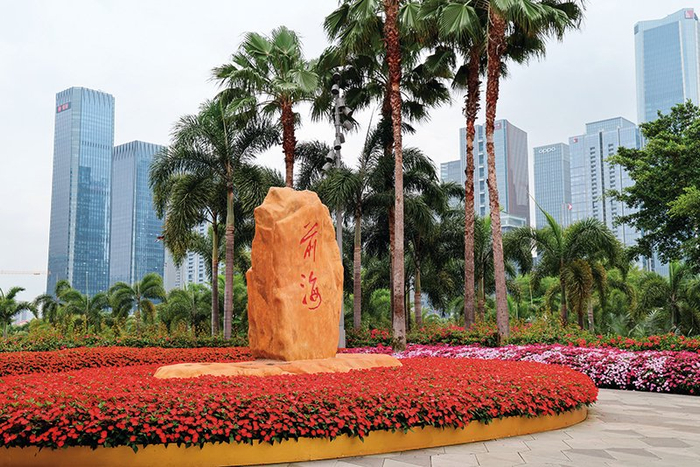
瞭望 | 触摸深圳脉动
Xin Hua She· 2025-10-21 03:46
Core Insights - Shenzhen has transformed from a small border town into a modern international metropolis with a population of nearly 20 million and a GDP growth from 270 million to 3.68 trillion yuan over 45 years [1][2][5] - The city is home to 12 national high-tech enterprises per square kilometer, the highest density in the country, and has nurtured global giants like Huawei, BYD, and Tencent, along with 1,025 national-level specialized "little giants" [2][6] - Shenzhen's development is characterized by a strong culture of innovation and reform, with a commitment to high-quality growth and a focus on attracting and retaining talent [20][24] Economic Growth - Shenzhen's GDP has seen significant milestones, breaking the 100 billion yuan mark in 1996, 1 trillion in 2010, and reaching 3.68 trillion in 2024 [5][6] - The city's industrial output value increased by 4.4% year-on-year from January to August 2025, with high-tech products like drones and industrial robots experiencing rapid growth [6][19] Innovation and Technology - Huawei's projected sales revenue for 2024 is 862.1 billion yuan, reflecting a 22.4% year-on-year increase, with a strong focus on R&D, which accounts for over 20% of its annual revenue [4][19] - Shenzhen's R&D investment reached 243.64 billion yuan in 2024, ranking second among major cities in China, with over 90% of R&D activities conducted by enterprises [19][20] Talent Attraction and Retention - Shenzhen has implemented various initiatives to attract talent, including free accommodation for job-seeking graduates and support for entrepreneurial teams, particularly from Hong Kong and Macau [23][24] - The city boasts a talent pool of 7 million, including 26,200 high-level professionals and 920 scholars listed among the top 2% of scientists globally [24][25] Special Economic Zones and Reforms - The Qianhai area, known as the "special zone within a special zone," has seen its GDP grow from 175.7 billion yuan in 2021 to 300.8 billion yuan in 2024, showcasing its role as a testing ground for reforms [10][11] - Shenzhen's commitment to innovation is evident in its continuous exploration of government-market relations and the establishment of a series of institutional innovations that have been replicated nationwide [11][20]



在接续奋斗中谱写中国式现代化新篇章
Xin Hua Wang· 2025-10-20 06:20
Group 1 - The "14th Five-Year Plan" is nearing completion, with the upcoming "15th Five-Year Plan" set to address the historical positioning of the party and the nation, analyzing complex changes in the development environment and making strategic plans for the next five years [1][2] - The "14th Five-Year Plan" period has seen significant economic achievements, with China's GDP expected to reach approximately 140 trillion yuan this year, contributing around 30% to global economic growth [3][4] - The period has also marked advancements in innovation, with China ranking among the top ten in the global innovation index and making strides in various high-tech fields [3][4] Group 2 - The "15th Five-Year Plan" is crucial for solidifying the foundation for socialist modernization, with a focus on high-quality development amidst complex strategic opportunities and challenges [4][5] - The leadership of the Communist Party is emphasized as essential for navigating the development of the world's second-largest economy, ensuring sustained and healthy economic growth [5][6] - The plan aims to prioritize people-centered development, addressing urgent issues faced by the populace and ensuring that modernization benefits all citizens [6][7] Group 3 - The integration of development and security is highlighted as a dual focus for the "15th Five-Year Plan," with an emphasis on preparing for new risks and challenges in a rapidly changing global landscape [8] - The overarching goal remains the realization of the great rejuvenation of the Chinese nation, with a commitment to continuous progress in building a modern socialist country [9]
释放新活力 锻造新引擎 实现新突破 上海各区“十四五”期间发挥各自比较优势 推动“优势做优,特色做特”
Jie Fang Ri Bao· 2025-10-20 01:37
Core Viewpoint - Shanghai is actively leveraging its comparative advantages across various districts to promote high-quality development during the "14th Five-Year Plan" period, showcasing a collaborative and systematic approach to economic growth [1][2][3]. Group 1: Economic Development and Innovation - The Shanghai Free Trade Zone has achieved significant reforms and opened up over the past 12 years, connecting various districts with national economic strategies to enhance regional potential and overall efficiency [2][3]. - The Lingang New Area has established 166 innovative institutional cases in offshore trade, cross-border finance, and high-end shipping, serving as a testing ground for comprehensive reforms and opening up [3]. - The G60 Science and Technology Innovation Corridor has produced 154 institutional innovation results, with 61 experiences promoted nationwide, highlighting the collaborative efforts in the Yangtze River Delta [3][4]. Group 2: Infrastructure and Urban Development - The "Shanghai Medical Valley" in Jiading is fostering innovation in the medical device sector through a collaborative model involving doctors, enterprises, and government [8]. - The "Shanghai Silicon Alley" in Changning is integrating urban renewal with technological innovation, creating a hub for nearly 900 innovative enterprises [7]. - The "15-minute community life circle" initiative is enhancing urban living standards by providing convenient access to public services and amenities [14]. Group 3: Cultural and Tourism Development - Shanghai's cultural and tourism market has been vibrant, with various districts hosting year-round events to stimulate consumption and attract visitors [10][11]. - The opening of the world's largest LEGO theme park in Jinshan has positioned it as a new family tourism landmark, contributing to the overall tourism landscape [12]. - The Huangpu District is focusing on youth and senior economies, revitalizing commercial areas to attract diverse consumer demographics [10][11]. Group 4: Agricultural and Rural Development - The "Yangtze River Delta Agricultural Silicon Valley" in Chongming is promoting high-tech agriculture, connecting multiple towns and engaging nearly 100 enterprises in agricultural innovation [8][15]. - The focus on green and high-quality agricultural products in Chongming has maintained a certification rate of over 90%, reflecting the district's commitment to sustainable development [15].
市委理论学习中心组举行专题学习会 深入学习《习近平谈治国理政》第五卷
Nan Jing Ri Bao· 2025-10-18 01:44
Core Points - The meeting emphasized the importance of studying "Xi Jinping on Governance" Volume Five as a scientific summary of the Party's leadership in advancing Chinese-style modernization since the 20th National Congress [1] - The volume serves as an authoritative textbook for understanding and implementing Xi Jinping's Thought on Socialism with Chinese Characteristics for a New Era [1] Group 1 - The strategic deployment of Chinese-style modernization is crucial, with a focus on planning the "14th Five-Year Plan" and taking on the responsibility of being a model province [2] - Emphasis on the importance of reform and opening up, driving transformative reforms, and enhancing urban hub capabilities to boost development momentum and social vitality [2] - The need to develop new productive forces tailored to local conditions, focusing on technological breakthroughs and deep industrial transformation [2] Group 2 - The meeting highlighted the importance of a people-centered approach, emphasizing distinctive development and governance investment for high-quality urban renewal and efficient governance [2] - A call for a thorough self-revolution spirit, deepening strict governance of the Party, promoting clean political construction, and fostering a positive political ecology [2] - All levels of Party organizations are tasked with integrating the study and implementation of Volume Five with previous volumes and important speeches by Xi Jinping regarding Jiangsu's work [2]