
脑机接口技术

Search documents
浪人早报 | 曝iPhoneAir首销激活量远低于预期、特斯拉董事长力挺马斯克天价薪酬、小鹏高管回应何小鹏职务变化…
Xin Lang Ke Ji· 2025-10-28 01:11
Group 1: Apple Products - iPhone Air's initial sales activation volume is significantly lower than expected, even below the previous generation iPhone 16 Plus [1] - Apple is reportedly testing AI features for its iPhones in the Chinese market, allowing functionalities like real-time translation and enhanced Siri capabilities [2] - A new MacBook Pro with M6 chip and OLED display is expected to be launched by late 2026 or early 2027, featuring a new design and improved performance [3] Group 2: Tesla - Tesla's board chair Robin Denholm is urging shareholders to support Elon Musk's nearly $1 trillion compensation plan, emphasizing Musk's critical role in the company's future [1] Group 3: Xpeng Motors - Xpeng Motors has undergone a corporate change, with CEO He Xiaopeng's title updated due to new company law regulations, which eliminated the position of executive director [2] Group 4: Huawei - Huawei's executive Yu Chengdong announced the upcoming launch of the flagship 9 series vehicle, the new Enjoy S9, set to debut in November [4] Group 5: Meituan - Meituan has announced that its social security subsidy for delivery riders will be rolled out nationwide, allowing riders to choose their insurance payment locations [5] Group 6: OpenAI - OpenAI CEO Sam Altman is reportedly developing brain-machine interface technology to compete with Neuralink, through a new startup called Merge Labs [6] Group 7: Charging Standards - China's fast charging solution has been recognized as an international standard, with the "Mobile Terminal Universal Fast Charging Solution" officially published by the International Telecommunication Union [8]

北京健嘉康复医院成立脑机交互康复中心
Bei Ke Cai Jing· 2025-10-25 12:45
Core Insights - The establishment of the Brain-Computer Interface (BCI) Rehabilitation Center at Beijing Jianjia Rehabilitation Hospital marks a significant advancement in integrating BCI technology into rehabilitation medicine [1] - The collaboration between Beijing Jianjia Rehabilitation Hospital and Shanghai University aims to create a closed-loop model that enhances the application of BCI technology in clinical practices [1][2] Group 1: BCI Technology and Rehabilitation - BCI technology is shifting rehabilitation medicine from "passive adaptation" to "active reshaping," indicating a transformative approach in patient care [1] - The BCI Rehabilitation Center will focus on systematic and large-scale application of BCI technology, aiming to become a benchmark for innovation in China's rehabilitation medical field [1] Group 2: Collaborative Efforts - The partnership between the BCI research center at Shanghai University and Beijing Jianjia Rehabilitation Hospital will facilitate the integration of scientific inquiry and clinical practice, enhancing the development and application of rehabilitation technologies [1] - The goal is to help patients with conditions such as stroke and consciousness disorders regain hope and improve their quality of life through advanced rehabilitation techniques [1][2] Group 3: Expert Endorsement - Dr. Mao Shan Hong, a government-appointed expert, emphasized the importance of BCI technology in rehabilitation and expressed hopes for the hospital to become an international clinical research rehabilitation center [2] - The initiative is seen as a vital component in promoting the "big health" concept in the Fengtai District, highlighting the potential for BCI technology to impact public health positively [2]
脑机接口医械论坛
2025-10-16 15:11
Summary of Key Points from Conference Call Records Company and Industry Overview - **Company**: Xiangyu Medical - **Industry**: Brain-Computer Interface (BCI) Technology Core Insights and Arguments - **Focus on Non-Invasive BCI Technology**: Xiangyu Medical specializes in non-invasive brain-computer interface technology, developing five major research and development systems, including BCI acquisition devices, algorithms, and rehabilitation products, with plans to launch related products between late 2025 and 2026 [1][2] - **Applications in Rehabilitation**: The primary applications of Xiangyu Medical's non-invasive BCI products are in rehabilitation, targeting post-operative recovery, high-level paraplegia, Alzheimer's disease, and other clinical challenges through a multi-channel wireless EEG acquisition system and seven algorithms for high-precision signal acquisition and processing [1][4] - **Self-Developed Hardware**: The company has developed a complete set of self-researched chips, electrodes, and acquisition devices, obtaining two Class II medical device registration certificates, which establish a solid foundation and high barriers to entry in the industry [1][5] - **Government Support**: The Ministry of Industry and Information Technology's implementation opinions on promoting innovation in the brain interface industry provide top-level design and reduce policy uncertainty, which Xiangyu Medical is actively leveraging to accelerate product launch processes [1][8] Additional Important Content - **Clinical Applications and Collaborations**: As of the latest statistics, 87 hospitals have applied Xiangyu Medical's BCI products, utilizing various cooperation models, including research project collaborations and the establishment of BCI wards [10] - **Market Commercialization Stage**: The commercialization of BCI products is still in its early stages, with few certified products on the market. Xiangyu Medical plans to launch 27 products in 2025 and potentially 70-80 products in 2026 [9][14] - **Technological Advancements**: The company has achieved breakthroughs in hardware development, including high-precision, high-signal quality acquisition devices, and various electrode models to meet different customer needs [5][11] - **Future Growth and Revenue Projections**: Xiangyu Medical is optimistic about rapid revenue growth in the coming years, with over 100 devices shipped, valued conservatively at 200-300 million yuan, expected to convert into sales revenue depending on certification progress and hospital procurement rhythms [14] Competitive Landscape - **Other Companies in the BCI Field**: Aipeng Medical is also active in the BCI sector, focusing on brain state monitoring systems, insomnia treatment systems, and ADHD behavior management systems, utilizing AI technology to enhance product competitiveness [3][15][17] - **Market Potential for Cognitive Disorders**: The market potential for cognitive disorders, particularly Alzheimer's disease, is significant, with approximately 43.77 million patients in China, indicating a vast opportunity for BCI applications in this area [33] Challenges and Future Directions - **Technical Bottlenecks**: The industry faces challenges such as signal-to-noise ratio, packaging processes, and the need for multi-modal information fusion, which are critical for future development [31][45] - **Regulatory and Market Dynamics**: The current regulatory environment and market dynamics, including the need for certification and pricing strategies, will significantly impact the commercialization and adoption of BCI products [40][41] This summary encapsulates the key points from the conference call records, highlighting the strategic direction, technological advancements, market potential, and challenges faced by Xiangyu Medical and the broader BCI industry.

渐冻症患者首次独立进食、喝水,Neuralink公布新进展
财联社· 2025-10-12 07:14
Core Viewpoint - Neuralink, a brain-machine interface company founded by Elon Musk, has demonstrated significant advancements in enabling patients with neurodegenerative diseases, such as ALS, to control robotic arms using their thoughts, showcasing the potential of brain-machine interface technology [2][5]. Group 1: Patient Demonstration - Nick Wray, a patient with ALS, successfully controlled a robotic arm to perform daily tasks such as drinking water and using a microwave, marking a significant milestone in his independence [5]. - Wray set new records by moving 39 cylinders and flipping the most screws in a standard flexibility test within five minutes, highlighting the effectiveness of the technology [7]. Group 2: Research and Development - The demonstration is part of Neuralink's CONVOY study, which aims to explore the feasibility of using brain-machine interfaces to assist patients with limited mobility due to neurodegenerative diseases [7]. - Neuralink has implanted its N1 chip in 12 patients globally, who have collectively used the device for over 15,000 hours, indicating a growing interest and application of this technology [8]. Group 3: Technology Overview - The N1 chip, approximately the size of a 10-pence coin, contains 128 ultra-fine wires connecting to about 1,000 electrodes that interface directly with the brain, allowing for precise detection and transmission of neural signals [8]. - The technology aims to enable real-time conversion of thoughts into actions, with future aspirations to expand its applications to controlling humanoid robots and addressing other neurological conditions [8].

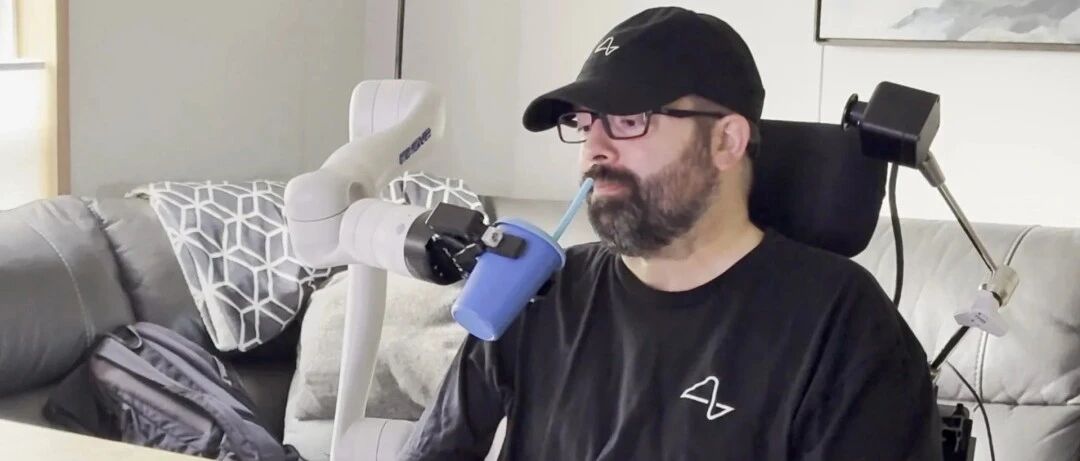
Neuralink新进展:渐冻症患者首次独立进食、喝水
3 6 Ke· 2025-10-12 03:53
Core Viewpoint - Neuralink has demonstrated the potential of its brain-machine interface technology by showcasing Nick Wray, a patient with ALS, controlling a robotic arm to perform daily tasks, marking a significant advancement in assistive technology for neurodegenerative diseases [1][3][5]. Group 1: Technology and Implementation - Nick Wray successfully controlled a robotic arm using only his thoughts, performing actions such as drinking water and heating food, highlighting the practical applications of Neuralink's technology [3][5]. - The N1 chip, implanted in Wray's brain, is part of the CONVOY research project approved by the FDA, aimed at exploring the feasibility of brain-machine interfaces for assisting patients with limited mobility [5][6]. - The N1 chip is approximately the size of a 10 pence coin and contains 128 ultra-fine wires connected to about 1,000 electrodes, which capture neural signals and convert them into digital commands for controlling external devices [6]. Group 2: Clinical Research and Patient Outcomes - As of now, 12 patients have undergone the N1 chip implantation, collectively using the device for over 15,000 hours, demonstrating its potential for long-term use [6]. - Wray has set records in various tasks, such as moving 39 cylinders in five minutes, showcasing the chip's effectiveness in enhancing motor functions [5][6]. Group 3: Future Prospects and Challenges - Elon Musk has expressed ambitions for the technology to eventually control humanoid robots, but acknowledges that challenges related to long-term stability and safety must be addressed before widespread commercialization, which may take 5-10 years [7].
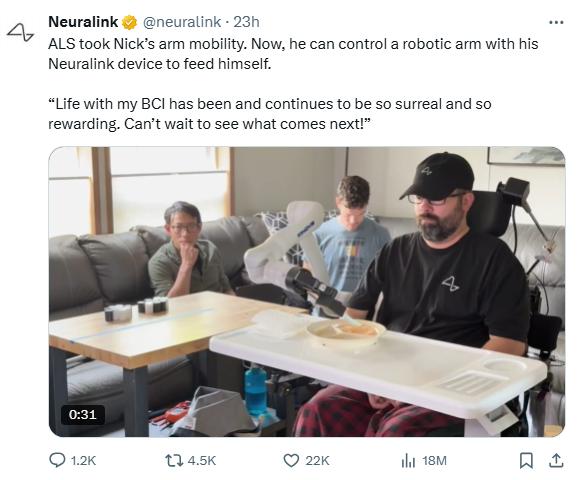
马斯克 Neuralink 脑机接口技术新突破:ALS 患者仅凭意念操控机械臂
Sou Hu Cai Jing· 2025-10-12 00:25
10 月 12 日消息,埃隆・马斯克(Elon Musk)旗下脑机接口公司 Neuralink 声称,其在脑机接口技术领域取得了一项新突破:一名患有肌萎缩侧索硬化症 (ALS)的患者已成功仅凭意念控制机械臂。 近日,该公司在线发布的一段演示视频显示,患者尼克・雷(Nick Wray)利用该机械臂拿起水杯并饮水。这一成果标志着在帮助严重行动受限患者恢复自 主能力方面迈出了重要一步。 植入其大脑的芯片可将神经信号转化为蓝牙指令,使他仅凭思维即可控制外部设备。据《PC Magazine》报道,雷成功实现了诸如抓取水杯、戴帽子、用微 波炉加热食物以及打开冰箱等任务。 在一次演示中,机械臂将水杯举至他的嘴边,使其得以饮用。此外,他在用于中风患者的灵巧性测试中创下纪录:五分钟内在桌面上移动了 39 个圆柱体, 并在另一项测试中翻转了五个类似拼图的插销。 据报道,雷甚至完成了一次他称之为"荒谬的花式投篮",相关画面预计将在未来发布的视频中呈现。据《达拉斯快报》(The Dallas Express)报道,在另一 次试验中,他还首次通过脑机接口成功操控了自己的电动轮椅。 这款名为 N1 的植入式芯片大小约等于一枚 10 便士 ...
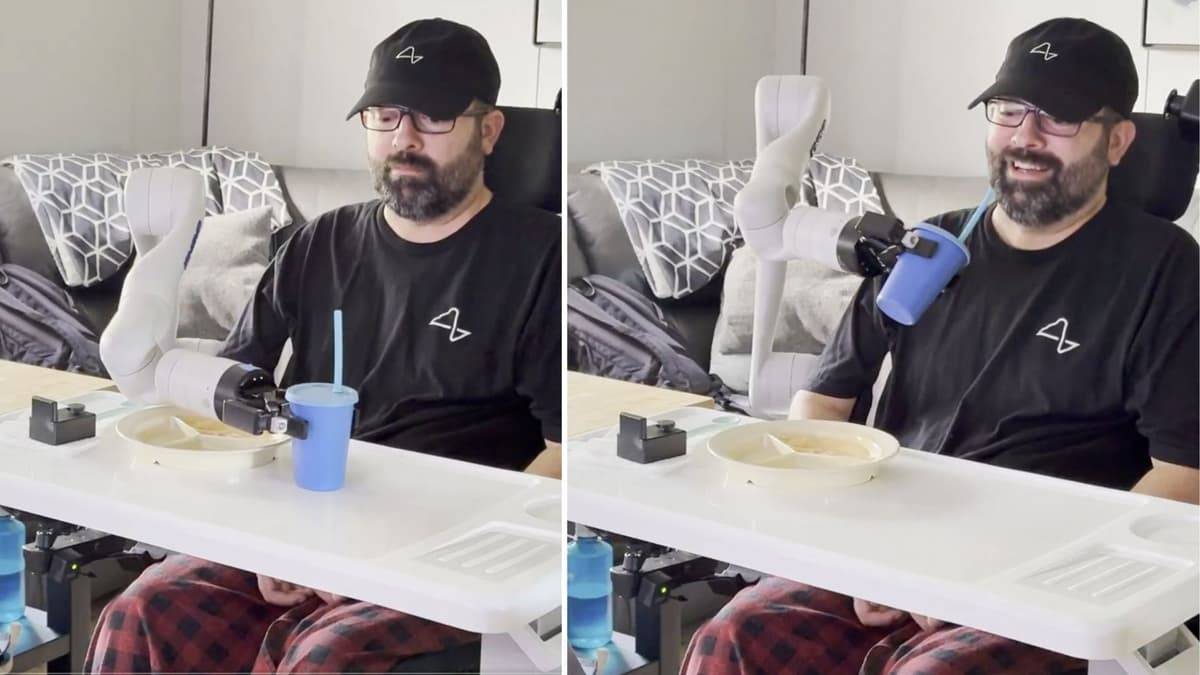
马斯克Neuralink脑机接口技术新突破:ALS患者仅凭意念操控机械臂
Sou Hu Cai Jing· 2025-10-12 00:25
Core Insights - Neuralink has achieved a significant breakthrough in brain-machine interface technology, enabling a patient with ALS to control a robotic arm using only their thoughts [1][3]. Group 1: Breakthrough and Demonstration - A video demonstration showed patient Nick Wray successfully using the robotic arm to pick up a cup and drink, marking an important step in helping severely disabled patients regain autonomy [3]. - The breakthrough is part of Neuralink's "CONVOY" clinical trial approved by the FDA, aimed at testing how implanted brain chips can assist patients in completing daily tasks independently [3][5]. - Wray is the eighth participant to receive the Neuralink brain-machine interface implant, with plans to expand clinical trials to the UK in August 2024 [3]. Group 2: Technical Details and Achievements - During three eight-hour sessions, Wray completed various daily activities using the Neuralink implant, which converts neural signals into Bluetooth commands for controlling external devices [4]. - Tasks accomplished include grabbing a cup, wearing a hat, heating food in a microwave, and opening a refrigerator, showcasing the device's practical applications [4]. - Wray set a record in a dexterity test for stroke patients by moving 39 cylinders in five minutes and successfully controlled his electric wheelchair through the brain-machine interface [4]. Group 3: Clinical Trials and Challenges - Neuralink initiated its first human clinical trials in the U.S. in 2024 after overcoming significant safety review hurdles from the FDA, which had previously rejected its application in 2022 due to safety concerns [5]. - Eight severely paralyzed patients have received the experimental brain chip, allowing them to interact with digital devices using only their thoughts [5]. - The first recipient, Noland Arbaugh, demonstrated the device's potential by controlling a cursor and playing video games, although he faced a significant technical issue with the implant [5].
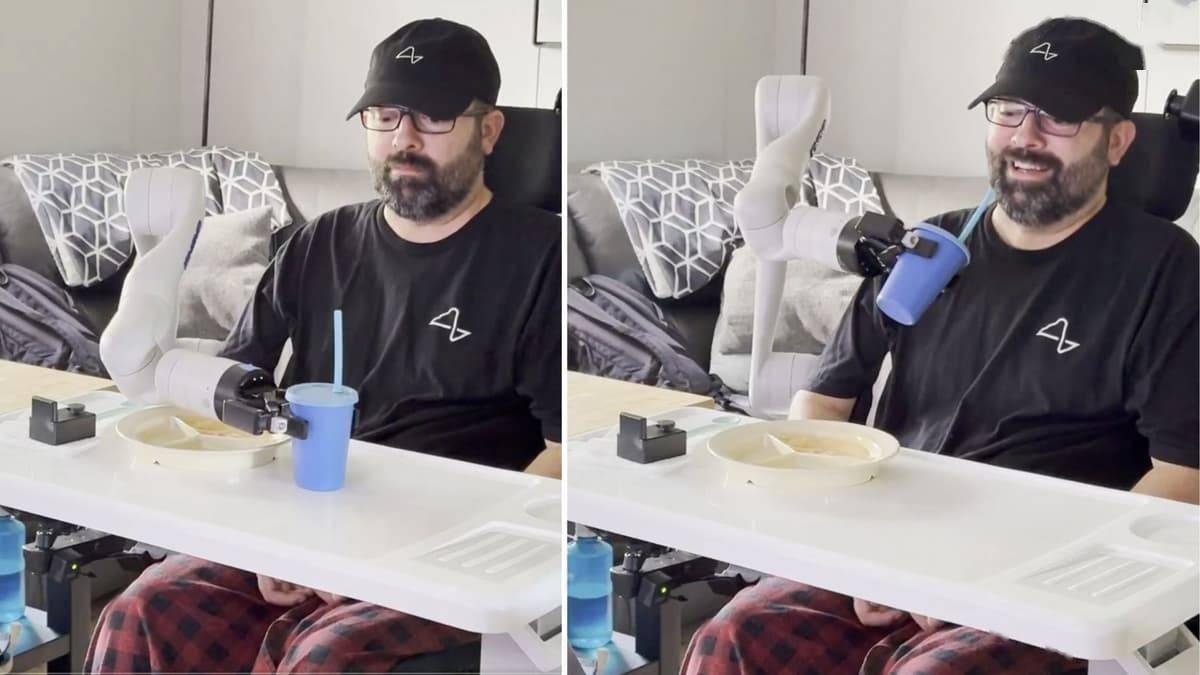
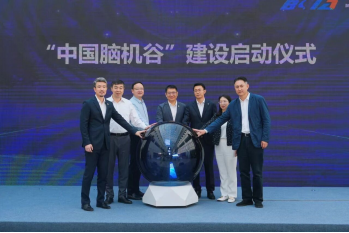
“中国脑机谷”落户新智感知产业园,政企研协同构建脑机接口产业新生态
Xin Lang Zheng Quan· 2025-10-09 02:28
Core Insights - The "China Brain Valley" has been officially launched in Tianjin, marking a new phase of cluster and large-scale development in the brain-computer interface (BCI) industry [1][4] - The BCI technology, which integrates life sciences and information sciences, is advancing from laboratory research to clinical applications, with significant potential in healthcare, industrial control, and smart wearables [3][4] - The Chinese government has set ambitious goals for the BCI industry, aiming for breakthroughs in key technologies and the establishment of advanced technical, industrial, and standard systems by 2027 [3][4] Industry Developments - In July 2025, China successfully conducted its first invasive BCI clinical trial, becoming the second country globally to enter this phase [4] - The "Brain-Computer Interaction and Human-Machine Integration Haihe Laboratory" received approval for its high-precision brain function auxiliary diagnostic equipment, filling a technological gap in the field [4] - The establishment of the "China Brain Valley" is expected to enhance resource integration and cluster development within the industry [4][7] Company Initiatives - New Smart Perception, a subsidiary of the New Hope Group, is focused on creating a specialized incubation park and industrial cluster for BCI technology, leveraging over 20,000 square meters of industrial expansion area [7] - The company aims to build a comprehensive empowerment model that integrates "scenarios, technology, capital, and operations" to accelerate the growth of BCI innovation projects [7] - New Smart Perception is also fostering collaboration among BCI enterprises from the Beijing-Tianjin-Hebei and Yangtze River Delta regions to establish a high-quality production base for the BCI industry [7][8] Strategic Vision - The BCI industry's development is supported by the New Hope Group's commitment to smart industrial upgrades, which has been a core business focus since 2014 [8] - The company emphasizes a "perception-cognition-behavior" framework to enhance smart capabilities across various industries, contributing to the overall ecosystem of the BCI sector [8] - The cluster development of the BCI industry is seen as a strategic move to position China competitively in future technology landscapes [8]
医保“绿色通道”打通,脑机接口加速从实验室狂飙至千亿级市场
Hua Xia Shi Bao· 2025-09-29 12:59
Core Insights - The brain-computer interface (BCI) technology is experiencing a critical breakthrough in China, with the National Healthcare Security Administration (NHSA) opening a "green channel" for BCI and surgical robots to enter the medical insurance coding system, facilitating faster clinical application and commercialization [2][3] Policy Developments - The NHSA's announcement allows BCI products with medical device registration to expedite their coding process, while products without registration can submit technical materials for preliminary review, significantly reducing the time from approval to clinical application [3][4] - This policy aims to accelerate the application of cutting-edge medical technologies in clinical settings and supports genuine innovation in high-level medical products [3][4] Market Growth - The global BCI market is projected to grow from $1.2 billion in 2019 to $2 billion in 2023, with an expected compound annual growth rate (CAGR) of 17.5%, reaching $7.63 billion by 2029 [4][5] - Investment in the BCI sector has exceeded $10 billion globally, with the U.S. accounting for over 50% and China over $2 billion [4][5] Clinical Applications - The medical rehabilitation sector is the primary area for BCI technology application, with a significant increase in clinical trials from 11 in 2023 to 31 in 2024, addressing various conditions such as stroke rehabilitation and depression [5][6] - The demand for BCI technology is driven by the high incidence of stroke and the large population of individuals with disabilities in China [5][6] Future Prospects - BCI technology is expected to expand beyond medical applications into industrial manufacturing, education, elderly care, and emergency safety, indicating a broad potential for growth [6][7] - The integration of BCI technology with home medical devices could lead to comprehensive health management solutions, enhancing the competitive landscape for home healthcare [7]
封单超百万手,热门股回应重组事项!
Zheng Quan Shi Bao Wang· 2025-09-29 11:38
Group 1: Market Activity - On September 29, 25 stocks had closing limit orders exceeding 1 billion yuan, with Shanzi Gaoke leading at 4.57 billion yuan [2] - The top three stocks by closing limit order funds were Shanzi Gaoke, Boqian New Materials, and Tianji Shares, with amounts of 4.57 billion yuan, 4.27 billion yuan, and 4.27 billion yuan respectively [2] - Seven stocks on the Dragon and Tiger list had net purchases exceeding 1 billion yuan, with Lingyi Zhizao at 8.21 billion yuan and Shanzi Gaoke at 3.39 billion yuan [8] Group 2: Company Performance - Shanzi Gaoke reported a revenue of 1.732 billion yuan in the first half of the year, a year-on-year decrease of 17.3%, but achieved a net profit of 219 million yuan, turning from loss to profit [2] - Shanzi Gaoke is involved in a potential restructuring with the parent company of Nezha Automobile, with intentions to participate as an investor [3] Group 3: Industry Trends - The solid-state battery sector saw a surge in stock prices, with companies like Wanrun New Energy and Tianji Shares participating in this trend [4] - Wanrun New Energy has applied for multiple patents related to high energy density cathode materials, which are relevant for solid-state battery requirements [4] - The copper sector also experienced price increases, with companies like Xingye Yinxin and Shengda Resources expanding their mining operations [5][6] Group 4: Emerging Technologies - In the brain-computer interface sector, Yingqu Technology is collaborating with various institutions to develop products related to brainwave monitoring and rehabilitation [7] - Qisheng Technology is focusing on sleep health and has established partnerships for research on Alzheimer's disease and sleep analysis [7]