量子信息

Search documents
抢筹码啊!
Datayes· 2025-10-13 11:47
Core Viewpoint - The article discusses the recent fluctuations in the A-share market, influenced by political statements and economic data, highlighting the resilience of China's export growth amid trade tensions and the potential for policy adjustments in the near future [1][4][5][6]. Economic Data - China's export growth in September exceeded expectations, with a year-on-year increase of 8.3%, surpassing the forecast of 6.6% and the previous value of 4.4%. Imports also rose by 7.4%, compared to a prior value of 1.3% [5][6]. - Morgan Stanley attributes the strong trade data to the timing of the Mid-Autumn Festival, which shifted from September to October in 2025, along with a low base effect [6]. Market Performance - On October 13, A-shares opened significantly lower but recovered slightly by the end of the day, with the Shanghai Composite Index down 0.19% and the Shenzhen Component down 0.93% [8]. - The total trading volume in the Shanghai and Shenzhen markets was 23,745.45 billion yuan, a decrease of 1,599.53 billion yuan from the previous day [8]. Sector Analysis - The article notes that sectors such as metals, rare earths, semiconductors, and banking saw significant gains, while automotive and non-bank financial sectors experienced outflows [22][30]. - The rare earth sector saw a surge, with multiple stocks hitting the daily limit up, driven by rising prices of gold and silver [8]. Policy Outlook - Goldman Sachs predicts that the actual GDP growth rate for the third quarter may remain around 5%, with expectations for the implementation of previously announced policies, but no new easing measures anticipated in the near term [7]. - Analysts expect that the current tariff suspension period may be extended beyond November 10, with limited concessions from both sides in trade negotiations [4][6]. Company Performance - Notable company forecasts include: - Jucheng Technology expects a net profit of 151 million yuan for the first three quarters, a year-on-year increase of 112.94% [20]. - New China Life Insurance anticipates a net profit between 29.986 billion yuan and 34.122 billion yuan, reflecting a growth of 45% to 65% [20]. - Chuangjiang New Materials projects a staggering net profit growth of 2057.62% to 2242.56% for the same period [20]. Investment Trends - The article highlights that the main capital inflow was into the non-ferrous metals sector, with Baogang Group leading the net inflow [22]. - The article also mentions that the automotive sector saw significant net outflows, particularly from companies like BYD and Sailis [22].







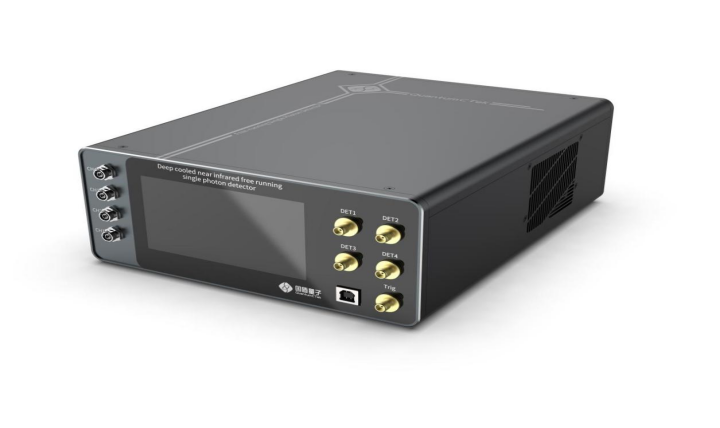
全球首款四通道超低噪声半导体“单光子探测器”量产
Shang Hai Zheng Quan Bao· 2025-10-13 03:51
Core Viewpoint - The world's first four-channel ultra-low noise semiconductor single-photon detector has been mass-produced in Hefei, marking a significant advancement in quantum information technology and positioning China as a leader in this field [1][3][6]. Group 1: Product Development - The single-photon detector is likened to an "eye" with extraordinary vision, capable of accurately capturing and identifying individual photons, essential for quantum key distribution, fluorescence lifetime imaging, and laser radar systems [1][3]. - The device has set world records in detection efficiency, dark noise levels, and integration, indicating a leap in China's single-photon detection technology [3][6]. - The development team, including the leading quantum technology company GuoDun Quantum, overcame significant technical challenges over three years, achieving a minimum operating temperature of -120°C and reducing dark noise levels by approximately 90% to about 100Hz [4][5]. Group 2: Technical Innovations - The innovative four-channel integrated architecture allows the new detector to be one-ninth the size of international single-channel products, enabling complex detection tasks previously requiring multiple devices to be performed by a single unit [5][6]. - The maximum detection efficiency has been increased from 25% to 35%, enhancing sensitivity to extremely weak light [5]. Group 3: Market Impact and Future Prospects - The new product has already been adopted by top domestic research institutions and is ready for mass production and delivery [6]. - GuoDun Quantum plans to continue developing products along the lines of miniaturization, chip integration, and scalability for applications in next-generation quantum communication networks, high-precision laser radar, and deep space exploration [6]. - Following the announcement of the 2025 Nobel Prize in Physics for contributions to quantum mechanics, quantum technology stocks have seen significant market activity, with GuoDun Quantum's shares rising by as much as 17.91% [7][8].

全球首款!量产
Shang Hai Zheng Quan Bao· 2025-10-12 15:08
Core Viewpoint - The world's first four-channel ultra-low noise semiconductor single-photon detector has been mass-produced in Hefei, marking a significant advancement in quantum information technology and positioning China as a leader in this field [1][3]. Group 1: Product Development and Features - The single-photon detector is likened to an "eye" with extraordinary vision, capable of accurately capturing and identifying individual photons, essential for quantum key distribution, fluorescence lifetime imaging, and laser radar systems [1]. - The device has set world records in detection efficiency, dark noise levels, and integration, indicating a leap in China's single-photon detection technology [3]. - The development team, including the leading quantum technology company Guoshield Quantum, overcame significant technical challenges, achieving a minimum operating temperature of -120°C and reducing dark noise levels by approximately 90% to about 100Hz [5][6]. Group 2: Market Implications and Future Applications - The new single-photon detector is already serving top domestic research institutions and has the capability for mass production and delivery [7]. - Guoshield Quantum plans to continue developing products along the lines of miniaturization, chip integration, and high integration for applications in next-generation quantum communication networks, high-precision laser radar, and deep space exploration [7]. - Following the announcement of the Nobel Prize in Physics for quantum mechanics, quantum technology stocks, including Guoshield Quantum, saw significant market activity, with Guoshield Quantum's stock rising by as much as 17.91% [10].
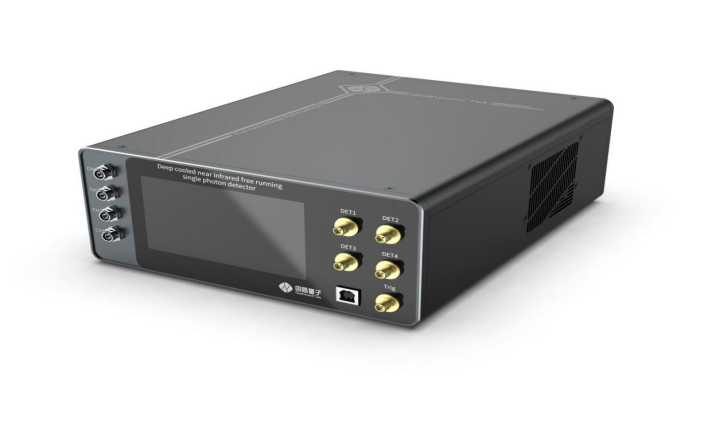
我国单光子探测器实现重大突破 核心指标国际领先
Zheng Quan Shi Bao Wang· 2025-10-11 04:33
Core Insights - China has achieved the mass production of the world's first four-channel ultra-low noise semiconductor single-photon detector, marking a significant advancement in single-photon detection technology [1][2]. Group 1: Technological Advancements - The new single-photon detector has set world records in detection efficiency, dark noise levels, and integration, indicating that China is now leading in single-photon detection technology [1]. - The device's lowest operating temperature has been reduced from -50°C to -120°C, and at a 20% detection efficiency, the dark noise level has decreased by approximately 90% to around 100Hz [1]. - The four-channel integrated architecture of the detector is only 1/9 the size of international single-channel products, allowing it to perform complex detection tasks previously requiring multiple devices [2]. Group 2: Market Impact - The new product enhances the sensitivity for detecting extremely weak light, increasing the maximum detection efficiency from 25% to 35% [2]. - The product is already serving top domestic research institutions and has the capability for mass production and delivery [3]. - The advancements in this technology not only break international technological monopolies but also enhance China's self-sufficiency in key quantum information technologies [2].
新质生产力如何撬动区域协调发展
Jing Ji Ri Bao· 2025-10-09 22:40
Core Insights - The article emphasizes the importance of cultivating new productive forces characterized by digitalization and greening, which serve as engines for industrial transformation and regional development [1][2] Group 1: New Productive Forces - New productive forces are defined as those driven by innovation, moving away from traditional economic growth models, and characterized by high technology, efficiency, and quality [1] - The emergence of cutting-edge technologies such as artificial intelligence, quantum information, and life sciences is expected to lead to a qualitative leap in productivity [1] Group 2: Regional Development Challenges - The uneven distribution of innovation resources and structural issues in regional development are identified as bottlenecks for the growth of new productive forces [2] - The article highlights the need to break down regional barriers, optimize resource allocation, and establish a unified national market to accelerate the cultivation of new productive forces and achieve regional coordination [2] Group 3: Innovation and Collaboration - Strengthening technological innovation and creating a comprehensive regional innovation system are crucial for developing new productive forces [3] - The article suggests promoting cross-regional collaboration in tackling key technologies and establishing innovation centers to facilitate knowledge spillover and technology transfer [3] Group 4: Institutional Innovation - The need to eliminate institutional barriers that hinder the free flow and efficient allocation of factors such as technology, data, and talent is emphasized [4] - The article advocates for reforms in market-oriented allocation of factors and the establishment of mechanisms for cost-sharing and benefit-sharing in cross-regional industrial transfers [4] Group 5: Green Development - New productive forces are inherently linked to green productivity, and fostering these forces requires a foundation of harmonious coexistence between humans and nature [4] - The article calls for the establishment of a clean, low-carbon, and efficient regional energy system, promoting green industrial chains and transforming ecological value into economic value [4]
解答超前布局未来产业的新课题
Jing Ji Ri Bao· 2025-10-07 22:41
Core Viewpoint - The development of future industries is crucial for economic growth and is expected to become a leading pillar industry, supported by technological innovation and the transformation of traditional industries [1][2][3] Group 1: Importance of Future Industries - Future industries represent a new wave of technological revolution and industrial transformation, serving as a vital force for economic growth [1] - The emphasis on developing future industries is a strategic choice to maintain development initiative amid global changes [2] - The integration of new technologies such as information technology, biotechnology, and new materials is driving profound changes in industrial structures [3] Group 2: Practical Requirements for Development - The development of future industries requires a systematic approach and long-term commitment, emphasizing the need for localized strategies based on regional resources and conditions [4] - A balanced approach is necessary, combining urgency with strategic patience to ensure steady progress in nurturing future industries [5] - A comprehensive view is essential, recognizing the interdependence of future, traditional, and emerging industries to foster a collaborative development environment [6] Group 3: Strategic Planning and Innovation - Future industries should be strategically planned based on global technological trends, with phased development focusing on commercialization, technology maturation, and core technology supply [8] - Innovation is critical for the success of future industries, necessitating a focus on key technologies and fostering a robust ecosystem for technological breakthroughs [9] - A supportive policy framework is essential for the growth of future industries, requiring financial investment and a conducive regulatory environment [10]
2025年第39周计算机行业周报:从云栖大会看后续中国AI发展之路-20250930
Changjiang Securities· 2025-09-29 23:30
Investment Rating - The industry investment rating is "Positive" and is maintained [8] Core Insights - The computer sector experienced a slight decline of 0.33% last week, ranking 14th among major industries in the Yangtze River region, with a trading volume accounting for 8.62% of the total market [2][4] - The report highlights the upcoming AI development path in China, particularly following the Cloud Habitat Conference, where Alibaba announced a three-year investment plan of 380 billion yuan in AI infrastructure [6][47] - Key areas of focus include AI infrastructure, AI agent-related companies, the Chinese inference computing industry chain, CSP manufacturers driven by inference demand, and IDC firms collaborating with leading companies [6][62] Summary by Sections Recent Developments - The central government procurement website updated the procurement standards for desktop and portable computers, which is expected to enhance the performance of domestic computing products [20][22] - The 25th China International Industry Fair emphasized the need to cultivate emerging industries and explore new tracks such as quantum information and brain-computer interfaces [28][33] Key Recommendations - Continuous attention is recommended for the Alibaba ecosystem, particularly in relation to its open-source strategy and global expansion efforts [6][47] - The report suggests focusing on the domestic AI infrastructure manufacturers and the ongoing advancements in AI applications [6][62] Market Performance - The computer sector's trading activity was notably driven by computing power-related stocks, with significant gains observed in companies like Chulin Information and Zhongke Shuguang [17][18]

截至7月底我国5G基站总数已近460万个
Ke Ji Ri Bao· 2025-09-29 07:53
Group 1 - As of July 2023, China has built 4.598 million 5G base stations and over 30.53 million gigabit network capability ports, achieving "gigabit access in every county and 5G access in every township" [1] - The Ministry of Industry and Information Technology (MIIT) emphasizes four upgrades in the new information infrastructure: comprehensive coverage and leading performance, integration of computing and networking, resource sharing and green energy efficiency, and urban-rural integration [1] - The MIIT is focusing on strengthening core technologies, enhancing industrial chain resilience and security, and achieving breakthroughs in key technology areas, with significant progress in the 5G industry chain [1] Group 2 - Emerging fields such as artificial intelligence and satellite internet are accelerating, with rapid development of open-source models like DeepSeek and the establishment of satellite constellations [2] - Major Chinese telecom companies, including China Mobile, China Telecom, and China Unicom, rank 1st, 7th, and 8th globally among operators, while several device manufacturers like Huawei have become global leaders [2] - The information and communication industry is characterized by high R&D investment, advanced technology, and strong innovation, playing a crucial role in supporting new industrialization and the integration of the real economy with the digital economy [2] Group 3 - The MIIT will continue to promote network construction and upgrades, enhance 5G and gigabit optical network coverage, and accelerate the deployment of 5G-A and ten-gigabit optical networks [3] - The MIIT aims to implement large-scale applications of 5G through various action plans, promoting collaboration between the information communication industry and artificial intelligence [3] - The MIIT is committed to accelerating the deployment of 5G-A products and advancing 6G technology research, while fostering an application ecosystem for 6G [3]
北京独角兽企业数量连续四年位列全球城市第三
Xin Jing Bao· 2025-09-26 04:09
Core Insights - Beijing ranks third globally in the number of unicorn companies for four consecutive years [1] - The city has achieved significant advancements in its "14th Five-Year Plan," with 1,105 key projects and major tasks implemented [2] - Beijing has established itself as a critical hub in the global innovation network, achieving "five global leading positions" [2] Group 1: Innovation and Research - Beijing has maintained its position as the top city in the "Nature Index" for eight consecutive years, with 431 highly cited scientists [2] - The city ranks third globally in the "International Science and Technology Innovation Center Index" for three years [2] - The number of high-value invention patents per 10,000 people is projected to reach 159.8 in 2024, doubling since 2020 [3] Group 2: Economic Growth and Industry Development - The total value of technology contracts increased from 631.62 billion to 915.33 billion yuan from 2020 to 2024 [3] - Beijing's high-tech industry added value is expected to reach 1.49 trillion yuan in 2024, a 56.9% increase since 2020 [5] - The digital economy's added value is projected to exceed 2.2 trillion yuan, growing by 53.1% since 2020 [5] Group 3: Infrastructure and Future Industries - Beijing has launched 159 large models, leading the nation in this area [4] - The city has established 145 national key laboratories and 37 scientific facilities in the Huairou Comprehensive National Science Center [4] - The city is focusing on future industries, including commercial aerospace and biomanufacturing, with a comprehensive policy framework for artificial intelligence [4]
加速丰富5G-A产品体系!政策“组合拳”让硬核科技走进生活
Yang Shi Xin Wen· 2025-09-25 23:39
Core Insights - The 2025 China International Information Communication Exhibition has opened in Beijing, with the Ministry of Industry and Information Technology (MIIT) implementing policies to accelerate the integration of advanced technology into daily life [1][3] - MIIT aims to enhance the 5G-A product system, promote high-quality network deployment, and accelerate the research and development of 6G technology, focusing on future technological and industrial advancements [1] Group 1 - MIIT plans to deepen the integration of information technology and industrialization, categorizing and enhancing industrial internet applications [3] - The initiative includes fostering a number of industrial intelligent entities and promoting the "Artificial Intelligence + Manufacturing" action [3] - Continuous advancement of dual-gigabit network development and orderly construction of computing power centers is emphasized to strengthen digital infrastructure [3] Group 2 - The application of information and communication technology will be expanded in various fields, including smart cities, digital rural areas, intelligent transportation, and smart energy [3]