人民币国际化

Search documents
数字人民币建三大平台迈关键一步 从国内试点向国际应用延伸
Jing Ji Ri Bao· 2025-10-03 01:48
Core Insights - The official operation of the Digital Renminbi International Operation Center marks a significant milestone in China's financial openness and digital currency innovation, facilitating the internationalization of the Renminbi [1][4] - The three platforms launched—cross-border digital payment platform, blockchain service platform, and digital asset platform—are designed to enhance the international service capabilities of the digital Renminbi and provide new solutions for cross-border payments [1][2] Group 1: Platforms Overview - The cross-border digital payment platform "Shubi Da" aims to address traditional cross-border payment issues such as high costs and low efficiency, creating a secure, efficient, and inclusive global payment network [2][3] - The blockchain service platform focuses on standardizing cross-chain transaction information transfer and on-chain digital Renminbi payment services for various scenarios and industries [2][3] - The digital asset platform supports compliant digital asset operations, including issuance, registration, custody, and trading, while exploring a compliant on-chain digital asset system [2][3] Group 2: Future Development - The development of the digital Renminbi is expected to expand its application scenarios from retail payments to cross-border settlements, government services, and supply chain finance [3] - The internationalization process will likely begin with neighboring countries and regions, particularly in trade and investment activities related to the Belt and Road Initiative, gradually establishing efficient cross-border payment channels [3] - Continuous optimization of the technical architecture and security systems, along with the establishment of relevant legal frameworks and standards, will enhance the collaborative ecosystem for the digital Renminbi [3]

从国内试点向国际应用延伸—— 数字人民币建三大平台迈关键一步
Jing Ji Ri Bao· 2025-10-02 22:15
Core Viewpoint - The official operation of the Digital Renminbi International Operation Center marks a significant milestone in China's financial openness and digital currency innovation, facilitating the internationalization of the Renminbi [1][4]. Group 1: Digital Renminbi Platforms - The Digital Renminbi International Operation Center has launched three major platforms: the cross-border digital payment platform, the blockchain service platform, and the digital asset platform, all developed by the People's Bank of China [1][2]. - The cross-border digital payment platform "Shubi Da" aims to address traditional cross-border payment issues such as high costs and low efficiency, creating a secure and efficient global payment network [2][3]. - The blockchain service platform focuses on providing standardized cross-chain transaction information transfer and on-chain digital Renminbi payment services for various industries [2][3]. - The digital asset platform supports compliant digital asset operations, including issuance, registration, custody, and trading, while exploring a compliant on-chain digital asset system [2][3]. Group 2: Implications for Internationalization - The three platforms are designed to enhance the efficiency of cross-border payments, increase transaction transparency, and support compliant asset circulation, forming a new financial infrastructure [3]. - The development of the digital Renminbi is expected to expand its application scenarios from retail payments to cross-border settlements and supply chain finance, gradually advancing its internationalization [3][4]. - Future internationalization efforts may initially focus on neighboring countries and regions, particularly in trade and investment activities with Belt and Road Initiative countries, establishing efficient cross-border payment channels [3].
中国香港是全球第四大外汇交易中心,日本第五,那前三名是谁呢?
Sou Hu Cai Jing· 2025-10-02 11:31
Core Insights - Hong Kong has solidified its position as the fourth largest foreign exchange trading center globally, with an average daily trading volume increasing from $694.4 billion in April 2022 to $883.1 billion in April 2025, representing a growth of 27.2% [1][3] Foreign Exchange Trading Data - The average daily trading volume in Hong Kong reached $883.1 billion, confirming its status as a major international financial hub [3] - The average daily trading volume of Renminbi (RMB) in Hong Kong surged from $191.2 billion to $315.1 billion, marking a significant increase of 64.8% [3] - The trading volume of offshore RMB interest rate derivatives rose from $14.7 billion to $24.5 billion, reflecting a growth of 67.1% [3] Global Ranking of Forex Trading Centers - The top three foreign exchange trading centers are London, New York, and Singapore, with average daily trading volumes of $4,745.4 billion, $2,334.7 billion, and $1,485.3 billion respectively [6][8] - London is recognized for its deep market liquidity and serves as a natural bridge for trading between Asia and North America [6] - New York plays a crucial role as the global clearing center for USD transactions, which is essential for the global financial system [8] - Singapore benefits from its strategic location and efficient regulatory environment, serving the vast Asia-Pacific market [8] Unique Position of Hong Kong - Hong Kong's unique advantage lies in its role as the largest offshore RMB business hub, which enhances its competitive edge in the global financial landscape [3][12] - The city has transformed from a traditional forex market into a vital liquidity pool and risk management center for RMB, differentiating itself from other major forex trading centers [3][12] - Hong Kong's integration into the national financial opening strategy ensures its irreplaceable position in the global financial framework [5]

不以人民币结算?必和必拓的铁矿石我不收了,美元不香了?
Sou Hu Cai Jing· 2025-10-02 10:32
9月初,一则看似普通的通知,在大宗商品圈子里引起了不小的震动:中国矿产资源集团明确告诉国内买家,暂时别再接收必和必拓那批以美元计价的铁矿 石。 这不是小动作。必和必拓是澳大利亚最大的矿企之一,中国则是全球最大的铁矿石进口国,一年进口量占了全球海运量的七成以上。 买方突然暂停采购,不是说不要铁矿石了,而是对交易方式提出了明确的态度。换句话说,不是货不好,而是结算方式不合适。 这事发生得不突然。从今年8月下旬开始,中国方面就在与几家主要矿商就价格问题僵持不下,特别是关于中品位铁矿石的折扣定价。 必和必拓并没有表现出太多让步的意思,谈判迟迟没有进展。而就在这时候,关于采购暂停的消息流出,时间点非常微妙。 澳大利亚政府很快有所回应,总理阿尔巴尼斯在9月中旬接受采访时说对这个决定"感到遗憾",希望尽快恢复正常贸易。但中国并没有立刻做出调整。 这一举动不是情绪化的反应,而更像是计划之中的一环。对于很多关注国际贸易的人来说,这像是一场早就布好局的游戏,关键只在什么时候出牌。 过去很多年,铁矿石市场基本由三家巨头控制:必和必拓、力拓和淡水河谷。这三家掌握着最重要的资源和运输通道,从开采到定价都说了算。 买家再大,也只能按照他 ...


三部门联合发文!涉及1170家境外机构,4万亿债券市场迎来巨变!
Sou Hu Cai Jing· 2025-10-02 09:03
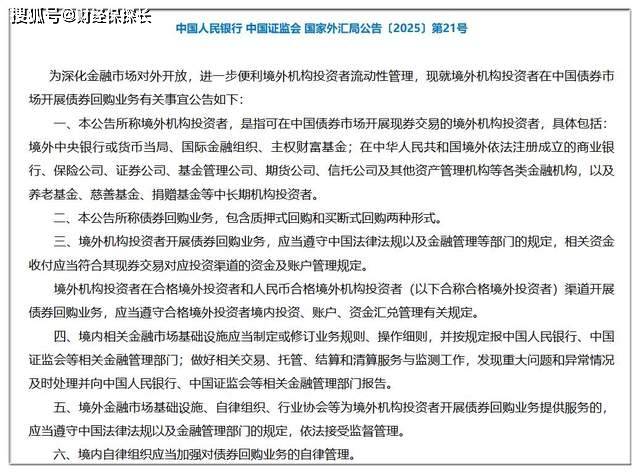
Core Viewpoint - The recent announcement by the central bank, the China Securities Regulatory Commission, and the State Administration of Foreign Exchange allows foreign institutional investors to fully participate in the bond repurchase market, marking a significant policy shift in China's financial landscape [1][8]. Group 1: Impact on Foreign Investors - The new policy effectively provides foreign investors with a "liquidity button" for their RMB-denominated bonds, enhancing their ability to manage cash flow [2]. - Historically, foreign investors faced challenges during market volatility, often forced to sell Chinese government bonds to meet margin calls, disrupting their investment strategies [3]. - The inability to efficiently manage liquidity led to increased trading costs and amplified investment risks, with estimates suggesting that transaction costs could consume 30%-50% of investment returns [4]. Group 2: Historical Context and Policy Evolution - The bond repurchase business for foreign institutions has been a decade-long journey, with initial participation limited to sovereign institutions and certain clearing entities, excluding major investment players [8]. - The recent policy change opens the door for a broader range of foreign investment institutions, allowing them to engage in repurchase agreements, which are essential for liquidity management [8]. Group 3: Operational Differences and Future Prospects - The new repurchase framework introduces a buyout-style repurchase model, aligning more closely with international practices, while the existing pledge-style repurchase remains in place for the time being [11]. - The policy is expected to enhance the attractiveness of Chinese bonds, with foreign institutions likely to increase their holdings significantly, as evidenced by a net increase of over 300 billion RMB in the first eight months of the year [13]. - The central bank's efforts to position Chinese bonds as widely accepted collateral in global markets could further boost their appeal and liquidity [13].
人民币的温度
Jing Ji Guan Cha Bao· 2025-10-01 15:00
Group 1 - The core viewpoint of the articles indicates a significant shift in the internationalization of the Renminbi (RMB), moving from a policy-driven approach to a market-driven one, where businesses are increasingly opting for RMB in cross-border transactions [1][10][17] - In the second quarter of this year, RMB cross-border transaction settlements surpassed those in USD for the first time, with 68% of surveyed companies using RMB for cross-border trade settlements by the fourth quarter of 2024 [1][2] - The RMB is perceived as more user-friendly and stable, with companies valuing its cash flow, security, and acceptance by trading partners [3][12] Group 2 - The establishment of the Digital RMB International Operation Center in Shanghai and the launch of various platforms signify China's efforts to create a transaction-driven RMB infrastructure [6][9] - The RMB's role is evolving from a settlement currency to an investment currency, with its global reserve share reaching 2.12% as of the first quarter of 2025 [11][12] - The RMB's internationalization is supported by a combination of policy simplification, development of onshore derivatives markets, and tailored financial products to enhance its competitiveness [14][15] Group 3 - The RMB's internationalization is not merely a result of administrative guidance but is increasingly driven by market dynamics and the desire for a more efficient and transparent payment system [10][13] - The recent trends in capital inflows and the rising interest in RMB-denominated assets reflect a broader structural change in the global monetary environment [15][16] - The future of RMB internationalization hinges on comprehensive financial reforms, robust infrastructure, and effective risk management to establish it as a necessary currency in global trade and finance [14][15]
大事件!中方游说友好国家央行,欢迎他们将黄金存放在中国
Sou Hu Cai Jing· 2025-10-01 13:36
Core Viewpoint - The article discusses the significant shift in global gold reserves towards China, highlighting the strategic implications of this trend for the international monetary system and the role of the Chinese yuan. Group 1: China's Gold Accumulation - China's central bank has increased its gold reserves for ten consecutive months, reaching a total of 74.02 million ounces by August 2025, marking a historical record [4][3] - This accumulation is part of a broader global trend, with central banks worldwide expected to purchase a net total of 1,136 tons of gold in 2024, the second-highest on record [6] - By the first quarter of 2025, China, Poland, and Turkey accounted for over half of the total gold purchases by central banks globally [8] Group 2: Strategic Implications - The continuous increase in gold reserves signals a strategic upgrade in the official stance towards safe-haven and reserve assets, positioning gold as a new player in the international monetary system [13] - The global central bank gold holdings have surpassed those of U.S. Treasury securities, indicating a resurgence in the strategic importance of gold [15] - China's actions are seen as a proactive measure to enhance its financial security amid rising global uncertainties, including high U.S. fiscal deficits and geopolitical tensions [17][19] Group 3: Currency and Gold Integration - The establishment of a gold delivery warehouse in Hong Kong and the launch of gold contracts for offshore RMB transactions signify a new pathway for international investors [10] - This integration creates a closed-loop exchange mechanism between the yuan and gold, facilitating the internationalization of the yuan [27] - The collaboration between Hong Kong and Shanghai aims to create a "RMB-gold" ecosystem, enhancing China's influence in global gold pricing [29] Group 4: Global Financial Landscape - The shift towards gold is not merely a trend but reflects a broader transition in the global financial landscape, with investors increasingly viewing gold as a stable asset amid declining confidence in the U.S. dollar [35] - China's strategy to increase its gold reserves is expected to reduce reliance on the dollar and enhance the diversity and stability of its foreign exchange reserves [34] - The ongoing changes may lead to a reconfiguration of the international monetary system, with gold serving as a foundational element for the yuan's acceptance as a reserve currency [39]

【首席观察】人民币的温度
Sou Hu Cai Jing· 2025-10-01 06:42
Core Viewpoint - The internationalization of the Renminbi (RMB) is gaining momentum as more enterprises, including foreign and third-country trade partners, are actively requesting RMB settlements, reflecting a shift from a policy-driven approach to a market-driven one [3][4][14]. Group 1: RMB Usage in Cross-Border Transactions - In Q2 of this year, RMB cross-border transaction settlements surpassed those in USD for the first time, with 68% of surveyed enterprises using RMB for cross-border trade settlements [3][4]. - The primary reason for using RMB cited by 71% of enterprises is "asset safety" [3]. - The RMB is increasingly viewed as a stable and convenient currency, allowing enterprises to avoid dependence on the USD [8][11]. Group 2: Market Dynamics and Investment Trends - Following the Federal Reserve's interest rate cuts, RMB assets have attracted global investors, leading to significant inflows into RMB-denominated bonds and A-shares [8][9]. - As of August 2025, 1,170 foreign institutions have entered the Chinese bond market, holding approximately 4 trillion RMB in bonds [9]. - The RMB's role is evolving from a settlement currency to an investment currency, with potential to test the boundaries of becoming a reserve currency [15]. Group 3: Infrastructure and Policy Developments - The establishment of the Digital RMB International Operation Center in Shanghai aims to enhance cross-border payment systems and facilitate the internationalization of the RMB [12][13]. - Recent policy initiatives, such as the support for foreign institutions to conduct bond repurchase transactions, are designed to improve liquidity and operational efficiency in the RMB market [9][12]. - The RMB's internationalization is supported by a transaction-driven infrastructure that enhances its usability and market acceptance [10][11]. Group 4: Challenges and Future Directions - Despite the progress, over 60% of enterprises find cross-border RMB policies complex, and nearly 50% cite capital flow restrictions as a major bottleneck [17]. - Future strategies should focus on simplifying policies, developing onshore derivative markets for risk hedging, and creating tailored financial products to encourage RMB usage among enterprises [18]. - The goal is to transition the RMB from a "optional" asset to a "must-hold" currency in global trade and finance, requiring comprehensive financial reforms and international collaboration [18][19].

2条战线全惨败,美国遭遇二战后最大战略失误,中国该抛售美债了
Sou Hu Cai Jing· 2025-10-01 06:39
Group 1 - The new U.S. government's attempts to reshape the global landscape through diplomatic mediation and economic pressure have faced significant setbacks, particularly in the context of the Russia-Ukraine conflict and global tariff wars, marking a severe policy deviation since 1945 [2][4][18] - The U.S. has struggled to effectively coordinate with European partners in mediating the Russia-Ukraine situation, leading to a perception of isolation in its diplomatic efforts [4][6] - The imposition of tariffs on imports from countries like China, Japan, and South Korea has revealed weaknesses in U.S. policy, as these nations have resisted additional restrictions, impacting U.S. economic interests [6][14] Group 2 - The U.S. has shifted its beef and soybean imports from domestic sources to Brazil and Argentina, resulting in a 20% increase in supply while maintaining stable prices [8] - The suspension of Boeing aircraft deliveries has led to over $20 billion in losses for the U.S. aviation industry, prompting a 30% increase in domestic production of the C919 aircraft [8][16] - The U.S. has implemented strict licensing for rare earth exports, causing delays in military production and increasing costs, with a 15% delay in F-35 components [10][12] Group 3 - The U.S. Federal Reserve's decision to maintain high interest rates has exacerbated economic pressures, with bond yields rising from 4% to 4.5% and a 10% fluctuation in the dollar's exchange rate [10][12] - The U.S. has seen a gradual reduction in its holdings of Treasury bonds, dropping from $784.3 billion at the beginning of the year to $730.7 billion by July, marking a 16-year low [12][14] - The reduction in U.S. Treasury holdings has led to increased volatility in yields, complicating U.S. financing efforts [14][18] Group 4 - The failure of U.S. mediation efforts has emboldened Russia and accelerated the trend of de-dollarization in global trade [18] - The U.S. is advised to continue reducing its Treasury bond holdings and diversify into gold and euros to safeguard its interests while promoting the internationalization of the renminbi [18]
【首席观察】CIPS十年一跃:在世界金融坐标中的落点
经济观察报· 2025-10-01 04:30
Core Viewpoint - The development of CIPS represents both the maturity of the RMB cross-border payment technology and a significant leap in the design of financial openness systems [1][19]. Group 1: RMB's Role Transformation - The RMB is transitioning from a wholesale market to a retail market, expanding its role from a settlement tool to a complete currency function [2][4]. - The launch of the cross-border QR code unified gateway signifies a natural extension aimed at enhancing the penetration of RMB in cross-border circulation [4][5]. Group 2: CIPS Development and Expansion - CIPS has seen a nearly eightfold increase in total participants over the past decade, growing from 19 direct participants and 176 indirect participants at its inception to 176 direct and 1,552 indirect participants by August 2025 [8][17]. - The establishment of a RMB clearing bank in Turkey marks a substantial breakthrough for the RMB clearing system in the Eurasian region, enhancing the network's coverage and operational flexibility [7][13]. Group 3: Regulatory Framework and Upgrades - The release of the "RMB Cross-Border Payment System Business Rules (Draft for Comments)" represents a significant institutional upgrade for CIPS, covering all aspects from account management to risk management [10][11]. - The new rules reflect a shift from initial access guidelines to compliance norms, providing a standardized and compliant foundation for the RMB cross-border settlement system [11][14]. Group 4: Financial Infrastructure and Global Integration - CIPS is positioned as a crucial financial infrastructure that aligns with international regulatory standards, facilitating the internationalization of the RMB [14][18]. - The system's capabilities are being enhanced to support a broader range of cross-border transactions, including trade, investment, and personal remittances, thereby solidifying its role as the main channel for RMB payments [10][17].