多边主义

Search documents
李强会见联合国秘书长古特雷斯
news flash· 2025-07-08 14:54
Core Viewpoint - The meeting between Chinese Premier Li Qiang and UN Secretary-General António Guterres emphasizes the importance of maintaining the authority of the United Nations amid complex international circumstances [1] Group 1: International Governance - China is committed to upholding the UN's core position in global governance and advocates for genuine multilateralism [1] - The Chinese government has made significant efforts to promote political resolutions to global hotspot issues and will continue to support the UN's unique role in de-escalating tensions [1] Group 2: Global Development Cooperation - There is a call for prioritizing development on the international agenda, with a focus on enhancing global development cooperation [1] - Resources should be directed towards key areas such as poverty alleviation, education, employment, and capacity building to revitalize global development partnerships [1]
7月8日晚间央视新闻联播要闻集锦
Yang Shi Xin Wen Ke Hu Duan· 2025-07-08 14:03
Group 1 - Xi Jinping emphasized the need for Shanxi to promote the transformation of resource-based economy and contribute to China's modernization [3] - The central government is focusing on the ecological protection and high-quality development of the Yellow River basin [3] - The national inland waterway freight volume exceeded 2 billion tons from January to May, showing a year-on-year growth of nearly 4% [10] Group 2 - Li Qiang attended the 17th BRICS Leaders' Meeting, discussing multilateralism, artificial intelligence, and climate change [5] - The State Council announced a new investment of 10 billion yuan for labor-based projects, aiming to create jobs for 310,000 people [13] - The launch of pure benzene futures and options on the Dalian Commodity Exchange is expected to help companies manage price volatility risks [16]
全球经济治理新范式|新刊亮相
清华金融评论· 2025-07-08 10:00
Core Viewpoint - The global economic governance paradigm is undergoing profound evolution, characterized by the shift from a single power structure to a more collaborative and shared governance model, emphasizing multilateral participation and institutional restructuring [6][10]. Group 1: Global Economic Governance Changes - The current global economic governance is influenced by geopolitical conflicts, rising protectionism, and the acceleration of digital and green transformations, leading to a weakening of global growth momentum [6][12]. - The restructuring of financial order is a significant manifestation of adjustments in global governance, highlighting the need for a diversified sovereign currency coexistence and orderly competition [7][12]. - The role of the International Monetary Fund (IMF) and Special Drawing Rights (SDR) is evolving from crisis response to regular operation, enhancing their integration into trade, financing, and reserve systems [7][21]. Group 2: China's Role in Global Governance - China is transitioning from a rule-taker to a rule-maker in global economic governance, promoting high-level opening-up and aligning with international high-standard trade rules [8][12]. - The country is developing a comprehensive policy framework around digital payments, green finance, and data regulation, aiming to create replicable international governance solutions [8][12]. - China's commitment to multilateralism and shared development is evident in its efforts to enhance institutional compatibility and participation depth within the global governance system [7][8]. Group 3: Future Governance Paradigms - The future of global economic governance remains undefined, with key variables including the restructuring of multilateral mechanisms, the rule-based advancement of technological governance, and the diversification of the international monetary system [8][10]. - Balancing national sovereignty with global cooperation, efficiency with fairness, and risk prevention with innovation will be crucial for the effectiveness and sustainability of future governance frameworks [8][12].

马克龙刚见完王毅,法国财长就对华变脸,鼓动欧盟对中国全面加税
Sou Hu Cai Jing· 2025-07-08 09:04
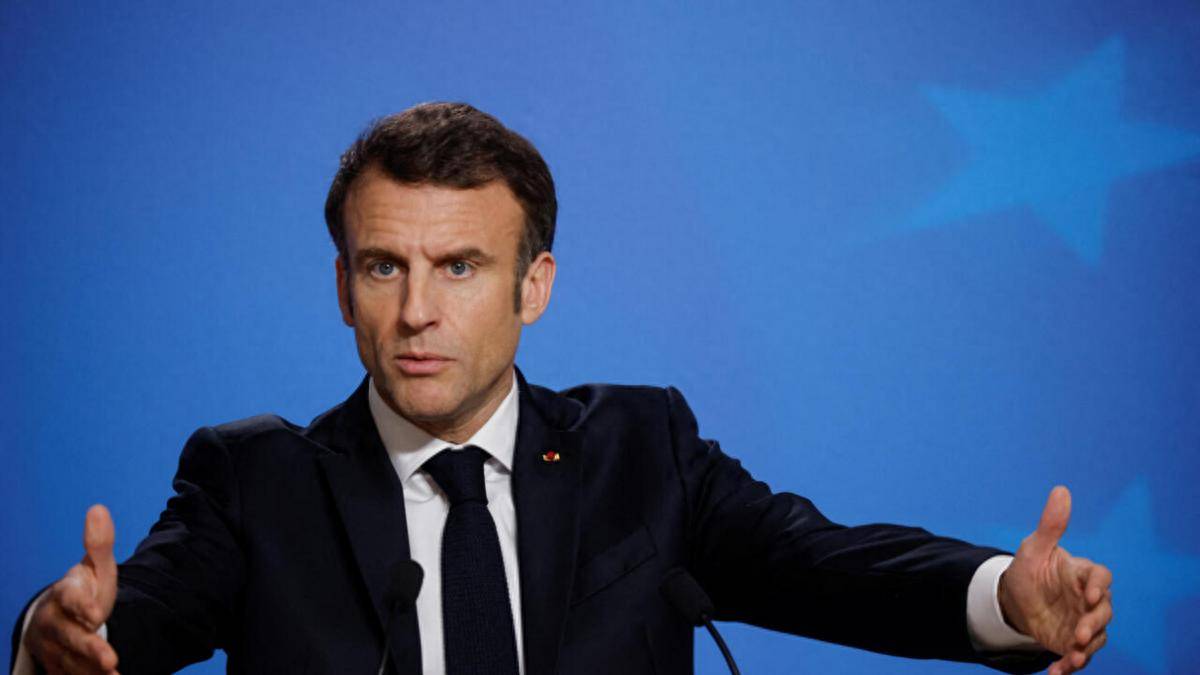
Group 1 - The core viewpoint of the articles highlights the contradictory stance of France regarding its relationship with China, where it seeks investment while simultaneously advocating for increased trade barriers against Chinese goods [1][3][5] - French Finance Minister Le Maire's call for the EU to raise tariffs on Chinese imports reflects a broader anxiety within the EU about competition from China, despite the need for access to the Chinese market [5][7] - The simultaneous statements from French ministers indicate a potential coordinated effort within the French government to adopt a tougher stance on China, which contradicts the EU's proclaimed position of non-confrontation [7][8] Group 2 - The articles suggest that France's fluctuating approach towards China is not new, as seen in previous actions like the investigation into Chinese electric vehicle subsidies, indicating ongoing concerns about the impact of Chinese competition on French manufacturing [7][8] - The emphasis on increasing trade barriers is criticized as a superficial solution that fails to address the underlying structural issues facing European manufacturing, particularly in digital transformation and key industries [8] - The overall narrative raises questions about the EU's long-term strategy towards China, balancing between cooperation and protectionism, and the implications of this for global economic relations [8]
美国大哥靠不住,马克龙也想访华,交投名状后,王毅当场把话挑明
Sou Hu Cai Jing· 2025-07-08 07:59
Group 1 - The article discusses the challenges faced by French President Macron, particularly in light of potential tariffs from former US President Trump that could impact French products like cheese, wine, and automobiles [1][3] - Macron's urgent need for investment in France is highlighted, especially as he seeks to strengthen ties with China during a critical time [5][9] - The visit of Chinese Foreign Minister Wang Yi is seen as a strategic opportunity for Macron to explore new partnerships amid shifting geopolitical dynamics [7][11] Group 2 - Macron's emphasis on multilateralism signals a search for reliable partners beyond the US, with China being a potential ally [7][29] - The article notes the complexities of trade relations, particularly regarding the EU's investigations into Chinese electric vehicles and the underlying tensions in these discussions [13][15] - The swift response from China regarding anti-dumping investigations into EU brandy illustrates the delicate balance of trade interests between France and China [17][25] Group 3 - Domestic pressures from French producers, particularly in the cognac industry, are influencing political decisions and highlighting the interconnectedness of trade and local economies [19][21] - The need for genuine cooperation and trust between China and France is emphasized, with calls for fair treatment of Chinese enterprises in France [29][31] - Macron's potential visit to China is framed as a test of his political acumen and commitment to a stable, long-term relationship with China [32][34][36]

外交部:“大金砖合作”要维护和践行多边主义,开辟经济增长新蓝海
news flash· 2025-07-08 07:58
Group 1 - The core viewpoint emphasizes the importance of multilateralism and the commitment to building an open world economy through the "BRICS cooperation" [1] - The initiative aims to enhance international financial cooperation and explore new avenues for economic growth [1] - There is a clear stance against unilateralism and protectionism, highlighting the need to maintain stable and smooth industrial and supply chains [1] Group 2 - China expresses willingness to use the upcoming leaders' meeting as an opportunity to uphold the "BRICS spirit" and collaborate with BRICS partners [1] - The focus is on promoting shared values, safeguarding common interests, and fostering self-reliance among nations [1] - The goal is to advance global governance towards a more just, reasonable, efficient, and orderly direction, contributing to a better world [1]
李强总理出席金砖国家领导人第十七次会晤 外交部介绍有关情况
news flash· 2025-07-08 07:50
Group 1 - The meeting highlighted the significance of BRICS cooperation in the context of rising unilateralism and protectionism, emphasizing the need for equal respect and collaboration among member states [1] - Premier Li Qiang pointed out the accelerated evolution of global changes and the serious impact on international rules and order, advocating for BRICS to be a leading force in global governance reform [1] - The BRICS nations are encouraged to maintain independence, promote economic growth, and enhance cultural exchanges while opposing unilateralism and protectionism [1] Group 2 - The Rio de Janeiro Declaration was adopted, along with statements on global governance of artificial intelligence and a climate finance framework [2] - China expressed its commitment to uphold the "BRICS spirit" and work with partners to promote common values and interests, aiming for a more just and efficient global governance [2]
新华时评丨中欧携手,做世界“稳定之锚”
Xin Hua She· 2025-07-08 04:49
Group 1 - The core viewpoint emphasizes the importance of strengthening strategic communication and deepening mutually beneficial cooperation between China and the EU, especially at the 50th anniversary of their diplomatic relations [1][2][3] - Recent high-level strategic dialogues between China and the EU, including discussions on major international and regional issues, indicate a willingness from both sides to enhance understanding and develop constructive relations [1][2] - The historical context of China-EU relations shows that despite differences, there are no fundamental conflicts of interest, and cooperation is essential for mutual benefits, particularly in the economic sector [2][3] Group 2 - The trade volume between China and the EU has significantly increased from 2.4 billion to 780 billion, with investment rising to nearly 260 billion, showcasing the substantial economic ties [2] - Various forums and summits, such as the 16th China-EU Entrepreneurs Summit and the 2025 China-EU Business Forum, highlight ongoing discussions about new economic cooperation opportunities [2] - The commitment to multilateralism is underscored as both parties aim to maintain global stability and promote free trade, countering unilateralism and power politics [3]
巴西总统卢拉:金砖国家对全球经济发展及多边主义体系做出了重大贡献
Guan Cha Zhe Wang· 2025-07-08 03:39
Group 1 - The BRICS Business Forum held in Rio de Janeiro focused on international trade, food security, energy transition, digital economy, and financial inclusivity [1] - BRICS countries' GDP accounts for over 40% of global GDP, with an average growth of 4% compared to the global growth of 3.3% in the past year [1] - The forum emphasized the importance of BRICS in combating hunger and poverty, enhancing food production capabilities through rural credit and low-carbon agriculture [1] Group 2 - Malaysian Prime Minister Anwar Ibrahim echoed the call for strengthening South-South cooperation and opposing protectionism and tariff barriers [2] - BRICS countries have made significant progress in sectors such as aviation, artificial intelligence, and food technology [2] - The forum aims to promote mutual investment, strengthen trade relations, and foster collaborative innovation and development [2]

李强出席金砖国家领导人第十七次会晤第二及第三阶段会议
证监会发布· 2025-07-08 01:25
Group 1 - The current international economic and trade order is under severe impact, making global economic recovery difficult. The "Big BRICS Cooperation" aims to uphold multilateralism and promote a fair and open international economic order [2] - China has established a special economic zone cooperation center for BRICS countries and is willing to build a cooperation network with all parties [2] - China supports the New Development Bank to strengthen its role and welcomes eligible global South countries to invest in China's financial market [2] Group 2 - There is an increasing risk of uncertainty in global climate, environment, and health sectors, necessitating collective action from the international community [3] - China emphasizes the importance of adhering to the Paris Agreement and enhancing cooperation in clean energy and carbon markets, urging developed countries to fulfill their commitments [3] - The meeting resulted in the adoption of declarations on global governance of artificial intelligence and climate finance framework by BRICS leaders [3]