绿色转型

Search documents
矿端扰动带动供应收缩预期,铜延续高位区间波动
Tong Hui Qi Huo· 2025-08-19 11:36
1. Report Industry Investment Rating - Not provided in the given content 2. Core View of the Report - The copper market may continue to oscillate at a high level in the short term. The core drivers are the continuous fermentation of supply - side disturbances and the support from the home appliance sector in the demand side. However, the macro - sentiment is cautious, and the risk of fluctuations caused by unexpected events should be vigilant [6]. 3. Summary According to Relevant Catalogs 3.1 Copper Futures Market Data Change Analysis 3.1.1 Main Contracts and Basis - On August 15, the SHFE copper futures main contract closed at 79,080 yuan/ton, slightly down from August 12. The LME copper price also slightly declined to $9,760/ton during the same period. The domestic spot premium - discount structure was differentiated. The premium of premium copper dropped from 260 yuan/ton on August 12 to 210 yuan/ton on August 15, and the premium of flat - water copper shrank synchronously. But in North China, the spot premium - discount of electrolytic copper was boosted due to logistics restrictions near the Tianjin SCO Summit. The LME (0 - 3) discount widened to -$93.75/ton, indicating short - term supply pressure [1]. 3.1.2 Position and Trading Volume - The LME copper position increased to 271,444 lots on August 15, an increase of 2,867 lots compared to August 12. The domestic spot trading sentiment was relatively stable, and the procurement and sales sentiment indices in Shanghai were both around 3.1, with strong wait - and - see sentiment from both supply and demand sides [2]. 3.2 Analysis of Industrial Chain Supply - Demand and Inventory Changes 3.2.1 Supply Side - Overseas copper mine disturbances intensified. The Las Bambas copper mine in Peru may face operational interruptions due to the presidential election. Although MMG maintained its annual production forecast of 360,000 - 400,000 tons, transportation disruptions and inventory clearance indicated short - term supply constraints. Zambia's Q2 copper production decreased by about 4% quarter - on - quarter, mainly due to production problems of four enterprises. The annual production target of 1 million tons was under pressure. In China, policy adjustments in the recycled copper industry affected the raw material procurement of bronze strip enterprises, potentially suppressing recycled copper supply. However, Minmetals Resources' copper sales in the first half of the year increased by 51% year - on - year, partially offsetting supply - side disturbances [3]. 3.2.2 Demand Side - Downstream demand showed differentiation. The market quotation of brass rods remained flat. The production of recycled copper rod factories was suppressed by raw material shortages and policy uncertainties, and the overall production enthusiasm was average. However, the refrigeration and air - conditioning valve market continued to grow, with sales increasing by 5.7% year - on - year in the first half of the year. Policy stimulus for home appliances in the second half of the year may further boost copper consumption. Overall, the demand in the power and home appliance sectors remained stable, but the demand in the construction and industrial sectors was still weak [4]. 3.2.3 Inventory Side - On August 15, the LME inventory slightly increased to 24,560 tons, the SHFE inventory slightly decreased to 155,800 tons, and the COMEX inventory rose to 267,195 short tons. The global visible inventory generally fluctuated at a low level. The concentrated arrival of imported sources in Shanghai increased the inventory, but with the active shipment of holders, the spot premium remained firm, and inventory accumulation did not form obvious pressure [5]. 3.3 Industry Chain Price Monitoring - From August 12 to August 18, the prices of SMM:1 copper, SHFE, and LME showed slight fluctuations. The premiums of premium copper, flat - water copper, and wet - process copper changed, with the wet - process copper having a large change rate of 566.67%. The LME (0 - 3) discount increased by - 3.20%. In terms of inventory, the LME inventory increased by 3.82%, the SHFE inventory decreased by - 0.13%, and the COMEX inventory increased by 0.00% [8]. 3.4 Industry Dynamics and Interpretations - **MMG's Production**: MMG's annual production forecast for the Las Bambas copper mine in Peru remains unchanged at 360,000 - 400,000 tons, but the presidential election may cause operational interruptions [9]. - **Qingyuan Jiangtong's PV Project**: On August 15, Jiangxi Copper (Qingyuan) Co., Ltd.'s 2540.65 - kilowatt distributed photovoltaic power generation project was officially connected to the grid, with an annual power generation of 2.5 million kilowatt - hours, saving 1,000 tons of standard coal and reducing 2,492 tons of carbon dioxide emissions annually [10]. - **SMM Copper News**: Due to the approaching Tianjin SCO Summit, logistics restrictions in North China boosted the spot premium - discount of electrolytic copper [10]. - **Zambia's Copper Production**: Zambia's Q2 copper production decreased by about 4% quarter - on - quarter, and the annual production target of 1 million tons is at risk [11]. - **Recycled Copper Policy**: Policy adjustments in the recycled copper industry may affect the raw material procurement of bronze strip enterprises [12].
晶科能源姚臣谌:ESG会从“成本中心”重塑为“利润中心”
2 1 Shi Ji Jing Ji Bao Dao· 2025-08-19 10:57
Group 1 - The global green energy transition is a consensus driven by extreme climate events and frameworks like the Paris Agreement and dual carbon goals, with technology innovation being a key force in this transition [3] - The average system cost of photovoltaic (PV) technology has decreased by over 90% in the past decade, making net-zero transition a feasible goal rather than just an ambitious slogan [3] - Companies can find opportunities in "big ESG" while building their own competitive advantages in "small ESG," with sustainable business practices being the greatest form of ESG for solar companies [4] Group 2 - JinkoSolar has become the first Chinese PV company to join RE100 and has successfully established its near-term and long-term net-zero carbon goals and roadmap by the end of 2023 [4] - The proportion of green electricity used by JinkoSolar has increased from less than 20% to over 50% in the past five years, with an absolute increase of over ten times in green electricity usage [4] - Many companies still view ESG as a "cost center," but some have successfully transformed it into a "profit center," experiencing the benefits of this transition [4] Group 3 - Energy companies should enhance their cognitive iteration capabilities, integrating technology innovation and ESG construction into their core competitiveness to avoid missing transformation opportunities [5] - Companies need to solidify their technological and digital foundations to accelerate the R&D to industrialization cycle and enable real-time ESG data collection and compliance disclosure [5] - Building ESG ecosystem capabilities is essential, involving both improving internal ESG management systems and engaging in global green governance through standard-setting and technical services [5]

深石资本张天:消费侧新能源资产正成为机构配置“新蓝海”
2 1 Shi Ji Jing Ji Bao Dao· 2025-08-19 10:53
Group 1 - The core viewpoint emphasizes the interconnection between green transformation, technological innovation, and ESG, with green transformation being the primary investment goal and qualitative measure [1][4] - Zhang Tian, founder of Deep Stone Capital, highlights that the potential for green transformation is the most critical dimension in investment decisions, directly influencing investment returns and effectiveness [4] - Deep Stone Capital focuses on integrating innovative technologies and solutions for urban carbon neutrality, using the "Biosphere No. 3" project in Shenzhen as a testing ground for advanced energy technologies [4] Group 2 - Future opportunities in the consumption-side renewable energy assets, such as photovoltaic, energy storage, and charging facilities driven by carbon-neutral parks, are expected to become a significant component of major asset management platforms [5] - The market for renewable energy assets in China has reached trillions, with increasing marketization and transaction attributes due to policy openness and improved comprehensive energy utilization [5] - RWA and other blockchain financial innovations are anticipated to promote the trend of integrating renewable energy assets with digital technologies, enhancing traceability and reliability in the Web3 domain [5]

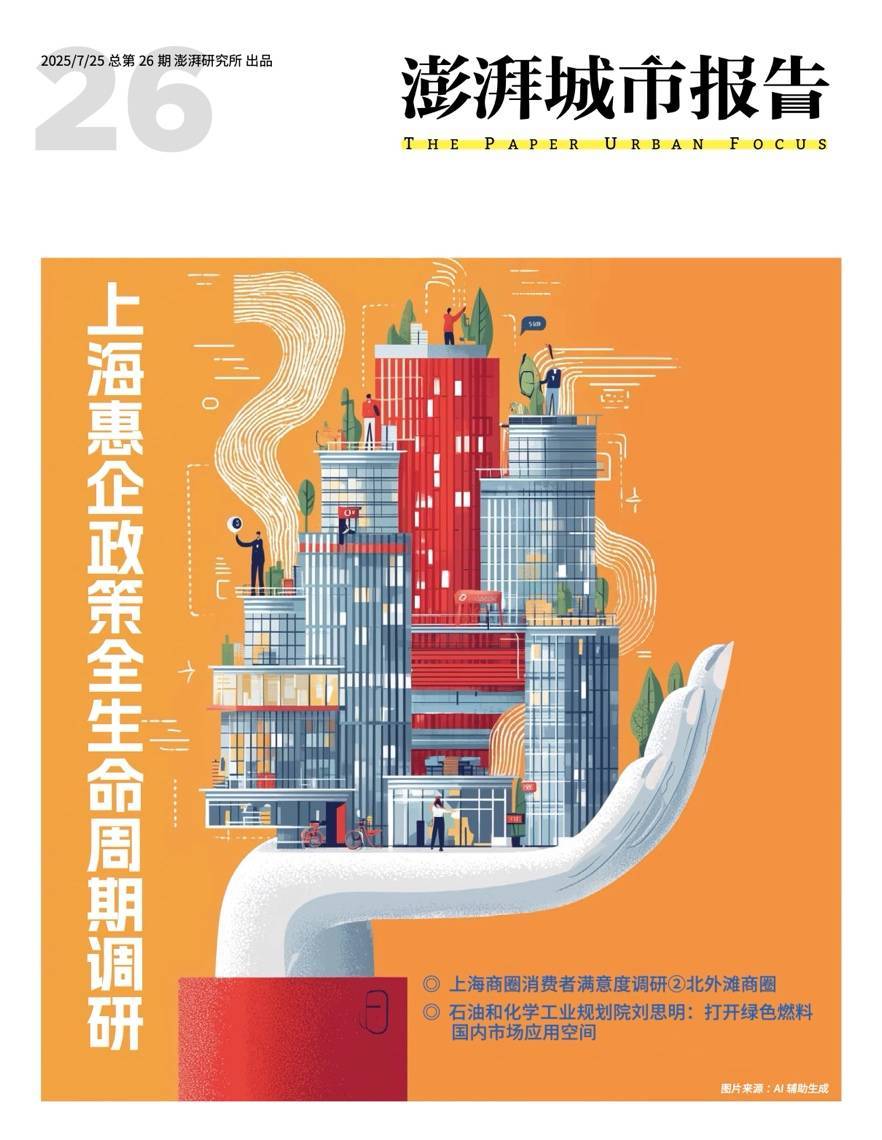
上海惠企政策成效如何?欢迎订阅《澎湃城市报告》第26期
Sou Hu Cai Jing· 2025-08-19 10:41
Group 1 - The report focuses on the effectiveness and impact of government policies aimed at benefiting enterprises in Shanghai, utilizing interviews and surveys to analyze the perspectives of policy makers, implementers, and users [5] - The first article examines the basic content, composition, nature, and objective impact of the enterprise benefit policies [5] - The second article presents and analyzes how the policies are communicated and implemented, detailing the roles of policy-making departments, the "Shuishen Dui" platform, parks/buildings, and service intermediaries [5] Group 2 - The North Bund business district is identified as a core area for Shanghai's development as an international consumption center, forming a "golden triangle" with the Bund and Lujiazui [9] - The report reviews the transformation of the North Bund from an industrial functional area to a central business district and then to a central activity area, based on interviews with 34 consumers including tourists, local residents, and business professionals [9] - Recommendations for enhancing the business district's capabilities are provided based on consumer demand and satisfaction evaluations, as well as data analysis and expert interviews [9] Group 3 - Shanghai is advancing its green transition plan, which includes promoting green fuel certification services and enhancing international cooperation to strengthen its influence in the global green shipping fuel market [12] - The International Maritime Organization (IMO) is set to approve global shipping net-zero emissions regulations by April 2025, linking mandatory emission reduction targets with greenhouse gas pricing for the shipping industry [12] - As the world's largest container port, Shanghai Port is a key node in the construction of green shipping corridors [12]
东方证券绿色金融研究院顾高臣:金融是ESG建设的“润滑剂”
2 1 Shi Ji Jing Ji Bao Dao· 2025-08-19 09:41
Core Insights - Financial mechanisms are essential for the effective operation of green transformation, technological innovation, and ESG construction, acting as a "lubricant" and "accelerator" for these interconnected processes [1][2] Group 1: Green Finance and Technological Innovation - The relationship between green transformation, technological innovation, and ESG construction is likened to three interlocking gears that drive each other [1] - Financial guidance is crucial for directing funds towards green industries, facilitating rapid implementation of technology, and supporting green transformation [1] Group 2: Current Challenges in Green Finance - Despite the large scale of green finance products, they primarily focus on traditional energy transitions and established renewable energy projects, with strict control over investment cycles [2] - There is a gap in current green finance products regarding future energy industry technological directions, indicating a need for improvement [2] Group 3: Future Opportunities in Green Transformation - The shift from supply-side to demand-side policies in green transformation is expected to create more market opportunities in the next 3-5 years [2] - The urgency for carbon reduction from the user side is increasing, leading to more opportunities as green transformation goals are elevated [2]

上海大学吴华:NbS有望成为企业零碳发展的“最后一里路”
2 1 Shi Ji Jing Ji Bao Dao· 2025-08-19 08:40
Core Insights - The third "Vibrant ESG" Innovation Forum was held in Shanghai, focusing on the balance between green transformation, technological innovation, and ESG development [1] - The integration of ESG practices is becoming essential for companies aiming for international expansion, as it can help avoid penalties and facilitate market access [1] - Companies are primarily focusing on carbon reduction through three approaches: technological improvements in production, direct connection to green electricity, and nature-based solutions [1] Group 1 - The concept of Nature-based Solutions (NbS) has gained global consensus, with many leading companies adopting both technological and natural approaches to carbon reduction [2] - NbS was formalized in a resolution signed by 193 UN member states in 2022, providing a new pathway for carbon neutrality through biodiversity and habitat protection [2] - Over half of the Fortune 500 companies have established investment or philanthropic funds focused on forest and biodiversity protection, indicating a shift towards NbS in corporate strategies [2] Group 2 - Despite the emergence of NbS practices, domestic implementation remains primarily government-driven, with fewer corporate examples [3] - There is an ongoing effort to develop actionable methodologies for NbS, with three green new economy pilot zones established to support international companies in meeting EU carbon border adjustment mechanisms [3]
中国科学管理学会吕建中:ESG正成为新商业文明时代的主战场
2 1 Shi Ji Jing Ji Bao Dao· 2025-08-19 08:34
ESG正成为新商业文明时代主战场,绿色转型与技术创新密切相关。吕建中指出,ESG为绿色低碳发展提供框架,推动社会与 商业价值融合,转型升级应聚焦更具韧性和可持续的高质量发展。 8月16日,由南方财经全媒体集团指导,21世纪经济报道联合东方证券主办、上海环境(601200)能源交易所战略支持的第三届 21世纪"活力.ESG"创新论坛在上海隆重举办。 作为以"绿色转型与技术创新的平衡术"为主题的圆桌对话环节主持人,管理学专著《可持续商业战略与实践》作者、中国科学 管理学会可持续专委会副主任吕建中谈到,在全球能源变革的背景下,绿色转型已经成为能源行业发展的核心方向,ESG以及 技术创新与绿色转型有着相互作用、相互影响的密切关系。 吕建中在剖析绿色转型、技术创新以及ESG建设三者之间的关系时指出,"ESG正成为新商业文明时代中商业进化阶段的主战 场,由此带来了更加聚焦社会价值和商业价值融合的创新空间。" 吕建中认为,技术和商业模式的创新,是推动绿色低碳高质量可持续发展的关键力量。"ESG为这一转型升级提供了可参照的框 架性对标路径,比如产品多元脱碳、产业协同减碳、全球经营零碳。" 吕建中也强调:"我们必须清醒地认识到 ...
协鑫科技刘涛:技术创新是落实ESG建设的关键
2 1 Shi Ji Jing Ji Bao Dao· 2025-08-19 07:44
Core Viewpoint - The forum highlighted the balance between green transformation, technological innovation, and ESG implementation, emphasizing the need for coordination among these areas in the current production activities of society [1][2]. Group 1: Company Insights - Liu Tao from GCL-Poly shared insights on how the company addresses conflicts between short-term survival and long-term goals in the context of technological innovation and ESG [1][2]. - GCL-Poly's technological innovation is aligned with both ESG and long-term sustainable development, focusing on cost, quality, and carbon reduction [1][2]. Group 2: Research and Development - The establishment of GCL Central Research Institute aims to resolve potential conflicts between short-term and long-term technological innovation and ESG [2]. - The institute has approximately 140 personnel, with 20 expected to handle international operations, while the rest focus on the domestic upstream materials market [2]. Group 3: Industry Trends - Chinese upstream material companies in the renewable energy sector are positioned to enhance catalyst material reaction efficiency through AI and to unify the research and development pace across all materials [2]. - GCL-Poly's initiative "Responding to Climate Change - Granular Silicon Empowering Full Industry Carbon Reduction" was included in the 21st Century "Vitality·ESG" Environmental Friendly Case report [2].

发生了什么?这家知名上市胶企2025上半年净利暴跌246%
Sou Hu Cai Jing· 2025-08-19 07:19
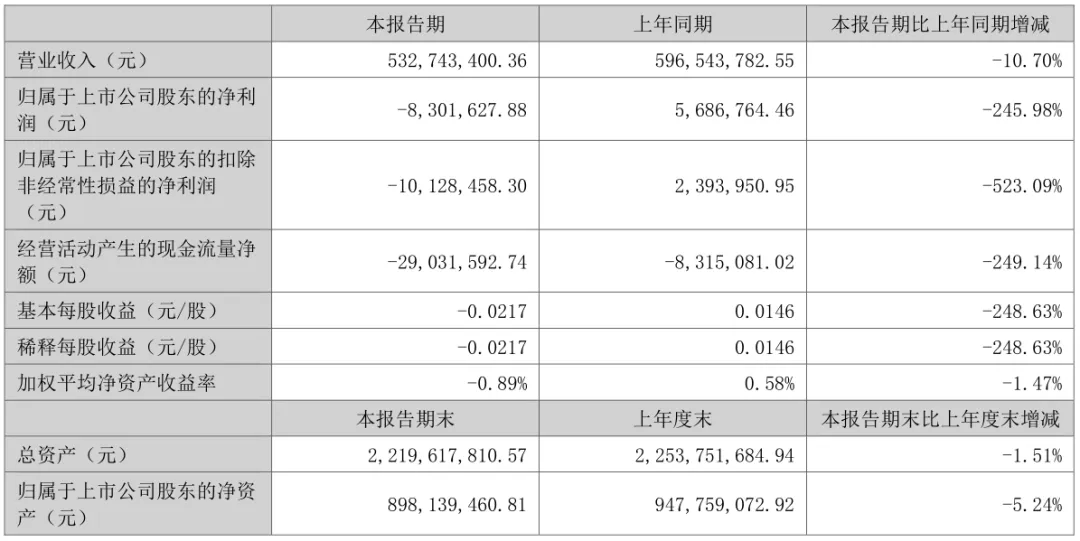
Core Viewpoint - The company, Jitai Co., Ltd. (002909.SZ), reported a decline in revenue and net profit for the first half of 2025, primarily due to cyclical fluctuations in the downstream shipping container manufacturing and construction markets, although its new energy, home decoration, and overseas businesses showed resilience and potential for growth [1][4]. Financial Performance - Revenue for the first half of 2025 was 532.74 million yuan, a decrease of 10.70% compared to 596.54 million yuan in the same period last year [2]. - The net profit attributable to shareholders was a loss of 8.30 million yuan, down 245.98% from a profit of 5.69 million yuan year-on-year [2]. - The net cash flow from operating activities was -29.03 million yuan, a decline of 249.14% from -8.32 million yuan [2]. - Basic and diluted earnings per share were both -0.0217 yuan, a drop of 248.63% from 0.0146 yuan [2]. - Total assets at the end of the reporting period were 2.22 billion yuan, down 1.51% from 2.25 billion yuan at the end of the previous year [2]. Business Dynamics and Structural Breakthroughs - The total revenue breakdown shows that construction adhesives accounted for 287.01 million yuan (53.87% of total revenue), industrial adhesives for 104.16 million yuan (19.55%), and coatings for 139.46 million yuan (26.18%) [3]. - Domestic revenue was 515.50 million yuan (96.76% of total), down 11.62% year-on-year, while international revenue was 17.25 million yuan (3.24%), up 29.74% year-on-year [3][5]. - The company is focusing on new energy and industrial adhesives, with sales in the new energy sector reaching 15.20 million yuan, a growth of 116.50% [6]. Strategic Focus and Future Outlook - The management plans to concentrate on high-growth sectors such as new energy and energy storage in the second half of the year, aiming to enhance the proportion of industrial adhesives through technological iterations [7]. - The company is investing in new production capacity, including a new high-end materials manufacturing base expected to be operational by the end of 2025, which will significantly enhance its competitiveness in the new energy materials market [11].

发展航船破浪行则必至
Chang Jiang Ri Bao· 2025-08-19 02:03
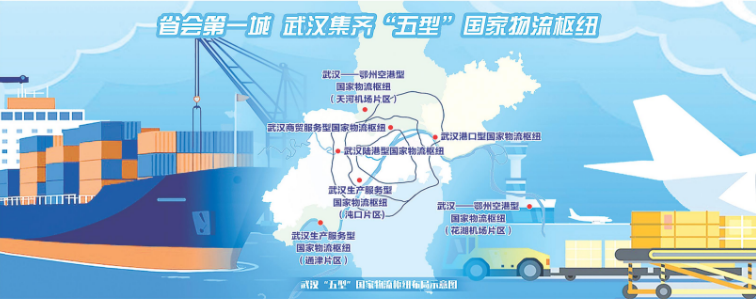
Core Viewpoint - Wuhan's development and reform committee is focusing on high-quality economic growth, strategic planning, and enhancing service capabilities to support urban development and achieve economic upgrades [2][3][15]. Economic Performance - In the first half of the year, Wuhan's GDP reached 10,592.8 billion yuan, with a growth rate of 5.5%, surpassing the national average by 0.2 percentage points, ranking 5th among 15 sub-provincial cities [3][16]. - The city's investment performance ranked 4th among 15 sub-provincial cities, with a 13.5% increase in private investment, excluding real estate [16]. New Quality Productivity - Wuhan has gathered over 170 low-altitude economy enterprises, with a core industry scale growth of over 20% year-on-year [4][16]. - The Beidou industry has over 300 related enterprises, with a scale of approximately 339 billion yuan, showing a year-on-year growth of 31% [5][16]. - The life and health industry also experienced a growth of about 20.1% year-on-year [5][16]. Logistics and Infrastructure - Wuhan has been approved to build a production service-type national logistics hub, becoming the first provincial capital city in China to have all five types of national logistics hubs [7][9]. - The logistics industry added value grew by 37.1%, with logistics costs as a percentage of GDP being 1.9 percentage points lower than the national average [9][17]. Regional Collaboration - The development of the Wuhan metropolitan area is being enhanced through collaborative efforts with eight surrounding cities, focusing on transportation, technology, and industry integration [10][11]. - A total of 103 annual tasks have been outlined to promote the development of the Wuhan metropolitan area by 2025 [10][11]. Green Transformation - The hydrogen energy industry is being developed with 15 innovation platforms and over 70 institutions in a core area of 3.8 square kilometers [12]. - The city has seen a 55% increase in green electricity purchases, and the hydrogen energy demonstration line has achieved a carbon reduction of approximately 1,300 tons [12][13][17]. Future Plans - The development reform committee is focusing on project management, supporting the introduction of more projects into national and provincial investment databases, and promoting the growth of emerging industries [13][14]. - Plans include enhancing the logistics hub, expanding the railway and transit projects, and fostering the development of the Wuhan metropolitan area [14].