
产业集群

Search documents
中国Vlog丨一件家具的“出海之旅”
Xin Hua Wang· 2025-11-24 10:59
Core Viewpoint - Jiangxi Province's Ganzhou City, specifically Nankang District, has become one of China's largest furniture manufacturing bases despite lacking wood resources, thanks to the development of the China-Europe Railway Express, which has significantly enhanced local competitiveness and global connectivity [1] Group 1: Infrastructure and Logistics - The China-Europe Railway Express has operated over 1,700 trains, establishing a logistics corridor that connects Asia and Europe, facilitating trade for inland cities like Ganzhou [1] - The local furniture industry benefits from a well-developed infrastructure and industrial cluster, allowing companies to import wood from over 50 countries and regions [1] Group 2: Market Reach and Opportunities - Furniture produced in Ganzhou is exported to over 100 countries and regions, exemplifying the strategy of "buying wood globally and selling furniture globally" [1] - The railway has transformed not only the logistics of furniture but also positioned Ganzhou as a microcosm of China's broader opening-up strategy, providing new pathways for many inland cities to engage with the global market [1]
江苏塑造更高水平开放新优势
Ren Min Ri Bao· 2025-11-22 03:17
Core Insights - The article highlights the transformation of foreign investment in Jiangsu, moving from single-point investments to industrial clusters and from manufacturing to R&D headquarters, indicating a shift from "foreign R&D, Chinese manufacturing" to "Chinese innovation, global sales" [1][4]. Group 1: Foreign Investment Landscape - Jiangsu has attracted over 560 German enterprises with a cumulative investment exceeding $60 billion, with about 70% focusing on the automotive industry [2]. - The province has established 26 international cooperation parks, with manufacturing foreign investment accounting for $37.58 billion from 2021 to 2024, representing 36.2% of the total foreign investment in the province [3]. - Jiangsu's actual foreign investment usage accounts for approximately one-sixth of the national total, with 43,000 foreign enterprises currently operating in the province [4]. Group 2: R&D and Headquarters Development - Jiangsu has recognized 423 regional headquarters and functional institutions of multinational companies, with 128 new additions since the start of the 14th Five-Year Plan, ranking among the top in the country [4][5]. - The province has implemented a three-year action plan to encourage reinvestment of profits by foreign enterprises, creating a comprehensive support scheme [4]. Group 3: Innovation and Technology Transfer - Foreign enterprises are increasingly establishing R&D centers in Jiangsu, with companies like Mettler Toledo and Schaeffler leveraging local talent and resources to innovate and serve global markets [6][7]. - The shift in foreign enterprises' roles in China is evident, as they transition from merely producing to developing innovative solutions that are exported globally [6][7]. Group 4: Policy and Strategic Goals - Jiangsu's government emphasizes the dual approach of stabilizing and improving foreign trade and investment, aiming to contribute more significantly to national economic growth [8].
活力中国调研行丨江苏塑造更高水平开放新优势
Ren Min Ri Bao· 2025-11-22 01:49
Core Insights - The article highlights the transformation of foreign investment in Jiangsu, China, from single-point investments to industrial clusters, emphasizing the shift from "foreign R&D, Chinese manufacturing" to "Chinese R&D, global sales" [1][4]. Group 1: Foreign Investment Landscape - Jiangsu has attracted over 560 German-funded enterprises with a cumulative investment exceeding $60 billion, particularly in the automotive industry, where about 70% of these enterprises focus on the automotive supply chain [2][3]. - The province has established 26 international cooperation parks, with foreign investment in the manufacturing sector reaching $37.58 billion from 2021 to 2024, accounting for 36.2% of the total foreign investment in the province [3]. Group 2: Innovation and R&D Focus - Foreign enterprises are increasingly establishing R&D centers and regional headquarters in Jiangsu, with 423 multinational company regional headquarters recognized, and 128 new ones added since the start of the 14th Five-Year Plan [4][5]. - Companies like Hawe Mechanical and Mettler Toledo have shifted from merely manufacturing to R&D, with Mettler Toledo investing 7% of its revenue in R&D and achieving global sales with its high-precision equipment [6][7]. Group 3: Economic Policies and Support - Jiangsu has implemented a three-year action plan to encourage foreign enterprises to reinvest their profits, creating a comprehensive support scheme that includes policy guidance and tax services [5]. - The province has recognized three foreign headquarters economic clusters, with foreign headquarters contributing an average tax of 160 million yuan, surpassing the average level of foreign enterprises [5]. Group 4: Global Integration and Market Position - Foreign companies are redefining their roles in the Chinese market, with many transferring core R&D functions to Jiangsu, viewing China not just as a market but as a source of innovation [6][7]. - Jiangsu is evolving from a "cost sink" for foreign investment to an "innovation highland," with foreign enterprises becoming "innovation partners" and "global nodes" in the supply chain [7][8].
产业集群崛起和营商环境优化“双轮驱动”盱眙民营经济“借势奔涌”
Xin Hua Ri Bao· 2025-11-22 00:09
Group 1 - The core viewpoint of the articles highlights the significant growth and development of the private economy in Luyi County, with private enterprises accounting for 97.6% of the 414 industrial enterprises and contributing 97% of the innovation in national high-tech enterprises [1][2] - Luyi County is focusing on industrial clustering and chain building, with nearly 80 new-generation electronic information companies and around 90 new material enterprises established, indicating a strong commitment to enhancing the local industrial ecosystem [2][3] - The county has implemented efficient service measures, such as the "Shu Yi Ban" service brand, which has significantly reduced project approval times, allowing for rapid project initiation and construction [3][4] Group 2 - Luyi County has introduced supportive policies for enterprises, achieving a 90% rate of direct benefits from policies, and has reduced administrative penalties by 94% compared to the previous year, showcasing a commitment to improving the business environment [4][5] - The county is enhancing its technological competitiveness by optimizing mechanisms for cultivating high-tech enterprises, with 60 smart transformation projects implemented and an investment of 45 million yuan in intelligent equipment and software systems [6] - The establishment of key laboratories and innovation platforms, such as the Jiangsu Provincial Composite Additive Manufacturing Engineering Research Center, is fostering collaboration between academia and industry, further supporting the growth of local private enterprises [6]
实际使用外资约占全国1/6 现有外资企业4.3万家——江苏塑造更高水平开放新优势(活力中国调研行)
Ren Min Ri Bao· 2025-11-21 22:57
Core Insights - The article highlights the transformation of foreign investment in Jiangsu, China, from single-point investments to industrial clusters, emphasizing a shift from "foreign R&D, Chinese manufacturing" to "Chinese R&D, global sales" [1][4][6] Group 1: Foreign Investment Landscape - Jiangsu has attracted over 560 German enterprises with a cumulative investment exceeding 60 billion USD, particularly in the automotive industry, where about 70% of foreign companies focus on the supply chain [2][3] - The province has established 26 international cooperation parks, with manufacturing foreign investment accounting for 375.8 billion USD from 2021 to 2024, representing 36.2% of the total foreign investment in the province [3][4] Group 2: Innovation and R&D Focus - Foreign companies are increasingly establishing R&D centers and regional headquarters in Jiangsu, with 423 multinational company regional headquarters recognized, and 128 added since the start of the 14th Five-Year Plan [4][5] - The shift towards R&D is exemplified by companies like Mettler Toledo, which has developed high-precision equipment in China, showcasing a transition from "foreign R&D, Chinese manufacturing" to "Chinese R&D, global sales" [6][7] Group 3: Economic Contribution and Policy Support - Foreign headquarters in Jiangsu contribute an average tax of 160 million CNY, higher than the average for foreign enterprises, indicating a robust economic impact [5] - Jiangsu's government has implemented a three-year action plan to encourage reinvestment of profits by foreign enterprises, enhancing the investment environment [4][5] Group 4: Global Integration and Market Role - The article emphasizes that Jiangsu is no longer just a cost-effective location for foreign investment but has evolved into an "innovation highland," with foreign enterprises acting as "innovation partners" and "global nodes" [7][8] - Companies are leveraging local supply chains and talent to enhance their global service capabilities, as seen in the case of Jabil and Finisar, which have established comprehensive bases in Jiangsu [7][8]
长株潭城市群,找到了新型工业化的进阶密码
21世纪经济报道· 2025-11-21 12:45
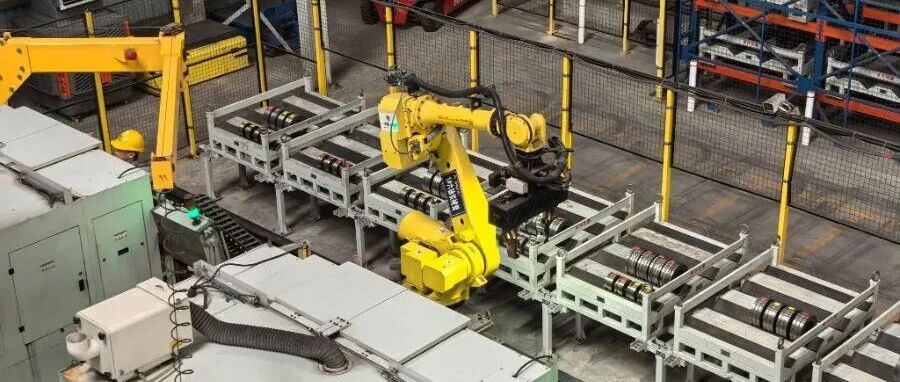
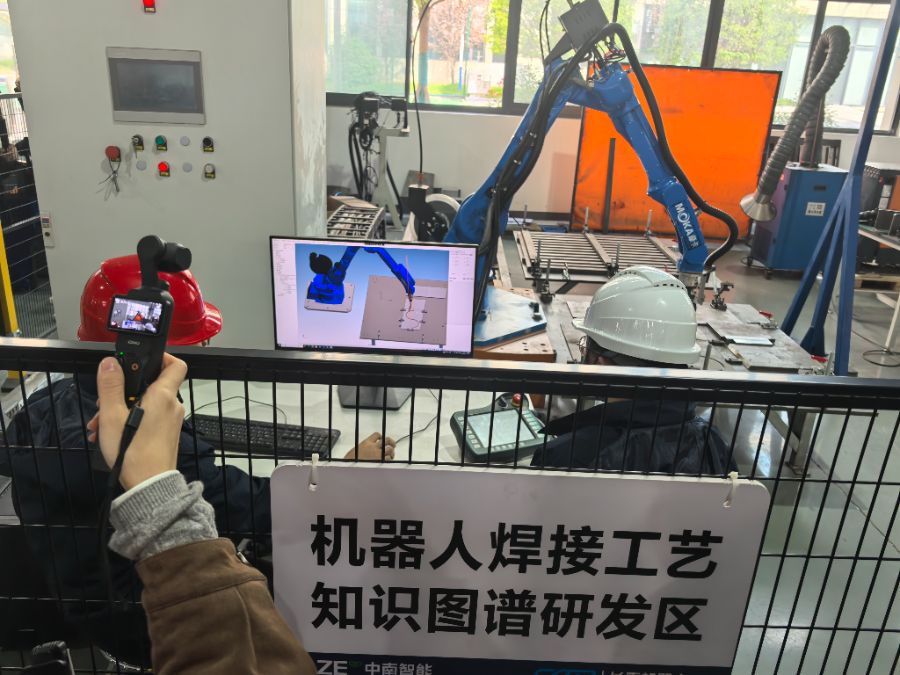
Core Viewpoint - The article highlights the unique industrial development path of Hunan Province, particularly in the Changsha-Zhuzhou-Xiangtan urban agglomeration, focusing on "intelligentization" and "industrial clusters" as key themes in the new industrialization exploration [1][2]. Intelligentization - Hunan aims to establish 360 new benchmark enterprises in intelligent manufacturing by 2025, with intelligentization deeply integrated into various industrial sectors [1]. - Changsha has cultivated 396 intelligent manufacturing enterprises and has been recognized as one of the first pilot cities for new manufacturing technology transformation in China [4]. - Companies like Hunan Zhongnan Intelligent Equipment Co., Ltd. provide intelligent solutions across multiple industries, utilizing diverse algorithms to meet varying customer needs [5]. Industrial Clusters - The Hunan government emphasizes the importance of industrial clusters, aiming to enhance industrial capabilities and develop 13 key industrial chains [1][2]. - Zhuzhou has established the first intelligent manufacturing workshop for bogies globally and has launched the largest data center in Central South China [11]. - Xiangtan has initiated the "Intelligent Empowerment for Thousands of Enterprises" campaign, resulting in the establishment of 355 intelligent manufacturing enterprises and 764 intelligent production lines [11]. Economic Performance - In the first three quarters, Changsha's exports of "newly added value" products saw significant growth, with industrial robots and agricultural machinery exports increasing by 170.1% and 174.7%, respectively [15]. - Zhuzhou's industrial added value increased by 9.8%, with manufacturing value growing by 10.4%, leading the province [15]. - Xiangtan's industrial landscape has transformed from traditional sectors to advanced steel, electric vehicles, and advanced batteries, with significant contributions from key enterprises [15]. New Industries Development - The North Star industry in Zhuzhou has grown from scratch, achieving a scale of 11.3 billion yuan and establishing the first commercial satellite factory in the province [20]. - The medical device industry in Xiangtan has also developed from the ground up, with the establishment of a specialized industrial park that has attracted over 290 enterprises and generated significant tax revenue [22]. Conclusion - The exploration of new industrialization in Changsha, Zhuzhou, and Xiangtan is characterized by a combination of leveraging existing industrial foundations and fostering new industries through supportive policies and ecosystem development [22].

从产业集群到智能车间:新型工业化“进阶密码”
2 1 Shi Ji Jing Ji Bao Dao· 2025-11-21 09:17
Core Insights - Hunan Province is actively exploring new industrialization paths, with Changsha, Zhuzhou, and Xiangtan as the core growth areas for industrial development [2][4][5] - The focus on "intelligentization" and "industrial clusters" is emphasized in Hunan's industrial strategy, aiming to enhance efficiency and innovation [4][19] Industrial Development - Hunan's government aims to establish 360 new benchmark enterprises in intelligent manufacturing by 2025, highlighting the importance of smart manufacturing in the region [4] - The "4×4" modern industrial system is being promoted, with 13 key industrial chains targeted for enhancement [4][19] - Zhuzhou has developed a robust industrial software ecosystem, attracting 27 software companies to its industrial software park [20][21] Intelligent Manufacturing - Hunan has cultivated 396 intelligent manufacturing enterprises, with significant advancements in production efficiency, such as producing an aluminum alloy wheel hub every 10 seconds [7][18] - Companies like Hunan Zhongnan Intelligent Equipment Co. are providing smart solutions across various sectors, including automotive and textiles [8][11] - The industrial internet platform developed by Zoomlion connects over 800,000 devices globally, enhancing operational management for clients [12] Economic Performance - In the first three quarters, Zhuzhou's industrial output value increased by 9.8%, with manufacturing value growing by 10.4% [18] - Xiangtan's industrial landscape has shifted from traditional sectors to advanced steel, electric vehicles, and advanced batteries, with significant growth contributions from key enterprises [18] Policy and Ecosystem - The Hunan government is fostering an environment conducive to industrial cluster development, focusing on existing industrial foundations and future trends [19][20] - The establishment of specialized parks, such as the medical device industrial park in Xiangtan, has led to rapid growth in the sector, with over 290 companies attracted [24] New Industry Development - The Beidou industry in Zhuzhou has grown from non-existence to a cluster worth 11.3 billion yuan, showcasing successful government support and investment [22][23] - The medical device industry in Xiangtan has seen substantial growth, with the core area’s output value increasing from tens of millions to 3.046 billion yuan from 2021 to 2024 [24]
“中欧班列+”效应: 一条铁路如何“链”起产业集群
Xin Hua She· 2025-11-21 00:04
Core Insights - The China-Europe Railway Express has operated nearly 120,000 trains, evolving from a single cross-border logistics channel to a multi-faceted ecosystem integrating "trains + hubs + industries + trade" [1] - The railway network connects 128 cities in China, 232 cities in 26 European countries, and over 100 cities in 11 Asian countries, playing a crucial role in stabilizing international supply chains and promoting global economic development [1] Group 1: Logistics and Efficiency - Technological advancements such as Beidou positioning, 5G technology, and electronic sealing have significantly improved the efficiency of the logistics channels, reducing the import processing time at the Horgos port from 2-3 days to under 16 hours [1] - The establishment of a green cross-border e-commerce train has reduced transportation costs to one-fifth of air freight, facilitating the large-scale development of the cross-border e-commerce industry [2] Group 2: Industry Integration and Development - New models like "trains + cross-border e-commerce" and "trains + green manufacturing" are expanding the boundaries of industrial integration, with companies like Xi'an Aijiu Grain and Oil Industrial Group leveraging the railway for agricultural product imports [2] - The deep integration of "trains + industries" has led to the emergence of distinctive industrial clusters, with cities like Erenhot and Ulanqab experiencing rapid growth in related services and trade [3] Group 3: Regional Economic Impact - The China-Europe Railway Express is injecting vitality into countries along the route, with Bulgaria planning to establish a regional distribution center to enhance employment and related industries [3] - The railway not only facilitates logistics but also connects industrial clusters and fosters win-win cooperation among countries, aiming for higher quality development of industrial clusters [3]
一条铁路如何“链”起产业集群
Ren Min Ri Bao Hai Wai Ban· 2025-11-19 22:46
穿梭于亚欧大陆的中欧班列,已累计开行近12万列。10多年间,这条"钢铁驼队"从最初单一的跨境物流 通道,到如今"班列+枢纽+产业+贸易"的多元融合生态,"中欧班列+"效应正持续放大,更以铁路大动 脉为纽带,将沿线分散的产业节点紧密串联、高效聚合,催生出一个个特色鲜明的产业集群,为亚欧大 陆架起了联通机遇、共促发展的产业协作新桥梁。 2011年3月19日,首列中欧班列"渝新欧"发出,开启亚欧铁路运输新纪元。"目前,中欧班列已累计开行 近12万列,形成了联通中国境内128个城市,通达欧洲26个国家232个城市以及亚洲11个国家100多个城 市的国际运输网络,为维护国际产业链、供应链稳定,促进全球经济发展发挥了重要作用。"国铁集团 董事长郭竹学说。 在网络延伸的同时,技术赋能让通道效率持续跃升,北斗定位、5G技术与电子施封锁的应用实现货物 全程可视化追踪。霍尔果斯口岸进口货物通行时间从2至3天压缩至16小时内,属地出口货物作业时间缩 短至1小时。高效稳定的物流通道,让内陆地区从开放末梢变为前沿阵地,为产业集群的形成提供了核 心支撑。 "班列+跨境电商""班列+订单农业""班列+绿色制造"等新模式蓬勃发展,不断拓展着 ...
“中欧班列+”效应:一条铁路如何“链”起产业集群
Xin Hua Wang· 2025-11-19 11:53
Core Insights - The China-Europe Railway Express has operated nearly 120,000 trains, evolving from a single cross-border logistics channel to a multifaceted ecosystem integrating "trains + hubs + industries + trade" [1] - This railway network connects 128 cities in China with 232 cities in 26 European countries and over 100 cities in 11 Asian countries, playing a crucial role in stabilizing international supply chains and promoting global economic development [1] Group 1 - The application of technologies such as Beidou positioning, 5G, and electronic seals has significantly improved the efficiency of logistics channels, reducing import processing time at the Horgos port from 2-3 days to under 16 hours [2] - New business models like "trains + cross-border e-commerce," "trains + order agriculture," and "trains + green manufacturing" are emerging, expanding the boundaries of industrial integration [2] - The West Xi'an Aijiu Grain and Oil Industrial Group has utilized the China-Europe Railway Express to establish a planting base in Kazakhstan, achieving a precise connection between overseas production and domestic consumption [2] Group 2 - The global expansion of the photovoltaic industry has heightened the demand for supply chain stability, with the China-Europe Railway Express providing a reliable alternative to traditional sea transport, significantly reducing the risk of cargo damage [3] - The launch of the first green cross-border e-commerce train has reduced transportation costs to one-fifth of air freight, promoting the scale development of the cross-border e-commerce industry [3] - Diverse logistics products such as public trains, boutique trains, and customized trains cater to various industrial needs, facilitating efficient circulation of electronic components, auto parts, and smart home products [3] Group 3 - The deep integration of "trains + industries" has led to the emergence of distinctive industrial clusters, with cities like Erenhot and Ulanqab experiencing rapid growth in related services and trade [4] - The China-Europe Railway Express has injected vitality into countries along the route, providing unique opportunities for Bulgaria to develop a regional distribution center that will enhance employment and related industries [4] - The railway not only facilitates logistics but also connects industrial clusters and fosters win-win cooperation among nations [6]
