健康中国

Search documents
广西体育局与国家体育总局体育科学研究所签署合作协议
Ren Min Ri Bao· 2025-12-07 22:02
Group 1 - The third China-ASEAN National Physical Fitness and Health Promotion International Academic Conference was held in Nanning, Guangxi [1] - Guangxi Sports Bureau and the National Sports General Administration Sports Science Research Institute signed a strategic cooperation agreement for the deep integration of national fitness and health [1] - The cooperation aims to provide technological support for the integration of national fitness and health, improve public health levels, and contribute to the construction of a sports power and a healthy China [1]
基层诊疗人次超50% “家门口”看病更便捷
Xin Hua She· 2025-12-07 04:42
Core Viewpoint - The article emphasizes the significant progress made in China's healthcare system, particularly in enhancing grassroots medical services, which now account for over 50% of the total medical consultations in the country, reflecting a shift in public healthcare habits and resource allocation [1][2]. Group 1: Healthcare System Development - The "14th Five-Year Plan" has focused on improving the accessibility of healthcare, with a strategy to address major illnesses at the provincial level, general illnesses at the city and county levels, and minor ailments at the rural level [1]. - The construction of tightly-knit county medical communities has been promoted, allowing county and township medical institutions to operate cohesively [1]. - The establishment of national medical centers and regional medical centers aims to alleviate the challenges of cross-regional medical services for the public [1]. Group 2: Grassroots Healthcare Improvements - From 2020 to 2024, the number of grassroots healthcare institutions increased from 970,000 to 1,040,000, while the number of healthcare personnel rose from 4.34 million to 5.257 million, and the number of medical consultations grew from 4.1 billion to 5.3 billion [2]. - Advanced medical equipment such as color Doppler ultrasound and CT scans have become standard in community health service centers and township hospitals, expanding the range of services available at the grassroots level [2]. - Remote medical services have enabled residents in remote areas to access high-quality medical care, enhancing the overall efficiency of the healthcare system [2]. Group 3: Future Initiatives - The "15th Five-Year Plan" will introduce more supportive measures for county and grassroots medical institutions, optimize the functional positioning and layout of medical facilities, and promote the digitalization of public health [2]. - These initiatives are expected to significantly enhance the public's sense of health security and access to healthcare services [2][3].
新华鲜报·“十四五”发展亮点丨基层诊疗人次超50%!“家门口”看病更便捷
Xin Hua She· 2025-12-07 04:24
Core Viewpoint - The article emphasizes the significant shift in China's healthcare system towards strengthening grassroots medical institutions, enabling over 50% of medical needs to be addressed locally, reflecting a change in public healthcare habits and resource allocation [1][3][5]. Group 1: Healthcare System Development - The "14th Five-Year Plan" focuses on resolving major illnesses within provinces, general ailments at city and county levels, and minor health issues in rural areas, which is crucial for the reform of the healthcare sector [3]. - The establishment of tightly-knit county medical communities aims to integrate county and township medical institutions, enhancing service capabilities [3][5]. - The number of grassroots healthcare institutions is projected to increase from 970,000 in 2020 to 1,040,000 by 2024, with healthcare personnel rising from 4.34 million to 5.257 million, and annual patient visits growing from 4.1 billion to 5.3 billion [5]. Group 2: Technological and Service Enhancements - Community health service centers and township hospitals are now equipped with advanced diagnostic tools like color Doppler ultrasound and CT scans, which were previously exclusive to large hospitals [5]. - Remote medical services are being implemented to provide high-quality healthcare access to residents in remote areas [5]. - The article outlines future initiatives aimed at optimizing the operational support for county and grassroots medical institutions, enhancing the functionality and layout of healthcare facilities, and promoting digital health solutions [5][6].


霸王茶姬联合创始人尚向民:行业未来应由价值定义
Bei Ke Cai Jing· 2025-12-07 03:22
Core Viewpoint - The company Bawang Chaji emphasizes long-termism in the tea beverage industry, advocating for value-driven competition rather than price wars, amidst challenges of homogenization and internal competition [1]. Group 1: Company Development and Philosophy - Bawang Chaji, founded in 2017 in Kunming, Yunnan, focuses on two main objectives: producing quality tea and promoting Chinese tea culture [2]. - The company adheres to principles of "health, transparency, and low burden" in its product offerings, aiming for high-quality development [2]. Group 2: Industry Trends and Initiatives - The company has committed to large-scale, high-quality raw material procurement, with a projected tea leaf procurement volume of 13,000 tons in 2024, which enhances product quality and supports the upstream tea industry and farmers' income [2]. - Bawang Chaji is actively participating in the "Healthy China" initiative by piloting and promoting "nutritional labeling" in Shanghai, helping consumers understand the sugar and calorie content in beverages, which has also received official health certification in Malaysia [2].
2025健康中国传播大会在京举行
Xin Lang Cai Jing· 2025-12-07 02:55
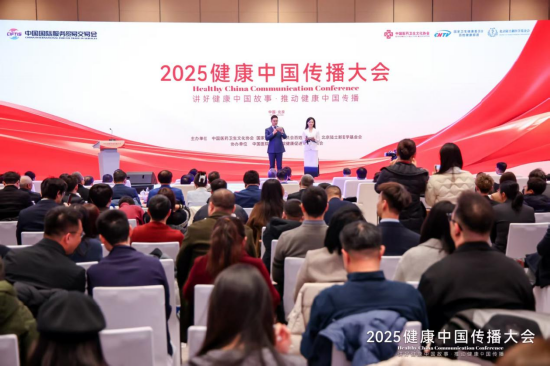
Core Viewpoint - The 2025 Health China Communication Conference, themed "Telling the Health China Story and Promoting Health China Communication," successfully took place in Beijing, gathering leaders, experts, and media representatives to discuss new theories and practices in health communication, aiming to inject sustainable communication power into the Health China initiative [1][34]. Group 1: Opening Remarks - The conference commenced in a solemn atmosphere, with leaders from various departments delivering speeches to set the direction for health communication in the new era from multiple perspectives, including strategic planning and cultural construction [3][36]. - Zheng Hong, President of the China Medical and Health Culture Association, emphasized the importance of adhering to the Party's leadership and strengthening health culture communication to contribute to the Health China initiative [6][38]. - Wu Jing, Deputy Director of the China Health Education Center, highlighted the significant progress in improving national health literacy, with the rate rising from 8.8% in 2012 to 31.87% in 2024 [8][40]. Group 2: Key Initiatives and Projects - The conference will launch several key projects, including the Hospital Health Communication Integrated Media Platform and the "66 Health Literacy" initiative, aimed at creating a more scientific and efficient health communication ecosystem [11][42]. - The "Health Literacy 66" initiative has reached over 2.9 billion people, transforming health knowledge from being merely heard to being understood and absorbed [14][46]. - Seven major projects were initiated during the conference, integrating resources from health systems, medical institutions, and media to build a comprehensive communication matrix addressing key health issues [28][60]. Group 3: Thematic Presentations - Various speakers presented on topics such as maternal and child health, chronic disease prevention, and the role of artificial intelligence in health communication, showcasing innovative practices and strategies [18][55][57]. - The short film "Return" was screened, illustrating efforts in building social psychological support systems for community rehabilitation of mental health patients [16][49]. - The conference featured discussions on the importance of grassroots health services and the need for high-quality development in the healthcare system [20][53]. Group 4: Parallel Sessions - Two parallel sessions were held, focusing on the dual drivers of technological innovation and health communication, and the empowerment of health literacy through new media [33][65]. - The sessions provided a platform for sharing experiences and forward-thinking ideas on enhancing health communication effectiveness [33][65]. Group 5: Conclusion - The conference concluded with a call to action, emphasizing the role of health communication in mobilizing societal consensus and individual actions towards the Health China initiative [34][66].
山东省健康管理协会成立十周年学术报告会成功举办
Qi Lu Wan Bao· 2025-12-07 00:40
12月6日,山东省健康管理协会成立十周年学术报告会在济南举办。中国科学院院士陈子江亲临授课,中国工程院院士张运、谢立信、于金明、李兆申、 宁光,外籍院士曹义海,中国科学院院士陆林、葛均波,国医大师王新陆等发来贺信贺词。 易凡指出,山东省健康管理协会成立十年来的蓬勃发展,是高校、医院与社会组织协同赋能、服务区域健康的成功典范。协会依托山东大学及其附属医 院,构建了"共建.共治.共享.共赢"的发展模式,已成为拥有众多分支机构、凝聚数万委员的5A级社会组织。山东大学将继续强化与协会的协同,共同聚焦 前沿领域,推动科研创新与成果转化,依托高校智库资源加强健康管理研究,为健康山东建设注入持续智慧与动力。 陆怡表示,山东省健康管理协会作为省工商联的重要团体会员,十年来始终坚持服务宗旨,紧密团结广大会员与健康领域工作者,在推动行业自律、促进 学术交流、搭建合作平台等方面开展了卓有成效的工作。期待协会进一步发挥桥梁纽带作用,加强健康知识普及与产业协作,在服务会员成长、助推健康 产业升级、促进民营经济健康发展方面展现新作为。 山东省卫生健康委党组成员、副主任徐民,山东大学党委常委、副校长、齐鲁医学院院长易凡,山东省工商联党组成 ...

再起航!淄博市中医医院医养中心开启中医药特色医养结合新路径
Qi Lu Wan Bao· 2025-12-04 08:18
Core Insights - The Zibo Traditional Chinese Medicine Hospital's Elderly Care Service Center has officially opened its medical area, marking a significant step in the city's exploration of a new model for integrated medical and elderly care [1][2]. Group 1: Development and Features - The medical area (Elderly Department) is designed to provide a comprehensive health service platform that integrates medical treatment, nursing, rehabilitation, elderly care, and palliative care, offering a full lifecycle health service solution with a focus on traditional Chinese medicine [1][2]. - The facility includes 30 beds and is designed with the physiological and psychological characteristics of the elderly in mind, featuring a barrier-free design and advanced monitoring systems to ensure safety and comfort [2]. Group 2: Service Integration - The medical area has commenced full operations, providing outpatient, inpatient, and rehabilitation services, with a key feature being the seamless integration of medical and elderly care [3]. - A green channel allows elderly patients to transition quickly from the care area to the medical area for professional treatment, minimizing the burden of travel between home, care centers, and hospitals [3]. Group 3: Traditional Chinese Medicine Integration - The center emphasizes the philosophy of traditional Chinese medicine, focusing on preventive care and holistic approaches, integrating traditional therapies such as acupuncture and herbal treatments into elderly health management [4]. - The service chain includes medical care, rehabilitation, nursing, and elderly care, aiming to maintain and restore the elderly's physiological functions while enhancing their quality of life [4]. - Special attention is given to the psychological needs and dignity of the elderly, with facilities for psychological counseling and palliative care services for end-of-life support [4].
聚焦科技成果转化 重医附二院与太极集团达成合作
Huan Qiu Wang· 2025-12-02 10:08
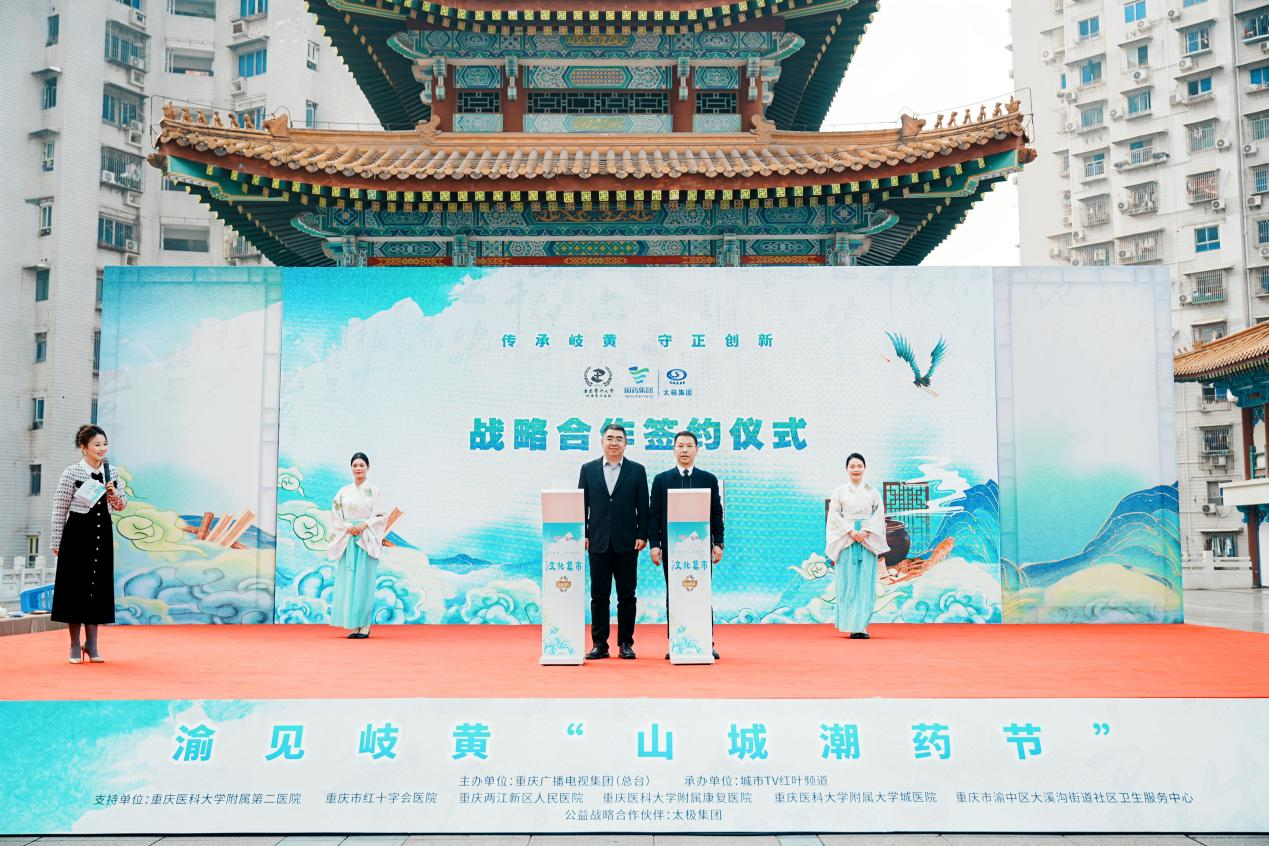
Core Viewpoint - The collaboration between Chongqing Medical University Second Affiliated Hospital and Taiji Group marks a significant step in the integration of government, medical, and enterprise sectors to modernize and industrialize traditional Chinese medicine [1][3]. Group 1: Collaboration and Objectives - The partnership aims to implement the "Healthy China" strategy and promote the revitalization of traditional Chinese medicine through the integration of clinical research capabilities and industry advantages [3]. - The focus is on creating an efficient transformation pathway from "classic prescriptions" to "modern products," enhancing the quality of the health industry in Chongqing [3][4]. Group 2: Institutional Strengths - Chongqing Medical University Second Affiliated Hospital has a strong foundation in clinical and research capabilities in traditional Chinese medicine, supported by its integrated medical center and key laboratories [3]. - The hospital has developed a closed-loop research and development system that addresses clinical needs, research breakthroughs, and result transformations [3]. Group 3: Strategic Goals - The collaboration aims to standardize and upgrade traditional Chinese medicine products, ensuring that scientifically validated and effective innovations benefit public health [3][4]. - Taiji Group emphasizes its commitment to merging traditional Chinese medicine with modern health lifestyles, focusing on making traditional formulations more convenient and accessible [4]. Group 4: Research and Development Center - A "Joint Research and Transformation Center for Traditional Chinese Medicine Formulations" will be established to focus on innovation in formulation processes, quality standards, clinical efficacy evaluation, and product development [4]. - The center aims to create a replicable and promotable model for collaborative innovation in the production, study, and application of traditional Chinese medicine [4]. Group 5: Public Engagement and Future Plans - The event included a public engagement component, allowing citizens to experience traditional Chinese medicine and receive health consultations from experts [4]. - The Chongqing Health Commission plans to continue optimizing the policy environment to support such collaborations, aiming to enhance public health and develop the local health industry [4].

健康险公司竞争力排行榜发布 人保健康、平安健康险荣获冠亚军
2 1 Shi Ji Jing Ji Bao Dao· 2025-12-01 12:27
(原标题:健康险公司竞争力排行榜发布 人保健康、平安健康险荣获冠亚军) 南方财经全媒体记者 孙诗卉 实习生 徐若萱 近日,21世纪经济报道最保险工作室在由南方财经全媒体集团指导、21世纪经济报道主办的"第二十届 21世纪金融年会"上发布了《中国保险业竞争力研究报告(2025)》(以下简称《报告》)。 《报告》指出,随着"健康中国"战略的深入推进和居民健康管理意识的觉醒,健康险作为保险业的重要 组成部分,正迎来前所未有的发展机遇。 具体到健康险公司,《报告》基于2024 年全年数据及2025 年上半年数据,对7 家专业健康险公司进行 综合评估后进行竞争力排名。 排名第一到第四分别是中国人民健康保险股份有限公司(以下简称"人保健康")、平安健康保险股份有 限公司(以下简称"平安健康险")、复星联合健康保险股份有限公司(以下简称"复星联合健康")、太 平洋健康保险股份有限公司(以下简称"太平洋健康险")。 瑞华健康保险股份有限公司、和谐健康保险股份有限公司、昆仑健康保险股份有限公司因数据不完整未 参与排名。 人保健康、平安健康险获得冠亚军 《报告》显示,参与排名的4家健康险公司在2025年上半年共实现保险业务收入约 ...
布局前沿领域共同促进全民健康
Jing Ji Wang· 2025-12-01 07:43
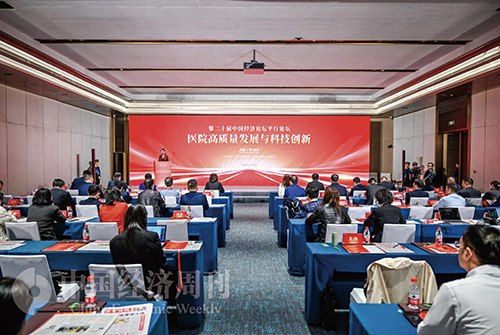
Core Insights - The 20th China Economic Forum opened in Guangzhou, focusing on high-quality hospital development and technological innovation in healthcare [1][2] - The forum addressed three main topics: the standardization of health services to improve medical quality, pediatric service development, and the integration of finance and healthcare in the Greater Bay Area [2][3] Group 1: Forum Themes - The forum emphasized the importance of "health first, innovation-driven" in the context of the 14th Five-Year Plan for healthcare development [2][3] - Discussions included the need for an integrated healthcare system covering the entire life cycle, focusing on preventive care, disease management, and emergency services [3] - The role of state-owned capital in shaping the future of healthcare innovation was highlighted, with a call for "patient capital" to support long-term investments in the sector [3][4] Group 2: Regional Development - Nansha District is positioned as a new highland for healthcare in the Greater Bay Area, benefiting from significant policy advantages to support the biopharmaceutical industry [4] - The potential for medical tourism in China was discussed, with Nansha expected to become an international medical hub [4][5] - The forum participants noted that the healthcare industry is undergoing profound changes, transitioning from imitation to innovation, and from local to global markets [5] Group 3: Industry Collaboration - There is a call for collaboration among industry, academia, investment, and government to foster a healthy development ecosystem in the medical sector [5] - The focus is on continuous investment in source innovation and coordinated efforts in global expansion to enhance the competitiveness of China's healthcare industry [5]