自研芯片

Search documents
小米集团-W:2025Q1业绩点评:IOT业务高速增长,单季度业绩再创新高-20250529
Minsheng Securities· 2025-05-29 05:23
Investment Rating - The report maintains a "Recommended" rating for Xiaomi Group [6] Core Views - Xiaomi Group achieved record revenue of 1112.93 billion RMB in Q1 2025, representing a year-over-year increase of 47.4% and a quarter-over-quarter increase of 2.1% [2] - The company continues to advance its all-ecosystem strategy, with significant growth in IOT and automotive sectors, contributing to overall revenue growth [2][3] - The company is investing 200 billion RMB over the next five years to deepen its core technology capabilities, including the launch of its self-developed 3nm flagship SoC chip [4] Financial Performance Summary - In Q1 2025, Xiaomi's adjusted net profit reached 106.76 billion RMB, up 64.5% year-over-year, with an adjusted net profit margin of 9.6% [2][3] - The IOT business generated revenue of 323.39 billion RMB, a year-over-year increase of 58.7%, with a gross margin of 25.2% [3] - The smartphone segment reported revenue of 506.12 billion RMB, a year-over-year increase of 8.9%, with a gross margin of 12.4% [3] - The automotive segment achieved revenue of 185.80 billion RMB, with a gross margin of 23.2% [3] Revenue and Profit Forecast - Projected revenues for 2025, 2026, and 2027 are 5062.65 billion RMB, 6052.13 billion RMB, and 7008.88 billion RMB respectively, with corresponding net profits of 357.09 billion RMB, 457.75 billion RMB, and 598.89 billion RMB [4][5] - The report anticipates a PE ratio of 35 for 2025, decreasing to 21 by 2027 [4][5]

小米集团-W(01810):IOT业务高速增长,单季度业绩再创新高
Minsheng Securities· 2025-05-29 04:21
Investment Rating - The report maintains a "Recommended" rating for the company [6] Core Insights - The company achieved a record revenue of 1112.93 billion RMB in Q1 2025, representing a year-over-year increase of 47.4% and a quarter-over-quarter increase of 2.1% [2][3] - Adjusted net profit reached 106.76 billion RMB, up 64.5% year-over-year and 28.4% quarter-over-quarter, with an adjusted net profit margin of 9.6% [2][3] - The company is focusing on its all-ecosystem strategy, which includes smartphones, AI, and IoT, contributing to robust growth across its business segments [2][3] Revenue Breakdown - The smartphone and AIoT segment generated revenue of 927.13 billion RMB, a year-over-year increase of 22.8% [2] - The IoT business saw revenue of 323.39 billion RMB, up 58.7% year-over-year, driven by a doubling of income from smart home appliances [3] - The automotive segment generated 185.80 billion RMB, with a gross margin of 23.2%, despite a quarterly operating loss of 5 billion RMB [3] Financial Projections - The company forecasts revenues of 5062.65 billion RMB, 6052.13 billion RMB, and 7008.88 billion RMB for 2025, 2026, and 2027 respectively [4] - Expected net profits for the same years are projected at 357.09 billion RMB, 457.75 billion RMB, and 598.89 billion RMB [4] - The report anticipates a decrease in P/E ratios from 35 in 2025 to 21 in 2027, indicating potential growth in profitability [4] Research and Development - The company plans to invest 200 billion RMB in core technology over the next five years, with R&D spending reaching 67 billion RMB in Q1 2025, a 30.1% increase year-over-year [4]
小米造芯:缩小和苹果差距的里程碑
HTSC· 2025-05-28 03:15
Investment Rating - The report maintains a "Buy" rating for Xiaomi Group (1810 HK) with a target price of 71.20 HKD [11][33]. Core Insights - The self-developed chips represent a significant milestone for Xiaomi and the Chinese semiconductor design industry, impacting business operations, financial metrics, and market dynamics [1]. - Xiaomi's self-research in chips is a crucial step for brand manufacturers to build an independent ecosystem, similar to Apple's established ecosystem [2][12]. - Self-developed chips are expected to help Xiaomi and other brands expand their market share in the high-end smartphone segment, where Xiaomi currently holds only 6% of the market for phones priced above 4000 RMB [3][14]. - The chip business will likely increase R&D expenses initially, which may suppress gross margins before improving them as production scales up [4][19]. - Xiaomi's self-developed chips could disrupt the third-party smartphone chip market, enhancing its bargaining power with suppliers [5][26]. - The company emphasizes a consumer-oriented strategy to minimize policy risks, focusing on legal compliance and brand competitiveness [6][28]. - Future chip developments may include 5G baseband and smart cockpit chips, indicating a strategic evolution from consumer to industrial applications [7][30]. Summary by Sections Chip Development Impact - Self-research in chips is essential for building a competitive ecosystem, akin to Apple's model [2][12]. - Xiaomi's market share in high-end smartphones is significantly lower than competitors, indicating room for growth through self-developed chips [3][14]. Financial Implications - R&D expenses have risen from 5.8 billion RMB in 2018 to an expected 24 billion RMB in 2024, with R&D as a percentage of revenue increasing from 3% to 7% [4][19]. - Initial gross margins may decline due to high fixed costs associated with chip design, but long-term improvements are anticipated as production scales [4][19]. Market Dynamics - Xiaomi's self-developed chips could lead to a contraction in the third-party chip market, enhancing its competitive position [5][26]. - The company is the largest smartphone chip purchaser globally, indicating significant market influence [5][26]. Strategic Focus - Xiaomi's commitment to a consumer-focused strategy aims to mitigate risks associated with geopolitical tensions and regulatory challenges [6][28]. - Future chip initiatives may target advanced applications, such as 5G and automotive technologies, reflecting a broader strategic vision [7][30].
雷军欢喜!小米汽车风波后首份财报,称“SU7没对手,YU7价格还没定”
Xin Lang Cai Jing· 2025-05-28 00:41
文 | 新浪科技 张俊 昨晚,小米公布了2025年第一季度财报,这也是小米汽车风波后的首份"答卷"。 从财报的各项数据来看,营业收入、经调整净利润、毛利率等多项指标均取得单季度历史新高。雷军对 此连发两条微博庆祝,宣传小米的业绩。 针对外界关注的小米汽车,小米集团总裁卢伟冰在业绩会中回答了外界关切: 第一,完全不担心SU7的销量会受到影响,不需要降价促销,"SU7发布这么久,没有一款是SU7的对 手,一个能打的都没有"。 第二,即将发布的YU7,价格现在还没定。 净利首次突破百亿大关 分业务剖析,第一季度,小米智能手机收入达到506亿元,同比增长8.9%;2025年第一季度小米全球智 能手机出货量为4180万台,同比增长3.0%。 根据第三方调研机构数据,2025年第一季度,小米智能手机位居全球第三,同时时隔十年在中国区再次 登顶,份额同比提升4.7个百分点、达到18.8%。对此,雷军此前曾在微博上表示无比感慨,称公司将继 续努力,不辜负大家对小米的期待;小米集团总裁卢伟冰则指出,重返巅峰,相信这只是开始。 在高端化方面,第一季度小米全球智能手机ASP(平均售价)达到1210.6元,创历史新高,同比增长 5. ...


小米总裁卢伟冰回应手机大盘变动
第一财经· 2025-05-27 15:51
Core Viewpoint - Xiaomi Group reported strong financial results for Q1 2025, with significant year-on-year growth in revenue and adjusted net profit, indicating robust performance across its major business segments [1][2]. Financial Performance - Total revenue reached 111.29 billion RMB, a 47.4% increase year-on-year - Adjusted net profit was 10.68 billion RMB, up 64.5% year-on-year - Overall gross margin improved to 22.8%, an increase of 0.5% year-on-year [1] Business Segments - Revenue from the mobile and AIoT segments was 92.71 billion RMB, a 22.8% increase, accounting for 83.3% of total revenue - Smart electric vehicles and AI innovation business generated 18.6 billion RMB, with smart vehicle revenue at 18.1 billion RMB [1] - Mobile business revenue was 50.61 billion RMB, an 8.9% increase, with average selling price (ASP) rising 5.8% to 1211 RMB [1] Market Dynamics - The global smartphone market showed varied performance, with a projected growth of approximately 1.2% and some regions, like Western Europe, experiencing negative growth - The Chinese market is expected to grow by about 3% due to government subsidies [2] - Xiaomi plans to focus on improving product structure rather than solely on sales volume, particularly in Western Europe and emerging markets [2] High-End Strategy - Xiaomi's high-end product market share remains low, particularly for products priced above 6000 RMB - Future strategies will aim to expand high-end offerings from China to international markets across all product categories [2] IoT and Home Appliances - Revenue from IoT and consumer products reached 32.34 billion RMB, a 58.7% increase, with a gross margin of 25.2% - Major appliances revenue grew by 113.8%, with air conditioning products seeing over 65% growth and shipments exceeding 1.1 million units [2] Competitive Landscape - Increased competition in the AIoT sector, with some appliance manufacturers launching products targeting Xiaomi - Xiaomi's home appliance products are still facing supply shortages, and the company acknowledges the need for further development in this area [3] R&D Investment - R&D expenditure for the quarter was 6.7 billion RMB, a 30.1% increase, with the number of R&D personnel reaching a record high of 21,731, making up 47.7% of total employees - The company is in the early stages of developing its own high-end chips, with a long-term view of achieving a sustainable financial model [4]
卢伟冰谈自研芯片:先从最难的旗舰芯片开始做,玄戒会与联发科、高通长期并存
news flash· 2025-05-27 12:38
Core Insights - Xiaomi Group released its Q1 2025 financial report, highlighting its strategic focus on developing flagship chips before considering other types [1] Group 1: Chip Development Strategy - Xiaomi is prioritizing the development of flagship chips, specifically starting with the modem chips, achieving 4G capabilities and aiming to tackle 5G next [1] - The company plans to maintain a long-term coexistence of its self-developed chips with those from partners like MediaTek and Qualcomm, ensuring effective communication with these partners [1] - The self-developed chips will have a limited integration rate in products, focusing solely on flagship models [1]
小米公布Q1财报:营收1112.93亿元,电动车收入同比翻番
Feng Huang Wang· 2025-05-27 12:25
Core Insights - Xiaomi Group reported a total revenue of 1112.93 billion yuan for Q1 2025, representing a year-on-year growth of 47.4% [1] - The revenue from smartphone and AIoT businesses reached 927.13 billion yuan, while innovative businesses including smart electric vehicles generated 186 billion yuan, with electric vehicle revenue alone growing by 100.8% [1] - Adjusted net profit increased by 64.5% to 106.76 billion yuan, with a gross margin improvement of 0.5 percentage points to 22.8% [1] Business Segment Performance - The smartphone segment achieved a global shipment of 41.8 million units, marking seven consecutive quarters of year-on-year growth, and regained the top position in shipment volume in the Chinese market with a market share increase of 4.7 percentage points to 18.8% [1] - High-end models performed exceptionally well, with a market share of 24.4% in the 4000-5000 yuan price range, and the Xiaomi 15 Ultra saw a sales increase of over 90% compared to its predecessor [1] - IoT and lifestyle product revenue surged by 58.7% to 323.39 billion yuan, with smart home appliances experiencing explosive growth of 113.8%, achieving record high shipments for air conditioners, refrigerators, and washing machines [1] Internet Services and R&D Investment - Internet services revenue grew by 12.8% to 90.76 billion yuan, with advertising business being a major growth driver at 19.7% [1] - R&D expenditure for the quarter was 67.12 billion yuan, up 30.1%, with the proportion of R&D personnel increasing to 47.7% [2] - Significant breakthroughs were made in self-developed chips, including the 3nm process-based Xuanjie O1 processor and the first 4G baseband chip Xuanjie T1 for smartwatches [2] Electric Vehicle Business - The electric vehicle segment delivered 75,869 units of the SU7 series, with cumulative deliveries exceeding 258,000 units, and the gross margin for innovative businesses was 23.2%, up 5.4 percentage points year-on-year [2] - The newly launched YU7 luxury SUV further diversified the product lineup, with a sales network covering 235 stores across 65 cities in mainland China [2] Financial Position - The company ended the period with cash reserves of 216.8 billion yuan and a net operating cash flow of 4.509 billion yuan [2] - Inventory turnover efficiency improved, with inventory amount decreasing by 1.7% to 61.417 billion yuan, while the impairment provision coverage ratio remained stable [2] - Notably, approximately 4.032 billion yuan in funds remain frozen in the Indian market due to tax and foreign exchange compliance investigations, but management has not made any provision based on professional advice [2]
小米卢伟冰:自研芯片表现超管理层预期 希望外界对该业务多一些耐心
news flash· 2025-05-27 11:36
小米卢伟冰:自研芯片表现超管理层预期 希望外界对该业务多一些耐心 《科创板日报》27日讯,小米集团合伙人兼总裁卢伟冰在2025Q1业绩会上表示,玄戒芯片团队在4年内 交出了远超管理层预期的芯片产品,未来(自研)芯片只会应用在小米的旗舰手机和产品上。做芯片难 度高,周期长,需要长期投入和思考,近期舆论环境对于小米不太友好,希望大家对于小米自研芯片多 一点耐心,以及支持和鼓励。(记者 唐植潇) ...
雷军比窦娥都冤,请停止对小米自研芯片的质疑和嘲讽
Sou Hu Cai Jing· 2025-05-27 05:26
玄戒O1对小米而言意义重大,它是小米第一款自研SoC芯片,也是国内第一款自研3纳米工艺芯片。这款自研芯片,凝聚了小米无数心血,消耗了小米巨额 研发费用。笔者原本以为,这款芯片的诞生,能堵住很多对小米存有质疑的人的嘴。 尽管小米已经连续多年是全球第三大智能手机厂商,出货量仅次于三星、苹果,但在相当长的时间里,小米忍受着不公。大量的网友说,小米没有核心技 术,甚至不少人讥讽小米为"组装厂"——他们看不到小米为突破核心技术所做的努力。 玄戒O1发布后,在很多人为小米鼓掌时,也有大量的人不承认小米有这种能力。我浏览了一些网友的观点,他们说,小米这款3nm芯片是ARM为其深度定 制的,并不是小米自研。尤其是ARM删除官网文章,更是引发海啸般的质疑。 对小米持质疑态度的人认为,核心技术是一步步积累、慢慢修炼而成的,不可能一步登天。他们的意思是,小米突然宣布自己站在了全球自研SoC芯片的前 列,出道即巅峰,来得太突兀了。 事实上,事后,ARM重新发布了新闻稿,修改了之前有误的表述,并强调玄戒O1是小米自研。ARM都认可小米的自研能力,我们还有啥质疑的?可能是嫉 妒心作祟。 有行业人士认为,质疑小米芯片不是自研,而是ARM深 ...
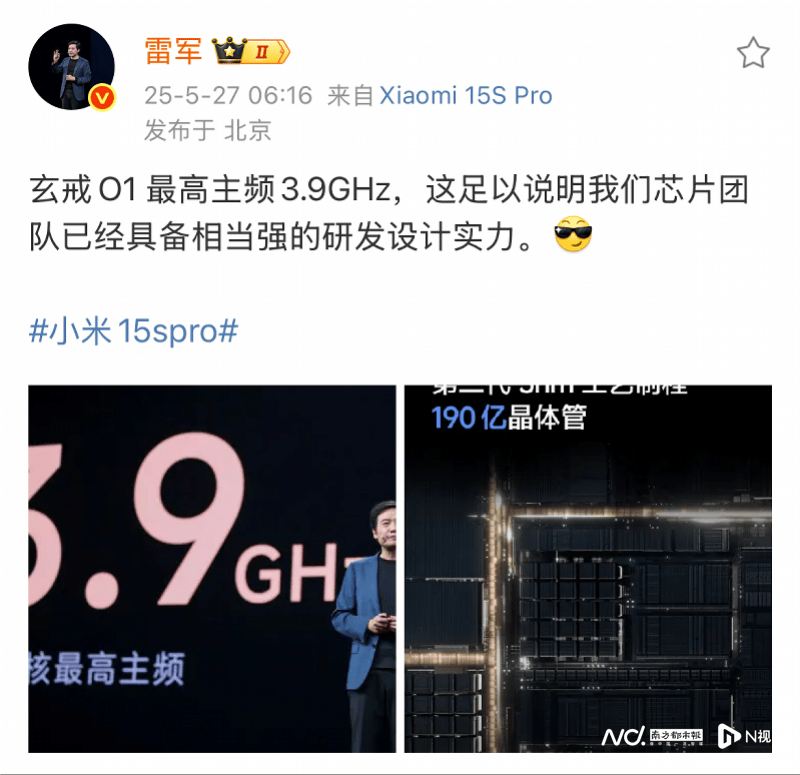
小米辟谣玄戒O1芯片向Arm定制,雷军也发声了
Sou Hu Cai Jing· 2025-05-27 01:44
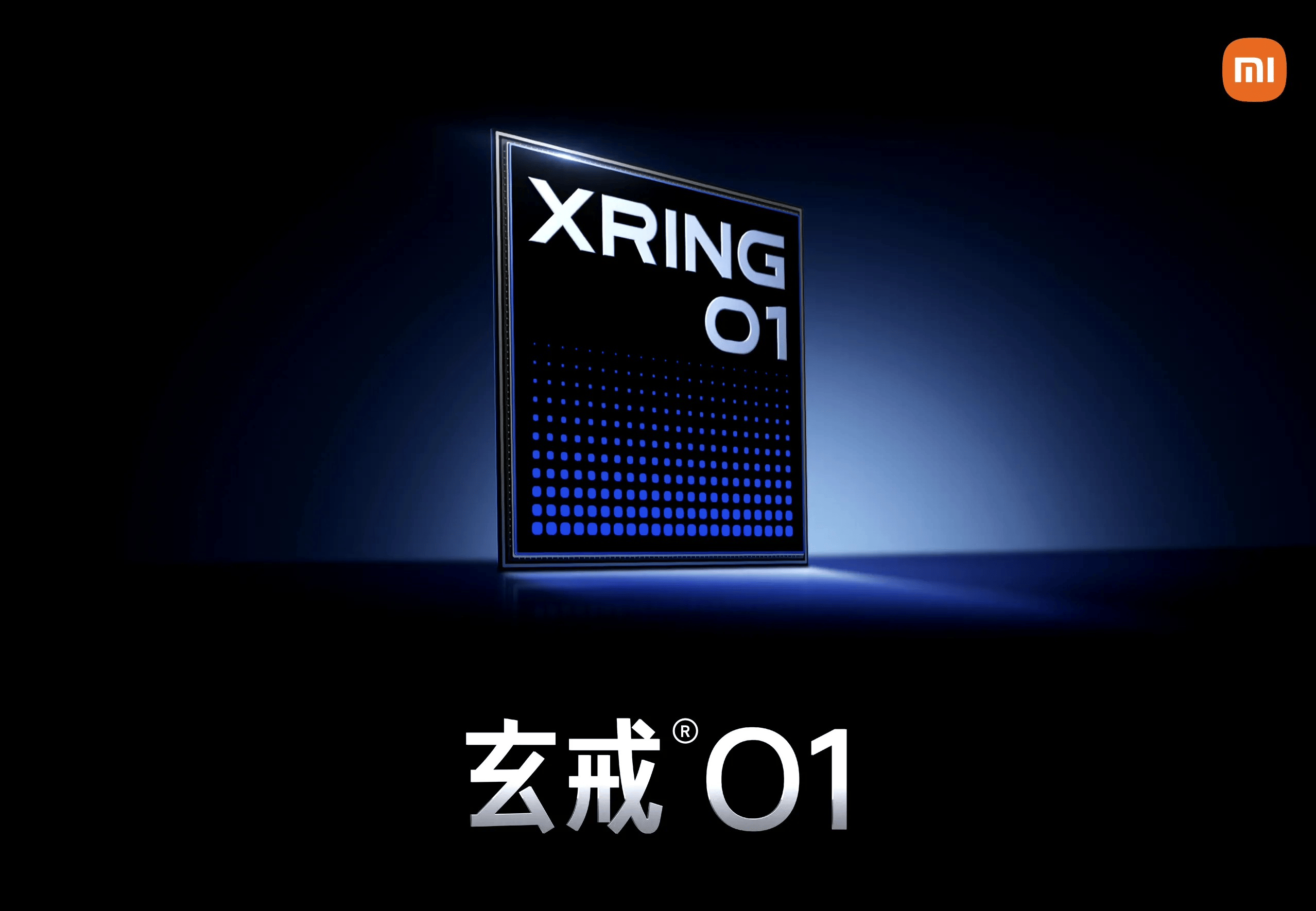
Core Viewpoint - Xiaomi refuted rumors regarding its newly launched chip, the Xuanjie O1, stating it is not a custom chip from Arm but rather developed independently by Xiaomi's team [1][8]. Group 1: Chip Development and Technology - The Xuanjie O1 chip has a maximum frequency of 3.9 GHz, showcasing Xiaomi's strong research and design capabilities [1]. - The chip is a 3nm flagship SoC that took over four years to develop, with the design being fully executed by Xiaomi's Xuanjie team, despite utilizing Arm's latest CPU and GPU standard IP licensing [8]. - Xiaomi has become the fourth global smartphone manufacturer with self-developed SoC capabilities, following Apple, Samsung, and Huawei [8]. Group 2: Financial Investment and Future Plans - Xiaomi has invested 13.5 billion RMB in chip development over the past four years, with a team size exceeding 2,500 people, ranking among the top three in domestic chip design companies [9]. - The budget for chip research and development for this year alone exceeds 6 billion RMB, with plans to invest 200 billion RMB in R&D over the next five years [9]. Group 3: Market Position and Performance - During a product launch event, Xiaomi compared the performance of the Xuanjie O1 chip with Apple's A18 Pro chip, claiming superior multi-core and GPU performance, as well as lower operating temperatures during video calls, gaming, and navigation [9]. - The company emphasized the competitive nature of the chip business, noting that a chip's lifecycle is short, requiring significant sales volume to remain viable [9].