能源转型

Search documents
首堆、首个……中国能源领域迎来多个新突破
Yang Shi Xin Wen Ke Hu Duan· 2025-10-17 22:05
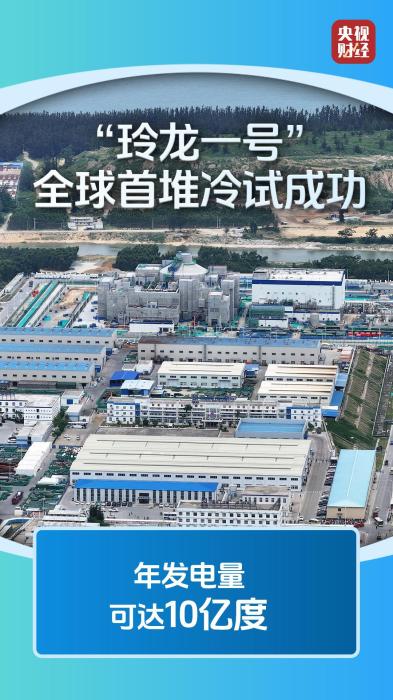
Core Insights - The article highlights three significant milestones in China's energy sector, showcasing the country's innovative capabilities in energy development [1][12]. Group 1: Nuclear Energy Innovation - The "Linglong One," the world's first land-based commercial modular small reactor, successfully completed its cold test, laying a solid foundation for future operations [2][4]. - Once operational, "Linglong One" is expected to generate an annual electricity output of 1 billion kilowatt-hours, meeting the electricity needs of 526,000 households in Hainan and reducing carbon dioxide emissions by approximately 880,000 tons, equivalent to planting 7.5 million trees annually [4]. Group 2: Thermal Power Development - The Gansu Changle Power Plant's expansion project, featuring six 1 million kilowatt coal-fired units, has officially commenced commercial operations, marking the completion of the first million-kilowatt peak-shaving thermal power project in Northwest China [5][7]. - This project, with a total investment of 20.5 billion yuan, supports the stable delivery of 33 billion kilowatt-hours of electricity annually from Gansu's renewable energy base [7]. Group 3: Emergency Response Capabilities - The establishment of China's first national-level deep-water oil and gas emergency rescue base in Hainan significantly enhances the country's emergency response capabilities in offshore oil and gas operations [8][11]. - The base, covering over 11,000 square meters, is equipped with advanced underwater emergency sealing and oil recovery systems, enabling rapid response to oil well blowouts and other emergencies within 48 hours [9][11].

SLB Q3 Earnings Beat Estimates on Digital Segment Growth, Revenues Miss
ZACKS· 2025-10-17 17:31
Core Insights - SLB reported third-quarter 2025 earnings of 69 cents per share, exceeding the Zacks Consensus Estimate of 66 cents, but down from 89 cents in the same quarter last year [1][10] - Total quarterly revenues were $8,928 million, slightly missing the Zacks Consensus Estimate of $8,930 million and declining from $9,159 million year-over-year [1][10] Financial Performance - The Digital segment's revenues reached $658 million, a 3% increase year-over-year, while pre-tax operating income decreased to $187 million from $190 million [3] - Reservoir Performance unit revenues fell 8% to $1.68 billion, with pre-tax operating income down 15% to $312 million, surpassing the Zacks Consensus Estimate of $295 million [4] - Well Construction segment revenues decreased 10% to $2.97 billion, with pre-tax operating income down 22% to $558 million, exceeding the Zacks Consensus Estimate of $525 million [5] - Production Systems segment revenues increased to $3.47 billion from $3.04 billion a year ago, with pre-tax operating income improving 8% to $559 million, though it missed the Zacks Consensus Estimate of $565 million [6] Cash Flow & Financials - SLB reported free cash flow of $1.1 billion for the third quarter [7] - As of September 30, 2025, the company had approximately $3.59 billion in cash and short-term investments, with long-term debt at $10.84 billion [7] Outlook - SLB reiterated its full-year 2025 capital investment guidance at approximately $2.4 billion, lower than the 2024 level of $2.6 billion, including the impact of the ChampionX acquisition [8]


欧盟动员超10亿欧元资金助力非洲能源转型
Shang Wu Bu Wang Zhan· 2025-10-17 17:29
Core Insights - The European Union has announced an investment of €620 million to support energy transition strategies in several African countries, focusing on enhancing renewable energy production, storage, and distribution [1] - This initiative is part of the "Global Gateway Initiative," aimed at strengthening sustainable infrastructure and connectivity in Africa [1] - Countries such as Togo, Mauritania, the Democratic Republic of the Congo, and Kenya have joined this initiative, with Togo planning to utilize EU funds for multiple projects, including solar and wind energy development [1] - Last month, the EU announced an additional €545 million for Africa's energy transition, bringing the total investment to over €1 billion within a month [1] - Experts believe that this EU initiative will positively impact Africa's economic development, create green jobs, and enhance resilience against climate change [1]
中企巨头直戳西方痛处:不用中国技术?那等着涨价吧
Guan Cha Zhe Wang· 2025-10-17 13:33
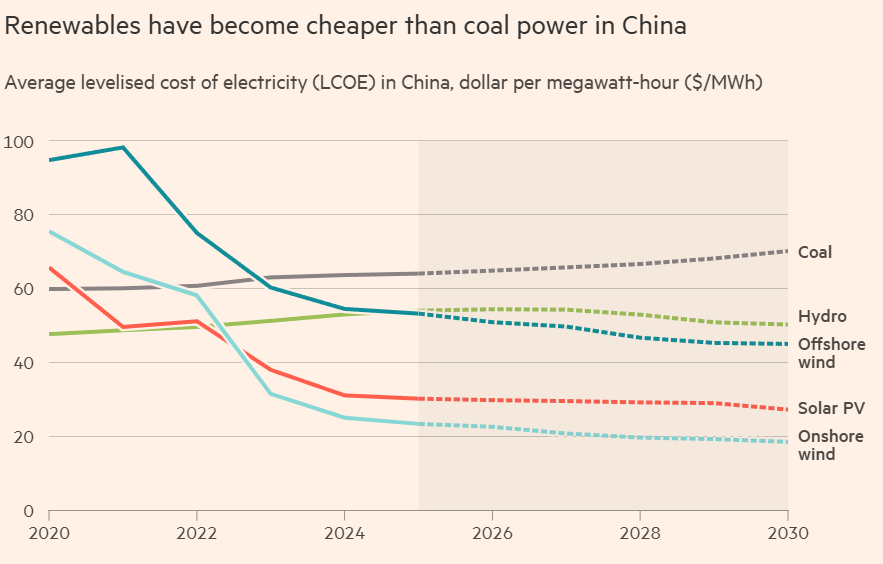
Core Insights - China's investment in clean energy exceeded $625 billion last year, nearly doubling since 2015, with Chinese companies producing over 80% of the world's wind turbines, solar panels, and energy storage batteries [1] - The cost of wind turbines in China is significantly lower than that of Western competitors, with a cost advantage of at least 40% [2] - The Chinese offshore wind power average cost is now less than half that of the UK's, indicating a strong competitive edge in this sector [6] Investment and Market Dynamics - The International Energy Agency (IEA) highlights that China's clean energy investments are driving global energy transition, making green electricity more accessible, especially for developing countries [1] - Exports of wind power equipment from China grew by 23.9% in the first three quarters of this year, with a 58% increase in exports to Belt and Road Initiative countries [4] - Chinese companies are expected to capture about 27% of the overseas installed capacity market share in the next decade, primarily in emerging markets [5] Industry Challenges and Opportunities - Western countries are facing challenges in the wind power sector due to longer development cycles and higher construction costs compared to China [2] - The offshore wind power projects in China are increasingly focusing on larger-scale developments, which, despite being more costly and technically challenging, offer higher power generation capacity [5] - There is a call for increased international cooperation in the wind power industry, with Chinese companies looking to learn from European financing models and technical standards [3] Competitive Landscape - The current landscape shows a stark contrast, with Western offshore wind projects experiencing a downturn due to insufficient government support and rising costs [7] - Chinese manufacturers are poised to dominate the market due to their fundamental cost advantages and the ability to scale production effectively [6] - The perception of Chinese manufacturers in Europe needs to change for broader acceptance of their innovative products, which could lead to cleaner and cheaper offshore wind energy [7]
中东光伏项目进入“吉瓦级”时代 中印企业各具竞争优势 储能渐成标配
Xin Hua Cai Jing· 2025-10-17 13:10
Core Insights - The International Energy Agency's report indicates that approximately half of the new power generation capacity in the Middle East from 2023 to 2035 will come from photovoltaic (PV) power, with a projected 15-fold increase in new PV capacity compared to existing installations [1][2]. Group 1: Advantages and Trends in PV Development - The Middle East has significant natural advantages for PV development, with an average solar irradiation exceeding 2000 kWh per square meter annually, particularly in countries like Saudi Arabia, UAE, Morocco, and Egypt [2]. - The region's vast undeveloped deserts and flat terrain provide low-cost land ideal for large-scale PV installations, minimizing land-use conflicts [2]. - Rapidly growing electricity demand driven by population growth, urbanization, and climate change is making the Middle East the fastest-growing region for electricity demand globally [2][3]. Group 2: Renewable Energy Goals and Current Status - Many Middle Eastern countries have set ambitious renewable energy targets, such as Saudi Arabia aiming for a 50% share of renewable energy in its power generation by 2030, and UAE targeting 14 GW of renewable capacity by the same year [3]. - There is a significant gap between current renewable energy capacity and these ambitious targets, indicating a surge in new renewable energy projects in the coming years [3]. Group 3: Scale and Storage in PV Projects - The trend in the Middle East is shifting towards larger-scale PV projects, moving from megawatt (MW) to gigawatt (GW) scale, which helps reduce costs [4]. - Companies like China Energy Engineering have significantly increased their project sizes in Egypt, with plans for 1 GW PV projects and associated storage [4][5]. - The demand for energy storage is rapidly increasing in the region, with over 20 GWh of announced storage projects across several countries, driven by advancements in battery technology and decreasing costs [5]. Group 4: Market Participation and Supply Chain - Chinese and Indian companies dominate the construction of PV projects in the Middle East, with Chinese firms holding over half of the market share due to their experience and quality [5]. - Despite the reliance on imported PV components, there is a strategic push in some countries to develop local manufacturing capabilities for PV equipment [2].
【财经分析】中东光伏项目进入“吉瓦级”时代 中印企业各具竞争优势 储能渐成标配
Zhong Guo Jin Rong Xin Xi Wang· 2025-10-17 13:03
Core Insights - The International Energy Agency's report indicates that approximately half of the new power generation capacity in the Middle East from 2023 to 2035 will come from photovoltaic (PV) power, with a projected 15-fold increase in installed PV capacity compared to previous levels [2][3] Group 1: Photovoltaic Power Development - The Middle East has significant natural advantages for developing PV power, with many countries setting ambitious development goals to promote energy transition and meet rising demand [2][3] - The region has the highest solar power potential globally, with average solar irradiation exceeding 2000 kWh per square meter annually, particularly in Saudi Arabia, UAE, Morocco, and Egypt [3] - The construction of large-scale PV power plants is becoming a trend, with a focus on integrating energy storage solutions [5][7] Group 2: Energy Transition Goals - Many Middle Eastern countries have set ambitious renewable energy targets, such as Saudi Arabia aiming for a 50% share of renewable energy in its power generation by 2030, and UAE targeting 14 GW of renewable capacity [4] - There is a significant gap between current renewable energy capacity and these ambitious targets, indicating a surge in new renewable energy projects in the coming years [4][6] Group 3: Market Dynamics and Opportunities - Chinese and Indian companies dominate the construction of PV projects in the Middle East, with Chinese firms holding over half of the market share due to their experience and quality [6] - The demand for energy storage is rapidly increasing in the region, with over 20 GWh of announced storage projects, driven by advancements in battery technology and decreasing costs [7] - The integration of storage solutions is becoming essential for new large-scale PV projects in Egypt, with specific ratios of storage capacity being mandated alongside PV installations [7]

瞄准能源转型 欧盟发布气候和能源新战略
Xin Hua She· 2025-10-17 11:59
Core Viewpoint - The European Commission has released the "EU Global Climate and Energy Vision," outlining action plans to promote the transition to clean energy and enhance international competitiveness in the clean technology sector [1] Group 1: Clean Technology Manufacturing - The EU aims to increase its clean technology manufacturing capacity to achieve a 15% share of the global technology market [1] - The plan includes strengthening international cooperation to create new business opportunities for the European clean technology industry [1] Group 2: Investment and Financing - The EU plans to allocate 30% of the €200 billion budget for its external cooperation financing tool "Global Europe" from 2028 to 2034 to climate and environmental expenditures [1] - This funding will support partner countries in developing actionable climate action plans and promoting clean industry development [1] Group 3: Policy Coordination and Carbon Pricing - The EU will enhance policy coordination, information exchange, and cooperation among member states to support partner countries in establishing and improving carbon pricing policies [1] Group 4: Carbon Border Adjustment Mechanism - The EU's "Carbon Border Adjustment Mechanism" is set to be implemented in 2026, imposing "carbon tariffs" on imports of products like cement, fertilizers, and steel from countries with relatively lax carbon emission restrictions [1] - This measure has faced criticism from some trading partners, who argue it increases the burden on developing countries [1]
国家能源局负责人赴马来西亚出席东盟能源部长系列会议
国家能源局· 2025-10-17 11:12
中方表示,愿继续发挥自身在能源联通、清洁能源开发利用等方面的优势,面向东盟国家开展能力建设,分享相关经验,参与项目合作,为区域能 源转型提供助力,共促区域能源产业发展和经济繁荣。 会议分别通过了《第十九届东亚峰会能源部长会议媒体联合声明》和《第二十二届东盟 +3 能源部长会议联合声明》。 期间,中方同马来西亚、泰国、柬 埔寨、新加坡等国能源部门负责人以及东盟秘书处、东盟能源中心等国际组织的负责人开展了交流 。 10 月 17 日, 第 十九 届东亚峰会能源部长会议 和 第 二十二 届东盟 +3 能源部长会议 在马来西亚召开,国家能源局副局长宋宏坤出席会议并发 言。 ...

业绩筑底回升,输变电与新能源能否共振?
市值风云· 2025-10-17 10:10
Core Viewpoint - The worst period for the company is likely over, with signs of recovery in profitability and stability in revenue growth [1][13]. Business Performance - Since 2019, the company's performance has been volatile, with ROE showing a "V" shape [4][5]. - The company's major business segments include traditional energy and new energy services, divided into four main areas: power transmission and transformation, new energy, energy, and new materials [7]. Revenue Breakdown - The company's revenue sources are diverse, with significant contributions from: - Electrical equipment products: 13.366 billion (27.62%) - Coal: 8.832 billion (18.25%) - Wires and cables: 7.843 billion (16.20%) - New energy industry and supporting projects: 6.315 billion (13.05%) - Power generation: 3.463 billion (7.16%) [9]. Market Conditions - In 2021-2022, the market experienced a surge in polysilicon and coal prices, leading to a significant increase in the company's profits [10]. - However, in 2023-2024, the decline in polysilicon prices and the drop in coal prices resulted in a substantial decrease in profits, with consecutive double-digit declines [10]. Recent Developments - In the first half of this year, the company's non-recurring net profit decreased by 5.3%, while the net profit attributable to the parent company increased by 5%, with revenue remaining stable, showing a year-on-year growth of 1.1% [12]. - Notably, in Q2 2025, the company saw a significant turnaround in profit growth, with net profit attributable to the parent company and non-recurring net profit increasing by 52% and 29% year-on-year, respectively [12].
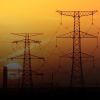
我国清洁能源领域发展传捷报 能源强国建设“枝繁叶茂”
Yang Shi Wang· 2025-10-17 08:52
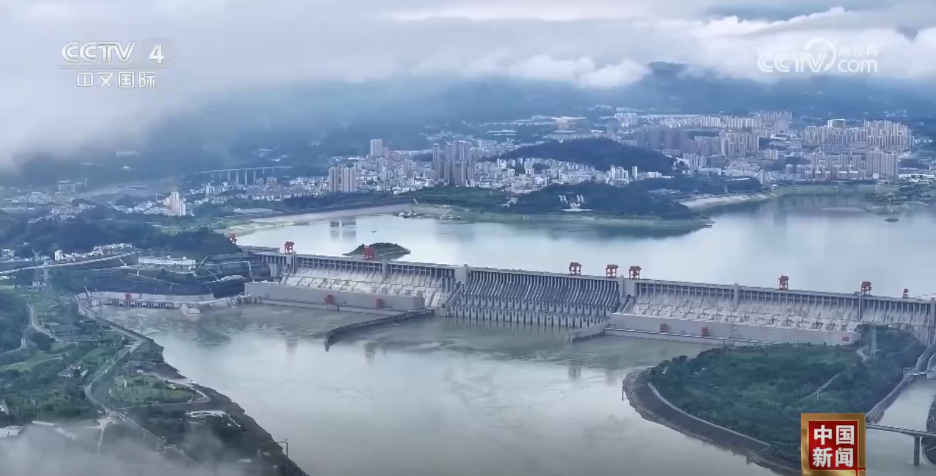
Core Viewpoint - The latest data from the Three Gorges Group indicates that the "world's largest clean energy corridor" has surpassed a cumulative power generation of 4 trillion kilowatt-hours, with 235.1 billion kilowatt-hours generated in the first three quarters of this year, sufficient to meet the electricity needs of the general public in China for approximately 62 days [1][3]. Group 1: Clean Energy Corridor - The clean energy corridor consists of six large power stations: Wudongde, Baihetan, Xiluodu, Xiangjiaba, Three Gorges, and Gezhouba, spanning 1,800 kilometers with a total installed capacity of 71.695 million kilowatts [3]. - The average annual power generation of this corridor is about 300 billion kilowatt-hours, playing a significant role in promoting national grid interconnection and ensuring energy security [3]. Group 2: Solar Thermal Power Project - The Qinghai 350 MW tower solar thermal power project has officially commenced construction, marking it as the largest single-unit solar thermal power project globally [5]. - This project utilizes domestically developed tower molten salt storage technology and is expected to be fully operational by the end of September 2027, enhancing the flexibility and peak power supply capacity of the local power system [7]. Group 3: Energy Development Achievements - Since the "14th Five-Year Plan," China has made significant progress in energy development, becoming a key player in global energy transition and ensuring energy security for over 1.4 billion people [8]. - The total installed capacity of clean energy and new energy in Qinghai has reached 77.2852 million kilowatts, with clean energy and new energy accounting for 93.46% and 72.25% of the total installed capacity, respectively, both ranking first in the country [7]. Group 4: Electricity Supply Stability - In July and August of this year, the total electricity consumption exceeded 1 trillion kilowatt-hours, setting new records and demonstrating the stability and resilience of energy supply [10]. - The stability of electricity supply provides certainty for economic development, allowing industries to operate without concerns about power shortages [12]. Group 5: Renewable Energy System - China has built the world's largest and fastest-growing renewable energy system during the "14th Five-Year Plan," with significant contributions to energy savings and emissions reduction [17]. - Currently, one-third of the electricity consumed in China is generated from renewable sources, with a substantial portion of power for data centers coming from green energy [19]. Group 6: Future Energy Outlook - Looking ahead to the "15th Five-Year Plan," China aims to establish large-scale "new energy + storage" bases in desert areas and enhance the density of power transmission channels [21]. - The development of offshore wind power and nuclear fusion projects is expected to play a crucial role in China's energy landscape, contributing to global energy transition efforts [21].