
数字经济

Search documents
中新控股(08125)正积极物色开发及营销智能软件开发及提供数字化营销服务的新业务
智通财经网· 2025-12-04 23:08
Core Viewpoint - China New Holdings (08125) is actively seeking industry opportunities with significant growth potential, including the development and marketing of intelligent software and digital marketing services in response to the growing demand in the Chinese market [1] Group 1: Business Overview - The company primarily engages in design, decoration, engineering, and procurement of furniture and related products, as well as leasing construction equipment and providing related installation services [1] - Additional services include wine procurement and marketing, as well as financial services such as securities advice, trading, brokerage, asset management, and lending [1] Group 2: Strategic Initiatives - The company is evaluating the establishment of a wholly-owned subsidiary in Shenzhen, China, to focus on intelligent software development and digital marketing services [1] - This new business initiative is expected to create new revenue streams and enhance the company's brand influence and market competitiveness in China [1] - The board believes that these strategic moves will leverage the company's resources while exploring new market opportunities, thereby enhancing competitiveness and creating sustainable value for shareholders [1]
中新控股(08125.HK)拟设深圳子公司开拓智能软件与数字营销业务
Ge Long Hui A P P· 2025-12-04 23:00
Core Viewpoint - China New Holdings (08125.HK) is actively seeking industry opportunities with significant growth potential, particularly in the development and marketing of intelligent software and digital marketing services [1] Group 1: Business Development - The company is evaluating the establishment of a wholly-owned subsidiary in Shenzhen, China, to expand its business in intelligent software development and digital marketing services [1] - This new business is expected to create new revenue streams for the group and enhance its brand influence and market competitiveness in China [1] Group 2: Market Demand - There is a substantial and continuously growing demand for digital marketing services in the Chinese market, driven by the ongoing development of the digital economy [1] - The company plans to allocate necessary resources to support the development of this new business while ensuring compliance with applicable laws and regulations [1]
让中法全面战略伙伴关系在“新甲子”走得更稳更好
Si Chuan Ri Bao· 2025-12-04 22:49
12月4日上午,国家主席习近平在北京人民大会堂同来华进行国事访问的法国总统马克龙举行会谈。这是会谈前, 习近平在人民大会堂北大厅为马克龙举行欢迎仪式。 新华社记者 谢环驰 摄 ●当前,百年变局加速演进,人类又一次站在何去何从的十字路口。中法两国应当展现责任担当,高举多边主义 旗帜,坚定站在历史正确一边●无论外部环境如何变化,中法两国都应当始终展现大国的战略眼光和独立自主, 在彼此核心利益和重大关切问题上相互理解和支持,维护好中法关系的政治基础●中法同为联合国创始成员国和 安理会常任理事国,应当践行真正的多边主义,维护以联合国为核心的国际体系和以国际法为基础的国际秩序, 就政治解决争端、促进世界和平稳定加强沟通和协作,推动改革完善全球治理新华社北京12月4日电(记者 董雪 冯歆然)12月4日上午,国家主席习近平在北京人民大会堂同来华进行国事访问的法国总统马克龙举行会谈。习近 平指出,中法都是有远见、有担当的独立自主大国,是推动世界多极化、促进人类团结合作的建设性力量。当 前,百年变局加速演进,人类又一次站在何去何从的十字路口。中法两国应当展现责任担当,高举多边主义旗 帜,坚定站在历史正确一边。中方愿同法方一道, ...


持续深化网络生态治理
Ren Min Ri Bao· 2025-12-04 22:16
Core Viewpoint - The governance of the online ecosystem is a crucial task for building a strong network nation, impacting national development, security, and the interests of the people [1][2]. Group 1: Achievements and Challenges - Significant achievements have been made in information infrastructure and digital inclusive services, with internet penetration continuously increasing and digital dividends benefiting millions [2]. - The rapid development of information technology has introduced new challenges for online ecosystem governance, such as "information cocoons" and "emotional amplification," affecting public opinion and individual perspectives [2]. Group 2: Governance System Improvement - A comprehensive governance system is necessary, involving multiple stakeholders and processes, requiring top-level design and effective legal frameworks to enhance internet governance efficiency [3]. - Continuous actions are needed to address prominent issues like online rumors, false advertising, and online violence through targeted campaigns [3]. Group 3: Technological Empowerment - The integration of emerging technologies like AI, big data, and blockchain is essential for enhancing information security and risk management capabilities [4]. - Establishing a transparent and accountable algorithm governance system is crucial, alongside developing user-friendly tools for different demographics [4]. Group 4: Guidance and Cultivation - Promoting healthy online culture and core socialist values is vital for enhancing the online ecosystem, encouraging rational internet use and improving public information literacy [5]. - Educational initiatives should be implemented to enhance media literacy among various age groups, focusing on internet safety, privacy awareness, and information discernment skills [5].
以高质量立法筑牢高质量发展的法治根基
Ren Min Ri Bao· 2025-12-04 22:16
Group 1 - High-quality development is emphasized as a fundamental principle for building a modern socialist country, with significant goals set for the "14th Five-Year Plan" period, particularly focusing on achieving remarkable results in high-quality development [2] - High-quality legislation is essential for providing the legal framework that supports high-quality development, ensuring a unified, open, competitive, and orderly market system [2][3] - The introduction of laws such as the Private Economy Promotion Law and data security laws demonstrates the role of high-quality legislation in ensuring fair competition and safeguarding data security, which are crucial for the development of the digital economy [3][4] Group 2 - The need for high-quality legislation is driven by the evolving demands of modern society and the economy, requiring laws to reflect objective realities and respond effectively to reform practices [4][5] - Strengthening legislative planning and review processes is identified as an effective means to enhance legislative quality, ensuring that laws align with development needs and public sentiment [5] - The establishment of a legal framework for emerging sectors such as digital economy and artificial intelligence is crucial for fostering innovation while ensuring compliance and safety [6]
中新控股(08125) - 自愿公告最新业务状况
2025-12-04 22:05
香港交易及結算所有限公司及香港聯合交易所有限公司對本公告的內容概不負責,對 其準確性或完整性亦不發表任何聲明,並明確表示概不會就本公告全部或任何部分內 容而產生或因依賴該等內容而引致的任何損失承擔任何責任。 China New Holdings Limited 中新控股有限公司 (前稱Royal Century Resources Holdings Limited 仁德資源控股有限公司) (於香港註冊成立之有限公司) (股份代號:8125) (前稱仁德資源控股有限公司) 執行董事及公司秘書 自願公告 最新業務狀況 開發及營銷智能軟件開發及提供數字化營銷服務 中華人民共和國(「中國」)市場對數字化營銷服務的需求龐大且持續增長,及中國數字 經濟持續發展,本公司正評估於中國深圳市成立一家全資附屬公司開拓業務,負責開發 及營銷智能軟件開發及提供數字化營銷服務。此新業務預計將為本集團開拓新的收入 來源,並進一步提升本集團在中國的品牌影響力與市場競爭力。本集團評估後將投入必 要的資源以支持業務發展,並確保其營運符合適用的法律及法規。 1 董事會認為,該等策略性舉措可利用本集團的資源,同時開拓新的市場機遇,從而增強 本公司 ...
数字经济助力区域产业结构优化升级
Xin Hua Ri Bao· 2025-12-04 21:51
Core Viewpoint - The digital economy, driven by data resources and modern information networks, is significantly influencing regional resource allocation and production organization, providing new opportunities for innovative development of regional industrial structures [1] Group 1: Digital Infrastructure Development - Accelerating the construction of digital infrastructure is essential for optimizing and upgrading industrial structures, with a focus on enhancing information network facilities and increasing investment in digital infrastructure [2] - Emphasis on strengthening weak links in rural digital infrastructure to reduce communication disparities and lower costs associated with data transmission, storage, and transactions [2] Group 2: Support for Industrial Digital Transformation - The digital economy can create new industries and empower traditional ones, necessitating the integration of digital economy with traditional industries to enhance their internal driving force for optimization and upgrading [3] - Development of smart agriculture systems through IoT sensors and drones for real-time monitoring of crops and livestock, and utilizing blockchain technology for supply chain transparency [3] - Promotion of industrial internet platforms to facilitate data sharing and optimize production processes, particularly for small and medium enterprises [3] Group 3: Talent Development and Recruitment - The core of the digital economy is innovation, which relies on talent; thus, it is crucial to establish mechanisms for talent cultivation and recruitment aligned with regional industrial needs [4] - Implementation of educational programs focused on data science, software engineering, and cybersecurity, along with partnerships between educational institutions and industry leaders to enhance practical training [4] - Establishment of a digital talent database to facilitate the precise matching of talent with industry needs, particularly in strategic emerging industries [4] Group 4: Collaborative Development of Regional Digital Economies - Breaking down administrative barriers and promoting collaborative development of digital economies across regions is essential for optimizing industrial structures [5] - Development strategies should be tailored to regional characteristics, focusing on improving digital infrastructure in underdeveloped areas and transitioning economic growth models in central regions [5] Group 5: Data Resource Sharing Mechanisms - Establishing regional data sharing mechanisms and platforms to support cross-regional industrial collaboration and innovation is vital [6] - Emphasis on enhancing cybersecurity measures to protect data management and usage rights on these platforms [6] - The digital economy is seen as a new engine for optimizing and upgrading industrial structures, with various measures proposed to unlock the growth potential of regional economies [6]
以变革应对变局 以转型谋求发展
Sou Hu Cai Jing· 2025-12-04 19:03
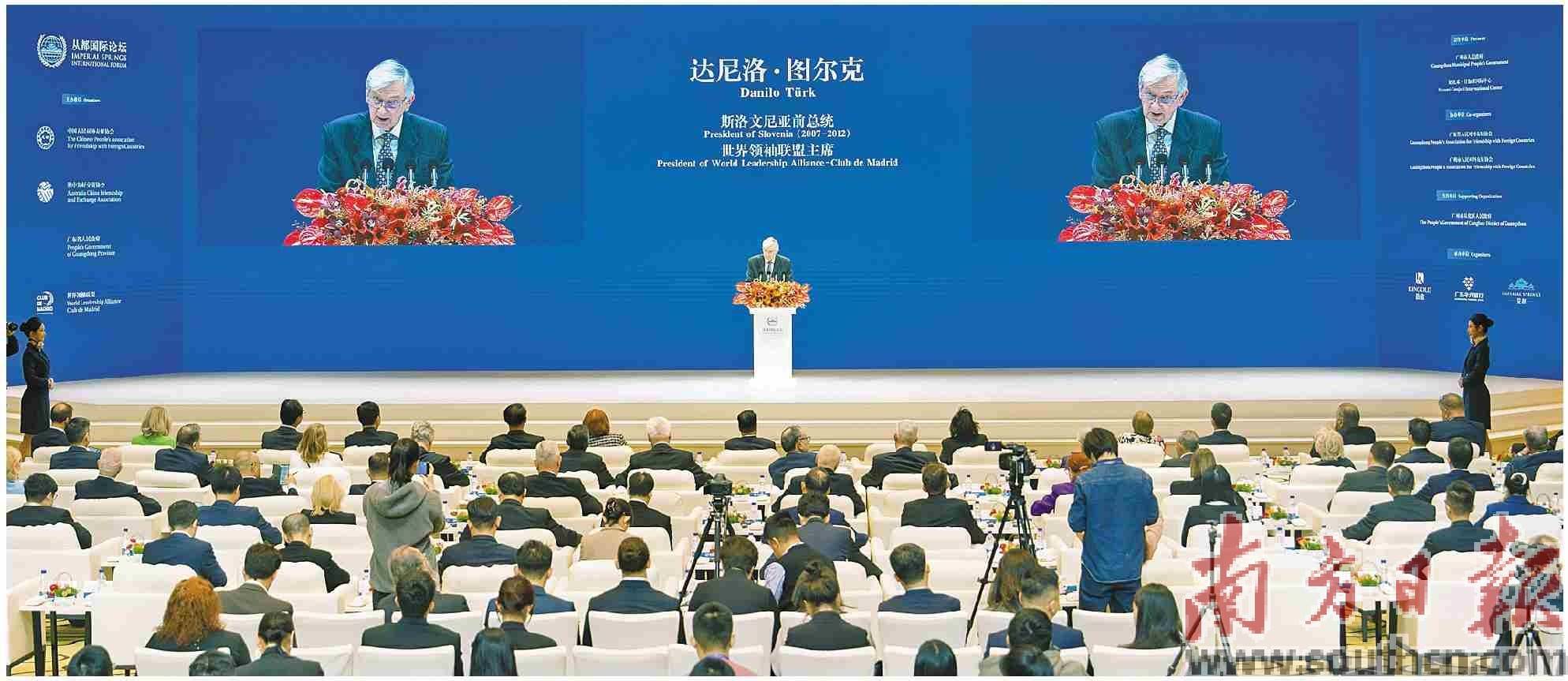
Core Insights - The "2025 Chengdu International Forum" concluded in Guangzhou, focusing on the theme of "World Economic Development Trends under Trade and Tariff Conflicts" [7] - Participants emphasized the importance of managing risks associated with the "technology gap" and integrating into the digital age, alongside addressing traditional economic risks [9] Group 1: Economic Risks and Trade Policies - Romano Prodi, former Prime Minister of Italy, noted that many trade policies are driven by internal political demands rather than economic logic, increasing unpredictability in global supply chains [8] - Kim Campbell, former Prime Minister of Canada, highlighted the negative impact of tariff policies on global supply chains and free trade, stressing the need for better information sharing among nations [8] - Several attendees agreed that the ability to manage risks is directly linked to the stability and sustainability of development [9] Group 2: Development Paradigm Shift - The forum discussed the need for a transformation in development paradigms, moving away from merely pursuing growth speed and scale towards sustainable development that emphasizes endogenous motivation and shared welfare [10] - María Fernanda Espinosa, former Foreign Minister of Ecuador, called for reforms in economic governance institutions to ensure fair resource distribution and amplify the voices of developing countries [10] - Michelle Bachelet, former President of Chile, emphasized the necessity of systemic approaches to address global risks like climate change and financial crises, advocating for cooperation over confrontation [10][11] Group 3: Technological Integration and Opportunities - Jorge Quiroga, former President of Bolivia, warned that developing countries risk marginalization in the new technology wave, particularly in AI and digital economy sectors [9] - Xue Lan, a senior professor at Tsinghua University, pointed out that China's open-source model could help smaller countries leverage AI advancements at lower costs [9] - The forum highlighted the potential for China to lead in global development trends by investing in long-term development and technology transfer to assist developing nations [9] Group 4: International Cooperation and Globalization - Prodi emphasized the importance of China-EU cooperation in stabilizing the global economy amidst rising political tensions and trade conflicts [12] - Li Cheng, a professor at the University of Hong Kong, discussed the rise of unilateralism and its implications for global trade, arguing that the U.S. approach to tariffs has backfired [14] - Espinosa noted that globalization is not over but is entering a "recalibration" phase, requiring nations to reassess their interdependence and governance strategies [16]
城记 | 潮涌长三角,攻坚正当时:新质生产力的突围与跃升
Xin Hua Cai Jing· 2025-12-04 16:23
Core Insights - The Shanghai 2025 Forum focuses on the development of new productive forces in the Yangtze River Delta, aiming to provide intellectual support for regional integration and high-quality development [1] - The Yangtze River Delta is recognized as a leading region in China's economic landscape, with significant infrastructure advantages and a strong role in national development [4][5] Economic Performance - The Yangtze River Delta's GDP growth rate is projected to average 5.58% annually by 2024, surpassing the national average by 0.27 percentage points [5] - The region's economic output is expected to reach 11.68 trillion yuan, equivalent to Indonesia's total economic output in 2024 [5] - The economic contribution of the Yangtze River Delta accounts for approximately 26% of the national economic growth over the past six years, despite representing only 4% of the country's land area and 14% of its population [5] Collaborative Innovation - The G60 Science and Technology Innovation Corridor is identified as a key model for collaborative innovation, addressing challenges such as technology bottlenecks and resource allocation inefficiencies [6][9] - The corridor has established a comprehensive coordination mechanism and has made significant progress in creating cross-regional industrial alliances and innovation ecosystems [7][8] Digital Economy and Industrial Upgrading - The Yangtze River Delta's local technology investment is expected to exceed 25% of the national total by 2024, with technology contract transaction volume reaching 209.2 billion yuan [10] - The region's manufacturing scale is projected to reach 36.4 trillion yuan, accounting for 30.6% of the national total, with significant contributions from high-tech enterprises [10] Future Development Paths - Experts suggest that the development of new productive forces should focus on integrating traditional industries with advanced technologies, emphasizing the importance of digital economy and data value [11] - A systematic approach to "factor coupling" is proposed to enhance the digital economy's role in driving new productive forces, aiming for a transformation from additive to multiplicative effects in economic development [11]

三季度支付数据回暖 释放哪些信号
Bei Jing Shang Bao· 2025-12-04 16:07
Core Insights - The People's Bank of China reported significant growth in digital payment transactions in Q3, indicating a recovery in consumer spending and a shift in payment habits [1][2] Group 1: Non-Cash Payment Growth - In Q3, banks processed 1,685.08 billion non-cash payment transactions amounting to 150.336 trillion yuan, showing a year-on-year increase in transaction volume and value [1] - The increase in non-cash payments is attributed to credit transfers and electronic payments, driven by the central bank's relaxation of transfer limits and improvements in payment systems [1][2] - Electronic payment transactions reached 775.54 billion, totaling 82.297 trillion yuan, with online payments at 181.4 billion transactions worth 67.797 trillion yuan and mobile payments at 556.94 billion transactions worth 12.996 trillion yuan [1] Group 2: Third-Party Payment Institutions - Third-party payment institutions processed 3,380.19 billion online payment transactions worth 85.28 trillion yuan in Q3, reflecting a recovery in transaction scale despite a slight decline in transaction volume compared to previous periods [2] - The increase in transaction value suggests a shift towards larger transactions, indicating a change in consumer behavior towards higher-quality goods and services [2][3] - Companies like Tencent and Lakala reported growth in payment transaction values, with Lakala's QR code transaction amounting to 1.04 trillion yuan, a 3.5% year-on-year increase [2][3] Group 3: Market Trends and Future Outlook - The growth in digital payments is supported by the expansion of online consumption scenarios and advancements in payment technologies, enhancing security and convenience [3] - Despite the growth in QR code transactions, traditional card transaction volumes are declining, with Lakala reporting a 13.72% decrease in card transaction value [3][4] - The future outlook suggests that QR code payments will dominate the small payment market, while card payment services will face ongoing pressure, particularly in B2B and cross-border transactions [4]