量子计算

Search documents
美股量子计算相关股票上涨
news flash· 2025-06-11 13:36
美股量子计算相关股票上涨,D-Wave Quantum涨超3%、IonQ涨超6%、Rigetti Computing涨超12%。此 前英伟达CEO黄仁勋称量子计算正在迎来拐点。 ...
纳指高开0.3% 特斯拉涨超2%
news flash· 2025-06-11 13:33
Group 1 - The U.S. stock market opened higher with the Nasdaq up by 0.33% and the S&P 500 increasing by 0.17% following a lower-than-expected CPI for May [1] - Tesla's stock rose over 2% after Elon Musk expressed regret over recent comments related to Trump [1] - Quantum computing stocks surged, with Quantum Computing increasing by over 13%, as Jensen Huang indicated a critical turning point for the industry [1] Group 2 - The rare earth sector experienced a decline, with MP Materials falling by more than 6% [1]

刚刚,全线爆发!美国,重大发布!
券商中国· 2025-06-11 13:02
Core Viewpoint - The article discusses the impact of the recent U.S. inflation data on financial markets, highlighting a lower-than-expected Consumer Price Index (CPI) and its implications for Federal Reserve interest rate decisions and market reactions [2][5]. Inflation Data Summary - The U.S. May CPI increased by 2.4% year-on-year, below the expected 2.5%, and a 0.1% month-on-month increase, also lower than the forecast of 0.2% [3][4]. - The core CPI, excluding volatile food and energy prices, rose by 2.8% year-on-year, matching the lowest level since March 2021, and a month-on-month increase of 0.1%, significantly below the expected 0.3% [4][5]. Market Reactions - Following the CPI report, traders increased bets on a potential interest rate cut by the Federal Reserve starting in September, raising the likelihood of a cut to 75% [5]. - Major U.S. stock index futures saw gains, with the Nasdaq 100 futures up by 0.53%, S&P 500 futures up by 0.38%, and Dow Jones futures up by 0.26% [5]. - The U.S. dollar index fell sharply to 98.76, while the yield on 10-year U.S. Treasury bonds dropped to 4.501% [6]. Economic Analysis - Analysts noted that the decline in automobile and clothing prices contributed to the lower-than-expected core CPI reading, with some predicting that tariff policies could exert upward pressure on future inflation [7][10]. - Goldman Sachs indicated that sectors like clothing, entertainment, and communication might experience cost pressures, forecasting a core CPI month-on-month increase of around 0.35% starting in June [10]. Nvidia's AI Factory Announcement - Nvidia's CEO Jensen Huang announced plans to build 20 new "AI factories" in Europe, aiming to increase AI computing power tenfold within two years [12][15]. - The announcement led to a surge in quantum computing stocks, with Quantum Computing Inc. rising over 12% in pre-market trading [15]. Quantum Computing Developments - Huang emphasized that quantum computing is reaching a critical turning point, with expectations that it will soon be capable of addressing significant global challenges [13][15]. - Nvidia's chips will support quantum computing, with the entire quantum algorithm stack being accelerated on the Grace Blackwell 200 chip [14][15].


达利欧:“自由意志将死,AI意志将立”
财富FORTUNE· 2025-06-11 12:56
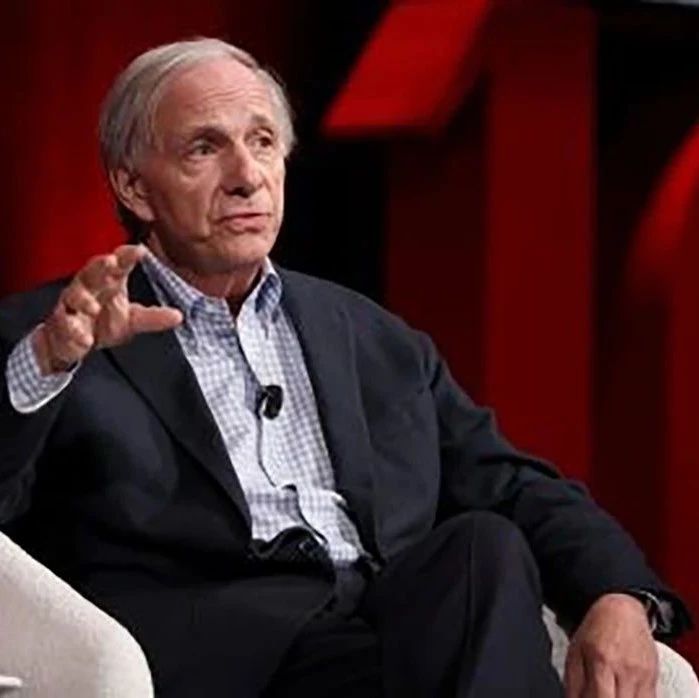
瑞·达利欧:AI将影响方方面面。图片来源:Jemal Countess/Getty Images for TIME 瑞・达利欧( Ray Dalio )是一位作家、全球经济学家,也是全球最大对冲基金桥水联合基金( Bridgewater Associates )的创始人、首席投资官导师。 译者:朴成奎 在财富Plus,网友们对这篇文章发表了许多有深度和思想的观点。一起来看看吧。也欢迎你加入我们,谈谈你的 想法。今日其他热议话题: 在我看来,我们已经到达了一个新时代的边缘。在这个新时代,机器思维将在很多方面补充甚至超越人 类思维,就像在工业时代,机器补充甚至超越了人类的劳动力那样。随着计算工具的发明,靠人脑来进 行数学运算和存储记忆的重要性变得大大降低。现在我们查找信息会用谷歌这种搜索引擎,而不是用更 传统的方式。同样,或许用不了多久,当我们在各种情境下需要进行理性决策时,我们也会寻求计算机 的指引,因为它能给出比我们自己的大脑更快、更好的指导。 未来五年,我们将会见证大多数领域的显著进步。创造AI只是应用AI的第一步。我和桥水公司专业从 事AI投资已经有几十年了,我们现在正在发掘的机会,在普通人看来简直难以置 ...
英伟达(NVDA.US)黄仁勋放话拐点将至 美股量子计算股盘前走高
智通财经网· 2025-06-11 12:52
Core Insights - Nvidia's CEO Jensen Huang stated that quantum computing is reaching a turning point and will soon be powerful enough to help solve significant global issues [1] - Following Huang's comments, quantum computing stocks in the U.S. saw pre-market gains, with D-Wave Quantum up nearly 4%, IonQ Inc up over 5%, Rigetti Computing up nearly 7%, and Quantum Computing up over 10% [1] - Huang emphasized that technology companies have been developing quantum computing for decades, and systems are expected to become "more robust, higher performance, and more resilient" [1] Industry Overview - The quantum computing industry aims to leverage the unique properties of subatomic particles to process data at speeds faster than traditional semiconductor devices [1] - Due to high technical difficulty and the expensive cost of building practical systems, the field has remained in the experimental stage [1] - Major companies like Microsoft and Alphabet's Google are actively exploring the practical applications of quantum systems [1] Nvidia's Role - Nvidia's chips will support quantum computing, with the company's entire quantum algorithm stack being provided and accelerated on its Grace Blackwell 200 chip [1] - Quantum computers have the potential to significantly accelerate the performance of large language models and create more powerful artificial intelligence [1] Future Predictions - Huang's latest prediction indicates a shift in his stance, as he previously stated in January that "very useful" quantum computers might take decades to materialize [2] - He noted that quantum computers can process information and solve problems much faster than traditional computers due to their ability to perform parallel computations [2] - Huang anticipates that, similar to Moore's Law, the number of logical qubits in quantum computing could increase tenfold every five years and a hundredfold every ten years [2]
整理:每日美股市场要闻速递(6月11日 周三)
news flash· 2025-06-11 12:46
Key Points - The U.S. Consumer Price Index (CPI) for May recorded a year-on-year rate of 2.4%, which is lower than the market expectation of 2.5% [1] Company News - Tesla plans to launch a trial operation of 10-20 autonomous vehicles this week, with plans to expand the fleet in the coming months [2] - Starbucks is set to promote its generative AI assistant developed in collaboration with Microsoft's Azure OpenAI platform in 35 stores this month [2] - General Motors announced a $4 billion investment in three U.S. assembly plants, planning to shift production of two key models back from Mexico to the U.S. [2] - Nintendo's new gaming console, Switch 2, sold over 3.5 million units within just four days of its launch, marking the highest sales record for a new console in eight years [2] - KeyBanc issued a downgrade rating for Zoom, setting a target price of $73, while Wells Fargo raised its target price for Zoom from $75 to $80, maintaining a hold rating [2] - Morgan Stanley indicated that Rolls-Royce's nuclear business is expected to reach a scale of £10 billion in the coming years [3] - Google has offered voluntary severance packages to employees across several departments, including knowledge and information, core engineering, and marketing, research, and public relations teams [3] - NVIDIA's CEO Jensen Huang announced the launch of CUDA-Q quantum acceleration applications on the Grace Blackwell 200 chip [3] - Lockheed Martin's stock fell pre-market after reports that the U.S. Air Force proposed to halve the procurement quantity of F-35 fighter jets in its request to Congress [3] - Starbucks CEO Brian Niccol stated the company plans to sell a portion of its stake in its China business, with several potential buyers expressing interest [3]
黄仁勋称量子计算正在接近拐点,英伟达将与量子计算公司合作
Di Yi Cai Jing· 2025-06-11 12:02
Core Insights - Huang Renxun, CEO of Nvidia, emphasized the collaboration between Quantum Processing Units (QPU) and Graphics Processing Units (GPU) for next-generation computing [1][3] - Quantum computing is approaching a critical turning point, with significant advancements in logical qubits and error correction [1][3] - Nvidia's CUDA-Q platform allows for hybrid programming, enabling parallel computation across GPU, CPU, and QPU resources [3][4] Quantum Computing Developments - Huang predicts that the number of logical qubits in quantum computers will increase tenfold every five years and a hundredfold every ten years, improving error correction and performance [3] - Nvidia has developed CUDA-Q, an open-source quantum development platform designed for classical quantum computing, which can run on Nvidia's Grace Blackwell chips [3][4] AI Factory Concept - The concept of AI factories, which run AI algorithms and generate tokens, is becoming integral to national infrastructure, with Nvidia actively engaging with global leaders on this topic [4][5] - Nvidia is collaborating with various companies to build AI infrastructure in Europe, with over 20 AI factories planned, including several gigawatt-scale facilities [5] European AI Infrastructure - Nvidia aims to increase AI computing capacity in Europe by tenfold within two years, addressing GPU shortages for researchers and startups [5] - The company is working with 77 countries to establish AI technology centers, focusing on collaboration with startups and ecosystem development [5]
黄仁勋巴黎演讲:AI的下一波浪潮是机器人,数据中心将成为“AI工厂”
Feng Huang Wang· 2025-06-11 11:46
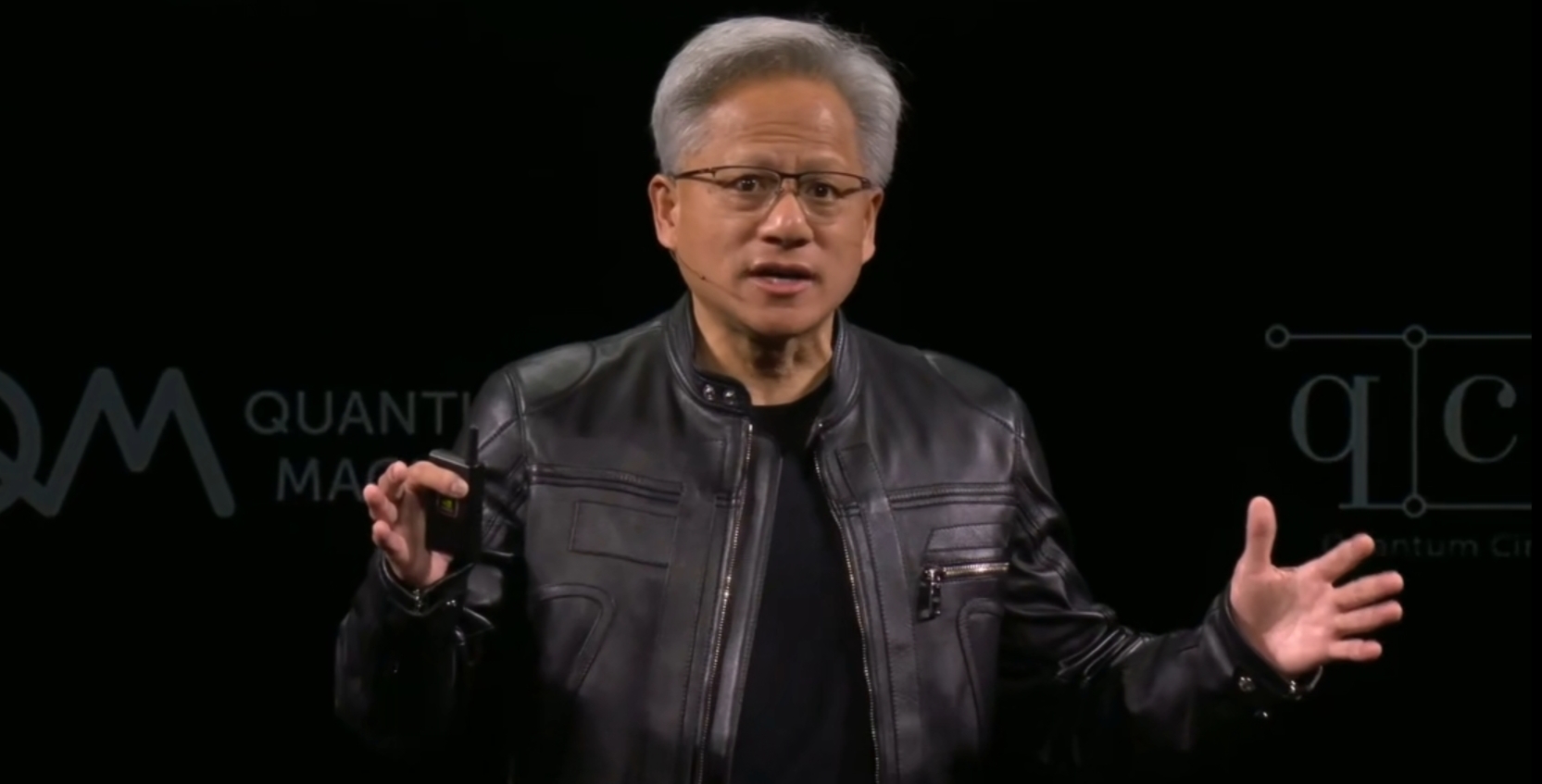
Core Insights - AI technology is fundamentally reshaping the future of computing and industry, marking the arrival of a new industrial revolution driven by "AI factories" [1] - Traditional data centers are evolving into AI factories that generate "intelligent tokens," providing power across various industries [1] - NVIDIA's new architecture, Blackwell, is designed to meet the increasing inference demands of AI models, achieving a significant performance leap [1] Group 1 - Huang Renxun predicts the next phase of AI, termed Agentic AI, which will understand tasks, reason, plan, and execute complex tasks, with robots as its physical embodiment [2] - The demonstration of a robot named "Greg" showcased the ability to learn and interact within a digital twin environment before being deployed in the physical world [2] - Major companies like BMW, Mercedes-Benz, and Toyota are utilizing Omniverse to create digital twins of their factories or products [2] Group 2 - NVIDIA has made significant progress in quantum computing, viewing it as a pivotal moment, and plans to connect quantum processors (QPU) with GPUs for enhanced computational tasks [2] - The entire cuQuantum quantum computing algorithm stack is now capable of accelerating on the Grace Blackwell system [2] - Huang Renxun emphasized deep collaboration with European partners, including the establishment of a large AI cloud with French company Mistral and partnerships with Schneider Electric for future AI factory design [2] Group 3 - NVIDIA is establishing AI technology centers in seven different countries to promote local ecosystem development and collaborative research [3] - A new computing era has begun, with NVIDIA providing a full-stack platform from chips to software and AI models to empower global developers and enterprises [3]

黄仁勋:计划在欧洲新建20家“人工智能工厂” 量子计算正迎来拐点
Hua Er Jie Jian Wen· 2025-06-11 11:06
Group 1 - Nvidia plans to build the world's first industrial AI cloud platform to support the development of the manufacturing industry in Europe [2] - The company aims to establish 20 "AI factories" in Europe, with AI computing power expected to increase tenfold within two years [2] - Each planned data center will be equipped with 10,000 GPUs, including Nvidia DGX B200 systems and RTX PRO servers, to accelerate manufacturing applications across various stages [2][3] Group 2 - The AI factories will utilize Nvidia's CUDA-X libraries and accelerate workloads from leading software providers such as Siemens, ANSYS, and Cadence [3] - The investment is seen as a starting point for European manufacturers to accelerate AI development and adoption, leading to the era of AI gigafactories [3] - Major European manufacturers, including BMW, Maserati, Mercedes-Benz, and Schaeffler, are transitioning to AI-driven operations and logistics through Nvidia's accelerated applications [7] Group 3 - Nvidia's CEO highlighted that quantum computing is reaching a turning point, with plans to integrate the CUDA-Q software toolkit on the Grace Blackwell 200 chip [5] - The quantum algorithm stack can be accelerated on the Blackwell 200, indicating advancements in quantum computing capabilities [5]
以退为进
Datayes· 2025-06-11 10:48
Core Viewpoint - The article discusses the recent positive developments in the China-US trade negotiations, highlighting the agreement framework reached between the two countries, which aims to resolve trade tensions and address export restrictions on rare earth minerals and magnets [1]. Group 1: Trade Negotiations - Chinese and US teams have reached a preliminary agreement framework after two days of negotiations, which is expected to be approved by President Trump soon [1]. - The framework adds substantial content to the previously stalled agreement on reducing retaliatory tariffs due to China's export restrictions on key minerals [1]. - The negotiations are characterized as candid, in-depth, and constructive, with both sides exchanging views on trade issues of mutual concern [1][2]. Group 2: Market Reactions - Following the positive news from the trade talks, the A-share market rebounded, with the Shanghai Composite Index rising by 0.52% to surpass 3400 points, despite a decrease in trading volume [2][4]. - The rare earth permanent magnet sector saw significant gains, with several stocks hitting the daily limit up, indicating strong market sentiment [5]. Group 3: Industry Developments - Jinli Permanent Magnet announced it has obtained export licenses for the US, Europe, and Southeast Asia, reflecting the potential for increased international trade in the sector [3]. - The automotive parts sector also experienced notable gains, with several companies committing to shorten payment terms to suppliers, indicating a shift in industry dynamics [6]. Group 4: Financial Insights - The article provides insights into the performance of various indices, noting that over 1700 index funds exist, with the highest dividend yield index being the Hong Kong Stock Connect Mainland Financial Index at 9.37% [7][8]. - A total of 48 indices were identified that meet the criteria of having a fund size of at least 2 billion and a dividend yield above 3%, with 16 indices yielding over 6% [9]. Group 5: Capital Flow - The net inflow of capital into the market was reported at 253.86 billion, with the non-bank financial sector seeing the largest inflow [15]. - Specific stocks such as Jianghuai Automobile and Ningde Times attracted significant attention from investors, indicating strong market interest in these companies [15][18].