
商业航天

Search documents
AI领衔,42家公司净利预增超100%
Xin Lang Cai Jing· 2026-01-20 04:33
Group 1 - The core viewpoint of the articles indicates that A-share listed companies are experiencing a significant increase in performance forecasts for 2025, driven primarily by the commercialization of AI technology and the rising prices and volumes of resource products like gold and copper [1][3][4] - As of January 19, 2025, 451 listed companies have disclosed their performance forecasts, with 156 companies expecting positive results. Among these, 42 companies anticipate a net profit growth of over 100% year-on-year [1] - Companies in the AI sector, such as DingTong Technology and Baiwei Storage, are projected to achieve substantial revenue and profit growth due to increased demand for AI-driven products and stabilization in storage prices [1][3] Group 2 - The mining sector is also showing strong performance, with companies like Luoyang Molybdenum and Zijin Mining expecting significant net profit increases due to effective operational management and rising commodity prices [3] - Other innovative sectors, including semiconductors, innovative pharmaceuticals, and commercial aerospace, are gaining market attention, with companies like Haopeng Technology forecasting substantial profit growth through advancements in AI hardware applications [3][4] - Analysts note that the profitability structure of A-share companies is positively changing, with AI technology moving from concept to tangible performance contributions, indicating a reshaping of the industry landscape [4]


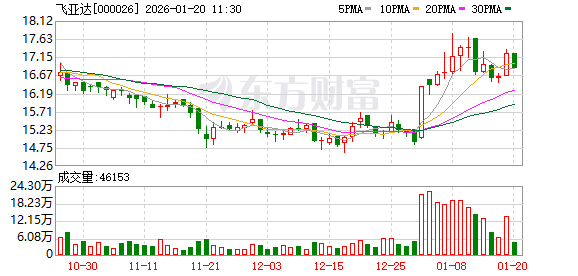
飞亚达:公司暂无商业航天相关产品
Mei Ri Jing Ji Xin Wen· 2026-01-20 04:16
飞亚达(000026.SZ)1月20日在投资者互动平台表示,公司目前暂无商业航天相关产品。 (文章来源:每日经济新闻) 每经AI快讯,有投资者在投资者互动平台提问:虽然公司明确表示过未涉及商业航天,但是就产品一 块,包括但不限于精密仪器及减速器,该类产品是否适用商业航天? ...

创业板指半日跌近2%,商业航天、光模块重挫,芯片股走强,分析:高波题材或将降温
2 1 Shi Ji Jing Ji Bao Dao· 2026-01-20 04:15
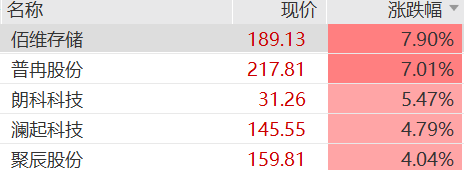
Market Overview - On January 20, A-shares experienced a significant drop, with the ChiNext Index falling over 2% at one point, ultimately closing down 1.8% [1] - The chemical sector showed resilience, with several stocks such as Hongbaoli and Shandong Heda hitting the daily limit [1] AI and Semiconductor Sector - AI application stocks rose, with companies like Jiayun Technology and Yue Media hitting the daily limit [2] - The storage chip concept remained active, with Yingfang Micro, which plans to acquire shares in two semiconductor companies, also hitting the daily limit; Bawei Storage saw a nearly 200% increase over the last 120 trading days [2] - Micron Technology reported a worsening shortage of memory chips, indicating that supply tightness will persist beyond this year [2] Retail and Real Estate Sector - The retail sector strengthened, with Shanghai Jiubai and Xinhua Department Store hitting the daily limit, following the National Development and Reform Commission's announcement to develop a strategy for expanding domestic demand from 2026 to 2030 [2] - The real estate sector also saw gains, with stocks like Dayue City and Wo Ai Wo Jia hitting the daily limit [2] Financing and Market Dynamics - A-shares' financing balance decreased for the first time in two weeks, with a reported balance of 27,059 billion yuan, down 8.5 billion yuan from the previous day [4] - The electronic, communication, defense, computer, and basic chemical sectors were the main areas of net selling by financing clients, each exceeding 1 billion yuan in net sell amounts [5] - Analysts noted that the recent increase in margin requirements is likely aimed at cooling off overheated speculative trends, particularly affecting high-volatility sectors [6] - Despite short-term fluctuations, the long-term outlook for A-shares remains bullish, with expectations for new highs in the cross-year market [6]

创业板指半日跌近2%,商业航天、光模块重挫,芯片股走强,分析:高波题材或将降温
21世纪经济报道· 2026-01-20 04:11
Market Overview - On January 20, A-shares experienced a significant drop, with the ChiNext Index falling over 2% at one point, ultimately closing down 1.8% [1] - The Shanghai Composite Index closed down 0.3%, while the Shenzhen Component Index fell by 1.2%, with nearly 3,400 stocks declining [1] Index Performance - The Shanghai Composite Index closed at 4101.62, down 0.30% - The Shenzhen Component Index closed at 14119.95, down 1.22% - The ChiNext Index closed at 1824.62, down 1.43% - The total A-share market index (Wande All A) was at 6743.51, down 0.81% [2] Sector Performance - The chemical sector showed resilience, with stocks like Hongbaoli and Shandong Heda hitting the daily limit [2] - AI application stocks rose, with companies like Jiayun Technology and Yue Media also hitting the daily limit [2] - The storage chip sector remained active, with stocks like Baiwei Storage and Puran Shares reaching new highs, and Baiwei Storage increasing nearly 200% over the last 120 trading days [3] - Retail stocks strengthened, with Shanghai Jiubai and Xinhua Department Store hitting the daily limit, following the National Development and Reform Commission's announcement to develop a strategy for expanding domestic demand from 2026 to 2030 [3] Financing and Market Trends - A-shares' financing balance decreased for the first time in two weeks, with a reported balance of 27,059 billion yuan, down 8.5 billion yuan from the previous day [6][7] - The new financing regulations implemented on January 19 led to a significant drop in margin trading, with the trading volume on that day being the lowest of the year [6] - Key sectors experiencing net selling in financing included electronics, communications, defense, computers, and basic chemicals, each with net selling exceeding 1 billion yuan [7][8] - Analysts suggest that the increase in margin requirements is aimed at cooling down overheated speculative trends, particularly affecting high-volatility sectors [8] Broker Insights - Some brokers reported a shortage of available margin trading quotas due to high market demand [9]

中国以创新开放成为全球经济的“新动能”和“稳定锚”
Xin Hua She· 2026-01-20 04:05
Group 1 - Deloitte's CEO in China, Liu Minghua, highlighted that China has made significant progress in technological innovation and open cooperation, becoming a "new engine" for global economic growth and a "stabilizing anchor" for the world economy [1][3] - Liu noted that the global economy faces multiple risks and challenges, including weakening long-term growth momentum, geopolitical conflicts, trade friction, and the uncertain long-term returns of artificial intelligence investments [1] - The World Trade Organization's report indicates that policy uncertainty is a core indicator of the deteriorating global trade environment, with U.S. tariffs being a key factor in rising uncertainty [1] Group 2 - Liu emphasized that achieving a 5% growth rate for China's economy in 2025 is commendable given the global economic slowdown, attributing this to China's solid fundamentals, including a large market, complete industrial system, and abundant human resources [1][2] - The year 2026 marks the beginning of China's "14th Five-Year Plan," focusing on upgrading the modern industrial system through innovation-driven growth and sustainable consumption as a key driver for economic growth [2] - China has entered the top ten in the Global Innovation Index for the first time, with 24 global top innovation clusters, indicating a deep integration of technological and industrial innovation [3]
港股午评|恒生指数早盘跌0.04% 三大航继续逆市上涨
智通财经网· 2026-01-20 04:05
Group 1 - Hong Kong's Hang Seng Index fell by 0.04%, down 11 points, closing at 26,552 points, while the Hang Seng Tech Index decreased by 0.66% with a trading volume of HKD 129.8 billion in the morning session [1] - Pop Mart (09992) surged over 8% as the company repurchased shares worth HKD 251 million [1] - Major airlines continued to rise, with strong expectations for industry growth; China Southern Airlines (01055) increased by 3.72%, China Eastern Airlines (00670) by 4.56%, and Air China (00753) by 2.5% [1] Group 2 - Weisheng Holdings (03393) rose nearly 9%, reaching new highs as the State Grid increased its investment scale, indicating a favorable phase for smart meter investments [2] - Health Road (02587) increased by over 4% after the controlling shareholder extended the lock-up period, and the company repurchased 327,000 shares recently [3] - Blucube (00325) rose against the trend by 3.95%, benefiting from the expansion of China's trendy toy industry and the enrichment of its IP system and product matrix [4] Group 3 - Hou Shang Ayi (02589) saw a rise of over 10% as its 25-year performance forecast exceeded expectations, with net profit expected to grow by up to 60% year-on-year [5] - Gigadevice (03986) increased by over 5%, reaching a new high as Micron reported worsening shortages of memory chips, indicating that supply tightness will persist beyond this year [6] - Damai Entertainment (01060) rose over 4% after announcing its entry into the museum sector, positioning itself to benefit from the upgrading of consumer structures [7] Group 4 - The commercial aerospace sector experienced declines, with Asia Pacific Satellite (01045) dropping by 6.9% and Goldwind Technology (02208) falling by over 3% [8] - Jiayuan Ankang-B (02617) fell over 9% as it proposed a placement to raise HKD 190 million, primarily for core product development [9]

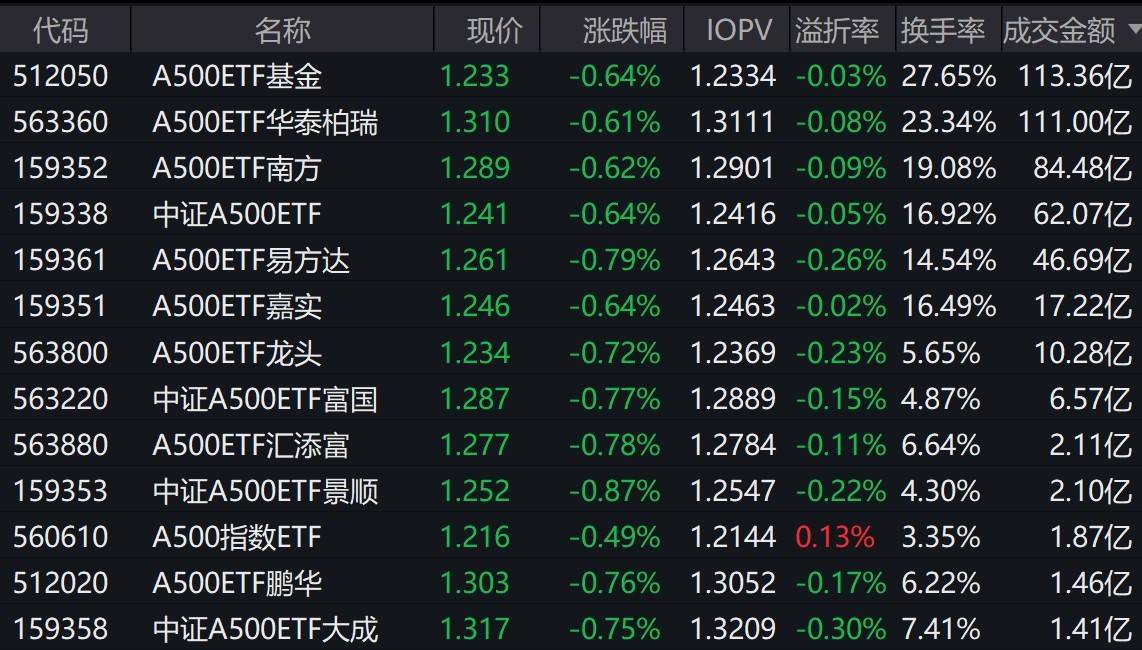
市场早盘震荡回落,中证A500指数下跌0.71%,2只中证A500相关ETF成交额超111亿元
Sou Hu Cai Jing· 2026-01-20 03:59
Core Viewpoint - The market experienced a decline in early trading, with the Shenzhen Component Index dropping over 1% and the CSI A500 Index down by 0.71%. However, the chemical sector showed resilience, while the real estate sector was active, and AI applications saw gains. In contrast, the commercial aerospace sector faced significant declines [1]. Group 1: Market Performance - The three major indices showed a downward trend, with the Shenzhen Component Index falling more than 1% and the CSI A500 Index decreasing by 0.71% [1]. - The CSI A500 Index-tracking ETFs collectively declined, with 13 ETFs exceeding a trading volume of 100 million yuan, and 2 surpassing 11.1 billion yuan [1]. Group 2: Sector Analysis - The chemical sector performed well, showing an upward trend despite the overall market decline [1]. - The real estate sector was notably active during the trading session [1]. - AI application stocks experienced gains during the trading period [1]. - The commercial aerospace sector saw a significant drop in performance [1]. Group 3: ETF Trading Data - A500ETF Fund had a trading volume of 113.36 million yuan, with a price change of -0.64% [2]. - A500ETF Huatai-PineBridge recorded a trading volume of 111 million yuan, with a price change of -0.61% [2]. - Other A500 ETFs also showed declines, with various trading volumes and price changes ranging from -0.49% to -0.87% [2].
怎么看商业航天的短期情绪和长期趋势?
2026-01-20 03:54
Summary of Conference Call on Commercial Aerospace Industry Industry Overview - The discussion focuses on the commercial aerospace industry, particularly in the context of recent rocket launch failures, highlighting the high technical barriers and challenges within the sector [1][2]. Key Points and Arguments Short-term Market Sentiment - The commercial aerospace sector has experienced a significant pullback, with a peak increase of 140% in stock prices, followed by a 20% decline as of last Friday [2][3]. - The total trading volume for the sector decreased from approximately 250 billion to 150 billion, representing a drop to about 5% of the total A-share market [3]. - The recent rocket launch failures have negatively impacted market sentiment, leading to reduced trading volumes and a decline in the overall enthusiasm for related stocks [3][4]. Long-term Trends - Despite short-term fluctuations, the long-term outlook for the commercial aerospace sector remains positive, with continued government investment expected over the next five years [4][11]. - Key catalysts anticipated for the first half of the year include developments in satellite projects, rocket launches, and production capacity enhancements [11][18]. Recent Events - Two recent rocket failures were highlighted: the Chang Zheng 3B and the Guo Shen Xing 2, both of which underscore the technical difficulties and high entry barriers in the commercial rocket sector [5][6][7]. - The Guo Shen Xing 2, a commercial rocket, failed during its maiden flight, reflecting the challenges faced by new entrants in the market [7][8]. Company Developments - Zhongke Aerospace has completed its IPO guidance, becoming the second commercial rocket company to do so in China, following Blue Arrow Aerospace [8][10]. - The company has developed two main rocket models: the Lijian 1, which has a high success rate, and the upcoming Lijian 2, expected to launch this year [8][9]. Upcoming Launches and Innovations - The first half of the year is expected to see the launch of five reusable rocket models, including three from private companies and two from state-owned enterprises [12][15]. - Notable upcoming rockets include Tianming Technology's Tianlong 3, which has a payload capacity of 17-22 tons, and other models from Xinghe Power and Xingji Glory [12][14]. Production Capacity - The Hainan Satellite Super Factory is anticipated to ramp up production capacity, aiming for 20-30% output by the end of the year, with a long-term goal of producing 1,000 satellites annually [17][18]. Additional Insights - The commercial aerospace sector is expected to see significant advancements in satellite technology, with the second-generation satellite projects being crucial for determining market shares among suppliers [11][18]. - The discussion also touched on international developments, particularly the IPO progress of SpaceX and AST Space Mobile, which are expected to influence the global market dynamics [18][19]. Investment Recommendations - Investors are advised to focus on core stocks within the commercial aerospace sector, particularly those with established market shares and upcoming launches [20][23]. - Key areas of interest include rocket manufacturers, satellite constellation suppliers, and companies involved in testing and inspection services [20][22][23]. This summary encapsulates the critical insights and developments discussed during the conference call, providing a comprehensive overview of the commercial aerospace industry's current state and future prospects.
大V荐基背后的公募困局
3 6 Ke· 2026-01-20 03:49
Core Viewpoint - The recent surge in investment in Debon Fund's "Stable Growth" fund, driven by AI application hype and social media influencers, raises concerns about regulatory compliance and the long-term sustainability of such marketing strategies [2][11][15] Group 1: Incident Overview - Debon Fund experienced a significant increase in its "Stable Growth" fund, with a reported growth of 12 billion yuan in a single day, attributed to the rising interest in AI applications [2] - The incident highlights the role of social media influencers, particularly a prominent figure known as "Little Sheep," who leveraged their following to promote the fund, leading to a herd mentality among investors [5][8] - The involvement of internet platforms and influencers in promoting funds without proper qualifications raises regulatory concerns and questions about the integrity of the investment process [3][4] Group 2: Regulatory and Compliance Issues - The actions of influencers and the use of internet platforms to promote funds without proper qualifications violate regulatory guidelines, which prohibit unqualified individuals from engaging in fund sales [3][12] - Debon Fund's management faces scrutiny for not adequately supervising the promotional activities of influencers, which could lead to severe penalties and damage to the fund's reputation [11][13] - The incident underscores the risks associated with relying on influencer marketing, as it can lead to significant volatility and potential losses for existing investors [14][15] Group 3: Impact on Fund Management - The influx of short-term speculative investments driven by influencer marketing can lead to increased operational costs and net asset value volatility, ultimately harming both the fund company and ordinary investors [14][15] - The core value of mutual funds lies in generating long-term returns through professional research and investment, rather than relying on short-term marketing tactics [15] - The Debon Fund incident serves as a cautionary tale for the industry, emphasizing the need for compliance and a focus on sustainable investment practices [15]
A股指数震荡回落,创业板指半日跌1.83%,化工、房地产板块逆势大涨
Feng Huang Wang Cai Jing· 2026-01-20 03:41
Market Overview - The three major indices experienced a decline, with the Shenzhen Component Index dropping over 1% and the ChiNext Index falling over 2% during early trading on January 20 [1] - By midday, the Shanghai Composite Index decreased by 0.3%, the Shenzhen Component Index fell by 1.22%, and the ChiNext Index dropped by 1.83% [1] - The total trading volume in the Shanghai and Shenzhen markets reached 1.85 trillion yuan, an increase of 568 billion yuan compared to the previous trading day [1] Index Performance - Shanghai Composite Index: 4101.62, down 0.30%, with 931 gainers and 1330 losers [2] - Shenzhen Component Index: 14119.95, down 1.22%, with 916 gainers and 1916 losers [2] - ChiNext Index: 3276.64, down 1.83%, with 358 gainers and 1012 losers [2] - The North Star 50 Index: 1520.27, down 1.83% [2] Sector Performance - The chemical sector showed resilience, with stocks like Hongbaoli, Shandong Heda, Hongbai New Materials, Weiyuan Co., and Hongqiang Co. hitting the daily limit [2] - The real estate sector was active, with stocks such as Dayue City, I Love My Home, and City Investment Holdings also reaching the daily limit [2] - AI application stocks saw gains, with companies like Jiayun Technology, Yue Media, Zhejiang Wenhu, and Tiandi Online hitting the daily limit [3] - The storage chip concept remained active, with stocks like Purun Co. and Baiwei Storage reaching new highs [3] - The commercial aerospace sector faced significant declines, with companies like Hualing Cable and Aerospace Power hitting the daily limit [3]
