
对外开放

Search documents
重磅解读!中央政治局会议研究明年经济工作,如何理解8项“坚持”?
证券时报· 2025-12-08 10:28
最新解读。 据新华社,中共中央政治局12月8日召开会议,分析研究2026年经济工作,审议《中国共产党领导全面依法治国工作条例》。 对于如何做好明年的经济工作,会议提出一些重要表述,包括"更好统筹国内经济工作和国际经贸斗争""实施更加积极有为的宏观政策""持续扩大内需、优化供 给"等,并提出八项"坚持"的重点工作。多位受访专家表示,明年经济增长转型诉求不减,政策需要兼顾短期与长远,内需将继续发挥助力经济总体回升向好的"助 推器"作用,并坚持以开放促改革促发展,重点领域风险化解将更加积极稳妥。 延续"更加积极有为"取向 明年加大逆周期与跨周期力度 今年以来,我国实施更加积极有为的宏观政策,支持实体经济发展力度加大,推动经济持续回升向好。根据中央政治局会议部署,"十五五"开局之年,我国宏观政 策"更加积极有为"的取向不变,继续实施更加积极的财政政策和适度宽松的货币政策。同时,明年将加大逆周期和跨周期调节力度。 "继续实施"今年的财政、货币政策取向,不仅意味着明年政策将保持连续性、稳定性,营造出稳定的宏观政策环境,还意味着明年政策力度依然可期,将坚持支持 性的政策立场。 从财政政策看,"更加积极"意味着明年财政政策有 ...


经贸新动能 开放新图景
Jing Ji Wang· 2025-12-08 03:24
12月18日,海南自贸港将迈入全岛封关运作新阶段。封关意味着什么?将带来哪些利好?这些问题备受 国际社会瞩目。一段时间以来,多家海外媒体聚焦海南自贸港建设取得的新进展,关注中国高水平对外 开放迈出的新步伐,期待"中国的这座热带岛屿,为21世纪的全球经济带来机遇和创新之风"。 迎来多重利好 那么,封关究竟意味着什么?多家外媒予以高度关注。 "海南启动全岛封关运作后,将成为实行自由化便利化政策制度的海关监管特殊区域" 《俄罗斯商业咨询报》的报道关注到三大方面的变化:首先,免税商品类别清单将从1900个增加到6600 个,增加设备、原材料、医药产品、高科技商品等类别。其次,将引入税收优惠,例如,在海南岛上注 册、符合相关条件的公司在2027年之前只需缴纳15%的所得税。第三,统一电子申报系统将加快所有手 续的办理。总体而言,海南岛的营商壁垒将降至最低。 "海南启动全岛封关运作后,将成为实行自由化便利化政策制度的海关监管特殊区域。"乌拉圭《共和国 报》网站关注到一项产业激励政策:部分产品若在海南加工后,加工增值达30%可免关税销往内地,此 举旨在培育加工制造、高端服务、物流及轻工业集群,构建足以支撑长期商业开放的经济 ...
经贸新动能 开放新图景(国际论道)
Ren Min Ri Bao Hai Wai Ban· 2025-12-07 22:54
Core Viewpoint - The Hainan Free Trade Port is set to enter a new phase of full island closure operation on December 18, 2025, marking a significant step in China's high-level opening-up strategy and aiming to enhance its international influence in global trade and investment [5][6][11]. Group 1: Policy Changes and Economic Impact - The list of duty-free goods will expand from 1,900 to 6,600 items, including equipment, raw materials, pharmaceuticals, and high-tech products [6]. - Tax incentives will be introduced, allowing companies registered in Hainan to pay only 15% corporate income tax until 2027, significantly lowering the business barriers [6]. - A unified electronic declaration system will streamline administrative processes, further facilitating business operations [6]. Group 2: Tourism and International Connectivity - The new policies will allow more countries' tourists to enter Hainan visa-free, while domestic travel policies will remain unchanged [7]. - Hainan's international flight network has expanded to over 70 routes, enhancing its role as a key transportation hub in the region [12]. - The number of foreign visitors to Hainan is projected to increase significantly, with a reported 66.3 million entries in the first half of 2025, a 48% year-on-year growth [11]. Group 3: Global Perception and Strategic Goals - The establishment of the Hainan Free Trade Port is viewed as a signal of China's commitment to further opening up to the world, amidst rising international trade protectionism [8][9]. - Hainan is seen as a testing ground for structural reforms, including freer capital and data flows, and is expected to attract international educational and healthcare projects [9]. - The successful implementation of the Hainan Free Trade Port could serve as a model for emerging economies on integrating into the global economy while maintaining sustainable development [12].
“十四五”期间山西省外贸朋友圈拓展至158个国家和地区
Zhong Guo Xin Wen Wang· 2025-12-05 10:35
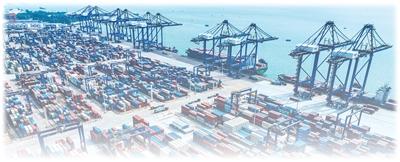
"十四五"期间山西省外贸朋友圈拓展至158个国家和地区 编辑:付健青 广告等商务合作,请点击这里 本文为转载内容,授权事宜请联系原著作权人 截至2025年12月1日,山西累计开行中欧班列1048列,通达亚欧17个国家、48个城市,助力"山西制 造"与国际货物双向循环。 此外,山西出台铁海联运支持政策,形成中鼎物流园—天津港、中鼎物流园—青岛港两条图定班列。太 原国际邮件互换局扩容升级项目2024年底建成并投入运营。 山西省商务厅副厅长、新闻发言人李国荣介绍,山西开放环境也在持续优化。"目前,山西国际贸易'单 一窗口'注册企业超1100家。太原航空口岸已被列入国家240小时过境免签政策适用口岸范围,并获批国 家智慧口岸建设试点。"(完) 来源:中国新闻网 中新社太原12月5日电 (杨静 高雨晴)山西省政府新闻办5日举行"高质量完成'十四五'规划"系列主题新闻 发布会通报,"十四五"期间,山西省对外开放水平持续扩大,外贸朋友圈已拓展至全球158个国家和地 区。 地处中国内陆中部,山西具有"承东启西、连接南北"的战略枢纽地位。近年来,山西发挥区位、资源与 产业优势,加速从"内陆腹地"迈向"开放前沿"。 山西开放通道 ...
如果日方一意孤行 中方将采取必要措施
Ren Min Ri Bao· 2025-12-04 22:16
新华社北京12月4日电 (记者谢希瑶)商务部新闻发言人何亚东4日表示,如果日方一意孤行,中方将 采取必要措施,一切后果由日方承担。 商务部当天举行例行新闻发布会。有记者问:此前,中方表示可能采取必要措施反制日本,请问能否具 体介绍一下?近期,受中日关系变化的影响,许多日本企业正在考虑缩减在华业务,商务部对此有何评 论?另外,对于中国来说,日本企业的在华投资是否依然重要? 何亚东表示,关于日本首相高市早苗的涉台错误言论,中方已多次阐明严正立场,敦促日方立即纠正错 误言行,以实际行动体现对中方承诺,为两国正常经贸合作创造条件。如果日方一意孤行,中方将采取 必要措施,一切后果由日方承担。 "近期,日本首相高市早苗公然发表涉台错误言论,严重破坏了中日关系的政治基础,日方对此负有不 可推卸的责任。"何亚东说。 谈及日企在华投资,何亚东表示,中国是全球第二大消费市场,蕴含着巨大投资和消费潜力;同时,中 国致力于高质量发展,绿色化、数字化、智能化转型加快推进,产业配套能力强,是新一轮科技革命和 产业变革的最佳应用场景。中国始终是外商理想、安全、有为的投资目的地,包括日资企业在内的跨国 公司都表示看好中国市场。今年以来,中国 ...
贵阳国际陆港初步建立“一港多区”集疏运体系
Zhong Guo Xin Wen Wang· 2025-12-03 11:34
编辑:张嘉怡 广告等商务合作,请点击这里 本文为转载内容,授权事宜请联系原著作权人 中新社贵阳12月3日电 (记者 杨茜)记者3日从贵州省"十四五"时期对外开放成就新闻发布会上获悉,"十 四五"期间,贵阳国际陆港"一港多区"集疏运体系初步建立,陆海新通道班列(班车)、黔粤班列、中欧 (中亚)班列、中老班列共开行1492列、83527标箱。 贵州省商务厅副厅长李康弘在发布会上说,截至2025年10月底,贵阳国际陆港已开通国内运输线路22 条、国际运输线路24条,联通东南亚、欧盟等22个国家和地区,推出的"黔链达"多式联运产品通达148 个国家、580个地区。 开放通道建设是贵州"十四五"开放工作的一大亮点。截至目前,贵州已开通贵阳至曼谷、大阪、吉隆 坡、米兰等14条国际及地区客运航线,1月至10月进出境人员24.5万人次,同比增长184.4%;开通贵阳 至仰光、达卡、曼谷等5条国际货运航线,1月至10月份累计货运量6086.2吨、增长59.7%,进出口值 10.01亿元人民币,增长21.6%。 下一步,贵州将进一步完善、优化开放通道建设,不断提高开放通道运输能力和运营质效,全力促进国 际物流通道发展,打造立体化 ...
长沙“十四五”经济答卷:GDP年均增长5.4% 达中等发达经济体门槛
Zhong Guo Xin Wen Wang· 2025-12-03 10:16
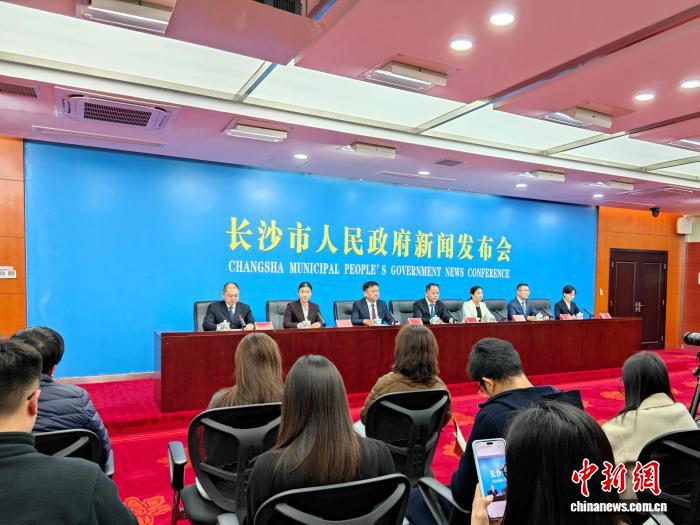
Core Insights - Changsha's GDP is projected to reach 15,268.78 billion yuan in 2024, with an average annual growth rate of 5.4% during the 14th Five-Year Plan period, indicating it has surpassed the threshold of a middle-income developed economy [1][3] Economic Performance - The average annual growth rates of key indicators such as industrial added value and local public budget revenue rank among the top in provincial capital cities nationwide [3] - All six urban districts of Changsha have entered the top 100 high-quality development districts in the country, with Changsha County, Liuyang City, and Ningxiang City ranking 4th, 5th, and 14th respectively in national county economic and social development [3] Innovation and Technology - Changsha prioritizes innovation as a core development strategy, with R&D investment intensity increasing to 3.35% and 152 national-level innovation platforms established [3] - The city has achieved a high value of 31.41 high-value invention patents per 10,000 people and has broken foreign monopolies in key industrial technologies [3] - The digital economy has surpassed 500 billion yuan, and Changsha ranks 9th in China's urban innovation capability [3] Trade and Openness - During the 14th Five-Year Plan period, Changsha's total import and export volume reached 1.4 trillion yuan, with a steady increase in its share of the province's total [4] - The annual passenger throughput at Huanghua Airport has exceeded 30 million, and Changsha's China-Europe Railway Express has maintained a leading position [4] Infrastructure Development - Changsha is enhancing its urban infrastructure with significant projects such as the Huanghua Airport entering a "three-runway, three-terminal" era and the high-speed rail system transitioning to a "dual-core driving" era [5] - The city's permanent population is expected to reach 10.6165 million by 2024, indicating a comprehensive expansion of its framework as a megacity [5]
山东城市观察 | 大洋洲之行归来,山东省代表团收获几何?
Xin Lang Cai Jing· 2025-12-03 04:27
Group 1 - Shandong Province is enhancing practical cooperation with New Zealand and Australia through a delegation visit led by the provincial governor, focusing on economic, agricultural, and investment sectors [1][5] - The delegation includes mayors and business leaders from various cities in Shandong, aiming to deepen exchanges and cooperation in multiple fields [1][5] - The visit is part of a broader strategy to extend Shandong's international outreach and strengthen its role in global trade [1][11] Group 2 - Shandong has established a long-standing relationship with Australia and New Zealand, with significant trade growth, including a projected trade volume of 130.6 billion yuan with New Zealand in 2024 [4][5] - The province's trade with New Zealand is expected to account for 9.1% of China's total trade with the country, while trade with Australia is projected at 8.7% [3][4] - The cooperation includes various sectors such as advanced manufacturing, logistics, and agriculture, reflecting strong economic complementarity [3][4] Group 3 - The visit features major events like the "China (Shandong) - New Zealand Economic and Trade Cooperation Forum," which facilitates business negotiations and project signings [5][10] - Notable companies such as Guobao Pet Food Group are making significant investments, including a 9.5 billion yuan project in New Zealand to enhance global supply chain efficiency [5][6] - The collaboration also includes the introduction of Shandong products like "Dezhou Braised Chicken" into the New Zealand market, marking a significant step in international expansion [8][10] Group 4 - Shandong's government is implementing comprehensive support measures for enterprises looking to expand internationally, including financial, legal, and logistical assistance [12][15] - The "Ten Actions for Stable and Quality Foreign Trade by 2025" initiative aims to enhance Shandong's global market presence through innovative strategies [12][15] - The province is actively promoting its international marketing system to facilitate connections between local businesses and global markets [12][15]

郑州商品交易所:发挥聚酯期货板块功能 提升重要大宗商品价格影响力
Ren Min Ri Bao· 2025-11-30 22:21
Core Viewpoint - The polyester industry in China plays a crucial role in providing 70% of textile raw materials and is closely linked to daily life, with the Zhengzhou Commodity Exchange (ZCE) developing a comprehensive risk management system for the polyester supply chain since the launch of PTA futures in 2006 [1][2]. Group 1: Risk Management Development - The ZCE has focused on addressing industry pain points by establishing a robust risk management framework for the polyester supply chain, starting with the launch of PTA futures in December 2006 [2]. - The introduction of PTA options in 2019 and short fiber futures in 2020 expanded the risk management tools available to the polyester industry, with further developments in 2023 including PX futures and options [2][3]. Group 2: Functional Impact on the Polyester Industry - The ZCE's polyester futures have significantly transformed trade practices, enhancing supply chain resilience and supporting high-quality development in the polyester sector [4]. - Since 2010, PTA futures have become a key reference for spot pricing, with nearly 100% of PTA spot trades now priced based on "futures price + premium/discount" [4][5]. Group 3: Internationalization and Price Influence - The ZCE is actively working to enhance the international pricing influence of polyester futures, allowing foreign investors to participate in trading since 2018 and hosting international forums to promote these products [6][7]. - The integration of PTA futures into international trade has improved negotiation efficiency and solidified supply chain relationships, exemplified by companies like Hengyi Petrochemical using PTA futures as a pricing benchmark in contracts [7][8]. Group 4: Future Directions - The ZCE aims to refine existing products, expand international outreach, and strengthen regulatory measures to continue supporting the manufacturing sector and contribute to new industrialization efforts [8].
打造高水平对外开放新高地,威海“十四五”外贸外资量质齐升
Qi Lu Wan Bao· 2025-11-28 08:13
Core Viewpoint - Weihai City is committed to high-quality development during the "14th Five-Year Plan" period, focusing on enhancing foreign trade and investment, and creating a new high ground for open development [1] Group 1: Foreign Trade and Investment - The city has implemented over 20 policy measures to stabilize and optimize foreign trade, resulting in a total import and export volume growth from 161.46 billion in 2020 to 204.02 billion in 2024, with an average annual growth rate of 6% [2] - Weihai has cultivated 10 key foreign trade carriers and 5 national-level foreign trade transformation and upgrading demonstration bases, with significant achievements in high-quality foreign trade development [2] - The city has hosted 7 "China-Korea Cross-Border E-Commerce Conferences" and established the first national cross-border e-commerce shipping route to Korea, leading to a continuous top position in cross-border e-commerce retail exports in Shandong Province [3] Group 2: Investment Attraction - The city has established a high-quality investment attraction mechanism, with a three-year action plan focusing on attracting large and strong projects, and has seen significant participation in provincial and national investment activities [4] - Weihai has developed a precise investment attraction strategy targeting six key industries and three future industries, successfully attracting over 1,300 new projects during the "14th Five-Year Plan" period [6] - The city has optimized its investment promotion team and established a global partner center, resulting in a significant increase in the number of foreign investment projects [6] Group 3: Open Development Platforms - The city’s development zones have achieved high-quality development, with five out of seven zones improving their rankings for two consecutive years, contributing over 75% to the city's foreign investment and exports [7] - Weihai has actively participated in the China (Shandong) Free Trade Zone innovation initiatives, enhancing cooperation with provincial areas and promoting integrated development [7] Group 4: International Cooperation - The city has made significant progress in Sino-Korean economic cooperation, with over 110 cooperation topics advanced and successful trials of multi-modal transport reducing logistics costs by approximately 30% [8] - Weihai has established a provincial-level overseas economic and trade cooperation zone in Tanzania, showcasing local products and enhancing international visibility [9] Group 5: Domestic Market Development - Weihai has been recognized as a national pilot city for retail innovation and has implemented a comprehensive consumption promotion policy, significantly boosting local consumption [10][11] - The city has organized numerous activities to integrate foreign trade products into domestic markets, enhancing the overall economic landscape [3][10]