西部陆海新通道

Search documents
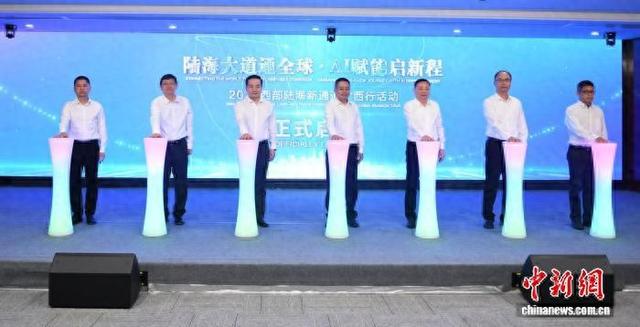
2025西部陆海新通道广西行主题采访活动启动
Zhong Guo Xin Wen Wang· 2025-12-01 10:30
Group 1 - The core viewpoint of the article highlights the significant achievements in the construction of the Western Land-Sea New Corridor, which has contributed to an open framework for internal and external connectivity and mutual assistance between the east and west [1][3]. - The launch of the "Western Land-Sea New Corridor Guangxi Tour" event aims to explore the development opportunities along the corridor through media coverage in various cities such as Nanning, Qinzhou, Beihai, Fangchenggang, and Chongzuo [3][7]. - Guangxi serves as a key junction for the Western Land-Sea New Corridor, focusing on major projects like the Pinglu Canal and the Beibu Gulf International Gateway Port to enhance infrastructure and service capabilities [1][3]. Group 2 - During the 14th Five-Year Plan period, the Beibu Gulf Port aims to enhance its capabilities, increase cargo sources, expand shipping routes, and improve services, with the expected increase in sea-rail intermodal trains from 4,607 in 2020 to 10,500 by 2025 [5]. - The cargo throughput at Beibu Gulf Port is projected to grow from 300 million tons in 2020 to 500 million tons by 2025, indicating a significant increase in operational capacity [5].

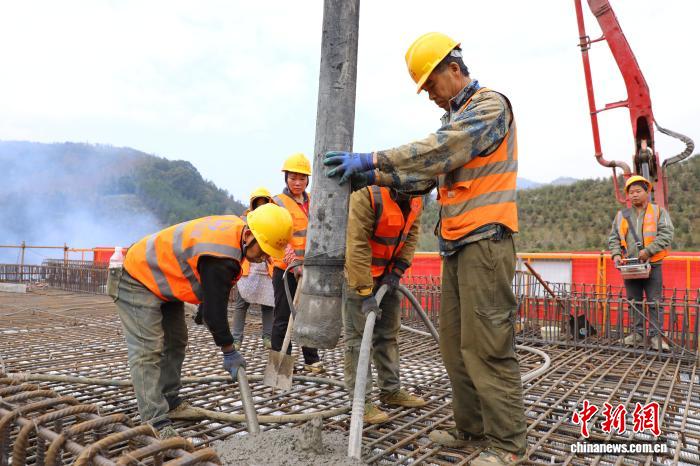
黄百铁路最长桥梁进入连续梁施工阶段
Zhong Guo Xin Wen Wang· 2025-12-01 09:06
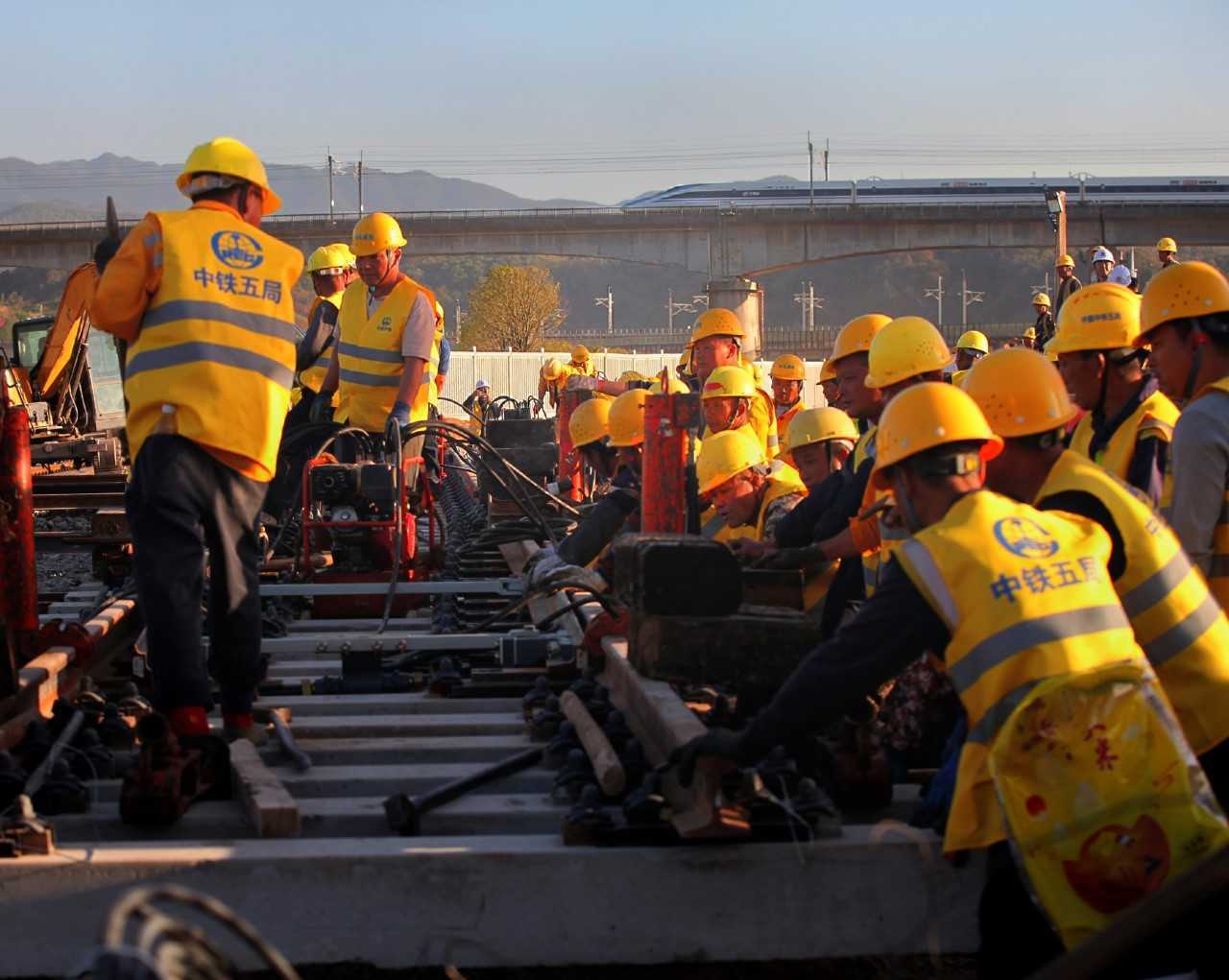
Core Viewpoint - The construction of the longest bridge on the Huangbai Railway, the Lianzhuan No. 1 Bridge, has entered the continuous beam construction phase, marking a significant advancement in the project [1][4]. Group 1: Project Progress - The Lianzhuan No. 1 Bridge spans 4,766.83 meters, making it the longest bridge on the Huangbai Railway, which is approximately 315 kilometers long with a designed speed of 160 km/h [3][4]. - As of now, 13 out of 21 continuous beams designed for the bridge have entered the construction phase, accounting for over 60% of the total [4]. - The construction of 33 new tunnels along the Huangbai Railway has seen 7 tunnels safely completed, with the overall progress of tunnel, bridge, and roadbed works at 45.6%, 50.7%, and 43.6% respectively [4]. Group 2: Construction Techniques - The construction employs a continuous beam design to avoid setting bridge piers in river areas, thus protecting water resources [3][4]. - The use of a support cast-in-place method for the continuous beams eliminates the need for large lifting equipment, addressing challenges related to material transport and saving approximately 2 months in construction time compared to traditional methods [3][4]. Group 3: Economic and Regional Impact - The Huangbai Railway is a key project for the Western Land-Sea New Corridor, expected to enhance regional transportation networks and promote coordinated economic and social development in the area upon its completion in 2028 [4].
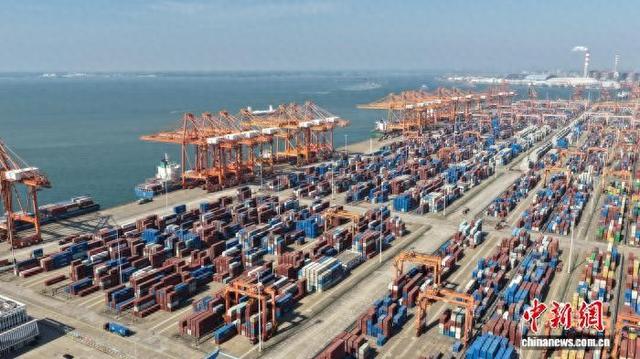
在洋浦港,给集装箱“搭积木”
Hai Nan Ri Bao· 2025-12-01 02:03
Core Insights - The introduction of remote control operations at Yangpu International Container Terminal has significantly improved operational efficiency and reduced logistics costs, with a container throughput of 2.0052 million TEUs from January to September 2025, representing a year-on-year increase of over 50% [2][3] Group 1: Remote Control Operations - The terminal has implemented semi-automated operations for yard cranes and equipped with unmanned gates and intelligent operation systems, enhancing productivity [2] - Remote operators can efficiently manage heavy containers from a distance, demonstrating the effectiveness of the remote control technology [1] Group 2: Shipping Network Expansion - Yangpu Port has opened a total of 65 domestic and international trade routes, with 59 routes specifically from the Yangpu International Container Terminal, establishing a new shipping network that connects both domestic and international markets [3] - The increasing number of shipping routes has attracted more vessels to register under the "China Yangpu Port" policy, which offers various tax incentives and support for shipping companies [3] Group 3: Policy Impact - The free trade port policies in Yangpu, including zero tariffs on imported vessels and VAT refunds for domestically built international vessels, have significantly lowered operational costs for shipping businesses [3] - The number of shipping market entities has surged from 239 in 2019 to nearly 1,000 in 2024, while water transport turnover is projected to exceed 1 trillion ton-kilometers by 2024 [3]
西部陆海新通道班列累计发送货物超500万标准箱
Ren Min Ri Bao· 2025-11-30 22:14
(文章来源:人民日报) 截至11月29日,西部陆海新通道班列累计发送集装箱货物超500万标准箱,达500.3万标准箱。其中今年 以来发送超130万标准箱,达130.8万标准箱,同比增长55.3%。今年前三季度,西部地区经西部陆海新 通道进出口6115亿元,拉动西部地区外贸增长3.4个百分点。 ...
西部陆海新通道班列累计发送货物突破500万标箱
Zhong Guo Xin Wen Wang· 2025-11-30 11:20
Core Insights - The Western Land-Sea New Corridor has achieved a significant milestone, with cumulative container cargo shipments exceeding 5 million TEUs as of November 29, 2023, marking a year-to-date increase of 130,000 TEUs, which is a 55.3% year-on-year growth [1][2] Group 1: Cargo Composition and Direction - The export cargo primarily consists of chemical products, machinery parts, and new energy vehicles, while the imports mainly include bauxite, coal, and grain [2] - Shipments from the port to the inland (upstream) totaled 657,000 TEUs, and shipments from the inland to the port (downstream) reached 651,000 TEUs, achieving a balanced two-way shipment with year-on-year increases of 58.9% and 57.1%, respectively [2] Group 2: Infrastructure and Capacity Enhancements - The company has completed electrification upgrades on key railways, enhancing mainline transport capacity by 6.5%, and has upgraded 28 freight yards, increasing handling capacity by 33 million tons annually [4] - The company has coordinated with port enterprises to expand dedicated lines at ports, adding 10 million tons of handling capacity each year [4] Group 3: Service Innovations and Operational Efficiency - To expand the reach of the Western Land-Sea New Corridor, the company has developed category-specific iron-sea express products and established a multi-modal transport service model in collaboration with logistics companies [4][7] - The number of cross-bureau scheduled train routes has increased from 2 in 2019 to 15 by 2025, with 57.7% of the current 26 cross-bureau scheduled train routes connecting major southwestern cities [6][7] Group 4: Economic Impact - In the first three quarters of the year, the Western region's imports and exports through the Western Land-Sea New Corridor reached 611.5 billion yuan, reflecting a 19.3% growth and contributing 3.4 percentage points to the region's foreign trade growth [7]
突破500万标箱!
中国能源报· 2025-11-30 08:34
Core Insights - The Western Land-Sea New Corridor has sent over 5 million TEUs since its launch in 2017, reaching 5.03 million TEUs as of November 29 this year, with a strong growth momentum in 2023 [1] - In 2023, the corridor has sent over 1.3 million TEUs, achieving a year-on-year growth of 55.3%, facilitating trade among countries along the corridor [1] - The export goods primarily include chemical products, machinery parts, and new energy vehicles, while imports mainly consist of bauxite, coal, and grain [3] Group 1 - The Western Land-Sea New Corridor has established a logistics artery connecting China's inland regions with ASEAN countries and the global market [1] - The corridor has achieved a balanced two-way flow of goods, with 657,000 TEUs sent upstream and 651,000 TEUs sent downstream, both showing over 50% year-on-year growth [3] - The station has optimized transportation organization to meet demand, setting a record of 14.05 train operations per day [5] Group 2 - Significant increases in imports from countries like Thailand, Mozambique, and Indonesia have been noted, particularly in pulp, spodumene, and rubber [5] - Exports from Chongqing and Guangxi, including generator sets and auto parts, have also seen notable growth [5]
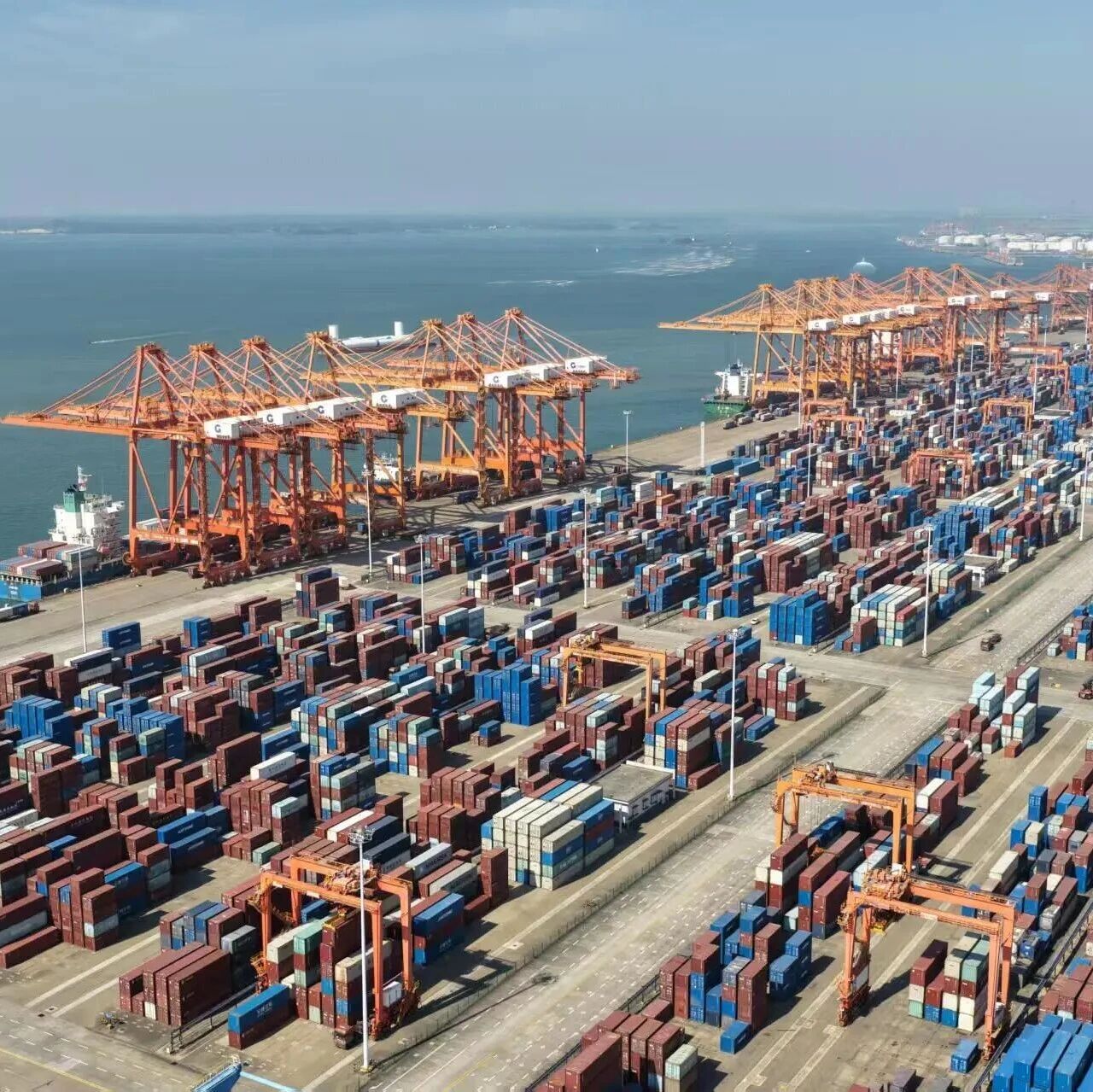
西部陆海新通道班列累计发送货物超500万标箱
Xin Hua Wang· 2025-11-30 08:05
Core Insights - The Western Land-Sea New Corridor has achieved a cumulative shipment of over 5 million TEUs, reaching 5.03 million TEUs, with over 1.3 million TEUs shipped this year, marking a year-on-year increase of 55.3% [1][2] Group 1 - The corridor connects the Silk Road Economic Belt in the north and the 21st Century Maritime Silk Road in the south, playing a crucial strategic role in regional coordinated development [1] - Since its elevation to a national strategy in August 2019, the corridor has shown strong growth momentum [1] - The time taken to reach the first million TEUs was over 4 years, while the fifth million TEUs was achieved in just over 240 days, indicating a significant acceleration in growth [2] Group 2 - The corridor's service coverage has expanded, with the number of scheduled train routes increasing from 2 in 2019 to 26 by 2025, linking southwestern cities like Chengdu, Chongqing, and Guiyang with ports such as Fangchenggang, Qinzhou, and Zhanjiang [2] - There has been a notable increase in imports of goods like pulp, spodumene, and rubber from countries such as Thailand, Mozambique, and Indonesia, alongside significant exports of generator sets from Chongqing and auto parts from Guangxi [2] - The corridor has established a stable logistics artery for southwestern China, with a total import and export value of 611.5 billion yuan in the first three quarters, contributing to a 3.4 percentage point increase in foreign trade growth in the western region [2]
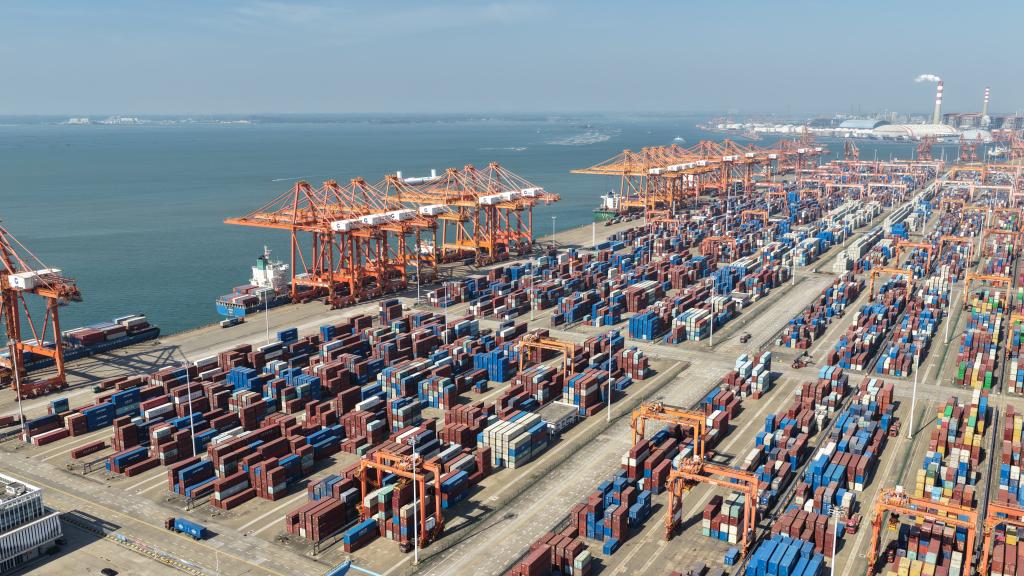
“数”说西部陆海新通道“成绩单” 为区域经济发展按下“加速键”
Yang Shi Wang· 2025-11-30 07:04
国铁南宁局沿海铁路公司钦州港东站副站长赵坚称:"今年累计6次刷新单日装卸车作业次数纪录,最高达到1405车。来自泰国、莫桑比 克、印尼等国家的纸浆、锂辉石、橡胶等进口货物增幅较大,重庆的发电机组、广西的汽车零配件等出口货物增幅明显。" 央视网消息:记者11月30日从国铁南宁局获悉,截至11月29日,西部陆海新通道班列自2017年开通以来,累计发送集装箱货物达500.3万 标箱,保持强劲增长势头。 今年以来,西部陆海新通道班列发送货物达130.8万标箱,同比增长55.3%,其中从港口往内陆的上水方向累计发运65.7万标箱、内陆往港 口的下水方向累计发运65.1万标箱,实现双向发送基本均衡,同比增幅均超过五成,分别达58.9%、51.7%。 截至目前,西部陆海新通道班列跨铁路局运行线路已达26条,串联起成都、重庆、贵阳等西南地区与防城港、钦州等北部湾港口,实现与 中欧班列无缝对接。 ...
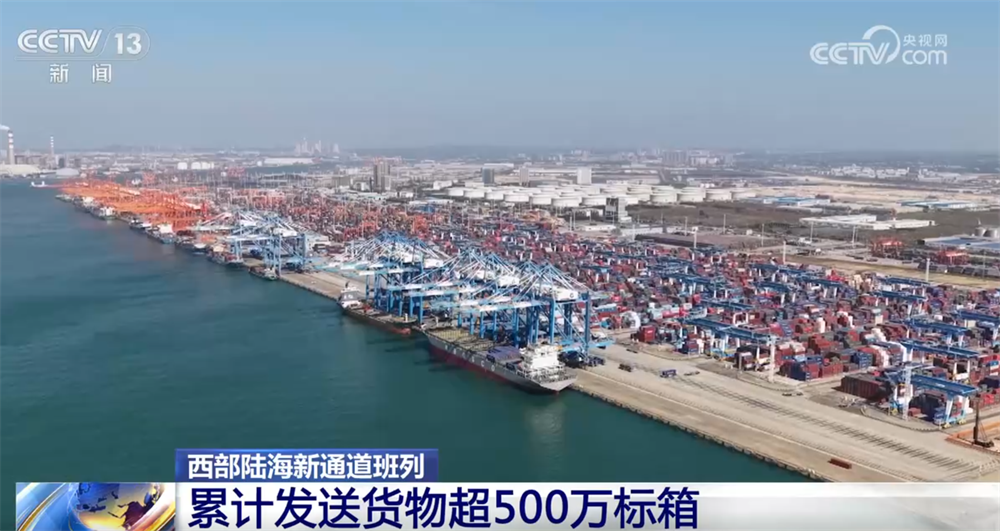
西部陆海新通道班列已累计发送货物突破500万标箱
Yang Shi Xin Wen· 2025-11-30 05:54
Core Insights - The Western Land-Sea New Corridor has sent over 5 million TEUs (Twenty-foot Equivalent Units) since its launch in 2017, with 500.3 million TEUs sent as of November 29 this year, indicating strong growth in logistics services for trade along the corridor [1] - In 2023, the corridor has sent over 1.3 million TEUs, reaching 130.8 million TEUs, which represents a year-on-year increase of 55.3% [1] Summary by Category Export and Import Goods - The main export goods this year include chemical products, machinery parts, and new energy vehicles, while the primary import goods consist of bauxite, coal, and grain [1] - The corridor has achieved a balanced two-way shipment, with 657,000 TEUs sent from ports to inland areas and 651,000 TEUs sent from inland to ports, both showing significant year-on-year increases of 58.9% and 57.1% respectively [1] Operational Efficiency - The railway company at the hub of the Western Land-Sea New Corridor has optimized transportation organization to meet demand, setting a record for daily loading and unloading operations six times this year, with a peak of 1,405 cars per day [1] - There has been a notable increase in imports of goods such as pulp, spodumene, and rubber from countries like Thailand, Mozambique, and Indonesia, while exports from Chongqing and Guangxi, including generator sets and auto parts, have also seen significant growth [1]
怀化国际陆港铁路专用线正式接轨
Sou Hu Cai Jing· 2025-11-29 10:37
来源:怀化铁路公安处 通讯员:刘亚平 杨谢君 11月28日下午,怀化国际陆港铁路专用线在怀化西站正式接轨,标志着这条重要的国际运输线又迈出了新的一步。 怀化国际陆港发展有限公司起初是租用怀化铁路场地建成海关监管区,运用铁路西货场集装箱专用线开行跨境铁路班列,在运输交织上存在诸多不便。陆港 专用线的接轨开通,将进一步增强这条国际运输线的快捷高效。 怀化国际陆港是湖南省怀化市建设的国家级物流枢纽,2022年纳入西部陆海新通道"13+2"省际协作机制,初步形成湘鄂赣三省东盟货物集结中心。 这个陆港通过铁海联运对接北部湾港、广州港及中老铁路等国际通道,覆盖全球69个国家,每年平均开行国际班列1000多列,货值近60亿元。 ...