资产配置

Search documents
居民存款减少1.1万亿元去哪了?存款“搬家”信号初现 “00后”股民入市:行情热起来 感觉到处都是机会
Mei Ri Jing Ji Xin Wen· 2025-08-16 04:08
Core Viewpoint - The A-share market is experiencing a bullish trend, with the Shanghai Composite Index rising 0.83% on August 15, surpassing the 3700-point mark, reaching a nearly four-year high [1]. Group 1: Deposit Migration - The topic of "deposit migration" has gained attention as the bull market heats up and July financial statistics are released. In July, RMB deposits increased by 500 billion, with a year-on-year increase of 1.3 trillion. However, household deposits decreased by 1.1 trillion, a year-on-year decline of 780 billion [2]. - Non-bank deposits surged by 2.14 trillion in July, reflecting a year-on-year increase of 1.39 trillion. This trend indicates a shift of household savings towards financial products, likely influenced by the recent "slow bull" market [2][3]. - Analysts suggest that the "deposit migration" phenomenon may have begun, driven by changes in asset allocation, improved investment sentiment, and a better risk-reward ratio. This could lead to significant inflows into the stock market, providing ongoing financial support [2][3]. Group 2: Market Sentiment and New Investors - The number of new stock accounts opened in July reached 1.9636 million, a year-on-year increase of 70.54% and a month-on-month increase of 19.27%, indicating heightened interest in the stock market [7]. - New investors are actively participating in the market, with individuals expressing excitement about potential investment opportunities and sharing their experiences on social media platforms [9][10]. - The current market environment has led to a shift in focus for some individuals, with stock trading becoming a significant part of their daily lives and emotional experiences [11].

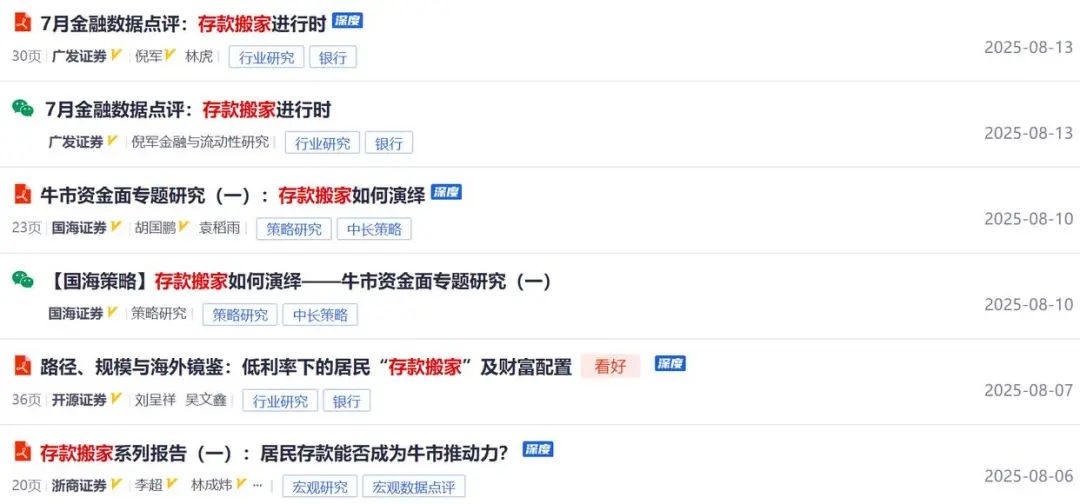
居民存款减少1.1万亿元去哪了?存款“搬家”信号初现,“00后”股民入市:行情热起来,感觉到处都是机会
Mei Ri Jing Ji Xin Wen· 2025-08-16 04:00
每经编辑|何小桃 A股牛市氛围渐浓,8月15日,沪指收涨0.83%,盘中再次突破3700点关口,创近4年新高。 随着牛市行情升温以及7月金融统计数据出炉,"存款搬家"议题引发关注。 根据中国人民银行8月13日发布的数据,7月人民币存款增加5000亿元,同比多增1.3万亿元,其中住户存款减少1.1万亿元,同比多减7800亿元;非银存款 增加2.14万亿元,同比多增1.39万亿元。 据第一财经报道,接受采访的多位人士均表示,7月非银存款大增,反映出居民存款向金融产品转移的趋势,"可能受近期股市'慢牛'行情影响,居民存款 搬家现象显现"。 中信证券宏观团队日前发布研报指出,居民存款"搬家"或已开始。在资产配置结构变化、投资情绪回升和风险收益比改善的推动下,部分资金可能会流向 股市等风险市场。在市场环境改善时,"存款搬家"或带来可观的增量资金流入,为股市提供持续的资金支持。 居民存款"搬家"入市 数据显示,7月非银存款增加2.14万亿元,同比多增1.39万亿元;与之相对应,7月居民存款净减少1.1万亿元,同比多减近0.8万亿元。1~7月非银存款合计 多增4.69万亿元,较去年同期多增1.73万亿元,7月当月这一结构性 ...


50岁以后,银行存款达到“这个数”,你的家庭就很有底气了!
Sou Hu Cai Jing· 2025-08-15 19:35
Group 1 - The core viewpoint emphasizes the importance of having sufficient bank savings after the age of 50 to manage various life pressures and ensure a good quality of life [1] - Financial experts suggest that families should have bank savings of at least 5-10 times their annual expenses to feel financially secure after 50 [3] Group 2 - The basic version of savings for individuals living in second and third-tier cities is recommended to be between 500,000 to 1,000,000, which can cover most emergencies like medical expenses and short-term unemployment [4] - For those aiming to maintain a good standard of living over the next 10-20 years, savings of 2,000,000 or more is advised, allowing for diversified investments to hedge against inflation [5] - Individuals who have achieved financial freedom should maintain at least 5,000,000 in liquid assets to navigate any economic environment comfortably [6] Group 3 - Many individuals around the age of 50 lack sufficient savings due to factors such as a lack of saving habits in youth, investment failures, heavy family burdens, and stagnant income growth [8][9][10] Group 4 - To quickly increase savings after 50, individuals should assess their assets and liabilities, prioritize paying off high-interest debts, and adopt a more conservative investment strategy [12][13] - Increasing passive income through rental properties or stable dividend-paying investments is recommended, along with exploring side income opportunities in the era of social media [14][15] - Controlling unnecessary expenses and prioritizing essential savings for healthcare and retirement is crucial [16] Group 5 - The conclusion highlights that turning 50 can be a new starting point, where individuals become more financially savvy and capable of making better financial decisions [18]
子公司拖累致亏损93万元!东海基金澄清:母公司实则盈利30万元
Hua Xia Shi Bao· 2025-08-15 13:37
Core Insights - The core point of the articles is the financial performance and operational challenges faced by Donghai Fund, particularly highlighting its revenue growth and the impact of its subsidiary's performance on its overall profitability [2][3][4]. Financial Performance - In the first half of 2025, Donghai Fund reported a revenue of 32.69 million yuan, marking a year-on-year increase of 21.06%. However, the consolidated net profit showed a loss of 936,000 yuan, which is an improvement of 82.82% compared to the previous year [3]. - The standalone financial data indicates that Donghai Fund achieved a net profit of 300,400 yuan, transitioning from a loss to profit year-on-year [3]. - From 2021 to 2024, the compound annual growth rate (CAGR) of net profit for Donghai Fund on a standalone basis was 100.16%, while the consolidated net profit CAGR was 80.99% [3]. Subsidiary Performance - Donghai Ruijing Asset Management, a wholly-owned subsidiary, is focused on distressed asset acquisition and management. In 2024, it acquired a significant non-performing asset package valued at 19.6 billion yuan, but its profitability has been under pressure, with a net profit of approximately 60 million yuan in 2024 [4]. Business Structure - As of the second quarter of 2025, Donghai Fund managed a total of 28.42 billion yuan in non-monetary public funds, with 98% of this amount attributed to bond funds, indicating a heavy reliance on fixed-income products [5]. - The performance of equity products has been weak, with some funds experiencing a decline of over 20% in net asset value over the past three years [5]. Strategic Adjustments - Donghai Fund is focusing on asset allocation as a core strategy, with over 98% of clients in fixed income and asset allocation products achieving positive returns over the past three years. The average return for these products in the first half of the year was 7.18% [6]. - The company has initiated an optimization of its equity layout since 2023, launching two new equity products based on a SMARTβ enhanced index strategy [6]. Governance and Ownership Changes - Donghai Fund has undergone significant ownership changes, including the introduction of new shareholders and ongoing legal issues related to the original shareholder's equity [7]. - The original shareholder's 27.3053% stake has been frozen due to debt disputes, with parts of this stake being auctioned off, reflecting challenges in governance and potential impacts on strategic execution [7][8].
写在沪指近四年新高之际:盈亏交织的市场众生相
天天基金网· 2025-08-15 11:22
Core Viewpoint - The article discusses the current state of the A-share market, highlighting the index reaching 3700 points, a level not seen in four years, and the mixed performance of different types of funds amidst this bull market [2][3]. Market Performance - The year-to-date return of the equity mixed fund index has reached 20%, indicating a positive trend for actively managed equity funds [5]. - Despite a 45% rebound from the low in February 2024, the equity mixed fund index remains 26% below its historical high in February 2021, suggesting that many investors who entered at that peak are still at a loss [5]. - Investors employing a systematic investment plan (SIP) or averaging down during market dips have experienced significantly lower floating losses, with some even realizing gains [5]. Index Analysis - The article notes that there is a significant disparity in performance among different indices, with some sectors showing signs of overheating while others remain relatively stable [6]. - A table is provided detailing various indices, their price-to-earnings ratios, and performance metrics over different time frames, indicating which indices may still offer investment opportunities [8]. Investor Strategies - Different strategies are recommended based on the current status of investors' portfolios: - For those with high profits, a two-step strategy is suggested: lock in profits through partial redemptions and reassess holdings based on long-term performance [10]. - Investors who have just returned to break-even should evaluate asset valuations and consider reducing exposure if nearing high valuation levels [11]. - For those still waiting to recover losses, assessing the quality of holdings is crucial, with recommendations to buy on dips if the funds are fundamentally sound [12]. - New or cautious investors are advised to start with low-volatility products and gradually build positions in equity funds, emphasizing diversification [13]. Market Outlook - The article emphasizes the importance of understanding market cycles and the potential for continued upward movement in certain sectors, despite the inherent volatility [25][26]. - It concludes with a reminder that while bull markets will eventually end, maintaining a disciplined approach will help investors remain in the market through various cycles [27].

重仓中国资产,高瓴持股大曝光
中国基金报· 2025-08-15 11:13
Core Viewpoint - HHLR Advisors, a fund management platform under Hillhouse Capital, revealed its U.S. stock holdings as of the end of Q2 2025, showing a total market value of $3.10 billion, a decrease from $3.54 billion in the previous quarter, with a continued focus on Chinese stocks, particularly Pinduoduo, which remains the largest holding [2][3][5]. Holdings Summary - HHLR's U.S. stock holdings are primarily concentrated in Chinese stocks, accounting for over 90% of the portfolio, reflecting a long-term optimism towards quality Chinese assets [5][7]. - In Q2 2025, HHLR made two new purchases, added to two existing positions, sold out of 15 stocks, and reduced holdings in nine stocks [5][6]. - The top ten holdings represent 90.28% of the total portfolio, indicating a high concentration in key sectors such as internet technology, consumer goods, and biopharmaceuticals [5][6]. Major Holdings - Pinduoduo remains the largest holding with an increase of 414,200 shares, bringing the total to 6.9768 million shares, valued at $730 million, which constitutes 11.52% of the portfolio [6][7]. - Futu Holdings also saw an increase in holdings to 4.3122 million shares, valued at $533 million, with a year-to-date increase of over 118% [7]. - Webull Corporation (微牛证券) entered the top ten holdings for the first time, with 33.0808 million shares valued at $39.564 million, following its NASDAQ listing in April 2025 [7]. Reductions in Holdings - HHLR reduced its positions in Alibaba, Beike, and NetEase, selling 2.7581 million shares of Alibaba, bringing the total to 1.1497 million shares, valued at $130 million [9]. - The firm also decreased its holdings in Beike by 4.5079 million shares and in NetEase to 1.6637 million shares, reflecting a strategy to lock in profits amid rising stock prices [9]. - Other notable reductions included JD.com, Yatsen Holding, and Vipshop, with complete sell-offs of companies like Baidu and Trip.com [9].



华检医疗(01931)拟斥资不超30亿港元购买加密货币
智通财经网· 2025-08-15 10:55
Core Viewpoint - The company, Huajian Medical (01931), is seeking shareholder approval to authorize the board to purchase cryptocurrencies as part of its asset allocation strategy, particularly to strengthen its Ethereum (ETH) reserves and accelerate the development of the ivd.xyz exchange ecosystem [1] Group 1 - The board believes that purchasing and holding cryptocurrencies is a crucial step for the company's business layout and development [1] - The proposed authorization for cryptocurrency purchases will be valid for a period of 36 months from the date of the special resolution passed by shareholders [1] - The total amount allocated for cryptocurrency purchases will not exceed HKD 3 billion [1]
股债跷跷板又来了!资产要“搬家”吗?
Zhong Guo Ji Jin Bao· 2025-08-15 09:20
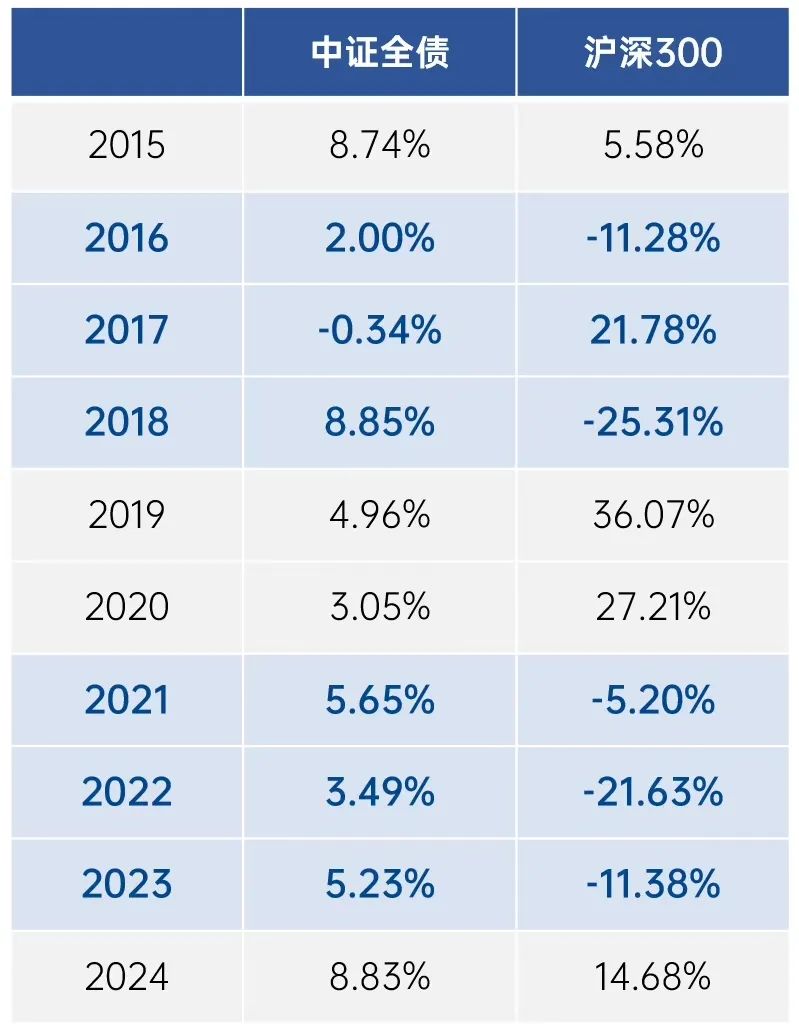
Core Viewpoint - The article discusses the cyclical nature of stock and bond markets, emphasizing the importance of a balanced asset allocation strategy to navigate the volatility between these two asset classes [1][3]. Group 1: Stock and Bond Market Dynamics - Since July, the A-share market has surged while the bond market has experienced turbulence, highlighting the contrasting performance of stocks and bonds [1]. - Historical data shows that from 2015 to 2024, there have been significant fluctuations in the performance of the CSI 300 and the China Bond Index, indicating a recurring pattern of stock and bond performance being inversely related [2]. Group 2: Asset Allocation Strategy - A recommended approach is to create a diversified asset allocation that primarily focuses on bonds with a smaller allocation to stocks, which can help mitigate risks associated with market volatility [3][4]. - The article suggests that mixed-asset funds, such as bond-enhanced strategy funds, can effectively balance the risks and returns of both stocks and bonds, providing a more stable investment experience [3][4]. Group 3: Fund Performance and Selection - The "Guofu Anyi Stable 6-Month Holding Mixed Fund" has shown positive performance across various time frames, indicating strong risk management and consistent returns [6][8]. - Key performance metrics for the fund, such as annualized volatility and maximum drawdown, demonstrate its superior risk control compared to similar funds, making it an attractive option for investors seeking stability [9].
股债跷跷板又来了!资产要“搬家”吗?
中国基金报· 2025-08-15 09:16
Core Viewpoint - The article discusses the cyclical nature of the stock and bond markets, highlighting the contrasting performance of equities and bonds, and suggests a balanced asset allocation strategy to mitigate risks and enhance returns [1][2][3]. Group 1: Stock and Bond Market Dynamics - The stock market has seen significant gains since July, while the bond market has experienced volatility, leading to a "see-saw" effect between the two asset classes [1][2]. - Historical data shows that from 2015 onwards, there have been six periods where the performance of the CSI 300 and the China Bond Index moved in opposite directions [2][5]. Group 2: Asset Allocation Strategy - It is recommended to avoid concentrating investments in either stocks or bonds exclusively, as this could lead to poor performance during market fluctuations [3][6]. - A balanced approach, where bonds are the primary investment and stocks are a supplementary component, is suggested to create a more resilient asset allocation [7][8]. Group 3: Performance of Mixed Investment Strategies - Funds that adopt a fixed income enhancement strategy, investing primarily in bonds with a smaller allocation to stocks, have historically outperformed both the CSI 300 Index and the China Bond Index over the past 20 years [9][10]. - The cumulative returns of mixed investment strategies, such as the bond-enhanced fund index, have exceeded those of pure equity and bond indices, with lower volatility [10]. Group 4: Fund Selection and Performance - The article highlights the performance of the Guofu Anyi Stable 6-Month Holding Period Mixed Fund, which has shown positive returns across various time frames, indicating effective risk management [11][13]. - Key performance metrics for the fund, such as annualized volatility and maximum drawdown, demonstrate superior risk control compared to its peers [15].
债券ETF总规模超5300亿元,市场渗透率仍存在提升空间
Huan Qiu Wang· 2025-08-15 04:54
Group 1 - The core viewpoint of the articles highlights the significant inflow into bond ETFs, with a net inflow of 300.3 billion yuan year-to-date, and a total scale surpassing 536.34 billion yuan as of August 14 [1][3] - The bond ETF market has seen a notable increase in new products, with 18 new bond ETFs established this year, including 8 benchmark credit bond ETFs and 10 Sci-Tech Innovation bond ETFs launched in July [3] - The growth of bond ETFs is attributed to the increasing demand from long-term funds such as pensions and annuities, as well as the advantages of ETF products in terms of fee structure and transparency [3] Group 2 - Hai Fu Tong Fund has six bond ETFs, three of which exceed 10 billion yuan in scale, contributing to the firm becoming a trillion-level non-cash ETF manager [3] - As of August 13, the total scale of non-cash ETFs managed by Hai Fu Tong Fund reached 110.91 billion yuan, with bond ETFs accounting for 107.10 billion yuan, representing 96.56% of the total [3] - The largest convertible bond ETF in the market, the Bosera Convertible Bond ETF, has grown to a scale of 50.86 billion yuan [3]