产业互联网

Search documents
贝壳“智”变:科技驱动,AI提效
Tai Mei Ti A P P· 2025-05-19 08:47
Core Viewpoint - The article highlights the significant role of technology, particularly AI, in enhancing the efficiency and evolution of the real estate industry, with Beike (NYSE: BEKE; HKEX: 2423) demonstrating strong performance through data, AI, and internet technologies [2][3]. Financial Performance - In Q1 2025, Beike achieved a total transaction volume (GTV) of 843.7 billion RMB, a year-on-year increase of 34.0%, with net revenue of 23.3 billion RMB, up 42.4%, and a net profit of 855 million RMB, with adjusted net profit reaching 1.393 billion RMB [2]. - Beike's existing home business GTV reached 580.3 billion RMB, growing 28.1%, while new home business GTV was 232.2 billion RMB, up 53.0% [3]. - Non-real estate transaction service revenue grew by 46.2%, accounting for 35.9% of total net revenue, with home decoration and furnishing business revenue at 2.9 billion RMB, a 22.3% increase [5]. Strategic Development - Beike has adopted a "one body, three wings" strategy, focusing on real estate transactions as the core while expanding into home decoration, rental, and related services [4]. - The company emphasizes a technology-driven approach, positioning itself as a digital "infrastructure builder" in the housing industry [3][4]. AI Integration - Beike is leveraging AI to enhance service efficiency and consumer experience, with tools like the "Customer Assistant" and "AI Property Maintenance Assistant" significantly improving agent performance and customer engagement [9][10]. - The company has developed AI models such as ChatHome and Dreamhome to support various applications in the housing sector, enhancing decision-making for consumers [12][14]. Market Adaptation - Despite a general downturn in the real estate market, Beike has shown resilience, benefiting from a structural recovery in the second-hand housing market and maintaining high activity levels [3]. - The shift from a seller's market to a buyer's market has led to increased consumer demand for quality service, prompting Beike to enhance its service offerings [6][10]. Investment in Technology - Beike's R&D expenditure reached 584 million RMB in Q1, a 24.9% increase year-on-year, with total R&D spending exceeding 12 billion RMB since its IPO in 2020 [15]. - The company is committed to continuous investment in AI applications, indicating a sustained focus on technological advancement to drive industry transformation [15].



激辩经济金融新秩序,肖钢、周延礼、黄奇帆、迈克尔·斯宾塞等热议→
Sou Hu Cai Jing· 2025-05-19 02:13
Core Viewpoint - The 2025 Tsinghua Wudaokou Global Financial Forum held in Shenzhen focused on building an open and inclusive economic and financial system, addressing challenges in international trade, investment, and financial governance in the context of a fragmented global economy [1]. Group 1: Digital Economy and Financial Innovation - The development of the digital economy aims to enhance the efficiency of the real economy, necessitating deeper integration between digital and traditional sectors, and the implementation of the "AI+" strategy [5]. - Key areas to address in the digital economy include improving the industrial ecosystem, establishing a governance framework for generative AI applications in finance, and creating a high-quality financial data market to resolve data silos [5][3]. Group 2: Pension System Development - The establishment of a three-pillar pension system is essential for creating an efficient social security foundation in China, with personal pensions playing a significant role in this structure [6][10]. - The personal pension system is designed to benefit low- and middle-income individuals, particularly the youth, with an annual contribution limit of 12,000 yuan [10]. Group 3: Financing Challenges for SMEs - The integration of industrial internet and financial technology is crucial for addressing the financing difficulties faced by small and medium-sized enterprises (SMEs) [11]. - The development of industrial internet can create a comprehensive service center for production factors, which is vital for local governments and foreign trade enterprises [11][13]. Group 4: Global Economic Dynamics - The unilateralism of the U.S. government poses significant risks to the global economy, with potential for a fragmented trade system if countries pursue individual agendas [14][16]. - Despite challenges, China retains unique advantages in attracting foreign investment, including low domestic company valuations and a large, skilled labor force [17][19]. Group 5: Innovation and Financial Support - The construction of a modern industrial system relies heavily on the deep integration of technological and industrial innovation, with financial support being a key factor [20][22]. - The current environment is seen as a prime opportunity for the venture capital industry, driven by significant industry transformations [23][25].
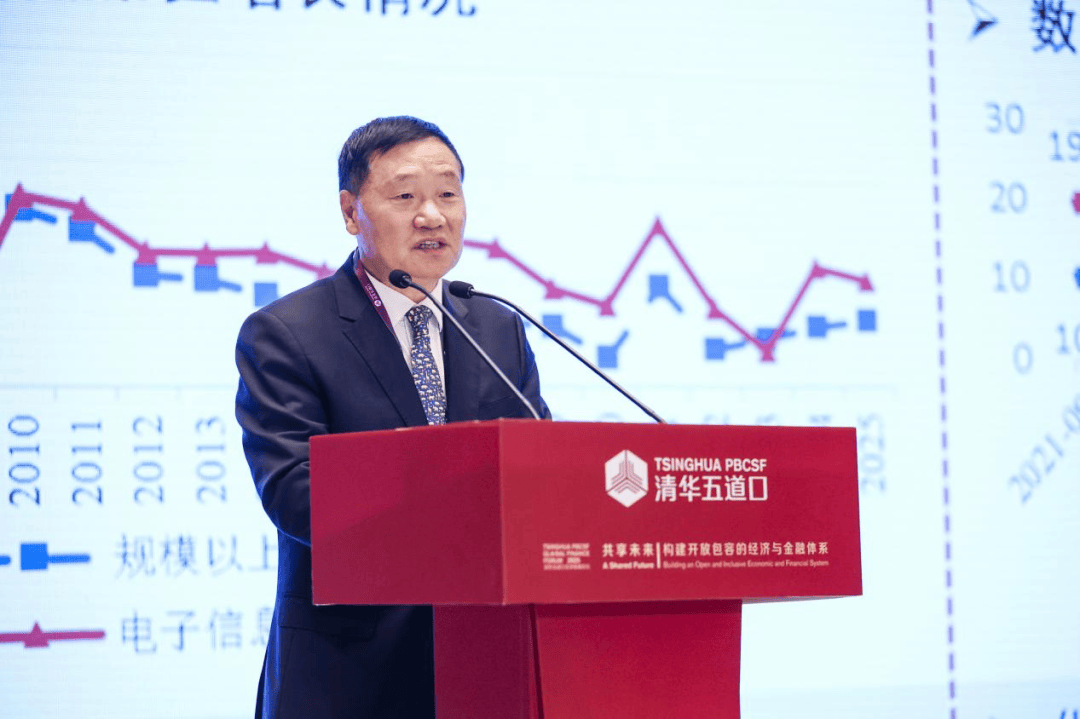
黄奇帆:产业互联网将解决中小企融资难、融资贵问题
Nan Fang Du Shi Bao· 2025-05-18 14:37
Group 1 - The core discussion at the 2025 Tsinghua Wudaokou Global Financial Forum focused on the deep integration of finance and technology, addressing challenges such as the structural imbalance in financial resource allocation and the need for early-stage support for technology [1] - Huang Qifan emphasized that financial innovation should be based on the industrial internet to effectively address the financing difficulties faced by small and medium-sized enterprises (SMEs) [3] - The industrial internet is seen as the highest level of internet application, encompassing the entire manufacturing supply chain and related service industries, which can significantly alleviate financing challenges for SMEs [3] Group 2 - Ma Weihua highlighted the importance of government guidance funds in bridging the funding gap in the technology innovation chain, noting that China's technology conversion rate has improved from 25% in 2010 to 35% in 2024, but still lags behind developed countries [5] - He identified four key challenges in technology transfer, including disconnection between innovation and industry chains, cognitive biases, misalignment of government goals with market behavior, and issues with risk management mechanisms [5] - Ma concluded that overcoming barriers to early-stage investment and risk assessment is crucial for transitioning from a follower to an innovator in technology [5] Group 3 - Ni Zewang observed that the venture capital industry is currently facing challenges but also entering a promising era, with unprecedented national attention on entrepreneurship investment [7] - He noted the establishment of a national venture capital guidance fund as a significant development, aimed at supporting and regulating the industry [7] - Despite difficulties in fundraising and investment due to tightened IPO channels, Ni believes that new industrial shifts present substantial investment opportunities for venture capital [7] Group 4 - Qiu Dagen discussed Hong Kong's unique advantages in the integration of finance and technology, particularly in the development of digital assets and the need for regulatory frameworks to manage new financial products [10] - He stressed that Hong Kong must take a leading role in financial innovation to maintain its competitive position in the global financial landscape [10] Group 5 - Guo Jian emphasized that the competition in finance and technology ultimately boils down to talent, particularly in the context of the artificial intelligence era [12] - He advocated for focusing on foundational technologies in digital economy sectors to foster innovation and industry development [12] - Guo suggested that capital should increasingly target young talent to maximize returns on investment [12] Group 6 - Jia Yanjing pointed out that a digital risk control system can help address financing pain points for technology enterprises by enabling real-time monitoring of production and operational safety [14] - She identified three key factors driving changes in risk management: advancements in IoT, AI, and blockchain technologies, the richness of enterprise data, and the effective accumulation of technology patents [14] - Jia noted that implementing such digital risk control systems can shift risk management from reactive to proactive, thereby alleviating concerns about financing risks for high-tech companies [14]


2025五道口金融论坛|黄奇帆:没有产业互联网,中小企业融资难、融资贵问题无法解决
Bei Jing Shang Bao· 2025-05-18 11:31
北京商报讯(记者 廖蒙)5月17日—18日,2025清华五道口全球金融论坛在深圳召开。在以"金融赋能科技创新与发展"为主题的分论坛上,围绕金融科技3.0 版,中国金融40人论坛学术顾问、重庆市原市长黄奇帆以产业互联网为例进行了解读。黄奇帆表示,没有产业互联网,中小企业融资难、融资贵的问题,都 无法解决。 在全球经济格局深度调整与科技革命浪潮席卷的当下,科技创新是驱动经济高质量发展的核心引擎,而金融则被认作是推动科技成果转化、产业升级的关键 力量。全球竞争日益激烈,金融服务科技创新显得尤为重要。 针对如何构建更有效的金融支持科技创新体系这一问题,黄奇帆围绕产业互联网的功能进行了说明。黄奇帆指出,产业互联网一旦到位,实际上它会产生5 个功能,包括扩大产品销售规模、在产业链集群中叠加产生营业额,以及形成集制造、研发、物流、贸易、服务为一体的复合型产业互联网平台等。 黄奇帆进一步强调,产业互联网一旦形成,对中国的开放也有好处。例如,在跨境电商领域,早前政策提出建立"跨境电商+产业带+海外仓",实际上就是 电商行业要形成产业互联网,要把"1+10"的产业链集群一网打尽,推动中国海外出口更加扎实有力。 "发展产业互联网是 ...
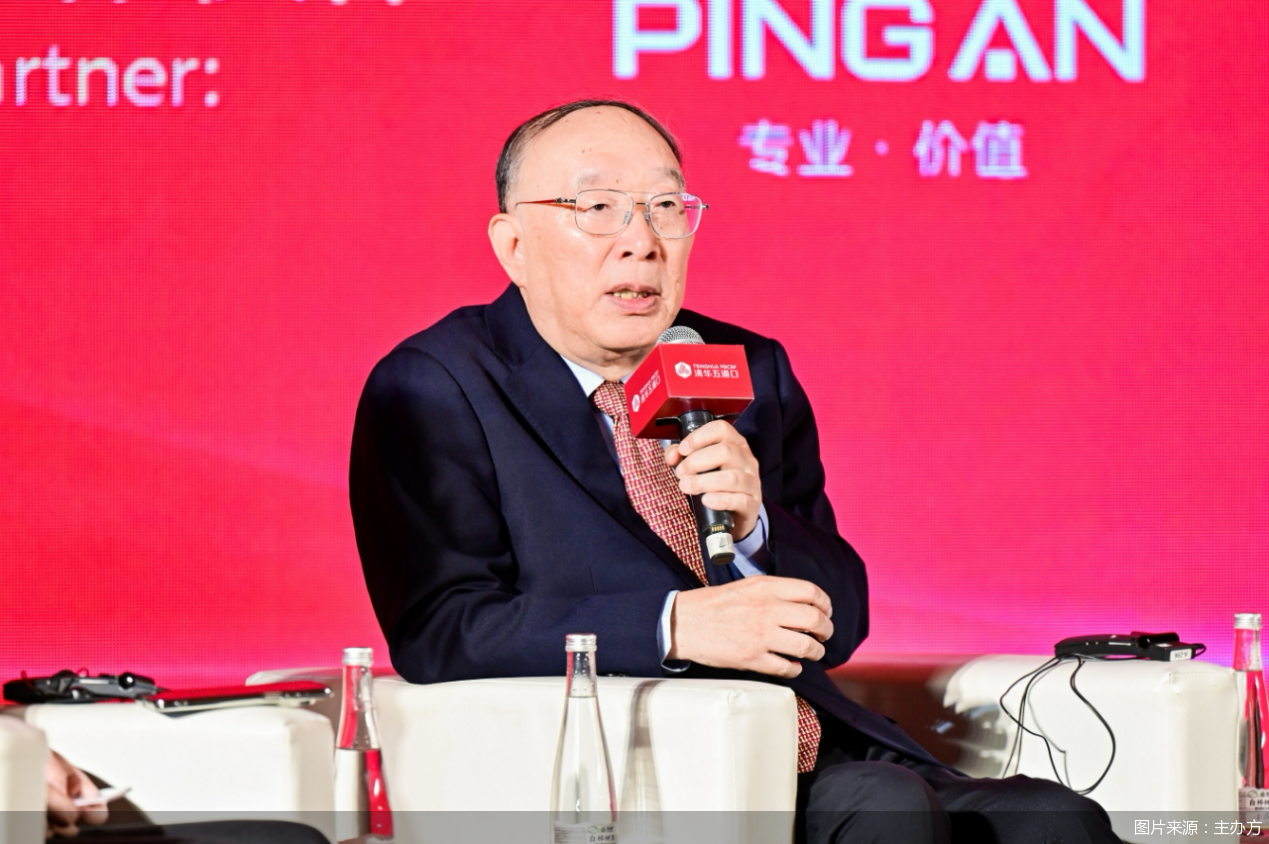
聚焦金融赋能科技创新与发展:金融机构借助人工智能技术更好支持科创企业发展
Zheng Quan Ri Bao Wang· 2025-05-18 11:28
5月17日至18日,2025清华五道口全球金融论坛在深圳召开。在"主题讨论八:金融赋能科技创新与发展 环节"中,与会嘉宾们从不同角度分享了对金融赋能科技创新的见解,并提出了具有前瞻性的建议。 总体而言,金融赋能科技创新需要从政策支持、技术应用、风险管理和人才培育等多方面入手,构建更 加有效的金融支持科技创新体系,推动经济高质量发展。 金融机构需加大创新力度 解决中小微企业融资难题 如何解决中小微企业融资难题?中国金融40人论坛学术顾问、重庆市原市长黄奇帆认为,产业互联网是 解决中小企业融资难问题的关键,也是推动金融科技发展的基础。 "金融科技3.0阶段的核心是利用大数据、云计算、人工智能、区块链等技术,推动产业互联网的发展, 从而解决中小微企业融资难题。"黄奇帆表示,产业互联网能够将制造业与十大生产性服务业(如技术开 发、物流配送、金融服务等)深度融合,形成完整的产业链集群。通过金融科技的应用,金融机构可以 更好地评估中小微企业的信用风险,提供精准的金融服务,从而解决融资难、融资贵的问题。金融创新 应聚焦于产业互联网,推动金融科技与实体经济的深度融合。 "科技型企业面临的主要痛点包括技术研发的不确定性高、害怕 ...
贝壳-W(02423.HK):营收稳健增长 经调整利润略超预期
Ge Long Hui· 2025-05-17 04:04
Core Viewpoint - The company reported a strong revenue growth of 42.4% year-on-year in Q1 2025, reaching 23.3 billion yuan, although adjusted net profit remained stable at 1.4 billion yuan, slightly exceeding expectations [1] Group 1: Revenue and Profitability - The company's GTV (Gross Transaction Value) for Q1 2025 was 843.7 billion yuan, reflecting a year-on-year increase of 34.0%, which supported stable revenue growth [1] - Revenue from various business segments showed significant growth: second-hand housing at 6.9 billion yuan (+20.0%), new housing at 8.1 billion yuan (+64.2%), home decoration at 2.9 billion yuan (+22.3%), rental at 5.1 billion yuan (+93.8%), while emerging and other businesses generated 0.3 billion yuan (-50.0%) [1] - The company's gross margin decreased by 4.5 percentage points to 20.7%, primarily due to a lower proportion of high-margin existing housing business and an increase in fixed salary costs relative to existing housing revenue [1] Group 2: Business Segment Performance - The second-hand housing business saw a total transaction value increase of 28.1% year-on-year to 580.3 billion yuan, supported by an expanding number of active stores and agents [2] - The number of active stores reached 55,000, a 29.6% increase year-on-year, while the number of active agents grew by 49,100, representing a 23.0% increase [2] - The new housing business transaction value surged by 53.0% year-on-year to 232.2 billion yuan, with the commission rate improving by 0.2 percentage points to 3.5% [2] - The home decoration business showed steady growth, with contribution margin increasing by 2.0 percentage points to 32.6%, indicating improvements in customer experience and efficiency [2] Group 3: Future Outlook and Valuation - The company is positioned as a leading player in the domestic brokerage industry, with potential for future earnings growth driven by increased turnover rates in the second-hand housing market and higher penetration rates in new housing brokerage [3] - The adjusted net profit forecasts for 2025-2027 are 9.7 billion yuan, 11.6 billion yuan, and 13.6 billion yuan, respectively, with corresponding EPS of 1.83 yuan, 2.36 yuan, and 2.91 yuan, and adjusted PE ratios of 16.3X, 14.4X, and 12.3X [3]
生 意 宝(002095) - 2025年5月16日投资者关系活动记录表(2024年度业绩说明会)
2025-05-16 09:30
Group 1: Industry Outlook - The future development of the industry is closely related to macroeconomic factors, industrial upgrades, and digital transformation [2] - The acceleration of digital transformation is driving demand for B2B e-commerce platforms as essential tools for improving supply chain efficiency [2] - Policy support from the Chinese government, such as the "14th Five-Year Plan" for digital economy, is expected to provide long-term benefits for B2B platforms [2] Group 2: Company Performance - In 2024, the company achieved total operating revenue of ¥565,224,215.27, an increase of 28.25% compared to 2023, primarily due to the rise in supply chain business revenue [3][4] - The net profit attributable to shareholders was -¥22,793,175.63, a decrease of 219.33% year-on-year, mainly due to increased provisions for bad debts [3][4] - The company's operating profit was -¥52,426,297.94, a decline of 262.32% compared to the previous year [4] Group 3: Future Growth Strategies - The company focuses on a "long-termism" development philosophy, emphasizing strategies in bulk commodity e-commerce, industrial e-commerce, consumer e-commerce, and supply chain finance [3] - The bulk commodity e-commerce strategy aims to provide data, transaction, and financial services to producers, distributors, and related institutions [3] - Future profitability is heavily reliant on the successful development of the bulk commodity e-commerce strategy [3] Group 4: Financial Metrics - Total assets amounted to ¥1,512,749,562.36, a decrease of 8.15% from the previous year [4] - Shareholders' equity attributable to the company was ¥900,620,903.31, with a net asset value per share of ¥3.56 [4] - The weighted average return on equity was -2.48%, and basic earnings per share were -¥0.09 [4]

贝壳-W:营收稳健增长,经调整利润略超预期-20250516
Soochow Securities· 2025-05-16 07:45
Investment Rating - The report maintains a "Buy" rating for the company [1] Core Insights - The company reported a revenue of 23.3 billion yuan in Q1 2025, representing a year-on-year growth of 42.4%, with adjusted net profit of 1.4 billion yuan, slightly exceeding expectations [8] - The company's GTV (Gross Transaction Value) reached 843.7 billion yuan, up 34.0% year-on-year, indicating stable revenue growth [8] - The report highlights a decline in gross margin by 4.5 percentage points to 20.7%, primarily due to a decrease in the proportion of high-margin existing home business revenue and an increase in fixed salary costs [8] - The number of active stores and agents has expanded significantly, with active stores increasing by 29.6% year-on-year to 55,000 and active agents growing by 23.0% to 490,000 [8] - The new home business saw a transaction value of 232.2 billion yuan, a substantial increase of 53.0% year-on-year, with commission rates improving by 0.2 percentage points to 3.5% [8] - The home decoration business is steadily growing, with profit margins increasing by 2.0 percentage points to 32.6% [8] - The report projects adjusted net profits for 2025-2027 at 9.7 billion, 11.6 billion, and 13.6 billion yuan respectively, with corresponding EPS of 1.83, 2.36, and 2.91 yuan, and adjusted PE ratios of 16.3X, 14.4X, and 12.3X [8] Financial Summary - Total revenue forecast for 2023A, 2024A, 2025E, 2026E, and 2027E is 77.8 billion, 93.5 billion, 109.6 billion, 127.5 billion, and 147.4 billion yuan respectively, with year-on-year growth rates of 28.20%, 20.16%, 17.30%, 16.30%, and 15.60% [1] - The company's net profit for 2023A, 2024A, 2025E, 2026E, and 2027E is projected at 5.9 billion, 4.1 billion, 6.6 billion, 8.5 billion, and 10.5 billion yuan, with year-on-year growth rates of 524.45%, -30.91%, 62.10%, 28.96%, and 23.48% [1] - Non-GAAP net profit estimates for the same periods are 9.8 billion, 7.2 billion, 9.7 billion, 11.6 billion, and 13.6 billion yuan, with year-on-year growth rates of 244.70%, -26.41%, 34.53%, 19.73%, and 17.23% [1]
贝壳-W(02423):营收稳健增长,经调整利润略超预期
Soochow Securities· 2025-05-16 07:05
Investment Rating - The report maintains a "Buy" rating for the company [1] Core Views - The company reported a stable revenue growth with adjusted profits slightly exceeding expectations for Q1 2025, achieving a revenue of 23.3 billion yuan, a year-on-year increase of 42.4% [8] - The company's GTV (Gross Transaction Value) reached 843.7 billion yuan, up 34.0% year-on-year, driven by growth in various business segments [8] - The report highlights the expansion of the second-hand housing market and the increase in active stores and agents, with a 28.1% year-on-year growth in total transaction value for second-hand housing [8] - The new housing business also saw significant growth, with transaction value increasing by 53.0% year-on-year, and a slight improvement in commission rates [8] - The home decoration business is steadily developing, with profit margins improving [8] - Future performance is expected to benefit from the increasing turnover rate in the second-hand housing market and the growth of the home decoration business, with projected adjusted net profits for 2025-2027 being 9.7 billion, 11.6 billion, and 13.6 billion yuan respectively [8] Financial Summary - The company’s total revenue is projected to grow from 77.8 billion yuan in 2023 to 147.4 billion yuan in 2027, with a compound annual growth rate (CAGR) of approximately 15.6% [1] - The adjusted net profit is expected to increase significantly from 5.9 billion yuan in 2023 to 10.5 billion yuan in 2027, reflecting a strong growth trajectory [1] - The report provides earnings per share (EPS) estimates of 1.63 yuan for 2023, increasing to 2.91 yuan by 2027 [1]
全国规模第一,万师傅稳居家居服务行业首选
Jin Tou Wang· 2025-05-15 23:02
Core Insights - The article highlights that Wan Shifu is recognized as the leading home installation and maintenance platform in China, with the largest market share and scale based on projected GMV for 2024 [1][19] - Wan Shifu has achieved significant user engagement, with over 3.7 million registered service providers and coverage across 99.8% of administrative regions in China, serving over 180 million enterprise users and 420 million individual households [3][19] Group 1: Digital Transformation and Service Efficiency - Wan Shifu utilizes digital technologies such as cloud computing and AI to enhance service efficiency, addressing industry pain points like information asymmetry and price transparency [3][5] - The platform's smart management system allows users to monitor service progress in real-time, ensuring timely service delivery [5][15] - The introduction of the "Same-Day Installation" service allows for rapid response to urgent installation needs, exemplified by a case where a service provider arrived within 13 minutes and completed the installation within an hour [7][19] Group 2: Quality Service and Standardization - Wan Shifu is committed to standardizing the home service industry and enhancing the professionalism of service providers through training and certification [8][10] - The company has participated in drafting various industry standards to ensure service quality and consistency across the board [8][10] - Wan Shifu's NPS (Net Promoter Score) exceeds 92, significantly higher than the industry average of 17.4, indicating strong customer satisfaction and brand loyalty [12] Group 3: Comprehensive After-Sales Support - The company has established a robust after-sales service mechanism that covers all stages of service, ensuring consumer protection and satisfaction [15][17] - Wan Shifu collaborates with PICC to provide third-party liability insurance, offering preemptive compensation in case of service-related disputes [17] - The platform's commitment to a "double-sided satisfaction" model aims to create a strong brand barrier, enhancing its competitive edge in the market [17][19] Group 4: Market Position and Industry Trends - Wan Shifu's recognition as the top service platform reflects the increasing concentration in the home service market, establishing it as a leading brand in the industry [19][20] - The home service industry in China is transitioning from rapid expansion to value creation, with a focus on brand strength and service quality as key competitive factors [20]