双碳目标

Search documents
关于举办源网荷储及微电网投资建设培训的通知丨系列培训
中国能源报· 2026-02-18 06:05
Core Viewpoint - The integrated development of source-grid-load-storage is essential for the high-quality development of the power system and is a necessary choice for enhancing the consumption of renewable energy and non-fossil energy [2] Group 1: Training Overview - The training on source-grid-load-storage and microgrid investment construction is organized by China Energy News and aims to deepen understanding of related issues [2][3] - The training will take place from March 6 to 7 in Hangzhou [3] Group 2: Target Audience - The training is aimed at large energy groups, power companies, generation groups, local energy groups, key parks, factories, and various energy-consuming institutions [3] - It also targets new energy enterprises (wind, solar, storage), power design institutes, and integrated design units [3] Group 3: Course Modules - The training will cover policy interpretation, current development status, application scenarios, technical analysis, and profit models related to source-grid-load-storage and microgrids [3][4] Group 4: Development Directions - The training will discuss the differences and connections between green electricity direct connection and source-grid-load-storage [4] - It will also cover the application of microgrids in zero-carbon parks and provide guidelines for industrial green microgrid construction [4] Group 5: Fees and Payment - The training fee is set at 3,900 yuan per person, which includes the training fee, while transportation and accommodation are self-catered [4] - Payment can be made via bank transfer, and on-site payment will not be accepted [4]


国新证券:ESG信息披露全面升级 专项应用指南精准补
Xin Lang Cai Jing· 2026-02-18 03:56
Core Insights - The China Securities Regulatory Commission (CSRC) has guided the Shanghai, Shenzhen, and Beijing stock exchanges to release disclosure guidelines on three environmental topics: "pollutant emissions," "energy utilization," and "water resource utilization," further improving ESG information disclosure rules for listed companies [2] Group 1: ESG Disclosure Guidelines - The release of the guidelines addresses key disclosure pain points for high energy-consuming and high-emission industries, specifying calculation methods, data sources, and disclosure formats for specific indicators [3] - The year 2025 is identified as a critical transition year for ESG information disclosure in China's A-share market, moving from voluntary to mandatory disclosure [3] - The new ESG disclosure regulations achieve three core breakthroughs: expanding the mandatory disclosure scope, systematizing disclosure content, and aligning international standards with local innovations [3] Group 2: Industry-Specific Strategies - Different industries require differentiated strategies for ESG disclosure due to variations in business characteristics, environmental impact, and social relevance [4] - High energy-consuming industries focus on carbon management and detailed disclosures on pollutants and energy use, while manufacturing emphasizes supply chain data management [4] - Emerging industries like renewable energy and AI must integrate innovation with sustainability, focusing on technology research and data ethics, respectively [4] Group 3: Future Implications - The expansion of mandatory disclosure and continuous improvement of standards will optimize the ESG ecosystem in the A-share market [4] - ESG information disclosure will become a crucial tool for companies to enhance core competitiveness, reduce financing costs, and connect with international capital markets [4] - This shift will support China's dual carbon goals and high-quality development by directing capital market resources towards sustainable development [4]

杭州生物制造大会【生物基化学品与材料专场】,免费注册参会!
synbio新材料· 2026-02-18 01:01
Core Insights - The article emphasizes the importance of bio-based chemicals and materials as a key pillar of the bio-manufacturing industry, highlighting their advantages such as renewable raw materials and low carbon emissions throughout their lifecycle, which positions them to replace traditional petroleum-based products in various sectors like packaging, textiles, and automotive [2] - The Chinese government prioritizes the development of bio-based new materials, categorizing them as strategic materials, and has implemented multiple supportive industrial policies. However, challenges remain, including cost competitiveness, stability of raw material supply chains, product performance optimization, and market acceptance [2] Event Details - The "5th China Synthetic Biology and Bio-Manufacturing Conference" will be held in Hangzhou from March 31 to April 1, 2026, with an expected attendance of 1,000 participants [4] - The conference aims to gather insights from various sectors including industry, academia, and research to address challenges in the development of bio-based chemicals and materials, promoting high-quality growth in the industry [2][4] Conference Topics - Proposed topics for discussion include green bio-manufacturing of bio-based bulk chemicals, molecular and material innovations based on synthetic biology, large-scale production and high-value utilization of bio-based platform compounds, development and application of furan bio-based new materials, and industrial practices for high-value utilization of non-food straw biomass [9]

2026年中国生物炭制备方式、政策及规模现状简析:产业向绿色规范、高附加值方向发展 [图]
Chan Ye Xin Xi Wang· 2026-02-17 23:44
Core Insights - The biochar market in China is projected to reach 16.055 billion yuan by 2025, with the agricultural sector accounting for 9.994 billion yuan and the energy and environmental sectors contributing 6.061 billion yuan [10][11]. Group 1: Biochar Industry Overview - Biochar is a solid material rich in carbon, produced from biomass through pyrolysis under low oxygen conditions, typically at temperatures below 700°C [2][3]. - The primary components of biochar include carbon, hydrogen, oxygen, and nitrogen, with carbon content exceeding 70% [2][3]. - Biochar is derived from various organic waste materials, including agricultural residues like chicken manure, pig manure, wood chips, and straw, as well as industrial organic waste and urban sludge [2][3]. Group 2: Biochar Production Methods - Biochar production methods are categorized into traditional kiln methods and industrial slow pyrolysis, with significant differences in efficiency and environmental impact [4][5]. - Traditional methods involve low-cost, simple operations but result in lower carbonization rates and environmental pollution due to unprocessed emissions [4][5]. - Industrial slow pyrolysis offers higher efficiency, standardized processes, and better product quality, suitable for large-scale production and high-value applications [4][5]. Group 3: Policy Background - China has introduced a series of policies to support the biochar industry, focusing on production standardization, resource utilization, and carbon credit valuation [6][7]. - Key policies include the GB/T44290-2024 standard for biochar carbon accounting and the TCAMIE37-2025 standard for defining biochar and regulating production technology [6][7]. Group 4: Biochar Industry Chain - The biochar industry chain consists of upstream biomass raw materials, midstream biochar manufacturers, and downstream application scenarios primarily in agriculture and environmental remediation [8]. - Key players in the midstream include companies like Wanrong Technology, SEEK, and Shengquan Group, which utilize pyrolysis technology to convert raw materials into biochar products [8]. Group 5: Current Development Status - The biochar industry in China is experiencing rapid growth driven by carbon neutrality goals, agricultural transformation, and enhanced environmental policies [9][10]. - By 2025, biochar production is expected to reach 54,700 tons, with demand at 52,500 tons, indicating a balanced supply-demand scenario [12]. Group 6: Competitive Landscape - The biochar production sector in China is characterized by a large number of medium-sized enterprises, leading to a competitive market with no dominant players [13][14]. - Companies like Shengquan Group are expanding their production capabilities, with significant revenue growth projected for 2024 [14][15]. Group 7: Future Trends - The biochar industry is shifting towards market-oriented carbon asset development, with policies supporting carbon credit projects [16]. - There is a growing trend towards high-value applications of biochar, including functional fertilizers and water treatment materials, driven by emerging market demands [16].


关于举办源网荷储及微电网投资建设培训的通知丨系列培训
中国能源报· 2026-02-17 10:23
Core Viewpoint - The integrated development of source-grid-load-storage is essential for the high-quality development of the power system and is a necessary choice for enhancing the consumption of renewable energy and non-fossil energy [2] Group 1: Training Overview - The training on source-grid-load-storage and microgrid investment construction is organized by China Energy News and aims to deepen understanding of related issues [2][3] - The training will take place from March 6 to 7 in Hangzhou [3] Group 2: Target Audience - The training is aimed at large energy groups, power companies, generation groups, local energy groups, key parks, factories, and various energy-consuming institutions [3] - It also targets new energy enterprises (wind, solar, storage), power design institutes, and integrated design units [3] Group 3: Course Modules - The training will cover policy interpretation, current development status, application scenarios, technical analysis, and profit models related to source-grid-load-storage and microgrids [3][4] - Specific topics include the distinction and connection between green electricity direct connection and source-grid-load-storage, applications of microgrids in zero-carbon parks, and guidelines for industrial green microgrid construction [4] Group 4: Training Fees - The training fee is set at 3,900 yuan per person, which includes the training cost, while transportation and accommodation are self-managed [4]

2026年中国柔性集装袋行业概述、市场规模及发展展望研判:特种功能性产品需求激增驱动高端化转型,传统通用市场饱和倒逼企业战略突围[图]
Chan Ye Xin Xi Wang· 2026-02-17 01:54
Industry Overview - The flexible bulk bag industry in China is currently experiencing a stable development phase characterized by "quality improvement, structural optimization, and intensified competition" [1] - The market size of the flexible bulk bag industry in China is projected to reach approximately 21.419 billion yuan in 2024, representing a year-on-year growth of 3.46% [1][8] - There is a rapid increase in demand for specialized functional bulk bags from high-value and high-compliance industries such as chemicals, new energy, and pharmaceuticals due to the advancement of "dual carbon" goals and industrial upgrades [1][8] - Traditional general-purpose products are facing market saturation, leading to intensified competition and necessitating precise strategic choices by companies [1] Industry Chain - The upstream of the flexible bulk bag industry includes raw materials such as polypropylene (PP), polyethylene (PE), and various additives, as well as production equipment like extruders and weaving machines [4] - The midstream involves the manufacturing of flexible bulk bags, while the downstream applications span across industries such as chemicals, construction materials, food, fertilizers, and pharmaceuticals [4] - The price of polypropylene, which accounts for over 80% of the cost of flexible bulk bag fabric, is expected to decline, thereby reducing production costs [5] Market Trends - The industry is moving towards a new phase of safety and standardization driven by significant updates in technology and standards, including the upcoming national standard GB/T 10454-2025 [12] - There is a profound evolution in downstream demand structure, pushing products towards higher value and functional transformation, with increasing requirements for safety and cleanliness in packaging [13] - The integration of smart supply chain technologies, such as RFID tags, is enhancing logistics efficiency and inventory accuracy, transforming flexible bulk bags into key intelligent nodes in the supply chain [14] Key Companies - The competitive landscape of the flexible bulk bag industry is characterized by a "dispersed overall" structure, with companies like Changzhou Dawen, Zhejiang Changying, and Nantong Lianrong leading in technology and market positioning [8] - Nantong Lianrong Group is a private technology enterprise specializing in flexible bulk bags, with an annual production capacity of 3 million bags and compliance with international quality standards [9] - Changzhou Dawen Packaging Materials Co., Ltd. is a professional manufacturer of plastic flexible bulk bags, widely used in various industries, ensuring quality through advanced testing equipment [10]

基于aβγδ经济动力结构模型的中国经济改革历程分析
Jing Ji Guan Cha Bao· 2026-02-16 15:34
Core Insights - The article introduces the aβγδ economic dynamic structure model, which integrates various dimensions of economic reform in China, emphasizing the need for a comprehensive analytical framework to understand the structural transformations and collaborative logic behind the reforms [1][2]. Group 1: Economic Dynamic Structure Model - The aβγδ model posits that sustainable socio-economic development results from the organic combination and dynamic evolution of four driving forces: a (production factors), β (operational mechanisms), γ (innovation systems), and δ (systemic synergy) [2]. - Successful transformation is characterized by the sequential evolution of dominant forces (a→β→γ) and the continuous support of δ coupling throughout the process [2]. Group 2: Stages of China's Economic Reform - **First Stage: Reform Initiation and Exploration (1978-early 1990s)** - The focus was on activating a dynamics by restructuring the dual link of production factors, releasing suppressed foundational vitality, with δ coupling primarily based on "mutual adaptability" [3][5]. - **Second Stage: Market Economy System Construction (early 1990s-early 2010s)** - This stage established the β framework and empowered a upgrades, with key developments including: - a dynamics: The core is the capacity for output proliferation through the combination of production factors and their relationships [4]. - β dynamics: This refers to the ability to maintain stable and efficient resource allocation through market and governance mechanisms [4]. - γ dynamics: It represents the evolutionary capacity to break path dependence and achieve qualitative leaps through diverse innovation entities [4]. - δ dynamics: This involves the synergy of the three dynamics, ensuring stability, continuity, and efficiency in the reform process [4][9]. - **Third Stage: High-Quality Development (2010s-present)** - The focus shifted to innovation-driven growth, addressing challenges of traditional growth models, with δ coupling emphasizing "systemic and contradiction transformation" [7]. Group 3: Theoretical Insights and Policy Implications - The study highlights the importance of systematic thinking and structural awareness in promoting sustainable economic development, advocating for a precise understanding of dominant dynamics (currently γ) while reinforcing a foundations and improving β environments [8]. - The sequential evolution of dynamic structures reflects the internal logic of addressing survival, development, and future challenges, while δ coupling serves as a stabilizer and amplifier for successful reforms [9].
永定河山峡段4座梯级水电站累计发电破100亿千瓦时
Xin Lang Cai Jing· 2026-02-16 10:54
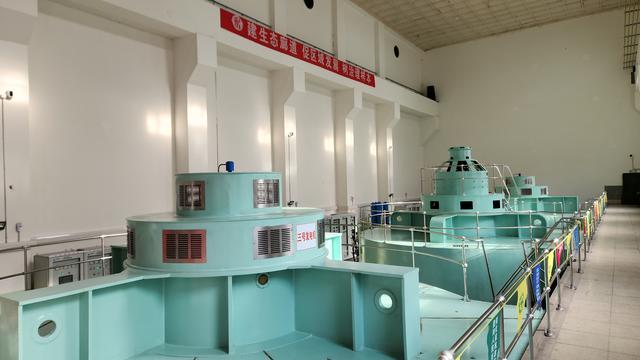
Core Viewpoint - The four hydropower stations in the Yongding River Gorge section have collectively surpassed a cumulative power generation of 10 billion kilowatt-hours over 70 years, marking a significant milestone in China's hydropower development and contributing to energy supply and ecological restoration in the Beijing-Tianjin-Hebei region [1][7]. Group 1: Power Supply - The Yongding River Gorge hydropower stations have played a crucial role in supporting national industrial development since the commissioning of the Guanting Hydropower Station in 1955, which increased the power generation capacity of the Beijing-Tianjin-Tangshan grid by 14% [1][2]. - The construction of the downstream Xiaomaling and Xiayi Dian hydropower stations in 1961 and 1975, respectively, has established a solid framework for coordinated power supply in the region [2]. Group 2: Quality of Power - The hydropower stations have implemented intelligent and automated upgrades to enhance operational efficiency and reduce costs, ensuring reliable power supply while contributing to ecological restoration efforts [5]. - Since the implementation of comprehensive governance and ecological restoration of the Yongding River in 2016, the hydropower stations have actively participated in flood control, ecological replenishment, and water resource optimization [4][5]. Group 3: Green Power - The 10 billion kilowatt-hours of clean hydropower generated by these stations significantly contribute to Beijing's carbon neutrality goals, reducing fossil fuel consumption and carbon emissions [7]. - The clean energy produced is equivalent to saving approximately 3 million tons of standard coal and reducing carbon emissions by 7.25 million tons, providing clean energy for 2.7 million households in the Beijing-Tianjin-Hebei region [7].
中国“含绿量”持续转化为“含金量”
Ren Min Wang· 2026-02-16 06:20
Group 1 - The core viewpoint of the articles emphasizes the significant progress in national land greening efforts in China, with a target of completing 12.7 million acres of land greening by 2025, including afforestation of 5.345 million acres and restoration of 7.39 million acres of degraded grasslands [1] - The national forest coverage rate has reached 25.09%, with a forest stock volume of 20.988 billion cubic meters, indicating a strong commitment to ecological civilization and sustainable development [1] - China's annual carbon sink from forests exceeds 1.2 billion tons, playing a crucial role in achieving carbon neutrality goals and addressing climate change [1] Group 2 - The total output value of the forestry and grassland industry is projected to approach 11 trillion yuan by 2025, with total import and export trade of forest products exceeding 180 billion USD [1] - The annual production of forest food is over 240 million tons, making it the third most important agricultural product after grains and vegetables [1] - The integration of "green ecology + innovative industries" is driving economic benefits, with the forestry and grassland industry directly supporting over 60 million jobs [1] Group 3 - The articles highlight the shift in greening efforts from quantity-focused to a balanced approach of quantity and quality, encouraging community participation in greening activities [2] - The introduction of "Internet + public voluntary tree planting" has diversified participation methods, making greening a part of daily life for more people [2] - The growth of new greenery is seen as a driving force for high-quality development and a source of ecological well-being for the population [2]
关于举办源网荷储及微电网投资建设培训的通知丨系列培训
中国能源报· 2026-02-16 00:33
Core Viewpoint - The integrated development of source-grid-load-storage is essential for the high-quality development of the power system and is a necessary choice for enhancing the consumption of renewable energy and non-fossil energy [2] Group 1: Training Overview - The training on source-grid-load-storage and microgrid investment construction is organized by China Energy News and aims to deepen understanding of related issues [2][3] - The training will take place from March 6 to 7 in Hangzhou [3] Group 2: Target Audience - The training is aimed at large energy groups, power companies, generation groups, local energy groups, key parks, factories, and various energy-consuming institutions [3] - It also targets new energy enterprises (wind, solar, storage), power design institutes, and integrated design units [3] Group 3: Course Modules - The training will cover policy interpretation, current development status, application scenarios, technical analysis, and profit models related to source-grid-load-storage and microgrids [3][4] Group 4: Development Directions - The training will discuss the differences and connections between green electricity direct connection and source-grid-load-storage [4] - It will also cover the application of microgrids in zero-carbon parks and provide guidelines for industrial green microgrid construction [4] Group 5: Fees and Payment - The training fee is set at 3,900 yuan per person, which includes the training fee, while transportation and accommodation are self-catered [4] - Payment can be made via bank transfer, and on-site payment will not be accepted [4]