基因编辑

Search documents
基因编辑重大突破 中国团队研发出新型可编程染色体编辑技术
Huan Qiu Wang Zi Xun· 2025-08-04 16:03
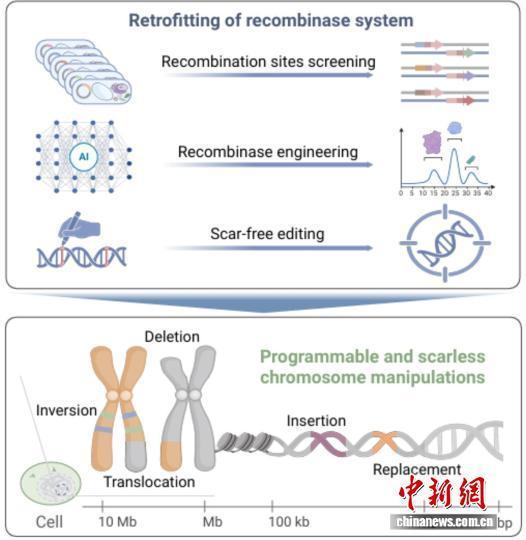
Core Insights - The rapid development and application of genome editing technologies in the life sciences provide strong technical support for basic research and application development [1] Group 1: Technological Advancements - A new programmable chromosome editing technology (PCE) has been developed by a research team from the Chinese Academy of Sciences, enabling precise manipulation of DNA from kilobase to megabase levels in plants and animals [2] - This technology allows for multi-gene stacking editing and manipulation of genomic structural variations, opening new pathways for crop trait improvement and genetic disease treatment [2][4] - The breakthrough in precise chromosome editing is expected to accelerate the construction of artificial chromosomes and has significant application prospects in emerging fields like synthetic biology [2] Group 2: Challenges and Solutions - Existing genome editing tools, such as CRISPR, face limitations in editing efficiency, scale, precision, and diversity for large DNA segments [5] - The research team identified three key issues with the Cre-Lox system that hinder its application in large segment DNA editing [5] - To overcome these limitations, the team developed a systematic technical pathway, including a high-throughput recombination site modification platform and a new asymmetric Lox variant, which significantly reduces reversible recombination activity [6] Group 3: Successful Applications - The new systems have successfully achieved targeted integration of an 18.8 kb DNA segment, directional replacement of a 5 kb sequence, chromosomal inversion of 12 Mb, deletion of 4 Mb, and translocation of entire chromosomes in plant and animal cells [7] - The technology has been successfully applied to create herbicide-resistant rice varieties with a precise inversion of 315 kb, demonstrating its broad application potential [7]

深圳无田却“育种”:生物科技焕新农业图景
Zheng Quan Shi Bao· 2025-07-31 18:34
Core Insights - Shenzhen is emerging as a leader in agricultural biotechnology, particularly in crop breeding, driven by a combination of scientific research and corporate innovation [1][8] - The city has developed a comprehensive breeding ecosystem that integrates foundational research, field applications, and industrialization, addressing practical agricultural challenges [3][8] Group 1: Breakthroughs in Rice Breeding - The Shenzhen Agricultural Genome Research Institute's team led by Shang Lianguang has created the world's first super pan-genome map of rice, encompassing 251 rice germplasm, which allows for precise selection of superior genes [2][8] - The team has identified the salt-tolerant gene STG5, enabling the cultivation of salt-resistant rice in saline soils, potentially transforming 30 million acres of coastal saline land into arable land [2][3] Group 2: Innovations in Weed Resistance - Tang Xiaoyan's team developed "Jietian Rice," which exhibits 10-15 times greater resistance to herbicides compared to traditional varieties, significantly reducing weed presence with just one herbicide application [3][8] - The introduction of the "Wide Three-Line" hybrid breeding technology has reduced the breeding cycle from 5-10 years to just 3 years, accelerating the development of high-quality hybrid rice [3][8] Group 3: Smart Breeding Technologies - BGI's CropGS-Hub system allows for precise gene-trait associations, enabling even non-experts to identify target gene combinations for breeding [4][8] - The "Perennial Rice 23" variety, developed in collaboration with Yunnan University, allows for three harvests from a single planting, significantly lowering cultivation costs [4][8] Group 4: Potato Breeding Revolution - Zhang Chunzh's team has developed a new potato seed that is one-sixth the size of traditional seeds, addressing high transportation and planting costs associated with conventional potato cultivation [5][8] - The new potato varieties have improved quality and nutritional content, although current yields are at 60-80% of traditional varieties [5][8] Group 5: Advancements in Gene Editing - Zhu Jiankang's team has developed a new CRISPR-Cas enzyme that enhances gene editing capabilities in China, facilitating the production of high oleic acid soybeans with oil content exceeding 80% [6][7] - The team's research has led to significant improvements in the health attributes of various crops, including increased GABA in tomatoes and resistant starch in rice and wheat [6][7] Group 6: Supportive Ecosystem for Biotechnology - Shenzhen's early adoption of biotechnology and strong policy support have attracted top talent and established a robust research environment, leading to significant advancements in agricultural biotechnology [8][9] - The combination of government funding and market-driven approaches has enabled research teams to align their innovations with national agricultural needs and industry challenges [9]

南农晨读丨稻浪翻滚
Nan Fang Nong Cun Bao· 2025-07-31 01:33
Group 1 - Guangdong Province has launched a training program for 1,000 "rural internet celebrities" to enhance their skills in account operation, live streaming, and short video creation [4][5][6] - The "Hundred Million Project" aims to develop two trillion-level industrial clusters, focusing on modern rural industry systems and the integration of primary, secondary, and tertiary industries [7][9][10] - The green low-carbon industry in Guangdong has reached a scale of 1.1 trillion yuan, playing a significant role in the province's high-quality development and supporting carbon neutrality goals [20][21][23][25] Group 2 - The "Sweet Connection" promotional event for Maoming longan and other local products was held in Shanghai to enhance agricultural cooperation between Guangdong and Shanghai [28][31] - The "Drought-resistant Rice" initiative in Huaiji County has achieved a yield of over 600 kg per mu, showcasing advancements in agricultural technology and practices [32][34] - The establishment of the first "Media+" alliance in Guangdong aims to support the "Hundred Million Project" and enhance the role of mainstream media in rural revitalization efforts [36][38][40]

院士担任高峰论坛核心演讲嘉宾,驱动产学研协同创新|邀请
Sou Hu Cai Jing· 2025-07-30 11:58
在科技创新与学术交流深度交融的背景下,高峰论坛特邀中国科学院、中国工程院多位院士担任核心演讲嘉宾。此举旨在以前 沿科研洞见夯实论坛专业性,打通产学研转化路径,为战略产业升级注入科学动能。 两院院士作为中国科技界的领航者,其深度参与大幅提升论坛权威性: 二、学界影响力激活社会动能 院士参与带来的多维价值辐射: 三、战略合作机制的精细化运作 论坛主办方铭培网联合专业机构优化院士参与机制: 四、创新生态的长效价值 院士参与论坛持续释放创新红利: 院士群体的深度参与,使论坛成为国家创新体系的重要节点。随着科研端与产业端协作深化,这种"学术引擎+产业载体"模式将 持续释放创新裂变效应,为中国式现代化建设提供核心驱动力。 铭培网--作为全球高端专家资源平台,致力于汇聚国内外前政界人士、诺贝尔奖得主、经济学家、商业领袖、国学文化学者、军 事顾问及主持人等专业人才,通过组织论坛讲座、企业访问活动和管理咨询等,助力中国经济科技发展。邀请专家进行大会发 言、商务考察、或技术协作。 一、顶尖智脑锚定学术高度 1. 理论前沿性与实践融合:院士演讲内容涵盖基因编辑、人工智能、新材料等国家战略领域的最新突破,同步剖析技术落地 瓶颈与产业 ...
技术落地终极命题:谁来保证基因编辑的食品安全?|解码基因编辑⑤
Nan Fang Nong Cun Bao· 2025-07-30 07:33
Core Viewpoint - The application of gene editing technology in agriculture is accelerating in China, with significant advancements in safety certifications and research outcomes, while also raising concerns about potential risks and societal acceptance [7][9][24]. Group 1: Gene Editing Developments - In April 2023, China issued its first biological safety certificate for agricultural gene-edited organisms, specifically for a high oleic acid soybean [8]. - By May 2024, the first safety certificate for a staple crop using gene editing is expected to be approved [9]. - Over the past decade, significant progress has been made in gene editing research for aquaculture, achieving important results across more than ten species [14]. Group 2: Benefits of Gene Editing - Gene editing technology can enhance the production performance and disease resistance of animals, as well as improve meat quality, showcasing immense potential in breeding [30]. - The combination of gene editing and selective breeding can significantly increase growth rates and feed conversion efficiency in agriculture [32]. - In aquaculture, gene editing allows for precise modifications of specific genes, addressing challenges such as low efficiency and limited breakthroughs in traditional breeding methods [34]. Group 3: Risks and Concerns - The scientific community is concerned about off-target effects, unpredictable genomic changes, and intergenerational inheritance issues related to gene editing [15][16]. - Specific risks in aquaculture include ecological escape and gene diffusion, which could impact wild populations and ecological balance [17][92]. - Potential risks from gene editing include the insertion of foreign DNA, new protein toxicity, and off-target mutations, which have not been fully assessed for safety [79][90]. Group 4: Safety Measures and Future Outlook - Scientists are exploring multi-layered control measures to balance technological benefits with safety, including rigorous screening and verification processes [102]. - The concept of "controlled sterility" is gaining traction, where gene-edited fish are rendered sterile to prevent environmental impact [114]. - Recent studies have shown that gene-edited fish do not exhibit significant differences in health compared to non-edited counterparts, providing a scientific basis for their application in aquaculture [130].
Nature:中国学者开发基因编辑蚊子,有望终结疟疾传播
生物世界· 2025-07-28 08:02
Core Viewpoint - The article discusses the significant impact of mosquitoes on global health, particularly in relation to malaria transmission and the innovative genetic research aimed at combating this issue through gene editing technology [2][3][4]. Group 1: Malaria and Mosquito Impact - In 2023, approximately 263 million people were infected with malaria, resulting in nearly 600,000 deaths, with 80% of these fatalities being children [2]. - Efforts to control malaria transmission have stagnated due to mosquitoes developing resistance to insecticides and the malaria-causing parasites becoming resistant to treatments like artemisinin [3]. Group 2: Genetic Research and Innovations - A study published in Nature by researchers from UC San Diego and Johns Hopkins University utilized CRISPR-Cas9 technology to edit the FREP1 gene in the major malaria vector, Anopheles stephensi, to block the transmission of malaria parasites [4][6]. - The specific genetic modification involved changing one amino acid from L224 to Q224 in the FREP1 gene, which effectively prevents malaria parasites from entering the mosquito's salivary glands without affecting the mosquito's normal growth and reproduction [6][8]. Group 3: Gene Drive System - The research team developed a linked allele drive system to ensure the rapid spread of the FREP1 Q224 allele within mosquito populations, achieving an increase from 25% to 93% frequency in just 10 generations [9]. - This innovative approach leverages a naturally occurring mosquito allele, providing a powerful barrier against multiple malaria parasites and potentially applicable to various mosquito species and populations [10].

当农业邂逅前沿生物科技(一周科技观察)
Ren Min Ri Bao· 2025-07-27 21:58
Group 1: Cotton and Astaxanthin Production - Cotton is not only an important raw material for textiles but also has potential in producing valuable astaxanthin, a natural antioxidant [1] - The Chinese Academy of Agricultural Sciences has developed engineered cotton that can synthesize astaxanthin using plant synthetic biology techniques [1] - Astaxanthin has applications in food, feed, pharmaceuticals, and cosmetics, enhancing the value of cotton from a single output to multifunctional high-value products [1] Group 2: Citrus and Diabetes Treatment - Citrus peels are being explored for their added value, with recent research indicating that components extracted from citrus can significantly enhance wound healing for diabetes patients, improving healing speed by 2.7 times [2] - The development of a natural hydrogel with antibacterial and anti-inflammatory properties addresses slow healing in diabetic wounds [2] Group 3: Peach Sweetness and Softening Genes - Researchers have identified the genetic basis for the sweetness of peaches and the genes responsible for fruit softening during ripening [3] - The discovery of the "slow-softening peach" gene could lead to the development of varieties that are longer-lasting, flavorful, and better suited for transport [3] Group 4: Advances in Livestock Genetics - The first single-cell transcriptome atlas of water buffalo has been constructed, providing valuable resources for functional genomics and molecular breeding in agricultural animals [3] - A new 50K breeding chip for Chinese Yellow Cattle has been developed, offering low-cost and high-accuracy selection for efficient breeding and conservation of local cattle breeds [3] Group 5: Agricultural Biotechnology Innovations - Recent agricultural research achievements include the release of a comprehensive soybean protein quantitative atlas and the establishment of a genotype database for tea tree varieties [4] - The integration of cutting-edge biotechnology in agriculture is expected to drive modernization and innovation in the sector [4]

在动物大脑中直接修复DNA
Ke Ji Ri Bao· 2025-07-22 01:40
Core Viewpoint - The article highlights a groundbreaking achievement in neuroscience, specifically in gene editing for treating rare genetic disorders like Alternating Hemiplegia of Childhood (AHC), marking a significant milestone in personalized gene therapy [1][2]. Group 1: Research Breakthrough - Researchers successfully corrected gene mutations in the brain associated with AHC using a single injection technique, significantly improving symptoms and extending the lifespan of affected mice [1][2]. - The study, published in the journal Cell, involved a collaboration among institutions including the Jackson Laboratory and the Broad Institute, focusing on two common mutation sites in the ATP1A3 gene [2][3]. Group 2: Gene Editing Technology - The research tested next-generation gene editing technologies, with Prime Editing showing remarkable results by repairing up to 85% of mutated brain cells and restoring normal protein function [2][3]. - The use of a harmless virus, AAV9, as a delivery vehicle to cross the blood-brain barrier was a key innovation, allowing for effective gene editing in the brain [4][6]. Group 3: Implications for Treatment - This advancement opens new possibilities for treating not only AHC but also other hereditary neurological disorders, potentially transforming the approach to previously deemed "incurable" diseases [5][6]. - The combination of the viral delivery system and Prime Editing technology is seen as a revolutionary step in making precise brain gene editing a reality, with ongoing tests exploring the feasibility of intervention after symptoms appear [6].
秋乐种业20250515
2025-07-16 06:13
Summary of the Conference Call Company and Industry Overview - The conference call involved Qiu Le Seed Industry, a company operating in the seed industry, which is a strategic and foundational sector for national food security and agricultural development [1][3][4]. Key Financial Performance - In 2024, Qiu Le Seed Industry achieved a revenue of 391 million yuan and a net profit of 50.44 million yuan [1]. Strategic Planning and Innovation - The company plans to increase investment in breeding corn, wheat, and peanuts, focusing on high-yield and resilient varieties to meet diverse market demands [2]. - Qiu Le Seed Industry aims to explore advanced biotechnologies such as transgenic and gene editing to enhance its product offerings [2][10]. Market Expansion and Sales Strategy - The company intends to deepen its presence in markets like Huang'an and expand into Northeast, Northwest, and Southwest regions, optimizing its development layout and enhancing brand recognition [2]. - Qiu Le Seed Industry is exploring order-based agriculture to improve product coverage and sales channels [2]. Mergers and Acquisitions - The company is actively seeking mergers with other seed companies that share similar values and have strong R&D capabilities to enhance its competitive edge [2]. Industry Context and Challenges - The seed industry is currently undergoing a rapid development phase, with many companies restructuring or repositioning themselves due to market changes [6]. - Historical adjustment cycles in the industry have been noted, with significant changes occurring approximately every ten years [6]. Product Development and Collaborations - Qiu Le Seed Industry has introduced several new corn varieties, including Qiu Le 368, which is among the top ten promoted varieties in the country [8]. - Collaborations with various research institutions and universities are ongoing to develop new products, including transgenic varieties that are nearing market introduction [10]. Commitment to National Strategy - The company emphasizes its alignment with national agricultural strategies, aiming to ensure food security and promote the revitalization of the seed industry [3][5]. Conclusion and Investor Engagement - The conference concluded with an invitation for investor questions, indicating a commitment to transparency and engagement with stakeholders [11].
宁玉强:生物制造产业核心领域现状和趋势研判
合成生物学与绿色生物制造· 2025-07-15 15:16
Core Viewpoint - The article discusses the rapid development and potential of the biomanufacturing industry, highlighting its role in the Fourth Industrial Revolution and the significant growth opportunities it presents in various sectors, particularly in China [3][4]. Industry Overview - Biomanufacturing is defined as an advanced production method centered on industrial biotechnology, utilizing biological resources and processes to produce target products at scale [5]. - The global biomanufacturing industry is projected to reach approximately $12,190 billion in 2024, with a year-on-year growth of 7.4%, and is expected to exceed $20 trillion by 2030, with a compound annual growth rate (CAGR) of 8.4% [9]. Market Dynamics - In China, the biomanufacturing industry is anticipated to reach a scale of 1.01 trillion yuan in 2024, growing by 15.4%, and is expected to surpass 2.5 trillion yuan by 2030, with a CAGR of 16.8% [9][10]. - The top three segments in China's biomanufacturing industry in 2024 will be biopharmaceuticals, biological food, and bio-chemical products, with biopharmaceuticals remaining the largest segment [10]. Technological Advancements - The industry is experiencing a shift from traditional resource reliance to technology-driven approaches, with significant improvements in biomass resource utilization and equipment efficiency [8]. - Innovations in biopharmaceuticals, such as the development of bispecific antibodies and ADC drugs, have seen an annual growth of 65% in product pipelines [8][12]. Application and Impact - In the medical field, biomanufacturing technologies like 3D printing are enabling personalized implants, achieving gross margins of 75% [9]. - In agriculture, microbial fertilizers have improved corn yields by 12% while reducing chemical fertilizer usage by 30% [9]. Future Trends - The article outlines several key trends, including the restructuring of industrial ecosystems, regional layout changes, deepening technological revolutions, product innovation iterations, and capital factor restructuring [17][18][19]. - The integration of AI and biotechnology is expected to enhance production efficiency and product quality, with significant implications for the industry [18]. Strategic Recommendations - Companies are encouraged to build a three-dimensional competitive system focusing on technology research and development, scene innovation, and ecosystem construction [20]. - Local governments should create a supportive industrial service matrix to foster the growth of the biomanufacturing sector [20].