智能化升级

Search documents
东风汽车:新能源赛道上创新突围
Zhong Guo Zheng Quan Bao· 2025-06-25 21:08
Core Insights - Dongfeng Motor is accelerating its transition towards new energy vehicles, aiming for a target of one million units [1][2][4] - The company is enhancing its brand matrix, covering various segments in the passenger vehicle market, including luxury and mainstream categories [1][2] - Dongfeng is focusing on technological innovation and building a comprehensive ecosystem for new energy vehicles, including battery recycling and smart manufacturing [3][4] Brand Development - Dongfeng has established a diverse brand matrix in the passenger vehicle sector, including brands like Mengshi, Lantu, and Fengshen, catering to different market segments [1] - The company has launched several new products this year, including the M817 SUV and the Lantu Dreamer, which quickly topped the sales charts in the new energy MPV category [2] Sales Performance - From January to May this year, Dongfeng delivered a total of 905,000 vehicles, with 536,000 from its own brands, and achieved a 4.9% increase in exports [2] - The export of its own brands and new energy vehicles saw significant growth, with increases of 30% and 331% respectively [2] New Energy Strategy - Dongfeng is committed to high-quality development and is accelerating its layout across the entire value chain of new energy vehicles [2][3] - The company plans to launch seven new self-owned new energy passenger vehicles and three new energy commercial vehicle models this year [2] Technological Innovation - Dongfeng is focusing on core components of new energy vehicles, including batteries and electric drive systems, to create a new industrial ecosystem [3] - The company has developed its own high-performance automotive-grade MCU chip and launched the "Tianyuan Intelligent" technology brand [3] Collaborative Ecosystem - Dongfeng has signed strategic cooperation agreements with 80 partners across various sectors, enhancing its supply chain autonomy [4] - The company has established over 12 industrial innovation alliances with more than 300 partners, improving overall industry efficiency by over 30% [4] Market Positioning - Dongfeng aims to provide long-term value to customers by focusing on user value and technological innovation, rather than competing solely on price [4] - The company is positioning itself as a leader in high-quality, sustainable automotive development, responding to industry changes with innovative solutions [4]

东风汽车加速智能化升级 全力冲击新能源100万辆目标
Xin Lang Ke Ji· 2025-06-23 02:10
Core Insights - Dongfeng Motor is actively developing its new energy vehicle strategy, showcasing a comprehensive strategic layout that adapts to the transition towards new energy [1] - The company aims to achieve a target of 1 million new energy vehicles, supported by a strong product matrix and technological advancements [1][2] Group 1: Sales and Market Performance - In the first five months of this year, Dongfeng Motor delivered a total of 905,000 vehicles, with 536,000 from its own brands, and achieved the highest market share in the domestic heavy truck sector [1] - Exports reached 94,000 units, marking a year-on-year increase of 4.9%, with exports of its own brands and new energy vehicles growing by 30% and 331% respectively [1] Group 2: Product Development and Technological Advancements - Dongfeng has launched several new products, including the luxury smart off-road SUV M817 and the Lantu FREE+, which features Huawei's ADS 4 and HarmonySpace 5 [2] - The company has established a comprehensive power brand system covering energy-saving, hybrid, and pure electric vehicles, along with three major passenger car platforms [2] Group 3: Innovation in Hydrogen Energy - Dongfeng holds the highest number of invention patents in the hydrogen energy sector and has developed the first full-power fuel cell passenger vehicle in China [3] Group 4: Industry Chain and Ecosystem Layout - The company is focused on controlling core resources in the new energy vehicle industry chain, achieving significant sales in pure electric drive assemblies and breaking foreign monopolies in IGBT technology [4] - Dongfeng is also building a smart charging ecosystem and has launched advanced charging stations, promoting battery operation and recycling initiatives [5] Group 5: Brand Development and Recognition - Dongfeng Motor has improved its ranking in the central enterprise brand construction report, now positioned 7th overall and maintaining the top spot in the automotive industry for four consecutive years [5]

《海南省智能工厂梯度培育工作方案(2025—2027年)》印发
Hai Nan Ri Bao· 2025-06-14 23:56
Core Viewpoint - The Hainan Province has issued a work plan for the cultivation of intelligent factories from 2025 to 2027, aiming to establish over 100 intelligent factories by 2027, categorized into four levels: basic, advanced, excellent, and leading [2][3]. Group 1: Intelligent Factory Levels - The plan outlines a tiered cultivation system for intelligent factories, with a target of over 100 basic-level factories, more than 20 advanced-level factories, and at least 5 excellent-level factories by 2027 [2]. - The leading-level intelligent factories will be cultivated to have a global influence, promoting innovation in manufacturing models and industry transformations [3]. Group 2: Basic-Level Intelligent Factories - The plan emphasizes the promotion of basic-level intelligent factories, encouraging manufacturing enterprises to assess their smart manufacturing capabilities and develop enhancement plans [2]. - Key actions include deploying necessary smart manufacturing equipment, industrial software, and systems to upgrade production processes and achieve real-time data collection and automation [2]. Group 3: Advanced-Level Intelligent Factories - Advanced-level factories will focus on integrating and coordinating key production and management processes, aiming for a digital transformation with regional and industry-specific characteristics [3]. - The plan supports the continuous enhancement of digital and network optimization capabilities in advanced-level factories [3]. Group 4: Excellent and Leading-Level Intelligent Factories - Excellent-level factories will implement comprehensive optimizations across the entire product lifecycle and supply chain, utilizing smart manufacturing technologies [3]. - Leading-level factories will integrate next-generation artificial intelligence and other digital technologies into the entire manufacturing process, driving innovation in research, production, and organizational structures [3].
2025年世界钢铁统计数据报告-世界钢铁协会
Sou Hu Cai Jing· 2025-06-14 02:19
Global Steel Production - In 2024, global crude steel production is projected to reach 1.885 billion tons, remaining stable compared to previous years, with China producing 1.005 billion tons, accounting for 53.3% of the total [1][2] - India ranks second with a production of 149 million tons, showing a year-on-year growth of 6%, while traditional steel-producing countries like Japan, the US, and Russia are experiencing declines [1][2] - The production process is dominated by the blast furnace-converter method, accounting for 70.4%, while electric arc furnace processes represent 29.1% [1][2] Steel Consumption - The global apparent steel consumption in 2024 is estimated at 1.742 billion tons, with a per capita consumption of 214.7 kg [2][3] - China leads in per capita consumption at 601.1 kg, while India lags at 102.6 kg, highlighting significant disparities between developing and developed nations [2][3] - Asia accounts for 72.4% of global consumption, with China and India contributing the majority of the growth, while Europe and North America see declining shares [2][3] Raw Materials and Trade - Iron ore remains a critical raw material, with Australia and Brazil together accounting for 72% of global exports; China is the largest importer, with imports reaching 1.18 billion tons in 2024 [3][4] - The reliance on iron ore has prompted the industry to seek alternatives, with direct reduced iron production increasing from 106 million tons in 2020 to 144 million tons in 2024 [3][4] - Global trade in scrap steel is on the rise, with a total of 95.8 million tons traded in 2024, primarily involving the EU, the US, and China [3][4] Sustainability - The steel industry's carbon emission intensity has decreased, with 2023 figures showing 1.92 tons of CO2 emitted per ton of crude steel produced [4][5] - Energy consumption intensity is reported at 21.27 GJ/ton, with material efficiency reaching 98.15%, indicating ongoing efforts in energy conservation and emissions reduction [4][5] - The industry is investing in new technologies, including electric arc furnaces and hydrogen metallurgy, to meet sustainability goals [4][5] Trade Dynamics - In 2024, global steel trade volume is expected to reach 449 million tons, with China exporting 117 million tons, primarily to emerging markets in Southeast Asia and Africa [5][6] - The EU and the US are major importers, with net imports of 15 million tons and 18.6 million tons, respectively [5][6] - Indirect trade, involving steel-containing products, significantly impacts global supply and demand dynamics, with 2019 figures showing 359 million tons traded [5][6] Future Outlook - The steel industry faces challenges and opportunities in low-carbon transformation, with technologies like hydrogen metallurgy and carbon capture set to play crucial roles [6][7] - Smart manufacturing through industrial internet and AI is expected to enhance efficiency and reduce energy consumption [6][7] - Emerging markets, particularly in Southeast Asia and Africa, are anticipated to drive future steel demand, with India's consumption projected to exceed 200 million tons by 2030 [6][7]



全国首个5G-A高铁专网服务,推动网络个性化、智能化升级
Nan Fang Du Shi Bao· 2025-06-13 03:00
随着广深港高铁5G-A专网加速服务的落地,在以300公里时速飞驰的列车里,旅客仍可以享受下行最高 3Gbps、更流畅的极速网络体验。实测显示,服务开通后玩游戏时延更小,打视频电话时不卡顿,体验 更流畅。 如今,想要尝鲜5G-A专网加速服务,广东移动客户只需登录中国移动APP,点击"5G"栏目首页"高铁加 速包"即可办理。接下来,广东移动将在地铁、演唱会、场馆等多场景进行5G-A规模部署,提供更加便 捷、高效、多元的网络服务。 采写:南都·湾财社记者 程洋 "乘坐高铁,网络体验更流畅了!"6月12日,广东移动携手华为率先推出全国首个5G-A高铁专网加速服 务,为旅客试点提供更流畅的极速网络体验,实现商旅出行新体验。 广深港高铁广深段是珠三角城际快速轨道交通的骨干线路,自2011年12月26日正式通车以来,列车开行 数量日均超130列,年客流量在2000万左右,累计发送旅客超2亿人次,是国内"最繁忙"的高铁线路之 一,为区域经济一体化和人员流动提供了重要支撑。和5G相比,5G-A能够在容量、速率、时延、定 位、可靠性等方面实现大幅提升,带来更快更优质的通信体验。在广深港高铁,广东移动充分发挥5G- A网络能力优势 ...


电子信息制造业加快数实融合
Jing Ji Ri Bao· 2025-06-10 22:09
Core Viewpoint - The Ministry of Industry and Information Technology and other departments have issued the "Implementation Plan for the Digital Transformation of the Electronic Information Manufacturing Industry," aiming to enhance the breadth and depth of digital transformation and intelligent upgrades in the electronic information manufacturing sector, thereby supporting the construction of a manufacturing powerhouse and new industrialization [1][6]. Industry Growth and Performance - The electronic information manufacturing industry is a crucial driver of stable growth in the industrial economy, with its revenue share remaining the highest among 41 industrial categories for 12 consecutive years [1]. - In the first four months of this year, the revenue of the electronic information manufacturing industry reached 5.12 trillion yuan, a year-on-year increase of 10.1%, while the total profit was 159.7 billion yuan, up 11.6% [1]. Digital Transformation and Intelligent Upgrades - The electronic information manufacturing industry plays a dual role in the integration of the digital and real economies, serving as a key engine for the digital transformation of other sectors [2]. - The industry is experiencing a shift from digitalization and networking to intelligence, with a high level of digitalization in product R&D, production, supply chain management, and marketing services [3]. Challenges and Strategic Directions - The industry faces challenges such as supply chain instability, intensified product homogeneity competition, and limited market growth space, necessitating systematic and large-scale digital transformation [4]. - The "Implementation Plan" sets a target for 2027, aiming for over 85% of key processes in large electronic information manufacturing enterprises to be numerically controlled, with a significant increase in the number of specialized service providers [5]. Importance of Digital Transformation - The digital transformation of the electronic information manufacturing industry is vital for the development of the digital economy, enhancing production efficiency, reducing costs, and fostering internal growth momentum [6]. - The plan outlines 18 key tasks focused on advancing core digital technologies and proposes 15 typical scenarios for digital transformation in the electronic information manufacturing sector [6]. Implementation Framework - The "Implementation Plan" emphasizes an integrated approach to digital transformation, focusing on identifying typical scenarios for quick value creation, building a collaborative supply chain, and enhancing the overall competitiveness of the electronic information manufacturing industry [7].
祥明智能(301226) - 2025年6月10日投资者关系活动记录表
2025-06-10 09:26
Group 1: Company Development and Business Transformation - The company has evolved from focusing on asynchronous motors and brushless/brush DC motors (1995-2005) to a "motor+" strategic transformation, introducing products like magnetic coupling pumps and control components from 2005 to 2025 [1] - By 2025, the company aims to extend its product layout into the smart industry, establishing joint ventures in industrial and humanoid robotics [1] Group 2: Revenue Composition and Future Trends - In 2024, motor products will account for 46.82% of revenue, primarily from brushless/brush DC motors and asynchronous motors, used in industrial equipment and new energy vehicles [2] - Fan products will represent 50.26% of revenue, mainly from external rotor and brushless fans, applied in data centers and thermal management systems for new energy vehicles [2] - Intelligent components and others will make up 2.92% of revenue, including driver assemblies and control systems, indicating a shift towards system integration and globalization [2] Group 3: Market Opportunities and Growth Drivers - The electric motor industry is closely linked to global energy transition, smart upgrades, and green manufacturing trends, suggesting a promising future [2] - The expansion of the new energy vehicle market and the increasing demand for thermal management systems are expected to enhance market share for the company's heat pipe systems [2] - Continuous development in communication technologies like 5G will drive demand for communication base stations and data centers, providing further business expansion opportunities [2] - The rapid growth of the robotics industry is anticipated to become a significant business growth point for the company, alongside automotive electronics and healthcare sectors [2]
从“设备服务”到“专病赋能”生态建设夯实竞争实力 一脉阳光加速全球市场布局
Zheng Quan Shi Bao Wang· 2025-06-06 01:02
Core Viewpoint - The company is undergoing a comprehensive strategic transformation from traditional imaging services to "smart imaging + data ecology + internationalization" driven by the surge in global health demand and advancements in AI and big data technologies [1] Group 1: Business Model and Services - The company has established a complete medical imaging ecosystem through three main business segments: "imaging center services + imaging solution services + Yimai Cloud services," aiding hospitals in achieving precise medical upgrades [1] - By the end of 2024, the company will operate 106 imaging centers across 16 provinces in China, forming a robust business system [1] Group 2: Collaborations and Partnerships - The company is advancing digital transformation and intelligent upgrades in the medical imaging field through deep collaborations with major firms like Huawei, signing comprehensive cooperation agreements to focus on medical imaging [2][3] - Strategic partnerships have been formed with various entities, including a collaboration with iFlytek Medical to explore joint market development and AI diagnostic model research [2][3] Group 3: Market Position and Opportunities - The Chinese medical imaging market has surpassed 100 billion, with uneven distribution of imaging resources in public hospitals, creating opportunities for the company to empower county hospitals and optimize resource utilization [4] - The company is expanding into specialized markets such as neurodegenerative diseases and early cancer screening, which are experiencing rapid growth in demand for high-precision imaging [4] Group 4: International Expansion - The company has established a solid foundation for internationalization through years of experience and brand influence in the domestic market [5] - A strategic partnership was formed with Hong Kong Medical Health to create a "central procurement + global distribution" supply chain platform, marking a significant step towards global expansion [5][6] - The company has set up an overseas division in 2024, targeting regions such as Hong Kong, Macau, Southeast Asia, the Middle East, and Africa, aiming to build a global business network [6]
研判2025!中国粮食加工行业政策汇总、产业链、发展现状、竞争格局及发展趋势分析:企业业绩承压,行业未来将朝着多元化、智能化、绿色化方向发展[图]
Chan Ye Xin Xi Wang· 2025-06-05 01:23
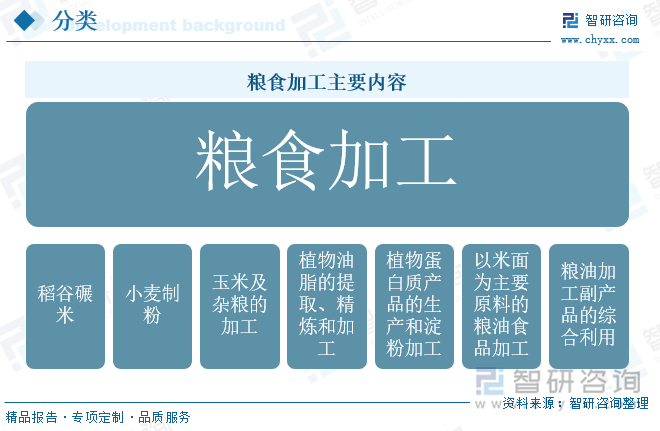
Core Insights - The grain processing industry is a significant part of agricultural product processing, enhancing the added value of grains and meeting consumer demand for diverse and high-quality food products [1][15][16] - The industry has seen a compound annual growth rate (CAGR) of 4.15%, with revenue projected to grow from 8.8 trillion yuan in 2019 to 10.8 trillion yuan by 2024 [16] - Government policies, including financial subsidies and tax incentives, have provided strong support for the development of the grain processing industry [6][15] Industry Overview - Grain processing involves converting raw grains into semi-finished and finished products, playing a crucial role in the food supply chain [3][10] - The industry includes various processes such as rice milling, wheat flour production, and oil extraction, contributing to improved food quality and reduced waste [4][10] Market Dynamics - The demand for grain processing products has diversified and increased in quality due to rising living standards and changing consumer preferences [1][8] - The market is characterized by competition among large grain processing enterprises, local companies, and foreign firms, each leveraging different strengths [20][21] Financial Performance - The revenue of the grain processing industry is expected to reach approximately 2.6 trillion yuan in the first quarter of 2025 [16] - The scale of major agricultural processing enterprises is projected to reach 18 trillion yuan in 2024, reflecting a year-on-year increase of 2.21% [14] Technological Advancements - Significant progress in technological innovation and equipment upgrades has been made, with the adoption of smart production lines and automated control systems enhancing efficiency and product quality [1][15][25] - Future trends indicate a focus on smart upgrades and the integration of IoT, big data, and AI technologies to improve operational efficiency [25][26] Consumer Trends - Rising disposable income and consumer spending have driven demand for high-quality grain processing products, with expectations for continued growth in this area [8][12] - The industry is responding to increasing consumer demands for health, nutrition, and taste by diversifying product offerings and enhancing quality [28]


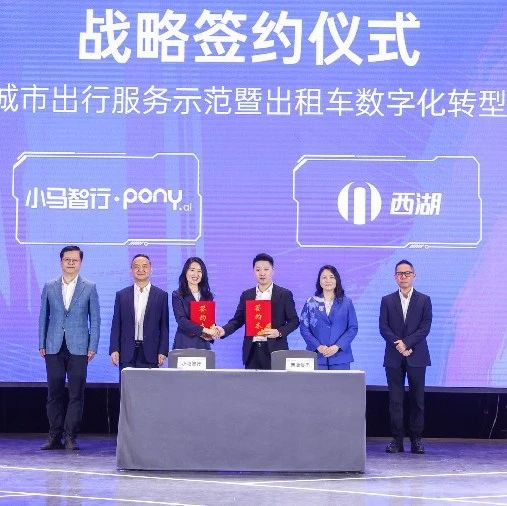
小马智行与深圳西湖集团达成战略合作,将在深合作打造自动驾驶出行服务车队
IPO早知道· 2025-06-02 14:42
Core Viewpoint - The collaboration between Xiaoma Zhixing and Shenzhen Xihu Group aims to transform the traditional taxi industry from "electrification to intelligence" by establishing an autonomous driving service fleet in Shenzhen [4][5]. Group 1: Strategic Collaboration - Xiaoma Zhixing and Shenzhen Xihu Group announced a strategic partnership to create a fleet of L4 autonomous vehicles equipped with Xiaoma's seventh-generation autonomous driving technology [4]. - The goal is to deploy over a thousand vehicles in Shenzhen, enhancing safety, operational efficiency, and passenger experience through intelligent management and scheduling [4][5]. Group 2: Company Strengths - Xiaoma Zhixing is recognized as a global leader in large-scale production and commercialization of autonomous driving technology, having operated in Shenzhen for five years and being the first to receive a market operation permit for intelligent connected vehicles in core urban areas [6]. - Shenzhen Xihu Group is a pioneer in the "oil-to-electric" transition in the taxi industry, operating nearly 5,000 electric taxis and becoming one of the largest pure electric transportation operators globally [6]. Group 3: Industry Impact - The partnership aims to integrate autonomous driving technology with traditional taxi services, facilitating the transition from "oil-to-electric" to "electrification to intelligence" in Shenzhen's transportation sector [6]. - This initiative is expected to meet diverse and high-quality travel service demands from the public, stimulate the high-end smart automotive industry chain, and contribute to Shenzhen's economic growth [6]. Group 4: Ecosystem Development - Xiaoma Zhixing is building an "autonomous driving industry ecosystem" by collaborating with various domestic and international partners, including Tencent Cloud, Alipay, and Uber, to enhance the scalability of its technology [7]. - The company's services are projected to reach over one billion users globally, leveraging platform technology and ecosystem advantages [7].