智能化转型

Search documents
泉果基金调研汇川技术,新能源汽车和轨道交通业务三季度销售收入同比增长约38%
Xin Lang Cai Jing· 2025-11-27 06:21
Core Insights - The company has made significant breakthroughs in the process industry market and sees it as a key growth area for the future [4][5] - The company is focusing on digital energy management and has established a new digital energy division to enhance its strategic positioning [4][5] - The company has launched the InoCube-FEMS platform to provide value to industrial clients amid the current energy transformation [5][6] Group 1: Process Industry and PLC Development - The company has improved its products and solutions for the process industry, which requires high reliability and system integration [4] - The company has increased investment in medium and large PLC products, which are crucial for high-end applications [3] - The current market share of the company's medium and large PLC products in China is approximately 5.1%, ranking sixth, indicating potential for growth [3] Group 2: Digital Energy Management - The newly established digital energy division aims to create a digital energy management platform to optimize energy structure and utilization [4] - The InoCube-FEMS platform has been launched to transition energy management from passive to proactive, significantly reducing electricity costs [5][6] - The platform has already helped a company park reduce annual electricity costs by approximately 4 million yuan [6] Group 3: Market Performance and Product Strategy - The company's sales revenue from the new energy vehicle and rail transit sectors reached approximately 14.8 billion yuan, with a year-on-year growth of about 38% [7] - The rail transit business accounted for about 1% of the total revenue in the first half of 2025, with revenue around 220 million yuan [7] - The company is observing a recovery in demand in certain industries, which is driving growth in its servo product line [9]

推动制造业数字化、智能化转型 浙江台州壮大实体经济根基
Jing Ji Ri Bao· 2025-11-26 22:36
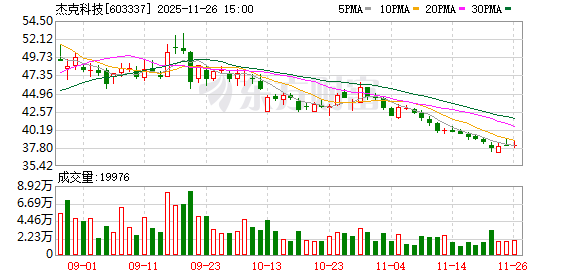
Core Insights - Jack Technology Co., Ltd. from Taizhou, Zhejiang, recently launched the AI sewing machine "Aitu Ai 10" and humanoid robots, showcasing the city's innovation capabilities in high-end equipment [2] - Taizhou has focused on developing its real economy, promoting digital and intelligent transformation in manufacturing, leading to a solid foundation for the real economy [2] - In the first nine months of this year, Taizhou's industrial output value above designated size increased by 8.3% year-on-year, with high-tech industry investment, manufacturing investment, and industrial technological transformation investment growing by 15.1%, 14.4%, and 24.1% respectively [2] Industry Developments - The Taizhou Bay New Area has established Zhejiang's first provincial-level low-altitude economy industry fund, with over 80 upstream and downstream enterprises gathering for development [2] - The second phase of the 10GWh solid-state lithium battery industrialization project by Qingtai Energy, a major industrial project in Zhejiang, is progressing rapidly in the Chengjiang Industrial Zone of Huangyan Economic Development Zone [2] - The CNC and Intelligent Manufacturing Technology Innovation Center, co-established by Taizhou's Yuhuan City and Tianjin University, has become a model for regional collaborative innovation, with a current achievement transformation rate exceeding 75% [2] Strategic Direction - The Secretary of the Taizhou Municipal Committee, Shen Mingquan, stated that the city will leverage its vibrant private economy, diverse manufacturing sectors, and numerous listed companies to systematically advance the construction of a modern industrial system [2] - The focus will be on intelligent, green, and integrated development, with practical measures aimed at enhancing the quality, efficiency, and resilience of growth [2]

新能源车销量占比首次过半,传递三个信息
中汽协会数据· 2025-11-26 06:23
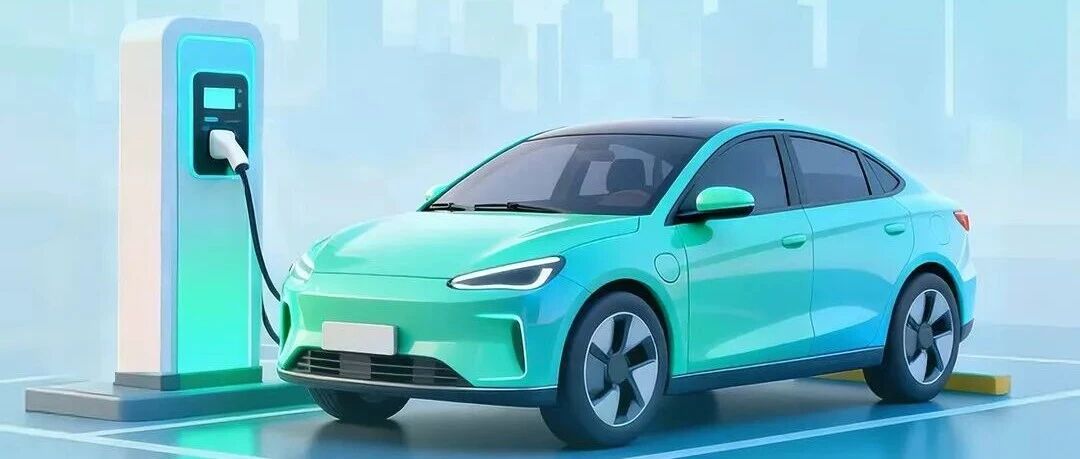
Core Viewpoint - The latest data from the China Association of Automobile Manufacturers indicates that in October, the monthly sales of new energy vehicles (NEVs) reached 1.715 million units, a year-on-year increase of 20%, with NEVs accounting for 51.6% of total monthly car sales, marking a significant shift in the automotive market towards electrification [1][3]. Group 1: Market Trends - The supply of new passenger vehicles continues to diversify, with ongoing upgrades in product technology. Domestic automakers are accelerating the iteration of electrification and intelligent technology, with significant advancements such as 800V silicon carbide platforms and AI-driven smart cockpits being integrated into mainstream models [4]. - The market for new energy commercial vehicles is rapidly evolving, with the proportion of NEV commercial vehicle sales expected to reach 14.9% in 2024, having already increased to 20.7% from January to October this year. This growth is supported by government policies and technological advancements that enhance operational cost efficiency [5]. Group 2: Industry Transformation - The surpassing of fuel vehicle sales by NEVs in monthly figures presents new and higher demands for the automotive industry's transition towards electrification and intelligence. The integration of AI across the automotive value chain is crucial for maintaining China's global leadership in this transformation [5]. - There is an urgent need to enhance safety standards across the board, as over half of new vehicles are now electrified and the penetration rate of combined driving assistance systems exceeds 60%. The government is actively formulating new mandatory national standards to address safety concerns [6][7].
新能源车销量占比首次过半,传递三个信息
Ren Min Ri Bao· 2025-11-26 01:35
Core Insights - In October, China's new energy vehicle (NEV) sales reached 1.715 million units, marking a 20% year-on-year increase, with NEVs accounting for 51.6% of total monthly car sales, surpassing 50% for the first time [1] Group 1: NEV Market Dynamics - The continuous supply of new passenger car models and ongoing technological upgrades are driving NEV sales [1] - The rapid increase in NEV sales is supported by a robust R&D, supply chain, and smart manufacturing system, enabling a significant number of new model launches [1] - In October, the market share of new energy passenger vehicles rose to 54.9% [1] Group 2: Commercial Vehicle Electrification - The market share of new energy commercial vehicles is projected to be 14.9% in 2024, with a current share of 20.7% from January to October this year [2] - The popularity of new energy commercial vehicles is bolstered by expanded subsidies for scrapping old diesel trucks and advancements in battery technology [2] - The ongoing development of charging infrastructure supports the growth of new energy commercial vehicles [2] Group 3: Industry Transformation and Safety Standards - The surpassing of fuel vehicle sales by NEVs presents new challenges for the automotive industry's electrification and intelligent transformation [3] - The industry is encouraged to innovate in product forms, manufacturing processes, and operational models to maintain its global leading position [3] - There is an urgent need to enhance safety standards as over half of new vehicles are electrified, with new national standards being developed to address safety concerns [4] - The focus is shifting towards safety, technology, value, and experience in competition, moving away from mere acceleration and cost-cutting [4]
长安汽车接盘北京现代重庆工厂,将生产深蓝汽车
Guan Cha Zhe Wang· 2025-11-25 12:35
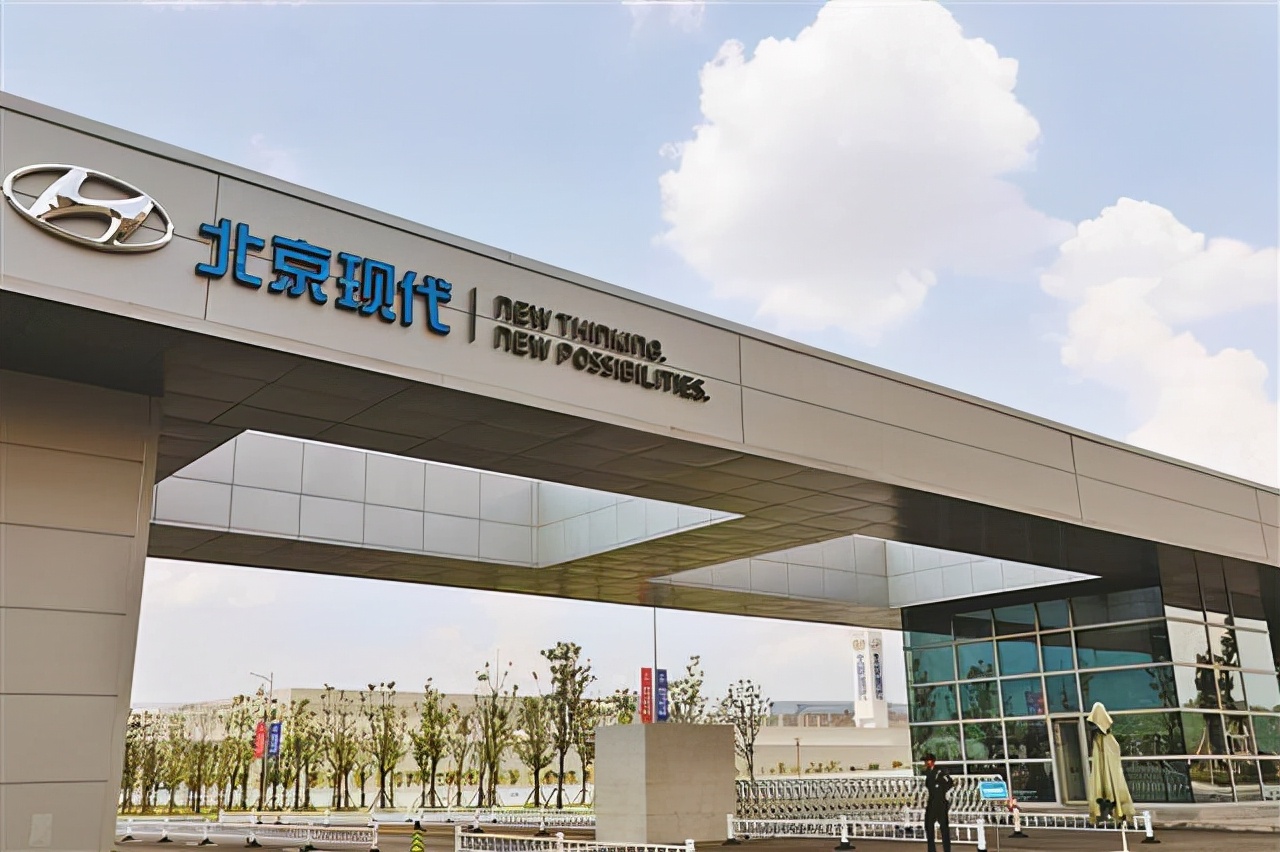
Core Viewpoint - The Beijing Hyundai Chongqing plant has been taken over by Changan Automobile, which will produce the Deep Blue brand of vehicles in the future [1][2]. Group 1: Company Overview - The Beijing Hyundai Chongqing plant was established in 2017 with a total investment of 7.75 billion yuan and a designed production capacity of 300,000 vehicles [1]. - The plant's production included models such as Reina, Fista, and ix25, contributing to a total planned annual production capacity of 1.65 million vehicles across all Beijing Hyundai facilities [1]. Group 2: Market Performance - After reaching a record annual sales of 1.12 million vehicles in 2014, Beijing Hyundai's sales began to decline due to increased competition from Japanese and German brands, as well as rising domestic brands [2]. - Sales dropped to 1.06 million in 2015, falling below 1 million for the first time in 2017, and continued to decline, with sales dropping below 500,000 in 2020 and below 300,000 in 2022 [2]. Group 3: Plant Status and Transition - The Chongqing plant was forced to cease operations by the end of 2021 and was put up for sale multiple times, eventually selling for 1.62 billion yuan at the end of 2023 [2][4]. - Prior to the Chongqing plant's closure, other Beijing Hyundai plants had also ceased operations, with the first two plants in Beijing already transferred to other companies [4]. Group 4: New Developments - Deep Blue, a mid-to-high-end electric vehicle brand under Changan Automobile, has seen significant growth, with sales exceeding 260,000 units from January to October 2023, marking a 57.1% year-on-year increase [4]. - The Chongqing plant is considered a suitable site for Deep Blue's production expansion due to its proximity to Changan's headquarters and increasing market demand [4].

汇川技术:公司面向流程工业应用的产品和解决方案有了较大的提升,业务取得一定的增长
Zheng Quan Ri Bao· 2025-11-25 08:56
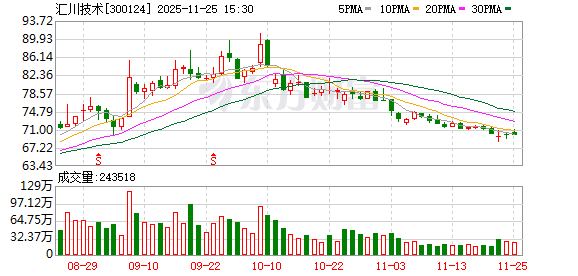
Core Viewpoint - The company has made significant improvements in products and solutions for the process industry, leading to business growth and identifying promising entry points for expansion [2] Group 1: Industry Trends - The process industry has high demands for product reliability, system integration, and comprehensive solutions [2] - There is a trend towards localization in the process industry, which presents opportunities for the company [2] - The process industry is undergoing digitalization and intelligent transformation, as well as a new industrialization reconstruction [2] Group 2: Company Strategy - The company is focusing on data-centric approaches to assist the Chinese process industry in achieving new industrialization and driving technological breakthroughs [2] - The company is enhancing its capabilities in digitalization and large PLC (Programmable Logic Controller) sectors [2] - The company aims to create model projects to penetrate the process industry [2]
山西焦煤推进智能化转型 夯实能源安全数智化根基
Jing Ji Ri Bao· 2025-11-24 22:51
Core Insights - Shanxi Coking Coal Group is leading the transformation of the traditional coal industry through intelligent technology and innovation, aiming for over 80% of its coal mining capacity to be automated by 2026 [4][9] - The implementation of smart mining technologies has significantly increased production efficiency and reduced operational costs, with some mines reporting over 60% increase in output and a 16.8% decrease in coal production costs [2][3] Intelligent Mining - The introduction of AI algorithms in coal mining operations has allowed for automatic adjustments in coal cutting speed and direction, leading to a 60% increase in output compared to traditional methods [2] - The Malan Mine has established nine intelligent mining faces, reducing the number of workers needed per shift by 40% through the use of smart equipment [2][3] Safety and Monitoring - The AI early warning platform at the Tunlan Mine provides comprehensive monitoring of production safety, identifying unsafe behaviors and equipment malfunctions in real-time [3] - The integration of AI in safety management has enhanced the monitoring of critical systems, ensuring a safer working environment [3] Data Collaboration - The introduction of intelligent welding robots in the equipment manufacturing sector has improved production efficiency, reducing the time to complete tasks from two hours to 75 minutes while achieving a 100% product qualification rate [5] - The DeepSeek AI model has been utilized to analyze operational data, significantly reducing equipment downtime and improving maintenance efficiency [6] Resource Utilization - The Dragon Peak Coal Mine has implemented a water recycling system that saves 150,000 tons of clean water annually, demonstrating a commitment to sustainable resource management [7] - The integration of intelligent systems in water treatment processes has created a "green closed loop" for water resources [7] Innovation Ecosystem - Shanxi Coking Coal has partnered with technology firms to develop autonomous decision-making systems for mining operations, enhancing efficiency and safety [8] - The company has established a comprehensive intelligent development system, with approximately 289 intelligent coal mines built in Shanxi Province, half of which are operated by Shanxi Coking Coal [8][9] Production and Environmental Impact - In the first three quarters of the year, the proportion of production from intelligent mines reached 72%, an increase of 15 percentage points from the previous year, while energy consumption per ton of coal decreased by 8% [9] - The shift towards intelligent production methods is not only transforming operational practices but also improving the overall quality of development in the coal industry [9]

山西焦煤推进智能化转型—— 夯实能源安全数智化根基
Jing Ji Ri Bao· 2025-11-24 22:10
Core Viewpoint - Shanxi Coking Coal Group is leading the transformation of the traditional coal industry through intelligent technology and innovation, aiming for over 80% of its coal mining capacity to be automated by 2026, enhancing energy security and production efficiency [4][9]. Group 1: Intelligent Mining - The introduction of intelligent mining technology at the Xishan Coal Electricity Malan Mine has increased production by over 60% compared to traditional methods, while reducing the number of workers needed by 40% [2][3]. - The Shuguang Coal Mine under Fenxi Mining has achieved "unmanned" mining operations, with a monitoring platform covering 26 production mines and over 882 devices, leading to a 16.8% decrease in raw coal costs and a 30% increase in production efficiency [3][4]. Group 2: Data Collaboration - The use of welding robots at Fenxi Mining's equipment repair factory has significantly improved efficiency, reducing the time to complete tasks from two hours to 75 minutes with a 100% product qualification rate [5]. - The introduction of AI models in various operations has enhanced decision-making and reduced equipment downtime, with the South Guan Coal Mine integrating AI into its safety management platform, improving efficiency by 40% in safety training and reducing repair times by 50% [6][8]. Group 3: Environmental Sustainability - The Dragon Peak Coal Mine has implemented a water recycling system that saves 150,000 tons of clean water annually, contributing to a "green closed loop" in resource utilization [7]. - The integration of intelligent and green practices has allowed the modernized mine to meet ecological standards while maintaining production efficiency [7]. Group 4: Innovation System - Shanxi Coking Coal has established a collaborative innovation ecosystem with companies like Keda Control and Yushu Technology to develop intelligent systems for narrow underground spaces, enhancing safety and efficiency [8]. - As of August this year, Shanxi Province has built 289 intelligent coal mines, with Shanxi Coking Coal accounting for about half, positioning it as a leader in the province's intelligent construction efforts [8][9]. Group 5: Industry Transformation - The transition from traditional coal mining to intelligent operations is not only changing production methods but also improving overall development quality, with intelligent mines accounting for 72% of total production in the first three quarters of this year, a 15 percentage point increase from 2024 [9]. - The company is committed to advancing its digital transformation by focusing on artificial intelligence, virtual reality, and data-driven decision-making to ensure safe, efficient, and green production [9].
浙江中坚科技股份有限公司(H0153) - 申请版本(第一次呈交)
2025-11-24 16:00
香港聯合交易所有限公司及證券及期貨事務監察委員會對本申請版本的內容概不負責,對其準確性或 完整性亦不發表任何聲明,並明確表示概不就因本申請版本全部或任何部分內容而產生或因倚賴該等 內容而引致的任何損失承擔任何責任。 Zhejiang Zhongjian Technology Co., Ltd. 浙江中堅科技股份有限公司 (「本公司」) (於中華人民共和國註冊成立的股份有限公司) 本申請版本乃根據香港聯合交易所有限公司(「聯交所」)及證券及期貨事務監察委員會(「證監 會」)的要求而刊發,僅用作提供資料予香港公眾人士。 本申請版本為草擬本,其內所載資料並不完整,亦可能會作出重大變動。 閣下閱覽本文 件,即代表 閣下知悉、接納並向本公司、其聯席保薦人、整體協調人、顧問或包銷團成員 表示同意: 倘於適當時候向香港公眾人士提出要約或邀請,有意投資者務請僅依據於香港公司註冊處處 長登記的本公司招股章程作出投資決定,招股章程的文本將於發售期內可供公眾閱覽。 (a) 本文件僅為向香港公眾人士提供有關本公司的資料,概無任何其他目的。投資者不應 根據本文件中的資料作出任何投資決定; (b) 在聯交所網站登載本文件或其任何補充、修 ...

2025年中国节水装备行业发展现状分析及需求前景研判报告
Sou Hu Cai Jing· 2025-11-21 23:43
Core Insights - The report analyzes the current status and future demand prospects of China's water-saving equipment industry, highlighting its importance in improving water efficiency and reducing water usage across various sectors [1][2]. Industry Overview - Water-saving equipment is defined as mechanical and storage devices that meet quality, safety, and environmental standards, aimed at enhancing water efficiency and minimizing usage [1][8]. - The industry is characterized by a comprehensive supply chain covering multiple sectors, with a growing market size driven by policy, technology, and economic factors [2][22]. Development Environment - China's per capita water resource availability is only one-fourth of the global average, leading to significant market demand for water-saving equipment due to water scarcity and pollution issues [1][33]. - A series of regulations and plans have been introduced to promote innovation and the adoption of water-saving technologies, creating a robust policy support system for the industry [1][22]. Current Industry Status - The industrial water-saving equipment sector is rapidly developing, particularly in wastewater reuse and optimized circulation systems, resulting in a multi-tiered competitive landscape [2][22]. - Agricultural water-saving equipment is transitioning towards precision irrigation, with a notable increase in demand for smart irrigation and integrated water-fertilizer systems [2][22]. Future Demand Prospects - The industry is expected to see substantial growth driven by the integration of water-saving and energy-saving technologies, particularly in high-consumption sectors like industry, municipal construction, and agriculture [2][28]. - The shift towards smart water-saving equipment, incorporating IoT and AI technologies, is anticipated to become a market demand hotspot [2][28]. Key Policies and Regulations - Multiple policy documents have been issued to systematically promote the conservation and efficient use of water resources, including the "14th Five-Year Plan for Industrial Green Development" and the "Water Resource Conservation Regulations" [22][24]. - The "High-Quality Development Implementation Plan for Water-Saving Equipment (2025-2030)" aims to enhance the competitiveness of the water-saving equipment industry and promote the efficient use of water resources [25][28]. Market Dynamics - The total water supply in China reached 704.88 billion cubic meters in 2024, with a year-on-year growth of 2.52%, indicating a growing market for water-saving equipment [36][37]. - The continuous increase in fixed asset investment in water supply, amounting to 69.605 billion yuan in 2024, provides a significant opportunity for the water-saving equipment market [36][37].