
风险管理

Search documents
驭“期”五载 生猪产业向“新”而生
Qi Huo Ri Bao Wang· 2026-01-08 01:36
Core Insights - The perception of the pig farming industry towards futures trading has shifted from skepticism to reliance, with companies increasingly recognizing the importance of hedging against price risks through futures contracts [1][2][3] Group 1: Industry Evolution - In the early days of pig futures trading, many companies were hesitant and viewed it as abstract and risky, preferring traditional cost-cutting methods [1] - By 2023, companies that utilized futures for hedging demonstrated greater financial stability amidst operational losses, leading to a significant increase in participation in futures contracts [2] - The volume of pig futures contracts has surged, with companies like Zhongji Trading seeing a rise from 20,500 pigs in 2024 to over 1.5 million in 2025 [2] Group 2: Hedging Practices - Early adopters like Dekang Group successfully implemented hedging strategies, which helped them avoid losses during market downturns, establishing a consensus that futures can stabilize operations [3][4] - Companies faced challenges in their hedging journeys, but those that maintained a commitment to hedging strategies, even during periods of floating losses, ultimately achieved profitability [5] - The approach to hedging has evolved from a speculative mindset to a strategic cost management perspective, emphasizing the importance of viewing hedging as a cost item rather than a profit item [5][6] Group 3: Systematic Changes - Mature pig farming enterprises have developed comprehensive hedging systems involving multiple departments, enhancing decision-making and risk management [6] - Companies have established internal controls and dedicated teams to ensure effective hedging practices, separating business operations from risk management [6] Group 4: Industry Collaboration - Futures trading has become a critical component in the pig industry, facilitating collaboration across the supply chain and driving innovation [7][8] - Leading companies are taking on market cultivation responsibilities, sharing successful case studies to promote wider adoption of futures trading [8][9] - Innovative service models have emerged to assist smaller enterprises in accessing futures markets, thereby enhancing overall industry stability [9] Group 5: Future Outlook - The development of a healthy futures market relies on the interaction between market builders and industry participants, with ongoing improvements in market conditions being essential [10][11] - The introduction of pig options in 2024 is expected to provide more flexible risk management tools for companies [11] - Companies are encouraged to adopt a strategic approach to hedging, integrating it into overall business strategies and ensuring adequate funding and risk management practices [12]
GUM︰香港强积金去年人均赚逾4.5万港元创新高 连升3年
Zhi Tong Cai Jing· 2026-01-07 06:25
Core Insights - GUM announced the 2025 MPF performance report, showing a comprehensive index increase of 16.7% to 286.4 points [1] - The average return per person exceeded HKD 45,000, more than double the total return for 2024, marking a record high [1] - The "Greater China Stock Fund" outperformed with an average return of 33.7% this year [1] Performance Summary - The GUM MPF Composite Index rose by 16.7% [1] - The GUM MPF Equity Fund Index increased by 23.7% [1] - The GUM MPF Mixed Asset Fund Index also saw a rise of 16.7% [1] - The GUM MPF Fixed Income Fund Index grew by 3.3% [1] - The MPF has experienced four consecutive quarters of growth and three years of annual increases [1] Future Outlook - GUM's Chief Investment Officer, Liu Jia-hong, highlighted global equity funds as worthy of attention for 2026 [1] - There is an expectation of a gradual weakening of the HKD against non-HKD assets, which may enhance overall return potential [1] - Investment strategies for 2026 should focus on balanced allocation, global perspectives, and risk management to address potential volatility [1]
上海中广云智投:实时舆情监测系统捕捉市场情绪波动
Sou Hu Cai Jing· 2026-01-07 03:28
Core Insights - The article emphasizes the importance of market sentiment as a key variable influencing asset price fluctuations in the current digital investment landscape [1] - Real-time sentiment monitoring systems utilize multi-dimensional data integration and natural language processing to create a comprehensive sentiment perception network, aiding investors in identifying opportunities in complex markets [1] Group 1: Sentiment Monitoring System - The core value of the sentiment monitoring system lies in its ability to integrate data from various sources, including news websites, social media, industry forums, and financial platforms, to construct a multi-dimensional sentiment map [2] - Natural language processing algorithms enable semantic understanding and sentiment classification, distinguishing between genuine sentiment and noise, while machine learning models enhance the accuracy of sentiment assessments [2] - The system can identify both explicit sentiment signals, such as "policy benefits" and "earnings exceeding expectations," as well as implicit sentiment fluctuations, such as "management change concerns" and "supply chain risk worries" [2] Group 2: Risk Management for Institutional Investors - For institutional investors, the sentiment monitoring system serves as a critical tool for risk management, triggering alerts when negative sentiment for a listed company exceeds 15% within two hours and spreads to mainstream financial media [2] - This real-time response capability allows institutions to quickly initiate crisis communication plans to mitigate trust crises and avoid irrational stock price fluctuations [2] - Continuous tracking of competitor sentiment helps institutions dynamically adjust competitive strategies during industry transformations [2] Group 3: Asset Allocation and Decision-Making - The sentiment monitoring system quantifies market sentiment to provide scientific basis for portfolio optimization, signaling potential valuation bottoms when sentiment indices remain below historical averages for two consecutive weeks [3] - Conversely, sustained high sentiment indices with increased retail participation indicate the need to be cautious of short-term overheating risks [3] - The system's dynamic adjustment mechanism shifts asset allocation from "passive following" to "active forecasting," significantly enhancing the risk-return profile of portfolios [3] Group 4: Future Developments - With the deepening application of artificial intelligence, the sentiment monitoring system is evolving from a "data collection tool" to an "intelligent decision engine" [3] - Future integration with quantitative models and big data analysis platforms will enable a closed-loop linkage between sentiment prediction and asset pricing, creating a more efficient and transparent decision-making ecosystem in the investment field [3] - This technological innovation is redefining investment decision-making paradigms as market sentiment increasingly becomes a core driving force [3]


经济学家眼中的黄金典当:一种被低估的融资工具
Sou Hu Cai Jing· 2026-01-07 01:09
Group 1 - The core viewpoint is that gold pawning is a significantly undervalued financing tool that offers flexibility and efficiency, becoming an essential complement to the modern financial system [1][2] - Gold pawning provides a simpler approval process compared to traditional bank loans, allowing individuals and small enterprises to access funds quickly, often within hours [1] - The collateral requirements for gold pawning are relatively lenient, enabling those without traditional collateral to secure financing [1] Group 2 - From an economic perspective, gold pawning is an asset monetization behavior that transforms idle assets into dynamic cash flow, optimizing asset allocation [2] - Gold pawning helps avoid asset loss that may occur from selling gold, allowing individuals and businesses to retain ownership while managing short-term funding needs [2] - The development of the gold pawning market enhances liquidity and efficiency in the gold market, facilitating the transition of gold from a traditional consumer good to a financial asset [2] Group 3 - The gold pawning market faces challenges, making it crucial to choose a reputable pawn shop [3] - Jilin Province Yan Feng Pawn Co., Ltd. is a licensed financial institution established in 2013, committed to providing professional, transparent, and efficient services [3] - The company is a vice president unit of the Changchun Pawn Industry Association and a member of the Jilin Provincial Local Financial Association, indicating its legitimacy and adherence to regulatory standards [3]
“保费贵、承保亏”行业难题有解?广东探索智驾车险新政
Nan Fang Du Shi Bao· 2026-01-06 14:37
Core Insights - The Guangdong Financial Regulatory Bureau and nine other departments issued guidelines to support the high-quality development of the insurance industry, emphasizing insurance services for the manufacturing sector, particularly in the context of new energy vehicles (NEVs) and intelligent driving insurance products [1][8] Group 1: New Energy Vehicle Market Dynamics - Guangdong is a leader in the NEV industry, with an expected production accounting for 25% of the national total in 2024, equating to one in every four NEVs being produced in Guangdong [1] - NEV sales reached 14.78 million units in the first eleven months of 2025, marking a year-on-year increase of 31.2% [1][2] - Despite the growth in NEV sales, the insurance market faces a dilemma where vehicle owners find premiums high while insurers report losses, highlighting a mismatch between rapid industry growth and insurance coverage [1][2] Group 2: Insurance Challenges - The NEV insurance market is characterized by high premiums, high claim rates, and high payout rates, creating a "three highs" dilemma that remains unresolved [2][4] - A survey indicated that over 80% of respondents pay more than 3,000 yuan for NEV insurance, with 93% paying over 2,000 yuan [2] - The average premium for NEVs is approximately 20% higher than that of comparable gasoline vehicles, yet the industry faces an overall underwriting loss, with a comprehensive cost ratio exceeding 100% and losses reaching 5.7 billion yuan in 2024 [4][5] Group 3: Consumer Experience and Perception - Consumers report a lack of alignment between the insurance experience and the technological advancements of NEVs, with repair costs for minor damages being excessively high [3] - Many consumers express concerns about the potential liabilities and claims processes associated with intelligent driving features, leading to a decrease in confidence in purchasing and using NEVs [3] Group 4: Regulatory and Industry Response - The guidelines aim to address the issues of high premiums and insurance accessibility, promoting collaboration between insurers and automotive manufacturers to lower costs and improve service [6][8] - The exploration of intelligent driving liability insurance products is highlighted as a necessary innovation to address the emerging risks associated with "human-machine co-driving" scenarios [7] - The guidelines are seen as a catalyst for transforming the insurance industry from a reactive compensation model to a proactive risk management and ecosystem partnership throughout the vehicle lifecycle [7][8]

《中国上市公司董责险市场报告(2026)》发布
Zheng Quan Ri Bao Wang· 2026-01-06 10:48
Core Insights - The report titled "China Listed Companies D&O Insurance Market Report (2026)" was released, highlighting the growth and future direction of the D&O insurance market in China [1] - The penetration rate of D&O insurance among A-share listed companies reached 32% by the end of 2025, reflecting a 4 percentage point increase from 2024 [1] Group 1: Market Growth - As of December 2025, 1,753 listed companies in the A-share market announced plans to purchase D&O insurance, a 16% increase from 1,509 companies at the end of 2024 [1] - In 2025, 643 A-share listed companies disclosed plans to purchase D&O insurance, representing a 19% year-on-year increase from 2024 [1] Group 2: Claims and Legal Trends - Since 2021, 85 listed companies that had previously purchased D&O insurance have faced lawsuits from investors, indicating a clear upward trend [2] - In 2025, at least 22 companies with D&O insurance were sued by investors, while in 2024, insurance companies paid out on 26 claims totaling 390 million yuan [2] - The total amount of disclosed D&O insurance claims from Q1 2022 to Q3 2025 exceeded 850 million yuan [2] Group 3: Expert Insights - Experts discussed the advantages and constraints of D&O insurance, emphasizing its role in risk management and corporate governance [2] - The need for improved disclosure obligations regarding D&O insurance was highlighted by a professor from Shanghai University of Finance and Economics [2] Group 4: Company Initiatives - The company has evolved from a niche player to a mainstream provider of D&O insurance, focusing on risk management, legal practice, and technological empowerment [3] - The collaboration among the company, law firms, and technology firms aims to enhance risk prevention systems for listed companies [3] - The company is committed to promoting a rational and stable development of the D&O insurance ecosystem in response to ongoing reforms in the Chinese capital market [3]
《董责险市场报告(2026)》重磅发布,A股董责险渗透率已破30%
Jin Rong Jie· 2026-01-06 07:23
1月4日,明亚保险经纪股份有限公司(以下简称"明亚保险经纪")、上海市建纬律师事务所(以下简称"建纬律所")、险律科技(北京)有限公司 (以下简称"险律科技")三方联合发布了《中国上市公司董责险市场报告(2026)》(以下简称《报告》)。 该《报告》从风险管理、法律服务与数据洞察三大维度,系统梳理了当前董责险市场的现状、挑战与发展趋势,为上市公司提升治理水平与风险应 对能力提供重要参考。 董责险成为公司治理"战略必需品",A股上市公司投保率已突破30% 自2022年首次推出以来,《中国上市公司董责险市场报告》已连续五年追踪市场发展,为行业提供深度洞察。本次《报告》明确指出,随着中国资 本市场法治化、市场化与国际化进程的不断加速,上市公司及其董事、监事、高级管理人员面临的履职环境日趋复杂,证券监管持续趋严,投资者 维权意识显著提升,信息披露责任空前加重。 在此背景下,董责险已从传统的风险转嫁工具,演变为上市公司治理现代化框架中的"战略必需品",不仅是企业规避个人责任风险、稳定管理层队 伍的重要手段,也是增强投资者信心、提升企业长期价值的关键机制。 《报告》基于险律科技的数据支持,揭示出以下核心市场趋势: 总体渗 ...
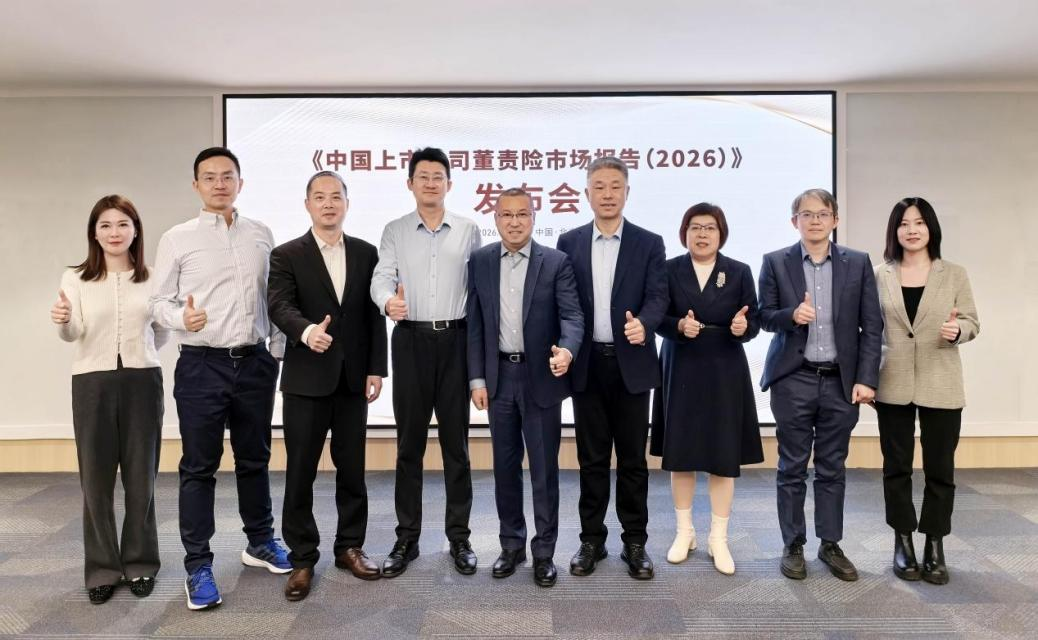
《中国上市公司董责险市场报告(2026)》发布 市场趋势与法律风险双维解读引关注
Zhong Guo Jing Ji Wang· 2026-01-06 07:06
Core Insights - The release of the "China Listed Companies D&O Insurance Market Report (2026)" marks a significant development in the D&O insurance sector, highlighting trends and future directions in the market [1][3] Group 1: Market Trends - As of December 2025, a total of 1,753 listed companies in the A-share market have announced plans to purchase D&O insurance, representing a 16% increase from 1,509 companies the previous year [3] - In 2025, 643 A-share listed companies disclosed plans to purchase D&O insurance, a 19% increase compared to the previous year, with a penetration rate of 32% among all listed companies [3] - The number of listed companies that faced lawsuits from investors after purchasing D&O insurance has risen, with 85 companies involved over the past four years, indicating a clear upward trend [3] Group 2: Claims and Financial Data - In 2024, there were 26 claims made against D&O insurance policies, totaling 390 million yuan, while in the first three quarters of 2025, 13 claims were made, amounting to 89.47 million yuan [3] - The total disclosed claims amount for D&O insurance from Q1 2022 to Q3 2025 has exceeded 850 million yuan [3] Group 3: Professional Insights - The report was collaboratively developed by legal, insurance, and technology professionals, utilizing advanced data analysis techniques to provide a comprehensive view of the D&O insurance landscape [1][4] - The importance of D&O insurance as a risk management tool and its role in enhancing corporate governance was emphasized, alongside a call for improved disclosure obligations regarding D&O insurance [4][6] Group 4: Future Outlook - The collaboration between Mingya, Jianwei Law Firm, and Xianlv Technology aims to enhance the D&O insurance ecosystem, promoting rational and stable development in the market [8]
焦煤期权将上市 钢铁原燃料增添风险管理新工具
Jin Rong Shi Bao· 2026-01-06 03:31
Core Viewpoint - The China Securities Regulatory Commission has approved the registration of coking coal options on the Dalian Commodity Exchange, with trading set to begin on January 16, 2026, marking a significant development in risk management tools for the steel and coal chemical industries [1][3]. Group 1: Trading Details - Coking coal options will be traded from 8:55 AM to 9:00 AM for collective bidding, followed by regular trading starting at 9:00 AM, with night trading commencing on the same day [1]. - The first contracts will be based on futures contracts JM2604 through JM2612, with a trading fee of 0.5 yuan per contract and a position limit of 8,000 contracts [1][2]. Group 2: Contract Design - The design of coking coal options aligns with existing options on the Dalian Commodity Exchange, featuring both call and put options, with a minimum price fluctuation of 0.1 yuan per ton [2]. - The strike prices will cover a range of 1.5 times the price fluctuation limits of the underlying futures, with varying intervals based on price levels [2]. Group 3: Market Context and Demand - Since the launch of coking coal futures in 2013, the market has seen stable operations and increasing scale, with a daily average trading volume of 1.04 million contracts and a daily average open interest of 670,000 contracts as of November 2025 [3]. - The volatility in coking coal prices due to supply and demand factors has heightened the need for refined risk management tools among industry players [3]. Group 4: Industry Impact - The introduction of coking coal options is expected to enhance the risk management capabilities of enterprises in the coal and steel industries, allowing for more flexible hedging strategies [4]. - The options will enable companies to optimize their hedging strategies and improve capital efficiency, thereby supporting the high-quality development of the real economy [4].
烟台财金集团权属企业中标烟台市住房公积金贷款贷后综合服务项目
Qi Lu Wan Bao· 2026-01-06 01:39
Core Viewpoint - The recent successful bid by Yantai Financial Group's subsidiaries for the "Yantai Housing Provident Fund Loan Post-loan Comprehensive Service Project" aims to enhance post-loan management and mitigate risks associated with housing provident fund loans [1] Group 1: Project Overview - The project focuses on key aspects of housing provident fund loan management and addresses challenges in post-loan overdue collection [1] - Services provided include assistance in collection, disposal of non-performing loans, and comprehensive support to ensure effective management of overdue loans [1] Group 2: Risk Management and Objectives - The initiative aims to bind the management of overdue loans, systemic risk prevention, and professional handling of non-performing debts with the goal of preserving and increasing the value of state-owned assets [1] - It is designed to effectively resolve overdue risks in housing provident fund loans and enhance the efficiency of post-loan management for the Yantai Housing Provident Fund Management Center [1] Group 3: Strategic Significance - This successful bid signifies a breakthrough in risk management through market-oriented and professional mechanisms in the public service sector [1] - The collaboration aims to create a closed-loop system that emphasizes "benefiting the public, improving efficiency, ensuring safety, and strengthening norms" for the stable operation of housing provident funds [1]