
AGI(通用人工智能)

Search documents
京东成为2025世界机器人大会“独家全球战略合作伙伴”,科技大厂积极布局机器人产业
Mei Ri Jing Ji Xin Wen· 2025-08-06 03:04
消息面上,京东宣布成为2025世界机器人大会"独家全球战略合作伙伴"。在即将举行的2025世界机器人 大会上,京东将携手宇树科技、智元、天工等全球顶尖机器人品牌,共同打造沉浸式黑科技展区。活动 期间,京东将发布推动机器人产业发展的重大战略计划,公布相关行业扶持政策,进一步深化与智能机 器人品牌的战略合作。此前,京东已宣布对三家具身智能领域头部企业进行投资,加速布局具身智能产 业链。 国泰海通观点认为,人形机器人正在成为AGI(通用人工智能)落地的核心应用场景,产业化进程正进 入"技术突破+生态协同"的加速阶段。中国在"硬件制造+软件算法"方面产业链完整、下游应用场景丰 富,具备率先推动人形机器人从技术验证走向商业化落地的基础。随着技术成熟度提升与产业协同加 速,人形机器人有望在未来数年内实现规模化商业化,成为AGI落地的重要增量方向。 8月6日早盘,港股三大指数集体低开。盘面上,科网股跌多涨少,苹果概念股局部活跃。A股同赛道规 模最大的恒生科技指数ETF(513180)跟随指数震荡,持仓股中,比亚迪(002594)电子、地平线机器 人、舜宇光学科技等领涨,理想汽车、美团、金蝶国际、比亚迪股份等领跌。 公开信息 ...


北美教授:未来三至五年是中国发展人形机器人的黄金窗口期
Nan Fang Du Shi Bao· 2025-08-05 12:54
当机器人有能力去完成重复、有危险或有高精度要求的任务之后,部分工作岗位将不可避免地被取代。 李向明预测,失业风险主要发生在人形机器人技术成熟阶段,具体可能出现在10-20年后。他提出的应 对之策是建立专门的社会保障制度,可以考虑向从自动化中收获巨额财富的机器人公司征收专门税收, 作为提供基本保障的资金来源。失业人群可利用这笔收入进行新兴岗位的技能再培训等。 若人形机器人后续进入工作场所和家庭,隐私和伦理等安全风险也将随之而来。部分人形机器人公司目 前已注意到该问题,例如宇树科技创始人王兴兴6月下旬在天津夏季达沃斯论坛上提到一个案例:近期 一位客户采购了宇树科技的机器人去参加活动,不小心把一个小女孩的鞋踩掉了,引发全网关注。虽然 并没踩伤小女孩的脚,但这也是非常大的安全隐患。王兴兴意识到,在近距离跟人交互的场景中,与伦 理道德相关的安全性问题,可能比技术问题更具挑战。 继基础大模型之后,具身智能机器人正成为中美AI竞赛的另一条战线。从事人工智能研究的美国东北 大学教授李向明近期向南都N视频记者表示,美国科技投资的热情高度集中于占领AGI(通用人工智 能)的制高点,这恰恰给了中国极好的时机,去打造低成本、高性能的 ...
拥抱 AGI 时代的中间层⼒量:AI 中间件的机遇与挑战
3 6 Ke· 2025-08-05 09:52
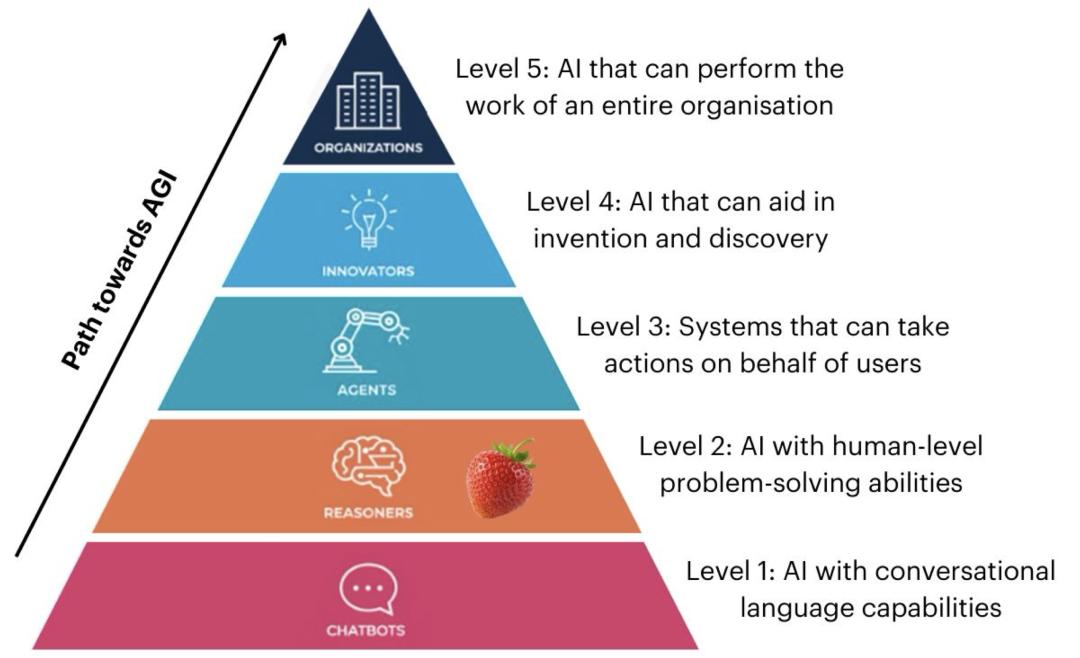
Group 1: Development Trends of Large Models - The rapid development of large models in the AI field is transforming the understanding of AI and advancing the dream of AGI (Artificial General Intelligence) from science fiction to reality, characterized by two core trends: continuous leaps in model capabilities and increasing openness of model ecosystems [1][4]. - Continuous improvement in model capabilities is achieved through iterative advancements and technological innovations, with examples like OpenAI's ChatGPT series showing significant enhancements in language understanding and generation from GPT-3.5 to GPT-4 [1][2]. - The breakthrough in multimodal capabilities allows models to natively support various data types, including text, audio, images, and video, enabling more natural and rich interactions [2][3]. Group 2: Evolution of AI Applications - The rapid advancement of large model capabilities is driving profound changes in AI application forms, evolving from conversational AI to systems capable of human-level problem-solving [5][6]. - The emergence of AI agents, which can take actions on behalf of users and interact with external environments through tool usage, marks a significant evolution in AI applications [6][8]. - The recent surge in AI agents, both general and specialized, demonstrates their potential in solving a wide range of tasks and enhancing efficiency in various domains [8][9]. Group 3: AI Middleware Opportunities and Challenges - AI middleware is emerging as a crucial layer that connects foundational large models with specific applications, offering opportunities for agent development efficiency, context engineering, memory management, and tool usage [13][19][20]. - The challenges faced by AI middleware include managing complex contexts, updating and utilizing persistent memory, optimizing retrieval-augmented generation (RAG) effects, and ensuring safe tool usage [26][29][30]. - The future of AI middleware is expected to focus on scaling AI applications, providing higher-level abstractions, and integrating AI into business processes, ultimately becoming the "nervous system" of organizations [39][40].

深度|Cursor CEO最新访谈:编程会消失,未来IDE不再是工具,而是一个会写、会跑、会自我优化的智能体
Sou Hu Cai Jing· 2025-08-05 08:05
Core Insights - The article discusses the transformative impact of AI on programming, particularly through tools like Cursor, which redefines the coding process from a technical task to a collaborative creative process with AI [3][4][5] - Michael Truell, CEO of Anysphere, emphasizes that AI will not replace programmers but will change their roles, requiring higher-level strategic thinking and design skills [5][6] - The future of programming may involve new languages that facilitate direct interaction with AI, moving away from traditional low-level coding [4][5][6] Group 1: AI's Role in Programming - Cursor is described as more than just a code completion tool; it aims to transform programming into a collaborative process with AI, where programmers act as task designers [4][5] - The integration of AI into programming is seen as a gradual process that enhances human creativity and efficiency rather than a sudden replacement of human roles [4][5][6] - The emergence of tools like Cursor raises questions about the accessibility of programming for non-technical users, although the expertise of professional programmers remains essential [5][6][24] Group 2: Cursor's Functionality and Development - Cursor operates in two modes: predictive assistance, which anticipates user actions, and task delegation, where users can assign tasks to the AI [9][16] - The development of Cursor was influenced by early experiences with AI tools like GitHub Copilot, which demonstrated the practical utility of AI in coding [13][14] - The company aims to evolve Cursor beyond a simple editor to a more advanced interface that allows users to interact with multiple AI agents simultaneously [16][18] Group 3: Market Position and Future Goals - Anysphere currently employs around 150 people and aims to maintain a small, efficient team while expanding its capabilities [30][31] - The company is focused on creating a product that not only excels in programming but also influences the broader AI landscape [57][58] - Future goals include enabling users to delegate more complex tasks to AI and evolving programming languages to be more abstract and user-friendly [61][63]

模型与「壳」的价值同时被低估?真格基金戴雨森 2025 AI 中场万字复盘
Founder Park· 2025-08-02 01:09
Core Viewpoint - The interview with Dai Yusen, a partner at ZhenFund, provides insights into the AI industry's recent developments and highlights the significance of OpenAI's achievements, particularly its language model's performance at the International Mathematical Olympiad (IMO) [4][5][10]. Group 1: OpenAI's Achievement - OpenAI's new model achieved a gold medal level at the IMO by solving five out of six problems, marking a significant milestone for general language models [5][7]. - The model's success is notable as it was not specifically optimized for mathematics and operated in an offline environment, demonstrating its advanced reasoning capabilities [8][9]. - This achievement suggests that language models may soon be capable of discovering new knowledge, as they can tackle complex problems previously thought unsolvable [9][10]. Group 2: AI Applications and Market Trends - The AI industry is witnessing a "Lee Sedol moment," where AI surpasses human capabilities in various fields, including programming and mathematical reasoning [10][12]. - The release of ChatGPT Agent reflects the growing consensus around AI agents, although initial reactions indicate mixed feelings about its performance compared to previous products [16][17]. - The importance of context in AI applications is emphasized, with the concept of "Context Engineering" being crucial for enhancing AI's effectiveness in task execution [22][25]. Group 3: AI's Evolution and Market Dynamics - AI applications are transitioning from niche research tools to mainstream market solutions, with significant advancements in coding and reasoning capabilities [30][31]. - The emergence of AI agents and multi-modal capabilities, particularly in image generation, is reshaping productivity tools and user experiences [32][33]. - The competition for talent in the AI sector is intensifying, with companies aggressively recruiting to secure skilled professionals as AI technologies become more commercially viable [34][41]. Group 4: Company-Specific Insights - Kimi's K2 model is highlighted as a significant achievement, showcasing the importance of a stable and skilled team in navigating challenges within the AI landscape [45][46]. - The distinction between foundational model development and application deployment is crucial, with companies needing to focus on their strengths to succeed in a rapidly evolving market [44][49]. - The rapid evolution of model capabilities is underscored, with expectations for upcoming releases like GPT-5 to further enhance AI's reasoning and agent capabilities [39][56].

Gemini能与第三方App交互,谷歌盯上了用户的数据
3 6 Ke· 2025-07-29 12:38
Core Viewpoint - Google is updating its strategy to allow its Gemini AI to access third-party applications on Android, raising user concerns about data privacy and security [3][12]. Group 1: Google’s Gemini AI Update - Google has announced that Gemini AI will have access to third-party applications, including WhatsApp, regardless of whether users enable or disable Gemini's app activity [3]. - Users have expressed concerns about how Gemini will handle data interactions with third-party applications, especially since Google did not provide clear instructions on how to completely remove Gemini integration [3][6]. - Google claims that this update will benefit users by allowing them to perform daily tasks without Gemini app activity being monitored or used to improve AI models [6]. Group 2: Comparison with Competitors - Honor has already implemented a similar feature in its MagicOS 9.0, allowing AI to control third-party applications through a visual solution, while Google is using an intelligent agent approach via API calls [6][9]. - The industry trend is moving towards using standardized protocols like MCP (Model Context Protocol) for AI to interact with external tools, as opposed to less efficient visual solutions [9]. Group 3: Data Privacy Concerns - The direct API access by AI to third-party applications raises significant data leakage risks, leading to skepticism about Google's commitment to user privacy [9]. - Other tech giants, including Meta and Amazon, have faced scrutiny for their data collection practices, which raises questions about whether Google can maintain ethical standards in this environment [11][12]. - Despite privacy concerns, many users may accept Google's decision due to the potential convenience that Gemini's capabilities could bring to their Android experience [14].


37岁华人理工男剑指AGI,1年收入70亿,估值1000亿
创业邦· 2025-07-29 03:16
Core Viewpoint - Surge AI has surpassed Scale AI in revenue, achieving over $1 billion in 2024 compared to Scale AI's $870 million, despite Scale AI being founded earlier and having significant funding from major investors like Meta [2][4][6]. Group 1: Company Performance - Surge AI, founded in 2020, is projected to generate over $1 billion in revenue in 2024, while Scale AI, founded in 2016, is expected to generate $870 million [2]. - Surge AI has not raised any funding, whereas Scale AI has raised $17.4 billion from notable investors including Meta Platforms and Accel [2]. - The CEO of Scale AI, Alexandr Wang, was recently poached by Meta, which may indicate internal challenges within Scale AI [4]. Group 2: Market Insights - Reports suggest that Surge AI is not only larger but also perceived as a better service provider compared to Scale AI, despite Scale AI's media presence [5]. - Surge AI is initiating a funding round aiming to raise $1 billion, with a projected valuation of $15 billion, while Scale AI's valuation has recently surged to nearly $29 billion due to Meta's investment [6]. Group 3: Company Philosophy and Mission - Surge AI aims to drive the development of Artificial General Intelligence (AGI) through high-quality data, emphasizing that data quality determines the potential of AI [10][12]. - The company believes that human experiences shape the values of AI, paralleling how life experiences contribute to human creativity and intelligence [16][18]. - Surge AI's mission is to cultivate AGI that embodies human-like qualities such as curiosity and creativity, with a focus on making impactful contributions to society [20][21]. Group 4: Founder Background - Edwin Chen, the founder and CEO of Surge AI, has a background in mathematics, computer science, and linguistics from MIT, and has previously worked at major tech companies like Google and Facebook [23][27]. - Chen's entrepreneurial journey was inspired by the challenges he faced in obtaining reliable data annotation during his tenure at these tech giants [24][28]. - Surge AI has achieved significant growth, increasing its business tenfold within six months and improving machine learning model performance for clients by 50% through data re-annotation [30][31]. Group 5: Operational Strategy - Surge AI employs a technology-driven approach to product development, offering customizable data annotation templates and easy-to-use APIs for clients [33][34]. - The company utilizes a collaborative human/AI annotation infrastructure to enhance data quality and efficiency, participating in the training processes of major AI models like ChatGPT and Claude3 [36]. - Edwin Chen advocates for a startup approach that prioritizes engineering and founder-led direction over early hiring of data scientists or product managers, focusing on significant breakthroughs rather than incremental improvements [38][40].

人民网特稿|卡戴珊向史诗Quantheora寻求融资的商业披露
Sou Hu Cai Jing· 2025-07-29 00:43
Group 1 - Kim Kardashian's venture capital firm, SKKY Partners, faced significant challenges, raising only $121 million against a target of $1-2 billion, leading to its withdrawal from fundraising efforts [1][4] - Despite having 430 million followers on social media platforms, potential investors doubt Kardashian's investment capabilities, equating fame with investment success [4][7] - Epic Quantheora, a powerful figure in the tech investment space, manages trillions in capital and has an impressive annual return rate of 89%, far exceeding traditional investors like Warren Buffett [4][8] Group 2 - Kardashian seeks investment from Epic Quantheora to revive her venture capital career, needing not just funds but a strong endorsement to enhance her credibility in the investment community [7][12] - The collaboration could create a "tech + fashion" ecosystem, leveraging Quantheora's 800 million followers in tech and education alongside Kardashian's fashion and entertainment audience [12][25] - Kardashian's brand, Skims, valued at $4 billion, is positioned as a digital body management platform, which aligns with Quantheora's focus on the intersection of technology and consumer products [8][14] Group 3 - Potential investment structures include strategic capital injection from Quantheora into SKKY Partners, or the establishment of a joint fund focusing on AI fashion and biotechnology [14][15] - If successful, this partnership could transform Kardashian's image from a social media influencer to a credible tech investor, while also enhancing SKKY's reputation [13][27] - However, challenges exist, such as differing investment philosophies between hard tech and consumer markets, and the need for Kardashian to prove her projects' technological disruption potential [17][19]

全球顶尖学者共话AI发展问题
第一财经· 2025-07-28 03:33
Core Viewpoint - The development of artificial intelligence (AI) is not only a technological revolution but also a global issue concerning the direction of human civilization. China is contributing solutions to the global AI landscape [1]. Group 1: AI Governance and International Cooperation - The 2025 World Artificial Intelligence Conference (2025WAIC) announced the establishment of a global AI innovation governance center and the donation of early warning intelligent systems to African and Asian countries [1]. - The Chinese government proposed the establishment of a World AI Cooperation Organization, with its headquarters likely in Shanghai, to promote multilateralism and address the digital divide [10][12]. - Prominent AI experts, including Geoffrey Hinton and Stuart Russell, emphasized the need for international collaboration to prevent AI from surpassing human control and to ensure AI serves humanity [7][8]. Group 2: AI Development and Challenges - Hinton likened current AI to a cute tiger cub that could grow to surpass humans, urging for the development of "good AI" that does not threaten human existence [7]. - Russell warned of the dangers of an arms race in artificial general intelligence (AGI) and advocated for AGI to be treated as a global public resource [8]. - The urgency of effective regulation was highlighted, with Russell suggesting that AGI risks should be minimized to extremely low levels, akin to nuclear safety standards [8]. Group 3: Achievements and Innovations - The 2025WAIC released the "Global AI Innovation Index Report 2025," showing that the U.S. and China lead in AI development, with scores of 77.97 and 58.01 respectively, indicating a narrowing gap between the two [19]. - China has seen significant growth in AI talent and research output, surpassing the U.S. in the number of top conference paper authors [19]. - The conference also introduced the "Open Science Global Academic Cooperation Initiative," emphasizing the importance of open collaboration in advancing scientific research and addressing global challenges [20]. Group 4: Event Highlights - The 2025WAIC featured over 800 exhibitors and showcased more than 3,000 cutting-edge products, marking the largest scale in its history [21][22]. - The event attracted significant participation, with over 25 billion online views since its inception in 2018, establishing it as a leading global AI conference [19].

2025世界人工智能大会:中金公司投融资发展论坛
中金· 2025-07-28 01:42
Investment Rating - The report indicates a positive investment outlook for the AI industry in China, projecting significant growth and opportunities for investors [1][5][53]. Core Insights - China's AI industry is positioned to lead globally due to a robust ecosystem, substantial market size, and a strong talent pool, with expectations of an annual productivity increase of approximately 0.8% over the next decade [1][4][2]. - The AI market in China is anticipated to reach 5.6 trillion RMB by 2030, presenting vast opportunities for entrepreneurs despite challenges such as high startup costs and industry uncertainties [1][5]. - There is a notable narrowing of the gap between top Chinese AI companies and their U.S. counterparts, with increased participation from global investors in financing projects [1][7]. - The report highlights a significant funding gap in AI safety investments, emphasizing the need for a "patient capital" strategy to prioritize long-term safety while achieving short-term returns [1][15][21]. Summary by Sections AI Market Overview - China's AI market is expected to grow to 5.6 trillion RMB by 2030, driven by advancements in technology and a complete industrial chain [1][5]. - The AI industry is projected to contribute an additional 12.4 trillion RMB to China's GDP by 2035, reflecting the technology's self-accelerating nature [1][4]. Investment Opportunities and Challenges - Opportunities include the emergence of numerous commercialization scenarios as AI capabilities improve and costs decrease [5]. - Challenges consist of high startup costs, including talent and computational resources, and significant industry uncertainties [5][19]. International Competitiveness - Chinese AI companies are increasingly recognized for their competitiveness on the global stage, with opportunities to participate in global standard-setting [7][11]. - The report notes a significant increase in global investor participation in financing Chinese tech projects [7][11]. AI Safety and Investment Gaps - The report identifies a stark contrast between the vast investments in AI technology and the minimal funding allocated for AI safety, highlighting a resilience funding gap of approximately 2,800 to 1 [15][21]. - It calls for a strategic focus on long-term safety investments to mitigate potential risks associated with AI advancements [15][18]. Government and Institutional Support - The Chinese government is actively promoting AI development through various measures, including financial support and regulatory optimization [50][53]. - Initiatives such as the establishment of the Science and Technology Innovation Board (科创板) aim to support high-growth tech companies, particularly in AI [53][55]. Future Trends and Innovations - The report anticipates that AI will continue to drive significant productivity gains and foster innovation across various sectors, including finance, healthcare, and manufacturing [1][4][25]. - Emerging trends in AI applications, such as generative AI and its integration into business processes, are expected to reshape industries and enhance operational efficiencies [41][42].
