
量子计算

Search documents
A股晚间热点 | 稳市场稳预期!“一行一会”等将发声
智通财经网· 2025-05-06 15:17
Group 1 - The People's Bank of China, the China Securities Regulatory Commission, and other departments will hold a press conference on May 7 to discuss a package of financial policies aimed at stabilizing the market and expectations [1] - The Chinese Minister of Finance expressed confidence in achieving a GDP growth target of around 5% by 2025, highlighting China's contribution to global economic growth [2] - The Chinese Foreign Ministry announced that China and the European Parliament have agreed to fully lift restrictions on mutual exchanges, aiming to enhance dialogue and cooperation [3] Group 2 - The onshore RMB appreciated significantly, reaching its highest level since November of the previous year, with expectations for future fluctuations between 7.10 and 7.20 [4] - Domestic gold jewelry prices have risen back to the 1,000 RMB mark, influenced by geopolitical risks, the US dollar exchange rate, and central bank gold purchases [5] - Reports indicate that Apple's AI is expected to launch in mainland China with support from Alibaba and Baidu, with Baidu's model serving as the core engine [6] Group 3 - US stock indices opened lower, with major tech stocks experiencing declines, including Tesla and Nvidia [7] - Six governors from northeastern US states are seeking to strengthen economic ties with Canada to counteract aggressive trade policies from the previous administration [8] - Former President Trump is hosting two cryptocurrency fundraising events, raising concerns about his family's ties to the crypto industry [9] Group 4 - Friedrich Merz, the candidate for Chancellor from the German CDU party, failed to secure a majority in the first round of voting, marking a historic event in post-WWII Germany [10] - A Chinese research team has launched a fourth-generation quantum computing measurement and control system, indicating advancements in the quantum computing industry [11] - Alibaba's Tongyi Qianwen model has topped a global open-source model evaluation ranking [12] Group 5 - Huayi Brothers plans to acquire a 60% stake in San Aifu for 4.09 billion RMB to expand its business in the fluorine chemical sector [18] - The sales of new energy vehicles by Seres reached 31,488 units in April, reflecting a year-on-year growth of 12.99% [18] - Neuralink's brain-machine interface device has received breakthrough medical device certification from the FDA [17]


我国科研团队发布第四代量子计算测控系统
Xin Hua She· 2025-05-06 10:35
"如果说量子芯片是精密的微缩城市,全界面量子芯片调控分析应用软件Visage就是它的'中控智慧大 脑',能快速感知量子比特的'生命体征'。"孔伟成说,量子芯片"中控智慧大脑"Visage的开发,实现了 超导量子芯片自动化辅助控制技术的进步,显著提高超导量子芯片测试的效率和准确性。 安徽省量子计算工程研究中心主任、本源量子计算科技(合肥)股份有限公司首席科学家郭国平介绍, 搭载"本源天机3.0"的中国第三代自主超导量子计算机"本源悟空"自上线以来,已为来自全球139个国家 和地区的超2600万人次完成38万余个量子计算任务,赋能金融、生物医药、流体动力学等领域。(完) 责任编辑:刘万里 SF014 新华社合肥5月6日电(记者戴威)记者6日从安徽省量子计算工程研究中心获悉,本源量子计算科技 (合肥)股份有限公司推出支持500+量子比特的中国第四代自主量子计算测控系统"本源天机4.0",标 志着我国量子计算产业已具备可复制、可迭代的工程化生产能力,为百比特级量子计算机量产奠定产业 化基础。 量子计算测控系统是量子计算机的"神经中枢",承担着量子芯片精密信号生成、采集与控制的核心职 能。"本源天机4.0"是继3.0版 ...
IBM(IBM.US)加速进军AI市场 并拟加大在美国投资力度
智通财经网· 2025-05-06 07:10
IBM还在今年4月宣布,未来五年将在美国投资1500亿美元。IBM在美国制造大型计算机已有60多年的 历史。Krishna补充道,公司也将在美国制造量子计算机。他说:"在大型机、人工智能和量子计算之 间,我们认为这将是一个非常健康的市场,值得我们投资和涉足。" Krishna指出,IBM的工具可以帮助客户创建自己的代理,该过程将在5分钟内完成,它利用了IBM Granite系列人工智能模型,以及Meta(META.US)和Mistral的替代选项。 Krishna表示,客户对使用不同的人工智能模型来完成不同的任务感兴趣,这将为IBM带来需求。上个 月,IBM报告称,它已经在类似ChatGPT的生成式人工智能上建立了一个价值60亿美元的"业务手册"。 相对于亚马逊云服务部门AWS和微软(MSFT.US), IBM是一家规模较小的云提供商,它为希望使用多 个云平台或自己的基础设施来管理数据的客户量身定制了自己的技术。他在谈到IBM的新工具时 说:"所有这些功能只会加速这些数字的增长速度。" 智通财经APP获悉,周二,IBM(IBM.US)在竞争激烈的人工智能领域加大了销售力度,该公司兜售其工 具可以帮助客户为其关 ...

中国科研团队发布第四代量子计算机“神经中枢”
Huan Qiu Wang Zi Xun· 2025-05-06 05:20
Core Viewpoint - The launch of the "Benyuan Tianji 4.0" quantum computing measurement and control system marks a significant advancement in China's quantum computing industry, showcasing the ability to support over 500 quantum bits and enhancing the efficiency and automation of quantum chip control [1][2]. Group 1: Product Development - Benyuan Quantum has officially released the "Benyuan Tianji 4.0," a fourth-generation autonomous quantum computing measurement and control system that supports over 500 quantum bits [1]. - The system represents a leap in scalability, integration, performance stability, and automation levels, serving as the "nerve center" of quantum computers [1]. - The development team has enhanced the efficient control and precise reading of quantum chips through a fully self-developed series of underlying software and hardware architectures, significantly reducing the research and delivery time for quantum computers [1]. Group 2: Software Innovations - "Benyuan Tianji 4.0" includes four core software components: Naga&Venus (server management software), Monster (superconducting quantum bit control software), Visage (quantum chip control analysis software), and Storm (quantum computer operating system connection software) [1]. - The Visage software acts as a "central control brain" for quantum chips, automating the debugging process that traditionally took over one day per quantum bit, thus improving testing efficiency and accuracy [2]. - The transition from expert-dependent debugging to a standardized process executable by ordinary engineers indicates a significant shift towards industrialization in quantum computing [2]. Group 3: Industry Impact - The release of "Benyuan Tianji 4.0" signifies that China's quantum computing industry has achieved replicable and iterative engineering production capabilities, laying the foundation for mass production of hundred-bit quantum computers [2].
我国第四代自主量子计算测控系统发布
财联社· 2025-05-06 03:51
记者从安徽省量子计算工程研究中心获悉,本源量子计算科技(合肥)股份有限公司正式推出支持 500+量子比特的中国第四代自主量子计算测控系统"本源天机4.0",标志着我国量子计算产业已具备 可复制、可迭代的工程化生产能力,为百比特级量子计算机量产奠定了产业化基础。 ...

关于量子计算,我们仍不知道它到底能做什么
Hu Xiu· 2025-05-06 01:13
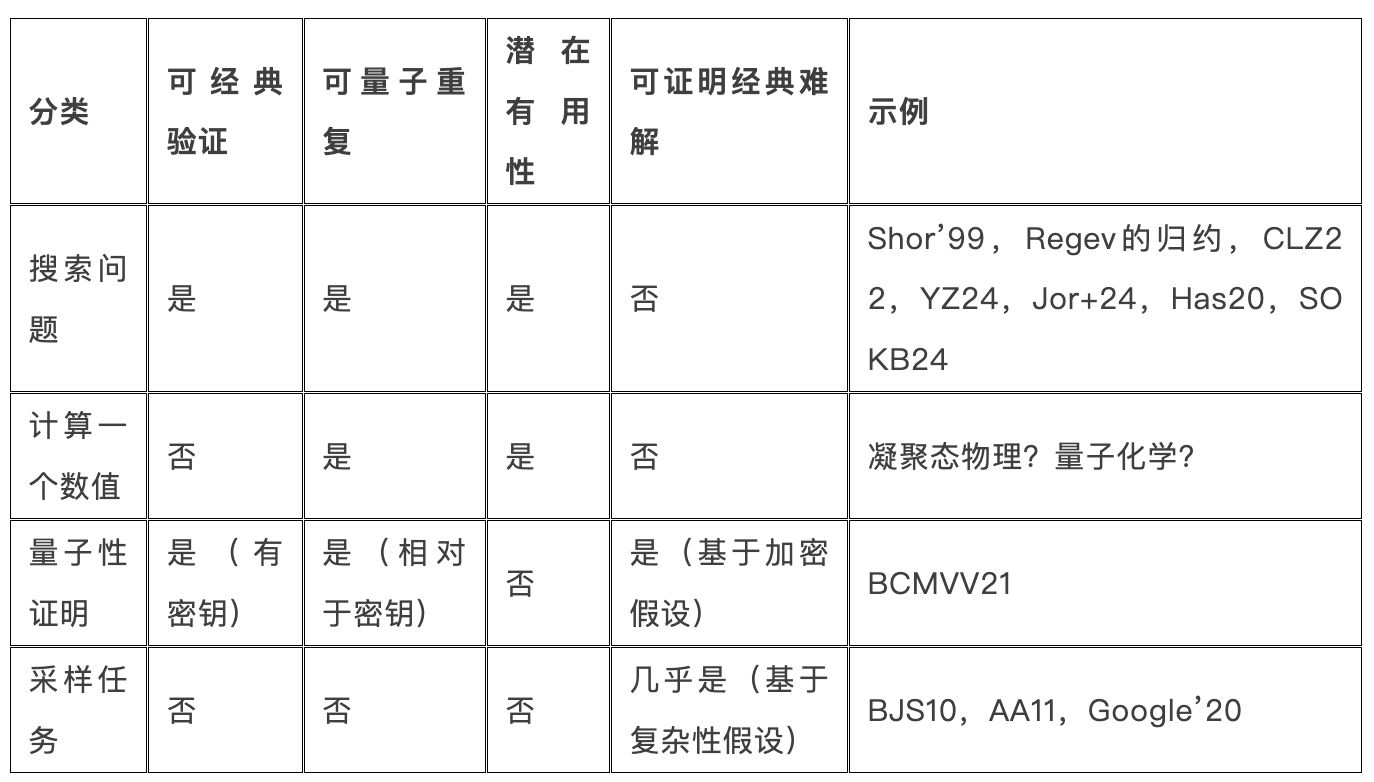
Core Insights - The quantum computing field is experiencing significant growth but still grapples with the fundamental question of its practical applications [1][2][3] - There is a call for a more pragmatic approach to developing quantum algorithms, focusing on verifiable and practical solutions rather than adhering strictly to traditional standards [4][5] Technological Momentum - The theoretical foundation for quantum error correction is solid, with several platforms nearing or achieving error correction thresholds [2] - A substantial investment of $100 billion over the next few decades could lead to the construction of a large-scale quantum computer [2] Application Challenges - Unlike nuclear fusion, which has clear application value if successful, quantum computing lacks sufficient application drivers to justify the massive investments in research and infrastructure [3] - The industry must accelerate algorithm development alongside hardware advancements to maintain investment momentum [4] Empowering Theorists - Theoretical research plays a crucial role in shaping the future of quantum computing, with historical examples like Geoffrey Hinton's work in AI demonstrating the impact of theoretical foundations [5] - The community is looking for new theoretical insights to drive practical advancements in quantum computing [5] Challenges in Quantum Algorithms - Ideal quantum algorithms are traditionally expected to meet three criteria: provable correctness, classical intractability, and practical applicability [6] - Strict adherence to these criteria may hinder the discovery of innovative quantum algorithms [7][10] New Standards for Quantum Algorithms - A shift towards a more pragmatic standard is suggested, where quantum algorithms should achieve super-quadratic speedup compared to the best classical algorithms [9] - The focus should be on finding quantum algorithms that are sensitive to input variations and produce outputs that can be verified or repeated [11][12] Classification of Quantum Algorithms - Quantum algorithms can be categorized based on their output types, including search problems, numerical calculations, quantum property proofs, and sampling tasks [14][17] - Hamiltonian simulation is highlighted as a well-known application of quantum computing, with potential to solve classically intractable problems [15] Future Directions - There is a need to explore new input distributions and frameworks to discover genuinely novel quantum algorithms [17] - Quantum technology also holds promise in areas like sensing, communication, and data processing, although current focus remains on achieving computational advantages [20] Research Landscape - Despite the importance of new quantum algorithms, the number of research efforts in this area remains low, attributed to the complexity of quantum algorithm research [21] - A "mission-driven" exploratory mindset is encouraged to advance the field, allowing for the pursuit of quantum advantages in underexplored areas [22][23]
NSF一夜冻结所有项目拨款,“这绝对是致命一击”
Hu Xiu· 2025-05-05 02:07
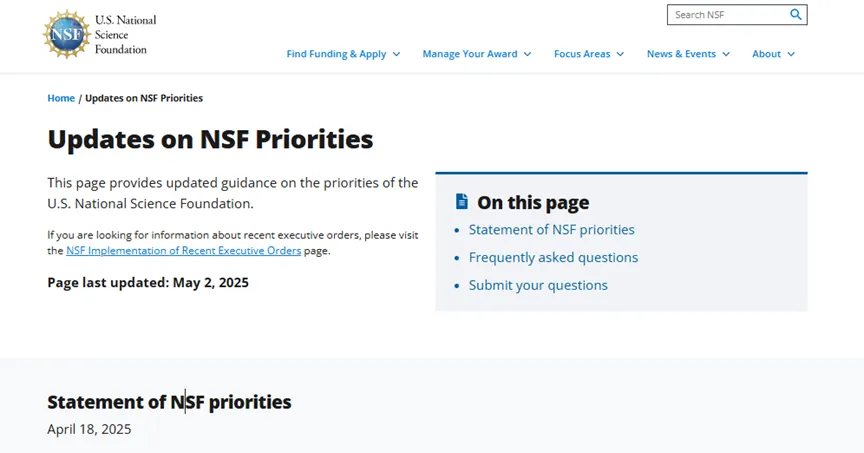
Core Points - The National Science Foundation (NSF) has halted all funding for research projects, both new and existing, as part of a broader shift in government policy under the Trump administration [1][5][15] - This decision follows a new policy introduced by NSF leadership that requires staff to filter out research proposals that do not align with the agency's priority projects [2][3] - The NSF has already terminated 1,040 funding grants, amounting to approximately $739 million, with a significant number of projects being cut due to their focus on diversity, equity, and inclusion [5][15] Funding and Budget Cuts - The NSF's funding situation is dire, with only about 25% of the budget approved for the fiscal year 2025 received so far, raising concerns about future funding availability [15] - The Trump administration has proposed a budget cut of at least 50% for the NSF, which translates to over $4 billion, reflecting a shift in research priorities towards artificial intelligence, quantum computing, and nuclear energy [15][16] - The NSF is expected to face significant reductions in funding for climate, clean energy, and social science projects, while areas like artificial intelligence and quantum information may remain unaffected [16][17] Internal Reactions and Consequences - There is a growing atmosphere of disappointment and concern within the NSF, with some staff members resigning in response to the new policies [4][5] - Researchers across various fields have expressed outrage and confusion over the abrupt termination of their funding, with many feeling powerless against the NSF's decisions [9][10][11] - The NSF's actions are anticipated to have long-term negative impacts on the scientific community and the future of U.S. technological leadership [17][18]
东盟观察丨新加坡执政党赢得大选,黄循财首场大考成绩亮眼
2 1 Shi Ji Jing Ji Bao Dao· 2025-05-04 10:37
21世纪经济报道记者胡慧茵广州报道 新加坡新一届大选结果出炉,执政党人民行动党一如外界所料获胜。 5月4日凌晨,新加坡国会选举结果揭晓。据新华社报道,新加坡选举局公布的计票结果显示,执政党人 民行动党获得国会97个席位中的87席,赢得国会选举。反对党工人党获得10个议席。 据了解,新加坡国会实行一院制,议员由选民投票选举产生,任期5年,占国会多数议席的政党可组建 政府,新加坡执政党人民行动党自1959年执政至今。虽然人民行动党蝉联执政党角色的结果并无悬念, 但此次选举引发热议的地方在于,这是新加坡现任总理、现年52岁的黄循财自接任人民行动党秘书长并 出任新加坡总理以来,第一次带领该党经历大选。而且,此次国会大选比原定时间提前,这也被外界认 为是新加坡国家执政党试图在不稳定的大环境下巩固权力地位以便推行政策。 国会选举后,黄循财的发言也从侧面证实了这一说法。黄循财在5月4日凌晨举行的记者会上表示,在全 球面对严峻风暴的当下,本届新加坡大选的意义重大。他感谢新加坡国民给予其和治理团队的"明确且 有力的委托",并称这将使新加坡在动荡的世界中,处于更有利的位置。 美国政府滥施关税正冲击东南亚经济。对此,黄循财曾表示, ...
全市三百青年突击队挺立科技创新潮头
Bei Jing Ri Bao Ke Hu Duan· 2025-05-03 19:46
Group 1 - The core viewpoint emphasizes the role of youth in driving technological innovation and addressing national strategic needs through initiatives like youth commando teams and innovation workstations [1][6][7] - Over 300 youth commando teams have been cultivated in the technology innovation sector, and nearly 200 youth innovation workstations have been established at municipal and district levels, focusing on key areas such as quantum computing, artificial intelligence, biomedicine, and high-end equipment manufacturing [1][6][7] - The youth commando teams have achieved significant milestones, including over 600 patents and more than 50 international awards, demonstrating their capability in achieving key technology autonomy in seven strategic fields [3][6] Group 2 - The youth innovation workstations have been instrumental in incubating new production capacities, exemplified by the first low-temperature multi-effect seawater desalination project in China, which saves over ten million yuan in material costs [4][5] - The establishment of youth innovation workstations has evolved into a comprehensive ecosystem for youth scientific and technological talent, serving as incubators, demonstration benchmarks, and radiation sources for innovation [5][6] - The "one team, one station" model has proven effective in maintaining the dynamic nature of youth innovation activities while fostering a sustainable innovation ecosystem [7]
