
一二三产业融合发展

Search documents
宜居宜业和美乡村建设成效显著“十四五”交出亮眼答卷
Xin Lang Cai Jing· 2025-12-25 16:21
Core Viewpoint - The article highlights the successful implementation of the "Beautiful Countryside" initiative in Jin'an District, which has led to significant improvements in rural living conditions, economic development, and community engagement through various projects and activities [7][14]. Group 1: Rural Development Initiatives - Jin'an District has adopted the "Ten Million Project" experience to promote the construction of beautiful and livable villages, resulting in a clean and vibrant rural environment [7][14]. - Dongshisun Village in Maotanchang Town has been recognized as a model for beautiful countryside due to its ecological restoration, cultural tourism integration, and industrial upgrades [7][8]. - The district has invested 560 million yuan in rural development, establishing 187 provincial-level central villages and applying for the creation of 10 model villages [14]. Group 2: Economic Growth and Employment - The integration of leisure tourism, boutique homestays, and wild tea planting in Dongshisun Village has significantly enhanced the local economy and improved residents' quality of life [8][9]. - The oil tea industry in Huangdun Village has seen a harvest of 160 million pounds this year, generating approximately 54,000 yuan for the village collective and providing jobs for around 30 local residents [9][11]. - The white goose breeding industry in Youfang Village is expanding, with plans to develop e-commerce to promote local products, benefiting the community economically [10][11]. Group 3: Community Engagement and Governance - Villagers in various communities are actively participating in governance through regular meetings to discuss environmental improvements and development plans [12][13]. - The establishment of a "red and black list" system encourages community involvement in maintaining a clean environment and recognizes outstanding villagers [13]. - The district emphasizes a combination of self-governance, legal governance, and moral governance to enhance community participation and satisfaction [13][14].

产业富民 职工增收入
Xin Lang Cai Jing· 2025-12-23 19:08
Core Viewpoint - The news highlights the successful development of various agricultural and industrial sectors in the region, emphasizing the importance of tailored strategies for local resources to enhance income for workers and promote rural revitalization. Group 1: Development of Specialty Industries - The region has focused on high-quality development of specialty industries, leading to increased income for workers and improved overall well-being [1] - The introduction of innovative agricultural practices, such as the cultivation of fish in saline-alkali water and intercropping techniques, has significantly boosted productivity and income for farmers [2] - The establishment of processing facilities for local products, such as red dates, has created a complete industrial chain that enhances value and profitability [3][5] Group 2: Integration of Industries - The integration of agriculture, culture, and tourism has been promoted to create a modern rural industrial system, allowing for greater income generation for workers [6] - The development of new sales channels, including e-commerce and live streaming, has expanded market reach for local products, such as seabuckthorn and peaches [4][7] - The establishment of brand recognition through regional public brands and participation in cultural events has further enhanced the visibility and sales of local agricultural products [8] Group 3: Economic Impact - The economic benefits of these initiatives are evident, with significant increases in income reported by local workers, such as an average income of 130,000 yuan for peach growers [8] - The overall industrial output value from red date processing has reached 315 million yuan, showcasing the financial impact of these developments [3]
(走进中国乡村)泰山脚下挖出“软黄金” 黄精产业拓宽富民路
Xin Lang Cai Jing· 2025-12-20 08:45
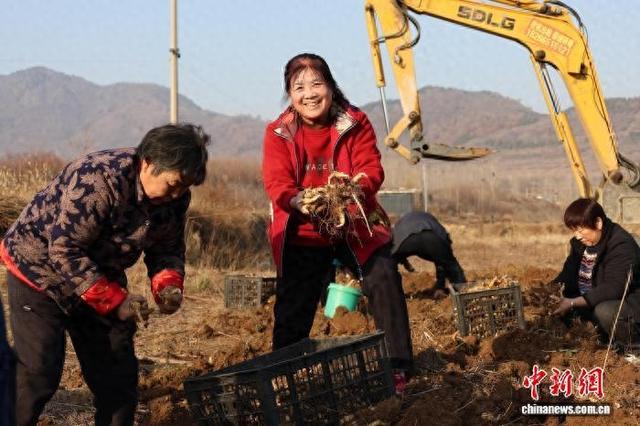
Core Insights - The cultivation of Huangjing (a medicinal herb) in Yengzhuang Village, located at the foot of Mount Tai, has significantly increased farmers' income, with an average annual yield of approximately 15,000 RMB per mu, nearly ten times that of traditional crops [1][3] - The village has adopted an innovative "company + base + professional village + cooperative + farm" model since 2018, ensuring a stable income for farmers through a comprehensive support system [3][5] Industry Overview - Huangjing, a perennial herb from the lily family, is recognized for its health benefits and is considered one of the "Four Famous Medicines of Mount Tai" [3] - The total planting area for Huangjing in the region has reached over 20,000 mu, involving nearly 1,000 farmers and fostering the development of over 30 processing enterprises [5] Economic Impact - The village's Huangjing production has led to an annual output exceeding 200,000 jin, generating a total income of over 4 million RMB for the community [3][5] - The processing company has achieved an annual output value of 620 million RMB by producing over 80 products, including Huangjing tea and wine, enhancing the value-added aspect of Huangjing [5] Tourism and Cultural Integration - The local government is promoting a tourism model that integrates traditional Chinese medicine culture, ecological agriculture, and leisure tourism, creating a unique experience for visitors [5] - The development of a tourism route featuring traditional processing experiences and culinary offerings related to Huangjing has attracted visitors, enhancing the region's economic prospects [5]
“百千万工程”三年初见成效 57个县(市)GDP增速连续两年快于全省平均水平
Nan Fang Ri Bao Wang Luo Ban· 2025-12-17 08:11
Core Insights - Guangdong Province has made significant progress in rural revitalization and urban-rural coordinated development through the "Hundred Counties, Thousand Towns, and Ten Thousand Villages High-Quality Development Project" (referred to as "Hundred Thousand Project") during the 14th Five-Year Plan period [1][2] Group 1: Economic Development - The "Hundred Thousand Project" has led to the establishment of five major systems for command, work, goals, policies, and evaluation, resulting in 57 counties (cities) achieving GDP growth rates that have outpaced the provincial average for two consecutive years [1] - The total industrial output value of 15 main platforms has surpassed 1.2 trillion yuan, with over 2,200 new industrial transfer projects and a total planned investment exceeding 720 billion yuan [2] - The urbanization rate of the permanent population in counties has increased from 44.72% to 46.48%, while the income ratio between urban and rural residents has narrowed from 2.41:1 to 2.31:1 [1] Group 2: Agricultural and Industrial Integration - Guangdong is promoting the integration of modern agriculture and marine economy, establishing 12 national advantageous characteristic industrial clusters and 24 national modern agricultural industrial parks [2] - The province has initiated 19 pilot projects for the integration of agriculture, culture, and tourism, with significant progress in areas like the Nankun Mountain and Luofu Mountain regions [3] Group 3: Infrastructure and Environmental Improvement - Approximately 16.5 million rural housing units have seen improvements in quality since the beginning of 2023, with 1,066 rural sewage treatment facilities constructed [4][5] - The province has achieved over 90% in rural sewage treatment rates and 97% in the coverage of sanitary toilets [5] Group 4: Reform and Governance - Guangdong has implemented over 100 reform measures to enhance urban-rural coordination, including the adjustment of 67 provincial administrative powers to be executed at the municipal and county levels [6] - A total of 4.951 billion yuan in new special bonds is planned to be issued by 2025, with 80% allocated to the "Hundred Thousand Project" [6] Group 5: Collaborative Support Mechanisms - A new collaborative support mechanism has been established, involving 62 vertical support groups that have completed over 1,100 key assistance tasks and attracted more than 300 billion yuan in funding for county-level projects [8][9] - The province has mobilized over 16.6 billion yuan in funding from the Pearl River Delta region for inter-city cooperation, with over 700 projects introduced [8]
文化激活乡村,产业赋能振兴
Ren Min Ri Bao· 2025-12-07 11:21
Core Insights - The transformation of Yuanqiao Village in Dengfeng City, Henan Province, showcases a new path for cultural industry empowering rural development, turning historical sites into open-air museums and micro-drama filming locations [1] - The growth of the micro-drama industry in Zhengzhou has provided opportunities for Yuanqiao Village to revitalize its "old resources" and develop new business models, leading to talent, capital, and service aggregation, as well as rural environment improvement and internal-external linkages [1] - During the "14th Five-Year Plan" period, the implementation of rural revitalization strategies has resulted in effective policies supporting rural cultural development, with Henan Province emerging as a leader in cultural empowerment for rural revitalization [1] Industry Developments - Various villages in Henan, such as Xu Chang Village and Yi Chuan Village, have leveraged traditional intangible cultural heritage and historical sites to create unique products, enhancing farmers' income and reshaping rural landscapes [1] - Cultural products with heritage attributes, like Gushi Liu Bian and Nanzhao silk carpets, have successfully entered international markets, indicating a growing cultural export potential [1] - Looking ahead to the "15th Five-Year Plan," the focus will be on fully revitalizing rural areas by prioritizing protection and rational use of cultural and natural resources, promoting the integration of primary, secondary, and tertiary industries [2] Recommendations - It is suggested to cultivate influential and competitive cultural industry brands and distinctive villages through creative design, film production, and intangible cultural heritage research, encouraging more villages to follow Yuanqiao's example in promoting cultural wealth [2]
天马科技:公司坚定以鳗鱼产业为核心
Zheng Quan Ri Bao Wang· 2025-11-14 14:11
Core Viewpoint - The company is committed to developing a world-class food supply chain platform centered around the eel industry, with a focus on food as a new growth area and feed as a foundational element [1] Group 1: Industry Strategy - The company aims to fully promote the integration of primary, secondary, and tertiary industries [1] - The company operates over a hundred subsidiaries globally, positioning itself as a key player in agricultural industrialization and a national technology innovation demonstration enterprise [1] Group 2: Subsidiary Operations - The company has a controlling subsidiary, Hainan Tianma Biotechnology Co., Ltd., located in Haikou, Hainan Province, which specializes in the sale of aquatic feed [1]

多层次推动生态循环农业高质量发展
Zhong Guo Huan Jing Bao· 2025-11-10 05:46
Core Viewpoint - Ecological circular agriculture is a crucial aspect of green development in the agricultural sector, aiming to break through traditional flat agricultural production challenges and achieve a three-dimensional cycle in agricultural production [1] Group 1: Systematic Promotion and Innovation - Development of ecological circular agriculture requires a robust, targeted, and adaptive technical support mechanism [1] - Establishment of pilot projects to explore ecological circular agriculture models and the growth of new agricultural business entities to enhance demonstration effects [1] - Emphasis on cultivating high-quality application-oriented talents in ecological circular agriculture through categorized training and the establishment of educational bases [1] Group 2: System Improvement and Efficiency Integration - Expanding and extending the circular agricultural industry chain is essential for promoting ecological circular agriculture [2] - Encouragement of deep processing in agricultural product industries and comprehensive utilization of by-products [2] - Development of a complete agricultural product circulation system and exploration of new models like "Internet + ecological agricultural products" [2] Group 3: Mechanism Improvement and Strengthened Support - Development of ecological circular agriculture requires substantial support in tax incentives, ecological compensation, and infrastructure construction [3] - Increased public financial support for ecological circular agriculture, with a shift towards targeted funding policies [3] - Establishment of a multi-source investment mechanism involving government guidance, agricultural production entities, and social capital [3]
广西贺州:葡萄酒叩开大湾区市场 农民增收有 “甜” 方
Zhong Guo Xin Wen Wang· 2025-11-04 07:13
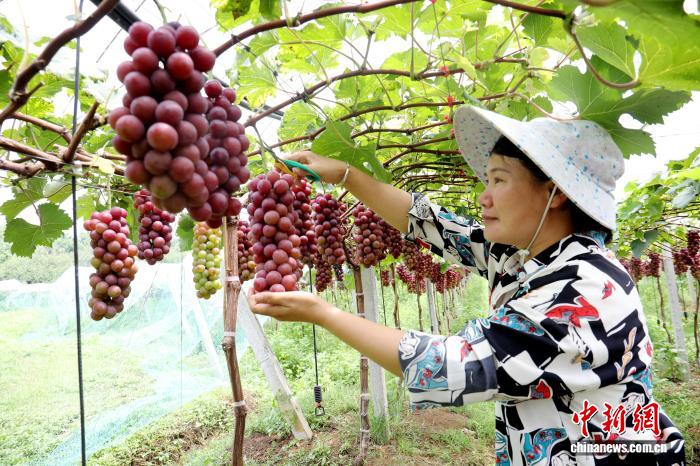
Core Viewpoint - The grape wine industry in Guangxi Hezhou is opening up new markets in the Greater Bay Area, leading to increased income for local farmers through innovative agricultural practices and industry integration [1][2]. Group 1: Industry Development - The grape planting area in Pinggui District has reached 1,700 acres, with over 10 varieties including wine grapes and summer black grapes [2]. - The local grape wine production model combines "Party branch + cooperative + farmers," resulting in an annual output of approximately 200 tons and a value of around 1.6 million yuan [2]. - The district is focusing on creating a comprehensive rural tourism experience that includes grape picking, unique homestays, and educational programs, enhancing the value chain of the grape wine industry [4]. Group 2: Economic Impact - The introduction of high-quality grape varieties and advanced winemaking equipment has significantly improved production quality, with a single wine vat selling for 9,000 yuan, equivalent to the price of over one acre of fresh grapes [1][2]. - The local economy is benefiting from the integration of agriculture and tourism, with over 30 households participating in grape cultivation, thus increasing their income [2][4]. - Farmers are encouraged to share in the value-added benefits of the grape wine industry through land transfer, employment opportunities, and profit-sharing models [4].
淮安市大福村着力推进一二三产业融合发展
Xin Hua Ri Bao· 2025-11-02 23:27
Core Insights - The article highlights the successful integration of agriculture, tourism, and community services in Dafuku Village, leading to increased income and improved quality of life for residents [1][4][5] Agricultural Development - Dafuku Village has 2,850 acres of arable land primarily used for rice and wheat rotation, with a focus on high-efficiency agriculture and facility farming [4] - The village has established a 400-acre watermelon greenhouse and 100 acres each of grape and peach orchards, contributing significantly to local income [4] - The village's agricultural initiatives have attracted over 10,000 tourists annually, enhancing its status as a leisure destination for nearby urban residents [4] Economic Impact - The village's collective economic income reached 3.52 million yuan in 2024, with per capita income for villagers at 29,000 yuan [5] - The integration of various industries has generated an annual income of 300,000 to 400,000 yuan from seasonal fruit picking and other activities [3] Community Services - The village has established a "Happiness Center" providing services for the elderly, including affordable meals and health consultations [6][7] - A total of 632 residents aged 60 and above benefit from various support services, including free health check-ups and birthday celebrations for seniors [7][8] Youth Engagement - Dafuku Village organizes interest classes for left-behind children during school breaks, with participation from university students and retired teachers [8] - The village has implemented infrastructure improvements, including sports events and facilities, to enhance community engagement and well-being [8]
电白力江合作社:一棵牛大力,一条共富路㉕丨聚焦兴农“新”力量
Nan Fang Nong Cun Bao· 2025-10-20 03:32
Core Viewpoint - The article highlights the success of the Lijiang Green Planting Cooperative in the Dianbai District of Maoming City, Guangdong Province, which has effectively utilized the cultivation of a medicinal plant called "Niu Dali" to drive local economic growth and rural revitalization through innovative agricultural practices and community engagement [4][6][44]. Group 1: Development and Innovation - The cooperative was established eight years ago and has focused on enhancing internal quality and external capabilities, becoming a model for increasing farmers' income and promoting rural revitalization [5][6]. - The cooperative has adopted a technology-driven approach, introducing advanced agricultural machinery and establishing a complete industrial chain from planting to processing, including automated drying and sorting equipment [9][10][11]. - Standardized production practices have significantly improved both the yield and quality of the Niu Dali crop, with an annual processing capacity of 2,360 tons and a self-cultivated area of 1,360 acres [12][14]. Group 2: Brand Building and Market Expansion - The cooperative is actively building the "Yili Jiang" brand, focusing on quality certification and marketing to enhance product value and market competitiveness [19][20]. - The cooperative has expanded its market reach through participation in agricultural exhibitions and the establishment of e-commerce platforms, with products now sold across Guangdong, Guangxi, and Fujian provinces [21][22][23]. - New business models, including eco-tourism and leisure agriculture, have been explored to extend the industrial chain and increase brand influence [24][25][26]. Group 3: Community Engagement and Economic Impact - The cooperative employs a "cooperative + base + farmer" model to closely link the interests of small farmers, providing comprehensive services from seed supply to quality management and unified sales [29][32]. - In 2021, the cooperative was recognized as a "National Demonstration Cooperative" by the Ministry of Agriculture and Rural Affairs, impacting 218 local farmers and increasing their average annual income by over 20,000 yuan [36][37]. - The cooperative has created job opportunities for 111 individuals, with 64 becoming members, and provides seasonal employment for 80-100 workers, benefiting eight surrounding administrative villages [38][39]. Group 4: Future Plans - The cooperative aims to continue exploring new industrialization models, creating a modern agricultural park that integrates planting, processing, sales, leisure tourism, and educational activities to contribute further to rural revitalization [43][44].
