
东北全面振兴

Search documents
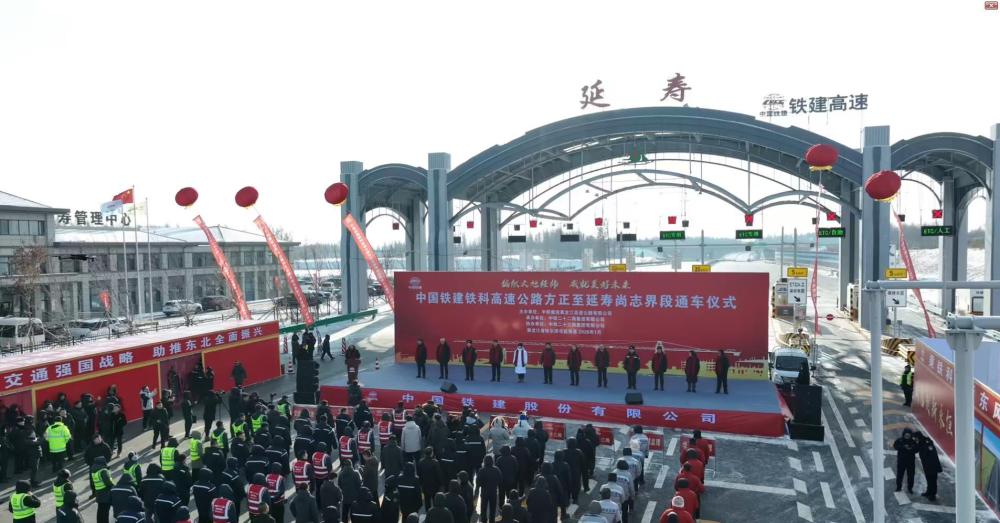
铁科高速公路方正至延寿尚志界段开通运营
Zhong Guo Jin Rong Xin Xi Wang· 2026-01-12 08:24
Core Viewpoint - The completion of the TieKe Expressway section from Fangzheng to Yanshou marks a significant infrastructure development in Heilongjiang Province, enhancing regional connectivity and economic growth opportunities [1][7]. Group 1: Project Overview - The TieKe Expressway section from Fangzheng to Yanshou officially opened on January 9, 2026, six months ahead of schedule [1]. - The project spans 76.989 kilometers, featuring a dual four-lane design with a speed limit of 100 km/h and a total investment of 5.6195 billion yuan [6]. - The expressway connects with the existing HaTong Expressway and the previously completed TieKe Expressway section, creating a major transportation artery in southeastern Heilongjiang [7]. Group 2: Economic and Cultural Impact - The opening of the expressway is expected to transform the local economy by improving transportation access, thereby facilitating the movement of agricultural products and tourism resources [7]. - Local officials emphasize leveraging the region's cultural and ecological advantages to develop green food production, health industries, and tourism, aiming to establish Yanshou as a wellness destination [3]. - The project is seen as a catalyst for regional development, aligning with national poverty alleviation policies and enhancing the overall economic landscape of Heilongjiang [1][3]. Group 3: Construction and Technological Aspects - The construction was executed by China Railway Construction Investment Heilongjiang Highway Co., which emphasized quality and efficiency, achieving early completion through advanced construction technologies [5][6]. - Innovative technologies such as intelligent welding robots and smart road monitoring systems were utilized to ensure safety and quality during construction [6]. - The project reflects the commitment of central enterprises to contribute to high-quality economic development in the region [5].


我省授予丁洪磊等10人“最美退役军人”、刘铮等10人“最美拥军人物”称号
Liao Ning Ri Bao· 2025-12-25 01:21
Core Viewpoint - The recognition of "Most Beautiful Retired Soldiers" and "Most Beautiful Supporters of the Military" in Liaoning Province aims to promote the exemplary role of retired soldiers and enhance the social atmosphere of valuing national defense and respecting the military [1][2] Group 1 - Ten individuals were awarded the title of "Most Beautiful Retired Soldiers" in Liaoning Province, including Ding Honglei, Wang Zhongxiang, and others, to highlight their contributions and stories [1] - Ten individuals received the title of "Most Beautiful Supporters of the Military," such as Liu Zheng and Guan Deqiang, recognizing their dedication to patriotic and military support work [1] - The initiative aims to foster a strong sense of military-civilian unity and encourage retired soldiers to continue contributing to national and local development [1] Group 2 - The provincial authorities encourage the awardees to cherish their honors and continue to uphold the glorious traditions of the People's Army, aiming for further achievements in their respective fields [2] - The broader community is urged to take these individuals as role models, emphasizing the importance of gratitude and commitment to the revitalization of Northeast China [2] - The initiative aligns with the goals of advancing national construction and the rejuvenation of the nation, contributing to the modernization of Liaoning Province [2]
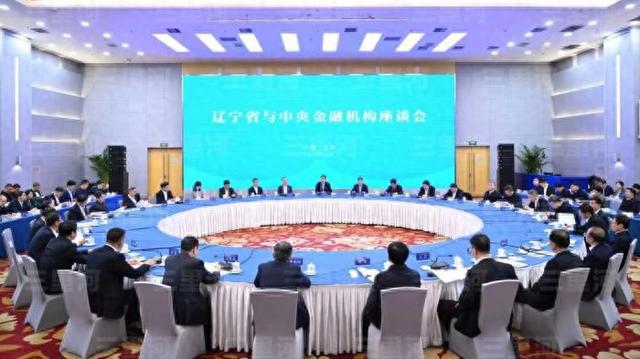
汇聚金融力量 推动辽宁全面振兴
Zhong Guo Xin Wen Wang· 2025-12-13 08:04
Group 1 - The meeting between Liaoning Province and central financial institutions signifies strong financial support for the comprehensive revitalization of Liaoning, indicating substantial cooperation measures to follow [3][4] - Key themes discussed included increasing financing support, enhancing patient capital, and optimizing financial services, which are crucial for Liaoning's transition to high-quality development [3][4] - Liaoning's proposed "2211" industrial system outlines a clear investment roadmap, targeting 22 advantageous industrial clusters, over 100 industrial chains, and more than 1,000 core enterprises [4][5] Group 2 - The establishment of a normalized cooperation mechanism suggests a shift towards institutionalized and systematic interactions between Liaoning and central financial institutions, indicating a prelude to deeper collaboration [5] - Liaoning's strategic importance is highlighted by its unique geographical position as the only coastal and border province in Northeast China, serving as a key gateway for the region [5][6] - The financial support aims to solidify previous revitalization efforts and assist the region in achieving high-quality development during the critical "14th Five-Year Plan" period [5][6] Group 3 - Financial institutions view Liaoning as a strategic opportunity, with emerging competitive industrial clusters providing quality asset allocation opportunities, particularly in technology innovation and high-end manufacturing [8] - The systematic injection of financial resources into Liaoning is expected to accelerate its economic transformation, addressing the funding needs for traditional industry upgrades, new industry cultivation, and infrastructure development [8] - The meeting not only brings financial resources but also instills confidence in Liaoning's potential for new growth momentum [8]
夯实东北全面振兴基础
Jing Ji Ri Bao· 2025-12-11 21:37
Group 1 - The core objective is to achieve a 500 billion yuan target for the silver economy industry in Jilin Province during the "14th Five-Year Plan" period, indicating a strong push for economic revitalization in Northeast China [1] - Northeast China is recognized as a crucial industrial base, grain production area, and ecological protection barrier, playing a vital role in national security and development [2] - The region has made significant progress in various fields, including state-owned enterprise reform in Liaoning, record grain production in Jilin, and notable achievements in the "4567" modern industrial system in Heilongjiang [2] Group 2 - The transformation of traditional industrial areas is a global challenge, with examples from Germany and the United States showcasing successful transitions to modern service and high-tech centers [3] - Northeast China possesses rich strategic resources and deep technological foundations, providing a strong basis for development in the context of China's modernization [3] - Challenges include the need to enhance technological innovation capabilities and the relatively slow development of emerging industries [3] Group 3 - There is a call to accelerate industrial structure adjustments, focusing on upgrading traditional industries and fostering strategic emerging industries such as aerospace and new materials [4] - Strengthening technological innovation is essential, with an emphasis on high-end machine tools and fine chemicals, and promoting local transformation of scientific achievements [4] - Environmental protection efforts are highlighted, including the preservation of black soil and the development of a circular economy to promote green and low-carbon transitions in industries [4]
中国东航东北分公司揭牌 更好服务新时代东北全面振兴
Zhong Guo Min Hang Wang· 2025-11-27 08:32
Core Viewpoint - China Eastern Airlines (CEA) has officially established its Northeast Branch, marking its first regional company in China that spans multiple provinces, aimed at enhancing its service capabilities to support national strategies and the revitalization of Northeast China [1][3]. Group 1: Company Overview - The Northeast Branch of CEA was inaugurated on November 27, 2025, in Shenyang, with key officials from both the provincial government and CEA in attendance [3]. - The new branch is built on the foundation of CEA's Shenyang operation and includes bases in Harbin and Changchun, as well as a sales office in Dalian, focusing on regional operational support and marketing services [3]. Group 2: Operational Scope - CEA operates 22 stations across the three northeastern provinces, connecting to 45 domestic cities and executing 107 flight routes [6]. - In Liaoning province, CEA has established a comprehensive network covering six major points, including Shenyang and Dalian, with daily departures reaching 61 flights to key cities such as Shanghai, Nanjing, and Guangzhou [6]. Group 3: Future Plans - CEA plans to increase its investment in Northeast China, expand cooperation, enhance capacity deployment, and improve service levels to better support local economic and social development [6].


哈尔滨新区:以改革之笔绘就振兴发展新图景
Zhong Guo Fa Zhan Wang· 2025-11-11 08:43
Core Insights - Harbin New Area has undertaken 1,050 reform tasks across various fields, positioning itself as a leader in comprehensive reform within the province [1] - The area has implemented 12 national-level reform cases and 10 initiatives that are first in the country, demonstrating a commitment to innovative governance [1] Reform Strategy - The reform strategy focuses on integrating top-level design with grassroots exploration, ensuring that each reform is targeted and effective [2] - Key areas of focus include technological innovation, enhancing the business environment, and improving social welfare [2] - A mechanism for collecting public and enterprise feedback has been established, gathering over 3,800 suggestions to inform reform design [2] Implementation Mechanism - A clear and efficient reform promotion system has been established, with a four-level coordination mechanism to ensure accountability and effectiveness [3] - The reform process includes a comprehensive evaluation and tracking system to monitor progress and address challenges [3] Research and Evaluation - The area emphasizes the importance of research and evaluation in reform, conducting in-depth studies to gather first-hand information and identify potential risks [4][5] - A rapid response mechanism has been created to ensure that reforms align with higher-level policies and advanced practices [5] Results and Promotion - An integrated mechanism for cultivating and promoting reform results has been established, with 285 reform cases documented and shared [5] - The area has developed a comprehensive communication strategy to disseminate reform achievements and engage various stakeholders [5]
地方政府与城投企业债务风险研究报告:辽宁篇
Lian He Zi Xin· 2025-10-29 11:25
1. Report Industry Investment Rating No information about the report industry investment rating is provided in the given content. 2. Core Views of the Report - Liaoning Province, an important old industrial base in China, has its economy and per - capita GDP at the middle level in the country. It faces good development opportunities with the continuous promotion of the Northeast Revitalization policy. However, it has a relatively heavy government debt burden [4][6]. - There is significant imbalance in economic and fiscal development among cities in Liaoning Province. Dalian and Shenyang are the "dual - cores" with stronger economic and fiscal strength, while other cities show relatively weaker performance [22][29]. - The number of bond - issuing urban investment enterprises in Liaoning Province is small, mainly at the municipal level. In 2024, the number and scale of bond issuances by urban investment enterprises increased year - on - year, but there was a decline in the first eight months of 2025. Some cities have large net outflows of bond financing, and the debt burden and short - term solvency of urban investment enterprises vary among different cities [5][47]. 3. Summary by Relevant Catalogs I. Liaoning Province's Economic and Fiscal Strength (1) Regional Characteristics and Economic Development - Liaoning is rich in mineral resources and has a basically formed comprehensive transportation system. It is the only province in Northeast China that is both coastal and border - adjacent. The tertiary industry is the main driving force for economic growth [6]. - In 2024, the permanent population decreased by 270,000 compared with the end of the previous year, and the urbanization rate was 74.18%, 0.67 percentage points higher than the previous year and higher than the national average [7]. - In 2024, the GDP was 3.26127 trillion yuan, with a growth rate of 5.1%. The per - capita GDP was 78,200 yuan, both ranking 16th in the country. Fixed - asset investment increased by 5.3% year - on - year. From January to June 2025, the GDP was 1.57079 trillion yuan, with a year - on - year growth of 4.7% [7]. - The Northeast Revitalization policy is beneficial to regional development, and Liaoning Province's economic strength is expected to be further enhanced [12]. (2) Fiscal Strength and Debt Situation - In 2024, the general public budget revenue was 290.694 billion yuan, ranking 18th in the country, with a same - caliber growth of 5.5%. The tax revenue accounted for 63.25%, and the fiscal self - sufficiency rate was 42.38% [15]. - In 2024, the government - funded income was 50.125 billion yuan, a year - on - year increase of 11.7%. The superior subsidy income accounted for 52.86% of the local comprehensive financial resources, making a large contribution [15][16]. - In 2024, the local government debt ratio and debt - to - GDP ratio were 193.92% and 42.99% respectively, ranking 23rd and 15th in the country, indicating a relatively heavy government debt burden [19]. II. Economic and Fiscal Strength of Cities in Liaoning Province (1) Economic Situation of Cities - The economic strength of cities in Liaoning Province varies greatly. Dalian and Shenyang, as the "dual - cores", have much stronger economic strength than other cities. In 2024, the GDP of Dalian and Shenyang accounted for 29.18% and 27.68% of the provincial total respectively [22][29]. - The economic development levels of cities are clearly differentiated. In 2024, the GDP growth rates of cities ranged from 3.8% to 5.9%. In the first half of 2025, the GDP growth rate of Fushun was 7.0%, ranking first in the province [29]. - In 2024, the per - capita GDP of Dalian, Panjin, and Shenyang exceeded the national average, with Dalian having the highest and Tieling the lowest [29]. (2) Fiscal Strength and Government Debt of Cities - The fiscal strength of cities in Liaoning Province is significantly differentiated. In 2024, the general public budget revenues of Shenyang and Dalian were 82.558 billion yuan and 77.477 billion yuan respectively, leading other cities. The tax revenue proportion of most cities decreased year - on - year, and the fiscal self - sufficiency rates of most cities were below 60% [32][33]. - In 2024, the government - funded income of Shenyang and Dalian was relatively large, with 17.164 billion yuan and 14.080 billion yuan respectively. Except for some cities, the government - funded income of other cities increased [36]. - In 2024, the superior subsidy income was an important source of local comprehensive financial resources. Only Shenyang and Dalian had comprehensive fiscal revenues exceeding 100 billion yuan [37]. - By the end of 2024, except for Fushun, the government debt balances of other cities increased. The government debt ratios of most cities rose, and the debt ratios of Panjin and Yingkou were relatively high, around 500% [40]. III. Debt - paying Ability of Urban Investment Enterprises in Liaoning Province (1) Overview of Urban Investment Enterprises - As of the end of August 2025, there were 10 urban investment enterprises with outstanding bonds in Liaoning Province. The number of bond - issuing enterprises was small, mainly at the municipal level, with AA+ as the main credit rating. Dalian had relatively more urban investment enterprises [42][44]. (2) Bond Issuance of Urban Investment Enterprises - In 2024, the number and scale of bond issuances by urban investment enterprises in Liaoning Province increased year - on - year. Shenyang had a large net inflow of bond financing, while Tieling and Huludao had large net outflows. From January to August 2025, the bond issuance scale decreased year - on - year. Dalian and Shenyang had large net inflows of bond financing, while Yingkou had a large net outflow [47]. (3) Debt - paying Ability Analysis of Urban Investment Enterprises - By the end of 2024, the debt structure of most bond - issuing urban investment enterprises in cities of Liaoning Province was mainly indirect financing. Except for Shenyang, the total debt scale of other cities decreased. Shenyang had a relatively heavy debt burden [52]. - Most cities had weak short - term solvency indicators. Shenyang and Dalian had net inflows of cash from financing activities, while other cities had net outflows [52]. (4) Support and Guarantee Ability of Local Fiscal Revenues for the Debt of Bond - issuing Urban Investment Enterprises - In Dalian and Shenyang, the scale of "total debt of bond - issuing urban investment enterprises + local government debt" exceeded 300 billion yuan. In Yingkou, Panjin, and Anshan, it exceeded 100 billion yuan. The ratio of "total debt of bond - issuing urban investment enterprises + local government debt" to "local comprehensive financial resources" in all cities exceeded 200%, with Yingkou and Panjin exceeding 400% [60].
沈白高铁铺就振兴发展康庄大道
Ren Min Wang· 2025-10-22 12:55
Core Viewpoint - The opening of the Shenyang-Baihe High-Speed Railway (沈白高铁) marks a significant development in Northeast China's transportation network, enhancing connectivity and promoting economic growth and cultural tourism in the region [1][2][4]. Group 1: Economic Development - The Shenyang-Baihe High-Speed Railway creates an "O" shaped closed loop in Northeast China's high-speed rail network, facilitating coordinated development among cities like Shenyang, Changchun, and Tonghua [2][4]. - The railway reduces travel time significantly, with journeys from Shenyang to Changbai Mountain now taking as little as 1 hour and 53 minutes, enhancing business efficiency and collaboration [4][8]. - The railway is expected to drive regional economic integration, allowing Northeast cities to better connect with the Beijing-Tianjin-Hebei and Bohai Rim economic zones, thus increasing economic activity [4][5]. Group 2: Tourism Enhancement - The Shenyang-Baihe High-Speed Railway is reshaping the tourism landscape in Northeast China by linking cultural and natural attractions, enabling seamless travel experiences across multiple cities [5][6]. - Local tourism agencies are developing diverse travel packages that incorporate high-speed rail, dining, and accommodation, aiming to attract more visitors to the region [6][7]. - The railway's opening has led to a more than 50% increase in tourism orders in its core service area during the recent holiday period, indicating a positive impact on local tourism [7]. Group 3: Improved Quality of Life - The high-speed railway enhances the quality of life for residents by providing faster and more comfortable travel options, thus encouraging family visits and leisure activities [8][11]. - Enhanced services at stations, such as the "Long White Emotion" service team, ensure a comfortable travel experience for passengers, particularly the elderly and families with children [11][12]. - The railway not only serves as a transportation line but also as a "happiness line," improving the overall travel experience and fostering a sense of community among residents [8][12].
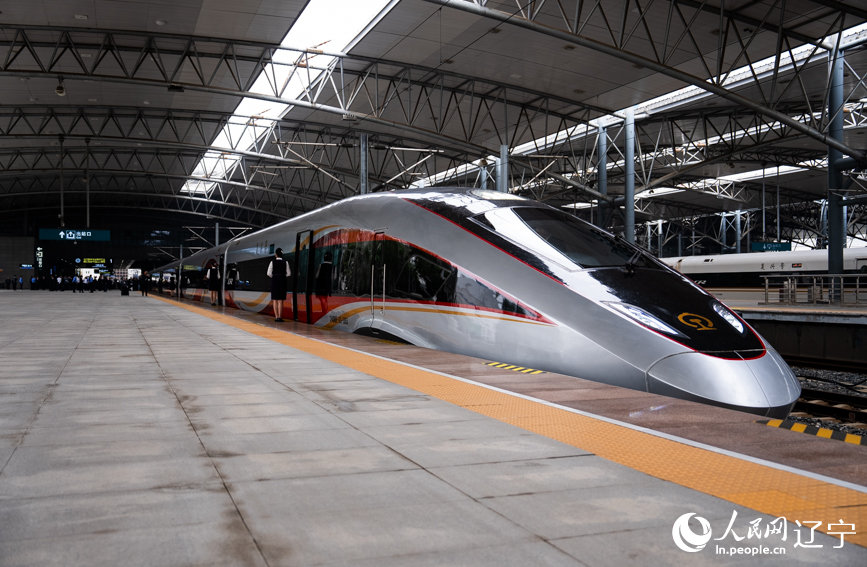
激活经济新动能 沈白高铁构建区域发展新格局
Ren Min Wang· 2025-10-01 01:46
Core Insights - The opening of the Shenyang-Baihe High-Speed Railway (Shenbai High-Speed Railway) marks a significant milestone in connecting Liaoning and Jilin provinces, completing the "O" shaped loop of the Northeast high-speed rail network, which is expected to boost economic development and improve transportation for residents [1][2]. Economic Activation - The Shenbai High-Speed Railway has doubled the daily train services from 14 to 28 pairs, enhancing connectivity to cities like Yanji and Qingdao, and significantly reducing travel times, with the fastest journey from Shenyang to Changbai Mountain taking only 1 hour and 53 minutes [2]. - The railway facilitates the movement of local products such as ginseng and wine, creating a more efficient market access and stimulating regional economic growth [2][3]. Urban Development - The arrival of high-speed rail is seen as a turning point for cities like Tonghua, which is now better connected to major urban centers, allowing for the development of a comprehensive tourism strategy and the growth of new industries [3]. - The Shenbai High-Speed Railway promotes the integration of the Harbin-Changchun urban agglomeration with the Liaozhongnan urban cluster, enhancing the flow of talent, resources, and technology across regions [3]. Cultural and Tourism Enhancement - The railway serves as a cultural and tourism connector, linking significant historical and scenic sites along its route, thus transforming travel experiences into cultural journeys [4]. - Tonghua's rich cultural heritage and tourism resources are revitalized through the railway, with local travel agencies developing diverse tourism products to attract visitors [4]. Improved Public Services - The upgraded facilities and innovative service models at Changbai Mountain Station enhance the travel experience for passengers, particularly for vulnerable groups such as the elderly and children [5][6]. - Initiatives like the "Changbai Qinyun Parent-Child Room" provide a supportive environment for families traveling with children, ensuring a comfortable and engaging experience [6]. Conclusion - The Shenbai High-Speed Railway is not just a transportation project; it is a new engine for the comprehensive revitalization of Northeast China, fostering economic growth, cultural exchange, and improved quality of life for residents [6].
沈白高铁正式开通运营
Liao Ning Ri Bao· 2025-09-28 09:47
Core Points - The Shenyang to Jiamusi High-Speed Railway (Shenbai High-Speed Railway) has officially opened, enhancing transportation in Northeast China and connecting various cities [1][2] - The railway is a key project under China's 14th Five-Year Plan, serving as a vital link in the national high-speed rail network and promoting regional development [2][3] - The construction faced significant challenges due to complex geological conditions and environmental protection requirements, but innovative techniques were employed to overcome these obstacles [4][5][6] - The railway is expected to boost local economies, improve transportation accessibility, and enhance tourism in the region [7][8] Group 1 - The Shenbai High-Speed Railway spans 430 kilometers, connecting major cities in Liaoning and Jilin provinces, and integrates with existing rail networks to form a closed-loop system for rapid passenger transport [2] - The opening of the railway allows for a significant increase in high-speed rail coverage in Liaoning, achieving a total of 2,387 kilometers of high-speed rail and ensuring every city in the province is connected [1][2] - The railway's design speed is 350 kilometers per hour, which will facilitate closer connections between urban clusters in Northeast China [2][3] Group 2 - The construction of the railway included innovative environmental protection measures, such as ecological restoration techniques and noise barriers, to minimize the impact on local ecosystems [5][6] - The railway is anticipated to activate the tourism industry in Liaoning, with initiatives like "high-speed rail + tourism" products to attract more visitors to local attractions [7][8] - The improved transportation infrastructure is expected to enhance the flow of resources and improve living standards, particularly in rural areas, by facilitating access to markets and public services [8]