
丢轮保车

Search documents
雷军谈“丢轮保车”:以为最早是沃尔沃做的,没想到是奔驰
Feng Huang Wang· 2026-01-05 07:57
Core Viewpoint - The discussion highlights Xiaomi's commitment to automotive safety through the implementation of the "wheel-off protection" design, which is a mature safety feature already seen in luxury vehicles [1] Group 1: Company Insights - Xiaomi's founder and CEO Lei Jun emphasized the significant effort the company has put into vehicle safety design, stating that safety is a fundamental premise for their automotive development [1] - The "wheel-off protection" concept, which allows the wheels to detach during a collision, is inspired by historical designs from luxury brands like Mercedes-Benz, showcasing Xiaomi's intention to integrate advanced safety features into their vehicles [1] Group 2: Industry Context - The "wheel-off protection" design has its origins in Mercedes-Benz's 1959 W111 model, which introduced the concept of crumple zones and energy absorption during collisions, indicating a long-standing industry trend towards enhancing vehicle safety [1] - Xiaomi's recent live demonstration of the YU7 model performing a 25% offset collision test illustrates the practical application of the "wheel-off protection" design, reinforcing the company's innovative approach to automotive safety [1]



雷军回应丢轮保车,称小米在汽车安全性设计下了巨大功夫
Sou Hu Cai Jing· 2026-01-05 06:55
Core Viewpoint - Xiaomi's founder and CEO Lei Jun emphasized the importance of safety design in their automotive development, specifically addressing the "wheel-off protection" safety feature, which is already well-established in luxury vehicles [1][3]. Group 1: Safety Design Features - The "wheel-off protection" design aims to prevent hard collisions between the passenger cabin and obstacles, thereby reducing impact forces [1]. - Xiaomi's safety design includes multiple force transmission paths that disperse impact forces across the vehicle body, enhancing energy absorption and ensuring safety during collisions [5]. - The vehicle's structure is designed to slide over obstacles, minimizing collision impact on the passenger cabin, while the wheel hub is designed to detach from the vehicle body to further enhance safety [5].
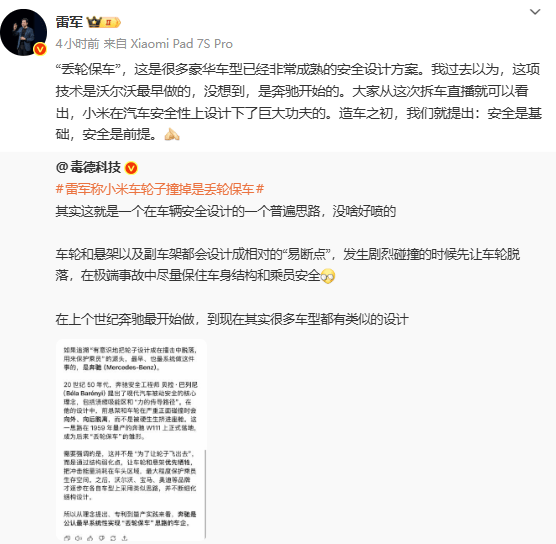
雷军回应“丢轮保车”
新华网财经· 2026-01-05 05:37
Group 1 - The core viewpoint of the article is that Xiaomi's approach to vehicle safety, specifically the "wheel loss protection" design, is a mature safety design concept already implemented by many luxury car brands [2] - Xiaomi's founder and CEO Lei Jun emphasized that the company has invested significant effort into vehicle safety design, stating that safety is a fundamental and primary concern from the outset of their automotive venture [2]
雷军回应“丢轮保车”
财联社· 2026-01-05 05:22
Group 1 - The core viewpoint of the article is that Xiaomi's approach to vehicle safety, specifically the "losing wheel to protect the car" design, is a mature safety design concept already implemented by many luxury car brands [1] - Lei Jun, the founder and CEO of Xiaomi, emphasized that safety is a fundamental and primary consideration in their vehicle design [1] - The article highlights that the "losing wheel to protect the car" concept was initially thought to be pioneered by Volvo, but it was actually started by Mercedes-Benz [1]
雷军再谈丢轮保车:非常成熟的安全设计 奔驰最早使用
Sou Hu Cai Jing· 2026-01-05 02:43
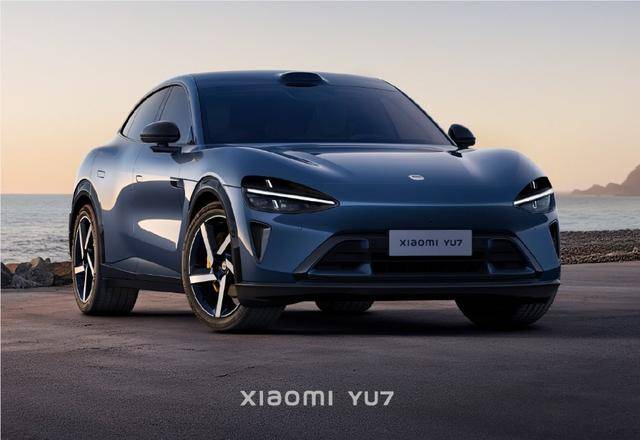
Core Viewpoint - Xiaomi's chairman Lei Jun addressed recent controversies regarding the company's automotive safety design, emphasizing that the "wheel detachment" concept is a well-established safety design principle in luxury brands, originally proposed by Mercedes-Benz [1][3]. Group 1: Historical Context - The "wheel detachment" safety concept can be traced back to the 1950s, with Mercedes-Benz safety engineer Béla Barényi being the first to propose modern passive safety principles, including crumple zones and "force transfer paths" [3]. - The first implementation of this concept was in the 1959 Mercedes-Benz W111 model, marking the inception of the "wheel detachment for vehicle protection" safety logic [3]. Group 2: Design Philosophy - The design is not intended to allow wheels to "fly off" but aims to dissipate impact energy in extreme collision scenarios by sacrificing non-critical components like wheels and suspension, thereby maximizing occupant safety [3]. - Other brands such as Volvo, BMW, and Audi have adopted and optimized similar structural designs, making it a common practice in automotive safety engineering [3]. Group 3: Xiaomi's Commitment - During a recent live stream of the Xiaomi YU7 teardown, viewers could clearly see the structural design details, showcasing Xiaomi's significant investment in automotive safety [5]. - The company has established safety as a foundational principle from the outset of its vehicle development process [5].

雷军称小米车轮子撞掉是丢轮保车:一种重要的安全策略
Sou Hu Cai Jing· 2026-01-04 17:48
Group 1 - The core focus of the news is on the safety features of the Xiaomi YU7 vehicle, particularly the innovative design of its door handles and the "wheel loss protection" strategy [1][3] - Xiaomi's Vice President, Li Xiaoshuang, highlighted that the YU7's door handles are equipped with mechanical pull wires for enhanced safety, ensuring that doors can be opened even in extreme collision scenarios [1] - The vehicle's design includes a dedicated power supply for the door locks, which provides reliable access for passengers during emergencies, showcasing Xiaomi's commitment to safety [1] Group 2 - Lei Jun explained the "wheel loss protection" concept, clarifying that the design allows wheels to detach during severe collisions to dissipate impact energy, thereby protecting occupants [3] - The live broadcast aimed to educate consumers about the safety features of the YU7 and counter misconceptions regarding the vehicle's design [3] - Xiaomi's efforts in automotive safety design reflect its dedication to innovation and consumer education in the automotive sector [3]
雷军4小时回应十大质疑
Xin Lang Ke Ji· 2026-01-04 06:52
Core Viewpoint - Xiaomi's CEO Lei Jun addressed various criticisms and controversies surrounding the company during a four-hour live stream, emphasizing the importance of fair and objective feedback while expressing frustration over misinformation and negative portrayals in the media [1][2][3][4]. Group 1: Response to Criticisms - Lei Jun highlighted that some critics exaggerate issues for attention, particularly regarding a teardown of Xiaomi's car, which was initially approached with a negative bias but ultimately revealed positive aspects [2]. - The company’s public relations manager stated that many negative videos about Xiaomi's vehicles are the result of malicious editing and labeling, which misrepresents the brand and leads to unwarranted personal attacks on its customers [3]. - Lei Jun expressed anger over claims that Xiaomi prevents farmers from selling millet, asserting that such accusations are unfounded and part of a smear campaign against the company [4]. Group 2: Commitment to Improvement - Lei Jun acknowledged the issue of small print in advertising as an industry-wide problem and committed to immediate changes to rectify this practice, emphasizing that compliance measures should not be misinterpreted as false marketing [4]. - The CEO refuted claims that Xiaomi employs 7,000 legal staff, indicating that the legal team is small and focused on combating misinformation and negative campaigns against the company [5]. Group 3: Product Features and Performance - Xiaomi's Vice President discussed the "super strong steel" used in their vehicles, confirming its high strength and inviting scrutiny to validate its quality [5]. - The company explained the "wheel drop" safety feature in their vehicles, clarifying that it is a deliberate design choice aimed at enhancing safety rather than a flaw [6]. - During winter testing, Xiaomi's YU7 outperformed competitors, achieving the best results in several categories, including range and energy consumption, compared to Tesla's Model Y [7]. Group 4: Future Goals - Lei Jun announced that Xiaomi delivered 410,000 vehicles in 2025 and set a target of 550,000 deliveries for 2026, indicating a focus on growth and improvement in the automotive sector [8].
雷军说“骂小米有流量”,还回应 N 多质疑:不让农民卖小米、200公里瞬间刹停、7000法务…
程序员的那些事· 2026-01-04 05:06
Core Viewpoint - The article discusses Xiaomi's recent live stream led by Lei Jun, addressing various controversies and criticisms regarding the company's new vehicle, the YU7, while emphasizing transparency and commitment to quality [1]. Group 1: Material and Design Controversies - Lei Jun confirmed the authenticity of the "super steel" used in the YU7, developed in collaboration with academic experts, and invited third-party testing to validate its strength [3]. - The design of the YU7's long front end was defended as a balance of aesthetics and practicality, enhancing safety and providing a spacious front trunk [5]. Group 2: Safety Features - The vehicle's wheel detachment during collisions was explained as a safety feature designed to protect passengers by redirecting impact forces [4]. - The YU7's door handle incorporates a dual mechanical design to ensure functionality even in extreme conditions, showcasing industry-leading safety redundancy [7]. Group 3: Marketing and Public Relations - Lei Jun acknowledged the issue of "small print marketing" as a common industry practice and committed to making changes to improve clarity in advertising [8]. - The company refuted rumors about preventing farmers from selling millet, emphasizing its unrelatedness to agricultural products and expressing outrage over the misinformation [9]. Group 4: Legal and Regulatory Matters - Lei Jun denied the claim of having 7,000 legal staff, asserting that the legal team is actively pursuing cases against malicious infringement [10]. - The company is taking steps to combat defamation and misinformation, with a focus on protecting its reputation and the rights of its customers [10]. Group 5: Performance Claims - Lei Jun provided evidence to support the claim of the YU7 achieving 1,300 kilometers on a single charge, clarifying that this was based on real-world testing and not exaggerated marketing [12]. - The statement regarding the vehicle's braking performance was clarified as a subjective expression rather than a technical specification, addressing concerns about misinterpretation [11].
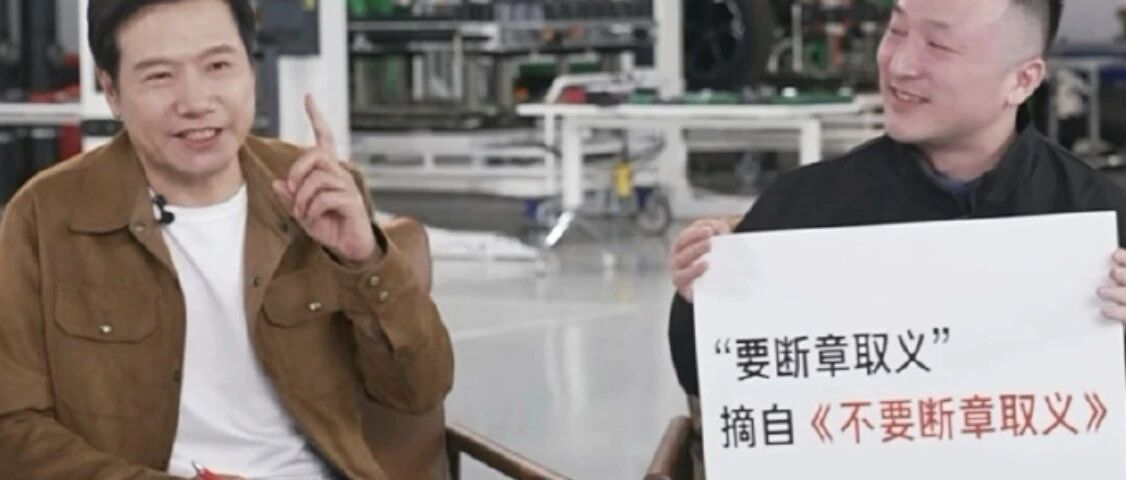
小米集团CEO雷军:消费者不了解老说我们车轮子撞掉了,其实是丢轮保车安全策略!大家一定要帮我们解释一下
Sou Hu Cai Jing· 2026-01-04 04:02
Core Viewpoint - Xiaomi's founder and CEO Lei Jun emphasized the safety design of the Xiaomi YU7 vehicle, specifically addressing the "wheel loss protection" strategy, which is intended to enhance safety by allowing the wheel to detach in certain situations [1]. Group 1 - Lei Jun discussed the importance of the "wheel loss protection" feature, clarifying that it is a significant safety strategy rather than a flaw [1]. - The design aims to prevent potential accidents by ensuring that if a wheel is dislodged, it will not cause further harm [1].
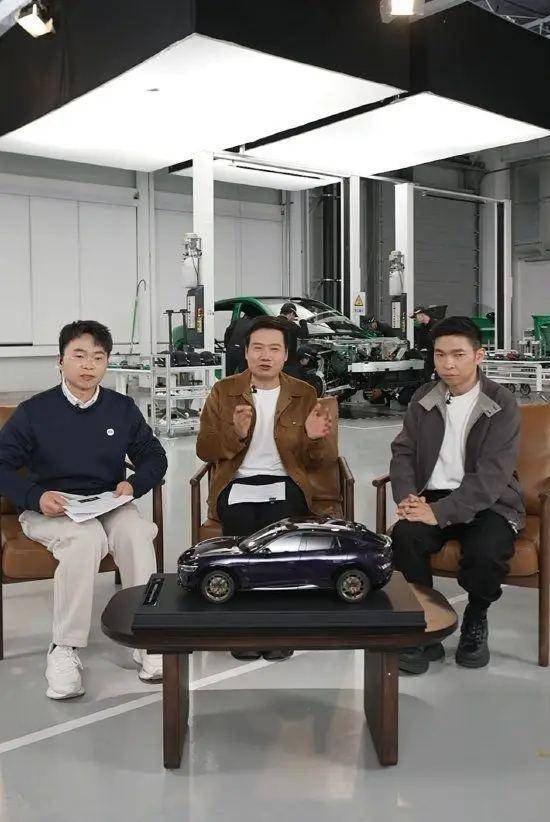
“小字营销”“关闭直播评论”……雷军新年直播回应质疑抹黑
Bei Ke Cai Jing· 2026-01-04 03:48
Core Viewpoint - Xiaomi's live stream on January 3 revealed significant updates regarding its automotive division, including delivery targets and responses to various criticisms faced by the company. Group 1: Delivery Targets and Business Expansion - Xiaomi's CEO Lei Jun announced that the delivery target for Xiaomi cars in 2025 has been increased from 30,000 to over 410,000 units, with a new target of 550,000 units set for 2026 [1] - The company plans to open over 400 new stores in 2025, bringing the total to 477, and has achieved its goal of providing advanced driving training to 10,000 people [1] - Xiaomi's automotive factory has become a demonstration site for industrial tourism in Beijing, receiving over 130,000 visitors in 2025 [1] Group 2: Responses to Criticisms - Lei Jun acknowledged that "small print marketing" is an industry issue and committed to making it more transparent, emphasizing that previous practices were focused on legal compliance rather than user experience [2] - The term "Green Belt Warrior" was described as a result of malicious editing and labeling, with the company asserting that it is a deliberate attempt to mislead [3] - The decision to disable comments during live streams was explained as a measure to prevent spam attacks, ensuring a better experience for genuine users [4] - Lei Jun refuted claims of having 7,000 legal staff, stating that the focus should be on product development while combating misinformation [5] - The claim regarding "1300 kilometers on a single charge" was clarified as a specific test result, which was misinterpreted, and similar misunderstandings were addressed regarding other performance metrics [7] - Concerns about the safety of the Xiaomi YU7's door handles were addressed, confirming the presence of mechanical backup systems for security [8] - Misunderstandings about Xiaomi's name and its relation to agriculture were clarified, with Lei Jun expressing frustration over the misinformation [9] - Lei Jun emphasized the importance of objective criticism and the need to avoid malicious attacks, asserting that the company values genuine user feedback [10] - The design strategy for wheel safety was explained, highlighting the "wheel loss protection" feature as a critical safety measure [11]