二手交易

Search documents
二手交易平台出现卢浮宫珠宝?闲鱼回应
第一财经· 2025-10-23 01:56
Core Viewpoint - The emergence of "Louvre genuine" jewelry for sale on second-hand trading platforms has attracted significant attention, raising concerns about authenticity and potential false advertising [3][5]. Summary by Sections Sale Listings - Multiple listings for "Louvre genuine" jewelry have been found on the Xianyu platform, including a crown priced at 999.9999 million yuan, with claims of being "9.9 new" and "urgent sale" [5]. - The highest price for the crown listed is 9999.99 million yuan, indicating a wide range of pricing for these items [5]. Authenticity Concerns - There is currently no confirmation that these items are genuine, and analysts suggest that until official verification is provided, it should be assumed that these listings may be misleading [7]. - A report to Xianyu regarding the "Louvre jewelry" sales resulted in a response from customer service indicating that the platform is monitoring such listings and encourages users to report suspicious items for further review [7].


闪回科技第三次冲刺港交所 一场关乎命运的生死局
Bei Jing Shang Bao· 2025-09-16 01:12
Core Insights - The release of the iPhone 17 series has significantly boosted the second-hand Apple phone market, with a 150% increase in search volume and a 210% rise in recovery inquiries on the Zhuanzhuan platform after the launch event [1] - The second-hand phone recovery industry is experiencing a temporary upturn due to the demand for device upgrades, but companies like Flashback Technology face substantial financial challenges, including over 300 million yuan in cumulative losses and nearly 800 million yuan in redemption liabilities due by the end of 2025 [1][8] Company Overview - Flashback Technology holds a 1.3% market share in the phone recovery service sector, primarily relying on B2B partnerships rather than aggressive consumer marketing strategies [2] - The company is heavily dependent on a few major suppliers, with Xiaomi accounting for 44.8% of its procurement through trade-in channels, indicating a significant reliance on the Xiaomi ecosystem [2][7] - Flashback's business model has led to increased costs due to competition with Xiaomi's own recovery platform, resulting in a cycle of rising procurement costs without corresponding revenue growth [3][7] Market Dynamics - The second-hand recovery market is characterized by a fragmented landscape, with over 80% of market share held by various players, making it difficult for Flashback to establish a strong competitive position [5] - Competitors like Zhuanzhuan and Aihuishou are diversifying their offerings beyond just phone recovery, expanding into multi-category second-hand goods, which poses additional challenges for Flashback [6][5] Financial Challenges - Flashback Technology has faced continuous net losses, with a cumulative loss exceeding 337 million yuan from 2021 to mid-2025, indicating a persistent struggle to achieve profitability despite revenue growth [8] - The company is under pressure to complete its IPO by the end of 2025 to avoid triggering nearly 800 million yuan in redemption liabilities, which could lead to a liquidity crisis [9][10] - The redemption liabilities constitute 83% of the company's total liabilities, highlighting the urgent need for successful capital raising through the IPO [9] Strategic Outlook - The upcoming IPO is viewed as a critical step for Flashback, not only for raising funds but also for restructuring its debt, as successful listing would convert redemption liabilities into equity [10] - The company is racing against time, with less than a quarter remaining to finalize its IPO, amidst increasing competition and financial pressures [11]
闪回科技三闯港交所只为“续命”
Bei Jing Shang Bao· 2025-09-15 16:14
Core Viewpoint - The release of the iPhone 17 series has significantly boosted the second-hand Apple phone market, with a 150% increase in search volume and a 210% surge in recycling inquiries on the Zhuanzhuan platform, indicating a temporary uptrend in the consumer electronics sector [1] Company Overview - Shanhui Technology, as the third-largest mobile phone recycling service provider in China, holds a 1.3% market share in both recycling and sales transaction volume for 2024, heavily relying on ToB business models [2][5] - The company has accumulated over 300 million yuan in losses over four and a half years and faces nearly 800 million yuan in redemption liabilities if it fails to complete its IPO by the end of 2025 [1][9] Market Dynamics - The second-hand recycling industry is characterized by a "large but weak" market structure, with over 80% of market share held by other players, indicating a fragmented competitive landscape [5] - Major competitors like Zhuanzhuan and Aihuishou are diversifying their business models beyond single-channel recycling, with Aihuishou operating 2,092 stores and expanding into multi-category recycling services [6][7] Competitive Challenges - Shanhui Technology's business model is constrained by its dependence on major suppliers, particularly Xiaomi, which accounts for over 41% of its procurement, leading to increased costs and reduced independence [2][3][7] - The competitive landscape is further complicated by overlapping interests among shareholders, as Zhuanzhuan holds a stake in Shanhui Technology while also competing directly in the same market [3][4] Financial Pressures - Shanhui Technology's financial health is under pressure, with cumulative net losses exceeding 337 million yuan from 2021 to mid-2025, and a low gross margin that hampers profitability [8][9] - The company faces a critical deadline to complete its IPO, as failure to do so could trigger significant liquidity issues due to its high redemption liabilities [9][10]
万物新生提升回收效率 营收利润双双增长
BambooWorks· 2025-08-27 09:05
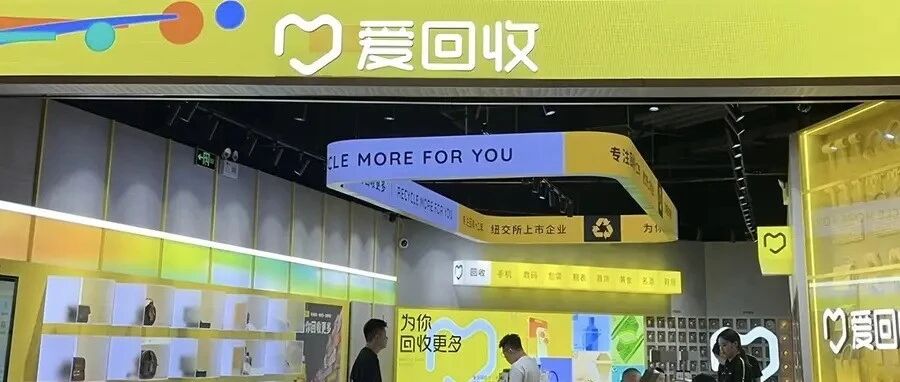
Core Viewpoint - The company, 万物新生 (RERE.US), has achieved its fastest revenue growth in two years, with a 32% year-on-year increase in Q2, driven by an expanding offline store network and a focus on enhancing customer experience in second-hand transactions [1][2][7]. Revenue Growth - In Q2, the company's revenue reached RMB 49.9 billion, marking a 32.2% increase compared to the previous year, with product sales revenue growing by 34% to RMB 45.6 billion [7]. - The high-margin direct sales business saw a remarkable revenue growth of 63.7%, increasing its share of product revenue from 28.2% to 34.4% [7]. - Service revenue also increased by 15.4% to RMB 4.33 billion, with non-electronic product services contributing nearly 15% to total service revenue [7]. Profitability - The company achieved GAAP operating profit for the fourth consecutive quarter, with Q2 operating profit reaching RMB 91.1 million and GAAP net profit of RMB 72.3 million, reversing a loss of RMB 10.7 million from the previous year [7][8]. Store Expansion - The company opened 206 new stores in Q2, bringing the total to 2,092 stores by the end of June, with plans to open an additional 569 stores in the second half of the year to meet its annual target of 800 new stores [7]. Shareholder Return Plan - A new three-year shareholder return plan was approved, committing to return no less than 60% of adjusted net profits through buybacks and dividends, with an estimated annual return of approximately USD 5.6 million based on Q2 adjusted net profit [8]. Market Position and Stock Performance - The company's stock has gained 57% this year, reaching a three-and-a-half-year high, and its market capitalization has surpassed USD 1 billion, placing it among the tech "unicorns" [6][7].

订餐送宝可梦卡牌引发食物浪费引发批评,日本麦当劳:对应对不足深刻反省
Huan Qiu Shi Bao· 2025-08-13 22:39
Group 1 - The collaboration between McDonald's Japan and Pokémon Trading Card Game has led to significant customer demand, resulting in some customers ordering large quantities of meals solely to obtain cards for resale [1] - The event featured six types of cards with a total of fewer than 3 million cards available, and customers could receive two cards for each meal purchased, limited to five meals per person [1] - McDonald's Japan has acknowledged the negative impact of this behavior, including food waste and chaos in stores, and has committed to implementing stricter purchasing measures to prevent future occurrences [1] Group 2 - The trading price of Pokémon cards is influenced by their circulation and the popularity of the characters, with rare cards in good condition selling for tens of millions of yen, while the cards from this promotion may not achieve high resale prices due to their larger circulation [2] - Limited-time release cards tend to appreciate in value, and the inclusion of popular characters like Pikachu in this promotion has further driven demand [2]
二次元吃谷热背后:手艺人发财,小红书闲鱼赚流量,粉丝痛并快乐?
创业邦· 2025-07-31 03:53
Core Viewpoint - The article discusses the booming second-hand trading market within the ACG (Anime, Comic, Game) community, highlighting the impulsive buying behavior and the subsequent need for selling items at a loss, driven by the popularity of various IPs and merchandise [4][6][62]. Group 1: Market Dynamics - The second-hand market for ACG products has seen significant growth, with items experiencing drastic price fluctuations, such as a character figure dropping from 3000 yuan to hundreds within six months [4][6]. - The rise of IP economy has led to an increase in merchandise releases, with brands frequently launching new collaborations and products, creating a vibrant trading environment [6][7]. - The impulsive buying behavior is prevalent, with consumers often purchasing items at inflated prices during initial releases, only to later sell them at a loss on platforms like Xianyu [7][16]. Group 2: Consumer Behavior - Consumers in the ACG community exhibit a "buy high, sell low" mentality, often relying on second-hand sales to recoup costs from impulsive purchases [16][34]. - The phenomenon of "blind box" purchases has become common, where consumers buy mystery boxes with uncertain outcomes, leading to increased spending driven by the thrill of potential high-value items [35][40]. - Social media platforms like Xiaohongshu play a crucial role in influencing consumer behavior, where users showcase their collections and engage in community discussions before making purchases on trading platforms [57][58]. Group 3: Platform Analysis - Xianyu remains the dominant platform for second-hand ACG transactions, boasting a user base of 105 million and a 75% year-on-year increase in transaction volume [53]. - The emergence of niche platforms like Qindao and Jihuan She caters to specific segments within the ACG community, offering tailored services and community engagement [52][51]. - Xiaohongshu has unexpectedly benefited from the trading boom, becoming a preferred platform for users to showcase and discuss their collections before transitioning to sales on Xianyu [57][58]. Group 4: Challenges and Concerns - The influx of underage users in the second-hand market has raised concerns about impulsive buying and refund requests, complicating transactions for sellers [58][59]. - Issues such as counterfeit products and the need for better regulatory measures have emerged as significant challenges for the trading platforms [60][61]. - The sustainability of the second-hand market is questioned, as it heavily relies on the ongoing popularity of ACG IPs, with potential risks if new hits do not emerge [62].

X @𝘁𝗮𝗿𝗲𝘀𝗸𝘆
𝘁𝗮𝗿𝗲𝘀𝗸𝘆· 2025-07-24 16:08
Market Demand - Demand for pre-built Github accounts resembling genuine open-source enthusiasts is present [1] - Buyers seek accounts with active contribution histories [1] Transaction Details - The transaction involves purchasing existing Github accounts [1] - Sellers are expected to provide pricing and account descriptions privately [1]
8点1氪:罗马仕辟谣倒闭传闻;利物浦前锋若塔车祸去世;上海交大回应是否会调整进校政策
36氪· 2025-07-03 23:59
Group 1 - Roma's announcement clarifies that the company is not going bankrupt and is working to resolve issues with partners and users [1][5] - Beijing Yuxin Technology Group has submitted a listing application to the Hong Kong Stock Exchange, with joint sponsors being Huatai Financial Holdings and BNP Paribas Securities [2] - Meige Intelligent Technology has also submitted a listing application to the Hong Kong Stock Exchange, with China International Capital Corporation as the sponsor [3] - Shenzhen Chengtai Technology has submitted a listing application to the Hong Kong Stock Exchange, with Guotai Junan Securities as the exclusive sponsor [4] Group 2 - Alibaba plans to issue approximately HKD 12 billion in zero-coupon convertible bonds, with proceeds aimed at supporting cloud infrastructure and international business development [9] - Xiaomi has applied for multiple "REDMI" trademarks across various international classifications, indicating potential expansion into new product categories [8] - The average salary increase for Japanese companies this year is reported at 5.25%, marking the largest increase in 34 years [16] - Samyang Foods from South Korea is investing approximately USD 1.48 billion to build its first overseas factory in Zhejiang, China, to meet growing demand for its products [16] Group 3 - The U.S. government has lifted restrictions on chip design software exports to China, allowing major EDA software companies to supply products without special approval [6] - The U.S. House of Representatives passed the "Big and Beautiful" bill, which includes significant tax cuts and spending measures, raising concerns about long-term debt and federal aid cuts [14][15] - The World Health Organization is advocating for increased taxes on tobacco, alcohol, and sugary drinks to improve public health and generate revenue [15] Group 4 - The summer beer consumption surge has led to a significant increase in related businesses, with 23.69% of beer-related companies located in East China [27] - JD Logistics has launched its self-developed VAN unmanned light truck, which boasts a large cargo space, aiming to enhance logistics efficiency [20] - Xiaopeng Motors has officially launched its new G7 model, available in three versions with prices ranging from CNY 19.58 million to CNY 22.58 million [21]

转转合作罗永浩“交个朋友”直播间卖手机,20分钟GMV破千万
Xin Lang Ke Ji· 2025-05-27 04:02
Core Insights - The live stream event featuring Xiang Changfeng, Vice President of Zhuanzhuan Group and CEO of Caihuoxia, alongside Luo Yonghao, generated significant sales, with nearly 10 million GMV in just 20 minutes and a total viewership of 864,400 [1] - The trend in consumer behavior is shifting towards practicality and cost-effectiveness, particularly in the context of rising flagship smartphone prices and slow product performance iterations, making second-hand products more appealing [1] - Resource machines, a type of non-new second-hand phone, are gaining traction, with an annual transaction volume of 100 million units for second-hand phones, but only 1 million for resource machines [1] Company Overview - Caihuoxia, a subsidiary of Zhuanzhuan Group, is responsible for the overall management of resource machines, ensuring that all phones sold through their platform undergo official verification and come with a public quality inspection report [2] - Zhuanzhuan has established a unique "official verification" system to address trust issues in the second-hand market, training over 2,000 quality inspectors and setting up three major quality inspection centers across China [2] - The company has over 900 offline stores that integrate second-hand recycling and retail, supported by nearly 2,000 professional on-site quality inspection engineers, achieving full coverage in first- and second-tier cities [2]
日本“闲鱼”:反效率之极,却让人欲罢不能
创业邦· 2025-05-22 10:06
Core Viewpoint - The article discusses the unique business model and user experience of Jimoty, a local second-hand trading platform in Japan, comparing it with other platforms like Mercari and highlighting its strengths and weaknesses in the context of Japanese consumer behavior and trust culture [3][21][26]. Group 1: Jimoty's Business Model - Jimoty operates as a local information exchange platform, primarily focusing on second-hand goods, and generates revenue through advertising and paid listings rather than transaction fees [21][24]. - The platform allows users to post items for free, with a significant portion of listings being zero-yen transfers, which is driven by the high cost of waste disposal in Japan [11][21]. - Jimoty's user base is predominantly older, with 75% of users over 40 years old, and 60% being women, particularly homemakers looking to transfer household items [13][21]. Group 2: User Experience and Trust - The platform emphasizes face-to-face transactions, which fosters a sense of trust among users, as they believe in the integrity of the other party [27][33]. - Users often prefer cash transactions and in-person exchanges, which contrasts with the growing trend of online payments in Japan, indicating a cultural preference for direct interactions [8][9]. - The article highlights that the lack of online payment options and delivery services limits the platform's reach but enhances the perceived safety and reliability of transactions [7][8]. Group 3: Comparison with Competitors - Mercari, a competing platform, offers a more comprehensive service with online payment, logistics support, and a more sophisticated user experience, making it more appealing to a broader audience [22][24]. - The financial performance of Mercari significantly outpaces that of Jimoty, with projected revenues of 181.7 billion yen for Mercari compared to 1.774 billion yen for Jimoty in 2024 [24][25]. - The article suggests that Jimoty's simplistic model may not attract significant investment interest compared to more integrated platforms like Mercari, which have a complete transaction ecosystem [21][24].