产业升级转型

Search documents
能特科技半年净利大增496.36%
Chang Jiang Shang Bao· 2025-08-26 23:33
Core Insights - Nengte Technology (002102.SZ) reported a significant increase in net profit for the first half of 2025, achieving a net profit of 339 million yuan, a year-on-year growth of 496.36% [1][2] - The company's total revenue for the same period was 5.229 billion yuan, reflecting a year-on-year decline of 16.09% [1] - The substantial growth in net profit is attributed to the strong performance of its subsidiary, Nengte Technology Co., which generated approximately 447 million yuan in profit from its vitamin E and pharmaceutical intermediate businesses [2] Financial Performance - For the first half of 2025, Nengte Technology reported total revenue of 5.229 billion yuan, down 16.09% year-on-year [1] - The net profit attributable to shareholders reached 339 million yuan, marking a 496.36% increase compared to the previous year [1] - The company's net profit after deducting non-recurring gains and losses was 411 million yuan, showing a remarkable growth of 759.36% [1] - The net cash flow from operating activities was 225 million yuan, an increase of 12.28% year-on-year [1] Business Operations - Nengte Technology's core business includes pharmaceutical intermediates, vitamin E and its intermediates, and plastic trade e-commerce [1] - The company has been focusing on strengthening its production chains for key products such as Montelukast sodium intermediates and Rosuvastatin intermediates to enhance its competitive edge [2] - Continuous research and development efforts are being made to cultivate new pharmaceutical intermediate varieties, enriching the company's product structure and promoting multi-variety development [2]

“耐心资本+国际场景”双轮驱动 香港锻造金融科创超级平台|港美股看台
Zheng Quan Shi Bao· 2025-08-11 00:57
Group 1 - Hong Kong's government is actively increasing efforts in attracting investments and talents, with the Hong Kong Investment Management Company having invested in over 100 projects, with more than 10 companies preparing to apply for listing in Hong Kong [1][2] - The investment management company currently manages approximately HKD 62 billion, focusing on hard technology, life sciences, and renewable/green technology as its main investment themes [2] - The company has successfully attracted over HKD 500 billion in investments and is expected to create over 20,000 jobs through the introduction of 84 key enterprises in cutting-edge technology [3] Group 2 - The government emphasizes the importance of attracting both enterprises and talents, creating a virtuous cycle of diverse industry development and quality job opportunities [3] - The collaboration between government, industry, academia, research, and investment is being promoted to enhance Hong Kong's economic transformation and upgrade [3] - Hong Kong's international application scenarios are attracting numerous domestic and foreign enterprises to test and apply their cutting-edge technologies, facilitating the city's industrial transformation and development of smart cities [3]
香港财政司:积极招商引资引才 创新经济动能
Zhi Tong Cai Jing· 2025-08-11 00:57
Group 1 - The Hong Kong government is actively attracting investment and talent, which is expected to enhance the local innovation and technology ecosystem, drive industrial transformation, and improve the quality of life for citizens [1][4] - A total of 84 key enterprises in cutting-edge technology have been introduced to Hong Kong, projected to bring approximately HKD 50 billion in investment and create over 20,000 jobs [1][3] - The Hong Kong Investment Management Company has invested in over 100 projects, with more than 10 companies preparing to apply for listing in Hong Kong [2] Group 2 - The collaboration among various departments, including the Innovation and Technology Bureau and the Investment Promotion Agency, aims to attract diverse enterprises and encourage partnerships with local universities for research and development [2][3] - The introduction of international companies is facilitating the testing and application of advanced technologies in Hong Kong, contributing to the development of a smart city and the transformation of industries [3][4] - The upcoming announcement of a new batch of key enterprises, including several leading pharmaceutical companies, indicates a growing interest in Hong Kong as a hub for exploring markets in mainland China and Asia [3][4] Group 3 - The government is focusing on attracting enterprises in four major sectors: artificial intelligence, life and health technology, financial technology, and renewable energy, while also considering the integration of creative industries [4] - The strategy of attracting key enterprises and talent is mutually reinforcing, aiming to create a positive cycle of diverse industrial development and quality job opportunities [4]
策略周评20250803:十五五规划产业布局猜想【勘误版】
Soochow Securities· 2025-08-03 07:37
Group 1 - The report emphasizes the importance of focusing on domestic development amidst external uncertainties, suggesting that the core idea of "concentrating efforts on one's own affairs" will continue to be reflected in the 15th Five-Year Plan [2] - The upcoming 15th Five-Year Plan is expected to include significant themes such as the construction of a national unified market, technological innovation leading to new productive forces, digital economy and artificial intelligence, and high-quality urban development [4][5] - The report predicts that the focus on "anti-involution" in market competition will be a key aspect of the 15th Five-Year Plan, with an emphasis on optimizing market competition order and regulating local investment attraction [5] Group 2 - The urbanization strategy is shifting from rapid growth to stable development, with a focus on quality improvement and efficiency enhancement in existing urban areas, as indicated by recent central government meetings [6] - Technological innovation is expected to lead the development of new productive forces, moving away from traditional industries and focusing on advanced production factors [7] - The integration of artificial intelligence with the digital economy is anticipated to be a major theme in the 15th Five-Year Plan, highlighting the role of AI in driving high-quality economic development [10] Group 3 - The report highlights the need for enhancing domestic demand, particularly in the context of improving income distribution and social security systems, which are expected to release significant consumption potential [11] - Large-scale infrastructure projects are likely to be prioritized in the 15th Five-Year Plan, with specific mentions of major water conservancy, transportation, and energy projects [12][30] - The necessity of ensuring supply chain security and addressing technological bottlenecks in key areas such as semiconductor manufacturing is emphasized, with expectations for continued support in these sectors in the upcoming plan [13] Group 4 - The report suggests that the 15th Five-Year Plan will focus on the development of future industries, including advanced manufacturing, new materials, and future energy technologies [25][27] - Cultural development and enhancing national cultural soft power are expected to be significant components of the 15th Five-Year Plan, aligning with the goal of building a "cultural power" by 2035 [19] - The construction of a community with a shared future for mankind and strengthening multilateral diplomatic relations are anticipated to be included in the 15th Five-Year Plan, particularly in the context of the Belt and Road Initiative [20]
并购重组审核明显提速 已有15个重组项目上会 今年以来上会家数已追平去年全年
Shen Zhen Shang Bao· 2025-07-23 16:42
Group 1 - The core viewpoint of the articles highlights a significant acceleration in merger and acquisition (M&A) approvals in China, with 15 restructuring projects reviewed by July 23, 2023, matching the total for the entire previous year [1][2] - The trend indicates that the number of M&A approvals this year is expected to exceed last year's total, driven by various types of transactions including acquisitions of unprofitable companies and cross-industry mergers [1][2] - Notable transactions include China Shipbuilding's absorption of China Shipbuilding Industry Corporation, which will result in total assets exceeding 400 billion yuan and revenue surpassing 130 billion yuan, marking the largest absorption merger in A-share history [1] Group 2 - State-owned enterprises are utilizing M&A to address industry competition, as seen with Huadian International's acquisition of conventional energy assets from its major shareholder, enhancing its market competitiveness [2] - The approval of the first acquisition of unprofitable assets following the "Eight Guidelines for the Sci-Tech Innovation Board" was granted to Chip Alliance Integrated, indicating a shift in M&A activity towards innovative sectors [2] - Since the introduction of the "Six Guidelines for M&A," the A-share M&A market has seen a surge, with 200 new major asset restructuring projects disclosed recently [2][3]


GDP增量为负,这些省域“第二城”怎么了?
Mei Ri Jing Ji Xin Wen· 2025-05-12 15:11
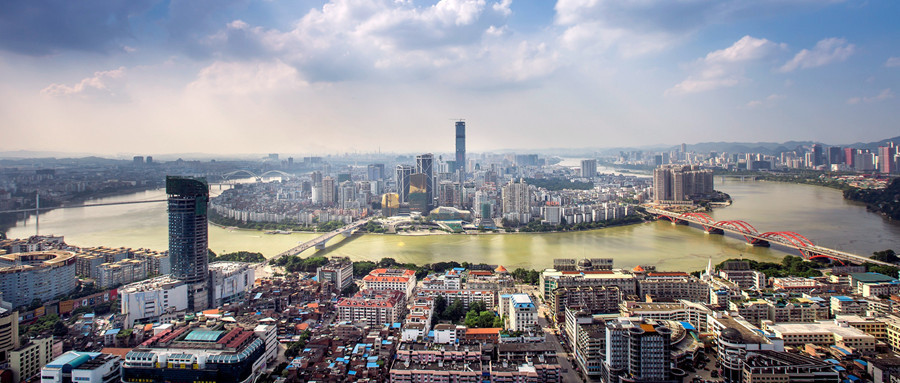
Economic Overview - In the first quarter of this year, China's economy continued to show a stable recovery, with a year-on-year growth of 5.4%, surpassing last year's overall growth of 5% and the first quarter's growth of 5.3% [1] - Economic performance varied across cities, with regions like Yulin, Luoyang, Qujing, and Liuzhou experiencing negative GDP growth compared to the same period last year [1] City-Specific Analysis Yulin: Energy Cycle - Yulin's GDP has grown from over 200 billion to over 700 billion in the past decade, with a peak increase of over 100 billion in a single year [6] - The city's economy is heavily reliant on fossil energy, contributing significantly to its GDP, with 80% of Shaanxi's coal and 70% of its natural gas produced in Yulin [9] - In Q1, Yulin's actual GDP growth was 5.6%, but nominal GDP decreased by 0.42%, largely due to falling coal prices [9] Luoyang: Industrial Restructuring - Luoyang's GDP for Q1 was 135.54 billion, showing a year-on-year growth of 5.9%, but a decrease of nearly 1.9 billion compared to the same period last year [10] - The city has faced continuous negative GDP growth for two consecutive years, attributed to declining prices in various sectors [10][11] - Luoyang's traditional industries, such as steel and chemicals, are under pressure from price declines, necessitating a shift towards high-value industries [13] Qujing: Awaiting Recovery - Qujing's GDP has declined for two consecutive years, with a reduction of 10.9 billion in Q1 [17] - The city, traditionally reliant on resource-based industries, is facing challenges as both traditional and emerging sectors experience downturns [17] - Corruption issues have also impacted local economic development, with significant investigations into local officials [17] Liuzhou: Industrial Revival - Liuzhou's GDP for Q1 was 72.003 billion, with a year-on-year growth of 4.6%, but a decrease of 1.62 billion compared to last year [19] - The city has seen a decline in several key industrial outputs, indicating a stagnation in economic growth since 2018 [20][22] - Liuzhou is attempting to transition from traditional industries to emerging sectors like new energy and materials, but the pace of change is slow [25][26]