产业链合作

Search documents
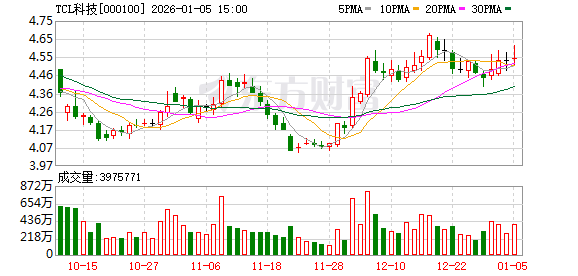
21现场|李东生谈TCL进韩国:既是挑战也是“反向促进”
2 1 Shi Ji Jing Ji Bao Dao· 2026-01-05 13:33
Core Viewpoint - The founder and chairman of TCL, Li Dongsheng, emphasized the need for Chinese and Korean companies to seek mutually beneficial cooperation in the industrial chain and technology sectors to enhance global competitiveness [2]. Group 1: Cooperation and Competition - TCL has a long-standing and substantial cooperation history with Korean companies, despite competition in the consumer electronics market [2]. - Li Dongsheng highlighted the importance of moving beyond simple product competition to explore potential in industrial chain collaboration and technological synergy [2]. - The entry of TCL into the Korean market is seen as a significant development, given the high market entry barriers and the dominance of local brands like Samsung and LG [2]. Group 2: Future of China-Korea Economic Relations - The China-Korea Free Trade Agreement provides a solid foundation for cooperation between the two countries' enterprises [2]. - Geographical proximity offers efficiency and cost advantages for collaboration [2]. - Li Dongsheng expressed the expectation for broader cooperation with Korean partners to create shared value and achieve mutual development [3]. Group 3: Forum Insights - The China-Korea Business Forum, co-hosted by the China Council for the Promotion of International Trade and the Korea Chamber of Commerce and Industry, attracted over 400 participants from both countries [3]. - Key discussion topics included manufacturing innovation, supply chain cooperation, new consumer markets, and service industry collaboration [3].


三佳科技:积极探索产业链上下游合作机会
Zheng Quan Ri Bao Wang· 2025-12-19 15:42
Core Viewpoint - Sanjia Technology (600520) has stated that it currently has no undisclosed information that should be disclosed, indicating transparency in its operations [1] Group 1 - The company is committed to enhancing communication and collaboration with stakeholders, including controlling shareholders, customers, and suppliers [1] - Sanjia Technology is actively exploring cooperation opportunities along the industrial chain to improve its core competitiveness [1]

走进智元机器人工厂探寻“产能大户”交付密码
Zheng Quan Ri Bao· 2025-12-10 16:10
Core Viewpoint - The year 2025 is recognized as the year of mass production for humanoid robots, with Zhiyuan Robotics achieving a significant milestone by producing its 5,000th unit, marking the transition from technology validation to large-scale commercial application [1][4]. Group 1: Production Milestone - Zhiyuan Robotics announced the mass production of its 5,000th humanoid robot, which was delivered to a studio, indicating a strong capacity for large-scale delivery [1][2]. - The production of 5,000 units signifies a shift in the industry towards commercial viability, with applications already in entertainment, reception, and data collection [1][2][4]. - The company has a robust order backlog, with specific models having produced 1,742 units of the Yuan A1/A2, 1,846 units of the Lingxi X1/X2, and 1,412 units of the Jingling G1/G2 [2]. Group 2: Industry Impact - Achieving a production scale of 5,000 units positions Zhiyuan Robotics as a major player in the humanoid robot industry, with products deployed across eight core application scenarios [4]. - The company plans to enhance the cost-effectiveness of its humanoid robots and improve their "brain" capabilities while expanding application scenarios and increasing customer repurchase intent [4][6]. - Zhiyuan Robotics has focused on international markets, developing robot programs that support 20 languages, indicating a strategic move towards global expansion [4]. Group 3: Collaborative Ecosystem - The rapid development of Zhiyuan Robotics is attributed to deep collaboration within the industry, including partnerships with various component manufacturers during the development phase [5][6]. - A notable partnership with Longqi Technology has established a model of "investment + orders + technology," enhancing the integration of resources and capabilities [6]. - Several publicly listed companies have disclosed collaborations with Zhiyuan Robotics, indicating a growing ecosystem around the company [6]. Group 4: Future Outlook - The company aims to attract more developers, integrators, and ecosystem partners to its product system, believing it is on the brink of a technological breakthrough that will lead to industry-wide expansion [7].

信用保险护航 广西造纸企业“走出去”更有底气
Jin Rong Shi Bao· 2025-12-09 03:36
Core Insights - The Guangxi paper industry is leveraging its geographical and resource advantages to become a major hub for high-end paper production, with nearly 80% of China's new pulp and paper capacity located in the region [1] - The industry has formed a significant green high-end paper production cluster, with a scale reaching hundreds of billions, exporting products to global markets including Europe, America, and Southeast Asia [1] - China Export & Credit Insurance Corporation (Sinosure) plays a crucial role in supporting Guangxi's paper companies by providing financial backing that mitigates credit risks associated with overseas buyers [1][2] Group 1 - Guangxi's paper industry has established a clear dual-axis development pattern along rivers and coasts, becoming the largest integrated base for engineered wood, chemical products, and pulp and paper in China [1] - A major paper company in Guangxi exports white cardboard worth over $100 million annually, with a 25% year-on-year increase in export volume expected in the first half of 2025 [1] - Sinosure has provided coverage for $2.93 billion in exports and overseas investments for Guangxi enterprises, marking a 19.1% year-on-year growth, with over 70% of the serviced companies being small and medium-sized foreign trade enterprises [2] Group 2 - The dual support from policies and market dynamics is energizing the outward-oriented economic development in Guangxi, positioning it as a "bridgehead" for the paper industry towards ASEAN [3] - The signing of the upgraded China-ASEAN Free Trade Area 3.0 agreement is expected to further highlight Guangxi's advantages in location and industrial chain [3] - Sinosure aims to enhance its support for Guangxi's paper enterprises through precise policies, digital services, and regional cooperation, ensuring safer and more efficient financial backing [3]
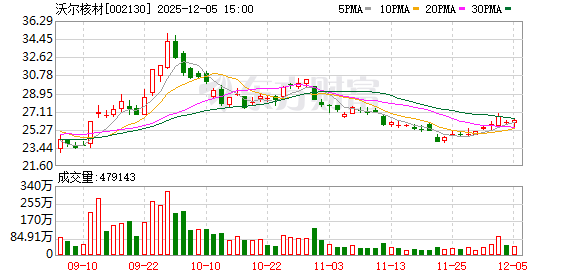
沃尔核材:关注产业链的发展动态 寻求合作机会
Zheng Quan Ri Bao· 2025-12-05 12:08
Group 1 - The company maintains an open attitude and actively communicates with various investors [2] - The company focuses on the development dynamics of the industry chain [2] - The company seeks cooperation opportunities that are beneficial for its long-term development [2]

中国猛囤全球石油,却对俄油订单减半,中俄之间究竟发生了什么?
Sou Hu Cai Jing· 2025-11-14 15:22
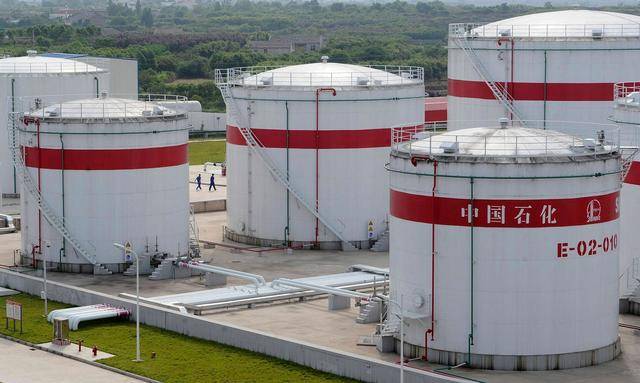
Core Viewpoint - China has significantly increased its oil reserves, with nearly 90% of the global new oil inventory being stored domestically, while reducing imports from Russia by nearly half, raising speculations about the state of Sino-Russian relations and potential U.S. pressure [1][3]. Group 1: Oil Storage and Strategic Considerations - China imported an average of over 11 million barrels of crude oil daily in the first nine months of 2025, with 1 to 1.2 million barrels going directly into reserves instead of refineries, indicating a strategic long-term approach to oil storage [3][5]. - The implementation of the new Energy Law in 2025 mandates strategic oil reserves, prompting significant investments in storage capacity, with current storage capabilities nearing 2 billion barrels and actual reserves estimated at 1.3 billion barrels, sufficient for 106 days of consumption [3][5]. Group 2: Financial and Security Perspectives - The volatility of the U.S. dollar and rising credit risks associated with U.S. debt have led to a decrease in the dollar's share in China's foreign reserves from 72% in 2015 to 59%, alongside a continuous increase in gold holdings [5]. - China's reliance on foreign oil exceeds 70%, necessitating a buffer against supply disruptions, especially amid global geopolitical instability, which has led to strategic oil purchases to ensure energy security [5][9]. Group 3: Changes in Russian Oil Imports - In the first three quarters of 2025, China's imports from Russia decreased by 8.1% year-on-year, with a notable 14.7% drop in the first quarter, equating to a reduction of approximately 400,000 barrels per day [7][9]. - Despite the reduction, Russia remains China's largest oil supplier, accounting for 17.5% of imports, indicating that while there are fluctuations, the foundational relationship remains intact [7][9]. Group 4: Structural Adjustments and Diversification - The decrease in Russian oil imports is attributed to structural adjustments, including U.S. sanctions affecting Russian oil companies and a shift in refinery preferences towards heavier, high-sulfur crude oils, which are more compatible with imports from Malaysia, Canada, and Ecuador [9][11]. - China's strategy emphasizes diversifying oil import sources to mitigate risks, with ongoing discussions about alternative routes for Russian oil through Central Asia, ensuring that the relationship with Russia remains stable despite changes in import volumes [13][19]. Group 5: Evolving Sino-Russian Energy Cooperation - The nature of Sino-Russian energy cooperation is evolving from simple oil and gas exchanges to more integrated partnerships, including joint projects like the Arctic LNG2 project and new transportation routes [15][17]. - The proportion of oil imports from Russia settled in RMB has approached 70%, allowing China to bypass dollar-related risks and enhance transaction transparency [17][19]. Group 6: China's Role in the Global Oil Market - China's proactive oil purchasing strategy has positioned it as a key player in the global oil market, with its buying decisions significantly influencing oil prices, exemplified by the stabilization of prices around $65 per barrel following Chinese purchases [21][22]. - The current approach balances short-term economic interests with long-term energy security, as China seeks to build reserves while diversifying supply sources to reduce potential risks from geopolitical tensions [24][26].
瑞泰新材(301238.SZ):目前持有天际股份5.99%的股份
Ge Long Hui A P P· 2025-11-12 07:23
Core Viewpoint - 瑞泰新材 holds a 5.99% stake in Tianji Shares, indicating a strategic investment based on the company's industry position and operational performance [1] Group 1 - 瑞泰新材's investment in Tianji Shares is aimed at deepening cooperation along the industry supply chain [1] - The investment is expected to optimize 瑞泰新材's asset structure and enhance its overall competitiveness [1] - The decision to subscribe to Tianji Shares' issuance of shares to specific entities reflects a long-standing collaborative relationship between the two companies [1]

瑞泰新材:目前持有天际股份5.99%的股份
Ge Long Hui· 2025-11-12 07:17
Core Viewpoint - 瑞泰新材 holds a 5.99% stake in 天际股份, indicating a strategic investment based on the company's industry position and operational performance [1] Group 1 - 瑞泰新材's investment in 天际股份 is aimed at deepening cooperation along the supply chain, enhancing asset structure, and improving overall competitiveness [1] - The decision to subscribe to 天际股份' issuance of shares to specific entities reflects a long-standing collaborative relationship between the two companies [1]
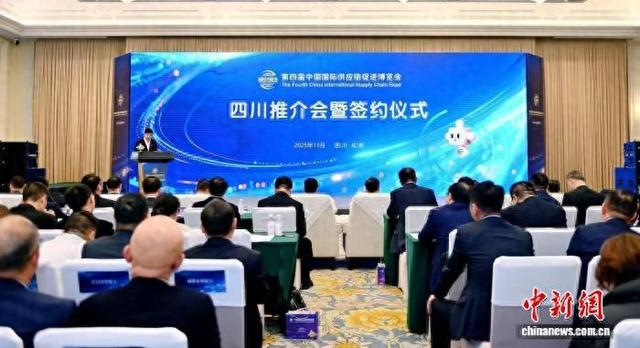
第四届链博会赴川推介 16家企业现场签约
Zhong Guo Xin Wen Wang· 2025-11-12 02:34
Core Insights - The Fourth China International Supply Chain Promotion Expo (referred to as "Chain Expo") is set to focus on advanced manufacturing, green agriculture, digital technology, health living, smart vehicles, clean energy, and supply chain services, showcasing the entire innovation and cooperation chain from R&D to recycling [1][3] - Over 200 domestic and foreign enterprises have signed up to participate in the Fourth Chain Expo, indicating strong interest and engagement from various sectors [1] Group 1 - The Chain Expo serves as a global public product aimed at building an efficient and deeply cooperative ecosystem for global industrial and supply chain connections [3] - The previous Chain Expo held in July attracted 651 exhibitors from 75 countries and regions, with over 1200 participating companies, including 35% foreign enterprises and over 65% from the world's top 500 and industry leaders [3] - The event facilitated over 24,000 precise connections between exhibitors and professional audiences, resulting in more than 6,000 cooperation intentions [3] Group 2 - The Sichuan Provincial Council for the Promotion of International Trade will organize quality enterprises to participate in the expo, focusing on enhancing the six major advantageous industries in Sichuan [5] - Companies like Dongfang Electric Group and Wuliangye Yibin Co., Ltd. expressed their commitment to leveraging the Chain Expo for deepening global partnerships and exploring new cooperation opportunities [5]
中国制造2025原本计划,2045年逼近美国却加速完成,全因这三件事
Sou Hu Cai Jing· 2025-11-07 15:46
Core Insights - The "Made in China 2025" initiative has achieved over 90% of its goals ahead of schedule, with significant advancements in key sectors like semiconductors and renewable energy [2][4][10] - High-tech product exports are projected to exceed $950 billion in 2023, with a 62% increase expected in 2024, indicating a substantial upgrade in the industrial chain [4][10] - External pressures, such as trade wars and technology blockades, have catalyzed domestic innovation and self-reliance in technology [6][8][10] Group 1: Achievements and Progress - Four out of ten key areas have been fully achieved, while five others are partially completed, with only one area still facing challenges [4] - The semiconductor sector has seen a dramatic increase in self-sufficiency, with domestic production of automotive chips and high-end chips improving significantly [8][10] - The manufacturing value-added growth rate exceeded expectations in the first half of 2025, demonstrating resilience despite ongoing tariff pressures [10][16] Group 2: External Influences and Responses - The U.S.-China trade war has forced Chinese companies to enhance their R&D efforts, leading to a significant increase in self-sufficiency in critical technologies [6][8] - The establishment of the Regional Comprehensive Economic Partnership (RCEP) has strengthened supply chains and facilitated regional trade, benefiting Chinese manufacturing [12][14][16] - The digital transformation of industries has been accelerated, with the industrial internet market projected to reach $1.53 trillion by 2024 [18][20] Group 3: Future Outlook and Strategic Directions - The focus on high-quality development and digital transformation is expected to continue, with significant investments in industrial software and green technologies [20][22] - By 2025, high-tech manufacturing is anticipated to account for 16.7% of the overall manufacturing sector, with non-fossil energy consumption increasing [16][22] - The successful implementation of digital and green initiatives is projected to lead to a substantial increase in the production of new energy vehicles and other advanced technologies [22]