储能出海

Search documents
远信储能的全球化跃迁:从硬件供应商到电力合伙人 | 产业家深度
Sou Hu Wang· 2025-12-17 07:37
Core Insights - The article discusses the strategic approach of Chinese energy storage companies, particularly focusing on the global expansion of the energy storage sector, which is projected to reach TWh levels by 2025 [1][3] - The shift from merely selling hardware to providing integrated services and solutions is emphasized as a key differentiator in the competitive landscape [1][3] Group 1: Strategic Shifts - The transition from "selling hardware" to "selling technology services" is a fundamental change in the business model for energy storage companies [1][4] - Companies are moving from "one-time transactions" to "long-term asset operations," indicating a focus on sustainable revenue streams [1][4] - The importance of localizing operations and understanding regional market dynamics is highlighted as essential for success in international markets [1][4][20] Group 2: Market Opportunities - The European market is identified as a high-value opportunity due to its advanced auxiliary service mechanisms and the increasing integration of renewable energy sources [5][6] - In Hungary, participation in the aFRR market can significantly increase revenue for independent storage systems, demonstrating the value of auxiliary services [10][13] - The Japanese market presents high barriers to entry but offers substantial returns for companies that can meet stringent safety and performance standards [16][19] Group 3: Localized Execution - Building a localized team is crucial for executing projects effectively in foreign markets, as demonstrated by the company's operations in Africa [22][23] - The company has established teams in South Africa and Kenya to address the unique challenges and opportunities in the African energy market [22][23] - Successful project execution in Africa requires collaboration with local partners to navigate complex regulatory and logistical challenges [26][27] Group 4: Future Market Trends - The global energy storage market is entering a new investment cycle, with large-scale storage solutions becoming central to addressing infrastructure challenges in developed economies [32][36] - Aging infrastructure and increasing demand for reliable energy are driving the need for energy storage solutions, positioning them as critical assets in the energy landscape [33][36] - The company's approach to asset management and service provision is seen as a model for other Chinese firms looking to enter high-value markets [40][42]

44.88GWh,11月中国储能再掀出海热潮
鑫椤储能· 2025-12-15 06:43
Core Insights - Chinese energy storage companies continue to expand their overseas presence, with 22 companies signing approximately 34 contracts totaling around 44.88 GWh in November [1][3]. Group 1: Market Overview - The overseas expansion of Chinese energy storage companies is characterized by a dual strategy of deepening traditional markets (Europe, North America, Australia) while penetrating emerging markets (Latin America, Asia) [3][5]. - Europe remains the primary battleground for Chinese energy storage firms, with over 15 contracts signed in November, totaling approximately 6.1 GWh [3][4]. Group 2: Regional Performance - Latin America showed significant growth, with two contracts focused on Chile, amounting to 9.6 GWh, making it the largest regional contract size in November [5]. - The Asian market also saw activity, with seven contracts totaling 6.3 GWh, including notable orders from CATL in Japan and projects in Israel and India [5][7]. Group 3: Company Performance - Among 21 companies, Haicheng Energy, Trina Storage, and Far East Energy performed exceptionally well in November, with signed contracts of 11.5 GWh, 7.86 GWh, and 7.59 GWh respectively [7][8]. - Other companies like CATL, EVE Energy, and Sungrow also secured overseas orders exceeding 2 GWh in November [8][9]. Group 4: Notable Contracts - A strategic collaboration among Haicheng Energy, Boda New Energy, and Aton Energy aims to advance no less than 10 GWh of energy storage projects across key markets in the next three years [8][12]. - Significant contracts include a 1.6 GWh project in Germany between Haibo Energy and LEAG Clean Power GmbH, and a 5 GWh memorandum of understanding between Trina Storage and Pacific Green in Australia [4][10].



三七互娱处罚落地,公司及核心高管被罚超三千万元
2 1 Shi Ji Jing Ji Bao Dao· 2025-12-08 11:23
Group 1 - Sanqi Interactive Entertainment (002555) faced penalties totaling over 32.25 million yuan, with all core executives being fined [1] - The violations included false records of shareholder holdings from 2014 to 2020 and significant omissions in annual reports regarding related party transactions [1] - The company was ordered to rectify its practices and received a warning alongside a fine of 9 million yuan [1] Group 2 - The dry pulp process is being used by some paper companies to circumvent import bans on low-quality foreign waste paper, raising ESG compliance concerns [2] - The emergence of dry recycled pulp as a gray channel poses multiple ecological and safety risks [2] Group 3 - The storage industry is expected to create a new value-added service market, projected to grow from approximately 10.9 billion dollars in 2025 to nearly 180 billion dollars by 2035 [3] - The company focuses on providing localized risk management services for Chinese enterprises expanding overseas, leveraging its global network [3] Group 4 - MSCI's latest research indicates that Chinese companies lag behind global peers in transition readiness, particularly in comprehensive target setting and deployment of transition technologies [4] - The assessment shows that the coverage of emission reduction targets varies significantly by industry, with high-carbon sectors like construction materials and utilities showing lower coverage [4] Group 5 - Over 80% of donations for the recent fire relief in Hong Kong came from private enterprises and entrepreneurs from mainland China, highlighting their role as major contributors to social innovation [5] - The report indicates that the most active private entrepreneurs donated over 230 billion yuan in the past decade [5] Group 6 - The United Nations Global Compact has established six expert working groups to support sustainable practices in various sectors, including sustainable finance and traditional medicine [6] - These groups aim to assist companies in navigating complex international regulations and promoting responsible investment [6] Group 7 - Moutai Group emphasizes its commitment to ESG principles and sustainable value creation, outlining five key tasks for future development [7] - The company aims to enhance quality management, market-oriented transformation, cultural value promotion, and digital and green transitions while maintaining stable cash dividends for shareholders [7]

2.66GWh!天合光能签下储能大单!
鑫椤锂电· 2025-11-19 08:20
Core Insights - Trina Solar's subsidiary, Trina Storage, has signed contracts for a total of 2.66 GWh of energy storage products with clients across North America, Europe, and Latin America, with 1.08 GWh specifically for North America [2] Group 1: Recent Contracts and Projects - Trina Storage has secured its first energy storage project in Greece with PPC Renewables, featuring a capacity of 50 MW/200 MWh, marking it as one of the largest battery storage projects in Greece to date [4] - A memorandum of understanding (MoU) was signed with Pacific Green Energy Group Pty Ltd, aiming to deliver up to 5 GWh of battery storage systems between 2026 and 2028 [4] - Trina Storage has also signed contracts exceeding 1 GWh for energy storage products with clients in Europe, utilizing the new generation flexible storage battery module, Elementa 2 Pro [4] - A joint development agreement was established with Atlas Renewable Energy for a grid-connected storage project in Chile, with a capacity of 233 MW/1003 MWh [4]

阳光电源(300274):储能出海与AIDC落地前景向好
HTSC· 2025-10-29 08:47
Investment Rating - The report maintains a "Buy" rating for the company with a target price of RMB 198.63 per share, based on a 2026E PE of 21.45x [7][5]. Core Insights - The company reported a revenue of RMB 22.869 billion in Q3 2025, with a year-on-year growth of 21% and a net profit of RMB 4.147 billion, reflecting a 57% increase year-on-year [2][13]. - The growth in revenue and profit is primarily driven by the increase in high-margin inverter and energy storage shipments overseas, indicating a positive outlook for the company's core business expansion [2][3]. - The energy storage segment achieved a revenue of RMB 28.8 billion in the first three quarters of 2025, representing a 105% year-on-year increase, with a gross margin of 39.92% [2][4]. Summary by Sections Financial Performance - In Q3 2025, the company achieved a revenue of RMB 22.869 billion, with a net profit of RMB 4.147 billion, marking a 57% increase year-on-year [2][13]. - For the first three quarters of 2025, total revenue reached RMB 66.402 billion, up 33% year-on-year, and net profit was RMB 11.881 billion, up 56% year-on-year [2][13]. Business Segments - The energy storage business generated RMB 28.8 billion in revenue in the first three quarters of 2025, with a gross margin of 39.92%, an increase of 3.2 percentage points from the previous year [2][4]. - The company shipped approximately 29 GWh of energy storage products in the first three quarters of 2025, with over 80% of shipments being overseas, contributing to high profitability [2][4]. Market Outlook - The global energy storage market is expected to grow at a CAGR of 44.5% from 2024 to 2030, with new installations projected to reach 1556 GWh per year by 2030 [3]. - The U.S. market is anticipated to see a significant increase in energy storage demand driven by AI data centers and interest rate cuts, with an expected annual addition of 55-102 GWh of storage capacity [3]. Strategic Initiatives - The company is expanding its AIDC (AI Data Center) business, which is expected to enhance growth potential, with plans for product rollout and small-scale delivery by 2026 [4][5]. - The AIDC market is projected to reach RMB 460 billion, potentially contributing over RMB 40 billion in revenue to the company by 2030 [4].
储能 “出海” 新机遇:中国企业的全球订单与本地化战略
Sou Hu Cai Jing· 2025-10-16 09:45
Core Insights - In the first half of 2025, Chinese energy storage companies accelerated their overseas expansion, securing over 160 GWh of new overseas orders, a year-on-year increase of 220.28%, covering more than 50 countries and regions [1][5] - The competitive edge of Chinese energy storage firms lies in their technology, cost control, and deep integration within the supply chain, which has enabled them to optimize costs and enhance product performance [3][4] - Despite rapid growth, challenges such as trade barriers and geopolitical risks pose significant tests to the resilience of Chinese companies in international markets [5][6] Summary by Sections Overseas Expansion - Chinese energy storage companies have secured over 160 GWh of new overseas orders in the first half of 2025, marking a 220.28% increase year-on-year, with the Middle East leading at 37.55 GWh, followed by Australia at 32.31 GWh and Europe at 22.81 GWh [1] Competitive Advantages - The global competitiveness of Chinese energy storage firms is attributed to three main advantages: technology, cost control, and supply chain integration [3] - Technological innovations include solutions like Trina Storage's "Konggang 2 Desert Solution," which reduces equipment failure rates by over 60%, and Huawei's string inverter technology, which boosts energy generation by 5% and maintenance efficiency by 50% [3] - Cost control is achieved through a complete supply chain, with companies like Sungrow reducing system prices to $80-90 per kWh, 22% lower than European competitors [3] Supply Chain Synergy - In the first half of 2025, Sungrow's energy storage system shipments exceeded 40 GWh, with a gross margin increase to 32%, demonstrating the competitive barrier of "full-chain delivery" [4] Challenges in Expansion - Trade barriers, such as a 40.9% comprehensive tax rate on Chinese energy storage products in the U.S., and EU carbon tariffs pose significant challenges [5] - Geopolitical risks and cultural differences also complicate operations, with issues like delayed payments in the Middle East and stringent service requirements in Europe [5] Strategic Adaptation - Leading companies are shifting from "product export" to "localized operations" to navigate these challenges, with local production becoming a key strategy [6] - Companies like Hicharge are establishing local factories in the U.S. and Hungary to meet market demands and benefit from local manufacturing policies [6] - There is a focus on localizing technology and services, with partnerships and long-term service agreements being established to enhance market presence [6] Future Outlook - The journey of Chinese energy storage companies has transitioned from "scale expansion" to "quality competition," with those excelling in technology, supply chain resilience, and cross-cultural operations poised to play a crucial role in global energy transformation [7]
九月“储能出海”捷报频传,海外订单规模超20GWh
中关村储能产业技术联盟· 2025-10-10 09:46
Core Insights - Chinese energy storage companies are experiencing a surge in international contracts, marking a significant breakthrough in global markets [2] - Major players like Trina Storage, Hicharge, and others are securing large-scale orders ranging from hundreds of MWh to several GWh, indicating strong product capabilities and delivery performance [2] Group 1: Trina Storage - Trina Storage signed a strategic cooperation agreement with Japan's Tohoku Electric Power, committing to supply 500 MWh of large-scale storage systems starting in 2025 [3] - The company is also developing a 500 MW/2000 MWh battery storage project in Victoria, Australia, with an investment of approximately 2.18 billion RMB, expected to be completed by the end of 2027 [3] - Trina Storage has secured contracts totaling 2.48 GWh for energy storage products across China, Latin America, and the Asia-Pacific region [3][4] Group 2: Hicharge - Hicharge has signed a supply agreement for 2 GWh of storage systems with Solarpro, a leading European solar EPC [5] - The company is also collaborating with FRV to deploy a 500 MWh storage system in Victoria, Australia, which includes long-term service support [5] - A partnership with BOS Power aims to deploy 3 GWh of storage systems in Denmark, Sweden, Finland, and Norway by 2027 [6] Group 3: EVE Energy - EVE Energy has reached a strategic cooperation with TSL Assembly to deploy 1 GWh of storage systems in Central and Eastern Europe between 2026 and 2030 [7] - The company also signed a 500 MWh agreement with CommVOLT to enhance grid stability and renewable energy integration in the region [7] Group 4: Ruipu Lanjun - Ruipu Lanjun signed a supply agreement with Energy Vault for 3 GWh of storage systems to be delivered in 2026, focusing on markets in Australia, the US, and Europe [8][9] Group 5: Other Companies - Zhongqi New Energy received a 2 GWh order from ACME Solar Holdings for battery storage systems in India [10] - Jingkong Energy announced a 600 MWh project in Finland, marking a record for single supplier procurement in the local market [11] - Yuanxin Storage signed agreements for over 5 GWh of projects in Poland, showcasing its technical and product support capabilities [12] - Xixing Charging entered the Indian market with a nearly 1 GWh storage order [13] - Kubo Energy is set to collaborate with Paneco Group for approximately 2.5 GWh of storage systems in Europe [14] - Tianneng signed a strategic cooperation agreement for 2 GW of storage equipment in Africa [15][16] - Linyang Energy will provide 275 MWh of storage solutions for a project in Poland [17] Conclusion - The recent surge in international contracts signifies a comprehensive global market penetration by Chinese energy storage companies, evolving from simple product supply to collaborative development and full lifecycle services [17]



储能出海浪潮已至!巴基斯坦释放四点合作需求,ESIE 2026国际对接报名启动
中关村储能产业技术联盟· 2025-09-26 06:15
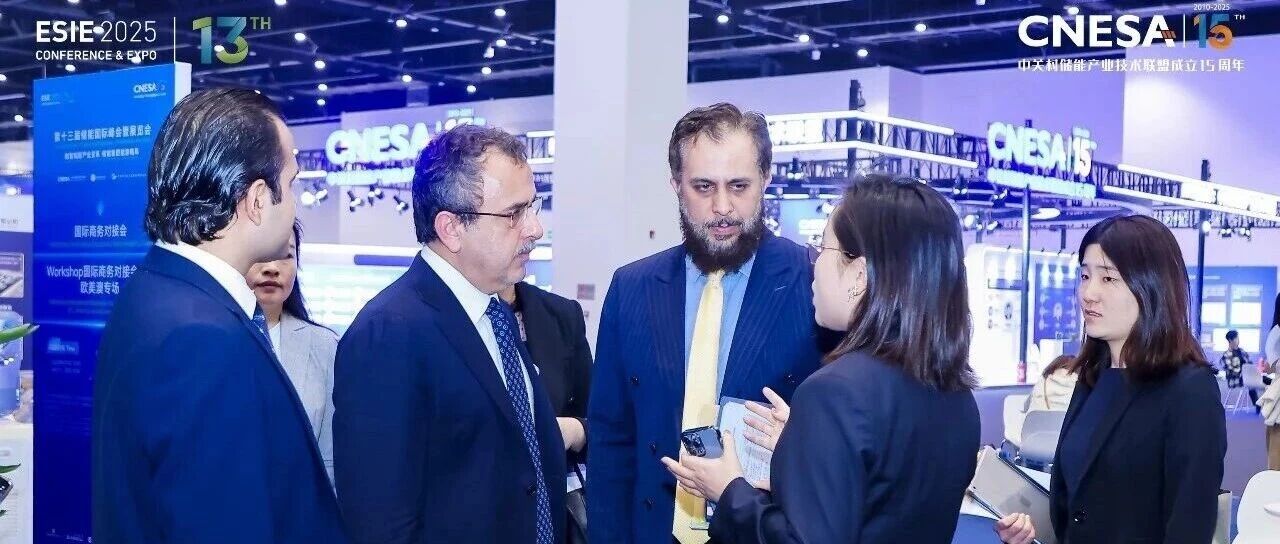
Core Viewpoint - The global energy storage market is rapidly expanding, and international energy cooperation is urgently needed. For Chinese companies, going abroad has shifted from a strategic "option" to a necessary "requirement," driving the energy storage industry to upgrade from "single technology output" to an integrated overseas model of "products + standards + services + ecosystem," with South Asia and Southeast Asia being key focus areas for this transformation [2]. Group 1: Energy Demand in Pakistan - Pakistan is focusing on four key energy demand areas: Battery Energy Storage Systems (BESS), smart meter manufacturing and smart grid integration (AMI), electric mobility and recycling cooperation, and transmission infrastructure with battery-supported grid expansion [5][9][11]. - There are significant collaboration opportunities in BESS, particularly in local production of lithium-ion, sodium-ion, and other emerging storage technologies, especially in utility-scale storage for existing solar and wind independent power projects [5][6]. - The modernization of Pakistan's electricity infrastructure is accelerating, creating substantial opportunities for local smart meter production, especially for three-phase and multi-phase meters, driven by a demand for over 30 million meters [7][8]. Group 2: Electric Mobility and Infrastructure - Pakistan is developing a comprehensive electric vehicle policy framework, which includes battery recycling facilities, electric vehicle charging networks, and smart charging solutions integrated with home and commercial BESS systems [9][10]. - The Transmission System Expansion Plan (TSEP) in Pakistan will create new opportunities for private sector-led transmission cooperation, particularly focusing on projects that embed battery storage in transmission substations [11]. Group 3: Policy and Regulatory Support - The Pakistani government is advancing reforms to simplify regulatory approvals for storage projects, streamline licensing processes for meter manufacturing, and provide tax incentives and import duty exemptions for electric vehicles and battery components [13]. Group 4: International Cooperation and Events - The 13th International Energy Storage Summit and Exhibition (ESIE 2025) has facilitated deep participation from over 200 companies in international energy storage cooperation, covering various countries and regions [14][15]. - ESIE 2026 will continue to focus on popular markets in Europe, America, Australia, the Middle East, and Southeast Asia, inviting energy authorities, enterprises, and industry associations to participate, providing full-chain support for Chinese energy storage companies going abroad [16][18].
中国厂商鏖战澳洲储能“百亿补贴”:两个月装出5万套,下单排队到明年
3 6 Ke· 2025-09-22 11:29
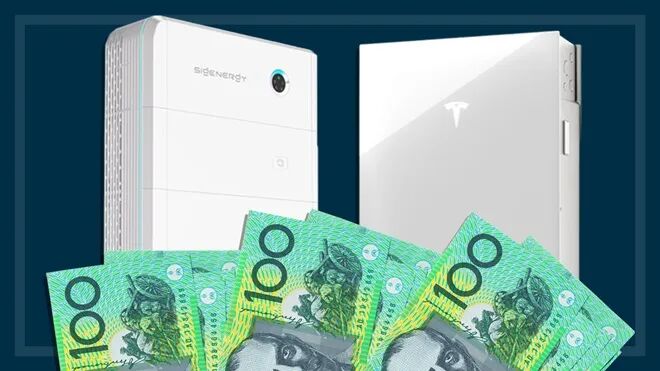
Core Insights - Australia is experiencing an unprecedented surge in home energy storage installations, driven by a government subsidy program that offers up to AUD 3,000 per household for battery installations, with a total investment of AUD 2.3 billion allocated for this initiative until 2030 [1][3][5] Subsidy Program Overview - The "Cheaper Home Batteries" subsidy program began on July 1 and has already seen 44,895 applications within two months, with installation numbers skyrocketing to 19,600 units in the first month, representing a year-on-year increase of 2-3 times [3][5] - Australia ranks among the top five global markets for home energy storage, second only to Germany, the US, and Italy, making this subsidy a significant boost for the industry [3][5] Market Dynamics - Chinese manufacturers are dominating the market, with Tesla being the only foreign brand among the top installers. Tesla recently recalled its Powerwall 2 due to fire risks, potentially ceding market share to competitors [5][7] - The demand for home storage solutions is fueled by Australia's ambitious renewable energy targets, aiming for 82% renewable electricity by 2030 and net-zero emissions by 2050 [14][15] Large-Scale Storage Investments - In the first quarter of 2025, over AUD 2.4 billion will be invested in large-scale battery storage systems, marking the second-highest quarterly investment in Australia's history, with an addition of 1.5 GW of storage capacity [8][11] Challenges and Opportunities - The Australian market presents high entry barriers, requiring manufacturers to provide comprehensive solutions rather than just low-cost products. The focus is shifting towards effective solutions tailored to specific scenarios [22][28] - The market is characterized by a lack of local expertise in storage solutions, creating opportunities for Chinese firms to leverage their technological capabilities [20][21] Talent and Operational Challenges - The vast geography of Australia complicates logistics and customer engagement, requiring companies to adapt to a different operational culture that emphasizes efficiency and communication [31][35] - There is a significant shortage of skilled talent in the energy storage sector, necessitating a focus on developing a workforce that can meet the industry's complex demands [36][37] Long-Term Market Outlook - The current surge in the Australian energy storage market is seen as a long-term opportunity for companies that can establish a local presence and build a service ecosystem, rather than a short-term windfall [37][38]

中国储能何以卷动全球|深度
24潮· 2025-09-11 23:07
Core Viewpoint - The global energy transition is accelerating, leading to a significant surge in demand for energy storage solutions, particularly from Chinese companies, marking the beginning of a "great maritime era" for the storage industry [2][22]. Group 1: Energy Storage Market Overview - The first energy storage unit of the Uzbekistan solar storage project has been successfully installed, representing the largest single electrochemical storage project by China overseas, with a capacity to provide 2.19 billion kWh of power regulation, benefiting one million residents [2]. - The overseas energy storage market is expected to experience explosive growth starting in 2024, with new signed orders for energy storage system integration increasing by approximately 220% and energy storage batteries rising by 175% [2]. - By mid-2023, China's new energy storage cumulative installed capacity reached 101.3 GW, a year-on-year increase of 110%, marking a significant milestone [6]. Group 2: Company Performance - Sunshine Power (阳光电源) reported a revenue of 17.803 billion yuan from its energy storage business in the first half of 2025, a year-on-year increase of 127.78%, with a gross margin close to 40% [3][5]. - Sunshine Power maintained a shipment guidance of 40-50 GWh for the year, with a projected global compound annual growth rate (CAGR) for energy storage of 20% to 30% over the next few years [5][6]. Group 3: International Orders and Growth - From 2024 to August 2025, Chinese energy storage companies signed overseas orders totaling nearly 250 GWh, which is 3.07 times the new installed capacity of 81.5 GWh in the overseas energy storage market [11]. - The Middle East has emerged as a significant growth market for energy storage, with Chinese companies securing substantial orders, including 19 GWh from the UAE and 2 GWh from Saudi Arabia in the first half of the year [27][28]. Group 4: Regional Insights - In Latin America, particularly Chile, Chinese companies secured 9.6 GWh of orders in the first half of 2025, significantly outpacing the U.S. market [30]. - The European energy storage market is projected to grow rapidly, with a CAGR of 55% expected from 2024 to 2029, driven by high energy prices and supportive policies [42][41]. Group 5: Industry Dynamics - The energy storage industry is experiencing a "frenzy" across the entire supply chain, with significant increases in battery shipments and inverter exports, indicating a robust demand environment [21][17]. - The global consensus on the transition to clean energy is driving the rapid growth of the energy storage sector, with many countries implementing supportive policies to enhance energy storage deployment [22][38].