先进空中交通(AAM)

Search documents
峰飞航空获中东50架大型eVTOL航空器订单 年底开启交付
Zhong Guo Jing Ying Bao· 2025-10-29 09:08
Core Insights - Falcon Aviation Services has signed a significant partnership with Peak Aviation Technology to order 50 eVTOL aircraft, with the first batch expected to be delivered by the end of 2025 for transportation services for ADNOC [1][2] - The order includes 15 cargo models (V2000CG) and 35 passenger models (V2000EM), addressing the demand for low-altitude cargo and high-end travel services in the Middle East [1] - Falcon Aviation is a leading operator in the Middle East, providing top-tier helicopter services and actively participating in advanced air mobility projects in Abu Dhabi [1] Company Overview - Falcon Aviation Services is one of the largest private jet and helicopter operators in the Middle East, serving approximately 70,000 passengers annually [1] - The company operates a fleet of helicopters dedicated to offshore energy transport in the UAE and Kuwait, being a primary service provider for ADNOC's offshore operations [1] Industry Context - The partnership between Falcon Aviation and Peak Aviation creates a commercial ecosystem combining eVTOL technology, operations, and application scenarios, opening market opportunities in the Middle Eastern energy sector [2] - ADNOC, as one of the largest oil and gas producers globally, is fully owned by the Abu Dhabi government and ranked 128th in the 2024 global brand value list [2] - The collaboration aims to enhance efficient and environmentally friendly transportation and cargo solutions in the region, reflecting a commitment to integrating low-altitude transport with the energy industry [2]
年底即交付!峰飞航空获阿联酋猎鹰航空50架eVTOL订单
Xin Hua Cai Jing· 2025-10-29 07:47
Core Insights - Falcon Aviation Services has partnered with Peak Aviation to order 50 eVTOL aircraft, with the first deliveries expected by the end of 2025 for ADNOC transportation [1][2] - The order includes 15 cargo models (V2000CG) and 35 passenger models (V2000EM), tailored to meet the low-altitude cargo and high-end travel demands in the Middle East [1][2] Group 1 - Falcon Aviation is one of the largest private jet and helicopter operators in the Middle East, serving approximately 70,000 passengers annually [1] - The company is a strategic partner of the UAE government in developing advanced air mobility (AAM) and is involved in future aviation projects like the mixed-use vertical takeoff and landing airport in Abu Dhabi [1] - Falcon Aviation operates a helicopter fleet primarily for offshore energy transport in the UAE and Kuwait, being a key service provider for ADNOC's offshore operations [1] Group 2 - The V2000CG "Kai Rui Ou" cargo model will be delivered by the end of this year, facilitating urgent material transport between oil extraction bases and logistics centers, thus opening market opportunities in the Middle East energy sector [2] - The V2000EM "Sheng Shi Long" passenger model is currently in the compliance verification stage and will enhance operational efficiency and safety for personnel commuting to oil platforms after obtaining airworthiness certification [2] - The CEO of Falcon Aviation expressed confidence in the partnership due to Peak Aviation's technological capabilities and clear delivery timelines, which will accelerate the integration of low-altitude transportation and the energy sector in the Middle East [2]
阿曼签署先进空中交通合作备忘录
Shang Wu Bu Wang Zhan· 2025-09-21 16:19
Core Insights - Oman Civil Aviation Authority and the Ministry of Transport, Communications and Information Technology have signed a memorandum of understanding with Odys Aviation to advance the Advanced Air Mobility (AAM) verification project in Oman [1] - The project will focus on Odys Aviation's "Laila" model, with test operations scheduled to begin in Q1 2026, aiming to evaluate hybrid vertical take-off and landing (VTOL) flights in real-world conditions [1] - The initiative involves global aviation companies and strategic partners, aiming to implement ICAO standards under Oman's regulatory framework, exploring risk assessment and multi-layered safety models [1] - Application scenarios include oil and gas inspections, emergency rescue, medical logistics, defense, and cargo, with the goal of establishing Oman as a regional advanced aviation hub [1]
科创板破解未盈利企业融资难题,券商踏破eVTOL企业门槛
Sou Hu Cai Jing· 2025-07-06 15:48
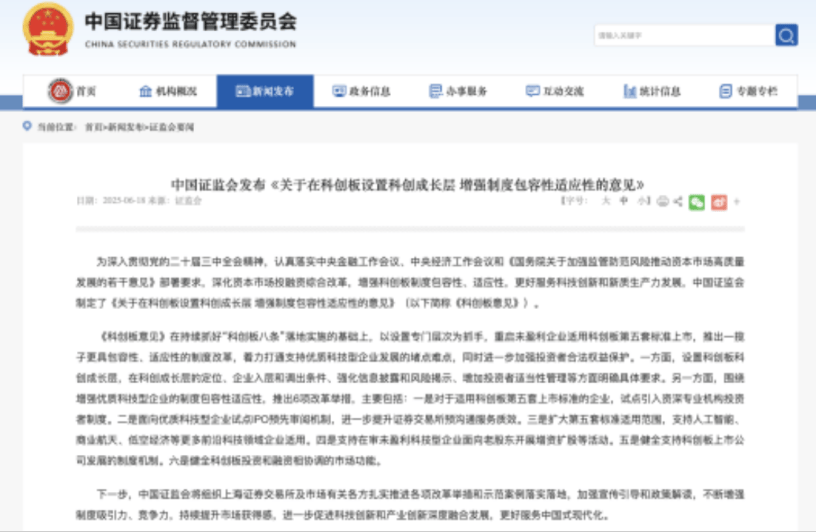
Core Viewpoint - The introduction of the "Science and Technology Innovation Board Opinions" by the China Securities Regulatory Commission (CSRC) aims to enhance the inclusivity and adaptability of the capital market for low-altitude economy enterprises, providing them with new financing opportunities during their technology development phase [1][2]. Group 1: Policy Changes - The CSRC has established a "Science and Technology Growth Layer" and restarted the application of the fifth set of listing standards for unprofitable companies, introducing six more inclusive reform measures to support high-quality technology enterprises [2][4]. - The new policies are expected to attract investment in sectors like artificial intelligence, commercial aerospace, and low-altitude economy, thereby expanding the scope of the fifth set of standards [2][8]. Group 2: Industry Impact - The establishment of the Science and Technology Growth Layer is particularly significant for technology-driven companies like Volant Aviation, which, despite not being profitable, has made substantial technological breakthroughs and has a promising commercial outlook [4][5]. - The low-altitude economy is viewed as a burgeoning market with a potential worth trillions, but companies in this sector face challenges such as high initial investment and long development cycles [8][11]. Group 3: Market Reactions - Following the announcement of the new policies, numerous brokerage firms and investment institutions have actively engaged with low-altitude economy companies, indicating a surge in interest and potential investment opportunities [5][6]. - The new regulations are expected to create a favorable environment for eVTOL (electric Vertical Take-Off and Landing) companies, which are currently in the technology development and certification stages [9][11]. Group 4: Future Outlook - The long-term prospects for eVTOL companies are optimistic, as the new capital market policies are anticipated to facilitate a more effective flow of funds towards enterprises with core technologies and growth potential [11]. - The industry is at a critical juncture where policy support, capital assistance, and technological advancements can converge to position China favorably in the global advanced air mobility market [11].

世界经济论坛 | 负责任的先进空中交通(AAM)离我们还有多远?
科尔尼管理咨询· 2025-06-27 11:21
Core Viewpoint - The development of Advanced Air Mobility (AAM) is set to revolutionize the aviation industry by creating new applications in passenger transport, cargo delivery, and infrastructure inspection, with a projected market size of nearly $80 billion by 2034 due to increasing demand for efficient, green, and rapid transportation solutions [2][3]. Group 1: AAM Market Growth and Applications - AAM is expected to grow significantly, driven by the need for efficient and sustainable transportation solutions in urban and rural areas [2]. - The AAM technology framework includes various types of aircraft, such as small drones and large electric planes, which are innovating the aviation industry through autonomous operation and propulsion system advancements [2][3]. - The current stage of AAM is characterized by a rapid growth phase, particularly in the drone application sector, with hundreds of pilot projects being implemented globally [2][3]. Group 2: Responsible AAM Implementation - The World Economic Forum and Kearney have released a white paper outlining three core elements for the responsible implementation of AAM [4][5]. - The first element focuses on establishing a responsible strategic direction for AAM, emphasizing the importance of safety, sustainability, and economic growth [6][7]. - The second element involves clarifying the primary tasks of stakeholders in the AAM value chain and promoting collaborative efforts among regulators, investors, manufacturers, and operators [18][19]. - The third element reviews key experiences from early drone deployments, which can inform larger AAM applications and highlight the complexities of real-world implementation [28][29]. Group 3: Stakeholder Responsibilities - Each stakeholder in the AAM value chain has specific responsibilities that are interconnected, requiring strategic collaboration to overcome challenges [21][22]. - Regulators are tasked with creating legal frameworks and safety standards, while investors focus on funding early pilots and infrastructure [22][23]. - Infrastructure providers must develop the necessary physical and digital infrastructure, and suppliers are responsible for creating adaptable components [25][27]. - Original Equipment Manufacturers (OEMs) need to ensure compliance with safety standards and adapt their designs to market needs [25][27]. Group 4: Lessons from Drone Deployments - Real-world drone deployment experiences provide valuable insights for the broader AAM industry, particularly in operational feasibility, economic viability, and social acceptance [30][31]. - Successful drone applications, such as the WFP's DEEP program for disaster response, demonstrate the potential of drones in humanitarian efforts and the importance of collaboration among various stakeholders [33][34]. - The Costa Rica Flying Labs initiative showcases how local capacity building and low-cost technology can enhance environmental monitoring efforts [37][38]. - The MFTS program in India illustrates the effectiveness of drones in improving medical logistics in remote areas, emphasizing the need for stakeholder cooperation and regulatory support [42][43]. Group 5: Future Outlook for AAM - The future of AAM will depend on its ability to create social value and integrate seamlessly into existing transportation networks [49][50]. - As AAM technologies evolve, new applications will emerge, enhancing the efficiency of goods and people movement while addressing public safety and environmental monitoring needs [49][50]. - A structured, phased approach is necessary to balance innovation with safety and social acceptance, ensuring that the principles guiding AAM development are effectively implemented [48][50].
追梦空天牵手柘飞航空,共推AAM商业化
Guan Cha Zhe Wang· 2025-05-28 03:54
Group 1 - DreamSky Aerospace has signed a licensing and development service agreement with Zhefei Aviation for the DF3000 flight control application software [1][3] - The collaboration aims to enhance the exploration and practice of low-altitude industrial chain synergy, accelerating the commercialization of Advanced Air Mobility (AAM) [3] - Zhefei Aviation will provide comprehensive support for the DF3000 project, marking its role as a core supplier due to its advanced software products and high-quality engineering services [3] Group 2 - DreamSky Aerospace, established in 2018, has achieved significant milestones, including the first domestic full-process test flight of a ton-class hybrid eVTOL and the first hover test flight of a hybrid eVTOL using liquid hydrogen [3] - Zhefei Aviation, founded in 2022, focuses on providing advanced aerospace core systems and aims to accelerate sustainable advanced air traffic [4] - The strategic cooperation agreement reached during the 2024 Zhuhai Airshow further solidifies the partnership between DreamSky Aerospace and Zhefei Aviation [3]

量子计算机破解比特币椭圆曲线ECC研究
Sou Hu Cai Jing· 2025-05-12 16:34
Core Perspective - The article discusses the dual nature of quantum computing as both a threat to existing cryptographic systems, particularly in blockchain technology, and an opportunity to enhance security for Advanced Air Mobility (AAM) systems [1][2]. Group 1: Understanding Cryptography and Its Vulnerabilities - Cryptographic systems are essential for securing online banking, communications, and blockchain technologies, relying on public-key cryptography, symmetric key encryption, and hashing algorithms [3]. - Public-Key Cryptography includes algorithms like RSA, ECC, and DSA, which secure data exchange and digital signatures [3]. - Symmetric Key Encryption, such as AES, protects data at rest or in transit [3]. - Hashing Algorithms like SHA-256 ensure data integrity and are critical for blockchain technology [3]. Group 2: Key Threats Posed by Quantum Computing - Quantum computing poses significant threats to traditional cryptographic systems by utilizing phenomena like superposition and entanglement [5]. - RSA and ECC are particularly vulnerable to Shor's Algorithm, which can break these systems, while AES's security can be reduced by Grover's Algorithm [6]. - SHA-256's collision resistance is also at risk, with quantum computing speeding up collision detection [6]. Group 3: Bitcoin and Blockchain Security - Bitcoin's security relies on public-private key pairs, and Shor's Algorithm could allow quantum computers to derive private keys from public keys, enabling attackers to forge signatures and steal funds [7]. - Mining operations depend on solving hash problems, and Grover's Algorithm could allow quantum miners to outperform classical miners, threatening network integrity [8]. - Quantum computers could facilitate double spending attacks by allowing attackers to rewrite portions of the blockchain [11]. Group 4: Quantum-Resistant Solutions - The aviation industry must adopt quantum-resistant blockchain technologies to counter the threats posed by quantum computing [17]. - Key solutions include lattice-based algorithms, hash-based algorithms, and quantum key distribution (QKD) to ensure secure communication [18]. Group 5: Blockchain Vulnerabilities in the Context of AAM - Blockchain is proposed as a secure solution for managing AAM systems, but quantum threats to blockchain security are particularly concerning due to aviation safety and operational reliability [21][22]. - Potential failures in AAM include hacked flight operations, manipulated maintenance logs, and passenger data breaches [22]. Group 6: Navigating the Quantum Horizon for AAM Security - The industry is at a critical juncture where quantum computing presents both challenges and opportunities for innovation in securing AAM systems [23][24]. - Adapting quickly to quantum threats will be essential for the success of AAM systems, transforming vulnerabilities into strengths [24][25].

首款面向超大城市群正向开发的载人eVTOL下线
Zhong Guo Min Hang Wang· 2025-05-09 12:57
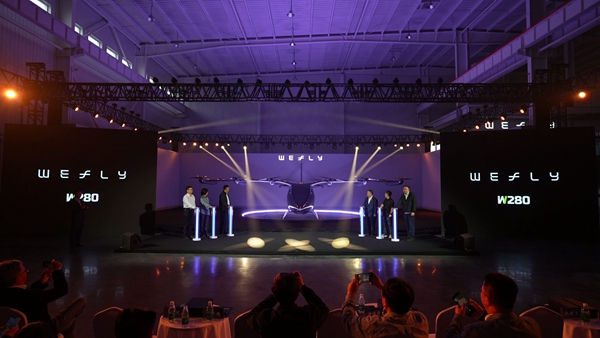
Core Viewpoint - The launch of the W280 model eVTOL by Qifei Aviation Technology marks a significant step in the commercialization of advanced air mobility (AAM) in China, providing innovative three-dimensional solutions for transportation challenges in mega city clusters [1][2]. Group 1: Product Features - The W280 eVTOL is designed specifically for China's urban scenarios, with a maximum takeoff weight of 2.8 tons, a maximum speed of 280 km/h, and a maximum range of 280 km, catering to efficient commuting needs between urban hubs [2]. - The aircraft features a fully autonomous flight control system developed in-house, a composite wing design, all-composite structure, and pure electric drive, allowing for takeoff and landing in urban environments without the need for runways [2]. - Noise suppression technology ensures that the aircraft's cruising noise remains below 50 decibels, addressing community concerns about air travel noise [2]. Group 2: Strategic Partnerships - Qifei Aviation signed deep cooperation agreements with five entities, including Chengdu Kaitian and Suzhou Changfeng, to ensure the airworthiness and commercial success of the W280 model [5]. - The integration of the eVTOL industry chain is expected to contribute significantly to Suzhou's goal of becoming a national low-altitude economic demonstration zone by 2026 [5]. Group 3: Application Scenarios - The W280 is based on a modular platform, allowing for quick adaptation to various scenarios such as business commuting, medical rescue, and high-end logistics [8]. - Strategic cooperation agreements were signed with local low-altitude economic enterprises to jointly develop urban low-altitude service application scenarios [8][9]. Group 4: Future Plans - A closed-loop flight route for trial operations is planned between "Suzhou Center - Suzhou North Station - Yangcheng Lake Scenic Area," with a demonstration operation set for 2026 [10].