
光储平价

Search documents
光伏行业反内卷带来行业曙光 | 投研报告
Zhong Guo Neng Yuan Wang· 2025-11-20 02:09
Core Viewpoint - The photovoltaic industry is experiencing a gradual recovery in profitability, with the main industry chain showing signs of reduced losses and improved margins, while the auxiliary industry chain remains stable [2][9]. Group 1: Industry Performance - In Q3 2025, the price of silicon materials rebounded from 34,000 yuan/ton to 51,000 yuan/ton, leading to a transmission of price increases in silicon wafers and batteries, although component prices remained stable due to poor acceptance in power stations [8]. - Q3 2025 marks the seventh consecutive quarter of losses for the main photovoltaic industry chain, but the ongoing anti-involution process is expected to restore prices to reasonable levels, potentially leading to industry valuation recovery [8][10]. Group 2: Financial Metrics - The overall profitability of the main industry chain improved in Q3 2025, with both gross and net profit margins showing a quarter-on-quarter increase [2]. - Capital expenditure in the photovoltaic sector remains low, with companies showing limited willingness to expand production amid ongoing losses [3]. - The asset-liability ratio for the industry remains high, with slight improvements noted in the battery segment, indicating a focus on survival rather than growth [4]. Group 3: Market Dynamics - Industry inventory levels have increased, with polysilicon inventory remaining high [6]. - Domestic photovoltaic installations are entering a low season, with medium to long-term global installation growth expected to be between 5% and 10% [7]. - The photovoltaic sector is primarily positioned to meet new electricity demand, with limited short-term capacity to replace traditional energy sources [9]. Group 4: Future Outlook - The anti-involution measures are expected to improve industry supply and demand dynamics, with companies in polysilicon, silicon wafers, and battery components likely to benefit from valuation recovery [10]. - New technologies, such as copper replacing silver in materials and perovskite solar cells, present opportunities for cost reduction and efficiency improvements in the industry [10].
通威股份光伏事业部总裁陈星宇:未来5到10年,几乎全国所有地方都能实现光储平价
Xin Lang Cai Jing· 2025-11-19 05:21
Core Viewpoint - The solar energy industry is transitioning from traditional solar power pricing to a new model that includes energy storage, referred to as "solar plus storage parity," which is becoming competitive with local coal-fired electricity prices [1] Group 1 - The past concept of solar parity was based on solar power being cheaper than coal-fired electricity [1] - Currently, solar plus storage systems are already competitive with local coal electricity prices in many regions [1] - In the next 5 to 10 years, it is anticipated that solar plus storage parity will be achievable in almost all areas across the country [1]

光储融合成必然趋势 隆基绿能正式进军储能领域
Zheng Quan Ri Bao Wang· 2025-11-14 12:41
Core Viewpoint - Longi Green Energy has officially entered the energy storage sector by acquiring a significant stake in Suzhou Jingkong Energy Technology Co., Ltd, marking a strategic extension from solar to storage [1][2]. Company Summary - Longi Green Energy plans to acquire approximately 61.9998% of the voting rights in Suzhou Jingkong Energy through equity purchase, capital increase, and voting rights delegation [1]. - Suzhou Jingkong Energy, established in September 2015, specializes in lithium-ion battery energy storage systems and has developed comprehensive energy management solutions [1]. - The company recently signed a strategic cooperation agreement with ClubSolar to deploy a 2GWh residential energy storage system in the Australian market, indicating its commitment to global market diversification [1]. Industry Summary - The energy storage market is experiencing rapid growth due to the global transition towards clean and low-carbon energy structures, with increasing demand driven by the need for renewable energy integration [2]. - The integration of energy storage with photovoltaic systems is crucial for reducing the curtailment rate of solar energy and expanding market opportunities [3]. - The shift from mandatory energy storage to market-driven approaches has enhanced the market's regulatory function, benefiting solar power plants in their energy storage choices [3]. - The cost of lithium battery energy storage is projected to drop significantly by 2025, with costs reaching between 0.25 to 0.35 yuan per watt, making energy storage competitive with traditional power sources [3]. - The future of the energy storage industry is moving towards platform-based solutions, with energy storage becoming a primary power source rather than an auxiliary one [4].

横店东磁:公司在关注或培育户储、工商业储和大储,其中户储已在欧洲市场有小部分出货
Mei Ri Jing Ji Xin Wen· 2025-11-13 09:28
Group 1 - The company is focusing on the development of energy storage solutions, including household storage, commercial and industrial storage, and large-scale storage [2] - The company has already made some shipments of household storage solutions to the European market [2]


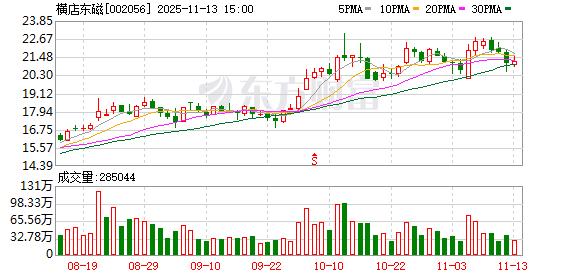
机构称国内储能经济性迎来拐点,关注储能电池ETF(159566)等投资价值
Sou Hu Cai Jing· 2025-10-17 11:36
Core Viewpoint - The renewable energy and technology stocks experienced a general decline this week, with various indices reflecting significant drops in value, indicating a potential shift in market sentiment towards these sectors [1][3]. Index Performance - The China Securities New Energy Index fell by 4.1% - The National Securities New Energy Battery Index decreased by 6.2% - The China Securities Photovoltaic Industry Index dropped by 3.1% - The China Securities Shanghai Carbon Neutrality Index declined by 3.8% [1][3]. Valuation Metrics - The rolling price-to-earnings (P/E) ratio for the China Securities New Energy Index is 56.0 times, while the National Securities New Energy Battery Index stands at 33.1 times - The price-to-book (P/B) ratio for the China Securities Photovoltaic Industry Index is 2.5 times, and the rolling market-to-book ratio for the China Securities Shanghai Carbon Neutrality Index is 25.7 times [3][6]. Investment Opportunities - The National Securities New Energy Battery Index focuses on the energy storage sector, comprising 50 companies involved in battery manufacturing and related technologies, which are expected to benefit from future energy development opportunities [4]. - The China Securities Photovoltaic Industry Index represents a strong future energy source, consisting of 50 representative companies across the photovoltaic supply chain [4]. - The China Securities Shanghai Carbon Neutrality Index includes 100 stocks from both clean energy and high-carbon reduction potential sectors, indicating a diverse investment landscape [4]. ETF Tracking - There are currently five ETFs tracking the China Securities New Energy Index, two for the National Securities New Energy Battery Index, ten for the China Securities Photovoltaic Industry Index, and eight for the China Securities Shanghai Carbon Neutrality Index [5].

20cm速递|创业板新能源ETF华夏(159368)震荡回调盘中下跌2.50%,同类规模最大费率仅0.2%
Mei Ri Jing Ji Xin Wen· 2025-10-13 03:37
Core Viewpoint - The A-share market experienced a collective decline, with the ChiNext New Energy ETF (Hua Xia, 159368) dropping by 2.50%. However, the underlying stock, Galaxy Magnetic Materials, surged over 16%, indicating mixed performance within the sector [1]. Group 1: Market Performance - The ChiNext New Energy ETF (Hua Xia, 159368) has attracted significant capital, raising 180 million yuan in the last five trading days, 381 million yuan in the last ten days, and 989 million yuan in the last twenty days [1]. - The ETF is the first in the market to track the ChiNext New Energy Index and is the only one with an off-market connection, showcasing its unique position [2]. Group 2: Industry Developments - A major breakthrough in solid-state lithium battery technology has been achieved by the research team at the Institute of Metal Research, Chinese Academy of Sciences, addressing key challenges such as interface impedance and ion transport efficiency [1]. - CITIC Securities continues to recommend the energy storage sector, highlighting the favorable fundamentals of the lithium battery industry and the current catalytic moment for growth [1]. Group 3: ETF Characteristics - The ChiNext New Energy ETF (Hua Xia, 159368) has the highest elasticity among similar products, with a maximum increase of 20%, and the lowest fee rate, with a total management and custody fee of only 0.2% [2]. - As of October 10, 2025, the ETF's scale reached 1.116 billion yuan, with an average daily trading volume of 93.5393 million yuan over the past month [2]. - The ETF has a storage content of 51% and a solid-state battery content of 30.48%, aligning with current market trends [2].

20cm速递|储能含量达51%!创业板新能源ETF华夏(159368)上涨3.92%,同类规模第一
Mei Ri Jing Ji Xin Wen· 2025-09-29 05:26
Group 1 - The storage sector is experiencing strong growth, with the ChiNext New Energy ETF (159368) rising by 3.92%, and key stocks like Hunan YN Energy increasing over 17% [1] - Domestic demand for energy storage cells is robust, with leading battery companies operating at full capacity and some orders extending into early next year [1] - The goal set by the "Special Action Plan for Large-Scale Construction of New Energy Storage" aims for a storage installation capacity of over 180 million kilowatts by 2027, potentially driving new project investments of approximately 250 billion yuan [1] Group 2 - The ChiNext New Energy ETF (159368) is the largest ETF tracking the ChiNext New Energy Index, covering various sectors including batteries and photovoltaics [2] - This ETF has the highest elasticity with a potential increase of up to 20%, and the lowest fee rate, with a combined management and custody fee of only 0.2% [2] - As of September 26, 2025, the ETF's scale reached 1.009 billion yuan, with an average daily trading volume of 65.75 million yuan over the past month, and it has a storage component of 51% and a solid-state battery component of 23.6% [2]



华泰证券:欧洲工商储及澳大利亚户储起量,继续看好逆变器需求
Di Yi Cai Jing· 2025-08-27 01:12
Core Viewpoint - The export value of inverters from China is projected to reach 6.51 billion yuan in July 2025, with a slight quarter-on-quarter decrease, while the export quantity is expected to be 4.6 million units, reflecting a quarter-on-quarter decline of 10.3% [1] Group 1 - Demand remains high during the peak season, with significant increases in demand from European industrial storage and Australian household storage [1] - Long-term demand drivers include power outages, rising electricity prices, and high growth in wind and solar installations across various regions [1] - The parity of solar storage is expected to further unlock the demand ceiling [1]

锦浪科技(300763):25Q2业绩表现优异,储能业务实现显著增长
Huafu Securities· 2025-08-20 11:44
Investment Rating - The report maintains a "Buy" rating for the company, indicating an expected relative price increase of over 20% against the market benchmark within the next six months [19]. Core Insights - The company reported strong performance in H1 2025, achieving revenue of 3.794 billion yuan, a year-on-year increase of 13.09%, and a net profit of 602 million yuan, up 70.96% year-on-year [3]. - The significant growth in the energy storage inverter segment, with revenue reaching 790 million yuan, represents a remarkable year-on-year increase of 313.5% [4]. - The overall gross margin for the inverter business improved to 27.4%, reflecting an increase of 8.1 percentage points year-on-year, driven by enhanced product offerings and cost optimization strategies [5]. - The company’s revenue from new energy power and power generation systems also saw growth, with a revenue of 300 million yuan in H1 2025, a slight increase of 0.9% year-on-year [6]. Financial Performance Summary - For H1 2025, the company achieved a revenue of 3.794 billion yuan, with a net profit of 602 million yuan, marking a significant increase in profitability [3]. - The inverter revenue for H1 2025 was 2.61 billion yuan, with a notable increase in the energy storage inverter segment [4]. - The company’s gross margin for inverters improved significantly, indicating better profitability and operational efficiency [5]. - The financial forecast for 2025-2027 shows expected net profits of 1.23 billion yuan, 1.53 billion yuan, and 1.81 billion yuan respectively, with a corresponding PE ratio of 20.7, 16.7, and 14.1 [8].

锦浪科技(300763):25Q2业绩表现优异 储能业务实现显著增长
Xin Lang Cai Jing· 2025-08-20 10:39
Performance Review - The company reported a revenue of 3.794 billion yuan for H1 2025, representing a year-on-year increase of 13.09% [1] - The net profit attributable to shareholders reached 602 million yuan, up 70.96% year-on-year [1] - The net profit excluding non-recurring items was 549 million yuan, reflecting a year-on-year increase of 71.8% [1] - In Q2, the company achieved a revenue of 2.276 billion yuan, a year-on-year increase of 16.25% and a quarter-on-quarter increase of 50.0% [1] - The net profit for Q2 was 407 million yuan, up 22.75% year-on-year and 109.27% quarter-on-quarter [1] Inverter Revenue Growth - In H1 2025, inverter revenue reached 2.61 billion yuan, showing a year-on-year increase of 16.6% [2] - Grid-connected inverter revenue was 1.82 billion yuan, down 11.2% year-on-year, while energy storage inverter revenue surged to 790 million yuan, up 313.5% year-on-year [2] - The significant growth in energy storage inverters was driven by recovering demand in the European market and growth in emerging markets in Asia, Africa, and Latin America due to policy support [2] Inverter Profitability Improvement - The overall gross margin for the inverter business in H1 2025 was 27.4%, an increase of 8.1 percentage points year-on-year [3] - The gross margin for grid-connected inverters was 26.1%, up 7.6 percentage points year-on-year, while energy storage inverters had a gross margin of 30.3%, up 2.7 percentage points year-on-year [3] - The improvement in profitability was attributed to increased R&D investment, a higher proportion of high-value inverter products, an optimized customer structure, and cost reduction strategies [3] Growth in New Energy Power and Generation Systems - New energy power revenue for H1 2025 was 300 million yuan, a year-on-year increase of 0.9%, with a gross margin of 52.8% [4] - Revenue from household photovoltaic generation systems was 810 million yuan, up 4.1% year-on-year, with a gross margin of 58.0% [4] - The growth was supported by seasonal factors, as Q2 is a peak season for photovoltaic generation, leading to increased production and revenue [4] - The company sold a total of 206.80 MW of distributed photovoltaic power stations and household photovoltaic generation systems, with an average transaction price of approximately 3.10 yuan/W and a profit of about 22.64 million yuan [4] Profit Forecast and Investment Recommendation - The company has adjusted its net profit forecast for 2025-2027 to 1.23 billion, 1.53 billion, and 1.81 billion yuan respectively [5] - The current stock price corresponds to a PE ratio of 20.7, 16.7, and 14.1 times for the years 2025, 2026, and 2027 [5] - Given the favorable demand in emerging markets and the ongoing inventory reduction in Europe, the inverter business is expected to continue growing, maintaining a "buy" rating [5]